
Stress & Yoga Pt. 2
Stress & Yoga : Abstract
Strategy of Stress:
1. Ethical changes i.e. social ethics, self-ethics
2. Better way of living i.e.
- Positive Nature, (Samyaka Prakriti)
- Positive Food ( Samyaka Aahar)
- Positive Action ( Samyaka Vihar)
- Positive Rest & Relaxation (Samyaka Vishrama)
- Positive Thinking (Samyaka Vichara)
3. Body warm up/ Preparation by the subtle exercise and cleansing process.
4. Yogasana, Pranayama and overall Workout routine.
5. Yog-nindra (psychic sleep),music healing.
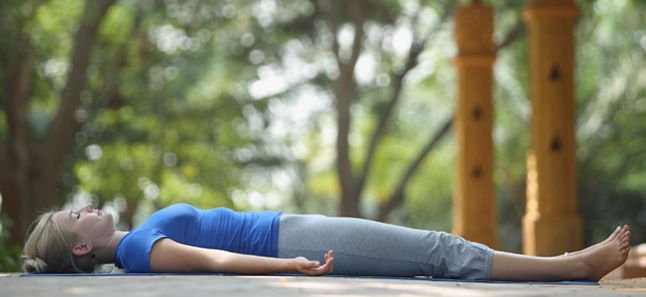
6. Shavasana: a complete rest and balance pose.
7. Meditation: a way of inner awareness, sound rest, and mind purity.
8. Counseling i.e. talk therapy and life coaching.
9. Body relaxing therapy and spiritual healing.
10. Other helpful tips:
- Proper knowledge of body, mind, and spiritual issues associated with stress.
- Action oriented life pattern.
- Realistic goal setting.
- No compromising with your norms, values, and beliefs.
- No competition in life, always try to be excellent but not the first one.
- Low-stress lifestyle.
- Love to all.
Brain functioning nature and calming pattern. Our brain fires 14 to more cycles of thoughts called beta waves a second which is for getting tasks done. But it is not for enhancing your learning capacity of new things. So doing any type of relaxation practice keeps sound rest at atom levels which minimizes the high consumption of oxygen and energy which provides better life and long life. Taking a few minutes to relax deeply slows our brain waves down which are alpha waves, occur at between 7 to 14 cycles a second can empower of learning level and soundness in life.
CONCLUSION
Finally, yog is all the solution of life. If one problem is in mind, hundreds of solutions you have in mind. But just one hour of going to yog studio and practicing yog is not a yogic life. This complete world is a yog studio and this precious life is itself a huge yog laboratory in which we have to do well experiments for ourselves. This beautiful life gifted by nature is itself a huge chemical, biological, and physics industry where we can find all the requirements for your experimental fulfillment of our being and consciousness. So, please globalize the yog science for peace, harmony, happiness, and bliss with the exploration of wisdom and intelligence all over the world.
Surya Namaskar
Surya Namaskar or Sun Salutation and enough clearance to stretch the arms above the head while standing.
It consists of 12 series of postures that are performed continuously and combined with synchronized breathing. Each position counteracts the preceding one producing a balance between flexions and extensions.
There are two types of Surya Namaskar: Traditional and Modern. Here we will be talking about the Traditional Surya Namaskar:
Pose 1: Prayer Pose (Pranamasana)
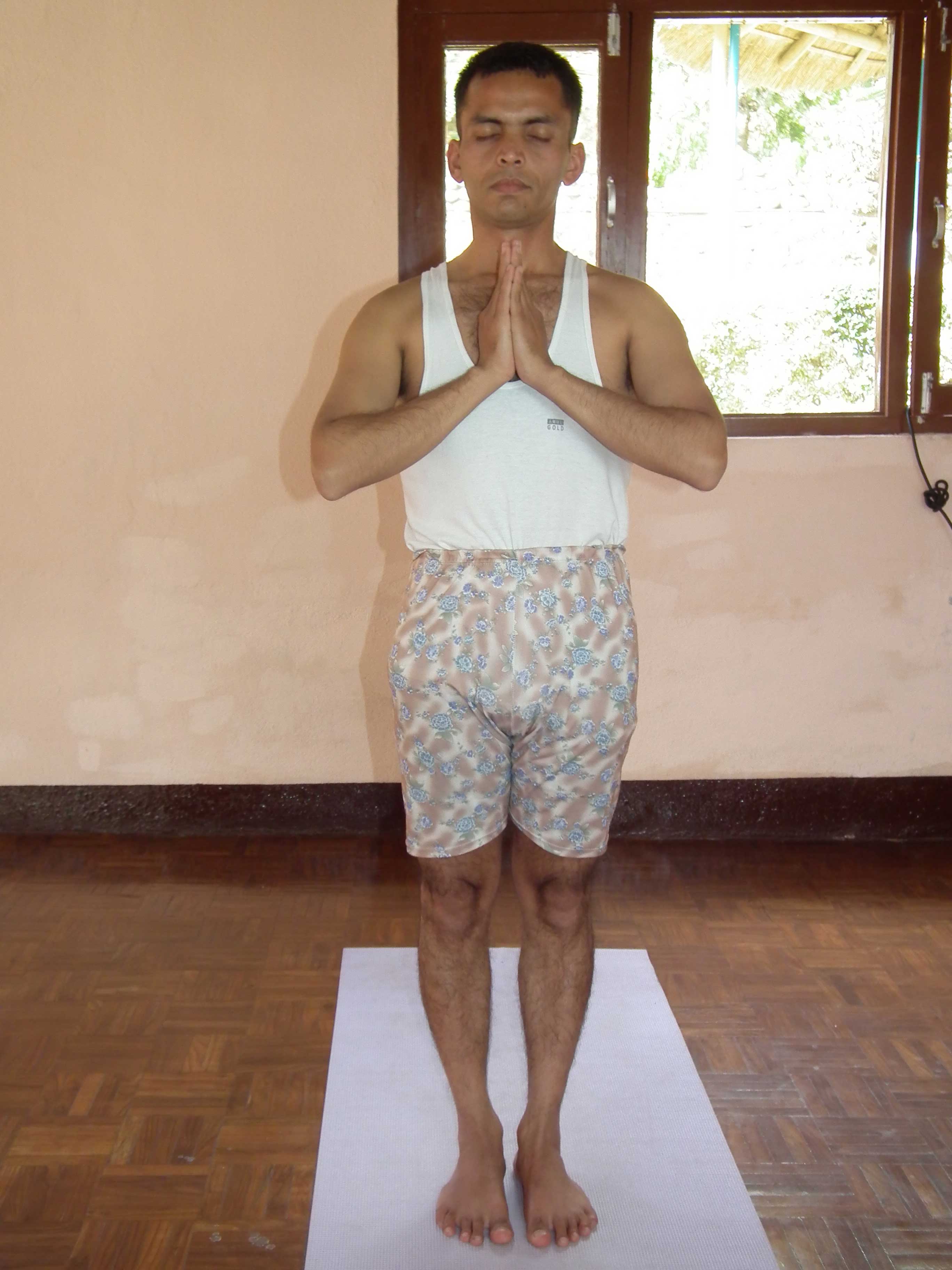
Stand at the edge of your mat, keep your feet together, and balance your weight equally on both feet. Expand your chest and relax your shoulders. As you breathe in, lift both arms from the sides, and as you exhale, bring your palms together in front of the chest in a prayer position. Then Pray the Sun Salutation Mantra.
Pose 2: Raised Arms Pose (Uttanasana)
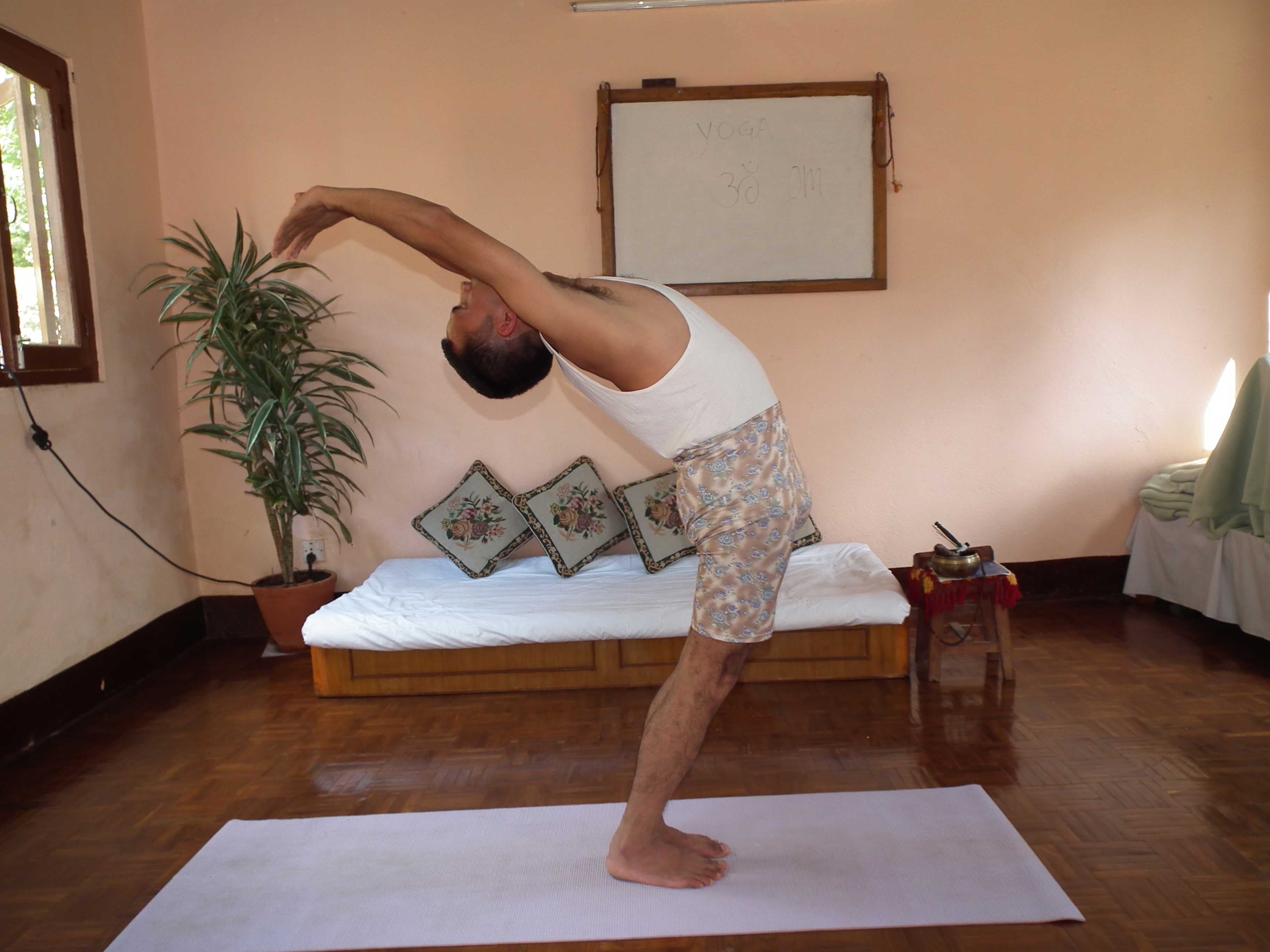
Breathing in, lift the arms up and back, keeping the biceps close to the ears. In this pose, the objective is to stretch the whole body up from the heels to the tips of the fingers. To get maximum benefits, you may pull the pelvis forward and ensure reaching up with your fingers rather than going backward.
Pose 3: Hand to Foot Pose (Hastapadasana)
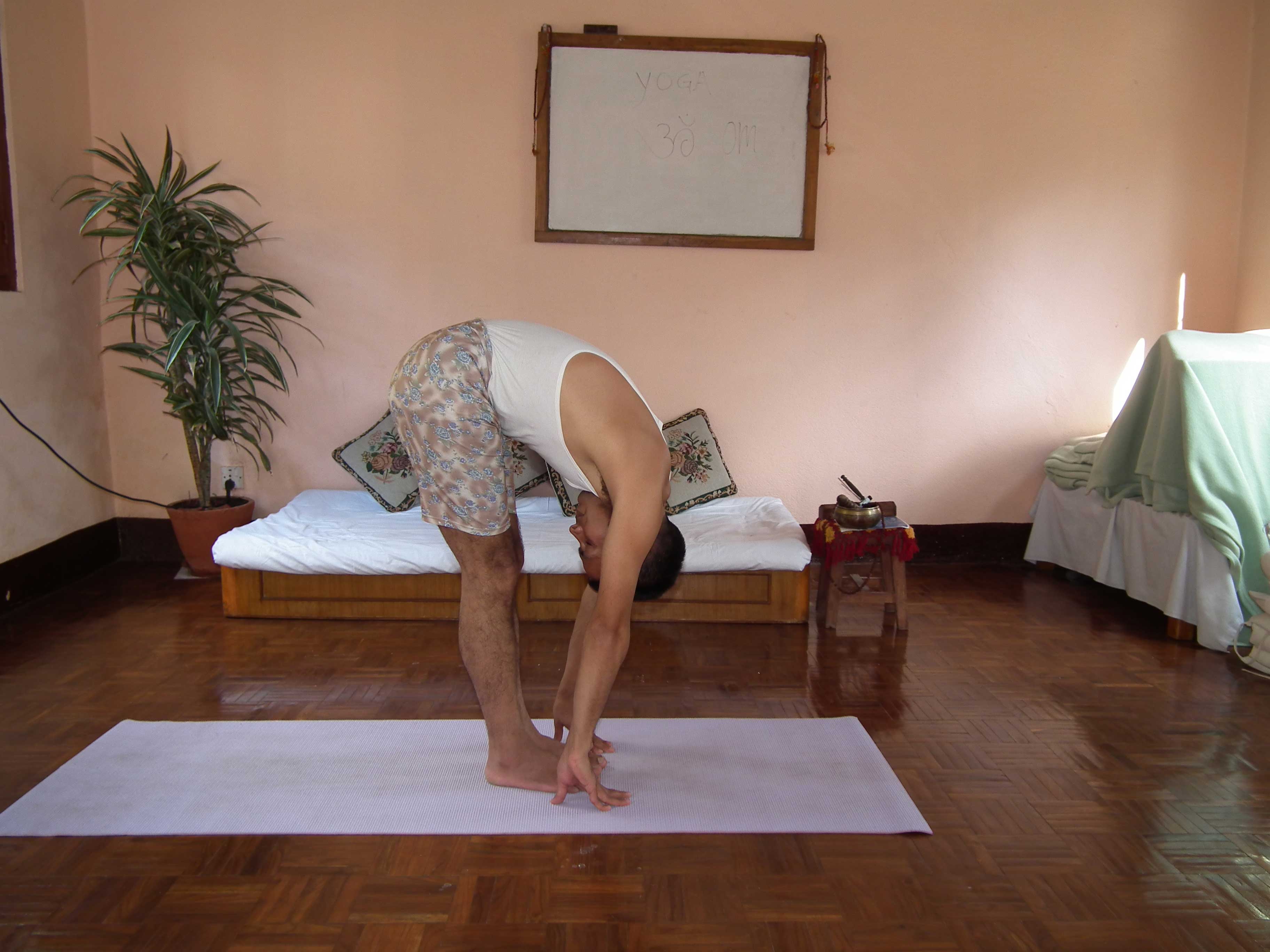
Breathing out, bend forward from the waist, keeping the spine erect. As you exhale completely, bring your hands down to the floor, beside your feet.
Pose 4: Equestrian Pose (Sanchalasana)

Crescent moon pose. Inhale and raise the arms above the head and extend the spine backward arching the back from the waist and moving the hips forward. Let the eyes follow the hands while relaxing your neck.
Pose 5: Mountain Pose (Parvatasana)
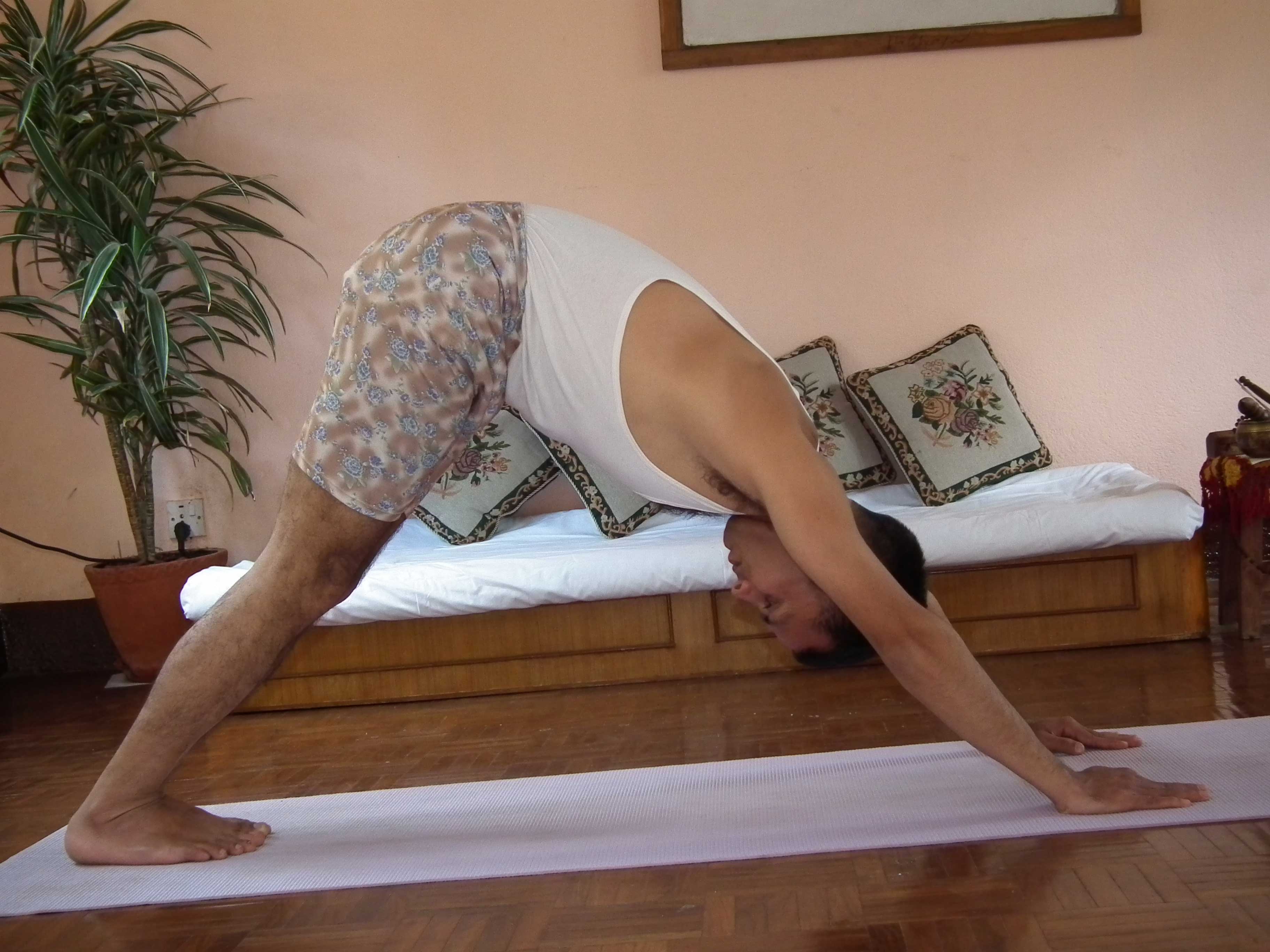
Exhale and bring the left foot back in line with the right. Lift the hips high like a mountain. Push the heels and head down and look at the toes with the head down between the arms.
Pose 6: Salutation Pose: Astanga Namaskar
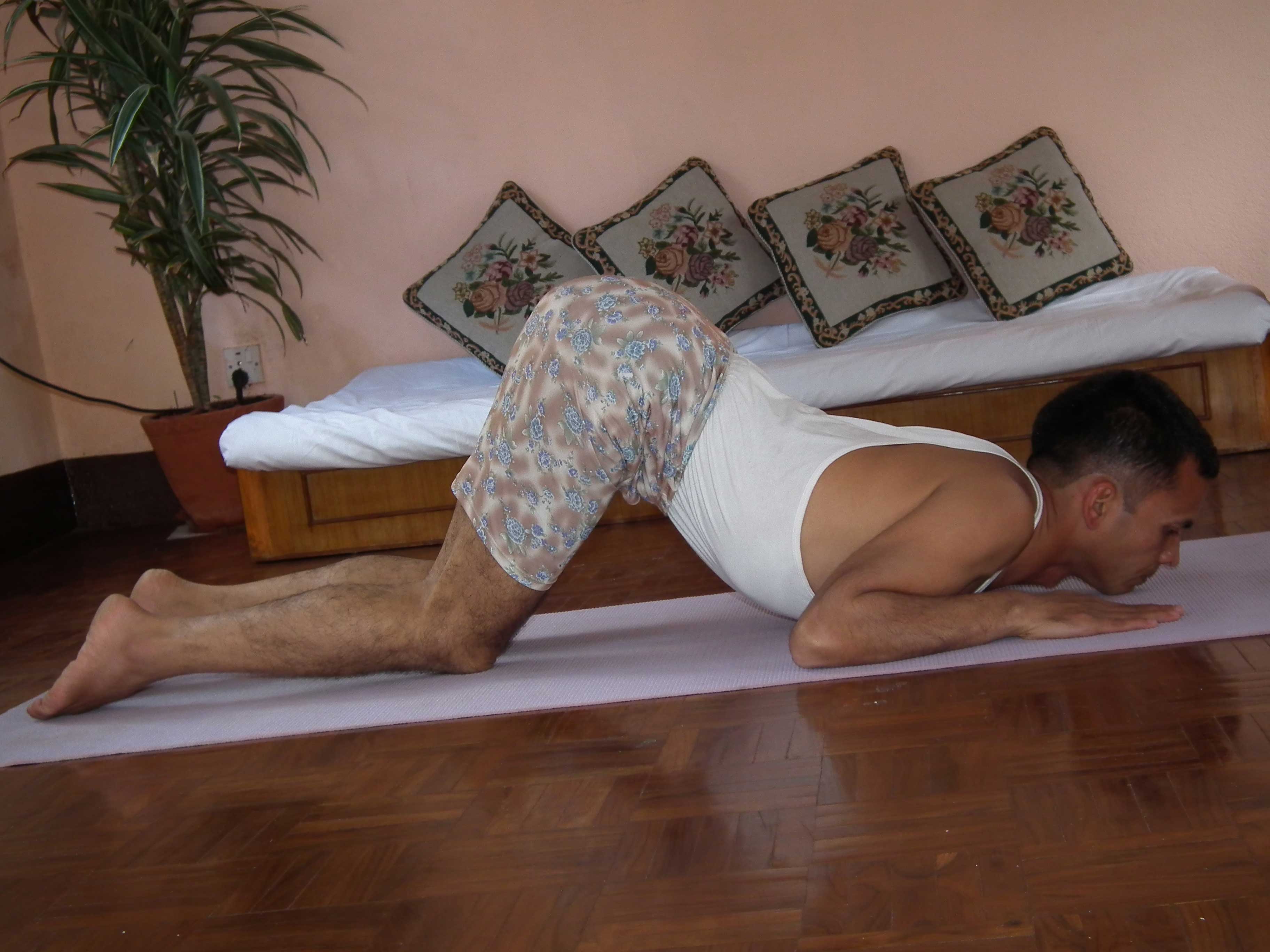
Put the knees down first and then bring the chest down. See that eight parts of the body are touching the floor including two feet, two knees, two hands, the chest, and the chin or forehead. Sashtang means eight limbs and dandawat means paying homage by touching the floor. Make sure the hips are slightly raised above the ground. Inhale and exhale in this position. Keep the feet together.
Pose 7: Cobra Pose (Bhujangasana)

Lower the pelvis and abdomen to the floor. Inhale and stretch the toes on the floor. Raise your head slowly up, arch the spine and neck, and look up. Keep your legs together and the elbows alongside the body slightly bent and keep the shoulders down.
Pose 8: Mountain Pose (Parvatasana)
Exhale and wiggle your toes forward allowing your feet to rest on the soles while you raise the hips as you did in number 5. If possible, try and keep the heels on the ground and make a gentle effort to lift the tailbone, going deeper into the stretch.
Pose 9: Equestrian Pose (Sanchalasa)
Inhale, and bring the right foot forward, and assume pose number 4 exactly as before. In this position, make a gentle effort to push the hips down towards the floor, to deepen the stretch.
Pose 10: Hand to Foot Pose (Hastapadasana)
Breathing out, bring the left foot forward. Keep the palms on the floor. You may bend the knees, if necessary. Gently straighten the knees and if you can, try and touch your nose to the knees. Keep breathing.
Pose 11: Raised Arms Pose ( Uttanasa)
Breathing in, roll the spine up, hands go up, and bend backward a little bit, pushing the hips slightly outward. Ensure that your biceps are beside your ears. The idea is to stretch up more rather than stretching backward.
Step 12: Prayer Pose (Pranamasana)
Exhale and stand erect bringing the hands back to the center of the chest with palms together as in pose number 1.
Benefits of Surya Namaskar (Sun Salutation)
1. Improves Muscles Flexibility
Each of the asanas done in Surya Namaskar centers around various muscle activities and operational hubs called Chakras. This aids in conditioning practically the entire of your body parts including arms, abs, thighs, and butt. It improves the body’s adaptability. As the muscle tone improves your general identity is upgraded also.
2. Improves Blood Circulation of the Body
Due to the active process of inhalation and exhalation, the lungs are constantly ventilated and the blood remains oxygenated. It’s a great way of detoxing your body and helping it get rid of excess carbon dioxide and other toxic gases. Surya Namaskar’s sequence of postures is the most scientific as it completes the circuit within the body. The cycle of blood flowing in and out from the heart into the right and left sides of the body is completed.
3. Good Digestion And Help in Weight Loss
Appropriate exercise and legitimate rest alongside a decent eating routine outcomes in improved insulin affectability and expands digestion. This certainly animates the stomach-related tract by creating the correct sort of stomach-related juices. Diverse asanas in Surya Namaskar guide the bloodstream to different indispensable organs which ensure improved execution.
4. Improves Energy and Awareness Levels
Alongside asanas, the breathing example is additionally a significant part of Surya Namaskar. It gives a profound cognizant unwinding to the body and brain. It expands the mindfulness. The casual personality and more beneficial body at that point result in improved vitality levels.
5. Anti-anxiety and Calming Properties
Surya Namaskar helps to improve memory and the nervous system. Moreover, it stabilizes the activity of the endocrine and thyroid glands. Thereby reducing anxiety and inducing the sensation of complete calmness and tranquility.
6. The sensitivity of the Heart Chakra
While engaging Surya Namaskar, both hands are joined together connecting to the center of the heart, these many beliefs activate the heart chakra and motivate the lotus heart to become more sensitive.
The Art of Yoga
Introduction:The Art of Yoga
Teaching children yoga along with the principles of Fine Art. In this case, drawing and painting is an idea that I am in the process of exploring with the help of some young, eager, and willing volunteers.
This idea grew out of my experience with:
1.The profound effect yoga has had on my work as a painter.
2. A deepening understanding, through personal experiences and the shared knowledge of art educators, of ways in which this principle of drawing and painting can be taught to others, providing them with the tools to express their innate creativity.
3. The imagination of a little six-year-old girl, Sabria, who during a spontaneous session of creative visualization, described this wonderful interior house she saw in her mind made of candy with “sweet water flowing curtains”
On a more subtle level, our dreams speak to us in the language of colourful images. The chakras are energy centers with specific colors and symbolic patterns that influence transformation. Each chakra’s color aligns with a unique vibrational frequency tied to physical and spiritual well-being. These colors and patterns guide healing, balance, and spiritual awakening. We have worlds upon worlds of colour, symbols, and images within us, yet we go through life not having full access to this part of ourselves. There is always an internal beginning with any outward creative expression.
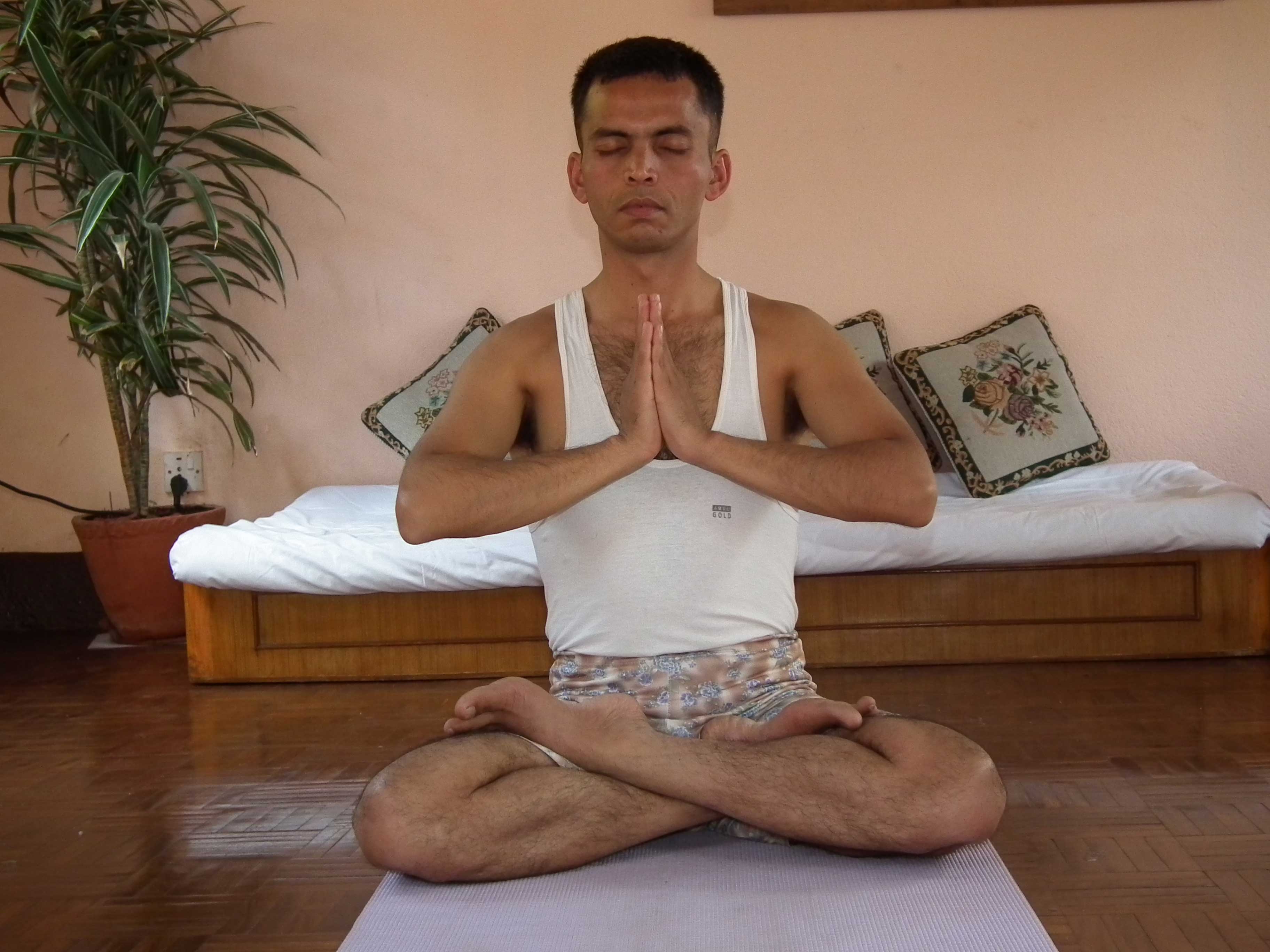
Some of the invaluable yoga practices include:
1. Chanting the mantra ‘Aum’ before starting any project, to acknowledge the presence of the creative power, from where all ideas and inspiration come.
2. Asana and Pranayama, to balance and still restlessness in the body and mind. It is a vital requirement for creative endeavors that demand long hours of being in one place to complete a painting, sculpture, etc.
3. Trataka, so invaluable in helping to develop the concentration and focus needed to perfect sometimes tedious details that are essential to bring the work to completion.
4. Yoga Nindra and Chidakasha dharana, help to clear any psychological blocks that would impede the creative process, while at the same time allowing images, that can be therapeutic or expressed creatively, to surface.
5. Antar Mouna, to help access the wonderful unlimited world of our imagination.
6. Creative Visualization, to help access the wonderful unlimited world of our imagination.
With the help of these and many other yogic practices, the body and mind are prepared to express creativity. Combine this with learning in a simple way such as drawing and painting skills as:
# Exercises to develop proper seeing for drawing purposes.
# Contour drawing, to train the mind to relate to the hand, the subtle change in the shape of an object. Color Mixing, gives ability to mix the exact color you want, without having to depend on buying a particular tube of paint.
# Perspective, to create a three-dimensional depth.
# Negative and Positive space, to create an interesting composition where all aspects of the image support each other as either the dominant or surrounding shape.
With these and other creative tools, it is easier to express outwardly the inner creative stirrings.
The lessons presented here were for the most part created especially in keeping with the theme of the Yogic Magic Carpet Rides, which seeks to facilitate a greater understanding between different cultures.
Yoga may be seen in these lessons as be silent partner, almost in the form of play, but its importance in helping the mind and body to be effective ‘instruments’ in the creative process speaks in a loud voice.
STRESS AND YOGA
Stress and Yoga: Abstract
The term ‘Yoga’ in Sanskrit means the union of existence. Yoga is gaining popularity now all over the world and becoming a part of life as a precious thing. According to Yoga Philosophy, all existence is itself yoga, all life is yoga, all nature is yoga, all creation is yoga, and all galaxies are yoga. The connection of five elements (Panchamahabhootas) is the yoga of nature, and the connection of soul, intellect, mind, and body is the yoga of human life. The trilateral integration of the universe, nature, and human life is the yoga of existence. If there is any disconnection among them, everything around them will be disturbed.
Yoga is the ethic of life under the biological clock of the universe. It is considered a way of a complete transformation of our nature which harmonizes precious life and also appeals to having peace, love, non-violence, happiness, and bliss in human life. This is not a science just some decades before somebody discovered it. It is ancient human science based on ancient wisdom for ethical and spiritual life.
Practically yoga is the science of the soul that drives our mind and body. The absolute purity of soul keeps the life more balanced and sound and also releases happiness, positivity, and calmness in the mind. If thoughts are positive, we are purified and then can be free from stress and all the suffering. So right way of yoga understanding and regular yoga practice is the total way of getting rid of stress, tension, anxiety, depression, restlessness, frustration, and loss of concentration which usually cause psychosomatic problems that are mind-related to diseases or stress diseases.
What is stress?
According to Yoga science, stress is an imbalance at physical and mental levels. Stress is the autonomic response of the body to any physical and mental demands placed on human life. Imbalance is misery that causes conflicts and disorders in life.
Stress levels:
- Moderate: It can improve our performance and efficiency and also drive in a positive way.
- Too little: it can result in boredom and tension.
- Too much: It can cause an unproductive anxiety level and whole body disorders.
Effects of Stress:
- Physical effects
- Weight gain / loss
- Heart palpitations
- Hypertension
- Unhealthy skin and wrinkles
- Unexpected hair loss
- Early aging
- Bodyache
2. Emotional effects
- Mood swings
- Tension and anxiety
- Leading depression
- Leading to bad expression
- Coping strategies i.e. Drugs, Alcohol
- Difficulty in making decisions
- Sexual and romantic indiscretions
- Feeling worthless, inadequate, and insecure
Symptoms of Stress:
1. Moderate levels:
Tension headache, Indigestion, Loss of concentration, Tight jaw, Muscles tension, Sweaty limbs, Restlessness, Cold limbs, Loss/increased appetite, Sleep disturbance, Irregular Bowl
- Severe levels:
-chest pain; hypertension; allergies; phobias; anxiety/depression; fatigue/ tiredness; confusion/ memoryless; chronic constipation; sexual disorders; Infertility; dermatitis; menstrual distress
to be continued…..
Yoga The Journey
Overview of Yoga :
Let’s Talk about Yoga the Journey. Yoga is a very common and universal subject today’s all over the world and becoming a global interest and necessity. It is a state of happening which is infinite, never complete but it is always full. It happens by practice and regular experiments in life. The final and inner means is Dhyana (Meditation). So It is more about Dhyana. Yoga starts from the practice of Dhyana. Dhyana is a means of transport for Yoga or Samadhi. There are so many pre-practices as yogic kriyas for preparation for Dhyana, and finally for Yoga.
YOGA: This word determines lots of terminological meanings. E.g. Union, Harmony, Balance, Existence, Connection, Creation, Good Luck.
The meaning is supposed to be the Union of the Universe, Harmony of the World, Balance of Human Life, Existence of Nature, Connection of Matter and Energy, Creation of Atom (electron, proton, and neutron), and Good Luck of moments.
Meaning: YOG (Sanskrit) – Root- ‘Yuj’ means to unite, to join, to add, to bind,
Yoga (English) but used to say Yogaa (Modern Tongue), come from Yogasana
Human Life = Body + Breath = Rhythmic Breath/Body + Mind = Soul
So, Yoga = Body/ Breath + Mind + Soul = Union = Self realization/Liberation
The Sanskrit, the Indo-European language of the Vedas, as eastern ancient sacred texts, gave birth to both the literature and the technique of yoga. One definition of the word Sanskrit, “is well-formed and refined perfectly,” connotes (to imply/mean) substance and clarity, qualities exemplified in the practice of yoga. The Sanskrit word yoga has several translations and can be interpreted in many ways. It comes from the root ‘yuj’ and originally meant “to hitch up,” (as in attaching horses to a vehicle). Another definition was “to put to active and purposeful use.” Still, other translations are “yoke, join, or concentrate.” Essentially, yoga has come to describe a means of uniting or a method of discipline.
It is more about than mastering postures and increasing your flexibility and strength.
It is a perfect practical system of self-culture. It is an exact science which aims at the harmonious development of the body, mind, and soul. Yoga is the discipline of the mind, senses, and physical body which helps in the coordination and control of the subtle forces within the body. It brings peace and everlasting happiness.
Almost every corner of the world is now familiar with this term. Though it has gained a lot of popularity, there are still many misconceptions about yoga among people. The the yoga is gaining popularity as an alternative means of good health these days. As a result, only Asanas, Pranayamas, and Meditation techniques are being popularized in the name of yoga as these are the therapeutic tools of yoga. Even to get good health and to sustain good health the proper understanding of the philosophy of yoga is important.
What is Yoga?
Yoga is essentially a spiritual discipline based on an extremely subtle Science which focuses on bringing harmony between mind and body. It is an art and science for healthy living. The word “Yoga” is derived from the Sanskrit root yuj meaning “to join”, “to yoke” or “to unite”.
According to Yogic scriptures, the practice of Yoga leads to the union of individual consciousness with universal consciousness. According to modern scientists, everything in the universe is just a manifestation of the same quantum firmament. One who experiences this oneness of existence is said to be “in Yoga” and is termed as a yogi who has attained a state of freedom, referred to as Mukti, nirvāna, kaivalya, or moksha.
“Yoga” also refers to an inner science comprising a variety of methods through which human beings can achieve a union between the body and mind to attain self-realization. The aim of Yoga practice (sādhana) is to overcome all kinds of sufferings that lead to a sense of freedom in every walk of life with holistic health, happiness, and harmony.
Generally, yoga is explained as a way of living. It is true but only when we are concerned about health. But yoga is not limited only to the health aspect of life. It deals with our existence. Yoga is the answer to all the questions we get about our existence. It answers the fundamental questions of our life – what? Why? How? When? Every human being on the earth irrespective of cultural and religious background faces these fundamental questions as it is the basic nature of human beings. So when these basic confusions or doubts get cleared one comes to know the reality of life, the reality of oneself, reality of existence. Then the person will lead a happy and satisfied life. And this is nothing but the purpose of yoga.
DEFINITION:
- Way of Living—How to live throughout biological clock pattern. E.g. how to wake up, sleep, work, practice, eat, drink, rest, entertain, speak, think, help, behave, love, etc.
- Realization of Union = Body + Mind + Soul i.e. Body management (Hardware); Mind management (soft ware) and Soul exploration (Power/light).
- “Yogaschittavrittinirodhah” PYS 1.2 – Patanjali Yoga Sutra—–Meaning: the cessation of modified thoughts in chitta (Mind+) is yoga.
- Yogahkarmashu Kaushalam- Bhagavat Gita 2.50—Skillful Action In Hand ( but head and Heart too)
- Yogah Samadhi -Bhagbhat Gita – Yoga is itself Samadhi (Liberation)
Self-realization, fully conscious mind/ self guided.
Samadhi in Yoga
Samadhi in Yoga is the 8th and final stage or step in the system of eight-limbed Ashtanga Yoga. Samadhi is explained in the Yoga Sutras of Maharishi Patanjali as total absorption in the object of meditation, where the mind becomes completely still. There are various stages of Samadhi each leading to a higher superconscious state of mind.
How to practice Samadhi ?
Samadhi cannot be practiced. It happens spontaneously just like meditation. There is no effort involved. One cannot forcefully practice Samadhi. We have to start from the process of Dharana or concentration with effort and in due course of time experience Dhyana or a state of meditation, which occurs spontaneously. In Dharana (concentration), there is focus and effort; in Dhyana (meditation), there is de-focus, relaxation, and effortlessness. In Samadhi, there is a sudden jump from the state of Dhyana or meditation into a state of total absorption in the object of meditation, where the knower, knowing and known merges into one conscious reality. This is effortless. Samadhi is an experience of a superconscious state of mind. It can be compared to deep sleep, except that we are not conscious in deep sleep, while in Samadhi one is fully conscious.
Brief history and Development
The science of Yoga has its origin thousands of years ago, long before the first religion or belief systems were born. According to Yogic lore, Shiva is seen as the first yogi or ādiyogi and the first guru or ādiguru. Several thousand years ago, on the banks of Lake Kantisarovar in the Himalayas, ādiyogi poured his profound knowledge into the legendary sapta rishis or “seven sages”. These sages carried this powerful Yogic science to different parts of the world including Asia, the Middle East, northern Africa, and South America. Interestingly, modern scholars have noted and marveled at the close parallels found between ancient cultures across the globe. However, it was in India that the Yogic system found its fullest expression. Agastya, the sapta rishi who traveled across the Indian subcontinent, crafted this culture around a core Yogic way of life.
This is widely considered an “immortal cultural outcome” of the Indus Saraswati Valley Civilization. It dates back to 2700 BC and has proven itself to cater to both the material and spiritual uplift of humanity. Several seals and fossil remains of the Indus Saraswati Valley Civilization with Yogic motifs and figures performing Yoga sādhana suggest the presence of Yoga in ancient India. The seals and idols of the mother Goddess are suggestive of Tantra Yoga. The presence of Yoga is also available in folk traditions, Vedic and Upanishadic heritage, Buddhist and Jain traditions, Darshanas, epics of Mahabharata including Bhagawadgita and Ramayana, theistic traditions of Shaivas, Vaishnavas and Tantric traditions. Though Yoga was being practiced in the pre-Vedic period, the great sage Maharishi Patanjali systematized and codified the then-existing Yogic practices, their meaning, and their related knowledge through Patanjali’s Yoga Sutras.
After Patanjali, many sages and Yoga masters contributed greatly to the preservation and development of the field through well-documented practices and literature. Yoga has spread all over the world by the teachings of eminent Yoga masters from ancient times to the present date. Today, everybody has conviction about Yoga practices towards the prevention of disease, maintenance, and, promotion of health. Millions and millions of people across the globe have benefitted from the practice of Yoga and the practice of Yoga is blossoming and growing more vibrant with each passing day.
The Fundamentals of Yoga
It works on the level of one’s body, mind, emotion, and energy. This has given rise to four broad classifications of Yoga: Karma Yoga where we utilize the body; Jnāna Yoga where we utilize the mind; Bhakti Yoga where we utilize the emotion and Kriya Yoga where we utilize the energy. Each system of Yoga we practice falls within the gamut of one or more of these categories.
Every individual is a unique combination of these four factors. Only a guru (teacher) can advocate the appropriate combination of the four fundamental paths as is necessary for each seeker. “All ancient commentaries on Yoga have stressed that it is essential to work under the direction of a guru.”
Traditional schools
The different philosophies, traditions, lineages, and guru-shishya paramparas of Yoga led to the emergence of different traditional schools. These include Jnāna Yoga, Bhakti Yoga, Karma Yoga, Pātanjala Yoga, Kunḍạlini Yoga, Haṭha Yoga, Dhyāna Yoga, Mantra Yoga, Laya Yoga, Rāja Yoga, Jain Yoga, Bouddha Yoga etc. Each school has its approach and practices that lead to the ultimate aim and objectives of Yoga.
Yogic practices for health and wellness
The widely practiced sadhanas are: Yama, Niyama, Āsana, Prānāyāma, Pratyāhara, Dhārana, Dhyāna, Samādhi, Bandhas and Mudras, Shatkarmas, Yuktāhāra, Mantra-japa, Yukta-karma etc. Yamas are restraints and Niyamas are observances. These are considered to be prerequisites for further Yogic practices. Āsanas, capable of bringing about the stability of body and mind, “kuryat-tadasanam- sthairyam”, involves adopting various psycho-physical body patterns and giving one an ability to maintain a body position (a stable awareness of one’s structural existence) for a considerable length of time.
Prānāyāma consists of developing awareness of one’s breathing followed by willful regulation of respiration as the functional or vital basis of one’s existence. It helps in developing awareness of one’s mind and helps to establish control over the mind. In the initial stages, this is done by developing awareness of the “flow of in-breath and out-breath” (svāsa-prasvāsa) through nostrils, mouth, and other body openings, its internal and external pathways and destinations. Later, this phenomenon is modified, through regulated, controlled, and monitored inhalation (svāsa) leading to the awareness of the body space getting filled (puraka), the space(s) remaining in a filled state (kumbhaka) and it getting emptied (rechaka) during regulated, controlled and monitored exhalation(prasvāsa).
Pratyāhara indicates dissociation of one’s consciousness (withdrawal) from the sense organs which connect with the external objects. Dhārana indicates the broad-based field of attention (inside the body and mind) which is usually understood as concentration.
Dhyāna (meditation) is contemplation (focused attention inside the body and mind) and Samādhi (integration).
Bandhas and Mudras are practices associated with Prānāyāma. They are viewed as the higher yogic practices that mainly adopt certain physical gestures along with control over respiration. This further facilitates control over the mind and paves the way for higher Yogic attainment. However, practice of dhyāna, which moves one towards self-realization and leads one to transcendence, is considered the essence of Yoga Sādhana.
Śaṭkarmas are detoxification procedures that are clinical in nature and help to remove the toxins accumulated in the body. Yuktāhāra advocates appropriate food and food habits for healthy living.
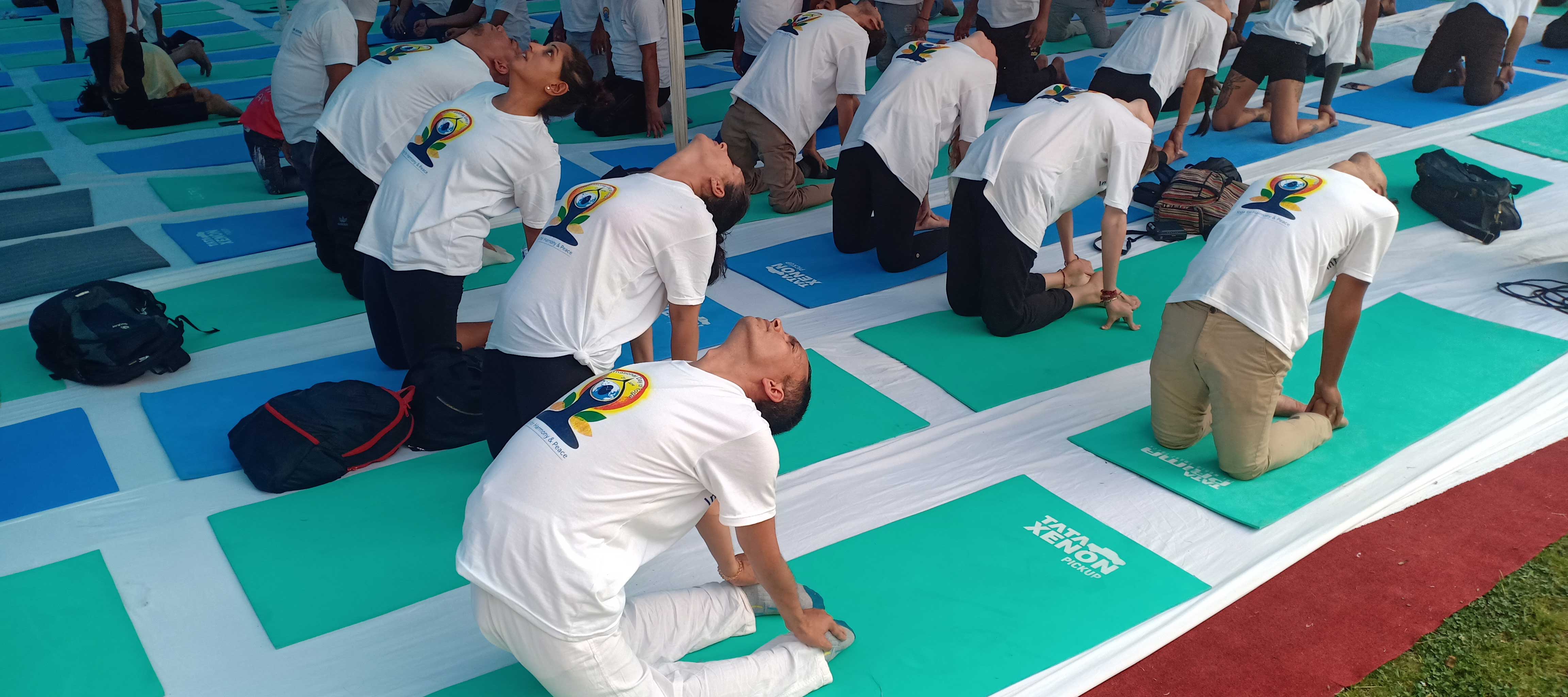
THE BIG QUESTIONS
Tradition seeks to provide credible answers to such profound questions as, “Who am I?”, “Whence do I come?”, “Whither do I go?” and “What must I do?” These are the sorts of questions that, sooner or later, we all end up asking ourselves. Or at least, we have our unconditional answers to them, though may not get around to consciously formulating them. Deep down, we all are philosophers, because we all need to make sense of our life. Some of us postpone thinking about these questions, but they don’t ever go away. We quickly learn this when we lose a loved one or face a serious health crisis.
So, we might as well ponder these questions while we are in good shape. And don’t think you have to feel gloomy to do so. Yoga doesn’t champion dark moods, but it is definitely in favor of awareness in all its forms, including self-awareness. If we know the stuff we are made of, we can function a lot better in the world. At the very least, our self-knowledge will give us the opportunity allow us to make conscious and better choices.
Yoga for Mental and Emotional Management
While talking about Yoga for Mental and Emotional Management, it is better to know the growth factors with chemicals produced in the body. A few simple practices starting from an early age around the age of seven- eight will help to develop and balance the mental and emotional changes and vital energies. It preserves the pineal gland, thus delaying sexual maturation and presenting needless psycho-emotional distress. The child can be taught AUM chants, recitation of Gayatri Mantra and other mantras, Surya Namaskar, a dynamic exercise involving twelve different movements, and mostly asanas named from animals. This provides stretching, flexibility, and relaxation for the body which enhances the strength, stamina, endurance, and efficiency of an individual.
Nadi sodhana pranayama, Bharamari pranayama, and Udgit Pranayama energize the body tissues and refresh and purify the mind. Nadi Shodhana pranayama balances the 72,000 nadis and the whole nervous system and empowers the children how to induce calmness and creativity in themselves. It helps to refine the energy. He can practice shambhavi mudras (focusing the gaze on the eyebrow center). It is essential for maintaining the normal functions of brain centers, brain tissues, and pineal and pituitary glands.
More About Yoga for Mental and Emotional Management
In dealing with mentally and emotionally unstable children. We must remember that they are not necessarily receptive, cooperative, obedient, and patient. A person attempting to teach them yoga practices may easily become frustrated when confronted by a negative, resentful child in the beginning. The key point is to remain objective, the child may be defiant and show anger and feelings of enmity (hostility). He is likely to be using the instructor to express the anger he feels for someone else, perhaps his mother or father. In any case, yoga cannot be forced on anyone. So it is up to the adult to devise ways of introducing these techniques. So that they appeal to the imagination of the child. If the child can experience even a brief period of mental relaxation, he will gain some insight into his behavior.
For mentally and emotionally distressed children, who find inactivity almost unbearable, the combination of physical and progressive relaxation is most appropriate, looking at restlessness. So it will be good to introduce Yogic means in proper ways focusing on their needs and natures. After Surya Namaskar the child will willingly lie down in Shavasana for yoga Nidra which is the perfect practice for balancing and promoting mental and emotional changes. Following the progressive relaxation of the body parts, the instructor may run through a series of visualizations such as elephant, horse, house, and so on. The purpose of the exercise is to induce deep relaxation on physical and mental levels. So that negative impression locked in the unconscious mind will float to the surface and be dissipated, then a new formation of mind and consciousness will reset and direct the positivity and management system in their life.
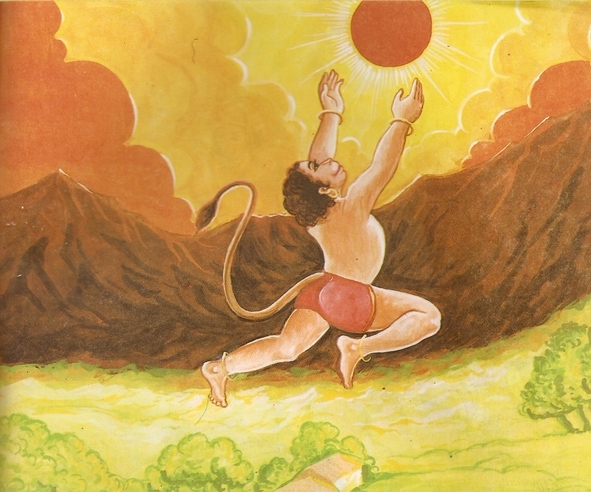
The results of the yoga study and practice seem to indicate that those children who received the yoga training regular basis, not only performed in better ways had showed a remarkable change in good discipline and manner. So yoga education in experimental ways can change children’s lives and make them realize the real modes and patterns of life which can easily and effectively manage mental and emotional disturbances and fluctuations.
Lifestyle Management
Lifestyle Management : The Most Important Aspect of Life
The daily work schedules on the base of a 24-hour biological clock throughout the natural cycle of human beings is called lifestyle. This is the style or rule of life. In getting the targets in modern life, mostly health issue of modern people was affected. According to Swastha Vritta, health is the balance of the body’s humor, digestive fires, wastes, and a pleasant mind. It encompasses physical, mental, psychological, social, and spiritual well-being. Health is the backbone for all the development and improvement in every step of life. Health is our primary right as also wealth without this we cannot achieve success and a better career.
We are now in the 21st century and well-equipped with modern technology and features. Our lifestyle is gradually changing toward modernity, becoming more stressful and technology-driven. We’ve reached unmatched technological success, where tasks once needing manpower are now done in seconds with a button. This shift highlights the efficiency and power of modern technology. These lifestyles have good as well as adverse effects on personnel, communities along the country & continent.
Adverse effects of modernization
The modern lifestyle offers benefits in daily activities but also makes us slaves to material possessions. This creates numerous obstacles at the physical, mental, and psychological levels. We are too prone to the various lifestyle disorders affecting our health and personal problem-solving ability. Despite advanced technology in hospitals and emerging research centers, new and deadly diseases continue to evolve. These diseases often lack quick and reliable recovery techniques. Despite advanced technology and more infrastructure, patient numbers are growing faster than progress. This leads to deteriorating health and more advanced complications. Natural mechanisms are becoming dead, and becoming totally like parasites.
- Physical aspect
Physically various food-borne diseases have been observed like malnutrition, over-nutritional diseases, psychosomatic diseases, and many lifestyle disorder abnormalities. These all are due to the sedentary lifestyle creating numerous burdens. We lack proper awareness of our body’s movements while sitting, standing, or performing daily activities. This ignorance, coupled with the modern lifestyle, is increasing physical diseases.
2. Mental Aspect
Lifestyle disorder creates various mental, physiological, and psychosomatic diseases. Currently, most people suffer from mental illnesses, primarily psychological and psychosomatic disorders. Through various communications, we see a rise in suicides, poisonings, acid attacks, and violence as people struggle to reach their perceived peak in life. This is a result of the imbalance between the body, mind, and soul. The yogic further means helps to manage as well as eliminate the root cause of the fortunes.
3. Social aspect
In society, we can observe very unequal relationships between modern and other people. There is always hatred relation even among family members. Always youngsters seem to be with gadgets leaving their precious time about the activities they need to perform. The feeling of doubt, dullness, carelessness, laziness, a sense of indulgence, false perception, and instability in a single matter as well as too many tasks at the same time are hovering in the modern that’s why there is no time for a single way of realization. We can see initially there used to be gathering of people for the discussion for the activities carried out during with the positive as well as negative so special rules and regulations were active but with this life, we have no time for personal activities then how could be for society? Hence social violence is seen more in the present context deteriorating the social norms and values.
4. Spiritual aspect
In the field of spiritual awareness, we seldom find people interested in modern times. Rather if we get people interested also need a shortcut method to operate all the levels quickly to get the benefits. All are rushing for only their pleasure and also at the extreme level so we can definitely say that in comparison to the ancient time modern people are too primitive in this matter. We are becoming more selfish, senseless, lonely, egoistic, ambitious, angry, etc. We have a lack of honesty, a sense of humor, love & kindness, moral values, humor collaboration, etc.
Causes and effects theory
Several causes affect the modern lifestyle. The cause used to be similar in the earlier ages also but it was among the minor people so used to cover. Similarly in the present condition, the ratio is very opposite we cannot find the people with confirmation within himself/herself. Rather moving restlessly every second with tension and problems with various disorders. Some of the causes of such deteriorating stages in modern life are as follows.
- Pleasure and pain
- Higher demand and meet targets
- Unconsciousness
- Darkness and Ignorance
- Pleasure and pain
Pain, Pressure, and tension are commonly suffered in the body. We humans by nature are greedy and egoistic in our behaviors. We want everything that is in our visibility. We desire all the pleasure-giving materials of the materialistic world. Not for sometimes but forever so we are very unsuccessful in our activity and pleasure is hindered for longevity. Just we can take an example, we don’t have a transport vehicle then ultimately we got the vary we desired. Then we want a much more advanced latest model likely in the very condition if we saw very model in our neighbor. We become jealous and unhappy further, we forget the earlier desire being success. According to the yogic text of Maharshi Patanjali in his text ‘Patanjali Yoga Sutra’ the pain is within us we are born with pain to cure the pre-historic deposition so we need to satisfy the matter we have. We are indulged in the sensual pleasure of the pre-historic deposits and the pros and cons effect of the gunas e.g. sattvic, rajasic, and tamasic.
2. Higher demand and meet targets
In the competitive tech-driven world, we’re constantly overwhelmed by new technologies and the pressure to meet ever-increasing demands. We are so focused on external goals that we neglect our personal, social, and spiritual growth. There is no proper time to eat, sleep, rest, or focus on other areas due to dependence on external factors. Hence he/she is always with various psychosomatic and lifestyle diseases. The wrong way of eating, playing and acting is leading to an adverse condition with own self, family and the connected society where the proper co-ordination is blocked. The hidden effects of modern technology on personal life highlight the need for a balanced lifestyle.
3. Unconsciousness
We are always in motion doing this and that but lack the time to manage everything and the success we seek. The main reason behind this is the unconsciousness. We often perform tasks unconsciously, eating hurriedly without considering hygiene or the quality of our food. In our rush, we multitask by reading, watching TV, or playing games while eating or doing other chores. We aren’t gaining proper physical and mental health benefits, such as rushing through defecation without giving it enough time. This leads to issues like constipation, piles, and various colon and rectal problems. The hurries and activities are causing serious problems in health.
4. Darkness and Ignorance
“Om Tamasoma Jyotirgamaya” means supreme power that leads us from darkness to lightness. Due to lack of awareness, knowledge, schooling, cultural values, traditional issues, religious issues, and social and personal issues sometimes bring darkness and make us ignorant which is the cause of suffering and pain. So we are misguided and innocently suffered.
Yogic model of lifestyle
The yogic model of lifestyle involves using various yogic practices for disease treatment, promotion, preservation, rejuvenation, rehabilitation, and healing. It also emphasizes spiritual awakening as a key aspect of life. We try to manage the three regimens of life Dinacharya (Day Regimen), Ratricharya (Night Regimen), and Ritucharya (Seasonal Regimen).
1. Shatakarma (Six Cleansing Acts)
- Jalaneti: The kriyas are jal neti, rubber neti, clean, or sutra neti these kriyas cleans the nostrils as well as balance the swara for the further practice of pranayama. It also minimizes the phlegm remaining in the nasal tract.
- Basti: The kriya is the enema or colon therapy. It is the process of passing the mild hot water through the nozzle of the catheter kept in the pot at the height of 2-3 feet in the anus. It then moves into the large intestine, where it is expelled, clearing the excretion channels.
- Dhauti: Dhauti is the process of swallowing a 6-foot cotton muslin cloth with warm water, allowing it to pass through the food pipe to the stomach. It cleans the phlegm residing in the track as well as some portion of stomach wastes striking in cloth. The other types are as follows:
- Nauli: Nauli is the process of moving the stomach rectal muscle at the center side so that the digestive fire increases as well as massaging the related internal organelles’ of the the abdominal cavity like stomach and intestine.
- Trataka: Trataka is the process of focusing the concentration of eyes so it removes pitta doshas as well as a concentration in work. It is of two types external and internal. The process of focusing on a single external object like the sun, moon, or gurus feet, the interest with opening eyes is called external Trataka. Whereas focusing on internal body parts like the Aanja chakra forehead and other chakras are internal Trataka.
- Kapalbhati: Kapalbhati is also an important Shatkarma phase that helps to clean the airway channels by carrying the wastes to the excretory channels with the proper functioning of the respiratory system, circulatory along the nervous system with the smooth functioning of bodily activities.
2. Asana:
The posture of sitting in such a position our body will be straight aligned along giving pleasure to the body is called asana. We practice the shukshma vayayama for proper movement and exercise to the small joints along with the further practice of yoga asana according to the available time and efficiency. These sorts of exercises initially activate the muscles, nerves, and joints along the bone that makes easiness in performing further asana. We can select some of the asanas of our types to cure our abnormalities or make us fit and healthy they are- The yogic practitioners have found some asanas in the main where “Maharshi Gherand” explains 32 asanas as the main for curing and maintaining the body. ‘Hatha Pradipika’ explained by “Swami Swatmaram” explains 15 asanas major along with “Maharshi Patanjali” doesn’t give the amount of asana but explains that the asana that gives us pleasure and tolerance for sitting for a long duration.
3. Pranayama:
We need to practice pranayama after the yogasana, so we can practice pranayama for a long time. The pranayama is composed of two words prana and ayama. Prana means the vital things in our body circulating throughout the body and ayama means the expansion of prana and remains long the duration.
- Bhastrika pranayama: Exhalation and inhalation forcefully for a certain count and holding breath outside and inhalation through the right nostril retention and exhalation through the left nostril with the ratio of 1:4:2. This pranayama helps to balance the three doshas of body (vatta, pitta and kaph doshas).
- Shitali pranayama: Making the tongue fold like a pipe and inhaling the air and exhaling while holding it for a certain time from the nostrils is shitali pranayama. This pranayama is done in the summer season to lose body temperature by pacifying the pitta doshas /bile doshas.
- Brahmari pranayama: We press the ear with the thumb and place the first finger on the forehead, then the second in the eyes base, and the other on the lips with inhalation and exhalation producing the sound of a bee is brahmari pranayama. This pranayama helps to calm down the mental concentration stress. It is beneficial for students to concentrate on their studies and for workers to improve efficiency in their tasks. It has calming and soothing effect on the body, clears and invigorates the mind, and uplifts the spirit.
4. Bandha and Mudra:
These are the various locks in the body as well as the hands so that our consciousness resides with us focusing on and curing the abnormality. There is the moola bandha holding air in the rectal part from escaping, the uddhiyana bandha holding breath in the chest, and the jalandhara bandha holding in the neck from inhaling and exhaling. The combination of all three bandha is called mahabandha.
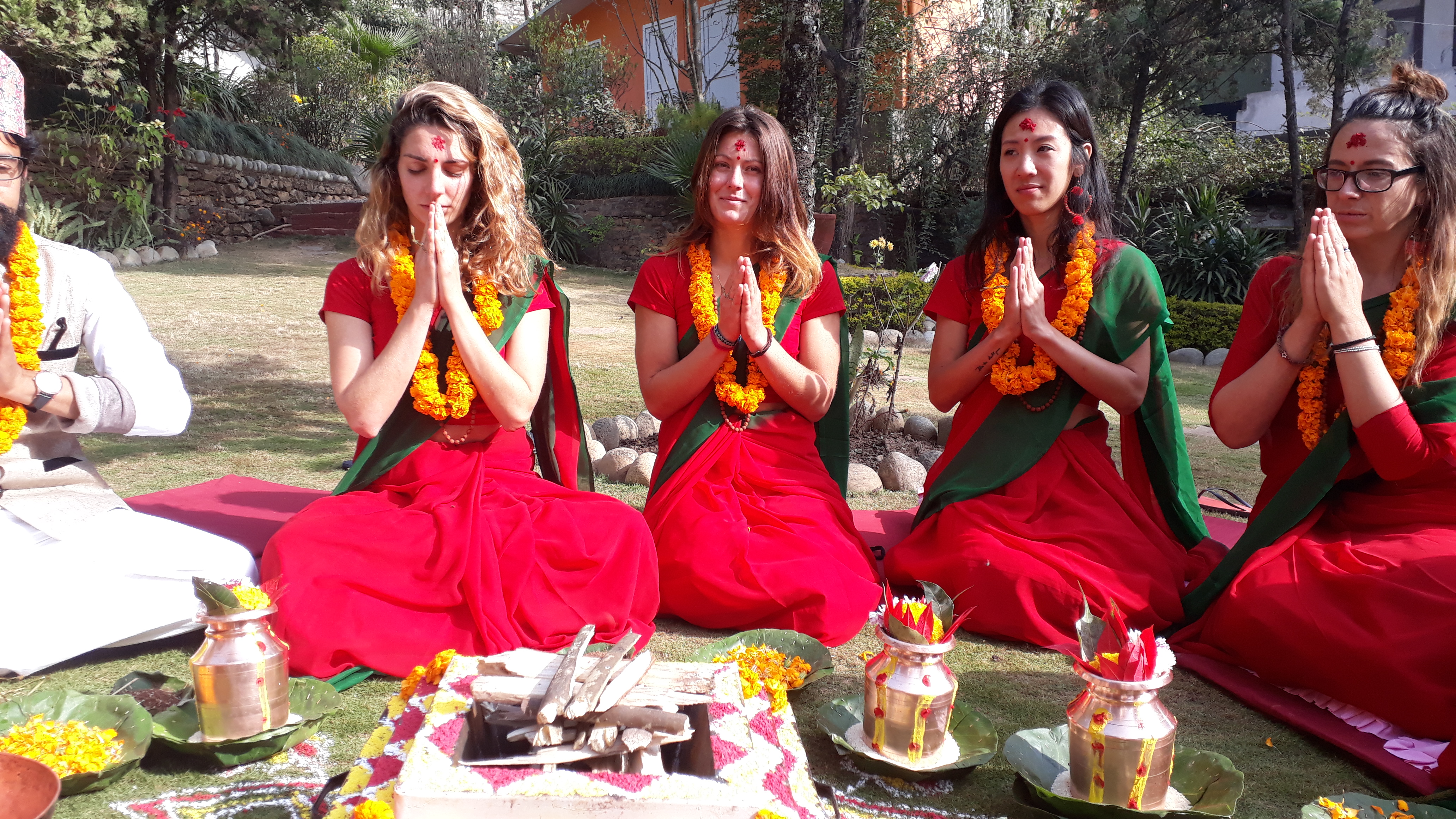
5. Yoga Nidra or Meditation
Yoga Nidra is called yogic sleep or conscious sleep for body and mind relaxation. It is an art of physical and mental relaxation. This is the practice of hearing and feeling. Meditation is the best technique for balancing the various physical, mental, psychological, social, and spiritual disturbances. Normally we don’t manage time for ourselves for self-realization and recovery so through meditation we can see our behaviors and thinking and have great successful life periods. Initially, we simply see the incoming air and outgoing air for some time then move to see the internal parts with sensitizing and relaxing. Then finally focusing on the external music of chanting ohm sound leading to focusing on the single objects must be done. There are various types of steps applied in meditation they are Yog Nidra, preshya, Bharatiya, Swas dhyan, Brahmanada dhyan, and Mantra dhyan. Meditation is the main step carried out in the model life of yogic intervention for focusing on curing the various disorders of modern life.
6. Clothes:
Clothes are important for life as they help to protect from the external stimulus. We must wear dress for comfort according to the season, if we wear unseasonable clothes in prolong we may be prone to various abnormalities. In modern life, we wear clothes that exactly don’t seem appropriate for the body’s humor. Too tight and too loose are rather not suit for the appearance and body. Our customs show our behaviors as well.
7. Food ( Anna Brahma) :
Food is divine. Jasto Anna Usto Mana means whatever the food, same as mind. We are what we eat and our behavior also is our food. For example, if we eat a non-vegetarian diet then we are too aggressive and show exaggerated behaviors as have no consciousness that things rise to diseases. Everything shows its characteristics though it doesn’t seem in the material so we must be conscious in taking as well as selecting the type of food. Basically, according to the Vedas and the philosophy there are three types of food they are Tamasic, Rajasik, and Sattvik. Out of these Sattvic food is called yogic food.
- Tamasic food: Foods containing highly spicy, fried, and oily along with refined food come under this category as well as meat and meat products, re-cooked, reheated food that makes us lazy due to much calorie food at a time. This sort of food also contain stale, tasteless, putrefied, and over-ripen food or maybe canned, tinned, frozen, or processed preserved food. The main thing is that we become lazy and restless in performing our activity so no effective for becoming healthy as leading with the diseases.
- Rajasic food: The stimulating food is called rajasic food which contains refined flour products, spicy, oily, fried, bitter, sour, salty, pungent, and too odorous, onions, garlic, and many more foods. This food activates and stimulates various organelles so we become restless and moving here and there with more desires 7 targets that overstimulate don’t show remarkable achievement in life. We overstimulate the endocrinal and nervous with wasting efficiency of the body.
- Sattvic food: These are fresh foods like fresh fruits, fresh vegetables, nuts, seeds beans, wholesome grains, honey dairy, and dairy products. This sort of food has a high amount of essential nutrients that are essential for proper functioning of the body. Having this sort of food we eat balances energy with higher consciousness in the work with higher success in performances. For curing various lifestyle diseases along the metabolic can be simply cured by these food once we become conscious of our eating. Hence we can directly say that our food must be medicine and the very medicine must be our food. Hence yogic model of life requires sattvic food daily with a balanced state of all the nutrients.
Some rules and regulations for taking food are as follows:
- We should take food in sequences as sweet food first to balance the vatta doshas of hunger, salty and sour food for digestion followed by other taste with bitter at the end for minimizing the phlegm doshas.
- We should not take the slow poison food as known as polish rice, salt, sugar, refined flours, and vanaspati ghee.
- Eat slowly and chew properly not too fast.
- No water before half an hour, after 1 hour after meal and also in between meals.
- We should take solid food in surya swara and liquid food in Chandra swara so can be digested properly with effective nourishing. We should take seasonal food free from chemical during production as well as during preserving.
- No physical and mental hard task after food.
- No late-night food as well as early sleep after food.
- Food time 5 to 7 pm and after 2 hours at least after food, no sleep.
- We should take food in a conscious state so the proper secretions of juices happen for digestion with proper satisfaction intake food.
8. Sleep– The most important factor for lifestyle managment:
Sleep is also one action under lifestyle. We should have good quality of sleep for the quality of life. We should sleep after 1 to 2 hours of Meal around 9 to 10 pm and wake up around 4 to 6 am. Normally adults need 6 to 8 hours of sleep. The main objective of the study was to present the model lifestyle that can clear all sorts of lifestyle disorders at all levels starting from the physical, social, psychological, and spiritual level. After the study, we came to know that a yogic model lifestyle is the only solution for curing all sorts of lifestyle disorders prominently. We are indeed at the extreme level of advancement of technology but in the case of personal awareness in the field of health, education, service, and most of the social arena we are in the initial stage. Though new advanced technology tools and techniques are used in the diagnosis of diseases in hospitals with effective means of treatment higher the ratio of patient attendants, the main reason behind this result is that medicines control the symptoms not the root cause of the abnormality.
SCIENCE OF HAPPINESS
“AUM Sarve Bhavantu Sukhinah”
SMS for, Health, Happiness, and Harmony
S – stands for Straight Body.
M – stands for Mind Fullness
S – stands for Smiling
Let’s talk about the SCIENCE OF HAPPINESS. Today, medical and scientific evidence shows that staying blissful for just 24 hours, free from tension, anxiety, irritation, or agitation, can boost the sharpness of our intellect by up to 100%. Our body and mind function better way. Medically and scientifically, it’s proven that staying joyful can change your entire chemistry, yet we claim to meditate and practice yoga. We hesitate to use the term “yoga” today, especially when we see how it’s practiced in modern society, particularly in the West. It scares us because it’s a cell, a very subtle technology, it’s not an exercise, people think it’s an exercise. If we want to just stay fit play tennis, swim, climb a mountain, you will be fit.
Yoga is a profound science that aligns your body’s geometry with cosmic geometry; you don’t need to do it for just that. When I say aligning the geometry of your body with cosmic geometry what we need to understand is that the solar system acts like a potter’s wheel in shaping the body. Adi Yogi, the first yogi, stated over fifteen thousand years ago that the human body must evolve further. The human body cannot evolve further without fundamental changes in the solar system. Modern neurologists now say something strikingly similar to what was said fifteen thousand years ago about the arrangement of the planets.

Many people are asking if evolution can further develop the human brain. Now, they suggest that physical laws, rather than neurological principles, may play a role in this development. Physical laws limit brain evolution, as it can only develop by increasing neuron size or number. However, this expansion is limited by these laws.
In another hand, happiness is the thing that appears from the inside, and this is eternal and pervasive. It does not come from physical things or materialistic ways of life that can be easily purchased. Neither it is artificial nor man-made. It comes from inside via mind and soul. Getting something material tools or a gift gives temporary happiness but joy is incomplete. Real happiness requires nothing, regardless of physical gain or achievement.
We don’t need any causes to be happy, which doesn’t mean that any conditions are required for happiness. It is eternal, and the entire flow comes from the mind and heart or soul. It is the state of sat chit ananda (sat – chitta – ananda) that means a true and blissful state of mind. “Santosha paramo Sukhah” means that Contentment is supreme happiness. If you are satisfied, you won’t have desires and you will be happy. If you don’t have any desires, you will be satisfied and then you will be happy.
Just be in something for need but not for desires. You focus on fulfilling all your needs, without seeking anything else to satisfy your desires. Try to be human and divine but not to be animals. Animals get rest when tired and eat when hungry, but the animal does not say, I am so stressed, please dear, let me smoke once. So “be happy, be jolly be cheerful”.
This is the SCIENCE OF HAPPINESS.
Yogacharya Subodh Simkhada
YOGA FOR ELDERLY PEOPLE
Abstract: Yoga For Elderly People
Life is one of the wonderful creations of nature. Life is a recycling process that does not end. It passes through different stages of the Zygote, Embryo, fetus, Infant, child, childhood, puberty, Adolescent, Youth, Adult, and finally old age. The present way of life determines how we are going to live ahead. Each phase of life is a wonderful and beautiful moment of life. We should try to make the best of each moment. We will have new experiences throughout the steps of life ahead. Imagination discovers experience and knowledge. Our ancient sacred texts like Vedas, Upanishads, Darshana, Smriti, Bhagavata Geeta, Ramayana, Ashtvavkra Gita, Mahabharata, etc. are the ideal texts for human lifestyles.
Especially Yama and Niyama of yoga are the fundamental principles of life. Also, all the organs of Yoga or Ashtanga Yoga are very important and applied. The basic principles and practices of yoga are for all ages of people, not only the Middle Ages people. Until the last minutes of life, he/she can use yogic norms and rules and will leave the body with a final smile. Yoga is such a science on which there is “no retire, never tired until expire”. This is general info on Yoga For Elderly People.
Introduction:
Yoga is a science for all age’s people. It is not the copy and paste science, just should ask the body and perform all the means of yogic practices as need. The way of yoga is promoted and messaged wrongly to public as physical training, even as exercises being out of yogasana ethics. The wrong techniques of yoga can harm all, especially elders. This age is more critical and creates sometimes more complexities. So it very needs to message the people how the elderly people can do yoga, how and why.
I express my views with the maximum information required by a senior person, not only about the yoga asana but also covering its all means. Yoga through daily lifestyles like how to eat, drink, work, sit, stand, sleep, wake up, think, speak, behave, love, and in general to survive.
Elderly and lifestyle:
Lifestyle consists of every activity in a day. Past, Present, and Future affect karma in one’s life. Our every karma is responsible for what we need to pursue the next steps of life. This is the age to focus on achieving a healthy, fit, and active life in all aspects. This is the age to enjoy more time for yourself, and your family, leisure, rest, and relaxation. Nowadays due to the enhancement of technology in our life, everyone has improved the quality of dependency. It makes one unhealthy, inactive, unfit, and lethargic too.
“Nityam
hitahara vuhara sevi, samikshari vyasane shvasaktah!
Data samah satyaparah, khamavanapropasevicha bhavatyarogah!!” – Charak Samhita
It means that one who eats healthy food regularly remains in the company of good people. People who rationalize the end consequences before doing any activity. One who is neither fascinated by materialistic things nor misuses them. One who gives charity maintains equilibrium in happiness and unhappiness, and uses truthfulness. They possess forgiveness qualities and are knowers of religion, never become ill and always would be healthy. Yogic practice with good understanding and experience can stop the aging process of degeneration and breakdown of cells.
The measures should be applied by elderly people:
- Balance the action, rest, and relaxation
- Be free, fresh, and fame
- Keep health, happiness, and harmony
- Apply triple rules of Discipline, Determination, and Devotion
- Apply the rules of Yama and Niyama of Ashtanga Yoga
- Have adequate sleep, a proper exercise regime
- Be careful about your diet, its timing, quality, and quantity
- Avoid excessive exercise and unwanted traveling
- Get medical observation in time.
- Increase social involvement, and devote to spiritual and religious merits.
- After retirement, real life begins, for pending, wishes, and desires
- Avoid depending on senses as they get aged, sluggish, and weaker
- Better to focus the needs rather than desires and enjoy the most, be happy, peaceful, and satisfied
- Share and teach all the experiences and knowledge to others
- After food, two hours, no sleep, and a few minutes of walking then should sit in Vajrasana
- Drink enough water, take fresh air, and intake of protective foods like fruits, and vegetables.
- Do 15 to 20 minutes of pranayama and meditation two times a day.
Growing Age and Memory:
Elderly people usually say I forgot this and that, simply due to a lack of attention, interest, or effort to remember. There are so many ways and techniques to enhance memory and concentration. Main concentration techniques such as light concentration, candle concentration, pen concentration, thumb concentration, flower concentration, Candle concentration, clear and fair as well as cure method. Memory involves learning, remembering, and forgetting which can be short-term, long term and photogenic.
Yoga is the best way to regulate life’s existence. Yoga is the science of freeing of mind or equilibrium in life. It harmonizes the body and promotes the capacity and efficiency of the body and mind. All traditional types of yoga is for elderly people, mostly better to use Hatha Yoga, Raja Yoga, Mantra yoga, Karma Yoga, Bhakti yoga, Gyana yoga, Raja Yoga. People frequently ask the questions that what kinds of yoga do you teach or how many processes are in yoga? But I sometimes become confused in that situation. Usually, we should teach traditional Hatha Yoga and Ashtanga Yoga.
Yogic Practice for Memory and Concentration
- Omkara / Pranava mantra chants
- Shambhavi Mudra,
- Khechari Mudra
- Nasigra Mudra
- Sinhasana
- Bharamari pranayama,
- Nadi shodhana Pranayama
- Trataka (Concentration Gaze)
- Sasankasana
- Sirshasana
- Eyes Exercise
- Jalaneti
Conclusion:
Yoga can be the best remedy for any illness if we practice in a regular base. Due to elderly ages, our body faces so many things and boundaries, so we should accept this. But yoga is the rule of nature as a pattern of Universal truths. If we follow this smoothly and properly, we can restore our health and age. There are so many limitations that occur with age like joint movement, muscle pain, stiffness, loss of enduring capacity in the mental and physical body, and so on. We lose our health to make the money but then lose our money to restore our health. By stressing over the past and future, we forget the present and misuse the beautiful life gifted by nature. We are living by dwelling on each moment. In fact, in “Om Mrityorma Amritagamaya”, we never die; only the body dies soul remains alive or immortal. The supreme power may lead us from mortal to immortal.
Yogacharya Subodh Simkhada –swamiyogsubodh@gmail.com
Benefits of Reiki Treatments
Reiki is a very simple process but usually produces quite profound effects. There are many wonderful Benefits of Reiki. The main purpose of Reiki treatment is to support the body and promote a positive mind for greater joy in life. The great thing about reiki is that one does not have to be unwell to experience the benefits.
Some come to Reiki to help with their energy levels, manage the stress of daily life, or when transitions are happening in their lives. Others come to develop themselves spiritually and experience a greater sense of meaning in life. Many of my clients are well and want to stay that way so reiki helps them to maintain that harmony so they can respond to the challenges differently.
After a treatment most people feel calm and relaxed, self better and some say they feel energetic, clear-minded, and productive.
Many who come for Reiki treatments or Reiki training realize that balancing their systems can help them to cope better with a wide range of health conditions, including stress, anxiety, depression, chronic pain, and infertility to mention a few.
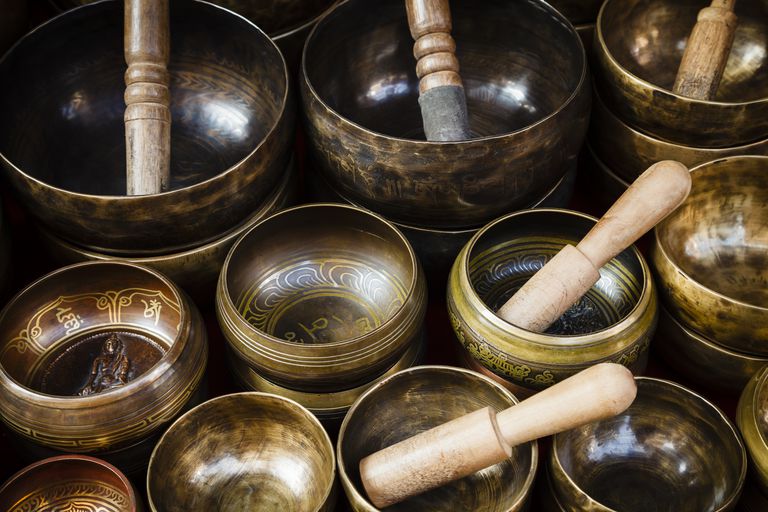
Benefits of Reiki
1. Promotes Harmony & Balance
Reiki helps to promote harmony and balance. It is an effective, noninvasive energy healing method that boosts the body’s natural healing and promotes overall wellness. Reiki works directly on restoring balance on all levels and on the problem and condition instead of just masking or relieving symptoms.
When we chat about balance, we mean mental and emotional balance, left and right brain, masculine and feminine, labeling things as good or bad, positive or negative, etc.
2. Creates deep relaxation and helps the body release stress and tension
What many people enjoy about a reiki treatment is it allows them time to themselves where they aren’t ‘doing’ but just ‘being’. Clients have reported feeling more clear, peaceful, relaxed, and lighter in themselves. Reiki provides a space where you can be more aware of what is going on inside your body and mind. To learn to listen to your own body and make wise decisions regarding your well-being from this place. Being more present means you are in your body, which unlocks deeper inner knowledge and wisdom.
3. Dissolves energy blocks and promotes natural balance between mind, body, and spirit
Regular Reiki treatments can bring about a calmer and more peaceful state of being, in which a person is better able to cope with everyday stress. This mental balance also enhances learning, memory, and mental clarity.
Reiki can heal mental/emotional wounds. It can help alleviate mood swings, fear, frustration, and even anger. Reiki can also strengthen and heal personal relationships.
Because Reiki enhances your capability to love, it can open you up to the people around you and help your relationships grow.
4. Assists the body in cleansing itself from toxins and supports the immune system
We spend so much time in the stress-reactive fight/flight phase that it becomes our ‘norm’ and our bodies literally forget how to return to balance.
Reiki reminds our bodies how to shift into parasympathetic nervous system (rest/digest) self-healing mode.
Rest/digest doesn’t mean you have to stop being active and productive or ‘do nothing’. It allows you to sleep better and digest better which is important to maintaining health and vitality. The more you embrace this space, the more active and productive you become without stress or burnout.
5. Clears the mind and improves focus as you feel grounded & centered
Reiki can support you in staying centered in the present moment and free from past regrets or future anxieties. It strengthens your ability to accept and adapt to events, even when they don’t align with your desires or timeline. You begin to react to situations, people, and yourself in a supportive way rather than acting out of habit.
6. Aids better sleep
The number one outcome of receiving a Reiki session is relaxation. When we’re relaxed, we sleep better, our bodies heal better, we think more clearly, and we relate to each other more genuinely. Often clients will experience deep relaxation during their Reiki session and sometimes a deep sleep during the session will improve the quality of your entire system and hence such healing impacts your overall wellbeing. So reiki healing is highly helpful for better sleep.