
Why Yoga Teacher Training in Nepal is Famous Worldwide – And Why Himalayan Yoga Academy Stands Apart
Introduction
Nepal – the land of the Himalayas, the birthplace of Lord Buddha, and a country steeped in spiritual heritage. For thousands of years, seekers, sages, and yogis have been drawn to these sacred mountains in search of wisdom, peace, and self-realization.
Today, Nepal has become one of the world’s most sought-after destinations for Yoga Teacher Training (YTT) . But what makes this small Himalayan nation so special? And why do students from across the globe choose Himalayan Yoga Academy for their transformative journey?
In this blog, we explore the magic of Nepal and the unique offerings that make our academy a beacon for yoga practitioners worldwide.
Part 1: Why Yoga Teacher Training in Nepal is Famous Worldwide
1. The Spiritual Heart of the Himalayas
Nepal is home to eight of the world’s fourteen highest peaks, including Mount Everest. But beyond the breathtaking landscapes, the Himalayas hold a profound spiritual energy. It is believed that the great yogis and siddhas of ancient times meditated in these mountains, and their presence still vibrates through the valleys and caves.
Practicing yoga here is not just a physical exercise – it is a pilgrimage into your own soul.
2. The Birthplace of Lord Buddha
Lumbini, in southern Nepal, is the birthplace of Siddhartha Gautama – Lord Buddha. His teachings on mindfulness, compassion, and inner peace form the foundation of meditation practice across the world. Studying yoga and meditation in the land where Buddhism was born adds a depth and authenticity that cannot be replicated elsewhere.
3. Authentic Yogic Traditions
Unlike many Western yoga studios that focus primarily on asanas (postures), Nepal offers authentic, holistic yoga rooted in ancient traditions. Here, you learn not just how to move your body, but how to:
- Master the breath (Pranayama)
- Calm the mind (Meditation)
- Purify the body (Shatkarma)
- Understand yogic philosophy (Patanjali’s Yoga Sutras, Bhagavad Gita, Upanishads)
- Live a yogic lifestyle (Ahimsa, Satya, Brahmacharya, and more)
4. The Power of Sacred Sites
Nepal is dotted with temples, monasteries, and pilgrimage sites that carry immense spiritual energy:
- Pashupatinath Temple – one of the holiest Hindu temples
- Boudhanath Stupa – a center of Tibetan Buddhism
- Swayambhunath (Monkey Temple) – ancient Buddhist stupa with panoramic views
- Pharping – home to sacred caves where Guru Padmasambhava meditated
Practicing yoga in such environments deepens your connection to the practice and accelerates your spiritual growth.
5. Immersion in a Yogic Lifestyle
In Nepal, yoga is not something you do for an hour – it is a way of life. During a YTT, you live in an ashram or retreat center, eat sattvic (pure, vegetarian) food, wake before sunrise, and follow a disciplined daily routine. This full immersion transforms not just your body, but your entire being.
6. Affordable and Accessible
Compared to Western countries, yoga teacher training in Nepal is significantly more affordable without compromising on quality. You receive world-class instruction, certification, accommodation, and meals – all at a fraction of the cost.
7. Internationally Recognized Certification
Reputable yoga schools in Nepal offer Yoga Alliance certified 200-hour, 300-hour, and 500-hour teacher training programs. This certification allows you to teach yoga anywhere in the world.

Part 2: Why Himalayan Yoga Academy Stands Apart
At Himalayan Yoga Academy, we are not just another yoga school. We are a spiritual family, dedicated to preserving the authentic teachings of yoga while making them accessible to modern practitioners from all backgrounds.
Here is what makes us unique:
1. Located in the Lap of Nature
Our academy is nestled in Raniban, Kathmandu, next to the serene Nagarjuna Jungle. Away from the noise and pollution of the city, we offer a peaceful, natural environment perfect for deep practice and introspection.
2. Experienced and Devoted Teachers
Our teachers are not just instructors – they are lifelong practitioners and scholars of yoga. Led by Shanta Kharel, an Associate Professor of Yoga with a Master’s degree in Human Consciousness and Yogic Science, our faculty brings decades of experience in:
- Hatha Yoga
- Ashtanga Vinyasa
- Yin Yoga
- Pranayama and Meditation
- Yoga Philosophy and Anatomy
- Ayurveda and Sound Healing
3. Comprehensive Curriculum
Our 200-Hour Yoga Teacher Training covers every aspect of yoga:
- Asana (postures) with alignment and adjustments
- Pranayama (breath control)
- Meditation and Mindfulness
- Yoga Philosophy (Patanjali’s Yoga Sutras, Bhagavad Gita)
- Anatomy and Physiology
- Teaching Methodology and Practicum
- Ayurveda and Yogic Diet
- Sound Healing with Singing Bowls
4. Small Class Sizes
We keep our groups small to ensure personalized attention for every student. Whether you are a beginner or an advanced practitioner, you will receive guidance tailored to your needs.
5. Authentic Monastery Retreats
We are one of the few academies that offer monastery-based retreats in sacred locations like Pharping and Nagi Gumba. This is a rare opportunity to live among monks, participate in daily puja (prayers), and experience the monastic way of life.
6. Yoga and Trekking Combinations
For those who love adventure, we offer unique Yoga + Trekking packages:
- Ghorepani Poonhill Yoga Trek – Sunrise over the Annapurna range
- Valley Rim Yoga Trek – Quiet trails close to Kathmandu
- Everest Base Camp Yoga Trek – The ultimate Himalayan adventure
7. Holistic Healing Therapies
Beyond yoga, we offer:
- Sound Healing with Tibetan Singing Bowls
- Ayurvedic Massage and Panchakarma
- Shirodhara (oil pouring therapy)
- Steam Bath and Herbal Treatments
8. Comfortable Accommodation and Nourishing Food
Our rooms are clean, comfortable, and equipped with heating for colder months. We serve delicious, sattvic vegetarian and vegan meals prepared with love and fresh local ingredients.
9. Warm, Family-Like Atmosphere
Many of our students arrive as strangers and leave as family. We create a supportive, welcoming community where you can be yourself, heal, and grow.
10. Affordable Pricing with High Value
We believe yoga should be accessible to all. Our pricing is transparent, affordable, and includes:
- Accommodation
- All meals
- Daily yoga and meditation classes
- Course materials
- Certification
- Airport transfers
Part 3: What Our Students Say
“My time at Himalayan Yoga Academy was life-changing. The teachers were knowledgeable, kind, and truly cared about my growth. I arrived stressed and left with a deep sense of peace. I highly recommend this place to anyone seeking authentic yoga training.”
— Sarah M., USA
“The monastery retreat was the highlight of my trip. Living with monks, waking up to chanting, and meditating in sacred caves – it was beyond anything I imagined.”
— Lena K., Germany
“I completed my 200-hour YTT here and felt fully prepared to teach. The curriculum was thorough, and the practical teaching sessions gave me confidence. Thank you, Himalayan Yoga Academy!”
— Rajesh P., India
Part 4: Courses We Offer
| Course | Duration | Certification |
|---|---|---|
| 200-Hour Yoga Teacher Training | 22 Days | Yoga Alliance Certified |
| 300-Hour Yoga Teacher Training | 30 Days | Yoga Alliance Certified |
| 50-Hour Yin Yoga TTC | 7 Days | Yoga Alliance Certified |
| 100-Hour Pranayama TTC | 10 Days | Himalayan Yoga Academy |
| 100-Hour Meditation TTC | 10 Days | Himalayan Yoga Academy |
| Singing Bowl / Sound Healing Course | 2–10 Days | Himalayan Yoga Academy |
| Ayurveda & Panchakarma Course | 22 Days | Himalayan Yoga Academy |
| Yoga Retreats (3–10 Days) | Various | – |
| Yoga + Trekking Packages | 7–12 Days | – |
Part 5: Why You Should Choose Nepal for Your YTT
- Authenticity – Learn yoga where it was born and preserved for millennia.
- Spiritual Energy – Practice in the land of the Himalayas and Lord Buddha.
- Affordability – Get world-class training at a fraction of Western prices.
- Cultural Immersion – Experience Nepal’s rich culture, festivals, and hospitality.
- Adventure – Combine your training with trekking, rafting, and exploration.
- Lifelong Community – Join a global family of yogis who share your journey.
Conclusion: Your Journey Begins Here
Yoga is not just a practice – it is a path to self-discovery, healing, and liberation. And there is no better place to walk this path than in the sacred Himalayas of Nepal.
At Himalayan Yoga Academy, we are honored to be your guide. Whether you are seeking a 200-hour teacher training, a peaceful retreat, or a yoga and trekking adventure, we welcome you with open arms and open hearts.
Come, breathe the mountain air. Meditate in ancient caves. Practice yoga by the river. Discover the peace that has always been within you.
Namaste. We will see you in Nepal.
Mardi Himal Yoga Trekking: The Best Short High-Altitude Retreat in Nepal
Nepal is a land that calls to the soul. The Himalayas don’t just tower over the landscape—they command a presence that makes you feel both insignificant and deeply connected to something greater. Over the years of trekking across this magnificent country, I’ve come to believe that the mountains have a way of meeting you exactly where you are. And sometimes, what you need isn’t the longest or most challenging trek—it’s the one that brings you back to yourself. That’s exactly what the Mardi Himal Yoga Trek offers.
Why Mardi Himal Treks in Nepal?
Tucked away in the Annapurna region, Mardi Himal is one of Nepal’s best-kept secrets. Unlike the bustling trails of Everest Base Camp or the well-worn paths of Annapurna Circuit, Mardi Himal remains refreshingly uncrowded and peaceful. The trail takes you through ancient rhododendron and oak forests, past traditional farming villages, and ultimately to the base camp of the majestic Machhapuchhre (Fishtail Mountain) at 4,500 meters.
What makes this trek truly special is its moderate difficulty—accessible to beginners with basic fitness, yet rewarding enough for seasoned trekkers. In just 5 to 7 days, you can experience the full majesty of the Himalayas without the exhaustive commitment of longer expeditions.
The Yoga Element: Where Trekking Meets Transformation
Here’s where the Mardi Himal Yoga Trek becomes something more than just a hike. Imagine starting each day not with a rushed breakfast and hurried packing, but with a guided yoga session as the first light touches the snow-capped peaks. Picture yourself practicing pranayama (breathing techniques) that not only calm your mind but actually enhance your lung capacity for the altitude ahead.
Each day of this 7-day journey blends mindful trekking with daily yoga, meditation, and nature-based healing practices. The certified yoga teachers who accompany the trek guide you through sessions tailored for all levels—from absolute beginners to experienced practitioners. Whether you’re meditating above the clouds or practicing asanas before the towering presence of Mt. Machhapuchhre, every moment is designed for inner transformation.
And here’s the beauty of it: you don’t need any prior yoga experience. All sessions are beginner-friendly and guided with care.
Why Himalayan Yoga Academy For Trek Experience?
Since 2007, Himalayan Yoga Academy has been at the forefront of promoting spiritual and yoga tourism in Nepal. Located on the lap of Nagarjun Jungle in Kathmandu and registered with Yoga Alliance US, the Academy has earned a stellar reputation—4.82 out of 5 stars from 168 reviews.
What sets them apart isn’t just their expertise—it’s their heart. Travelers consistently praise the knowledgeable and passionate instructors, the warm and helpful staff, and the nourishing food. One guest described their experience as “a beautiful experience towards self-discovery and acceptance”. Another said the academy “already feels like a second home”.
More Than Just Mardi Himal: Trekking Packages for Every Journey
While the Mardi Himal Yoga Trek is a standout experience, Himalayan Yoga Academy offers a diverse range of trekking packages to suit every traveler’s needs and timeline. Whether you want to combine yoga with your trek or prefer a more traditional hiking experience, there’s something for everyone.
Yoga Trekking Packages
- Ghorepani Poon Hill Yoga Trek (7 Days) – A unique Himalayan journey that beautifully blends trekking, yoga, meditation, and cultural immersion in the heart of the Annapurna region. The sunrise view from Poon Hill is legendary.
- Everest Base Camp Yoga Trek (15-17 Days) – For those dreaming of the ultimate Himalayan adventure, this iconic trek combines the world’s most famous trekking destination with daily yoga and meditation practice. Maximum altitude reaches 5,550 meters.
- Pikey Peak Yoga Trek– 7 Days – A newly discovered, short and easy trek in the lower Everest region that offers majestic views of seven 8,000-meter peaks, including Everest, Kanchenjunga, Makalu, and Lhotse. Perfect for those seeking spiritual immersion in Sherpa Buddhist culture.
- Valley Rim Yoga Retreat (7 Days) – A healing and magical hiking yoga retreat along the spectacular Valley Rim Trail near Kathmandu.
Trekking Without Yoga
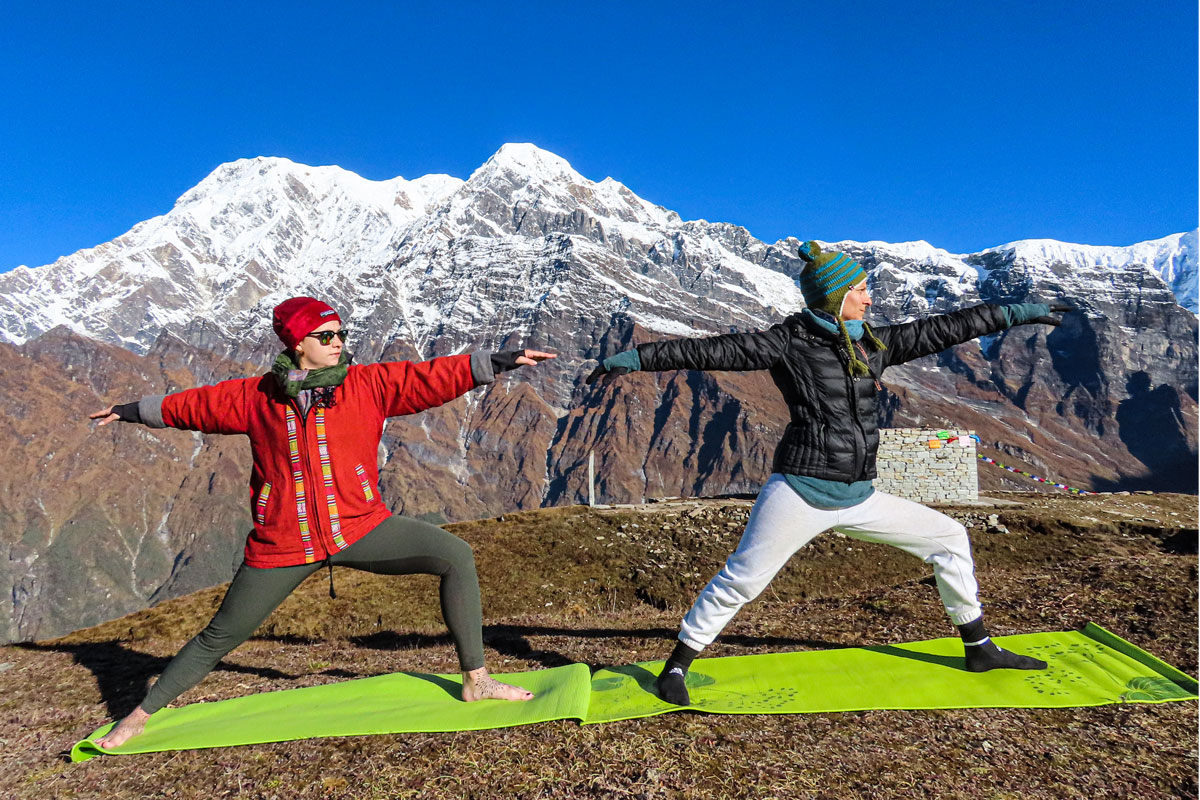
For travelers who prefer a more traditional trekking experience, Himalayan Yoga Academy also offers all of these same treks without the yoga component. This flexibility allows you to customize your Nepali adventure exactly the way you want it.
The Perfect Combination: Mix and Match
One of the greatest advantages of booking with Himalayan Yoga Academy is the ability to combine multiple packages to create your dream itinerary. Imagine starting with a yoga retreat in Kathmandu, followed by the Mardi Himal Yoga Trek, and then transitioning to a cultural sightseeing tour. Or perhaps you’d prefer to begin with the Ghorepani Poon Hill trek and add on a few days of relaxation and yoga in Pokhara.
The Academy’s team can help you craft a seamless journey that maximizes every moment of your time in Nepal. Whether you have a week or a month, there’s a combination that works for you.
Best Seasons and Practical Details
The ideal times for the Mardi Himal Yoga Trek are spring (March to May) and autumn (September to November), when the skies are clear and the mountain views are nothing short of spectacular.
Accommodation throughout the trek is in cozy teahouses, with comfortable hotel stays in Pokhara. Solo travelers are warmly welcomed, and group sizes typically range from 4 to 16 participants.
Final Thoughts :
The Mardi Himal Yoga Trek isn’t just a trek—it’s a homecoming. It’s a chance to step away from the noise of daily life and reconnect with what truly matters. The mountains of Nepal have a way of stripping away the unnecessary and revealing the essential.
Whether you choose Mardi Himal, Everest Base Camp, Ghorepani Poon Hill, or any of the other incredible routes, Himalayan Yoga Academy offers the expertise, warmth, and authenticity to make your journey unforgettable. With options for yoga-integrated treks, traditional treks, and customizable combinations, your perfect Himalayan adventure is waiting.
The trail calls. The mountains are ready. All that’s left is for you to take that first step.
Ready to plan your Himalayan yoga trekking adventure? Visit Himalayan Yoga Academy to explore packages, check availability, and start your journey toward the mountains—and yourself.
7 best highlights of this amazing Mardi Himal Yoga Trek.
1. Walking Through Beautiful Forests
The trek starts near Pokhara. You leave the busy roads behind and walk into quiet, green forests.
- Spring Flowers: If you come in March or April, the rhododendron trees are full of bright red, pink, and white flowers. The ground is covered with fallen petals. It feels like walking through a garden.
- Cool Shade: Even in other seasons, the oak and maple trees give nice shade. It is very peaceful. Our yoga teachers often stop here for a short “forest meditation” where we just listen to the birds and breathe fresh air.
2. Getting Close to Fishtail Mountain (Machhapuchhre)
This is the most famous mountain in the area. It looks like a fish tail. The local people believe it is a holy mountain, so nobody has ever climbed it.
On the Mardi Himal trek, you get very close to it. As you go up from Low Camp to High Camp, the mountain looks bigger and bigger. By the last day, it feels like you can almost touch it. It is a powerful and beautiful sight.
3. The Big View from Mardi Himal Base Camp (4,500m)
This is the main goal of the trek. The final walk to the top viewpoint is steep and hard work, but the view is worth every step.
- You get a full 360-degree view of the mountains.
- You can see the huge Annapurna range, including Annapurna I (the 10th highest mountain in the world).
- The best time to go is early morning. We bring our yoga mats to the top. Imagine doing Sun Salutations while the sunrise turns the snowy peaks orange and pink. It is a moment you will never forget.
4. A Quiet Trail with Fewer People
Let’s be honest. The Everest Base Camp trail is very busy. You have to walk in long lines of trekkers.
Mardi Himal is different. It is much quieter. There are fewer tourists, so you can enjoy the mountains in peace. The teahouses at Forest Camp and High Camp are small and cozy. You get to know your group, your guides, and your porters very well. This solitude is perfect for relaxation and meditation.
5. Visiting Local Gurung Villages
Nepal is not just about mountains. It is also about the kind people who live there.
On this trail, you pass through small Gurung villages. You will see traditional stone houses, colorful prayer flags, and old women weaving wool. We stop to drink local tea and eat Dal Bhat (rice and lentil soup) cooked on a wood fire. Meeting these friendly locals gives you a real taste of Nepali mountain life.
6. Safe and Gradual Climbing (Good for Beginners)
Mardi Himal is a great choice for first-time trekkers.
The height increases slowly, day by day. You start at about 1,100 meters and go up to 4,500 meters over several days. This slow climb gives your body time to get used to the thin air.
At Himalayan Yoga Academy, we also teach you simple breathing exercises (pranayama). These help you take in more oxygen. They calm your mind and help prevent altitude sickness. You do not need to be a super athlete to do this trek.
7. Beautiful Sunrises and Sunsets
At High Camp, the sunsets are incredible. As the sun goes down, the snow on the mountains glows red and gold.
We do a gentle stretching session at this time. We hold easy poses to relax our tired leg muscles while we watch the sky change colors. It is a perfect way to end the day.
How Himalayan Yoga Academy Makes It Better
We don’t just give you a map and say “good luck”. We add daily yoga to your trek.
- Morning session: Energizing stretches to warm up your body before you start walking.
- Evening session: Soft, relaxing poses to heal your muscles after a long day of hiking.
- You don’t need experience: If you have never done yoga before, that is okay. Our teachers guide you step-by-step.
(Note: If you prefer just to trek without yoga, we offer the same Mardi Himal package without the yoga classes. The choice is yours.)
Mix and Match with Other Packages
Why stop at just one adventure? You can combine Mardi Himal with other trips to make the most of your time in Nepal.
For example:
- Add a 3-day Chitwan Jungle Safari to see elephants, rhinos, and crocodiles.
- Add the Ghorepani Poon Hill Yoga Trek for another short trek with a famous sunrise view.
- Start or end with a Kathmandu Valley Yoga Retreat to relax near the capital city.
Our team can help you plan a custom trip that fits your schedule and interests. You can mix treks with yoga or just do treks. We are flexible.
Best Time to Go and Final Thoughts
- Best months: Spring (March to May) for flowers, and Autumn (September to November) for clear skies.
- Duration: 5 to 7 days.
Mardi Himal is proof that you do not need a month to have a great Himalayan experience. It is short, safe, and stunning. Whether you come for the mountain views, the yoga, or both, this trek will stay in your heart forever.
Ready to plan your trip? Contact Himalayan Yoga Academy today. We will help you design the perfect Nepal adventure—with yoga, without yoga, or combined with other packages. We are here to make your journey simple, safe, and unforgettable.
See you in the mountains!
How Much Yoga Experience Do You Need Before a 200-Hour Yoga Teacher Training?
“I’m not flexible enough.”
“I can’t even touch my toes.”
“I don’t know all the Sanskrit names.”
If these thoughts have ever crossed your mind while considering a 200-hour yoga teacher training, you’re not alone. But here’s what might surprise you: none of these things determine whether you’re ready. So How Much Yoga Experience Do You Need Before a 200-Hour Yoga Teacher Training?
Here is everything you need to know about preparing for a 200-Hour Yoga Teacher Training TTC, what to expect, and how to embark on this life-changing journey.
1. The Central Question: What Does “Readiness” Look Like?
Too often, aspiring yoga teachers delay their training because they compare themselves to flawless poses on social media. Real readiness, however, isn’t found online. It becomes clear through:
- Consistent personal practice
- Direct feedback from experienced teachers
- Honest self-observation
Change one variable at a time in your practice and notice whether your breath, control, and confidence improve. That awareness is the true heart of yoga.
2. What a 200-Hour Yoga Teacher Training Is Designed to Do
A 200-hour course is meant to establish a broad, responsible foundation—it is not promised to make you a master overnight.
A well-structured curriculum introduces:
- Asana & Functional Alignment (Hatha, Ashtanga, Vinyasa)
- Anatomy & Safety
- Pranayama & Meditation
- Yoga Philosophy & Ethics
- Teaching Methodology & Practicum
Its true value lies in giving you a coherent roadmap, supervised teaching experience, and the tools to identify what you need to study next.
3. How to Prepare Before Arrival
You don’t need extreme flexibility or to memorize every Sanskrit name before day one. Instead, set yourself up for success with these practical steps:
- Build a steady personal practice: Focus on consistency over intensity.
- Read the published curriculum: Understand the flow of your course.
- Communicate openly: Disclose any relevant injuries or health concerns to your instructors.
- Logistics & Essentials: Confirm equipment provided, pack comfortable clothing, secure travel insurance, and give yourself enough time to recover from travel.
- Clear your schedule: Reduce unnecessary work commitments so you can fully immerse yourself without distraction.
Arrive willing to ask questions, receive constructive feedback, and respect the pace of a diverse, international group of students.
4. The Residential Learning Experience
Studying residentially creates an unmatched continuity between morning practice, lectures, meals, self-study, and community life.
However, an intensive program can be physically and emotionally demanding. To thrive:
- Prioritize sleep and hydration.
- Remember that a disciplined schedule is meant to support learning—not reward exhaustion.
- Practice patience, punctuality, and respect within shared living spaces.
5. Key Pillars of a Foundational Yoga Training
Asana, Alignment & Different Bodies
One visible pose shape cannot fit every unique skeleton. Functional alignment respects individual body structures by adjusting stances, ranges, props, and transitions. Depth is not evidence of teaching ability—stable breathing and appropriate sensation matter far more.
Anatomy, Safety & Scope
Understanding movement and body mechanics helps teachers keep students safe. However, a yoga teacher certificate does not authorize medical diagnosis or rehabilitation. Sharp, electrical pain or persistent symptoms require stopping immediately and referring to a medical professional. Consent and progressive sequencing are essential to reduce risk.
Pranayama & Meditation
Breathwork and meditation broaden training beyond physical postures. Beginners benefit from conservative progressions, especially with forceful breathing or retention. Meditation instruction should offer an accessible focus and permission to adjust positions whenever necessary.
Philosophy, Lifestyle & Ethics
Rooted in traditional texts like the Yoga Sutras and Bhagavad Gita, yoga is a wider way of life. Ethical principles such as Ahimsa (non-harming) and truthfulness guide language, boundaries, and teaching practices. Spiritual authority must never be misused to pressure students, dismiss pain, or excuse misconduct.
Teaching Methodology & Practicum
Practicum turns theory into real-world confidence. Trainees learn to cue, demonstrate, observe, and manage class time. Constructive feedback focuses on clarity, safety, and responsiveness—preparing you to guide real people safely and effectively.
6. Highlight: Himalayan Yoga Academy’s 22-Day 200-Hour YTTC Program
If you are looking for an immersive experience in a peaceful setting, Himalayan Yoga Academy offers a 22-day residential 200-hour yoga teacher training program in Kathmandu, Nepal, designed for beginner-to-intermediate students.
Set against a tranquil Himalayan backdrop, the curriculum covers a complete foundation in Hatha, Ashtanga, Vinyasa, philosophy, anatomy, pranayama, meditation, and teaching methodology.
(Always confirm current dates, room options, fees, and prerequisites directly before booking travel.)
7. Life After Graduation: The Journey Begins
Graduation is not the end; it is the beginning of a new chapter. As a new graduate:
- Start with small, manageable classes to build confidence.
- Keep reflective notes after every class to track your growth.
- Obtain appropriate liability insurance and seek ongoing mentorship.
A certificate opens the door, but lasting trust from your students grows through preparation, humility, consistency, and placing their well-being first.
Frequently Asked Questions (FAQ)
- Q: Do I need advanced yoga experience to join?
- A: No. A consistent practice and a readiness to learn matter far more than holding advanced poses.
- Q: Does a 200-hour certificate guarantee a job?
- A: No. It provides a strong foundation. Teaching opportunities depend on your continued practice, local requirements, and practical skill.
- Q: Where can I study residentially in Nepal?
- A: Himalayan Yoga Academy offers a structured 22-day 200-hour residential program in Kathmandu.
Take the Next Step on Your Yoga Journey
The strongest 200-hour training balances challenge with care, tradition with critical thinking, and personal transformation with professional responsibility.
Ready to explore your potential? Review the curriculum, upcoming dates, and fees directly at: