
THE FIVE PRINCIPLES OF YOGA
Yoga is a complete science of self-discipline. Yoga balances, harmonizes, purifies and strengthens the body, mind and soul of the practitioner. It shows the way to perfect health, perfect mind control, perfect peace with one’s Self, the world, nature and God. Millions of people have begun to practice yoga through the application of the simple, time-tested techniques. We discuss THE FIVE PRINCIPLES OF YOGA below.
Positive, focused thoughts are much more powerful than negative, confused thoughts. No external technology can control surging emotions and imaginations. No type of alcohol, drugs (whether tranquillisers, sleeping pills, or wake-up pills), or other such instruments can hope to offer a long-term solution to the epidemic mental weakness.
These chemicals destroy not only the bodies and minds of the users but also those of their offspring creating genetic disturbances and unbalancing the mental vibration. Real peace comes only to those who can control the body and mind with proper self-discipline.
The Five Principles of Yoga
1. Proper Exercise
Proper exercise acts as a lubrication system to the joints, muscles, ligaments, tendons, and so forth, by increasing circulation and flexibility. Yogic exercise can be compared to no other system in its complete overhauling of the entire being. A yoga asana, posture, is meant to be held for some time. Performed slowly and consciously, the asanas not only produce physical benefits, but are mental exercises in concentration and meditation.
Yoga exercise focuses first on the health of the spine. The spinal column houses the centre of the nervous system, the telegraphic system of the body. As a direct extension of the brain, the healthy spine aids in the health of the whole body. Maintaining the spine’s flexibility and strength through proper exercise, circulation is increased, the nerves are ensured their supply of nutrients and oxygen and the body retains its youthful state.
Asanas affect the deeper and more subtle parts of the body. The internal organs receive massage and stimulation through the various movements and are toned into functioning more efficiently. As yoga postures are always practiced with deep breathing, relaxation and concentration, the asanas also help to develop mental control.
2. Proper Breathing
Proper breathing connects the body to its battery, the solar plexus, where tremendous potential energy is stored. When tapped through specific yoga breathing exercises (pranayama), this energy is released for physical and mental rejuvenation. Most people use only a fraction of their lung capacity for breathing. They breathe in a shallow fashion, using only a small part of the rib cage. Their shoulders are hunched, they have painful tension in the upper part of the back and neck, and they suffer from a lack of oxygen. They become tired easily and don’t know why.
Tension and even depression may be overcome by proper diaphragmatic breathing. All the diseases of the body can be destroyed at the root by regulating the prana, vital energy; this is the secret knowledge of healing. Acupuncturists, shiatsu, faith healing, doctors with healing touch and so forth, are examples of the development of a high degree of conscious or unconscious control of prana. In ordinary breathing, we extract very little prana, but when we concentrate and consciously regulate our breathing, we can store a greater amount in our nerve centres and brain. So Proper Breathing is also one the 5 principles of yoga.
3. Proper Relaxation
Proper relaxation cools down the system. Relaxation is Nature’s way of recharging the body. When the body and mind are continually overworked, their efficiency diminishes. To regulate and balance the work of the body and the mind, it is necessary to economise the energy produced by our body, the main purpose of learning how to relax. Even while resting the average person spends so much energy through needless physical and mental tension. In one day, our body usually produces all the substances and energy necessary for the next day. But often all these are consumed within a few minutes by bad moods, anger, injury or irritation. So, Proper relaxation is one of the FIVE PRINCIPLES OF YOGA.
4. Proper Diet
A proper diet provides fuel for the body. The yogic diet is a vegetarian one, consisting of pure, simple, natural foods that are easily digested and assimilated and that promote health. One should have a certain knowledge of dietetics to balance the diet. The yogic attitude toward diet is to eat to live, not live to eat. The yogi will consume foods in the minimum quantity with the most positive effect on the body and mind, and with the least negative impact on the environment and the least pain to other beings. One of the first ways to take responsibility for the planet is by eating with consideration. So, proper diet is also one of the FIVE PRINCIPLES OF YOGA.
5. Positive thinking & meditation
Positive thinking & meditation put you in control. The intellect is purified. The lower nature is brought under conscious control through steadiness and concentration of the mind.
If you follow these FIVE PRINCIPLES OF YOGA, which comprise a truly holistic approach to body, mind and soul, you will gain strength and balance to face this decisive world era.
Maha Mrityunjaya Mantra
In English : Maha Mrityunjaya Mantra
Om Tryambakam Yajamahe Sugandhim Pushthivardhanam
Urvaarukamiva Bandhanaan Mrityormuksheeya Maamritaat
In Sanskrit : Maha Mrityunjaya Mantra
ॐ त्र्य॑म्बकं यजामहे सु॒गन्धिं॑ पुष्टि॒वर्ध॑नम् ।
उ॒र्वा॒रु॒कमि॑व॒ बन्ध॑नान् मृ॒त्योर्मुक्षीय॒ मा ऽमृता॑त्
Meaning
Om, we offer our salutations to the three-eyed Lord (Shiva) for increasing the vitality and fragrance in us; to release us from the bondage of death so effortlessly as a ripe cucumber falls out of its creeper automatically. And may He bless me with immortality.
Brief Explanation
Om, the mystic sound, the primordial sound, is the fountainhead of all Vedic Chanting. It is made of letters A, U, and M, each pronounced separately and together. But what is beyond the utterance of the culminating “M” is the vibration that continues, the transcending word, the “ANAHATSHABDA”, the unstruck sound Anahat is beyond and before manifestation, the sound, Anahat is beyond and before manifestation, the sound that carves the soul to immortality on its stream. Shabdad generally means sound made by other forces, while Nada (NAD) is the primordial vibration, which creates, sustains, and dissolves all manifestations. It’s symbolic representation is as follows:
Brahma(Creator) Vishnu(Preserver) Mahesh(Destroyer)
Andre Can Lysebeth, a leading European teacher of Hatha Yoga, says that the sounding of Om and other mantric vocables gives a vibro-massage to various glands and vital organs in the thoracic cavity and the abdomen, stimulates deeper breathing, and tones the nervous system. But it is the influence on consciousness that concerns us in the yoga of meditation. Mundaka Upnishad says: “Om is the bow, the individual self is the arrow, the spirit is the target. One should then become one with it like the arrow that has penetrated the target.”
Trayambakam
Shiva, who is worshipped as the three-eyed god, has the third eye located between the eyebrows. This represents the eye of Wisdom, knowledge, destruction of worldly attachments, eg, Burning of ‘KAMA DEVA’ the god of beauty and love, by Shiva. The eye is OMNISCIENCE, conveying that all is perceived at all times, everywhere. It also represents the Agya Chakra of the Sadhaka to concentrate upon during meditation.
Yajamahe
Yagya means a sacrifice offered, this is a process of communication with the Divine by methods of submission. Surrender was established during the Yagya, physically performed, and the mantra yagya that will take place as a result of an unabated flow of love towards god.
Sugandhim
Literally means fragrance, gandha is smell, odour, suganda means good-smell, fragrance. The whole universe, which is the body of Shiva, is full of Divine Fragrance.
Pushtivardhanam
One who nourishes the infinite life, sustaining energy of the universe. The self-existing principle of life. The power behind all that is.
Urvarukamiz Bandhanaa
An appeal to Tryambaka (Shiva) to release the bound soul from the very bondage of birth and death. The individual bound by the power of maya is compared to the pumpkin attached to the creeper. “Urvarukam” means pumpkin, which, when ripe, is separated from the creeper; in other words, the creeper discards it. The soul ripened by his grace, freed from all the enmeshments of life, releases itself from the creeper of life.
Mrityu
Mrityu means its manifestations are seen and unseen. They are kshan mrityu, Prana Mrityu, Deha mrityu and maha mrityu. Death in many forms beyond our general awareness.
Importance of Mahamantra
This Maha Mrityunjaya Mantra is considered very powerful. When all medicines and treatments have failed, one should merely surrender to god and repeat this Divine name with devotion. Divine grace can work wonders. This is a Vedic mantra that has healing powers.
This Maha Mrityunjaya Mantra is specially meant to ward off calamities, accidents, adversities, and illnesses, etc. It is called Faith Healing and Prayer Healing.
When you chant the Maha Mrityunjaya Mantra with faith, your pranic flows begin to move. Your mental waves form a powerful pattern that boosts your physical well-being, extends your lifespan, and protects you from accidents. With a healthy body and a focused mind, you radiate beauty, draw inspiration, and feel energized. You succeed in every area of your life and develop a powerful, magnetic personality.
How to practice
Chant the Maha Mrityunjaya Mantra loudly with proper intonation. Producing resonance while chanting, following carefully the vibrations spreading throughout the body. Repeat 3 times loudly. Carefully record the effect in the mind. Repeat 3 times loudly and mentally and produce some pattern of resonance effect through out the body silently chanting shanty 3 times.
Maha Shivaratri
OM NAMAH SHIVAYA – HAPPY MAHA SHIVARATRI DAY
Maha Shivaratri, which means ‘Great Night of Shiva’, is a Hindu festival, the day of Worship, largely celebrated in Nepal and India as well. But in Nepal is more valuable and popularized because of Pashupati Temple, one of the greatest Hindu temples or Shiva Temple, located in Kathmandu, Nepal. On this Day, more than a million Hindus from all over the world visit this Temple here in Kathmandu and celebrate to venerate Lord Shiva, an important deity in Hindu Culture. This is celebrated on the NEW MOON in the month of Magha according to the Nepali calendar.
Maha Shivaratri is a major festival for the millions of Hindus devotes and is celebrated with devotion and enthusiasm in Nepal and India. On the Shivaratri Day, people start thronging the numerous Shiva temples to offer the traditional worship. Many devotees keep fast on the day and stay awake for the whole night chanting Shiva mantras and devotional songs. People also greet each other and send their good wishes.
Shiva and Yoga : Maha Shivaratri
Shiva radiates as the original light of existence and embodies the immortal Prana—the life force—with supreme Yoga Bal, or yogic power. He brings light into darkness and destroys evil. Though revered as one of the three great deities of Hinduism, Shiva first stands as a Yogi. He is Adiyogi, the first yogi; Adinatha, the original master; Mahayogi, the great yogi; and Yogeshwara, the lord of yoga. Shiva lives as the ultimate yogi who embodies and governs all aspects of yoga through the body, energy, mind, emotion, and cosmic intelligence.
To understand the origins of Yoga and the role of all Yoga practices today, we must first recognize Shiva as the eternal source of Yoga—the supreme consciousness and cosmic intelligence that drives the universe. Shiva initiated Yoga Chaturtha, a complete system that encompasses every stage of yogic development. He introduced Hatha Yoga to purify and empower the body, Mantra Yoga to cleanse and focus the mind, Laya Yoga to align the body with rhythm and energy, and Raja or Dhyana Yoga to connect with eternal, supreme consciousness.
Shiva established himself as the father of Asana practice by creating 8.4 million (84 lakhs) postures through his intense Sadhana and yogic exploration. His deep connection with Yogasanas, both known and unknown today, originates directly from his practice. As Nataraj, Shiva expresses yoga not only through posture but also through divine dance, reflecting the essence of Asanas. Today, practitioners recognize 84 Asanas as the foundational standard, with Siddhasana highly recommended for Dhyana (meditation).
Shiva symbolizes the immortal prana, the undying force of eternal existence and pure being, and is honored as Mritunjaya (conquers death). The Tantric Yoga practice about prana /kundalini relates to Shiva, who holds the inner power of Pranayama. Pranic Mantras, So Ham that relate to Shiva, are called today Aajapa Japa Dhyana / Meditation.
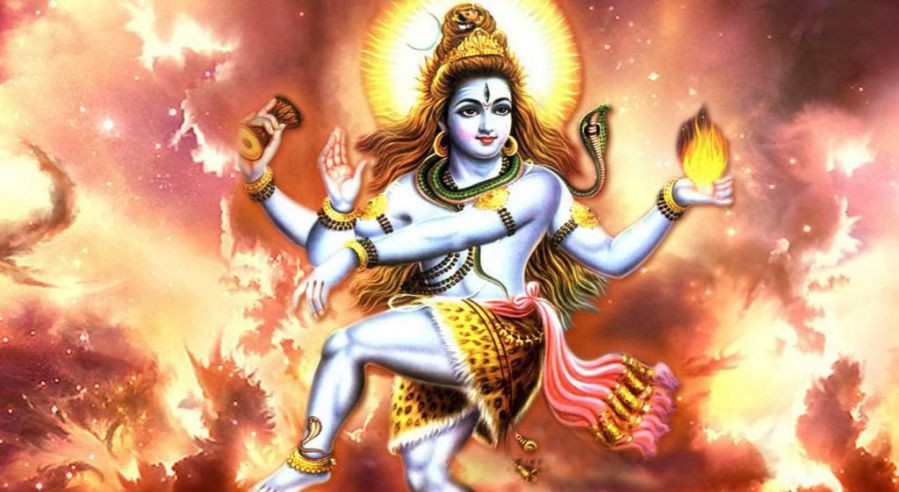
Natrajasana : Shiva Dance PoseShiva is the source of all Mantras, so his one creation is Mantra Yoga as well. He is himself Omkara, the primordial cosmic sound/divine sound, and from his drum all the letters of the Sanskrit alphabet arise and reverberate. It is the so-called “Mantra Moolam Gurur Vakyam,” which means the main mantra is the words of Guru, who is the first Guru, Maha-Guruthe or Adiguru. Shiva is said to be all the vowels, but he encompasses every aspect of primal sound, nada (Sound), and music.
Shiva is the supreme source/ Lord of Dhyana (Meditation), always researched and felt minutely seated in deep meditation, by reciting the pranava or watching the breath, watching the thoughts, being thoughtless and uniting the entire universe into himself for wakening kundalini motive to endless exploration and expansion of cosmic intelligence i.e. isolation.
In his youthful form as Dakshinamurti, Shiva takes the role of the master of Jnana Yoga—the Yoga of Knowledge. He teaches through the silent power of the awakened mind, using manan (deep contemplation) and nidhidhyasana (the constant inner presence through practice). Shiva begins by teaching his first student, his wife Parvati, and then enlightens the Sapta Rishis, along with all the gods, goddesses, sages, and seers. As the original guru of wisdom, he becomes known as Adi Shankar, the one who expounds the profound philosophy of Advaita, or non-dualist Vedanta—a direct manifestation of Shiva’s infinite intelligence.
By Swami Yoga Subodh
Mindfulness Retreat in Nepal
The heart or core message of Yoga science is ‘SMS”. One of the components is ‘M’ stands for mindfulness. Whatever we do, we should be mindful for achievement or perfection. Where is the body, there is mind, then it makes the sense. Mindful work can rise and transform us. So, learn why Mindfulness Retreat in Nepal ?
Mindfulness is the non-judgmental focus on our present emotions, thoughts, and sensations, but keeps us in the present moment. It is the ability to dictate which thoughts we listen to and which to dismiss as useless and irrational. It’s the power to fully engage with the present moment—being here and now—while letting go of stress about the past and worries about the future.
In our modern lives, digital distractions lead many of us to suppress our emotions and thoughts. When we finally face our inner world, we often lack the clarity and focus to manage our thoughts productively. We jump from one thought to another, reliving the past or panicking about the future, raising our stress levels. We stay in the moment, but not the right one.
It’s this lack of control that can send us into stress overload, resulting in panic attacks and causing depression. Teaching the skills needed to live in the present, a mindfulness retreat works to harness control over our thoughts and emotions.
Why People Should do a Mindfulness retreat in Nepal?
Previous attendees often tell us they gained the most benefit in the following ways:
- The learning of ‘No mind theory, art of freeing of mind, how to increase focus power, laughing therapy, art of living that keeps us mindfulness.
- The key skills to ‘tame’ the mind so that you can live with less stress, overcome negative thinking and limiting beliefs that can hold you back
- You’ll learn to meditate and bring mindfulness into daily life, staying connected to your calm center.
- Take time out in nature to rest, eat healthy food and leave feeling like your batteries have been recharged.
- Identify what your ‘true north’ is by uncovering your values and how to live a truly ‘meaningful life’.
- Notice less reactivity, better mood, and improved relationships after going home.
- Therapy, Healing and meditation all levels of teaching and practice for fullfilment of entire need.
Reasons Why Mindfulness retreat in Nepal?
Nepal is a very unique and pinnacle nation and known as a county of:
Shiva Civilization, Shiva is known by the names of Aadiguru, Aadiyogi, Aadinaatha, Yogeshwora in Himavat Kshetra (Himalayan region),
Parvati (Wife and first Disciple of Shiva) known as Shakti (energy, will and action),
Pashupat as Yogashaalaaa (first School of Pashupat or Shiva Yoga) is known as Chaturtha Yoga, i.e., Hatha Yoga (Physical Balance), Mantra Yoga (Sound Energy), Laya Yoga (Rhythm), and Raja Yoga (Eternal),
Sapta Rishis (Seven Sages), a country of sages and seers,
Maharshi Kapil in Kapildhaama,
Buddha in Lumbini,
King Janaka (Father of Goddess Sita and Yogi King as Yoga Saadhaka and convener of First ancient Yoga workshop) in Janakapur,
Veda-vyasa In Tanahu,
Here is a very positive and fully natural life pattern, and Tapobhoomi- a land of Meditation or determined karma.
Yoga for Holiday
Everybody wishes to have a wonderful holiday on their vacation and making Yoga a part of their holiday (Yoga For Holiday) adds excitement.
As People experience depression in different ways. It may interfere with your daily work, resulting in lost time and lower productivity. It can also influence relationships and some chronic health conditions.
Himalayan Yoga Academy will provide you the chance where you can integrate yoga in your holidays. Since Yoga will help in improving your physical and mental health. Yoga consists of postures, breathing, techniques and meditation. So Let Yoga join your holiday joy.
Nepal is a very beautiful country. It’s geography is so diverse. You may enjoy hills, mountains, rivers, lakes and many more natural gifts In this small landlocked country.
Here in our HYA Retreat. We teach you Hatha yoga, Astanga Vinyasa yoga, Sivananda yoga, Iyengar yoga, and Restorative yoga. Kapalbhati, Anulombilom, Bhastrika, Bhramari, Shitali, and many more breathing techniques are in our course of study. Since Meditation has become so important in managing our daily life. So, you will be able to learn how to do different meditation techniques like Vipasyana meditation, Buddha meditation, Mindful meditation, guided meditation, etc.
Yoga practices can utilize any or all of the 8 limbs. They generally involve relaxation (shava asana), physical postures (asana), breathing regulation techniques (pranayama), and meditation (dhyana). While there are different schools of yoga, some common schools include Ananda, Anusara, Ashtanga, Bikram, Iyengar, Integral, Kundalini, Kripalu, Power, Prana, Sivananda, and Vinyasa. Types of yoga include alignment-oriented yoga, fitness yoga, flow yoga, gentle yoga, hot yoga, specialty yoga, and spiritual-oriented yoga.
So, during your holiday, if you choose yoga as one of your holiday retreats. Then you will feel changed from various perspectives. While you return to your work, you will have a new way of doing it. You can practice yoga for 1-2 hours a day, which will bring very good results in your daily work. So, we believe yoga for the holiday can be a very good choice if you wanna enjoy your holiday to the fullest and earn many things during your holiday as well.
Shankha Prakshalana
Shatakarma (Six Cleansing Acts) is the first unit of Hatha Yoga or one of the Saadhaanaa among Sapta-saadhaanaa according to Ghreranda Samhita. Under this, one of the major cleansing process is Shankha Prakshalana or Master Cleansing.
Shankha Prakshalana is the process by which one can cleanse oneself in the same way as a conch is cleansed by pouring water form one side and throwing out from the other side. In this process salty warm water (also with lemon) is taken from mouth, and then we do some of the stretch and twist exercises. Water flows out from the rectum. Thus, total indigestible food particles in alimentary canal is cleansed.
Five Asana of Shankha Prakshalana
- Tadasana: Stand erect keeping your feet together. Raise your arms overhead with the palms upward. Inhale and lift your heels and stretch as much as you can. Return slowly the heels to the ground. Repeat upward stretch five times.
- Triyaka Tadasana: Take Tadasana position. Bend to the right and then to the left. The movement is from the waist. Bend five times each on either side. Breathe deeply.
- Katichakrasana: Stand erect with your feet about a meter apart. Stretch the arms side ways at the shoulder level. Twist the upper part of the body to the right, bringing the left hand to the right shoulder and wrapping the right arm around the trunk in a smooth motion. Repeat on the opposite side. Five times each on either side.
- Udarajarshan Asana: Sit in Utkatasana (Squatting Pose) with hands on the knees. Bend the right knee to the ground while turning the trunk to the left. Look behind the body keeping the hands on the knees. Return to starting position. Repeat the same procedure, twisting the body in the opposite direction. Five times each on either side.
- Triyaka Bhujangasna: Take the final position of basic Bhujangasana. Twist the upper portion of the trunk and head to one side and gaze at the heel. Do it on the opposite side of the body. Repeat it five times for each side.
Note
- Take light food on previous night.
- Do not take bath for 2 hours after Shankha Prakshalan take rest in Shavasana for about 30 minutes.
- After completing the Kriya of Shankha Prakshalan take rest in Shavasana for about 30 minutes.
- Take only moong dal Khichadi and rice with 100 gm ghee during the day.
- Don’t drink water and sleep up to 3 hours.
- Don’t take milk, curd, sweet , cold drinks, cold items, pickle for few days.
- No meat products, no alcohol for at least 3 weeks.
- Do rest full day.
- If you have high blood pressure and have suffered heart. Attack, please don’t do this kriya.
- Should be performed under the guidance of a yogacharya.
- Do it after 6 months when the season changes.
Benefits of Shankh Prakshalan
- Cleanses alimentary canal.
- Increase digestive power and improve good appetite.
- Helps to prevent and cure headache, ear and eye diseases, pyorrhea, mouth disease tonsillitis, heart diseases, diabetes, asthma, piles, menstrual disorder Etc.
- Activates the intestines.
- Removes kidney stones, constipation, acidity, gas and other digestive disorder.
- Rejuvenate your health and life.
Meditation Benefits for Students
Meditation is the state of deep concentration and being in the moment. People of every profession, corporations, and faculties need yoga, especially meditation yoga, in such a stressful and mechanical life. Meditation is a major means or final key of yoga science. Meditation has several benefits for all age groups of people and professions. Likewise, there are numerous meditation benefits for students, and thus should be included in the education of children.
Many researches in the fields of psychology, education and neuroscience shows teaching meditation in schools has a lot of positive effects on students’ well-being, social skills, academic skills and intuition. They find about various merits of mediation.
A recent meta-review of the impact of meditation in schools combined the results from 15 studies and were almost 1800 students from Australia, Canada, India, the UK, the US and Taiwan. The research showed meditation is beneficial in most cases and led to three broad outcomes for students: higher well-being, better social skills, greater academic skills and intuition growth.
Students who were taught meditation at school reported higher optimism, more positive emotions, stronger self-identity, updated skills, and greater self-acceptance, and took better care of their health as well as experiencing reduced restlessness, stress, depression, and anxiety. This was compared to before the meditation projects and to peers who were not taught meditation.
The review also showed that meditation helps the social life of students by leading to increases in pro-social behavior (like helping others) and decreases in anti-social behavior (like anger, hatred, and disobedience).
Finally, meditation was found to improve a host of academic and learning skills in students. These included faster information processing, greater focus, more effective working memory, more creativity, and cognitive flexibility.
So, we see that the advantages of mediation are not limited to improving academics and keeping you peaceful and calm. It goes beyond the usual necessities. It takes you to bring about innovativeness and creativity in the world to make it a better place to live. The human brain is limitless when it comes to innovation and creativity. Meditation accelerates the performance of the brain and navigates you through innumerable possibilities in which a teeny-tiny idea can be executed.
Finally, if meditation is to become system-wide across. Then we might see the increasing change in the attitude, thinking, and capabilities of the students across the globe. There will be innovation and creation. Learn more benefits of meditation in the next blog.
Dhyana or Meditation is the seventh stage of Ashtanga yoga and also the final device of the whole yoga science. Yogasana is a means of transport for Meditation. Meditation is the means of transport for Yoga cum Samadhi. If we do every means of Yoga consciously and silently, that is meditation; even well-done, Asana practice is also meditation. So do any karma properly and consciously, and we shall get maximum benefits to transfer the life.
Source: https://theconversation.com/why-meditation-should-be-taught-in-schools-42755
Best Yoga Teacher Training School in Nepal
Himalayan Yoga Academy in Nepal has been established as a school where students get enlightened with asana, spiritual knowledge, and other life engagements. As a true yoga school in Nepal, it offers specified and standard courses to the trainee to conduct teacher training programs. Himalayan Yoga Academy in Nepal has courses that are designed to make your dream come true. We don’t think that after taking the courses, you have to be the trainer or link with yoga. Being the best yoga teacher training school in Nepal, we provide these courses, which may be beneficial for you. We brought the comprehensively designed courses, which will be conducted by highly experienced and dedicated teachers. The training and services that we provide are:
- 200 hrs Yoga Teacher Training Course
- 300 hrs Yoga Teacher Training Course
- Yoga Retreat in Nepal
- Reiki Training in Nepal
- Singing Bowl Training in Nepal
- Ayurveda Training in Nepal
Courses Provided
Since Himalayan Yoga Academy is the Best Yoga Teacher Training School in Nepal, we have many students who attend the class or course. We provide the best services, clean rooms, spa services, hiking services, and spiritual environment, healthy foods, and Nice classes with experienced gurus as the requirement of the course and students.
Missions of Himalayan Yoga Academy
Yoga in different forms can help with so many problems that are in our society. So our main goal is to help society get a ride from all these, and others are:
- Conduction of advanced and authentic Yoga training based on philosophical & Traditional footing and boosting the intrinsic needs of human life.
- Provision of eastern knowledge and philosophy to world people with the motive to unite Sanatana (ancient) and Modern wisdom through the science of self.
- Improvement of well-being, health, happiness, and harmony through knowledge of yoga and spiritual science developing the platform of the International yoga Community.
- Make well-experienced in specific features of Nepal, like natural and cultural beauty. Nepalese lifestyle, introduce the festivals and feasts, and traditional practices, and make all know “People’s Unity owns Cultural and Natural Diversity.
- Resolution of keeping our focus on spiritual tourism further ahead, however, we initiated this karma. Especially the promotion of Spa since 1999 and Yoga continuously since 2007 A.D in this field till date.
- Acknowledgment of real traditional yoga all over the world in modern contests where people, even yoga Masters, and practitioners are misunderstanding knowingly and unknowingly, doing just the business, not trying for the transformation of self.
Yoga Teacher Training Books
Here are Yoga Teacher Training Books
1. Asana Pranayama Mudra Bandha
Asana Prana Yama Mudra Bandha is recognized internationally as one of the most systematic yoga manuals today. Since its first publication by the Bihar School of Yoga in 1969, it has been reprinted seventeen times and translated into many languages. It is the main reference text used by Yoga teachers and students of Bihar Yoga/Satyananda Yoga within the International Yoga Movement, and many other traditions as well.
This comprehensive text provides clear illustrations. step by step directions and details of chakra awareness. It guides the practitioner or teacher from the simplest to the most advanced practices of hatha yoga system. A therapeutic index is provided for use by doctors and yoga therapists incorporating recent information from research into yoga. This edition successfully brings the exposition of yoga practices to the standard of a university text.
2. Patanjali Yoga Sutra
The Yoga Sutras of Patanjali form the basis of classical Yoga. Encompassing both philosophy and practice, the Sutras provide indispensable instruction for all serious students of yoga. This study guide is for the second of four books, Sadhana Pada (On Yoga Practice). It explains the practice of yoga and teaches the direct means of attaining the goal of perfect peace.
The Yoga Sūtras of Patañjali are a collection of 196 Sanskrit sutras (aphorisms) on the theory. Philipp A. Maas assesses Patañjali’s Yogasutra’s date to be about 400 CE, based on tracing the commentaries on it
3. Gehendra Samhita
Gheranda Samhita (IAST: gheraṇḍasaṁhitā, घेरंडसंहिता, meaning “Gheranda’s collection”) is a Sanskrit text of Yoga in Hinduism. It is one of the three classic texts of hatha yoga.
The text teaches a seven-limbed yoga, in contrast to eight-limbed yoga in Patanjali’s Yogasutras, six-limbed yoga taught in Goraksha Samhita, and four-limbed yoga discussed in Hatha Yoga Pradipika. It declares its goal to be the perfection of an individual’s body, mind, and soul through a seven-step lifelong, continuous self-development. The means of this goal include self-purification, thirty-two asanas in detail for building body strength, twenty-five mudras to perfect body steadiness, five means to pratyahara, lessons on proper nutrition and lifestyle, ten types of breathing exercises, three stages of meditation, and six types of samadhi.
4. Light on Yoga by BKS Iyengar
Regarded by many as the Bible of modern yoga, this book is the definitive guide to the philosophy and practice of yoga. The book includes classic photos and instruction on asana and pranayama, a 300 week practice and development programme and yoga sequences to help heal a range of illnesses and conditions.
Throughout his life, BKS Iyengar devoted himself to his lifelong practice, study, and teaching of yoga, becoming the greatest exponent of yoga the world has yet seen. One of his most famous pupils was the world-renowned violinist Yehudi Menuhin, and it was Menuhin who invited him to teach in the West. More than anyone, Iyengar is responsible for bringing yoga from the East to the West. Teaching until his mid-nineties, a remarkable and inspirational feat in itself, BKS Iyengar remained a student until the end. He was known affectionately to his students as Guruji.
He believed wholeheartedly in yoga for all, irrespective of sex, race, class, or creed. In 1966, he published this ground-breaking book ‘Light on Yoga’ to bring yoga out from the darkness. He went on to write a vast number of inspirational books in which he explored diverse aspects of yoga.
5. Yoga-Nidra by Swami Satyananda Saraswati
Yoga Nidra is a simple yet profound technique adapted by Swami Satyananda Saraswati from the traditional tantric practice of nyasa. The Text explains the theory of Yoga Nidra in both yogic and scientific terms and includes class transcriptions of the practice. It also presents the various applications of this versatile technique, which has been used for deep relaxation, in stress management and therapy, to enhance the learning process in education, to harmonize the deeper unconscious and awaken inner potential, and as a meditative technique. A research section is also included.
Bridge Pose
LEVEL: Beginner
Anatomy: Digestive System, Shoulders, Spine, Thyroid
Pose Type: Backbend, Heart Opener
In Sanskrit, the bridge pose is called Setu-bandhasana (set-uu bahn-dah-S-anna). It is also called Setu Bandha Sarvangasana.
Setu bandha = the construction of a bridge
The Setu Bandha Sarvangasana massages the spine, stretches the chest, neck & hips. It also calms the brain, helps to open the sinuses, reduces headaches, and opens up your shoulders. This is a great pose for women who experience menopausal symptoms.
Benefits of Setubandhasana / Setu Bandha Sarvangasana
- Stimulates the thyroid
- Improves posture and open rounded shoulders
- Stretches the abdominal organs and improves digestion
- Tones the female reproductive organs
- Relieves anxiety, fatigue, and insomnia
- Reduces anxiety and insomnia
- Lowers stress
- Alleviates mild depression
Steps for Bridge Pose (Setu Bandhasana Sarvangasana)
- First of All, Lie down on your back with your arms next to your body, palms facing down. Bend your knees and place your feet near your sitting bones, hip-distance wide.
- Then, slowly inhale and lift your hips high. Check if your knees are aligned over your ankles.
- Interlace your fingers on the floor and tuck your shoulders underneath you. Draw your hands toward your feet.
- Stay in the pose for a few minutes with breathing, then release hands, and exhale to lower.
CONTRAINDICATIONS
- Pregnancy
- Neck injury
- Hernia
- Peptic or duodenal ulcers