
How to Prevent From Coronavirus
What is the novel coronavirus?
Coronaviruses are not new viruses. Remember SARS? That was a coronavirus too. But novel coronavirus, also known as COVID-19, is a new version of the virus. Health experts say it’s primarily spread when a sick person coughs or sneezes, but experts say they can’t rule out that it is spread through fecal contamination, like the coronavirus SARS. Then, how to prevent from Coronavirus. Below are Prevention tips for Coronavirus.
Precautions to Prevent from Coronavirus
There is no vaccine to prevent the COVID-19 infection and no medication to treat it. CDC believes symptoms appear 2 to 14 days after exposure. Avoid exposure and avoid exposing others to an infection with these simple acts.
- Wash your hands often with soap and water for at least 20 seconds. An easy way to mark the time is to hum the “Happy Birthday” song from beginning to end twice while scrubbing.
- Use an alcohol-based hand sanitizer that contains at least 60% alcohol.
- Avoid touching your eyes, nose and mouth with unwashed hands.
- Avoid close contact with people who are sick.
- Stay home when you are sick or becoming sick.
- Cover your cough or sneeze with a tissue (not your hands) and throw the tissue in the trash.
- Clean and disinfect frequently touched objects and surfaces.
- Getting a flu shot is recommended.
Updates on Nepal about Coronavirus
Till now, Nepal stands in the list of least affected countries globally with just one confirmed case. It was found in in one Nepali student who landed Nepal on 5th January from Wuhan and has been already recovered. And, if we talk about the suspected case then, it is 10 but we’re lucky, no confirmed cases are found other than one (from January 5 till present).
So, till today (5th March 2020), we’ve just the single confirmed case and has already been treated well and recovered. The Government is also becoming very active and doing things very seriously and taking strict actions regarding COVID-19.
Shirodhara in Nepal
Shirodhara massage is a classic Ayurvedic therapy. It includes pouring warm herbal oil on the forehead in a continuous stream. Ayurvedic Shirodhara therapy is very effective in promoting sound sleep and reducing stress. Shirodhara treatment is one among the Bahiparimarjana chikitsa, or external treatments, told in Ayurveda. The term Shirodhara comes from two words, “Shira” meaning head, and “Dhara” meaning stream. More about Shirodhara in Nepal. It is effective to soothe, energize, nourish, and relax the nervous system. It is good for chronic headaches, sleeplessness, anxiety, tension, restlessness, irritability, nervousness, fear, and emotional downfalls.
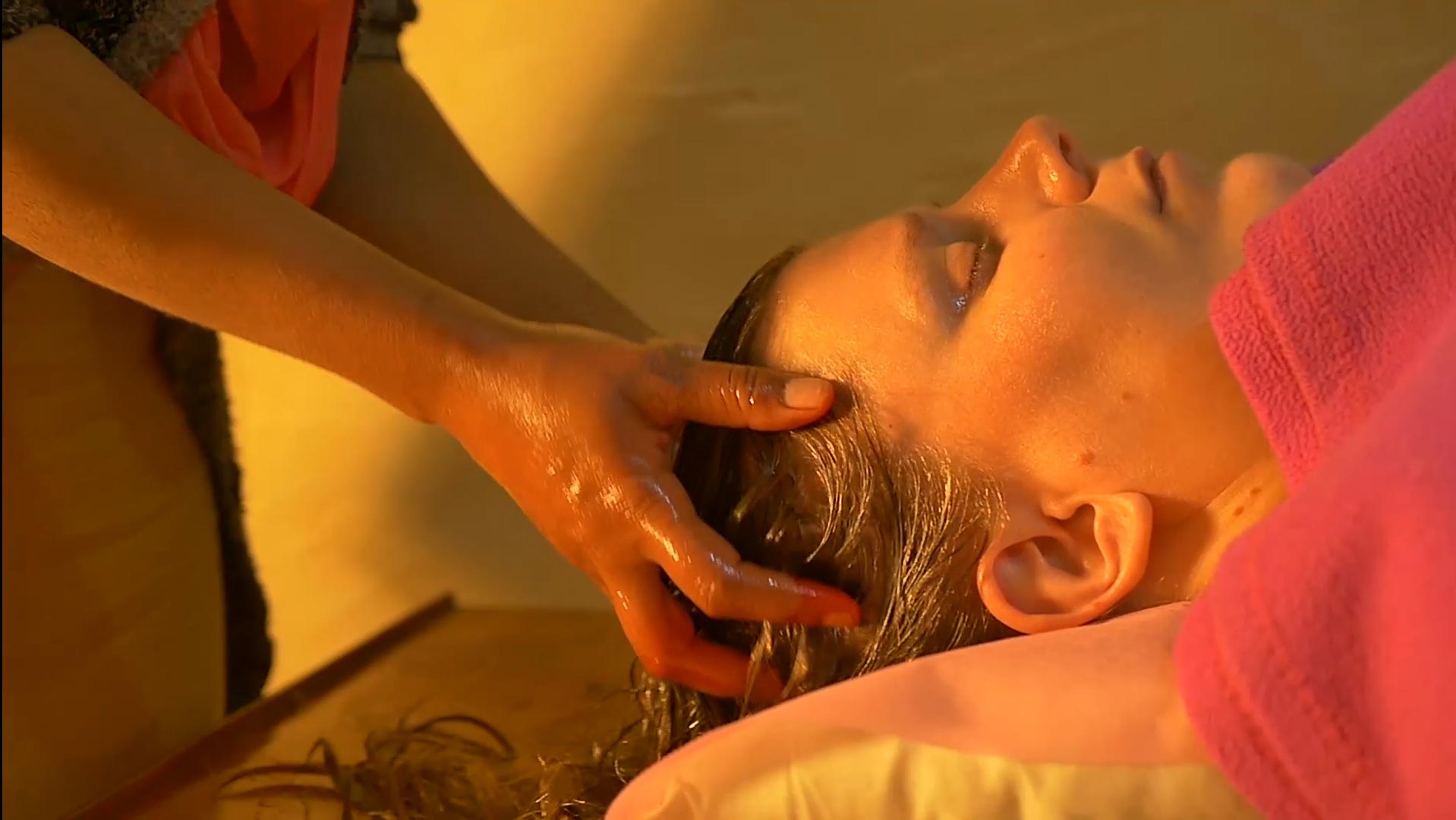
Practitioners usually perform Shirodhara in the morning or evening. Depending on the type of liquid used—medicated or non-medicated—they refer to it as Tailadhara, Takradhara, Kashayadhara, or Jaladhara. Ayurvedic texts also recognize Shirodhara as one of the four special head treatments known as Murdhataila.
- Shirodhara massage treatment begins with Abhyangam (Ayurvedic body massage).
- You need to lie down on the massage table with closed eyes and relax your body.
- Shirodhara begins with the pouring of about 2 litres lukewarm oil continuously as a stream on to the forehead in an oscillating manner.
- The time duration of Shirodhara treatment may extend from 30 to 60 minutes, depending on the condition of the patient. It is very important to make sure that the oil does not enter the eyes or ears, and is therefore recommended to be performed by an experienced therapist
- You may also be given a mild head massage before or during Shirodhara. Other type of Shirodhara may also include pouring of buttermilk, decoctions or even water.
In Nepal, we have various Ayurvedic hospitals and clinics. Here in our Himalayan Yoga Academy, we have various ayurvedic trainers and therapists. They will conduct various Sirodhara therapies, which will help you relax and rejuvenate. So, you are welcome to do Shirodhara in Nepal.
Vinyasa Yoga in Nepal
Vinyasa is a style of yoga characterized by stringing postures together so that you move from one to another, seamlessly, using breath. Commonly referred to as “flow” yoga. It is the breaking down process of the final Posture in sequence. It is the real process of training, but not practice for a regular Yoga Session. More about VINYASA YOGA in Nepal.
Vinyasa Yoga Definition
As with many things in yoga, the definition is dependent on the context and on who you ask. Below are the more common definitions. “The Sanskrit word Vinyasa comes from a prefix VI, which means variation, and a suffix, nyasa, which means‘ within prescribed parameters. Srivatsa Ramaswami, a student of Krishnamacharya for more than thirty years. He goes on to refer to classical yoga, from the Yoga Sutras of Patanjali, for the specific parameters: Steadiness (Sthira); Comfort (Sukha); Smooth and Long Breathing (Prayatna Sithila).
They are all vinyasas, progressive sequences that unfold with an inherent harmony and intelligence. “Vinyasa” is derived from the Sanskrit term nyasa, which means “to place,” and the prefix VI, “in a special way” —as in the arrangement of notes in a raga. The steps along a path to the top of a mountain, or the linking of one asana to the next. In the yoga world, the most common understanding of vinyasa is as a flowing sequence of specific asanas coordinated with the movements of the breath.
The term Vinyasa is derived from vi, meaning “in a special way,” and nyasa, meaning “to place,”. This indicates that we are not “throwing our bodies around” but are bringing consciousness to each movement in each moment.
The word “vinyasa” can be translated as “arranging something specially,” like a yoga pose. In vinyasa yoga classes, we should coordinate movement with breath to flow from one pose to another. Ashtanga Yoga, Jivamukti, Power Yoga, and Prana Flow could all be considered vinyasa yoga. Vinyasa is also the term used to describe a specific sequence of poses, e.g., Chaturanga to Upward-Facing Dog to Downward-Facing Dog, commonly used throughout a vinyasa class.
The variable nature of Vinyasa Yoga helps to develop a more balanced body as well as prevent repetitive motion injuries that can happen if you are always doing the same thing every day.
As a philosophy, Vinyasa recognizes the temporary nature of things. We enter into a posture, are there for a while, and then leave. While Vinyasa, or Vinyasa-Krama, dates back to the Vedic age — the earliest period of yoga thousands of years ago — it referred to a series, or sequence of steps, to make something sacred.
History of Vinyasa Yoga
The great South Indian master Krishnamacharya championed the vinyasa approach as central to the transformative process of yoga. But Krishnamacharya had a broader vision of the meaning of vinyasa than most Western students realize. He not only taught specific asana sequences like those of Jois’s system, but he also saw vinyasa as a method that could be applied to all the aspects of yoga.
In Krishnamacharya’s teachings, the vinyasa method included assessing the needs of the individual student (or group) and then building a complementary, step-by-step practice to meet those needs. Beyond this, Krishnamacharya also emphasized vinyasa as an artful approach to living, a way of applying the skill and awareness of yoga to all the rhythms and sequences of life, including self-care, relationships, work, and personal evolution.
T. Krishnamacharya began the movement practice of Vinyasa and greatly influenced the way yoga is practiced today. Vinyasa connects breath with movement, guiding every action toward what is sacred or most important in our lives. Although Vinyasa Yoga has become one of the most popular forms of yoga worldwide, many people still do not fully understand it.
More about Vinayasa Yoga in Nepal
We offer a variety of yoga styles, including All Levels Vinyasa Yoga, Slow Flow Vinyasa Yoga, Dynamic Flow Vinyasa Yoga, Yoga Fusion (a blend of Yoga and Pilates), Restorative Yoga, and Ashtanga Yoga. This wide range of styles and levels gives you the freedom to explore and choose what suits you best on any given day. When you find the right style and teacher, you build a steady and fulfilling practice. As you establish a routine, you begin to experience the many benefits of consistent yoga. Practice once a week, and you change your mind. Practice three times a week, and you will change your body. To transform your life, practice every day.
Characteristics of Vinyasa Flow Yoga
Vinyasa Yoga connects one posture to the next using the breath. This can be thought of as linking or flowing into postures which is sometimes why it’s called “Flow Yoga”. The opposite of this would be an alignment based class where students engage with a posture, explore it for a period of time and then “break the posture” by coming out.
Vinyasa is synonymous with movement. Moving in and out of postures is the obvious movement but even in stillness Vinyasa is represented by the beat of your heart and inhale / exhale of your breath. Move with breath. Breath initiates the movement of Vinyasas, which is why you’ll hear it referred to as a “breath-synchronized” practice.
Practitioners use Ujjayi Breath as the primary breathing technique. They inhale and exhale rhythmically through the nose, creating a steady and calming flow. This technique produces an overall sensation of relaxation.
Vinyasa practice generates heat and can add a cardiovascular component not always present in other forms of postural practice. The picture below is from a student’s heart rate monitor worn during a regular Vinyasa class I taught.
Natural Home Remedies for Sinus Infection
Sinusitis occurs when inflammation affects your sinuses. An infection or another issue often causes this condition. The sinuses, hollow air spaces within the bones around your nose, produce mucus that drains into the nasal passages. When swelling blocks your nose, it prevents proper drainage and causes pain. Further about Natural Home Remedies for Sinus Infection.
Ayurveda and Sinus
According to Ayurveda, the problem of the sinus is caused due to an imbalance in the Prana Vata and Sheshaka Kapha. Prana Vata is the Vata subdosha that governs the head, brain, and mind region, and Sheshaka Kapha is the Kapha subdosha that governs moisture and lubricant balance. With an imbalance in both, the complication occurs. With the Vata-Kapha pacifying diet, one can easily treat the problem, keeping themselves hydrated, eating spices, Jala Neti, and Nasya therapies, and also cure the issue. But for instant relief, one can simply rely on the selected Ayurvedic remedies for sinus infection.
Powerful and effective Ayurvedic herbs for Sinus infection
1. Licorice Root
The root of the licorice plant (Glycyrrhiza glabra or Glycyrrhiza uralensis) has a long history of use in Eastern and Western medicine. The licorice plant is a perennial legume native to the Middle East and parts of Asia and India.
It is considered good for eyesight, useful in increasing strength and immunity, and improving skin complexion. It is good for improving hair quality and voice quality (on chewed and taken orally with honey). It’s a potent blood detoxifier and anti-vomiting agent (in small quantities; in large quantities, it can cause nausea).
2. Holy Basil
Holy basil (Ocimum tenuiflorum) isn’t like the sweet basil in your mom’s marinara sauce or the Thai herb you use to flavor a steaming bowl of pho. This green leafy plant, also known as Ocimum sanctum L. Its uses are as follows:
- Fresh flowers for bronchitis.
- The leaves and seeds, with black pepper, for malaria.
- The whole plant is used for diarrhea, nausea, and vomiting.
- An alcohol extract for stomach ulcers and eye diseases.
- The pill and ointment for eczema.
- An essential oil made from the leaves for insect bites.
3. Ginger-Garlic
Both the spice herbs are known for their medicinal properties, where ginger tastes strong and garlic has of pungent taste. Consisting of antibacterial, anti-oxidant, anti-microbial, and anti-inflammatory properties that calm a sinus irritation, Ginger and Garlic are widely used in Indian cuisine.
- Drink ginger tea twice daily, or grate ginger and add a teaspoon of honey to it.
- Create a concoction with crushed garlic, grated ginger, a teaspoon of honey, and a pinch of turmeric. Drink twice daily. You can also add a pinch of black pepper.
4. Chamomile
Chamomile is a daisy-like flower, which is dried and used to make herb infusion serving medicinal purpose. The chamomile tea is a popular herbal tea loaded with ample health benefits. This fragrant brew is a perfect inclusion in daily routine to stay fit and healthy.
5. Turmeric
Turmeric is one of the best natural remedies for sinusitis, credited with its medicinal properties. Indian households have used turmeric since ancient times to heal wounds.
• Take a pinch of turmeric powder, some fresh ginger juice, and a teaspoon of honey. Mix and add hot water. Drink this hot concoction twice daily.
6. Fenugreek
When it comes to home remedies for sinusitis, Fenugreek proves to be one of the best herbs to treat a sore throat, high fever, cleanse mucous membranes, reduce inflammation, and relieve throat irritation.
- Mix 1-2 teaspoons of crushed fenugreek seeds in a glass of water. Boil for a few minutes.
- Strain and consume the same several times a day. But do not consume during pregnancy.
What is Yogashchittavrittinirodhah?
Yoga is the science of life. It is ancient science with more than 15,000 historical scripture mentioned in Rig Veda, first sacred text of the world. But as a first pure and authentic text is Yoga Darshna out of Shata-darshan (six eastern philosophies) written or designed by Maharshi Patanjali. Today whatever practice all over the world is based on this Yoga philosophy. This is the first recommended yogic text. More about Yogashchittavrittinirodhah.
Before this, so many descriptions and commentaries were partially or briefly touched on or scripted in different texts. Such as the Vedas, Upanishads, Samkhya Yoga Darshana, etc. We give here in the Himalayan Yoga Academy the basic concept about sacred texts and the yogic message to Human beings.
Yoga Darshana is the complete text of Yoga for beginning levels to higher levels of practitioners and readers. It has 195 verses and is divided into four chapters. When Maharshi Patanjali made a plan to write this philosophy, firstly he started from “Atha Yogaanushaasanam”, which means now the discipline of yogic science begins. Immediately, he formulated the definition of Yoga “Yogashchittavrittinirodhah” P. Y 1.2. in the second verse. Here in our Himalayan Yoga Academy, we focus on the different authentic and sacred definitions mentioned in sacred and holy texts.
Yoga is “Yogashchittavrittinirodhah,” that means the cessation of modifications of thoughts in chitta or Mind; that is Yoga. Chitta is more about the Mind. Chitta includes Mind, Egos, Intellects, and Consciousness all together. Yoga is concerned with the Mind and supreme consciousness, but has no concern for the body. The body is something, just the foundation or device for higher practice. Yoga is the ability to direct the mind exclusively toward an object and sustain that direction without any distractions.
“Yogashchittavrittinirodhah” – Yoga + Sh + Chitta + Vritti + Nirodhah: Yoga means the cessation of fluctuating thoughts in chitta. Chitta is a composition of four fundamentals, e.g., mind, ego, intellect, and consciousness. Maharshi Patanjali gives his formal definitions of yoga for the classical school of Yoga itself: Yoga is the stilling of the changing states of the mind or the stilling of all thought.
The commentators have packed a substantial amount of dense information into their writings on this Yoga Darshana or Sutra. Since Maharshi Patanjali defined and summarized the entire system of Yoga in these verses, the commentators use this Darshana to lay out the psychological and metaphysical foundation of the Yoga process. They explain how Yoga helps practitioners calm, reduce, and still unwanted and excessive thoughts to reach a state of inner clarity. Patanjali presents Yoga as the state of being free from mental distractions. Moreover, he formulates and channels the remaining 193 verses with precision to guide practitioners toward their ultimate spiritual goals.
How to do Thunderbolt Pose
Vajrasana, also known as the Thunderbolt pose, is a sitting posture that involves sitting on the knees with the calves beneath the thighs. It is the only pose that can be done on a full stomach. The pose is ideal for practicing meditation and breathing exercises like Pranayama, Kapalabhati, and Anulom Vilom. Further on, How to do Thunderbolt Pose.
You will also notice that this pose is used across various religious cultures for the purpose of praying, which in itself speaks a lot for the tranquility it will offer to your mind. One of the most spectacular things about this yoga pose is that, unlike most asanas, this doesn’t have to be carried out on an empty stomach; rather, it is more efficient when practiced post-meal.
How To do Thunderbolt Pose
- Kneel Down on the floor.
- Place your both toes together and heels apart. Then bring down the buttocks and place the gap in between your heels. Touch your toes together.
- With your Hands in Chin or Jnana Mudra, simply place the palms down on the knees.
- Stay Erect. Then Closing your eyes breathe normally.
Health benefits of Thunderbolt Pose
- Improves posture
While practicing Vajrasana, one thing that is required of you is to always keep your back straight. This helps you retain the position for a longer time and also helps in better absorption of all the benefits offered by the posture. Regular practice of this pose would then condition your back to always be straight and thus results in the improvement of the posture. - Betters digestion
When you sit in Vajrasana you obstruct blood flow to the lower part of your body – thighs and legs. This increases blood flow to your pelvic area and stomach,, due to which bowel movement and digestion become better. It aids liver functions as well.” - Losing weight
Becomes possible with regular practice of Vajrasana. You will see the difference in your belly fat after a few weeks of regular Vajrasana practice. - It can help with arthritis
Regular yoga practice for a few months, coupled with a few pranayamas (breathing techniques) and meditation, helps you deal with arthritis.
- Increases leg muscle strength and flexibility
The stretching of your leg muscles and the intensive use of the joints involved in the practice of this pose stretches the ankles, thighs, knees, as well as hips, and thus results in ensuring their flexibility. - Keeps you calm
The pose requires you to sit for a long duration of time with full concentration. It might make you uneasy initially, but regular practice will help you build the required patience and will also keep you calm.
Contraindications of Thunderbolt Pose
- People with injuries to the ligaments at the knees or ankles should avoid this pose.
- Intestinal ulcers or hernia patients.
- People with severe arthritis pain should not practice this pose.
Why Poon Hill Yoga Trek in Nepal?
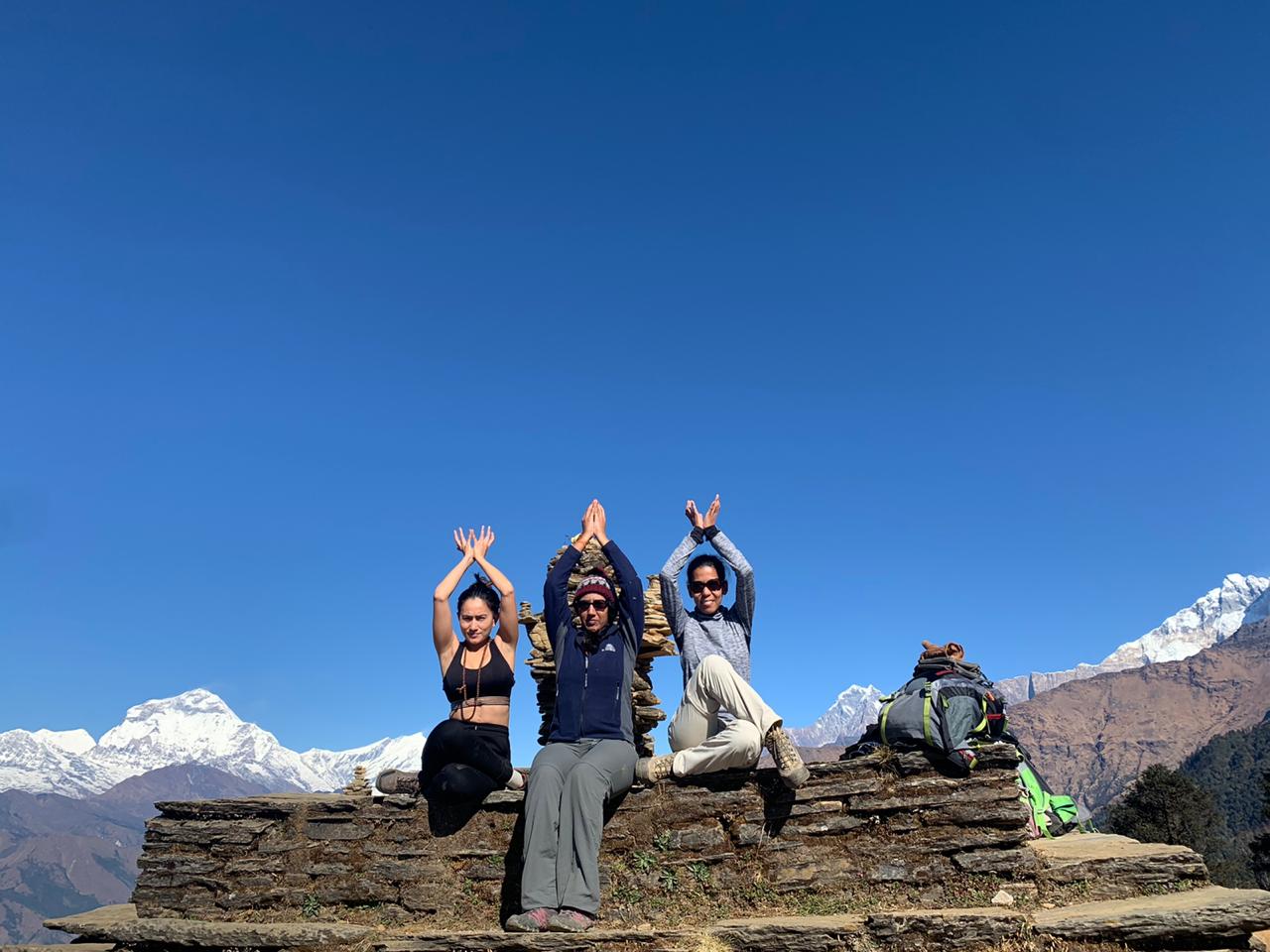
Ghorepani Poon Hill Yoga Trek in Nepal is intrinsically known as Annapurna Sunrise or Annapurna Panorama trek. It is one of the most popular treks among the trekkers and climbers that rambles among the beautiful natural scenery and traditional villages of the Annapurna Region in the Myagdi district of Nepal. The way through the Poon Hill trek assembles different rhododendron forests and beautiful natural views of mountains including the Annapurna mountain ranges. The occupancy of terrace farming along with the greenery of farmland accomplishes the photo shoot for the photographers. In addition, the views of the Annapurna and Dhaulagiri ranges give the feeling of fulfillment of desire.
The Poon Hill Point provides you with a huge combination of Himalayas including Annapurna I, Annapurna II, Annapurna III and Annapurna IV, Annapurna South, Lamjung Himal, Gangapurna and Manaslu ranges, and others. The Gurung village of Ghandruk and the cultural magnificence of the Gurung Museum identify the unique culture of Nepalese society. The views of waterfalls and the small village settlement give a thrilling experience for the photographers.
Trekking from Kathmandu to Poon Hill is the best experience for tourists. It gives you a perfect sight of vision of different Himalayas and villages. You have different routes to travel from Kathmandu to Poon Hill. The Kathmandu to Poon Hill distance is around 271 km. You should go to different places to reach Poon Hill. This makes the distance so long. But it gives you the best feeling along the tour. You need to travel to Pokhara to begin the journey.
Why Ghorepani Poon Hill Yoga Trek in Nepal?
Yoga shows a continuously positive vibe within us. There are several scientific and spiritual explanations for Yoga. The vibration or frequency of continuous repetition of words like OM and other mantras vibrates in a frequency that evokes physical and mental health. Positivity leads to overcoming our Kleshas. Furthermore, Yoga brings us close to Mother Nature, the vital nature preserve for us. Yoga has a relationship with Panchatatva—the five elements: earth, air, water, fire, and sky, which are the precise foundations of our existence. Similarly, Trataka, where you concentrate on a specific pose at a single point of light, can help decrease the number of thoughts.
There are numerous benefits of yoga trekking to the physical, mental, and psyche health. Therefore, yoga trekking is the most essential addition to your daily life. We have come to a stage of an era where stress is the most common word and where mental, physical as well and emotional intelligence has depleted. To overcome that incorporation of Yoga trekking once a year is the most.
Yoga helps cure those stressors inside your body and calms your body with care. When your body is in a calm state, you respond better and you’ll be happier.
Meditation Retreat in Nepal
In today’s world, many people live their lives at full speed without pause. Low-grade stress, in the form of worry, is our constant companion. Often, we’re concerned about work, family life, and finances. Sometimes this leads us to cram more activities into or eke more productivity out of every day. It is as if we’ve become hamsters on a wheel. And forget that we have a choice about whether or not to get off that wheel. We rarely pause long enough to allow another perspective to enter our hearts. Meditation retreat in Nepal helps us get off the hamster wheel.
What is Meditation?
Meditation is a process of calming the mind down and focusing on a single thought (a breath in and out) at a time. It’s not necessarily related to religion. You get back the ability to be fully present in what’s happening at the present moment. So, meditation retreats are designed to help you slow down and shut out all of the external noises. Listen to yourself and reconnect with yourself.
On a wellness vacation (Meditation Retreats), you relax fully. Your health and well-being are the primary focus of your time away from home. You step out of your busy daily routines and into a slower pace of life, which encourages you to deepen your meditation practice, engage in daily physical activity, and modify your mindset. Taking time for yourself and with yourself is an essential part of the itinerary.
Often journaling while on retreat is a perfect way to spend quality time with yourself and at the same time record your emotions and thoughts to reflect back upon later.
Why Meditation Retreats?
Making new connections and friendships with like-minded people, who often have similar concerns or interests, is an additional benefit of meditation retreats. These people become your support system as you work toward your goals and also provide a sounding board to help you identify and resolve personal challenges. Most importantly, they let you realize that you are not alone.
Retreats provide an opportunity to explore some of the world’s most beautiful settings. They allow us to step out of busy, sometimes urban, life and into a slower way of being. Connecting deeply with nature and the energy that flows through it is an integral part of these meditation and qigong retreats. Intentionally engaging with the life force found in natural settings helps us rejuvenate our internal energy or qi.
Why Meditation Retreat in Nepal?
Nepal is a one-stop spiritual destination. Every activity here revolves around finding yourself and seeking your roots, whether it be practicing yoga or going on a mighty trek, or just visiting a temple. Apart from several temples and monasteries, it is also a hub for yoga meditation seekers. The spiritual relevance between Hinduism and Buddhism has made this place a perfect destination for meditation retreats. Several resorts and hotels have tied up with multiple yoga experts to offer world-class service. Meditation retreat in Nepal is taught in day retreats, in which participants learn the basics and practice enough for it to be beneficial. Meditation retreats include sitting and walking meditations and are perhaps best known for their requirement that participants remain silent.
The Best Place to Learn Yoga in Nepal
Nepal is the easiest and safest country to visit, even alone; you can travel to Nepal. Now you can do a Yoga Teacher training course, Yoga retreat, Yoga Detox, Special Pranayama Course, Yoga Nidra and Meditation course, Mudra Yoga, Mantra, Reiki Healing and Training, Singing Bowl healing and meditation, Basic Ayurveda, and Pancha Karma course under the same umbrella. More reasons about the Best Place to Learn Yoga in Nepal. It is cheaper and easier to learn Yoga Teacher Training Nepal at the Himalayan Yoga Academy in Nepal.
Nepal is the beauty of Culture, Nature, and diversity. You can fully enjoy with Nepalese lifestyle, Traditions, and Costumes throughout the Yoga Teacher Training in Nepal. Here, you will learn very authentic Yoga, including all the means of Shata karma, Prayer, Asanas, Bandha, Mudras, Pranayama, Yoga Nidra, Meditations, and Sahara Yoga (Food Yoga). You will learn here at Himalayan Yoga Academy about good lifestyles throughout the biological clock and what time to do.
It is an easy way to be a yoga Master, not only for Yoga Teachers cum Instructors. It will be a nice initiation, and you just need to give continuity with full determination for your perfection. You may continue this journey of making a difference by using natural remedial ways of life.
“There is a will, there is the way”. So your willpower makes you start your journey to Nepal and learn about Nepal. The overall well-being of humankind is a product of Yoga masters to a great extent these days, and to become a perfect Yoga Master in Nepal, the third pole of the world.
If you want to groom your yogic or spiritual knowledge, Nepal is the best place for you. Nepal is the birthplace of yoga, the origin of yoga referencing the Shiva civilization, Janak Civilization, Kapil, and Patanjali Buddha Civilizations. In all the South Asian countries, Nepal is the core place due to the Himavat Kshetra.
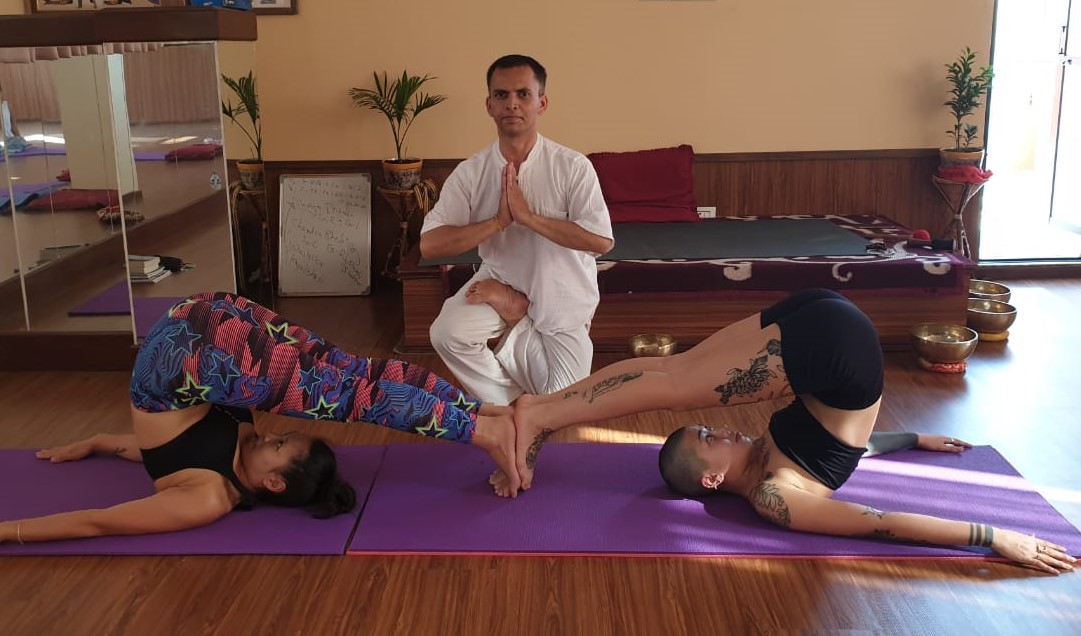
The traditional Yoga cultures are the essence and beauty of Nepal. Yoga Teacher Training (YTT) at Himalayan Yoga Academy in Nepal will promote your values and roles as a Yoga master.
Apply Now: 200 HRS and 300 HRS Yoga Teachers Training In Nepal
To learn yoga in Nepal to increase your skills and sharpen your Intelligence, it is highly advisable to become a good trainee or disciple; you should be conscious and silent. A Yoga Master is a practitioner and healer who updates a source of true knowledge and may rebuild the circuit of yogic tools, with traditional standards to help people with a physical, mental, and spiritual foundation.
Himalayan Yoga Academy is affiliated with Yoga Alliance USA, which is a global Yogic Brand for the quantity and quality of Yogic science. So you will get global validity to work in this faculty as well. Yoga Alliance recommends the standard course for 200-hour Yoga Teacher Training in Nepal. So this concludes the Best Place to Learn Yoga in Nepal.
5 Best Places for 200 Hour Yoga Teacher Training in Nepal
Himalayan Yoga presents an article on the 5 Best Places for 200 Hour Yoga Teacher Training in Nepal. Nepal has a lot of places for yoga teacher training Nepal opportunities to explore and also to enhance your yoga skills. We highly focus on updating our yoga knowledge in a pure environment of yoga. Our yoga teacher trainers in Nepal also provide yoga knowledge in various destinations.
It’s time to finish your search and finally get engaged in the practice of Yoga. Get this wholesome experience, and give a boost to your personal and professional growth. The 200-hour yoga teacher training is an opportunistic program that skillfully shapes you to become an established yoga teacher. If you are willing to take your yoga practice to a higher level, then it’s important to find the best destination where all the original teachings are being distributed.
Perfect 5 Best places for 200 hour yoga teacher training in Nepal
1. Kathmandu
Kathmandu Valley, a city seated in the lap of the Great Himalayas, is considered the abode of the Gods. Doused in stories of divinity and godly power, the valley maintains its spiritual status with the hundreds of thousands of temples it houses. Often called the playground of the gods, the valley’s mystical element was even featured in Marvel’s Dr. Strange.
Deeply rooted in Hinduism, Buddhism, and Tantrism, the Kathmandu valley flaunts many religious and powerful places. Also, Kathmandu valley is covered by an evergreen forest of Shivapuri Nagarjuna National Park. Hence, while you may enjoy both the natural activity as well as the city tours, you will also learn traditional yogic knowledge during your yoga teacher training in Nepal. It can be considered one of the best places for a 200-Hour Yoga Teacher Training in Nepal.
2. Pokhara (Fewa Lake Side)
Phewa Lake is the focal point of all tourist activities, often the hub from which people start their Pokhara tours. This over-visited-always-crowded area is a beauty in itself. With the beautiful backdrop of the snow-white Machhapuchhre (fishtail) mountain, the stark greenery on the other side of the lake, and colorful boats dispersed all around, it’s a view worth all the hassle. The skies are clear and blue; the air is fresh, although the surroundings have been quite polluted with the increase of tourists in recent years. The lake has a Vishnu temple situated right in the center of the 5km stretch, which is filled with local people on Saturdays.
On a clear morning, you can see the mirror image of the Machhapuchhre (Fishtail) mountain on the lake, which is a breathtaking sight. Boat rides take you to the Tal Barahi temple in the center or simply show you around the lake, whichever option you choose. Personally, a boat ride in Phewa Tal while in Pokhara is a must. It’s a completely different experience as you paddle in this beauty with the mountains surrounding you in every direction possible. Locals are more than happy to help you with their boats in case you can’t find one. The market stretched on the entrance of Phewa Tal is popularly known as the lakeside and is the perfect destination for shopping, eating, hanging out, or just following the peaceful trail.
3. Pokhara (Begnas Lake Side)
Begnas Lake is a freshwater lake in Pokhara Lekhnath Metropolis of the Kaski district of Nepal, located in the southeast of the Pokhara Valley. It is a quiet freshwater lake in the Kaski district of Nepal that changes color depending on the season. it is the second largest of the eight lakes in Pokhara valley with a maximum depth of 10 meters.
The Begaskot (Mountain View Point) is located 2 km away from this property, while the Begnas Market is 3 km away. The Pokhara Airport and Pokhara city are located 12 km away. You can do Boating, fishing, and swimming are some of the activities you can indulge in, the bonus being surrounding green mountains. The nature of the Begnas Lake area is so refreshing that it will rejuvenate you in several ways. You can do your yoga teacher training feeling refreshed.
4. Bhaktapur
Bhaktapur is an ancient Newar city located in the eastern corner of the Kathmandu Valley, approximately 13 km (8 miles) from Kathmandu. Also known as an open museum, it is home to some of the best preserved historical monuments, including palaces, courtyards, temples, pagodas, monuments, craftwork, hand-crafted peacock windows, etc., reflecting mostly Hinduism. It has two of the seven monument zones within the Kathmandu Valley listed as a World Heritage Site by UNESCO.
Here, in Bhaktapur, you will find a lot of places to do yoga classes. Bhaktapur is more a city than nature. But if you go side of Bhaktapur city. Then you may enjoy the forest and the view as well.
5. Nagarkot
Just 32km from Kathmandu, the village is packed with hotels lining a ridge, affording one of the broadest possible views of the Himalayas, with eight ranges visible (Annapurna, Manaslu, Ganesh Himal, Langtang, Jugal, Rolwaling, Everest and Number ).
For adventure seekers, it’s an excellent opportunity for hiking and nature walks as Nagarkot provides the broadest views of eight Himalayan ranges. Nagarkot is also very popular for relaxing your mind and soul throughout the year. Nagarkot becomes quite popular for relaxing the mind and soul throughout the year.