
PROTECTION OF ALMIGHTY IMMUNE SYSTEM AGAINST COVID-19
Here is an interesting article on PROTECTION OF ALMIGHTY IMMUNE SYSTEM AGAINST COVID-19. Please, you may protect your almighty immune system and preserve healthy and genetic genes not only for yourself but also for future generations. You may run away from Corona today, but think about how you can avoid the more fatal virus tomorrow. If you are anxiously waiting for a vaccine to exacerbate your fears, suppose you are signing up for a ventilator one day. So be aware now and make your lifestyle regular and natural.
TIPS FOR THE IMMUNE SYSTEM AGAINST COVID-19
Today, one hand, if people are suffering from this virus, but I am not sure this is a pandemic, or epidemic, or something else. The normal fatal rate is an average of 2 % of COVID-19 where whereas the 20 % fatal rate of suicide occurs globally context of 6 months. So, the second one is more dangerous. Maybe Corona isn’t behind this fatal outcome? Everyone should think sensitively. “Prevention is better than a Cure”. The fact is that no medications to date in the world have been developed through the latest medical science.
But there is an ultimate reality that only one power remains in this universe to fight every fatal pathogen. That is the natural Immunity System acquired by birth and creation, which has been saving 8.4 million lives in the world, and 7 billion people are living today due to this original immunity. So do something, get everything.
Source of Immune / Prana
i. Parental Prana
ii. Grain Prana
iii. Air Prana
iv. Cosmos Prana
Essential Tips
Boost your natural immune system by changing positive lifestyle / yogic lifestyle. Don’t wait to get vaccinated, which is not a medicine. Medicine is within you, just know and use.
Yoga Saadhana: OM / Mantra chants, Purification/ Hygiene, Warm up Exercise, Yogasana, Mudras, Pranayama, Dhyana. Gain true knowledge, and do excellent karma.
Sleep in time within 10 pm after 2-3 hours of Meals and take deep & sound sleep.
Waking up between 3-6 in the morning before sunrise.
Drink enough water as needed.
Get enough air in an open place. Love the ventilation rather than the ventilator.
20-40 minutes of Solar Energy by Sun Bath.
Do 40 minutes of work or exercise or yogasana, sweat once a day, or increase your heart rate.
Breathing for 20 minutes or doing Pranayama/Kumbhaka by knowing, if possible, two times a Day.
20 minutes of straightening the back and sitting in silence or practicing any method of meditation yoga, if possible, two times a Day.
Action and Rest should be equal. So have a proper rest. Rest is itself a reserve of energy.
Chant Omkar or any other mantras, there will be no germs in that vibration, whether inside or outside.
Eat a balanced, natural, and vegetarian diet in time for the right purpose. No fast food, junk food, smokes, drugs, etc.
Cereals, Sprouts, and green vegetables used at least 9 types of spices. Eat at least one thing every day.
City dwellers should eat less dairy in the city and boycott the meat class altogether. No intake of sugar.
Drink basil, ginger, or lemon, any type of herbal tea.
Drink turmeric dissolved in evening milk or warm water.
Gargle and rinse with salt water or Tulsi tea for more than 30 seconds and minimum 4 times, at least after coming back to home and before sleep.
If you know, do Jalneti in the morning, and if you come from outside, do it in the evening.
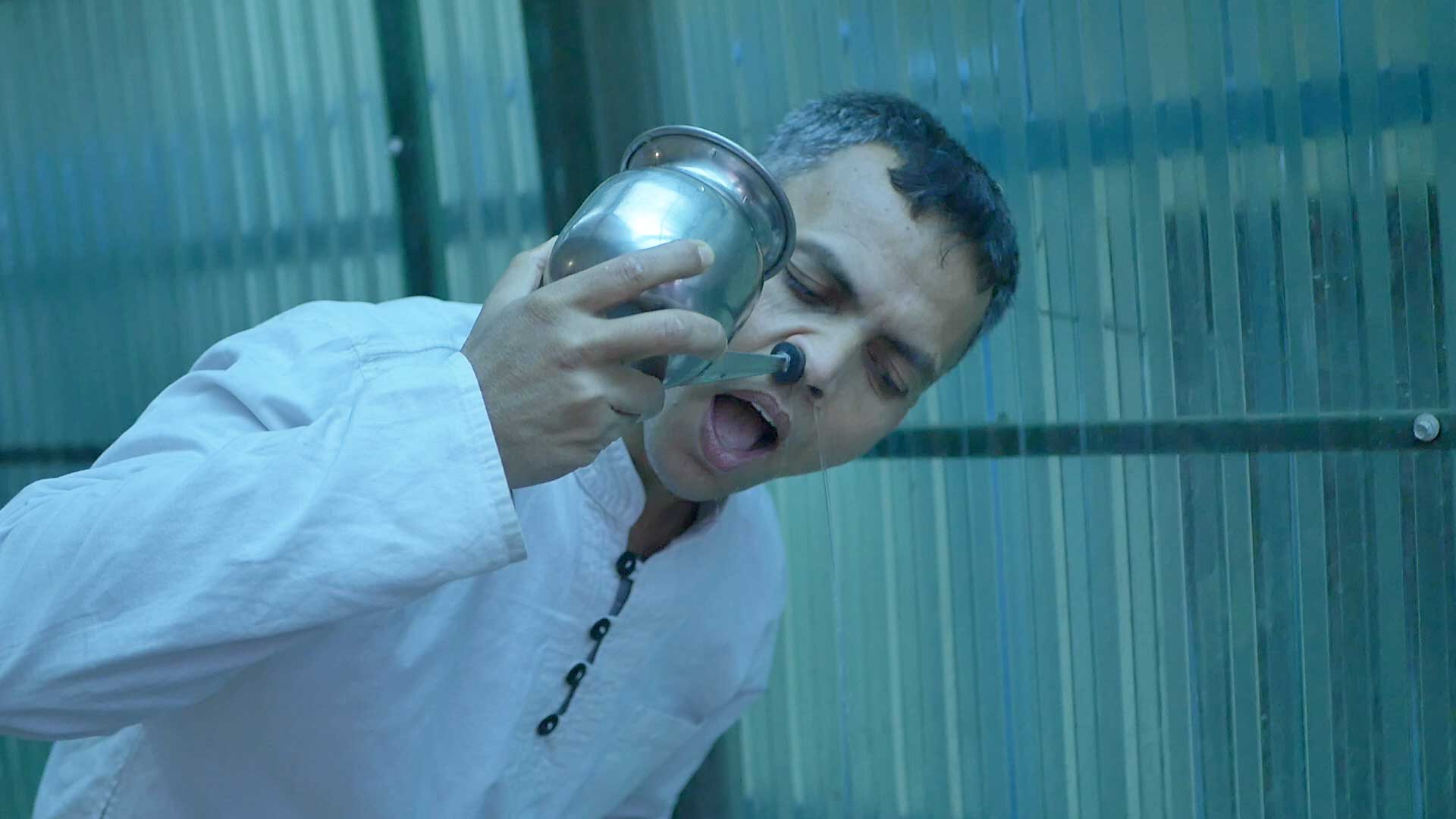
Steam: Take a steam bath or sauna twice a week.
Whoever survives with what is available, what has become of you, and now learn to live happily with deprivation. Learn to live with what you have.
Clap, rub your palms, and wash your hands occasionally. Don’t kill your own hand tissue or skin with too much sanitizer, and have a bath daily.
Smile from time to time, smiling can increase your positive energy. It is the best prescription for stress.
Just as you were careful with a person with a common cold, you should be as careful as you are with a person who is unfamiliar with normal behavior, infected persons, and in crowds. Use Max in only crowds, in hospitals, and crowds.
Our lungs with a capacity of 2100 C.C, but 1/4 of the lung capacity is working now who live in urban life or modern life.
Live a normal and active life, not just a life of comfort, a life of happiness and joy. Although it is difficult to find happiness, we should achieve a life of happiness and joy because it is obtained from within and not bought on the market.
Make a strong willpower, have a fresh mood, and be positive.
ॐ Survey Bhavantu Sukhin! Survey Santu Niramaya! Survey Bhadrani Pashyantu, Ma Kashchid Dukh Bhag Bhavet !!
Om Shanti!
Sirsasana ( Head Stand Pose)
Sirsasana consists of two words, where ‘Sirsa’ means ‘the head’ and ‘asana‘ means pose. It is also commonly known as headstand, also known as Salamba Sirsasana. It is known as the ‘king’ of asana, but Aarogya (Therapeutic) point of view, sometimes it can be ‘killer’ in the technological era instead of ‘King’ because of the illness complications such as Hypertension, Heart problems, Brain problems, Excess stress, and the stage of beginners. In this yoga pose, the body is completely inverted and held up right, where the body is supported by the forearms, while the crown of the head rests lightly on the floor.
Steps to do Sirsasana
Preparatory Phase:
It is very intense postures, so we need to prepare very well.
i. Sukshma Vyayama: Fingers; wrist, elbow and shoulder exercises, Neck Exercises, Eyes exercises
ii. Pre-aasanas: Tadasana, Vajrasana, Bhringasana, Shasankasana, Dolphine Pose
Methods:
- First of All, Lower yourself down on your knees or from Shasankasana, place your arms on the floor and interlock your fingers in such a way that the weight of your upper body is focused on your arms.
- Then, extend your legs and lift your buttocks in the air to enter into the dolphin pose.
- Rest your head on the interlocked finger to give it a base. Lift your heels and rest your legs entirely on your toes.
- Now slowly bend your knees and slowly lift one of your legs off the floor.
- Try to slowly lift your other leg by folding your knees by slightly pushing the weight of your body to your head.
- Stretch your legs straight, maintain the balance of your body and hold the pose for half a minute to 3 minutes, and more depending upon your comfort level.
- We can perform different variations of legs and also Ardha or padmasana as well.
- To come out of the pose, slowly bend your knees and try placing your feet on the floor one by one and hold in Shasankasana.
- Roll back into the sitting position Vajrasana, Ardha -Vajrasana and Tadasana and let your body relax for a minute or two in Shavasana.
Note: Counter Pose of Sirsasana is Tadasana
Benefits of Sirsasana
- It keeps all organs free and relax.
- Strengthens the arms, core, legs, and back.
- Increases the blood circulation and impulsive communication.
- Improves the immune system.
- Due to the inverted pose, there is better circulation of blood to brain and eyes.
- This pose highly improves the nervous system and strengthens the spine.
- It’s the solution for insonmia, loss of concentration, loss of memory, anxiety, in beginning stages of stress and anger management.
- Inverted pose puts pressure on pituitary and pineal glands which in turns improve its efficiency.
Sirsasana Contradictions
- People having any form of back injury or neck injury.
- People with blood pressure issues and heart disease.
- Pregnant women or women who are menstruating shouldn’t practice this pose.
We will teach you how to do Sirsasana properly. Join our 200-hour or 300-hour yoga teacher training program at Himalayan Yoga Academy in Nepal. You will be properly guided by our experienced teachers.
FAQs about Our Best Online Yoga Teacher Training
Here we present FAQs about our Best Online Yoga Teacher Training to provide you with meaningful insights.
1. What makes your online yoga course different than other online yoga teacher training courses ?
Ans: Our online course is so unique that you will get both physical and theoretical knowledge of Yoga, most understandably. Our main Guru, who has the experience of more than 20 years, will guide you most positively and innovatively. He and other gurus’ experiences will cover up your satisfaction level and understanding level. You will have no regrets and complaints.
2. Is this online yoga teacher training registered with Yoga Alliance?
Ans: Yes, we are indeed registered with Yoga Alliance USA.
3. Is this online yoga teacher training suitable for beginners ?
Ans: Yes, this 200 hour online yoga course is suitable for beginners. They will get every beginners training and knowledge. Everybody in Beginning is beginners.
4. What device can I use to take the training ?
Ans: You can use any device, such as laptops, tablets, smartphones, etc.
5. How long does this yoga training lasts?
Ans: This is self paced online yoga teacher training. You can complete this course on basis of your comfortless, satisfaction and mutual understanding.
6. Do you also offer yoga teacher training in person?
Ans: Yes, we do. Please contact us for more details.
7. After completion of this course, am I eligible to teach yoga internationally and domestically?
Ans: Yes, the course is registered under Yoga Alliance USA. This accreditation will help you to make you recognize yourself as a yoga teacher internationally, and you can teach anywhere.
8. What is the nature of the course, only physical or something more?
Ans: Of course! It will be more; only physical is not a Yoga course, that is the Fitness course, so this course will be more integrated with philosophy and a physiological base.
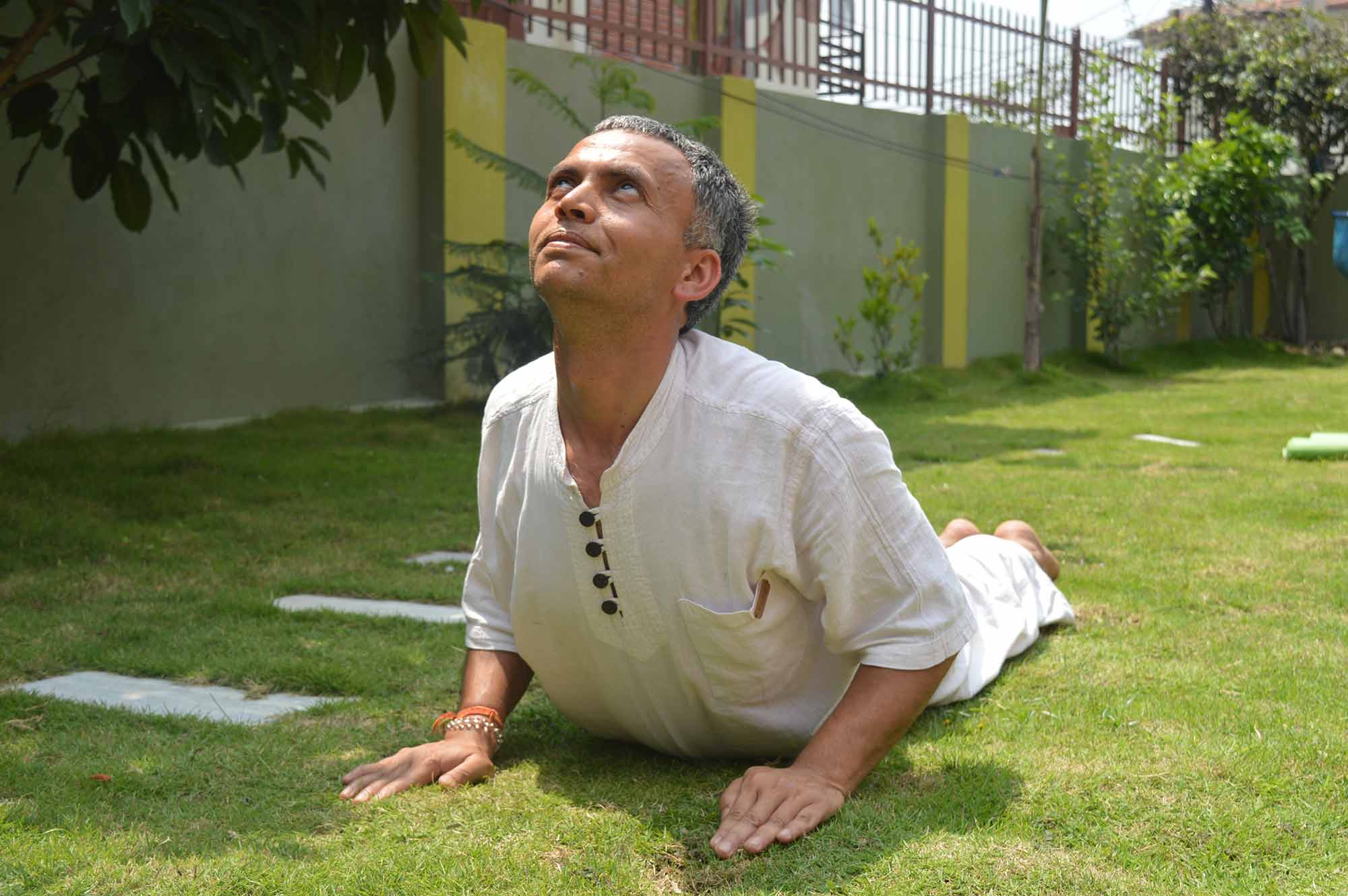
9. Is the online course going on all year?
Ans: We do boost up, regular classes, healing cases, and counselling, but the Yoga Teacher Training course will run on a specific situation only.
10. What are the other benefits of doing Online classes?
Ans: Learning is infinite, and Yoga is the science of life, so you will become a member of our Yoga family. You may get proper guidance, further knowledge, and practices, and also different courses as well.
SCIENCE OF ONE NOSTRIL BREATHING AND PRANAYAMA
We present an insightful article on the Science of one nostril breathing and pranayama. Breathing involves the movement of air in and out of the lungs through the nostrils. The activity of inhalation and exhalation is breathing. Breathing is a part of respiration. For the most part, control of the breath is automatic and involuntary. With each inhale, we bring oxygen into the body and spark the transformation of nutrients into fuel. Each exhale purges the body of carbon dioxide, a toxic waste.
Respiration involves a gas exchange between the lungs and the blood. The deriving energy from food molecules with the help of oxygen is called respiration.
Mechanism of Breathing/Respiration: As the chest muscles contract on inspiration, the diaphragm moves down, the ribs expand and oxygen moves into the lungs. On expiration, the diaphragm and chest muscles relax and carbon dioxide moves out of the body, into the atmosphere. This is called Respiration Mechanism. There are aspects of breathing that we control voluntarily and consciously via the cortex of the brain.
“PRANAYAMA PARAMA TAPAH”
ONE NOSTRIL STUFFY AT A TIME/NASAL CYCLE
Nostrils have the specialized erectile cells/ tissues. At a given time, these cells are swollen in one nostril while they are shrunk in the other. Hence, when we breathe air passes easily through the nostril in which the tissues are shrunk. Throughout the day, they each take breaks in a process of alternating congestion and decongestion called the nasal cycle. This cycle is first discovered by the German nasal specialist Richard in 1895 A.D.
However, because of this swelling very small amount of air slowly passes through the other nostril. Thus, it seems as if we are breathing through one nostril only. Around 85% of proper breathing enters through one nostril at a time. After a few hours, the swelling and shrinking in the nostril reverse. This breathing pattern is called the Nasal Cycle. It is original and natural Pranayam. Generally nasal cycle is beneficial for human beings because some odors are detected better in fast-moving air, while others in slow-moving air. Then the fast-moving odors in one nostril and the slow-moving ones in the other. One nose can detect a greater range of smells. Besides this, our nostrils are moist. Continued breathing can make them dry. Thus, when we breathe through one nostril, the other nostril gets time to become moist again.
Every few hours, your autonomic nervous system, which takes care of your heart rate, digestion and other things what we don’t consciously control, switches things up and your other nostril does all the heavy lifting for a little while. The opening and closing of the two passages is done by swelling and deflating erectile tissue.
One more interesting part of breath is that which nostril is more working that makes different effects on the body and mind. One of the studies in 1998, the breathing through the right nostril particularly raises the glucose levels in the blood and also another study in 1993, the significance of right nostril breathing increases more oxygen than the left one.
Another study in 1994, that breathing through the left nostril influences the right hemisphere of the brain and have vice-versa through the right nostril. When we turn laterally, one side and stay 12 to 16 minutes on one side, is swollen and increases the breath another opposite. This is very huge science as the Swara Yoga Faculty.
THE SCIENCE OF BREATHING
Autonomic Nervous System and Breathing: The autonomic nervous system (ANS) consists of the sympathetic nervous system and the parasympathetic nervous system (PNS) – also known as the fight or flight system, which returns us to a relaxed resting state. The PNS is under the control of the vagus nerve. Nerve fibers from the central nervous system (CNS) go to the organs in the thorax, throat area, the heart, and the abdomen, and fibers from the organs go back into the central nervous system to convey what is going on internally. Nerve fibers send branches into the limbic system of the brain that inhibit the stress responses.
Phase of Swasa, Swasa Vyayama, Swasa Kriya, Pranayama and Uchcha Pranayama
- Swasa (Breath) – it is observed, felt during regular swass process. It will be different forms and stages in Dhyana (Meditation) as well.
- Swasa Vyayama (Breathing Exercise) – It is done and happened with/ throughout the Physical activities.
- Swasa Kriya (Breathing Act) – It is done and smoothly acted by effort with awareness, but no physical exercise.
- Pranayama ( Breath Control) – It is called Kumbhaka or it is practiced with kumbhaka throughout all four phases Puraka, Antara Kumbhaka, Rechaka & Bahira Kumbhaka
- Uchcha Pranayama (Advanced Breath Control) – Kumbhaka is practiced with Bandhas/ Lock.
Deergha Swasa Kriya or Pranayama
Deergha Swasa Kriya / Pranayama also called Three-Part Breath, is a practice of slowing and deepening the breath. Deerga is an essential yogic breathing technique that is taught in most yoga classes along with postures. To practice this technique, slow down the breath and focus on the exhale—especially effective for increasing the relaxation benefits of the practice. There is a small amount of research suggesting that slow yogic breathing can have an important impact on vagal tone, a physiological marker of resilience and stress reduction.
Few studies have found at how this breathing technique might lower blood pressure and improve vagal tone in those with hypertension. In these studies suggest that Deergha can be a helpful tool for those with hypertension, and may also improve physiological markers of stress more generally.
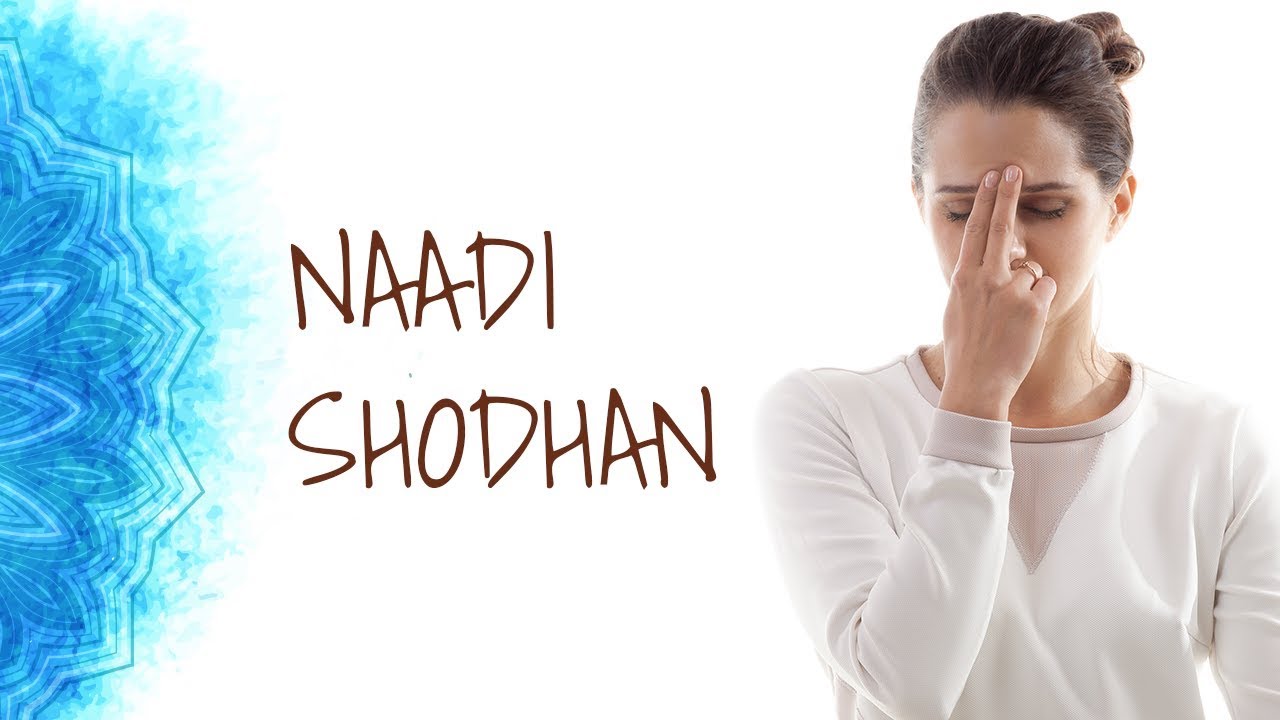
Nadi Shodhana Kriya or Pranayama
Nadi Shodhana Kriya or Pranayama (Alternate-Nostril Breath) is touted for its ability to reduce stress and still the mind. This practice consists of sitting quietly and breathing into each nostril separately by plugging one nostril and breathing in the opposite nostril. The instruction is to practice going back and forth between each nostril slowly and rhythmically. The practitioner plugs the left nostril, breathes in through the right; plugs the right nostril, exhales through the left. Then he or she repeats this on the other side: Plug the right nostril; breathe in through the left, and onward.
Interestingly, as many yogis have noticed in their practice, breathing through one nostril compared to the other produces different effects on the body. For example, a study found that breathing exclusively in and out of the left nostril decreases blood pressure, whereas breathing exclusively through the right nostril increases blood pressure. This aligns with the yogic view that breathing into the left nostril activates the ida (Lunar Path), the energy channel associated with rest, and Lunar breath influences the right hemisphere of the brain. The breathing into the right nostril activates the pingala (Solar Path), the energy channel associated with activity and action, and influences the left hemisphere of the brain. Nadi Shodhana helps balance the nervous system, evening out differences in sympathetic and parasympathetic tone, and it also reduces blood pressure, promoting a greater sense of calm and relaxation. Usually there are four phases of Nadishodhana, i.e, I and II are Nadishodhana Kriya; and III and IV are Nadishodhana Pranayama.
Pranayama (Yogic breath Control) involves the voluntary control of the breath, and is practiced widely in yogasana and meditation, but is something that anyone can do. Slow Pranayama appears to shift the autonomic nervous system from the fight or flight sympathetic to the calming parasympathetic state and has been shown to positively affect immune function, hypertension, asthma, and stress-induced psychological disorders.
Historically, pranayama techniques were aimed at expanding the life-force energy, increasing the life span, and helping people access more subtle experiences—nadis, chakras increased sensitivity to the world. These outcomes are difficult to measure using our current scientific models and techniques; there may be maximum advantages that our current research cannot capture. However, scientists have begun to collect data on the more observable physical and mental benefits of various Swasa and pranayama techniques. While the research is preliminary, their findings may encourage you to get on your physical and breath work.
Bhastrika Kriya or Pranayama:
The Bellows breath, or Bhastrika, is also meant to increase energy flow. Bhastrika is practiced by breathing fully and forcefully in and out of the nose. It is done in three stages: Manda (slow), Madhyama (Medium), and Drutta (Fast). Some researchers in Colleges were curious to see how Bhastrika would impact the nervous system. The participants were instructed to practice a slow-paced bhastrika: inhaling to maximum for a count of four, then exhaling to maximum to a count of six. At this pace, participants were breathing at a rate of six breaths per minute, and they were asked to continue with this practice for five minutes.
Researchers found that Bhastrika produced a significant decrease in blood pressure and a slight decrease in heart rate. The researchers concluded that “slow-paced Bhastrika Pranayama (respiratory rate 6/min) exercise shows a strong tendency of improving or balancing the autonomic nervous system through enhanced activation of the parasympathetic nervous system, and thus can be practiced for mental relaxation and reduction of stress in daily life.” Bhastrika can also increase heat energy, release tension in the abdomen, activate all the organs in the Abdominal and pelvic cavity, control the fat accumulation, help loosen congestion, and decongest the lymph and purify the blood.
Medical Merits of Pranayama
Several studies show the therapeutic merits of Pranayama. One study showed improvement in pulmonary function tests in patients with asthma and emphysema after practicing yogasana and Pranayama for 40 minutes a day over two months. Several studies have supported Bhastrika Pranayama in enhancing “parasympathetic tone.” The study showed the benefits of Alternate Nostril (Anuloma-Viloma Kriya), Nadi shodhan Kriya, or Pranayama in increasing parasympathetic tone by measuring heart rate variability and expiration-inhalation ratios. A pilot study with chemotherapy patients showed improvement in mood and sleep after Pranayama, and numerous other studies support the benefits of Pranayama in Insomnia, depression, and anxiety.
Conclusion
Pranayama is loosely translated as prana or breath control. The ancient yogis developed many breathing techniques to maximize the benefits of prana. Pranayama is used in yoga as a separate practice to help clear and cleanse the body and mind. It also affects our state of mind. In the yogic tradition, air is the primary source of prana or life force, a psycho-physio-spiritual force that permeates the universe. It is also used in asana, the practice of postures, to help maximize the benefits of the practice, and focus the mind, and in preparation for meditation.
OM SHANTIH! SHANTIH! SHANTIH!
Langhanam or Upavāsa (Fasting)
What is Langhanam or Upavāsa (FASTING)? Pancha mahabhoota( Five Elements ) – Aakasha, Vaayu, Agni, Jala, and Prithivi build the human body. The ether element is the first element to appear in this universe, which is the most effective, pervasive, and universal. It is a formless, invisible, and subtle element. Ether element has a vital role in all aspects of health and disease management. Upavaasa (Fasting) is one of the means applied in ether element.
Meaning
Laṅghanam (लङ्घनम्) or Laṅghana (लङ्घन) or Upavāsa (उपवास) refers to “fasting practice & therapy”, and is dealt with in the 17th-century Vaidyavallabha (chapter 1) written by Hastiruci.
Fasting in Sanskrit is called Upavāsa = upa means “near” + vāsa means “to stay”. Upavaasa, therefore, means staying near (the Lord/ Nature), meaning the attainment of close mental proximity with Nature.
Definition
Fasting is the willing abstinence or reduction from some or all food, drink, or intake of excess things, for a period. “लंघनं परम् औषधं” “Langhanam param aushadham” ancient Sanskrit saying that means “fasting is the supreme medicine”.
According to Sanatan philosophy, food means satisfaction of the sense organs, and to starve the senses means to elevate them to contemplation. Fasting in Sanatan, is a method to attain control over one’s desires and senses for the sake of spiritual gain. Doing it for a cause has always strengthened people’s minds to attain their goals.
Fasting in Eastern Philosophy indicates the denial of the physical needs of the body for the sake of spiritual gains. According to the scriptures, fasting helps create an attunement with the Absolute by establishing a harmonious relationship between the body and the soul. This is thought to be imperative for the well being of a human being as it nourishes both his/her physical and spiritual demands.
Merits of Langhanam (Fasting)
- Modifies the function of cells genes, hormones and immunity power rapidly increases.
- Mental acuity: Research and empirical evidence has shown that being in a fasted state can improve cognitive function. The digestive system gets complete rest.
- Build and maintain a healthy gut: Removing food for a period of time gives the gut a break from digesting and assimilating nutrients and can benefit the micro biome.
- Beneficial for brain and the mental power is enhanced.
- Lower stress load and inflammation: Fasting has been shown to lower inflammation by reducing oxidative stress and has also been demonstrated to lower insulin resistance.
- Extend lifespan, help live longer.
- Helps to lose weight, belly fat, fat begins to take place and fat is completely used up.
- Lower the risk of Diabetes by enhancing the catabolism of blood sugar.
If we want our physical, mental, emotional, and spiritual health, we should practice 5 Langhanams (Upavaasa) which are for spiritual power exploration. Our ancients used one very simple principle is called langhanam “paramaushadam-supreme Medicine” Upavaasa (Fasting) is the ultimate medicines.
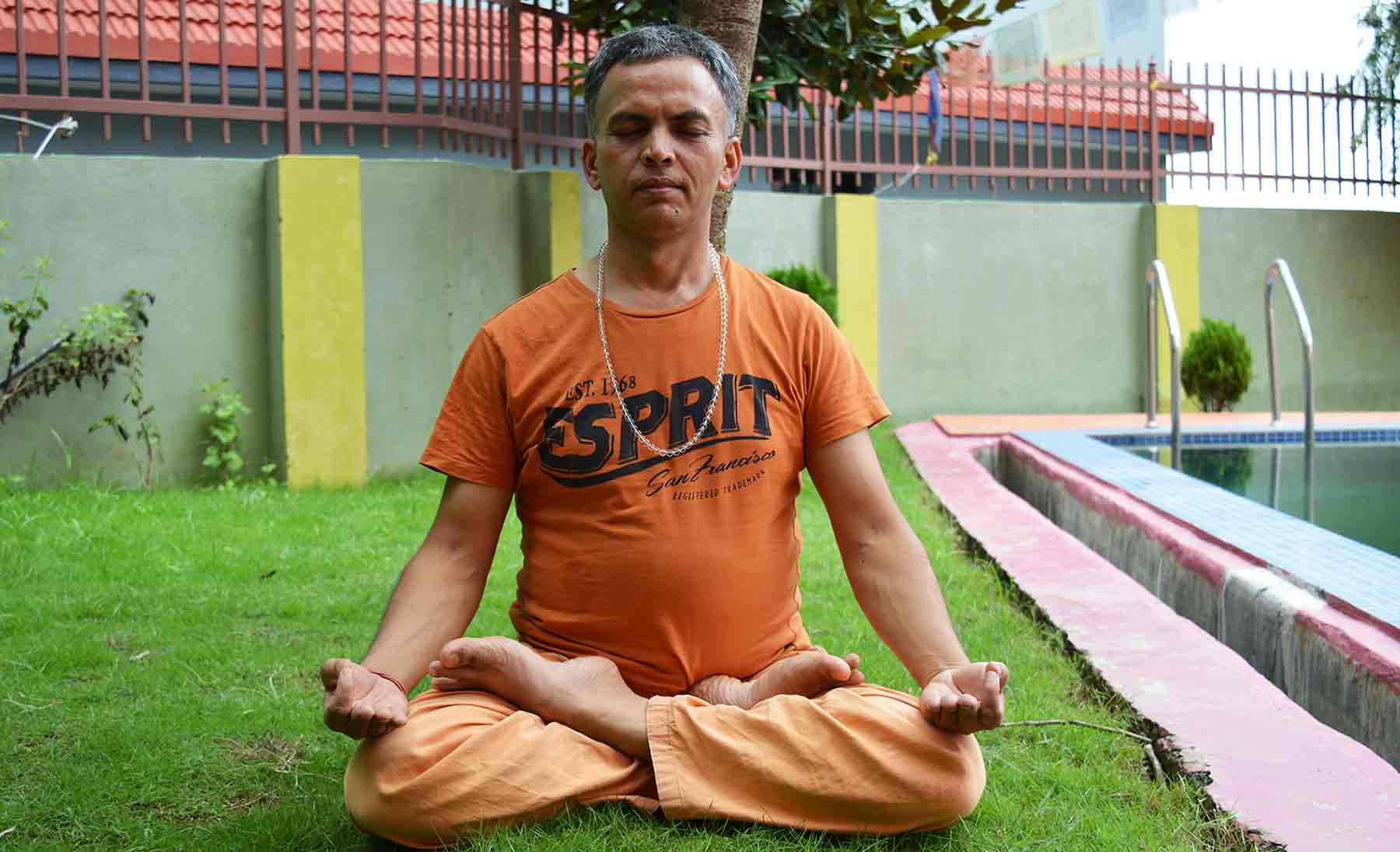
First langhanam/Upavaasa
The first upavaasa (Langhanam) is Anna Upavaasa (Fasting food) – our ancients didn’t use the human body as an eating machine, funnily, so many people lonely are engaging in nonstop eating. The kind of eating will only make you sicker and is going to make you more prone to infections. We should eat when we are hungry and only when our digestive fire burns and asks for it, but not when our tongue asks. That will also give some break to whoever is cooking at home. We start eating only when our breath is flowing strongly through our right nostril, which makes the food digest what we are eating most effectively. When the breath is flowing through our right nostril breath of the solar energy flow, then we can practice any kind of fasting.
We can practice intermittent fast, water or soup or Juice or fruit fasting. Remember even animals fast when they are sick or want to heal ourselves. They always try to live with nature. Langhanam can also be eating right way in right time. All immunoglobulin which are antibodies to fight diseases are all proteins and cellular atmosphere. Eating right will mean taking the right amount of protein into our diet to enhance immunity in the body.
Second Upavaasa
The second Upavaasa (langhanam) is Svasa Upavaasa (fasting breath). Breath is the indicator of the quality of life, lifespan, and also nature of consciousness. Just as the more heat an engine produces, the faster it burns out. Every cell is like an engine that is being powered by the intake of breath. The ancient yogis practiced fasting of breath, they deliberately did slow inhalations and extremely long exhalations with breath pauses. When we practice breath fasting, we will age slowly our thoughts begin to become more positive. You can more easily break away from negative thinking, release the tension, unnecessary pressure, and release over fatigue, and suffer.
Third Upavaasa
The third Upavaasa (langhanam) is Vachan (Speech) fasting, which is hurtful and pessimistic speech. Very few people have Vaak Shakti or the power of speech to manifest their goals. The more consciously we speak true words and cause joy to others in a very pleasing tone, our vaak shakti grows. Mauna (Speechless) and true speech are the calming process of the mind and reduce the firing in the mind. It helps to regenerate the energy and to rejuvenate the body and mind.
Fourth Upavaasa
The fourth Upavaasa (langhanam) is stillness / Asana fasting movements. It is not about living on our couch, eating popcorn, and watching TV. Fasting movement means sitting still, making more steadier, either observing our breath, listening to the sound of nature, hearing your entire sounds, or with the name of our divine being inwardly. Still, even if we can sit still for a minute at a time. It will bring down the restlessness in our body and mind. It helps us concentrate in the mind and become more still in meditation. Asana is the first step for Dhyana (Meditation).
Fifth Upavaasa
The fifth Upavaasa (langhanam) is thoughts fasting. Every second we have 24 to 40 thoughts firing in our mind. Much more thoughts can tense our brain and generates the tension and intense in stress more and more.
What is thought?
Thought can refer to the ideas or arrangements of ideas that result from either intrinsic (arising from within) or extrinsic (arising from the environment) reactions. A thought may be an idea, an image, a sound, or even an emotional feeling that arises from the brain. Thoughts are covert symbolic responses to stimuli that are considered to mediate between inner activity and external stimuli.
“Yogashchittavrittinirodhah”, P.Y.D 1.2 that means the cessation of modified thoughts in chitta is yoga. Thought fast reduces the number of thoughts and stilling and calming the mind that creates the state of the devoid is known as meditation. During the fasting, we should be in the present moment, not with the past and not with the future.
To Sum up
Langhanam or fasting is a superpower. We try this 5 langhanams / Upavaasa practice, and we will get and feel great power in our body, our mind, and consciousness. This upavasa practice and therapy is as old as the human race itself, which was mentioned in the Vedas, the Bible, and the Kuran.
Reasons to Involve Your Kids in Yoga Practice
Naturally, kids are born to learn from their environment. Kids are a form of God as pure as a lotus. Kids are like a sponge that absorbs everything around them so quickly. They normally do what adults do by copying them in different ways. Yoga is important for kids for many purposes in their lives. It is important for adults as well. Learn reasons to involve your Kids in Yoga Practice.
Children’s age is the best time for the initiation of yoga learning and practice. An Upa-nayan rite is the initiation of yogic life by offering the Gayatri Mantra, which enriches their true knowledge by reciting regularly. The means of Yoga helps kids to relax, relieve stress and anxiety, sleep better, improve emotional regulation, increase empathy, and improve mood and moral ethics.
‘Om Bhūr-Bhuvaḥ Svaḥ Tat-Savitur-Varēṇyaṁ; Bhargō Dēvasya Dhīmahi Dhiyō Yō Naḥ Prachōdayāt.! (Rigveda 3.62.10)
ॐ भूर्भुवः स्वः तत्सवितुर्वरेण्यं; भर्गो देवस्य धीमहि, धियो यो नः प्रचोदयात् ॥
Reasons to Involve Your Kids in Yoga Practice
1. Awareness and Self-Esteem
Yoga brings a lot of change in the physical and mental state of the person. So as its makes every functioning of the body more and more aware, those person who does yoga are more stress free and normally there every action are more focused and very sharp. If yoga is taught to the children, since children natural behavior is very naughty and restlessness, they seem to try fun in every work they do.
So normally they are not aware of their action. But yoga teaches them to balance their body and mind coordination and enhance their moral discipline. Hence, they try to become more aware of their action. Yoga also helps to cultivate increased self-esteem, self-confidence, and empathy within kids, which translates to more positive relationships with others by reflecting their positive attitude toward themselves onto others.
2. Yoga Improves Social Relationships
Yoga is typically regarded as an individual activity. While that is partially true, there is a social component to yoga, especially called Yama such as Ahimsa, Asteya, etc. We go to yoga classes with other people and take part in the yoga community where we can share our experiences with others.
For kids, the entire yoga practice is a social one. Yoga for kids typically includes songs, mantras, yogic games, Mudras, and other fun activities that get kids moving together and learning from one another, particularly with partner yoga poses. This creates a positive, engaging environment in which kids can have fun, feel pleasure, talk to one another, and learn to trust and respect one another.
3. Determination and Concentration Development
Yoga is a combination of concentrating on your breath, energy, attention, and limiting your thoughts. With children’s receptive nature, they will learn the art of concentrating on their breathing and focusing attention within no time. The skills, will, and interest, overall, impact their concentration levels.
Kids who practice yoga with different means like postures, pranayama, and meditation regularly find it easy to stay focused and concentrate for a more extended period. Their attention span is boosted, and their ability to grasp more is increased. If you want your kids to have an improved concentration span, at this epoch when it is hard to maintain concentration, tag kids in yoga practice.
4. Flexibility and coordination
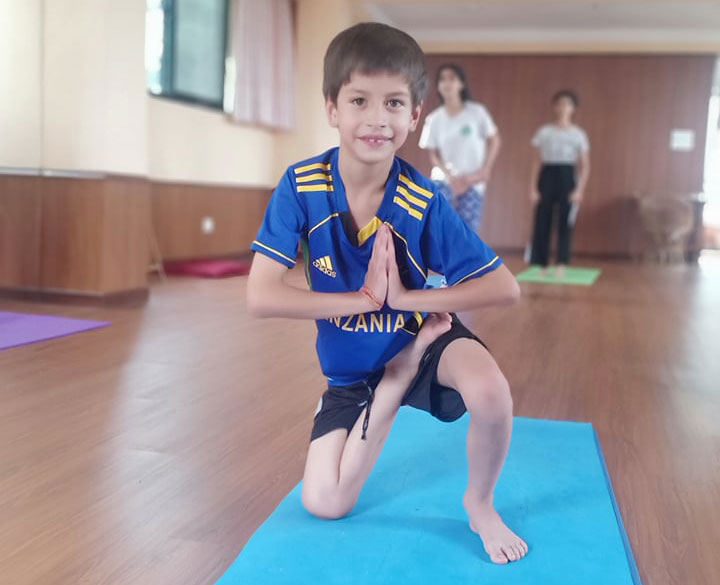
Since Yoga also consists of physical activities, yoga is not only the yogasanas, it is more about flexibility, strength, and posture help enhance flexibility and coordination. Yoga Asanas builds the strength and flexibility of your child in an instant. For example, Malasana (Squat Asana) is a challenge – a pose that resembles sitting on an imaginary chair on the floor with your hands behind your legs, builds balance, strength, and flexibility.
Tagging your kids along for yoga practices enhances their body flexibility. Children who have a flexible body are healthy, confident, and strong. A flexible body results in better posture. The benefits accruing from having a better posture among children are numerous.
5. Yoga Improves Sleep
Getting the body moving before bedtime is an excellent way to improve sleep. When we are stressed or overwhelmed, our bodies are tense and our minds are full, reducing our ability to sleep well. This is also true for kids.
We tend to think that kids “have it easy” and that they don’t feel stressed, but this simply isn’t true. Kids aren’t stressed about finances or getting to work on time, but they are stressed out by their schoolwork and peer relationships. The physical practice of yoga also helps to relieve tension and release negative emotions held physically in the body, helping them to fall asleep faster and stay asleep longer.
6. Yoga Improves Strength and Breath Control
Especially Yogasana in Yoga takes some strength, both mentally and physically. When practiced regularly, we notice many physical, emotional, and cognitive changes within ourselves, particularly increased flexibility, upper body strength, enhanced vitality, and mental clarity. All of this newfound strength has much to do with the breath.
When we breathe harshly or quickly, we increase muscle tension, reduce focus, and heighten our fight-or-flight response, all of which have detrimental effects on our minds and bodies. Teaching proper breathing techniques, and building physical and mental strength from a young age, helps to reduce the chances of obesity, depression, and depressive symptoms, as well as increases self-esteem, self-confidence, and improves overall wellbeing.
7. Physical and mental stress
Yoga provides an avenue through which children can deal with physical and psychological stress. Due to the changing nature of children’s bodies, stress due to physical changes is bound to occur. When the stage comes, most parents are lost for ideas on what to do. If your child’s stress is on writing, the best writing help is available. Yoga is the solution as it introduces children to a nurturing and loving community that encourages self-acceptance. This helps children to discover their strengths and shortcomings.
As yoga’s core values are self-acceptance, your kids will find both physical and emotional stability. Additionally, health symptoms caused by anxiety and stress can be cured by yoga. As kids, these health symptoms are regular and frequent. A child with previous experience in yoga practice will have a better way of dealing with stress and anxiety as an adult, despite the child’s age.
8. Calmness in children
The manner of execution of yoga poses requires a great deal of enthusiasm, determination, and focus. The result is that a sense of clarity is achieved at the end that leaves your children’s body with calmness. Yoga teaches kids to relax. Unlike other sporting activities that have competitions, yoga is a non-competitive activity. Your child will be at peace and relaxed, knowing that it isn’t a competition.
Furthermore, the focus on breathing in and out results in relaxation. When a person is tired, they breathe in and out to relax their muscles, which also happens in yoga. As your child poses to breathe in and meditate, there is a general feeling of clarity.
9. Yoga Improves Independence and Coping Skills
As mentioned above, yoga is both a social and individual activity. One of the benefits of practicing an activity that is both individual and social is that it helps kids to recognize what “individual” and “social” mean.
Kids rarely do things on their own. After all, they are kids! It’s up to us adults to make the most of the decisions for them. However, it is still important that they learn how to do things on their own. Practicing yoga is a great way to introduce independence to your kids because their practice, and what they get out of their practice, is theirs and only theirs. By increasing independence in practice, we are also helping kids to develop their coping skills.
To Sum Up
All of these benefits make it clear that yoga is an important tool in our children’s physical, mental, and spiritual well-being. It offers optimum health, happiness, and harmony. Practicing yoga is something we do for ourselves, as adults, to help us unwind and reduce both physical and mental stress. Yogic practices make them focus and free of minds as well.
TEEJ FESTIVAL : A UNIQUE RITE AND CULTURAL BEAUTY IN NEPAL
Nepal is one of such unique countries with the beauty of culture and nature, where festivals are celebrated with joy and in a very vibrant way. Being a multi-ethnic nation, Nepal celebrates each festival uniquely. One festival can be celebrated with a different essence by different ethnic groups. In Nepal, there are many small and big festivals celebrated in each month. More about the Teej Festival.
Teej festival is the biggest Hindu festival of Nepalese women, generally falling in August or early September, which is celebrated all over Nepal. Mainly, the festival is dedicated to Goddess Parvati, the wife of Lord Shiva. During this Teej festival in Nepal, married women take Vrata (religious fast) for the long and healthy life of their husbands and family as well as pray for health and prosperity. On the same occasion, unmarried girls take Vrata to get a nice husband in the future. Both Married and unmarried women celebrate Teej with joy, love, and dedication. During the festival, women are dressed in red Sarees with gold ornaments as much as possible.
WHAT IS TEEJ AND ITS ORIGIN?
The name of this festival, “Teej,” is believed to have come from a small red insect, which only appears on the earth at the end of the monsoon season around August. So, this festival is named after that particular insect, “Teej.” Occurring around August, the Teej festival is celebrated by women all over Nepal for three days. Wearing the red sarees and red tika, bangles, they sing and dance to traditional folk songs for days. It is especially significant for married women when they get a special invitation to visit their birth town/ maternal home and feasts.
Having a long feast also known as Dar in dinner and supper, they sit for a 24 hour long Vrata / fasting, where most do not eat or even drink water. What is fascinating is to watch women of all age group, young and old, dance for hours in the heat, rain, traditionally without a drop of water or food for an entire day.
REASON BEHIND TEEJ FESTIVAL CELEBRATION
Teej festival is dedicated to the Goddess Parvati, marking her union with Lord Shiva. Teej is celebrated for the well-being of the husband, children, and the whole family as well. Nowadays, they celebrate this festival as a way to be united and have fun while praying for the well-being of the husband and all members of the family. It has also become a way to bring women together from different classes and celebrate the festival as one. The celebration of Teej implies the ultimate sacrifice a woman makes for her husband’s health, prosperity, and longevity.
HOW TO CELEBRATE TEEJ
In Nepal, Teej is a three-day festival. However, Teej is celebrated in different ways in different regions of Nepal. This festival is celebrated for a total of three days that combine the feast as well as rigid fasting, culturally without drinking a drop of water. Teej is celebrated all across the world by Nepali Hindu women. It gives fun, mental relaxation, full of entertainment, cultural pleasure, and family harmony. Teej is a vibrant and pleasant festival that has become more popular since its start. However, in recent years, this festival has influenced many Nepali women residing all over the world. Women in red attire sing and dance in the street, going to the temple in a holy and even at home in a fasting mood and strength. Usually, women get called by their parents or brothers, where they celebrate Teej with the rest of the family members and siblings.
HARITALIKA TEEJ
The word “Haritalika” is comprised of two words, “harit” and “aalika”; “harit” means “abduction” and “aalika” means “female friend.” Haritalika Teej is celebrated as a remembrance of the Goddess Parvati and Lord Shiva. As per the story, Goddess Parvati’s father made a promise to marry her to Lord Vishnu against her wish. But she didn’t like it and she told this to her friend, and she took Parvati to a thick forest where Parvati’s father couldn’t get her. Goddess Parvati prayed to Lord Shiva by making a Shiva lingam from her hair. Impressed by her devotion towards him, Lord Shiva married Parvati and since then, the day is referred to as Haritalika Teej as Goddess Parvati’s friend (aalika) abducted (harit) her so she could achieve her goal of marrying Lord Shiva. So, Teej is celebrated in Nepal as Haritalika Teej.
Lord Shiva-Goddess Parvati Unification
In Hindu mythology, it is believed that Goddess Parvati and Lord Shiva were united on this day. For this, Parvati had to endure penance. It is said that she took 108 births on Earth before Lord Shiva accepted her as his wife. Since then, this day is considered to be an auspicious day, and it is believed that whoever remembers her on this day will be blessed with a happy married life and all her desires will be fulfilled.
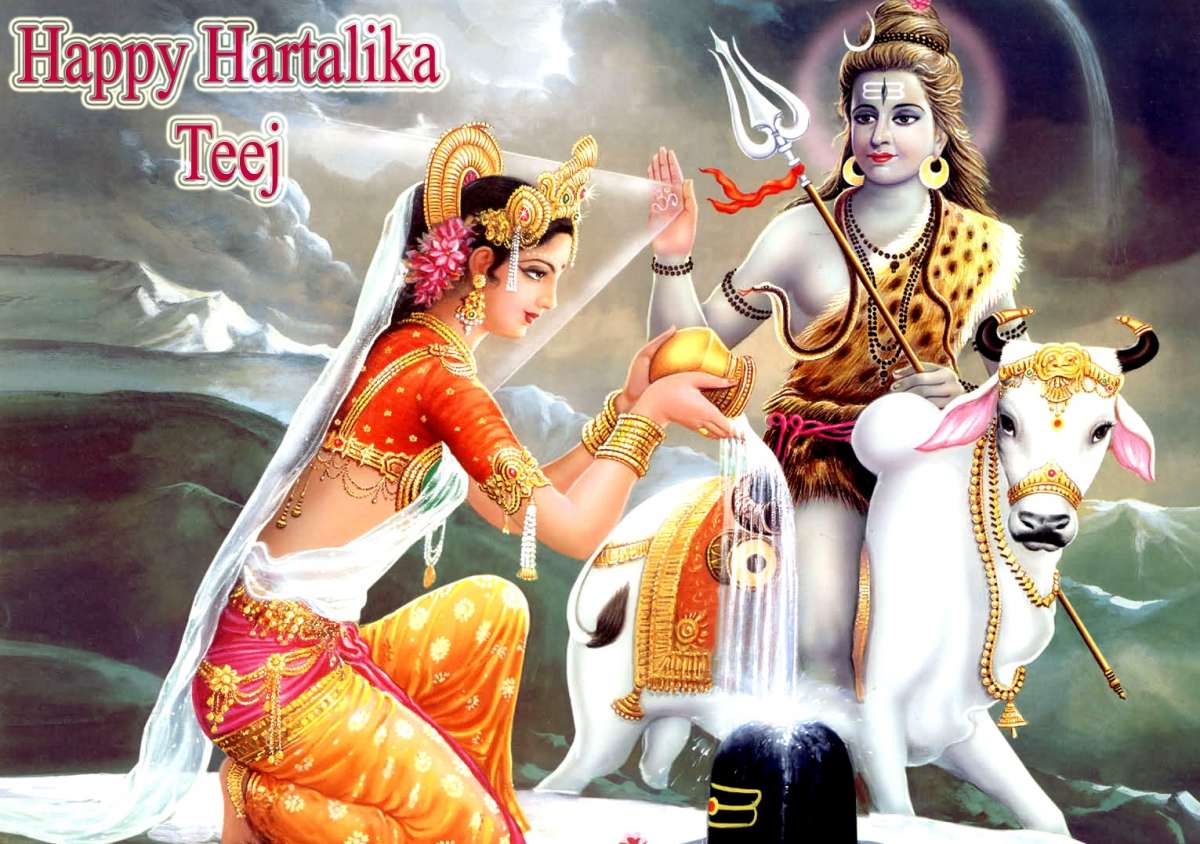
One special aspect of Teej celebrations is the ‘Teej Katha’ that includes the stories of the legends associated with the festival. In the evening, the women gather to hear the narration of this Katha and pray for the good health of their husbands and husbands-to-be and a blissful married life. Teej Puja begins with the offerings of flowers and fruits to the goddess. The food delicacies such as Ghevar, Dal Bati Churma, Besan Laddu, Kaju Katli, and Sattu form an indispensable part of Teej celebrations.
Significance of Teej Festival in Nepal
Teej is a great festival for Hindu Women who celebrate the long-lasting life of their Husband. It is also a monsoon festival celebrated for the union of lord Shiva (a Hindu God known as destruction, consciousness, and creation) and Parvati (the Hindu Goddess is known as Devi Shakti, will, action, and knowledge).
The significance of such a festival is for women to ask for special blessings by Lord Shiva, to have attain a good husband in life, and to pray for his longevity and prosperity.
On the final day of this three day festival Women satisfy seven saints offering them food, money and various offerings, and also bathing with Red mud and brushing their teeth with Datiwan (branches of a bush tree) hoping this purifies their body and soul.
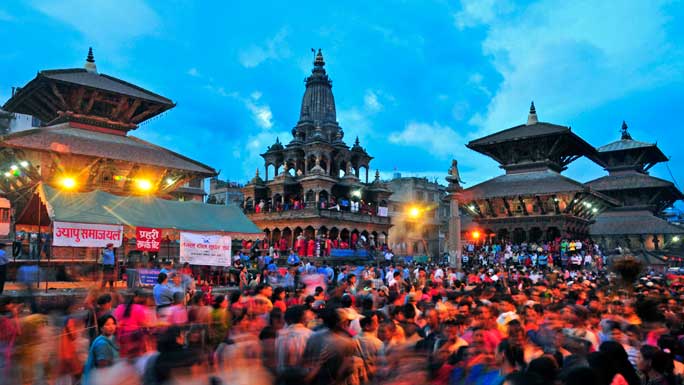
It is a sight to behold at the Pashupatinath temple, where thousands of women draped in Red and green throng the premises of the temple. Observers can take photos of these women dancing merrily, where sometimes foreigners, especially women tourists are requested to participate in the merry-making.
This festival is a symbol of dedication of goddess Parvati for Lord Shiva. Even today, women commemorate this mythological event by keep a ‘Nirjara Vrat’ for their husband’s well being and long life. This festival also helps in strengthening the bond between couples. This festival also welcomes the advent of Monsoon season.
Teej in Pashupatinath Temple
Pashupatinath is a famous Hindu Temple and also an important religious site for Hindus, and is dedicated to Lord Shiva. It is believed that Shiva (a Hindu God) is the most powerful deity, known as the God of Gods, also named as the one who has the power of creation and destruction. According to Hindu Mythology, Pashupati is the incarnation of Lord Shiva as the animal.
As Teej is all about Mahadev Shiva and Devi Parvati, people visit Pashupatinath Temple to worship Lord Shiva and to pray for the happiness and health of the family. More than 500,000 Nepali women visit Pashupatinath Temple during the Teej festival. People from different parts of the Indian subcontinent come to visit Pashupatinath to appease Lord Shiva.
Mental Detox Nine Tips
The human body is composed of Pancha kosha (five sheaths), the 5 body layers, i.e, Annamaya Kosha (Physical or food Sheath), Pranamaya Kosha (Vital Sheath), Manomaya Kosha (Mental Sheath), Vijnanamaya Kosha (Wisdom Sheath), and Anandamaya Kosha (Blissful Sheath). The first sheath is called the food or physical sheath, the foundation of life. “Anna Brahma” means that food is divine. Food is nectar, but sometimes it becomes poison and produces poison as well. Food also detoxifies the body & mind. Similarly, we get toxic forms on each sheaths mentioned above, like vital mental, wisdom sheaths. More about Tips for Mental Detox.
Many of us love eating good foods as fancy as the preparation, may look as delicious as they may be. They get digested once they enter into our system and the body needs to throw the unwanted waste out in a day failing which can cause illness. There is nothing in the world that can quench our thirst more and make us feel more refreshed than water. Yet if the body doesn’t throw that water out in a couple of hours that retained water can be the cause of illness.
Noise-induced hearing loss not only affects hearing, but it could also affect the brain’s ability to recognize speech. Prolonged exposure to loud noise alters how the brain processes speech, potentially increasing the difficulty in distinguishing speech sounds, according to neuroscientists. Exposure to intensely loud sounds leads to permanent damage to the hair cells, which act as sound receivers in the ear. Once damaged, the hair cells do not grow back, leading to noise-induced hearing loss.
Once I saw a very elderly yoga teacher teaching her yoga students breathing techniques. She asked them to breathe in and hold their breath. But elderly as she was, she happened to fall asleep. The students who respected her a lot were unable to hold their breaths any longer, but didn’t even want to disobey her. Finally, as they were gasping, one of them walked up to her and woke her up. As she got up, she said-“and now breathes out”. As funny as this may sound, the air we breathe in can be held for no more than a few minutes, and if it is not thrown out, we may die.
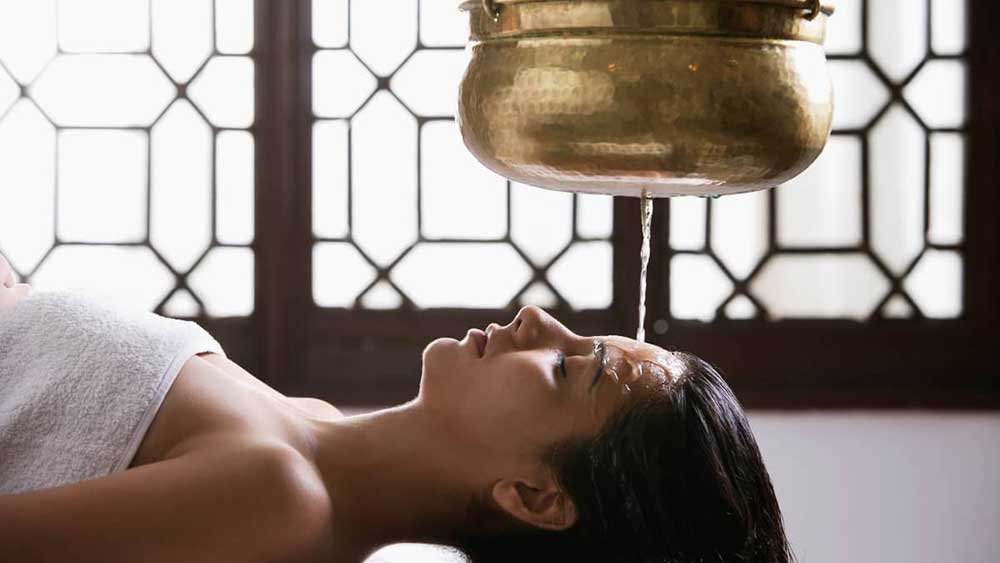
Isn’t this principle true for our negative emotions as well? Emotional hurt, envy, jealousy, greed, feelings of hatred, revenge, and anger can make our minds toxic. Yet we continue to hold them in our system, only leading to so many psychological, biological, and consequently physical disorders. The body has a system to remove unwanted food, water, air, and chemicals without us even being aware of it. How we wish there were an automatic arrangement that could throw negative feelings and emotions out as well. But that’s not how it works with the mind. We have to consciously work on detoxifying these toxic emotions out of our inner systems.
Tips for Mental Detox
- Write your feeling down on a paper and discard it. You may tear the paper into many pieces and burn it into ashes, this practice does not necessarily solve this problem but allows us to express ourselves and release the negative energy at least temporarily.
- Express actively your emotional feelings, angers, and stressors with physical exercises under dynamic techniques for Meditation.
- Open your heart and confide into someone close and trustworthy. Sharing our feelings cannot out lighten the heaviness. We feel but we may also receive support and guidance to deal with our negativity.
- Generalize all the issues and simplify them. Do not make big issues; always try to resolve these cases.
- It’s not bad to be busy but bad to make crazy, in terms of this, try to have easy.
- Always try to live easily and happily with scarcity and something else you have or do not have.
- Attempt the speechless (Maunavrtta) once a month, stilling and calming the mind by meditation.
- Sound Healing and meditation (Dwani Patro) will purify and calm the mind and enhance mental power.
- Adopting a spiritual practice: The most powerful of course is adopting spiritual practice which can help us cleanse our consciousness and give us the inner strength to fight tendencies. Always remember that it is not the glass of water which is only a couple of grams in weight that hurts our mind, it is the duration for which we hold it. The better it is for us.
Conclusion
Attempting all the applied kriyas and understanding can detoxify our mind and also enhance our energy that keeps our mind fresher, natural and updates. Silence and calmness are the major means for mental detox.
OM SHANTIH! SHANTIH! SHANTIH!
KRISHNA BHAGAVAD GITA AND YOGA
Janmashtami, the birth anniversary of Lord Krishna, is celebrated in various parts of the country with great enthusiasm. The festival is celebrated with most fervor in Mathura, which is said to be his birthplace. The Mathura, ruled by the evil King Kansa, whose sister, Princess Devaki, was Krishna’s birth mother. Devaki and Vasudeva were married with a lot of fanfare, however, a prediction said that the couple’s eighth son would cause Kansa’s downfall.
According to legend, Krishna was the eighth son of Devaki and Vasudeva. Devaki was the sister of Mathura’s cruel king Kansa, and it was prophesied that her eighth son would be the cause of his death. The moment Kansa got to know about the prophecy, he had both Devaki and Vasudeva imprisoned and, one by one, killed all their sons until Krishna was born.
All hell broke loose when Kansa heard of this and imprisoned Devaki and Vasudeva instantly. The evil king got their first six children killed, but at the time of the birth of the seventh child, Balaram, the fetus is said to have been mystically transferred from Devaki’s womb to Princess Rohini’s. When the couple’s eighth child, Krishna, was born, Vasudeva managed to rescue the baby and gave him to Nand Baba and Yashodha in Vrindavan.
KRISHNA, KRISHNA JANMASHTAMI, BHAGAVAD GITA AND YOGA
ॐ कृष्णाय नमः “Om Krishnaya Namah”
Meaning: ‘Accept my salutations, Oh Sri Krishna.’
Date and time of celebration
Krishna is believed as the eighth avatar (incarnation) of Lord Vishnu. He is said to be born on the eighth day of the Krishna Paksha (Dark Moon Time of the month) in the month of Bhadra (August- September) according to the Vedic calendar. As per Drik Panchang, devotees observe a fast on this day and abstain (fast) from consuming grains until the next day’s sunrise. Krishna Janmashtami is also known as Krishnashtami, Ashtami Rohini, Srikrishna Jayanti, Gokulashtami, Sree Jayanthi, etc.
About Krishna Janmashtami
Janmashtami is the birthday of Lord Krishna, which is celebrated with great ardor and zeal in Mathura during the monsoon season. If we go by the Nepali calendar, this important day falls on the Ashtami or eighth day of the Krishna Paksha or dark fortnight of Bhadra month. No one knows when this festival originated! Maybe a thousand years ago, this festival found its foothold in our culture. One would come across various legendary stories and myths encircling the birth of Janmashtami.
Among all of them, the most widely accepted view is that Lord Krishna is the eighth avatar (incarnate) of Lord Vishnu. We all know from the Mahabharata that the birth of Lord Krishna was to kill the demon Kansa, who happens to be his maternal uncle. Whenever there is some imbalance in the universe regarding peace and prosperity, it is said that Lord Vishnu comes to save humanity from the hands of demons.
Bhagavad Gita Relates
The tale of the Mahabharata has a lot to do with the life of Lord Krishna. During the Dharma Yuddha (righteous war) between the two Pandavas and Kauravas, Lord Krishna played the charioteer of Arjuna. He was encouraging Arjuna on various segments of life like Dharma (righteous path), Karma (deeds), Theistic Devotion, Yogic ideals, salvation, knowledge, etc., because Arjuna was in emotional commotion in killing his brothers and cousins. The verses mentioned in this book are often called a life guide or spiritual dictionary.
Lord Krishna stated that whenever there is prominence of evil deeds in this universe, he will reincarnate in various looks and attire to show the path of right and peace to all. The Gita, as it’s commonly called, is a dialogue between Prince Arjuna and Sri Krishna, Arjuna’s charioteer, friend, and counselor. The story opens to the scene of a battlefield just prior to the start of a gigantic war, with Arjuna asking Krishna for guidance.
THE BHAGAVAD GITA AND YOGA
The ancient scripture, Srimad Bhagavad Gita, is a treasure for ‘yoga’ lovers. The Holy Scripture speaks about the detached way of life through its 700 verses (shlokas) divided into 18 chapters. It is the conversation between Arjun and Lord Krishna. Though all 18 chapters are considered as yogic paths which are associated with the Yogic message, four chapters are specifically applied in human life. The Bhagavad Gita is the most treasured and famous of spiritual or yogic texts. Composed of 700 verses, the Bhagavad Gita was written in the third or fourth century BCE as part of the epic text the Mahabharata.
The three types of ‘yoga’ advocated by the Bhagavad Gita are – Karma Yoga, Bhakti, Jnana Yoga, and Dhyana Yoga.
1) Karma Yoga (Yoga of Action)
Karma Yoga comes from ‘Karma’, which means action. Bhagavad Gita says that one should act selflessly without attaching himself or herself to the outcome. The Karma yoga is known as the Path of Work. Considered the most practical of all the paths, it is a path of action. To be one with the divine, a spiritual and Hindu believer must act selflessly. In other words, a person should do what is right, not because they want to be rewarded, but simply because right is right.
2) Bhakti Yoga (Yoga of Devotion)
Considered as one of the easiest forms of ‘yoga’, Bhakti yoga means doing ‘bhakti’ or worship of the lord selflessly. It is said that this form of yoga can be practiced even in regular life, as one does not need to leave everything or follow a rigorous regime to attain salvation through this form of ‘yoga’. This form of yoga simply advises one to get absorbed in the supreme soul. It advises to feel that supreme power into one’s soul and vice versa. It asks to always keep the mind engaged in ‘me’, i.e., the supreme lord – Lord Krishna.
3) Jnana Yoga (Yoga of knowledge)
This last yoga of Bhagavad Gita talks about ‘Jnana’ or ‘knowledge’ through which one can attain salvation. Unlike the other two forms, this one advocates to know the absolute, the Brahman. Like the other two, it does not advise to practice a form of meditation. Rather it asks to know beyond name and form of the doer of an act and understand him as per his nature.
4) Dhyana Yoga (Yoga of Meditation)
Sitting and concentrating the mind on a single object by controlling the thoughts and the activities of the senses, is realized as Meditation. Let the yogi practice meditation for self-purification. If you feel you have no love for Krishna or not much devotion, then chant the Hare Krishna mahamantra under proper guidance, and love for Krishna will manifest in your heart.
Hare Krishna Maha Mantra
हरे कृष्ण हरे कृष्ण कृष्ण कृष्ण हरे हरे
हरे राम हरे राम राम राम हरे हरे
“Hare Krishna, Hare Krishna, Krishna Krishna, Hare Hare
Hare Rama, Hare Rama, Rama Rama, Hare Hare”
Meaning: An Ode to Sri Krishna and Lord Rama, who are both two bodies but one being, as they are the incarnations of Sri Hari Vishnu. So, accept my salutation.
HAPPY KRISHNAJANMASHTAMI (BIRTH DAY OF KRISHNA)
Best Singing Bowl Training in Asia
The singing bowl is a musical instrument that is used for healing, relaxation, and meditation purposes originated in Nepal and later on, it got popular in Tibet and India as well. We make this course especially for healing, meditation, and the path of the spiritual journey. Further, Learn why Best Singing Bowl Training in Asia.
Singing Bowls can help balance the Chakra energy system. Each crystal bowl is specifically tuned to a chakra frequency. When singing bowls are played, and particular sound frequencies are projected into a not-eased area, correct harmonic patterns can be restored.
Scientific studies show that sound can produce changes in the autonomic, immune, endocrine, and neuropeptide systems. Dis-harmony within the body can be restructured by sound. That’s why singing bowl training is so popular in Asia.
The sounds from singing bowls are calming and induce a sense of peacefulness, it is a relaxation that goes beyond the physical body. The tones of each chakra bowl will permeate your system, resonating your essence, so that inner chaos, conflict, and dissonance seem almost immediately to be transformed into harmony.
Amazing Benefits of Singing Bowl
- Rejuvenates mind, and body and promotes physical, emotional, and spiritual wellbeing
- The sound and vibration of bowls are so relaxing that it helps in the healing of several mental and psychological ailments such as migraine, anxiety, depression, and body and muscle aches
- Bowl massage, vibrations help in clearing up blockages by increasing mental and emotional clarity
- Provides deep relaxation and as a result, many find it promotes sleep, helps stimulate blood flow
- Chakra Therapy session Cleanses and Balances Chakra and aura
- Also used as a tool for clearing up negative energy and cleansing of space whether it’s your own room or office with the practice of a Shamanic session with the bowls by the master.
Why is our Singing Bowl Training in Nepal Considered the Best in Asia?
- Professional Teacher
- World Popular Academy
- Long History in Teaching
- Based on Nada Yoga ( Chikitsa ) which is most traditional spiriutal healing.
- Very Scientific and Spiritual Combined Course
- 100% satisfaction rate.
- Teaching Methods Tips
- Government Approved
Why Singing Bowl so popular in Asia?
- Asia is its Origin:
Much of the history of singing bowls remains unknown or unclear due to the Chinese invasion of Tibet in the 1950s. However, oral traditions date singing bowls to the time of the historical Buddha Shakyamuni (560 – 480 BCE). Some singing bowls during this time were used for strictly religious purposes within monasteries and temples, such as leading chants or prayers, guiding meditation, or acting as an offering or begging bowl. - Its Market lies in Asia:
The production of these sound bowls—often inscribed with an image of the Buddha and/or Tibetan script (commonly the six-syllable mantra Om mani padme hum)—is not limited to Nepal. They may be found in tourist areas throughout South and Southeast Asia and in specialty shops in the Americas and Europe, as well as online. - Buddhism prevailed in Asia:
Japanese and Vietnamese Buddhists have traditionally used singing bowls to perform funeral rites and to worship their ancestors. Most of the Buddhist monasteries have been using the singing bowl as their worshipping materials. They use these singing bowls to meditate and pray during their prayers.
Singing Bowl Training in Nepal
These are the three categories of the Singing Bowl Training in Nepal offered by Himalayan Yoga Academy.
1. Introduction Singing Bowl Training