
21 Dec 2019 HYN Himalayan Yoga Academy
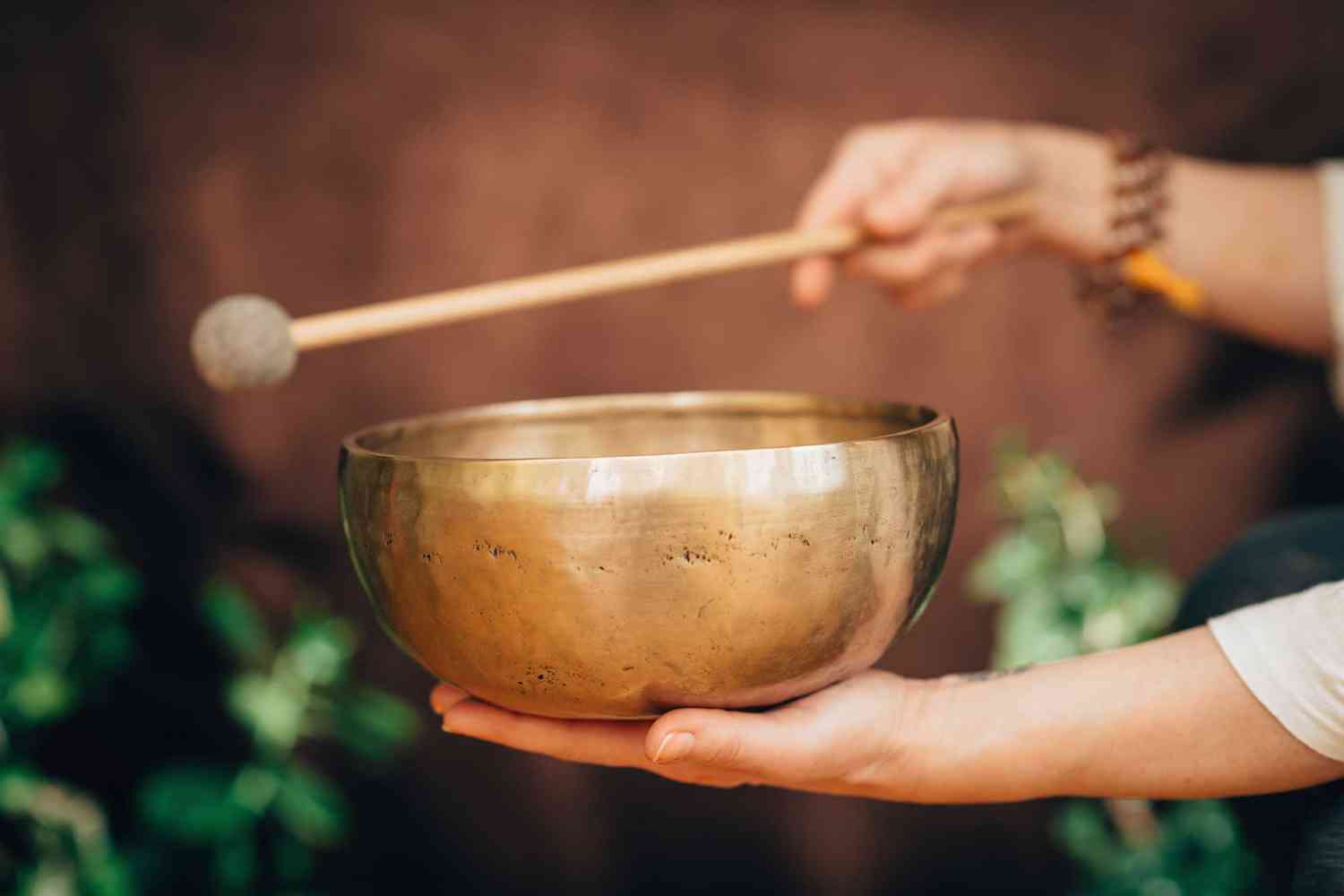
If you have ever seen a singing bowl, you know it looks beautiful. But when you hear it – that pure, expanding tone – something inside you shifts.
At Himalayan Yoga Academy (HYA) in Kathmandu, Nepal, singing bowls are regarded as sacred tools of Nada Yoga (the yoga of sound). They are not simply instruments; they are bridges between the physical body and the cosmic vibration.
But what exactly is a singing bowl used for? The answer may surprise you.
What is a Singing Bowl Used For? (12 Real-World Uses)
Based on the professional training syllabus of Himalayan Yoga Academy and traditional sound healing practices, here are the most common and powerful uses of a singing bowl.
1. To Make You Feel Better
The most immediate effect. The vibration literally massages your nervous system, lowering cortisol (stress hormone) and inducing calm.
2. As an Aid in Meditation, Yoga, or Spiritual Practice
The bowl gives the mind a single point of focus. As the sound fades, your thoughts fade with it. HYA teaches this as the journey from Aahaat Nada (external sound) to Anahat Nada (the silent sound within).
3. As an Aid in Teaching
Teachers use bowls to mark transitions between lessons or to calm an overstimulated classroom.
4. For Healing Practices
Professional sound healers use bowls on and around the body to balance the seven chakras (Root to Crown). The syllabus details specific therapies like “Middle-Path/Sushumna Activation” and “Chakra Healing.”
5. As a Ceremonial Object or Altar Piece
In Nepali and Tibetan traditions, bowls are placed on home altars to honor the Buddha or deities. They are often rung before prayer.
6. For Music and Performances (Even in Orchestras)
Modern orchestras and ambient musicians use singing bowls for their unique overtones. They are tuned to specific notes (C, D, E, F, G, A, B) – the same as the diatonic scale.
7. To Soothe Upset Children and Babies
A gentle, quiet rimming of a small bowl can stop a baby’s crying instantly. The frequency mimics the safety of the womb.
8. Getting a Classroom Full of Kids to Come to Order
One strike of a large Lingam bowl is often more effective than shouting. It is a sonic “reset button.”
9. As a Conversation Piece That Speaks for Itself
A hand-hammered bowl from Nepal is art. Placed in a living room, it invites questions, stories, and connection.
10. To Remind You of Something You Might Have Forgotten
Sound bypasses the logical brain and touches deep memory. Many report sudden flashes of insight, peace, or forgotten dreams when listening to a bowl.
11. For Chakra Balancing & Kundalini Awakening (Advanced)
As taught in the HYA Level-1 syllabus, specific bowls (e.g., C3 for Root, G3 for Throat) are used to uncoil the Kundalini energy at the base of the spine.
12. To Clear Negative Energy from a Room (Space Cleansing)
Before a healing session, practitioners use a bowl or Tingsha (small cymbals) to “cut” stagnant energy and purify the environment.
How to Use a Singing Bowl (Step-by-Step Guide)
Knowing what a bowl does is one thing. Knowing how to make it sing is an art. According to the Himalayan Yoga Academy training manual, there are two primary techniques: Striking and Rimming.
What You Will Need:
- A singing bowl (any size)
- A leather-wrapped or wooden mallet (padded striker)
- A soft playing surface (a small cushion or silicone ring)
Technique 1: The Circular Rimming (The Classic “Singing” Method)
This creates a sustained, ethereal tone.
- Step 1: Place the bowl on a soft surface so it does not slide. (Do not hold it in a tight fist – you will dampen the vibration).
- Step 2: Hold the mallet lightly but firmly. Use your full arm to make the motion, not just your wrist. (Rotating only your wrist creates a choppy sound.
- Step 3: Gently press the mallet against the outside edge or rim of the bowl.
- Step 4: Begin moving the mallet in a slow, steady circle (clockwise or counter-clockwise – whichever feels natural).
- Step 5: When you start to hear a bright, clear tone, you can slow down the motion to sustain the note.
Pro Tip: You can also make the same circular motion against the outside of the bowl (the curved side). This produces a lower, earthier tone.
Technique 2: Striking (The “Bell” Method)
Best for starting or ending a session.
- Step 1: Hold the mallet perpendicular to the bowl’s rim.
- Step 2: Gently strike the outer rim or the bottom edge.
- Step 3: Let the sound ring naturally. Do not mute it with your fingers.
Advanced Tip: Finding Your Point of Release
According to the HYA syllabus, the real healing happens in the silence after the sound.
“Concentrating on the bowl, especially the pulses of sound as they become quieter and quieter, is an excellent way to bring the mind into focus. The point where you no longer perceive the sound is your point of release from the external.”
How to practice: Strike or rim the bowl. Close your eyes. Listen carefully. When the sound completely fades, remain in the silence for 10–20 seconds. That silence is the goal.
Part 3: Choosing Your Perfect Bowl (A Note from Himalayan Yantra)
Not all singing bowls are created equal. The quality of the metal, the thickness, and the tuning determine the healing effect.
Himalayan Yoga Academy is proud to recommend HimalayanYantra.com – our trusted sister concern for authentic, hand-hammered singing bowls from Nepal.
Why Himalayan Yantra?
- Authenticity: Directly sourced from traditional Nepali artisans.
- Tuned for Healing: Bowls available in specific chakra notes (C, D, E, F, G, A, B).
- Types Available: Jambati, Lingam, Manipuri, Remuna, Thadobati, Ultabati, Naga Pedestal, and more.
“My suggestion is a soft playing surface and a mallet that fits the bowl.” – Himalayan Yoga Academy
Visit www.HimalayanYantra.com to find your perfect companion for meditation, healing, or gifting.
Conclusion: Start Your Sound Journey Today
A singing bowl is used for everything from soothing a crying baby to awakening your Kundalini energy. Whether you are a beginner meditator or a professional sound healer, the bowl is a simple, profound tool to bring you back to yourself.
At Himalayan Yoga Academy (HYA) in Kathmandu, Nepal, we have been teaching the science of Nada Yoga and sound healing for years. Our sister concern, Himalayan Yantra, ensures you get a genuine instrument to practice with.
Ready to begin?
- Buy your singing bowl: www.HimalayanYantra.com
- Learn professional sound healing: Contact HYA at +9779841922465 or spiritualscience.nepal@gmail.com
Let the vibration heal you.