
Why Himalayan Yoga Academy Remained Open in Whole Lockdown Period?
Background
Himalayan Yoga Academy is a Yoga commune, not a Business Company. This international school is located in the countryside on the lap of the Jungle called Raniban (Queen of the Jungle) and the crown of New Town called Sunrise Height within Kathmandu city (City of temples) run by professionals. The only motto of this school, and owner too, is to facilitate the global people by fusing the ancient wisdom and modern technology. The owner informally began to put the step in Yoga and Tourism since 1997 and institutionally since 2007. His focus was to knock the global people from asleep sub-conscious minds and raise those who are innocently falling into ignorance of the ultimate reality of life and its phenomenon.
The Message
Since the beginning of the school, we have been working in lifestyle management by teaching the art of living throughout the biological clock of 24 hours i.e. 1440 minutes or 86400 seconds.
We always tried to provide the right message of yoga as a union of acts in a moment being aware, awake, and alert for sound health, purity, happiness, blissfulness in their life, and eventually keep free the people from sufferings.
Since the beginning of the programs, we have always talked about natural immunity as an original vaccine in the body. Himalayan Yoga Academy has always emphasized health management rather than disease management. We always talk about natural right, universal phenomenon, original rites and culture, sense of humor, and unconditional rules rather than unnatural, artificial, man-made things, conditionals.
The Fact
Viruses are creatures, microscopic organisms that always appear, bring hazards, and somehow disappear, so it is not the solution to scary, to escape, and to tense; it comes and goes that is natural. But our intelligence or our consciousness might be foresight that we have the permanent thing forever generation to generation until this species remain in this world that thing is our immunity, natural immune called original body vaccine.
- We have posted the covid-19 integrated tablets for prevention, remedies, healing, motivation, counseling through online and blog articles, videos, short notice and webinar presentation as well in social Medias and zoom online.
- Always informed and encouraged the people either to do yogic practices or to work hard in different fields, even farming, constructions, etc.
- We focused that everybody needs to break the sweat, enough cardio exercise, breath workout acts, hiking, trekking, climbing, etc.
- Practice of Yoganga during Covid-19.
- We have messaged them to do all yogic tools such as Nasal cleansing (Jala Neti), frontal brain cleansing (Kapalbhati ), Gargle and Rinsing, Jogging, physical Exercise, Yogasana, Breathing Acts, Pranayama, Yoga nidra, Meditation etc.
- We have also advised the people to apply natural and healthy food habits, herbal tea, natural spices, drinking water, enough sleep.
- Encouraged applying the laughing therapy, clapping therapy, Reiki Healing, etc.
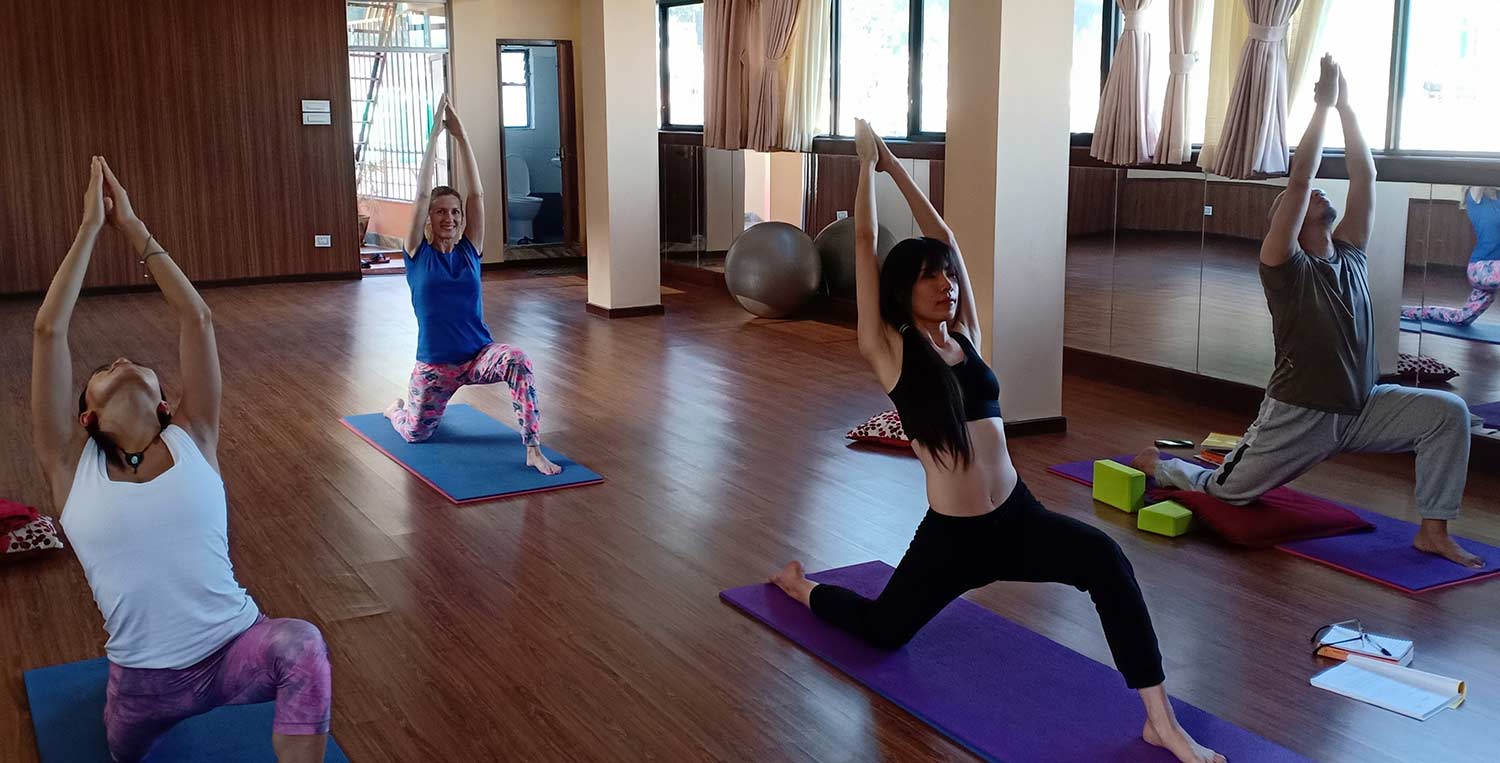
- There were no any options except Yogic capsule. So we remained the school open and continued the classes to both Nepalese and foreigners.
- We are lucky because 2 to 3 persons of foreigners always were with us. Some of them stayed 27 days and some two months in Yoga Teacher Training 200 hours and 300 hours.
Conclusion
The pandemic situation started, and the lockdown began. People were locked up and stayed at home, slept in bed, watched television, saw the data of death and infected people, thought too much, got scared, torched mentally, and got worried about the situation, all these issues made them trouble that reduced and completely scaled down the immunity like battery down. So, viruses are temporary, but immunity is everything in life that is permanent, stays with us forever. Let’s recognize and boost and keep our generation safe and alive.
Why Learn Singing Bowl Training with Us?
Himalayan Yoga Academy is a Registered Yoga School certified as RYS 200, 300, & 500, affiliated to Yoga Alliance USA alongside a well-experienced professional team of teachers who are very keen to expand their knowledge into this world. Himalayan Yoga Academy provides a Singing Bowls Training Sound Healing Teacher Training Course. Why Learn Singing Bowl Training With Us? This course is based on a systemic syllabus and research pattern initiated for the first time at the Himalayan Yoga Academy in Nepal.
In this sound educational program, you’ll not only learn and practice the Natural Sound Meditation techniques we inherited from different cultures but also will understand the principles of Sound Healing. You’ll be trained in the art of leading various sorts of sound healing meditation sessions. Our Main Objective is to supply the core principles of Sound Healing and Meditation. Get the experience of practicing Sound Healing Meditations. Also, learn to use the knowledge to conduct Sound healing sessions and workshops.
Why Learn Singing Bowl Training with Us?
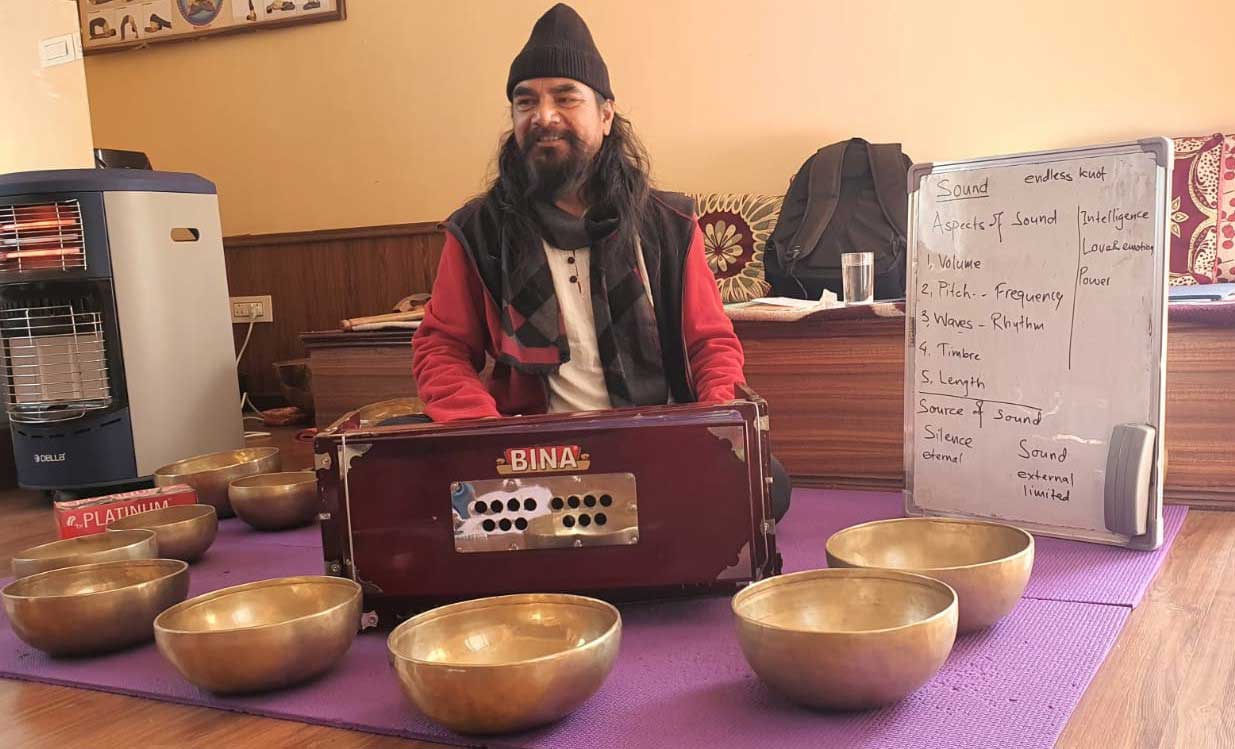
- You will learn how to play the various types of singing bowls that originated in Nepal. They were promoted in Tibet, Bharat, and around. How the different types of bowls have different benefits for the mind, body, and spirit.
- You will find out how to make sounds and vibrations in each of the Seven Chakras using the Tibetan Singing Bowls. For example, the Root Chakra keynote is C, and the frequency is 256 Hz. The Heart chakra’s keynote is F, with a frequency of 341.3 Hz.
- You will learn how to combine mantra sound Meditations with Tibetan Singing Bowls to give deep therapeutic healing sessions
- Professional Registered Singing Bowl Healers.
What to experience after our Singing Bowl Training?
- After our training, you will gain personal well-being, clarity, a positive attitude, and peace of mind.
- After Learn Singing Bowl Healing training, You will learn how to give 2-hour sessions of sound & vibration healing, using various techniques such as body contact and sound baths.
- Build a positive learning environment in which you and all other like-minded healers will thrive and create long-lasting friendships.
- You will learn how to work with both small and large groups making them more relaxed and receptive by combining sound healing meditation techniques in order to lead them into Group Sound Healing Concert.
- We have here music researchers and professors as resource persons at Himalayan Yoga Academy. All courses are designed and will be taught under their guidance.
How to Choose the Yoga Teacher Training that’s Aappropriate for You
Yoga as the transformation of Life
Yoga is the aim achieved from the regular practice of yogic means that can change lives. It helps, heals, transforms, and inspires people. Whether you are going to have on your mat for more days or months, the thought of becoming a certified yoga teacher trainer probably crosses your mind. With the massive value of people becoming certified yoga teachers, it’s no surprise that you’re curious about what it sorts of. If you’re looking to deepen your practice, learn more about yogic philosophy, understand more, experience more, or have a big interest in teaching others, choose the Yoga Teacher Training for you. Choosing a yoga teacher training program is an investment in yourself that yields lifelong transformation physically, mentally, emotionally, and spiritually. As such, the program you choose ultimately contributes to the direction of your growth.
Reasons for Choosing a Yoga Teacher Training in Nepal Program
Right now, you might not have a clear plan for teaching yoga. Take some time and think about what you’d like to do with your yoga instructor certification. As you planned, it’s a big investment of time, mind, and money. Of course! You should make sure you’re choosing the right program, right place, the right time, and right decision for you.
1. Mission of Life
What is the Mission of the program? It should be the mission of life to appear from mind and spirit, not only from the body’s needs.
2. Discipline of Programs
What should be the right discipline or faculty of life otherwise it does not meet your mission.
3. Yoga Alliance Approval and Certification
Is the program approved by Yoga Alliance or not? How do you become certified through the program in the journey from student to teacher? Yoga Alliance requires fundamental subject matters and hours. Is it valid worldwide or regional or only inner country?
4. Lead Master
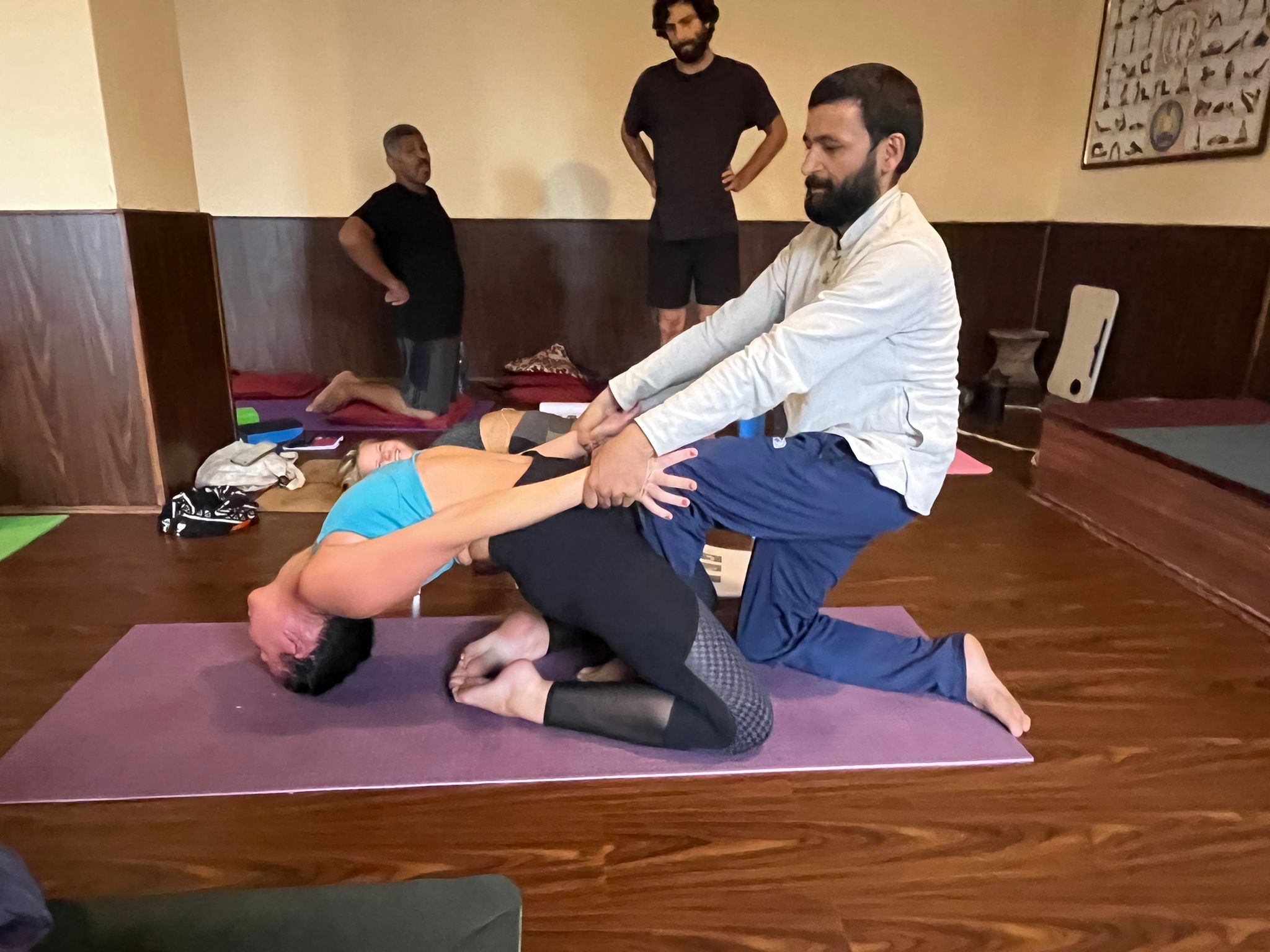
Yoga Alliance requires that each program has a designated lead trainer, and there may or may not be co-trainers. Who is the lead trainer? How long has the lead trainer been teaching yoga? He should teach the full hours mentioned by Alliance.
5. Location and Environment
Where is the location? What is the environment? It is very important for keeping the daily lifestyles better. Where you are, either in Nature close to the jungle, river, Himalayas, the beach or sea, hilly reason, open place, close to religious or historical venues, close to the village, ventilated hall and rooms, etc.
6. Learning and Teaching path
What foundations of learning and practice will be emphasized? What is the paradigm of teaching methodology? Is this both survival learning and experiential learning? Is it authoritarian or non-authoritarian and is it ethical and literal or just physical boosting?
7. Curriculum and Syllabus
Do the curriculum and syllabus fulfill the requirements that are set by Yoga Alliance? What emphasis is placed on the physical versus non-physical components of yoga? How is teaching proper alignment addressed? Is physical alignment taught in isolation, or are both physical and energetic alignment considered?
8. Self-Study and library facility and time
How does the yoga teacher training program teach you to deepen your self-awareness through conscious self-inquiry? How is this process facilitated by the school? It is very important to explore the self in formal, non-formal, or informal ways of learning.
9. Culture and society
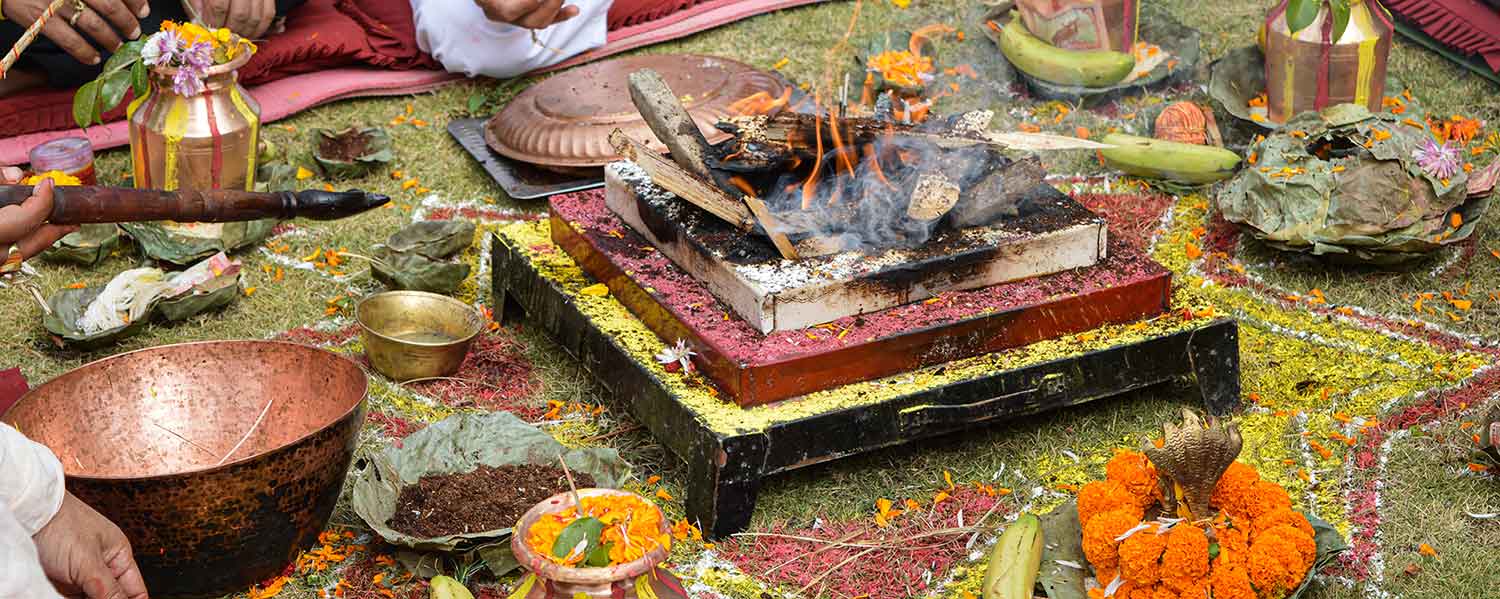
The training course should be in a safe space for its trainees and should get different cultural experiences. You should experience the typical lives and cultures.
10. Food and Accommodation facility
Food is divine. So it should be natural, vegetarian, vegan as the target group, and gluten-free as needed. Accommodation should be comfortable if possible private room, if not only two persons sharing one room.
11. Styles and Types of Yoga
You should choose traditional or ethical Yoga learning, not only one particular teacher’s style or sequence. Teacher style can meet just a small group of people in a small market. If you go into real yoga based on philosophical, physical, physiological, biological, psychological, and spiritual as well, it will be the right norms.
12. Methodology
The teaching methods should be multi-dimensional such as lecturing, discussing, demonstrating, presenting, observing, projecting, and practicum.
13. Cost of the Yoga Teacher Training
The yoga teacher training cost can vary in the place, facility, services, reputation, mission, and also depending on many factors such as on-site or off-site housing, meal plan, guest teachers, materials, special workshops, hiking, the business of yoga training, etc.
14. Contents of the Program
There are many types of yoga teacher training. If you’re researching a Yoga Alliance accredited school (a good idea), your training requirements will be broken down into the following categories: Techniques, Training, and Practice, Teaching Methodology, Anatomy & Physiology, Yoga Philosophy, Lifestyle and Ethics, Practicum, Remaining Contact and Elective Hours.
15. Eligibility
Everyone in the beginning is a beginner. So in general, very beginners can also join in Teacher Training courses. In general ages 10 to 100 old can join the courses. Even the disabled can also join the course if such a facility has been managed in school. Please you may join us with an open and free mind, not an occupied mind.
16. Ways of Teaching
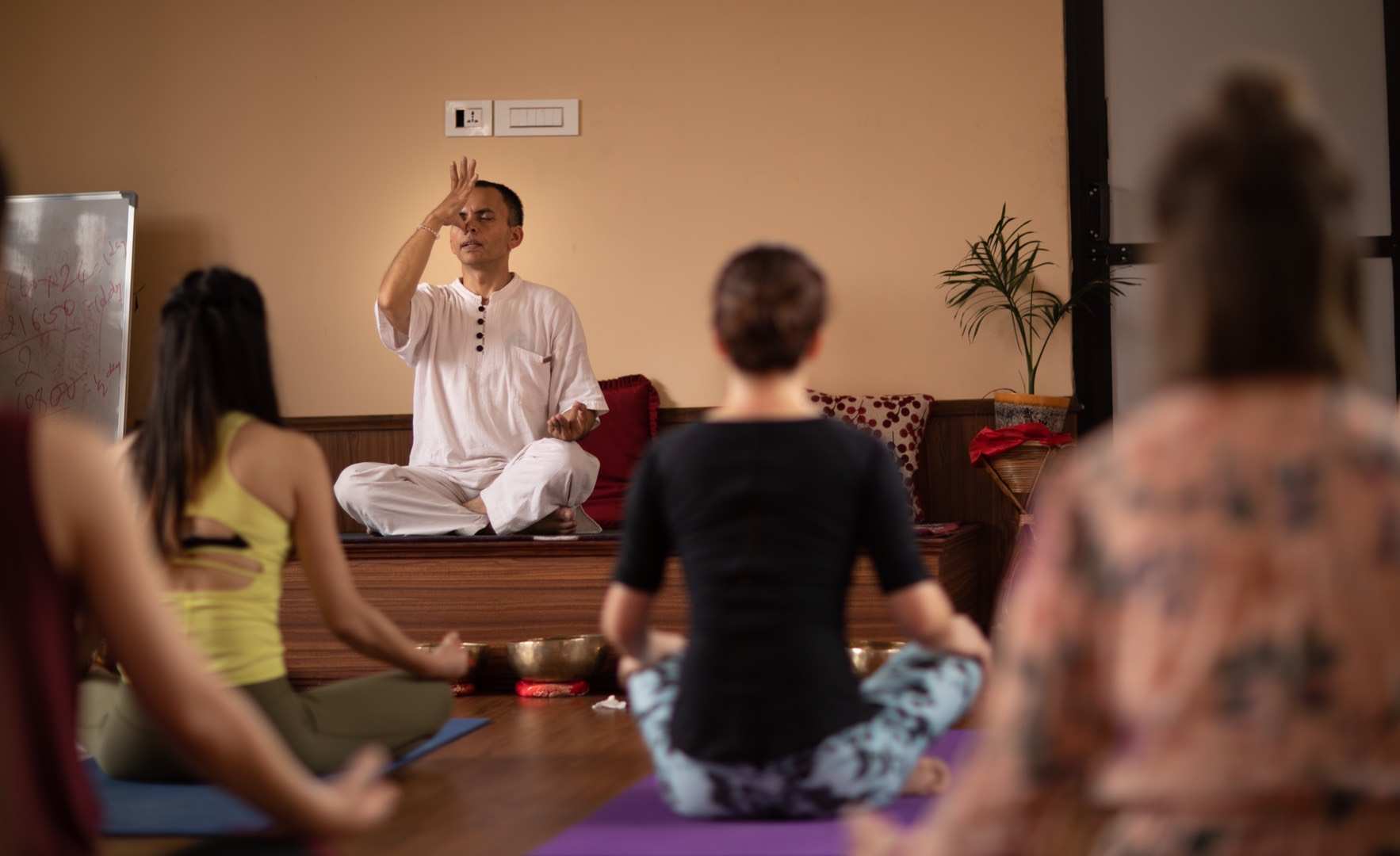
Learning should be formal, non-formal, and informal as the nature of yoga science. You should follow initiation, continuation, and Devotion.
17. Opportunity to learn yoga in the original place of Yoga, Himavat Khanda
Himalayan zones (Himavat Kshetra) is the country of the Himalayas called Nepal is the place where yoga was originally born. So when you go to Nepal and especially Bharat Khanda (South Asian Region), you will learn about yoga from its origin. The foundations of yoga are thought to date back to at least 15000 years ago in Himavat Kshetra by Adi Yogi Shiva. Knowledge of yoga first appeared in the Vedas, ancient philosophical texts from Bharat Khanda, and later in the Upanishads, the Bhagavad Gita, and Shata Darshana. Later, more extensive descriptions were recorded in the Samkhya Yoga and Yoga Sutras by Maharshi Kapil and Maharshi Patanjali, respectively.
18. Yogic lifestyle management
Following yoga teacher training in Nepal allows you to live a yogic lifestyle. Nepal is also the origin place of Ayurveda. The yogic lifestyle involves the acts of a biological clock of 24 hours, 140 minutes time figure, eating a balanced (Aahara), engaging in physical activity (Vihaara), positive thoughts (Vichaara), rest (Vishraama), and relaxation as well as sleep (Nidra).
19. High Altitude Practice
High altitude enriches your yogic practice and helps to awaken the kundalini power that expands our consciousness. The science behind is the effect of gravity.
Conclusion
There are lots of reasons why you should consider doing your yoga teacher training in the In Himavata Region, Nepal, with us. Nepal is the birthplace of Eastern wisdom like the Vedas and philosophies like Samkhya Yoga, Yoga Darshan, Mimansa, Bauddha Darshana, Bhagavad Geeta, Ramayana, and Ashtaavakra Geeta. Other advantages are the international character, the lower price, and the beautiful environment on the lap of the Himalayas. If you like, you can combine your training with Hiking, trekking, and traveling around the country-sides of the country. Altogether, it will be an experience of a lifetime that will probably leave a long-lasting positive impression on you. After your yoga teacher training in Nepal, you will go home with new true knowledge, insights, inspiration, experiences, happiness, and bliss that will heighten your life.
TRIKONASANA (TRIANGLE POSE)
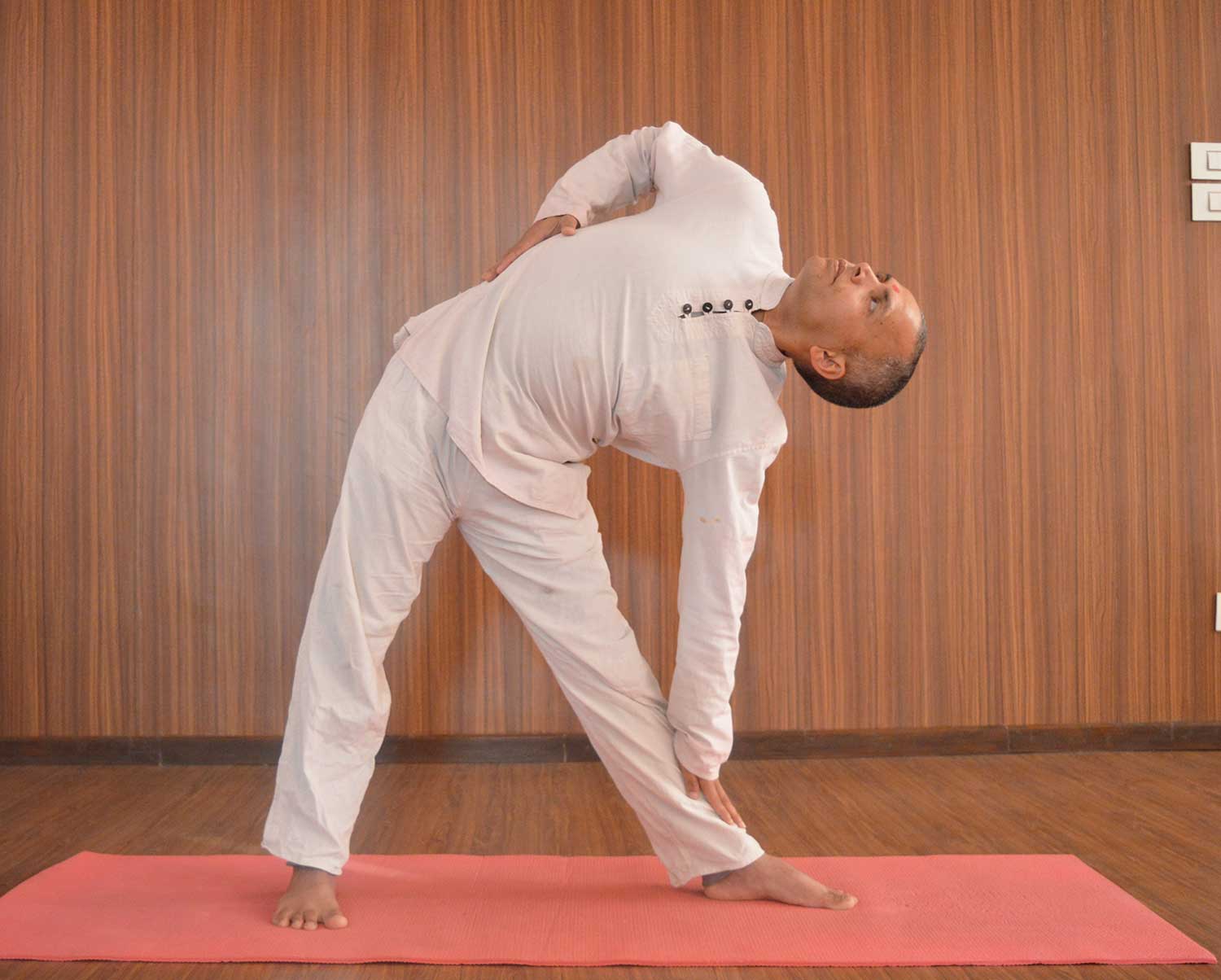
The term Trikonasana त्रिकोणासन comes from the Sanskrit trikona, meaning “three corners” or “triangle,” and asana, meaning “posture.” The term is often used synonymously with utthita trikonasana (extended triangle pose).
Trikonasana is a standing yoga posture that requires strength, balance, and flexibility. In this posture, both arms extend with the legs spread apart and one foot turned at a 90-degree angle. The upper body bends toward the lead foot so that one arm reaches toward, but not necessarily touching, the ground and the other toward the sky.
Methods
- Stand straight. Separate your feet comfortably wide apart (about 3 to 4 feet).
- Turn your right foot out 90 degrees and left foot in by 15 degrees.
- Now align the center of your right heel with the center of your arch of left foot.
- Ensure that your feet are pressing the ground and the weight of your body is equally balanced on both the feet.
- Inhale deeply and as you exhale, bend your body to the right, downward from the hips, keeping the waist straight, allowing your left hand to come up in the air while your right hand comes down towards floor. Keep both arms in straight line.
- Rest your right hand on your shin, ankle, or the floor outside your right foot, whatever is possible without distorting the sides of the waist. Stretch your left arm toward the ceiling, in line with the tops of your shoulders. Keep your head in a neutral position or turn it to the left, eyes gazing softly at the left palm.
- Ascertain that your body is bent sideways and not backward or forward. Pelvis and chest are wide open.
- Stretch maximum and be steady. Keep taking in long deep breaths. With each exhalation, relax the body more and more. Just be with the body and the breath.
- As you inhale, come up, bring your arms down to your sides, and straighten your feet.
- Repeat the same on the other side.
Variations of Trikonasana
- Sarala Trikonasana
2. Trikonasana
a. Utthita Trikonasana
b. Parivrtta Trikonasana
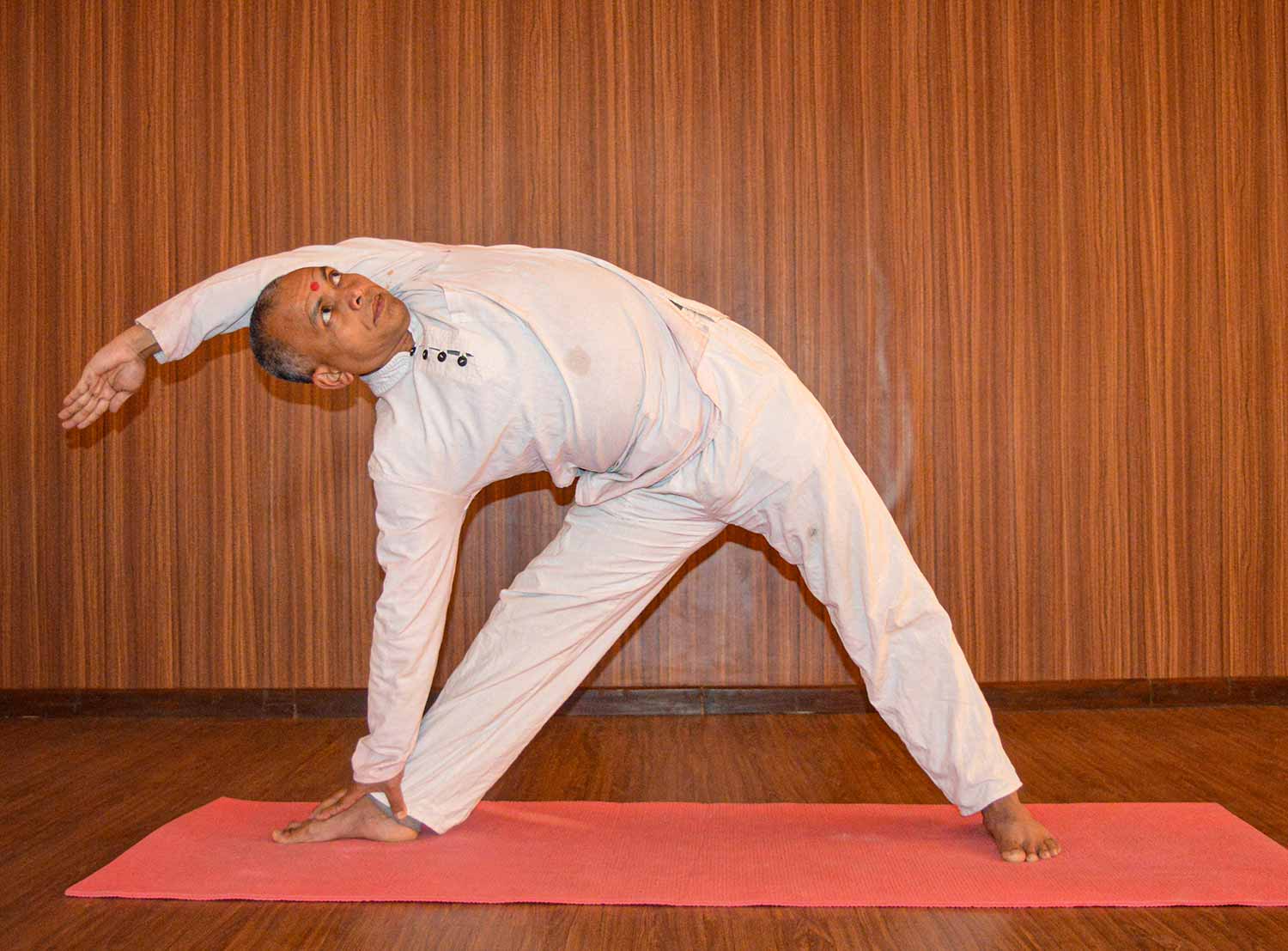
a. Utthita Trikonasana
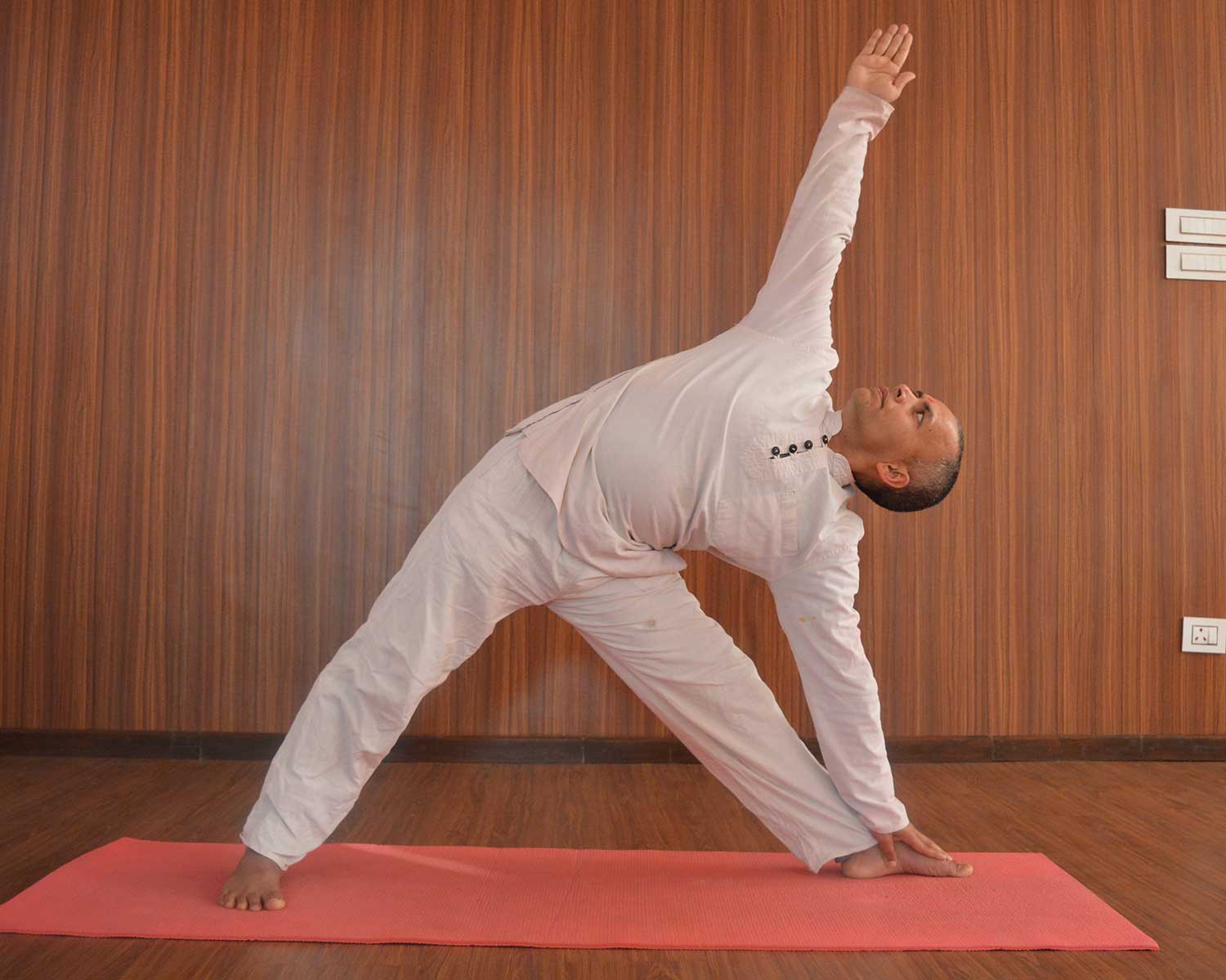
The name Utthita Trikonasana उत्थित त्रिकोणासन; comes from the Sanskrit utthita, meaning “extended,” trikona, meaning “three corners” or “triangle,” and asana, meaning “pose.” People often use the term synonymously with trikonasana (triangle pose). The common English name for Utthita Trikonasana is Extended Triangle Pose.
Uttihita trikonasana is a standing yoga asana that requires balance and flexibility. In this posture, straight legs are spread apart and one foot is at a 90-degree angle. With both arms extended, the body bends toward the lead foot so that one arm reaches toward the ground and the other toward the sky. In addition to a range of physical benefits, uttihita trikonasana is believed to stimulate energy pathways in the body.
b. Parivrtta Trikonasana
Parivrtta Trikonasana is an Asana Yoga pose. It is translated as Revolved Triangle Pose from Sanskrit, the name of this pose comes from parivrtta meaning revolved, tri meaning three, kona meaning angle, and asana meaning posture or seat. This pose is a variation of Trikonasana or Triangle Pose.
Technique of Parivrtta Trikonasana
- Stand in Tadasana (or mountain pose), i.e. feet together, toes touching and hands by your side.
- Exhale and jump with your feet, 3-4 feet apart.
- Raise your arms parallel to the mat. They should be in the line with your shoulder and be facing down.
- Turn your right foot 90 degrees to the right & left foot 45 degrees to your right.
- Make sure your left and right heels are aligned and turn your right thigh outward.
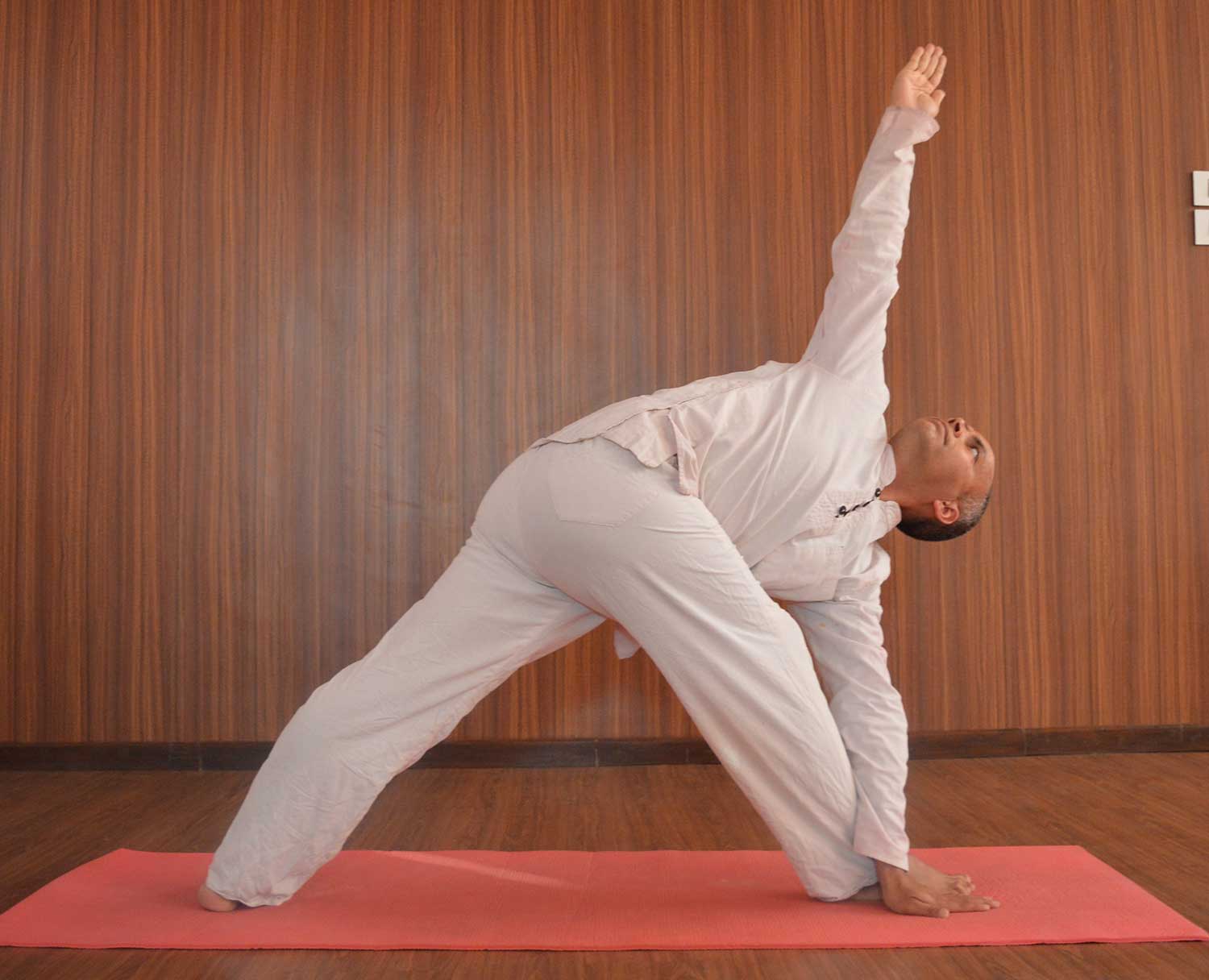
- Slowly turn to your right, exhale and bend down in front of your right leg and touch the floor with your left hand.
- Inhale and raise your right arm up towards the ceiling. You can even use the “yoga -block” for the support, if you are unable to touch the floor.
- Turn your head up and look at the thumb of the raised hand.
- Make sure your neck is in a comfortable position.
Benefits of Practicing Trikonasana
- This exercise helps to strengthen and stretches the legs.
- It stretches the hip and spine and increases flexibility.
- This exercise expands the chest and shoulders and removes the stiffness of neck and Beneficial in correcting the misalignment of the shouldersStrengthens the legs, knees, ankles, arms and chestStretches and opens the hips, groins, hamstrings, calves, shoulders, chest and spineIncreases mental and physical equilibriumIt stretches spinal muscles and increases the spinal range of motion.
- This exercise helps to increases neck mobility.
- It helps the body to inhale fresh oxygen and nutrients and helps improve digestion
- Revitalize abdominal organs hence helpful in getting rid of digestive problems and constipation.
- It Strengthens and tones the muscles of the thighs, back pain and sciatica
- Stretches calf muscles, thigh, hamstrings and hip muscles
- It improves the sense of balance by keeping the feet and ankles in space.
- Massages reproductive organs and pelvic region of the body.
- Gives an intense stretch to the spine and enhances its flexibility.
- Strengthens spinal nerves and it helps to relieve upper back tension and reduces anxiety, and stress.
- Directs the blood flow in the lower region of the spine improving its functioning
Preparatory asanas to do before Trikonasana
- Tadasana
- Triyak Tadasana
- Katichakrasana
- Konasana
- Vrikshasana
Precautions
- If you have a spine or back injury then you are advised to do this yoga asana under the expert supervision of an experienced yoga teacher.
- Students with problems like migraine, low blood pressure, headache, diarrhoea should also avoid doing this yoga asana.
Learn these poses with our experienced teachers at Himalayan Yoga Academy, our academy provides 200 hour & 300 Hour Yoga Teacher Training Courses, as RYT200 Yoga Certification offers detailed teachings on asanas (Yoga Postures), meditation, Pranayama, yoga philosophy, yoga anatomy physiology, alignment-adjustment, teaching methodology as well as fundamentals of Ayurveda and its importance. Our experienced teachers of Yoga School, like Swami Yog Subodh, will surely guide your path with different knowledge and skills.
PRANAYAMA AND SHATKARMA: HATHA PRADEEPIKA
Introduction
Instruction from a proper Guru is of paramount importance to the practice of Pranayama. Shatkarma (Svatmarama) explains how disturbance in the mind may be related to disturbances in the breath and how learning to restrain the latter may bring about greater steadiness of the mind. As long as the vital air (5 pranas) operates within the body, there is life. When they cease to, there is death. A restraint of the breath is therefore necessary to gain a greater experience of that which lies beyond and is free from the effect of the senses.
The practice of Pranayama is geared towards purifying the Nadis – all the nerve patterns – so that the Prana can ultimately pass through the Sushumna, the middle channel, and then awaken the practitioner to his/her true identity – which is beyond name and form. The first method listed is alternate nostril breathing. This is gradually supplemented with the practice of Kumbhakas (retentions), but caution is given so the practitioner does bring about his ruin:
“Yathaa sinho gajo vyaaghro Bhaved Vasyah shanaih shanaih !
Tathaiva sevito vayurnyathaa hanti saadhakam !!2.15!!
“Just as lions, elephants, and tigers are controlled by degrees, similarly the breath is to be controlled gradually, and otherwise it may kill the practitioner. By the proper practice of Pranayama, all disease is eradicated, but an improper practice gives rise to all sorts of disease.” (2.15-16)
Great care should therefore be taken when one engages in Pranayama practice. First and foremost a good grounding in the practice of postures is expected. To awaken the more subtle patterns of the breath Shatkarma (Svatmarama) optionally suggests that Six Karmas.
* be performed for the removal of phlegm, constipation, and the general sluggishness that cause disturbance to the mind and nervous system. These are:
“Dhautirvastistathaa Netistratakam Naulikam tathaa !
kapalabhaatishchaitaani shatakarmarmaani prachakshate !! 2.22
6 Karmas (Shat Karmas)
1. Dhauti
2. Basti
3. Neti
4. Trataka
5. Nauli
6. Kapalabhati
“Suryabhedanmujjaayee seetkaaree sheetalee tathaa !
Bhastrikaa Bhramari moorchchhaa plaavineetyashtakumbhakaah !! 2.44
*However, some Acharyas (teachers) claim Pranayama practice in itself is sufficient to cleanse the body of its impurities (2.37).
The main purpose of Pranayama is to:
1) rid the practitioner of the fear of death
2) to purify the Nadis
3) to cause the breath to enter the Sushumna.
The state of Manonmani – steadiness of mind – is then brought about. The accomplishment of this may be brought about by the practice of Retention (Khumbhakas). These Khumbhakas are to be practiced together with the 3 bandhas. Eight kinds of Khumbhaka are listed:
Khumbhakas:
1. Surya Bhedana
2. Ujjayi
3. Sitkari
4. Shitali
5. Bhastrika
6. Bhramari
7. Murcha
8. Plavini.
The highest essence of Pranayama practice is known as Kevala Kumbhaka: a complete and spontaneous cessation of breath where no effort of inhalation or exhalation is needed. This is only mastered by the most capable yogis and gives a direct experience of Raja Yoga.
In this chapter, we are also reminded that Hatha Yoga and Raja Yoga are mutually dependent on each other in order to bring about the highest result. No success can be attained in either without the proper practice of both.
HATHA PRADIPIKA FIRST CHAPTER
Hatha Pradipika is one of the foremost texts on Hatha Yoga. It is divided into five chapters, covering Asana, Pranayama, Mudra, Samadhi, and Yoga therapy. The author of the Hatha Pradipika First Chapter text is Swatmarama. This name may be allegorical: Swatmarama means “one who delights in his Self/Atman”. Thus, the reader may wonder if the writer changed his name to mention the true advantages of Yoga or if it was a name he was given after realizing the greatest merits of Yoga.
“Shreeaadinaathaaya Namo’stu tasmai yenopadishtaa hathayogavidhaa !
Vibhraajate Pronnataraajayogamaarodhumichchhoradhrohiniv !!1.1
An important feature of the text is that Hatha Yoga and Raja Yoga are not considered separate entities. One of a physical nature and the other spiritual, but rather an integrated whole, both dependent upon each other for the essence of Yoga to be realized. Raja Yoga is mere theory unless embodied and practically understood whilst the practice of Hatha Yoga is fixed in the corporal sphere unless a deeper integration of spirit is infused into it. When the mind is finally exhausted from its identification with Knowledge and knowable objects, the atman – the soul – is all that remains. Then, there is no longer any duality in the working mind, and the soul may shine through in its unobstructed essence.
“Hathaviddhya param gopyaa yoginaa siddhimichchhataa !
Bhaved veeryavatee guptaa nirveeryaa tu prakaashitaa !! 1.11
There is some speculation as to whether Swatmarama actually had a deeper experience of his topic or whether he was merely a hired scribe compiling a system. However, Yoga was traditionally conveyed through a lineage from teacher to student. Some of the more obscure passages are in keeping with the tradition of preserving the secrecy of the true meaning of Yoga (1.11). This tradition may perhaps have evolved to preserve the potency of the practice in a world of triviality.
Chapter 1: Injunctions on how to perform Asanas
Certain principles are given for the successful outcome of the practice of Asanas. After describing the proper place of practice, the author then advises us on 6 negative and 6 positive behaviors which each respectively diminish or cultivate greater success in Yoga.
6 causes that make a yoga practice futile are (1.15):
1. Over-eating
2. Over-exertion
3. Talking too much
4. Severe austerities
5. Public contact
6. Fickleness of mind
The 6 that bring speedy success are (1.16)
1. Enthusiasm
2. Courage
3. Perseverance
4. Proper understanding
5. Determination
6. Avoiding excessive contact with people
Here, as well as in many other Yoga texts, it is a 6-limb practice that begins with Asana. The stress is placed on cultivation of practical exercises, but the Yamas and Niyamas are not be abolished altogether: they act as a grounding influence to make the mind receptive to Yoga within the postures. Some manuscripts of HYP include Yamas and Niyamas, whilst others do not. In copies that do, these (Yamas and Niyamas) are each 10 in number:
Yamas (1.17)
1. Ahimsa
2. Truth
3. Non-stealing
4. Continence
5. Forgiveness
6. Endurancec
7. Compassion
8. Meekness
9. Sparing diet
10. Cleanliness
Niyamas (1.18)
1. Tapas
2. Patience
3. Belief in God
4. Charity
5. Adoration of God
6. Hearing discourses on the doctrine of religion
7. Shame
8. Intellect
9. Japa
10. Yajna
All manuscripts do agree upon the purpose of Asanas: “It is the first limb of Hatha Yoga and Asanas are therefore described first. I should be practiced for steadiness of posture, health and lightness of body” (1.17 or 1.19, depending on the edition). The rich traditions of postures originating from the sages are merely referred to, and only 15 are mentioned in total. Four of them are considered to be the most important ones, namely, Siddhasana, Padmasana, Simhasana, and Bhadrasana (1.36).
A clear description is given for all the postures mentioned, along with respective benefits.
In addition, the author also suggests that they should be complemented with the practice of Mudras for proper cleansing of the Nadis to take place. Close attention to Nada is also suggested, together with proper observation of food patterns and curbing the senses in general. In short, food is to be taken moderately. It should be well cooked, supplemented with ghee and sweets, and always offered up to the Lord Shiva. Food that may be disturbing to the practice is described as bitter, sour, salty, or hot. Also mentioned are too many green vegetables, sour gruel oil, mustard, and sesame. Consumption of alcohol, fish, meat, yoghurt, buttermilk, plums, oil-cakes, asafetida, garlic, onion, etc., are also said to be bad for the Hatha Yogi (1.61).
HATHA PRADIPIKA
The Hatha Pradipika is a medieval scripture written around 1350. The Nath Yogi Swatmarama is the author. The meaning of the title is interesting to consider if one wishes to begin to understand the book’s content. Pradeepika means “light” or “to illuminate”. ‘Ha’ means “sun” or Pingala. ‘Tha’ means “moon” or Ida, and yoga or yug means to “join” or to Yoke. So the title suggests: light on how to join the sun and the moon. Another way we could say this would be: Generally, we say Hatha Pradipika or Hatha Yoga Pradipika, both are but it is called Hatha Pradipika which is the main text of Hatha Yoga.
Introduction
The Hatha Pradipika of Svatmarama is a classic Sanskrit manual on Hatha Yoga. Its author, Svami Svatmarama, was a disciple of Svami Gorakhnath. It is said to be the oldest surviving text on hatha yoga, and is one of the three classic texts of hatha yoga. The other major three texts are the Gherand(a) Samhita and the Shiva Samhita & Gorakshaa Samhita.
The text was written in the thirteenth to sixteenth century AD and is derived from older Sanskrit texts and Svatamarama’s own experiences. The book consists of five chapters about postures (asanas), breathing methods (pranayama), subtle centers (chakras), hidden spinal energy (kundalini), bandhas, kriyas, shakti, vessels (nadis), and mudras among other topics and finally talking about the Yoga therapy as well.
When viewed from this perspective, hatha yoga is a tantric practice as it attempts to bring about a harmony between the two energies of life: the pranic and the mental. This pair can also be described as the shakti, or female, cool current which travels through the ida nadi, and the mind, or male, hot current which travels through the pingala nadi. When their union takes place in the central channel (sushumna nadi) it is the union of body and mind, and this is the awakening of higher consciousness.
Description
Hatha Yoga is anything but easy. It is certainly not for the faint of heart or those lacking willpower. Hatha Yoga is the yoga that is attained through forceful means with difficult physical kriyas and cleansing, purifying actions as a beginning practice.
In past eras, it has been defined as the yoga system, which ties the practitioner to a stake until he/she is well-cooked. The practice requires total mastery over both the physical and mental body. This enables one to endure prolonged ecstatic states of union with the infinite. Samadhi, or the enlightened state, is not just a mental experience; it is a psychokinetic or whole-body/mind event involving every fiber, cell, and tissue. Most editions contain four or five chapters, though the original Hatha-Yoga-Pradipika had ten chapters.
The ten chapters of the The Hatha-Yoga-Pradipika—or more precisely the Hatha-Pradeepika cover the following topics:
Chapters:
1 (59 stanzas): the elemental body ( bhoota-atmaka-shareera), six-limbed Yoga, moderate eating, the moral disciplines (yama), and the practices of self-restraint ( niyama).
2 (39 stanzas): fifteen postures
3 (25 stanzas): the six purificatory acts (shat-karma)
4 (70 stanzas): the eight types of breath control (kumbhaka)
5 (188 stanzas): the locks ( bandha) and seals (mudraa)-ten in all
6 (42 stanzas): sensory inhibition, concentration, and meditation
7 (67 stanzas): Raja-Yoga, khechari-mudraa, and the ecstatic process ( samaadhi-krama)
8 (51 stanzas): cultivation of the inner sound (naada-anusandhaana)
9 (42 stanzas): omens (arishta) of imminent death
10 (43 stanzas): the sacred syllable om, conscious dying
5 Chapters Compose
The text is composed of five chapters. Chapters 1,2,3,4, and 5 respectively deal with Asana; Shatkarma and Pranayama; Mudra and Bandha; Dhyana & Samadhi and Yoga Chikitsa respectively.
1: Asana
There are guidelines for sadhana, as well as how to perform various asanas and suggestions for food restrictions that may aid in the practice of meditation. Overeating, exertion, talkativeness, adhering to rules, being in the company of common people, and unsteadiness of mind are the six causes that destroy yoga. Enthusiasm, perseverance, discrimination, unshakable faith, courage, avoiding the company of common people are the six causes that bring success in yoga. Paschimottanasana is the best among asanas. By this asana, the pranic currents rise through the central energy channel. The digestive fire increases, the abdomen becomes flat, and the practitioner becomes free from diseases.
2: Shatkarma and Pranayama
This chapter deals mainly with techniques (the shat (six) karmas) for cleansing the physical body, breathing exercises which purify the pranic body through breath retention (kumbak), and various practices to balance the doshas and release blocked energy.
When the nadis are purified, there are external symptoms—success is visible when the body becomes thin and glows. Closing the mouth, inhale with control and concentration through the ida and pingala nadis so that the breath is felt from the throat to the heart and produces a sonorous sound. When the breath is unsteady, the mind is unsteady. When the breath is steady, the mind is steady, and the yogi becomes steadfast. As long as the breath is retained in the body, as long as the mind is calm, and as long as the sight is in the middle of the brows, where is the fear of death? The perfection of hatha yoga is achieved when there is leanness of the body, tranquil countenance, manifestation of the inner sound, clear eyes, disease-lessness, control of bindu (semen/ova), active digestive fire, and purification of the nadis.
3: Mudra and Bandha
This chapter concentrates on the use of mudras (gestures) and bandhas (locks), contrivances for awakening kundalini and directing energy toward enlightenment. Therefore, the knower of yoga conquers death by preserving the bindu. Release of the semen/ova means death; conservation of bindu is life. She is verily a yogini who conserves her rajas by contracting and raising them. She knows past, present, and future and becomes fixed in khechari mudra. The bindu and the rajas in one’s own body unite through the union by the practice of vajroli mudra, thus bestowing all perfections or siddhis. The yogi who moves the Shakti regularly enjoys perfection or Siddhi. She easily conquers time and death. What more is there to say?
4: Dhyana and Samadhi
This chapter describes and gives further techniques for the attainment of perfection in the form of hearing. According to the Hatha Yoga Pradipika, Dhyana & Samadhi come when there is development of a sound body and a sound mind; the yogi’s attainment of perfection is in the form of the unstruck sound nadam. Practically speaking, yoga is attained when one can hear God, the absolute as the pranava, the nadam.
5: Yogic Therapy
This chapter deals the Yogic Therapy, the zone of tridosha, methods of treatment, and the appreciation of Ayurveda. It mentions about the experiences of Hatha Yoga practice, therapeutic effects of the means of Hatha Yoga, balance of Tridosha, importance of Ayurveda, etc.
Conclusion
In Hatha Yoga Pradipika, importance is given to balancing the opposite flowing energies by forceful physical postures and kriyas. Hatha Yoga teaches us to unite the solar and lunar energy; Pingala and Ida and Shiva and Shakti. Hatha Yoga Makes the strong foundation in the body and connects to energy and mind. Four chapters sort about Hatha Yoga, and the fifth chapter deals with how to use the means of Hatha Yoga in treatment and how to balance the three doshas: kapha, pitta, and vata.
UTTARAAYANA AND MAKAR SANKRANTI
Introduction
The term Uttaraayana (commonly Uttarayan) is derived from two different Sanskrit words “Uttara” (North) and “Ayana” (movement) thus indicating a semantic of the northward movement of the Earth on the celestial sphere. This movement begins to occur a day after the winter solstice in December which occurs around 22 December and continues for six months through to the summer solstice around June 21 (dates vary). This difference is because the solstices are continually processing at a rate of 50 arc seconds/year due to the precession of the equinoxes, i.e. this difference is the difference between the sidereal and tropical zodiacs. The Surya Siddhanta bridges this difference by juxtaposing the four solstitial and equinoctial points with four of the twelve boundaries of the rashis.
Difference between Uttaraayana and Makar Sankranti
Here is a common misconception that Makar Sankranti marks the beginning of Uttaraayana. This is because at one point in time Sayana and Nirayana zodiac were the same. Every year Sidereal and Tropical equinoxes slide by 50 seconds due to Axial precession, giving birth to Ayanamsha and causing Makar Sankranti to slide further.
When equinox slides it will increase ayanamsha and Makar Sankranti will also slide. This misconception continues as there is not much difference between the actual Uttaraayana date which occurs a day after the winter solstice (of Dec 21) when the sun makes the northward journey, and January 14. However, the difference will be significant as equinoxes slide further. In 272 BC, Makar Sankranti was on Dec 21. In 1000 AD, Makar Sankranti was on Dec 31 and now it falls on January 14. After 9000 years, Makar Sankranti will be in June. As a result, Makar Sankranti will come in June after 9000 years. Then Makar Sankranti would mark the beginning of Dakshinayana.
Celebration
2021 Makar Sankranti: Know Why Makar Sankranti Festival Is Celebrated.
Makar Sankranti: The auspicious period of Uttarayan starts on Makar Sankranti. The Sun god is worshipped on Makar Sankranti. Devotees on Sankranti also worship Lord Vishnu and Goddess Lakshmi.
Makar Sankranti is the first big festival of the year celebrated across India and Nepal. It is a perfect example of unity in diversity. Every state in India has different ways of celebrating Makar Sankranti but the theme – harvest season – is the uniting factor. Makar Sankranti is essentially a celebration of a bumper harvest. According to the Hindu calendar, there are 12 Sankranti days in a year.
Each Sankranti marks the beginning of a month and is observed in India and Nepal. Sankranti also represents the movement of the Sun from one constellation to another. From Makar Sankranti, the Sun starts moving towards the northern hemisphere, marking the end of the winter season and days start getting longer. Hence, Makar Sankranti is also known as Uttaraayana, the beginning of an auspicious period.
In Nepal, OX (Bull) fight is organized as part of Makar Sankranti festivities, especially in Nuwakot, Dhading Districts and around.
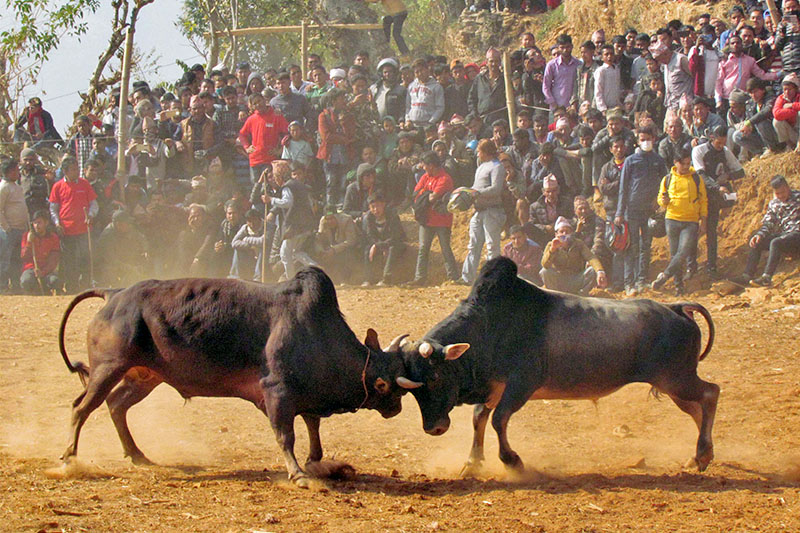
2021 Makar Sankranti: Know why Uttaraayana is significant
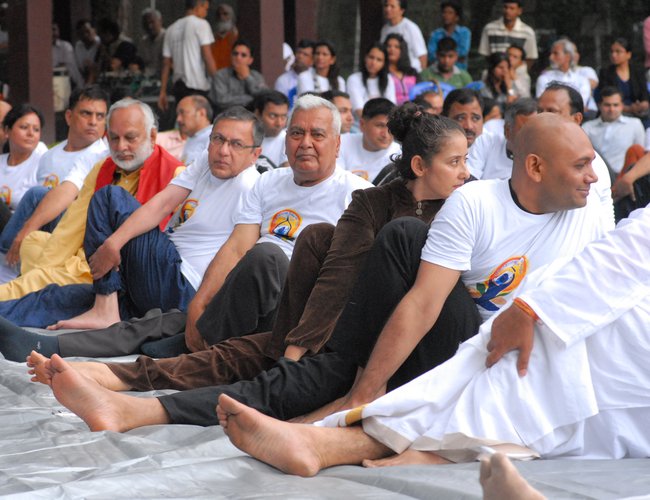
Uttaraayana is traditionally known to be a period of divinity and a new beginning. Uttaraayaṇa is derived from two Sanskrit words ‘uttara’ or north and ‘ayana’ or movement, indicating a northward movement of the Sun. In Mahabharata, Bheeshma Pitamaha chose the day of Uttaraayana to die. Bheeshma had a special boon of Ichha Mrityu or death according to his will and he waited on his death bed of arrows until Uttaraayana. In Nepal, on the day of Makar-Sankranti, National Yoga Day is also celebrated.
2021 Makar Sankranti Date, Day and Time
Thursday, January 14 – Magh Krishna Paksha Dwitiya tithi
Makar Sankranti Punya Kala or auspicious time starts at 8:30 AM and ends at 5:46 PM.
Makar Sankranti Maha Punya Kala starts at 8:30 AM and ends at 10:15 AM
While festivities may not be at par as previous years on account of the corona virus pandemic, usually on this day devotees take a dip in holy rivers. For believers, taking a dip washes away their sins, it is also considered a time of peace and prosperity and many spiritual practices are conducted on this day. Sesame and jaggery ladoos, chaakoo, yam, sweet potatos are distributed on this day. The sweet signifies that people must stay together in peace and harmony despite their differences. It is also believed that those who die on Makar Sankranti are not According to Hindu belief, if one dies on Makar-Sankranti they are not reborn, but go straight to paradise.
Conclusion
Makar Sankranti is dedicated to the sun god Surya and marks the first day of the sun’s transit into Makara (Capricorn) Rashi (zodiac), it also marks the sun’s northward journey and is called Uttaraayana for this reason. I pray that it marks the end of difficulties and brings success, joy, and peace in your life. May this Makar Sankranti usher in goodness, peace, good health, and happiness in your life. Here’s sending my best wishes and greetings.
Poorna Titali Asana (full butterfly)
Introduction
Badha = Bound or Restrained, Kona = Angle, Asana = Pose or Posture. This pose is pronounced as BAH-dah-cone-AHS-ana. Titali or Putali Asana or Kriya, the Sanskrit word which suggests Butterfly in English. In Titali Asana you’ve got to maneuver your knees up and down an equivalent because the wings of a butterfly, so that’s why it’s referred to as Butterfly Pose. The Butterfly pose is additionally mentioned because of the Purna Titali Asana. There are active and passive two variations.
Titali Asana with stilling is nearly like a Bound Angled Pose or the Baddha Kona Asana or Poorna Titali Asana and also meditated variation is also called Gorakshasana. This is often an easy exercise that will simply be performed once even with minimum directions from your trainer. Targeting primarily the legs, it’s the proper cure to relax and stretch the muscles of the legs, especially once an extended day of labor or an intensive computer. The reclined Butterfly posture is another variation of the Butterfly pose (Titali Asana).
How to Do Poorna Titali Asana (Full Butterfly)
Steps
1: First sit within the Base Position Yoga Pose (Prarambhik Sthiti) with the legs outstretched and therefore the feet together.
2: Bend the knees and convey the soles of the feet together.
3: Now keep the heels as on the brink of the perineum as possible.
4: Fully relax the inner thigh muscles.
5: Now clasp the feet with both hands.
6: Gently move the knees up and then down towards the ground, but don’t use any force while moving the knees up and down.
7: Gently practice up to 30 to 50 up and down movements.
8: Gently straighten the leg after completing the practice, but slowly and punctiliously bend it once, Keep the soles of the feet together.
9: Place the hands on the knees.
10: Now using the hands, gently push the knees down towards the ground, allowing them to originate again.
11: While doing the Full Butterfly Yoga Pose using the hand doesn’t force this movement.
12: Gently repeat 30 to 50 up and down movements.
13: Gently straighten the leg after completing the practice, and relax.
Benefits of the Putali Asana (Butterfly Acts):
- The butterfly pose renders a great stretch for the inner thighs and groin.
- It relaxes the tensed tissues and improves the flexibility of this region.
- It improves blood circulation in the lower body that is stalled due to long sitting hours
- A good stretch for the inner thighs, groins and knees, improving flexibility in the groin and hip region
- Helps in intestine and bowel movement
- Removes fatigue from long hours of standing and walking
- Offers relief from menstrual discomfort and menopause symptoms
- Helps in smooth delivery if practiced regularly until late pregnancy
- Stimulates abdominal organs, ovaries and prostate gland, bladder, and kidneys
- Stimulates the heart and improves general circulation
- Stretches the inner thighs, groins, and knees
- Helps relieve mild depression, anxiety, and fatigue
- Soothes menstrual discomfort and sciatica
- Helps relieve the symptoms of menopause
- Therapeutic for flat feet, high blood pressure, infertility, and asthma
- Consistent practice of this pose until late into pregnancy is said to help ease childbirth.
- Traditional texts say that Baddha Konasana destroys disease and gets rid of fatigue.
Precautions
While doing the asana, take care that: This asana should be avoided in case of Groin or knee injury. Be careful while bending if you suffer from High blood pressure or any cardiac problems. Be slow and careful while doing the asana as in almost all the yoga asanas, as being quick is not what is called for in any yogic Asanas. The butterfly should be avoided by ladies if menstruating trouble or should be performed under the guidance of a yoga expert during those days.
Conclusion
Titali Kriya or Asana can be practiced for warming and opening joints as subtle exercises, for more warm-up and stretching as Dynamic exercises, and then for stilling, strength, stamina, endurance, and power as Asanas. Butterfly can be practiced at the beginning of the session, middle of the session, and middle of the day as needed. It is a very common asana for all levels of practitioners.
NATHA YOGA TRADITION
Natha is a Sanskrit term that can be translated to mean “lord,” “master,” or “protector.” It is most often used to refer to the nathas (saints/gurus) of the Nath tradition. The Nath tradition is a heterodox siddha (adept) tradition that was established by Shiva and followed by Matsyendra, and further developed by his disciple, Gorakh. He introduced Natha Yoga or Hatha Yoga in a Public forum.
The Nath tradition has many sub-sects, but they all accept Aadinath Shiva, Matsyendra, and Gorakh as their founders. The Natha Sampradaya, or the “Tradition of the Natha Gurus,” is based on a lineage of spiritual masters who are worshiped both collectively and individually.
NATHA YOGA AND NATHA YOGI
The Sampradaya of Mahayogi Gorakhnath is an ancient authentic Yoga tradition. It was Guru Gorakhnath who founded this Tradition. He is regarded by Aadinaatha Shiva. Mahayogi Gorakhnath established and developed yoga, which is being practiced all over the world. Many scientists determine the period of formation of the Tradition from the 5th to 12th century A.D, but as a rule, all dates are quite contradictory. Gorakhnath and other great Yogis are honored by Nathas as spiritual Masters with realized kaya-siddhi and attained immortality.
Gorakhnath has written about fifty texts on philosophy, metaphysical aspects of Yoga, and various methods of Yoga-sadhana. He founded the order of Kanphataa Yogis. The Kanphataa yogis’ distinctive attribute is big earrings in the ears, symbolizing solar and lunar energy. Natha Yogis have another characteristic feature which is the Nadi (ritual whistle), which yogis carry on a black woolen cord (Janeu). This symbol is related to the Nada-anusandhana practice, which is intended for working with sound vibration. The Janeu cord is associated with the Ida and Pingala channels. Some treatises on Yoga and Tantra are traditionally attributed to Mahayogi Gorakhnath.
MEANING OF TIME IN NATHA TRADITION
Time, in Natha worldview, is the essence of Shakti, the dynamic aspect of Shiva. Tantra names are given aspect of Shakti Kali, whereas in Nath tradition the highest manifestation of the Goddess is Yogamaya Balasundari. Special yantra is used for her worshiping. Yantra is divided into four parts, symbolizing the four yugas – time segments of the universe. In the middle is Balasundari herself in yamala (union with Shiva). Balasundari is Nija-shakti of Shiva, Kundalini.
The Nathas are believed to descend from earlier cults, including the Pashupatas, Kapalikas, and Siddhas. They were closely connected with the alchemical tradition of Rasayana. This site provides extensive information about the Natha tradition.
Nathas consider time as Shakti, within which the practitioner constantly resides in his pursuit of Kundalini awakening, and therefore time for Nathas is not just a certain material element but also has deep spiritual meaning. Shakti embodies the creative dynamic reality of Shiva that reflects the essence of time – continuous change and transformation- while Shiva is a static reality that is related to space. Here, space implies not only the physical but also its transcendent aspect.
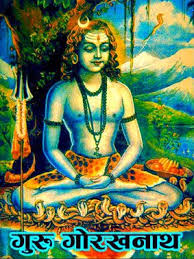
NINE NAATHS: NAVNATH SAMPRADAYA
The Navnath (Sanskrit: नवनाथ), also spelled as Navanatha and Nau Nath, are the nine saints, Masters, or Naths on whom the Navnath Sampradaya, the lineage of the nine gurus, is based. They are worshipped collectively as well as individually. The nine gurus, collectively known as Navnaths, are considered representative of great teachers in this tradition or parampara:
- Machindranath or Matsyendranath
- Gorakshanath or Gorakhnath
- Jalandharnath
- Kanifnath
- Gahininath
- Bhartrinath
- Revananath
- Charpatinath
- Naganath
NATH YOGA SAMPRADAYA -BOOKS
- Gorkhnaht satakam book-Yoga-Mimansa
- Hatha Yoga Pradipika: Sanskrit and English
- The Splendours And Dimensions Of Yoga -Hatha yoga –book
- The philosophy of Jñānadeva: as gleaned from the Amṛtānubhava-book
- The Return of the Serpents of Wisdom-Natha sidha and Hatha yoga –book
- Kundalini: the mother-power-Matsyendranath-book
- Sonic theology: Hinduism and sacred sound-Gorakh nath- book
- Yantra-Mantra Tantra and Occult Sciences–sabar mantra Gorksh nath- book
- Sharing Jesus holistically with the Buddhist world-Matsyendranath and Gorakh nath-book
- Yoga: Immortality and Freedom-Matsyendranath and Gorakh nath-book
- Discovery of Spiritual India-Matsyendranath and Gorakh nath-book
- Maha Siddha Matsyendranath -Tāntric art of Orissa –book
- Maṇimahesh Chambā Kailāsh-Gorkshnath – book
- The Encyclopedia of Indian Philosophies: Yoga: Hatha Yoga
- Gorakhnāth and the Kānphaṭa yogīs-book
- Philosophy of Gorakhnath with Goraksha-Vacana-Sangraha-book
- The Alchemical Body: Siddha Traditions in Medieval India-Nath Sidha
- Kundalini: the mother-power-Matsyendranath-book
Conclusion
The Nath Sampradaya is an ancient tradition where the devotees are the spiritual custodians of Hatha Yoga and Tantra. Nathas consider Shiva (Adinath) as their first Guru and Matsyendra as the forefather of the Nath Tradition and therefore Yoga. The original goal of Natha yoga was spiritual liberation or self-realization during the yogi’s lifetime. In the Natha tradition, the yogi’s actions and thinking determined their path, rather than a divine being. Natha yoga practice includes physical practice along with spiritual and intellectual advancement goals.