
YOGA DARSHANA, YOGA AND HUMAN LIFE
YOGA DARSHANA, YOGA AND HUMAN LIFE
Yoga as Spiritual Discipline
Yoga is a popular topic today. In ancient times, to become omnipotent, wise, and Buddha, to be disciplined and moral, to develop spiritual consciousness, to achieve victory, the use of yogic organs such as mantras, kriyas, asanas, pranayama, mudra, meditation, etc. was used as a spiritual practice. There were various ways of chanting and penance. It was a regular education system. It was a way of life. There was a culture of life.
Transferring human culture to future generations from this way of life and education, yogis, sages and Maharishis published invaluable texts such as Vedas, Upavedas, Upanishads, Mahabharata, Ramayana, Purana, Smriti, Bhagavad Gita, Ashtavakra Gita, Shatdarshan, Yoga Darshana, Ayurveda, Samhita, etc. These texts in themselves were invaluable compound gifts from those great yogis. Based on the rules and consciousness of this scripture, human life came into existence by moving. It is said in the Vedas that “Yasmadrute na siddhyati yajno vipaschitcharan. Sadhinam Yogaminvati”. Without yoga, no sacrifice of any scholar is perfect. Yoga is the liberating state of mind restraint. The introverted emptiness of the introverted instinct is yoga.
Clips of History
The history of yoga is tens of thousands of years. Shiva was the Adiyogi and Adiguru. Around Gosainkunda in Nepal, Shiva taught Parvati the fourfold yoga Hatha, Mantra, Laya and Raja Yoga. Tantra Yoga and Kundalini Yoga are believed to be the beginning of Shiva Parvati’s interaction. About five thousand years ago, the Rig Veda was the first major reference text for yoga. Veda Vyas divided the Vedas into four types and four of the disciples who taught the main Veda in Tanahu were Pail, Vaisampayan, Jamini and Sumantu.
The Rig Veda is a Veda read by a sage from the Vedas and considered the first Veda. The Veda is the Sama Veda read by the sage Jamini from Vedavyasa. Veda recited by the Vaisampayan sage from Vedavyasa is Yajurveda. The Veda recited by Sumantu sage from Vedavyasa is Atharvaveda. Maharshi Vedavyasa’s disciple Marishi Jamini wrote Mimamsa Darshan in the Tanahu district of Nepal.
Classical Period
About 184-148 B.C. For the first time, Maharshi Patanjali created a pure philosophy of yoga, which is called Yoga Darshan or Yoga Sutra. The scattered yogas, the invaluable information, and the messages of yoga are summed up in one place. Divided into 195 verses and four verses, this philosophy is “Ath Yoganushasanam” p.y.s. 1.1;. He started by mentioning that now the journey of the discipline of yoga begins. Immediately, “Yogashchittavrittinirodha: defined as the merging of the instincts that arise in the mind, that is, the mind, the mind, and the intellect, is called yoga or samadhi. And the yogi attains Moksha Siddhi. The restraint of the mind is Samadhi but not the state of Kaivalya. The restraint of the mind is Samadhi but not the ultimate truth of Yoga.
Paadas of Yoga Darshana
The first step is Samadhi Paada: What is Samadhi in the first step in Yoga philosophy, how many types are there, what is Yoga, and what are the forms of Yoga? The means of attaining yoga or samadhi are described. It is said in the Yoga Sutras that “Atomic Paramatman is a vassal:” – This. Fri 1.40; that is, the continuity of practice makes it clear to the seeker that his mind can be fixed from the smallest atom to the ultimate sky where the mind can always be kept stable.
“Sadhana Pad” is the second step which explains how to attain Samadhi. It is said that: Hanopaya: “After the limbs of Ashtanga Yoga are practiced in a formulaic manner, the light of knowledge is created by removing impurity, and only continuous practice of consciousness destroys ignorance and makes it yogic. Through continuous practice, the light of wisdom arises and the Creator becomes omniscient and omnipotent.”
The first sutra of the sadhana pada is “Tapa: Swadhyayeshwar Pranidhanani Kriya Yoga: – Su. 2.1; Karma with penance or determination, self-study, and devotion to the study of various scriptures as required. Kriya Yoga is to attain the state of samadhi. : B, The importance of Kriya Yoga is to neutralize obstacles and interruptions.
“यमनियमासनप्राणायामप्रत्याहारधारणध्यानसमाधयो’ष्टावङ्गानीP.Y.S. 2-29; The eight organs of yoga are Yama, Niyama, Asana, Pranayama, Pratyahara, Dharana, Dhyana and Samadhi. Ashtanga yoga is considered a complete yoga, not a type or path. More than 2300 years ago, Maharshi Patanjali integrated the yogas scattered in various scriptures and its knowledge-based messages and experiences.
SCIENCE OF CHAKRA AND HUMAN ENDOCRINE SYSTEM
Himalayan Yoga Academy presents essential content on the Science of Chakra and human endocrine system. The biological basis of the human body consists of 10 bodily systems that are associated with Body support. They are Muscular contraction, Digestion and Elimination, Reproductive, Lymphatic, Urination, Circulatory and Pulmonary, Endocrine, and nervous systems. According to chakra psychology our energy centers are directly related to the Endocrine System and Nervous System.
Energy Centres
1. Muladhara/1st Chakra:.
Root Chakra related to elimination and excretion. Associated sense organ- Nose is the sense organ of the first chakra. The sense of smell is connected to the early brain. Organ of action is Anus. The 1st chakra, the Muladhara – the root chakra, Movement here is the slowest – we use our anus but once a day. Is the anus a gland? Not by Western definitions. Maybe our analogy begins to break down as we reach the grossest level, but we can ask – is the anus important? Try to live without a proper functioning anus and all your other glands will be very unhappy.
2. Swadisthana Chakra/ 2nd Chakra:
Related to sex and reproduction. Ovaries (female), testicles (male) and also adrenal glands and hormones secreted it. Associated sense organ is tongue. Organ of action- Organ of action are genitourinary organs. Lower still, we come to the 2nd chakra: the svadhisthana – the center of water and sexuality. Here we find the reproductive glands. Here also we find a source of energy: body movement. When we dance, especially slow, tribal, sensual dancing, we stimulate these glands, and we notice the effect quite happily. Slow undulating movements are at very low frequencies: when we are seductive, we are slow.
3. Manipura Chakra/ 3rd Chakra:
Associated with digestion and absorption. The cortex of adrenal is the endocrine gland of the third chakra. Associated sense organs are eyes. Organ of action is digestive system. Responsible for maintaining bodily homeostasis. The glands and you will see another important gland: the pancreas – the source of insulin. It too is nourished with a certain form of energy. We are now at the 3rd chakra: the Manipura – city of jewels and power. Right above the pancreas is the diaphragm and it moves too: every breath we take causes the diaphragm to compress and release the pancreas. On average we breathe 18 times a minute, for a frequency of pressure on the pancreas of 1/3rd of a hertz.
4. Aanantha Chakra/ 4th Chakra:
Associated with circulation and respiration. It concerns to thymus gland. Sense Organ associated are fingertips. Organ of action is Skin and Storehouse is Diaphragm. The energy link is in fingertips and breathes.
5. Vishuddhi Chakra:
Associated to thyroid and parathyroid glands. The thyroid gland is most commonly associated with this chakra. The vishuddhi chakra is for clarity of communication between the mind, heart and soul and the ability to understand situations clearly without fear or doubt. Associated Sense Organ is Ears and Organ of action is Vocal chords
6. Aagya Chakra:
Pituitary Gland (both sense organ and organ of action) – Associated with the pituitary gland and the hypothalamus. This chakra is the master instructor, responsible for giving instructions to the whole body. If this cycle is blocked, there could be multiple hormonal imbalances.
7. Bindu Chakra/ Soma/Moon: Pineal Gland
8. Sahasrara Chakra/ Crown Chakra:
Hypothalamus of the brain associated Sense. Associated with the pineal gland, little is known about this chakra except that it responds to light. When the cosmic consciousness shines in the mind of humans, they attain truth.
Organ is Pituitary Gland and Organ of action is Pineal gland
Pituitary Gland:
Hormones secreted – Luteinizing Hormone (LH), Follicle-Stimulating Hormone (FSH), Thyroid Stimulating hormones (TSH), Oxytocin, Antidiuretic Hormone (ADH), Adrenocorticotropic Hormone (ACTH)
Pineal Gland:
Melatonin and serotonin.
Serotonin is a derived hormone that is responsible for sleep patterns in circadian and seasonal cycles.
Thyroid Gland:
- T3(Triiodothyronine), T4(thyroxin), TSH (Thyroid Stimulating hormone).
- They are tyrosine-based hormones that are primarily responsible for regulation of metabolism. T3 and T4 are partially composed of iodine.
- Thymus Gland: Responsible for immunity. Thymopoetin and thymosin. Hormones that assist in processes where T-cells differentiate into different styles.
- Thymosin- Accentuates immune response as well as stimulating pituitary hormone such as growth hormone.
Pancreas and liver:
Glands associated with pancreas:
- Insulin-like Growth Factor-1 (IGF-1)
- Angiotensinogen
- Thrombopoietin
- Hepcidin
- Betatrophin
Glands associated with Liver:
The most important hormone that the pancreas produces is insulin. Insulin is released by the ‘beta cells’ in the islets of Langerhans in response to food. Its role is to lower glucose levels in the bloodstream and promote the storage of glucose in fat, muscle, liver and other body tissues.
- Adrenals Gland: Steroid hormone like aldosterone.
- Testes and Ovaries
- Testerone(male) / Estrogen, progesterone(female), oxytocin.
The endocrine system plays a vital role in regulating bodily health. This system includes all the glands and hormones produced by it. These glands are controlled by the master gland and nervous system. Hormones released by glands are responsible for maintaining homeostasis, cellular metabolism, reproduction, respiration, growth and sexual development.
In Chakra Psychology as explained above chakra are energy centers in the body and they are parallel to the function of glands and glandular secretion (hyper-secretion, hypo-secretion and normal functioning).The hyper or hypo secretion of any glands might result in energy blockage/Chakra blockage and vice-versa. Each of the traditional l7 chakras and 21 microchakras, which enables the chakra to process information related to our thoughts, feelings, and behavior. When energy flowing in the chakra is blocked, our physical, emotional and psychological wellbeing is compromised. Through practice of Nada Yoga/sound and meditation one can achieve their psychological well-being.
MUDRAS and BANDHAS
MUDRAS and BANDHAS: YOGIC BANDHA AND SPIRITUAL IMPORTANCE: PART- V
Connection between Mudras and Bandhas
Yoga mudras and Bandhas are often taken together as they work on a deeper level. These work on a more subtle level than pranayama and asana. Both mudras and bandhas work on cleaning the mind and healing the body at a subtle level.
Mudra uses some particular body movement or posture to redirect the prana energy to a chakra. The organs connected to that particular area of Chakra gain effect from mudra. Bandha uses the contraction of muscles and organs that redirect the energy to any particular chakra and helps the organs of that area to function well.
Initially, we have no control over our inner body. For example, we can’t control the flow of blood or the flow of heat inside us, etc. Mudras and Bandhas give us control over our inner body. These activities give us the power to control and heal our subtle bodies.
Incorporating Breath in Bandhas
Breath is a very essential part of Bandha practice. Breathing exercises before Bandha allows the Prana to flow throughout the body. Prana is controlled by inhaling and exhaling breaths. Prana governs the energy in all the physical and mental exercises. While practicing bandha, breathing practice (holding the breath) helps to complete the lock.
Actually, the combination of breath with the inner word/contraction of muscles forms a Bandha. Bandhas in conjunction with pranayama gives the best results.
Bandha includes both Antar Kumbhaka (inhalation retention) and Bahya Kumbhaka (Exhalation Retention). Without breath retention (Kumbhaka), no bandha or no lock can be performed.
Thus, Bandha has a deeper relationship with the breath.
Conclusive words
Since we were born, we are aware of only our physical body. But, there is a lot more than the physical body. We only know a few things about our subtle body, our soul. Bandha is a deeper understanding of our souls. These stimulate the Prana and Chakras.
Bandhas are boon of Hatha Yoga to us. One, who masters this technique of Yoga, masters his/her soul. Bandha’s results do not overnight These take a little time to show their result. You only need to be patient. You will get the desired results, not immediately, but definitely.
An important component of yoga, the bandhas are primarily meant to serve our yogic practice. They are often misunderstood.
If you have been coming to my yoga classes, you have probably been using them perhaps without realizing it. I often cue them in class to guide my students into better alignment and help prevent injuries. Indeed, the physical practice of the bandhas utilizes co-activation of muscles and physical movements that ensure better alignment in postures and protect us from strain and injury.
But more importantly the bandhas, also known as energy locks , serve as valves that control energy, irrigate the channels of energy, and activate, replenish and balance the flow of prana throughout the body. While practicing, we observe energetic patterns beyond our physical form in the energy body.
How does it work? When you activate a bandha, the energy flow in a specific part of the body is blocked. When the bandha is released, this allows the energy to flow powerfully through the body and increases pressure. Asana creates bandha and bandha serves the breath and the breath is the vehicle for prana.
There are three classic bandhas: mulabandha, uddiyana bandha, and jalandhara bandha. They can be practiced together or individually during kriya, asana, pranayama, mudra, visualization, and meditation. When practiced together they are called tri-bandha.
Conclusion:
So finally, remember that engaging the bandhas not only help us with our alignment and prevention of injuries but they are essential in our yogic practice as they prevent disease by sealing the nadis and mastering unruly movements of prana and ultimately, when ready, help us raising kundalini up our sushumna nadi.
So… next time you hear me say, draw your navel in and up, lower your chin down as you lift your sternum slightly… you will understand that I am inviting you to engage your bandhas.
If you want more clarifications about the bandhas, do not hesitate to come to me after class and ask for guidance. I’ll be more than happy to help.
YOGA TEACHER MANUAL
Introduction
Yoga, an ancient Art and Science of Health, Self, and Life is the key to unlocking the hidden potency of human beings. It works for integrated health, supper happiness, and harmony in human life. Health is not only physical fitness, to those who are only physically fit means only 15 to 20% of their life works in daily work. To those who have mental and emotional balance 50 to 60% of their life works in daily work out. To those who have full life force and will power means 100% of life works in daily work. When people are healthy physically, mentally, emotionally, culturally, socially, spiritually, and also ecologically can only gain their integrated or wholesome health and then be able to update into happiness. Being happier, they can expand their consciousness.
Nature of Course
Yoga plays an important role in human health and life. So the yoga training of teachers in yoga both theoretical and practical aspects is considered very necessary for developing the skills and energy required in the Yoga Teacher Training course. A model of course schedules for the Teachers’ Training Programme proposed by the experts are as follows:
The training components provide teacher-trainees with knowledge of Yoga and related subjects for a comprehensive understanding of teaching Yoga. This approach promotes the overall development of students’ wholesome personalities. The course standards aim to provide teacher-trainees with the knowledge of the fundamentals of Yoga and other allied sciences, helping them develop the necessary skills and perception.
It has two sections: Theory and Practical. The theory section deals with:
The introduction, Foundations of Yoga,
Paatanjal Yoga Darshan & Ashtanga Yoga,
History & Philosophy of Yoga,
Hatha Pradipika and Hatha Yoga,
Gheranda Samhita & Sapta Sadhana,
Bhagavad Geetaa & Chaturthavidh Yoga,
Yoga, Human Anatomy & Physiology, fundamentals of Body science and relavent to Human health anf life.
Yogic Food & Lifestyle, Values & Attitude of yogic Life, Personality Development,
Methodology of Yoga Teaching, etc.
The practical session deals with:
Yogic Practices like Prathana (Prayer), Mantra (Mixture of Sound Energy), Shatakarma (Six Cleansing Acts), Sukshma Vyayama (Subtle Acts), Surya Namaskara Chakra (Sun- salutation Cycle), Yogasana (Posture), Bandha (Lock), Mudra (Gesture), Pranayama (Breath Control), Yoga Nidra (Yogic Sleep), Relaxation techniques, Dharana (Concentration gravity), Dhyana (meditation), Traditional Hatha Yoga, Ashtanga Yoga (Classical), Karma Yoga (Yoga of Action), Bhakti Yoga (Yoga of Devotion), Jnana Yoga (Yoga of Knowledge), mantra Yoga and Kundalini Yoga (Yoga of Spiritual Power);
Introduction of Corporate Yoga, Clinical Yoga, Children Yoga, Acrobatic Yoga, Ashtanga Vinyasa (Modern Yoga), Yin Yoga ( Traditional Yoga with new Brand or Trade),
Practicum (Teaching Practices) & Communication skills, Business skills, Chances & challenges, and Evaluation
Yoga For Menstruation
Introduction
Menstruation is the periodic flow of blood and cells from the lining of the uterus in humans and most other primates, occurring about every 26-28 days in women between ages 11 and 14 and continuing until menopause at about age 46 to 52. Every month, your body prepares for pregnancy. If no pregnancy occurs, the uterus, or womb, sheds its lining. The menstrual blood is partly blood and partly tissue from inside the uterus. Talking about Yoga For Menstruation. It passes out of the body through the vagina. They usually last from three to five days. Besides bleeding from the vagina, you may have.
- Abdominal or pelvic cramping pain
- Lower back pain
- Bloating and sore breasts
- Food cravings
- Mood swings and irritability
- Headache and fatigue
The Fact Today about Yoga For Menstruation
It’s an absolute myth to believe that women shouldn’t be doing yoga while in their menstruation cycle. Yoga has nothing to do with the natural process of bleeding. So chill out women don’t throw you on the bed and feel low when yoga is there. There are a plethora of Yoga Asanas that are even recommended to ease away menstruation, painful cramps, irregular bleeding, sacral pain, and so on.
Yogasana, pranayama, and just a short meditation will make you forget away the menstruation complications and balance your entire day. Few asanas are so beneficial that it feels as if they were specialized to help a woman in those days of bleeding. But women remember that few yogasanas are to be completely avoided during your sensitive days.
What Is An Irregular Period?
Usually, a menstrual cycle is 26 to 30 days long but it can range from 21 days to 38. It is irregular if you have not had your periods for over 35 days or have experienced bleeding within 21 days of your previous period. Girls, when they first get their period, or women going through menopause can experience irregular ones for some time. But if your periods are always irregular, it needs special attention. So, no excuses and enjoy your yoga every day and enjoy!
DON’TS:
- Avoid intense and dynamic exercise cause we don’t want to hurt our Uterus.
- Avoid advanced asanas as we already know that our uterus needs peace and no war.
- Strictly Avoid Inverted Asanas as you don’t want impure blood moving upward to the heart and brain.
DO’S:
- Women mantra chanting and meditation is recommended during your Yoga session.
- Incorporate subtle exercises before you move on to asana.
- Feel free to practice the traditional sun salutation.
- Remember you need short yoga Nidra and meditation for emotional and hormonal balance.
Here are Tips on Yoga For Menstruation
Malasana (Squat Pose) regulates the blood flow eases the sacral pain and induces the swadhisthana chakra (2nd chakra) and mooladhara chakra (1st chakra).
Bhujangaasana (Cobra Pose) eases the sacral pain.
Dhanurasana (Bow pose) induces uterine relaxation by inducing uterine movement.
Ushtrasana (Camel pose) stimulates the spinal nerves relieving the backache.
Vajrasana (Thunderbolt pose) usually period pain and upsets digestion that can be balanced by sitting in Vajrasana.
Baddha konasana (Lock angle Pose)
Baddha Konasana is one of the best asanas for the treatment of menstrual problems. It improves the reproductive system in both women and men, improves blood circulation, and helps stimulate organs like the kidney and bladder. Baddha Konasana also relieves stress. It is beneficial for pregnant women for a smooth and easy delivery.
Supta Baddha Konasana
You can perform the yoga asana as instructed in the video. This pose helps relax the body and relieves menstrual cramps. It also helps improve reproductive health.
Upavishta Konasana
Use a bolster or wall to support your entire back and sit on a folded blanket to allow the spine to lift. It is better to place the hands by your side. It is recommended to do this pose for 2-3 minutes.
Supta Padangusthasana
Follow the instructions in the video. All you need to do is rest the extended leg on the bolster to support it.
Breathe Acts and Pranayama
Abdominal Breath Kriya
- Nadi shodhana Shuddhi and Anuloma –Viloma
- Sheetali Pranayama
- Bharamari Pranayama
Bhakti Yoga and Nada Yoga – Mantra singing, devotional songs, music listening and healing
Practice Yoga Nidra (Sleeping relaxation), Easy Meditation on a chair or leaning on wall
Yoga and Samadhi
Himalayan Yoga Academy presents a blog on Yoga and Samadhi. Yoga is a universal subject and is practiced worldwide. It is becoming a global interest and necessity. Yoga techniques and practices have their origin in Yoga Daarshan. Yoga is a state of happening that is infinite, never complete but is always in fullness. Yoga happens through practice and regular experiments in life (through spiritual and welfare practice-collective philosophy).
The final and inner means of yoga is Dhyana (Meditation) through any kind of yogic practice as said in Bhagavad Gita and Sanatan Dharma- the book talks about the forms of yoga as well as ethical practices –The practice of DHARMA in human life (The word dharma explains to be the real self, nature of a human rather just being a religion. Dhyana is a means of transport for yoga or Samadhi i.e. is an insight into Individual Liberation also referred to in Vedanta, Upanishads, philosophical practice, cultural practice, and religious practice within society. Through Vedha, Geeta, Yoga sutra, and Gurukul system, the Yoga Sutra’s main goal is liberation. Prachhaya darshan began with the existence of nature-ancient most.
Sage Patanjali is referred to as the founder of Yoga and author of Patanjali Yoga Darshan the classical book entirely based on philosophy of Yoga. Shiva is referred to as the Adiyogi and Krishna is also referred to as the great Yogi. Sage Vasyaa said “Yoga Samadhi”; yoga is Samadhi and the state of Samadhi is yogaH. The path of liberation begins from our body, technological advancement is a materialistic idea that fulfills human needs and desires, and the path to go beyond the body is yogaH. What people understand as yoga is not completely true, actually yoga –unity/union happens after dhyana and Samadhi.
YogaH is to be in the state of existence, yoga is the fruit of yoga sadhana(practice). State of direct-realization. Through Samadhi, yogah-oneness-unity happens i.e. through the practice of the limbs of yoga, the yoga happens. Samadhi is a liberated state free of bondage and suffering. Through various sadhana it is achieved, the state of achievement, the destination, and the goal is the state of Samadhi.
‘Sama’ and ‘dhi’ when our buddhi/wisdom works in equanimity-with no division, freedom- without bondage, undisturbed that is Samadhi- self-guided state/character-guided state. Not influenced by religion, culture, and practices but through the atman inside. Samadhi is the way of living- according to the fruition of yoga- transforms life then one decides his karma/action according to the state of Samadhi. Samadhi is the last limb of yoga in any form of yogic practice. The last state of yoga sadhana is dhyana and the last state of fruition of yoga is Samadhi. The man in Samadhi still has the infinite path to walk mukti, moksha, nirvana, kaivaliya contained here. “samatto yogah uchhate” see and feel everything as one without diversion, uninfluenced by differences created, state of neutrality, out of bondage and suffering-unbothered by actions in the environment, compassion to every being in existence as its own part-as one.
The isolated phase-purest form of the soul. Understood as the end state of spirituality but depends upon how dense, in deep one wants to travel in Samadhi. Settling all kinds of suffering, physical suffering, mental suffering life suffering, all kinds of bondage, differences to live the life of freedom as a bird- do birds worry about life? It doesn’t, it’s free so to feel the state of freedom in life is the state of Samadhi- the highest state of human consciousness.
In 1983 Swami Viveknanda was able to revive the science of yoga in the modern world. Development of the modern world and comfort man lacked an active lifestyle so the necessity of asana- only physical practice was approached in the beginning; the limb of yoga i.e. asana was popularized and practiced as exercise. Looking through- from the phase of agricultural society, the world moved to industrial society then to technological society with the change in structure of society eventually man started to face every kind of illness and crisis- physical, physiological and psychological.
In the present context, yoga is working on holistic well-being for man to be fixed in every possible way. Though in the beginning yoga was accepted as an alternate form of exercise in modern society now people have started to understand its spiritual aspect. People now remain interested in the fundamental principle, knowledge, and science behind, yogaH sadhana, therapeutic aspect of yoga (psychotherapy), eastern psychology, and meditation moreover they seem to focus on meditation to manage their mind-overcome stress, and this way yoga has been popularized at present.
As said by Yogacharya Subodh Simkhada. Yoga Guru- Himalaya Yoga Academy.
MAHASHIVRATRI FESTIVAL CELEBRATION
MAHASHIVRATRI FESTIVAL CELEBRATION AND RELEVANT OF YOGA
In the daily hustle and bustle of life, busy and crazy day, we almost forget our root of life and source of energy – that which is running us. Mahashivratri is a festival to remember and to take our awareness to the basis of our existence: The cause behind the celebration of Shivaratri is as follows.
- One is that Lord Shiva married Parvati on this day. So, it is a celebration of this sacred union.
- Second is that when the Gods and demons churned the ocean together to obtain ambrosia that lay in its depths, a pot of poison emerged. Lord Shiva consumed the poison, saving both the Gods and mankind. The poison lodged in his throat, turning it blue. People celebrate Shivratri to honor the savior of the world.
- Third is that as Goddess Ganga descended from heaven in full force, Lord Shiva caught her in his matted locks, and released her on Earth as several streams. This prevented destruction on Earth. As a tribute to Him, the Shivalinga is bathed on this auspicious night.
- The fourth is believed that the formless God Sadaashiva appeared in the form of a Lingodhbhava Murti at midnight. Hence, people stay awake all night, offering prayers to the God.
Importance of Mahashivaraatri as Yogic prospective
Mahashivratri is very significant for people who are on the spiritual path. It is also very significant for people who are in family situations and also for the ambitious in the world. People who live in family situations observe Mahashivratri as Shiva’s wedding anniversary. Those with worldly ambitions see that day as the day Shiva conquered all his enemies.
But, for the ascetics, it is the day he became one with Mount Kailash. He became like a mountain still. In the Yogic tradition, Shiva is not worshiped as a God, but considered as the Aadis Guru. The first Guru from whom the science of Yoga originated. After many millennia in meditation, one day he became still. That day is called Mahashivratri. All movement in him stopped and he became utterly still, so ascetics see Mahashivratri as the night of stillness and victory.
What should do on Mahashivaraatri?
Mahashivratri is the day to honor and celebrate Lord Shiva — honor life and celebrate existence. Most people spend the day of Mahashivaraatri in prayer, meditation, and celebration. Here is a list of what should do on Mahashivratri:
Observe Upavaasa/Fasting
Chants mantras and devotional songs/dance
Visit temples and Yoga schools
Attend Mahashivratri Puja
Worship the Shivalinga
Meditate
(1) Observe fasting on the day of Mahashivratri
Fasting (Upavaasa or Vrata) detoxifies the body and reduces the mind’s restlessness. A calm mind easily slips into meditation. Therefore, fasting on Mahashivratri detoxifies the body and supports meditation. It is recommended to fast with fruits or easily digestible foods.
(2) Chant Mantras and Devotional songs
‘Om Namah Shivaya’ is the perfect mantra to chant on Mahashivratri, as it immediately elevates your energy. ‘Om’, in the mantra, refers to the sound of the universe. It means peace and love. The five letters, ‘Na’, ‘Ma’, ‘Shi’, ‘Vaa’, and ‘Ya’ in ‘Namah Shivaya’ indicate the five elements – Earth, Water, Fire, Air, and Ether. Chanting ‘Om Namah Shivaya’ harmonizes the five elements of the universe. When there is peace, love and harmony in all the five elements, then there is bliss and joy.
3) Visit temples and Yoga schools
On the auspicious day of Shiva, people usually visit Shiva Temples and Yoga Ashram/schools. The Pashupati, a great Hindu temple of the world is the first Yoga School of Shiva, the school of Paashupat Yoga in Kathmandu, Nepal. More than one million Hindus visit on that day of Shivaraatri every year.
4) Attend Mahashivratri Puja
Mahashivratri Puja is a special ceremony performed to honor Lord Shiva. It involves singing special Vedic mantras accompanied by certain rituals. Rudra Puja brings positivity and purity to the environment and transforms negative emotions. Participating in the Puja and listening to the chants helps the mind slip into meditation effortlessly.
(5) Worship the Shivalinga
The Shivalinga is a symbolic representation of the formless Shiva. Worshiping the Shivalinga includes offering ‘Bel Patra’ (leaves of the bel tree) to it. Offering ‘Bel Patra’ represents offering three aspects of your being – rajas (the aspect of you that is responsible for activity), tamas (the aspect of you that brings inertia), and sattva (the aspect of you that brings positivity, peace, and creativity which affect your mind and actions. Surrendering the three to the Divine brings peace and freedom.
6. Meditate on Mahashivratri
Keep awake and do meditation. ‘Wake the Divinity that is deep within you. The Divinity is within you, let it wake up!
Mahashivratri – A Night of Awakening
Mahashivratri is an opportunity and a possibility to bring yourself to that experience of the vast emptiness within every human being, which is the source of all creation. On the one hand, Shiva is known as the destroyer. On the other, he is known as the most compassionate. He is also known to be the greatest of the givers. The yogic lore is rife with many stories about Shiva’s compassion. The ways of expressing his compassion have been incredible and astonishing at the same time. Let this night not just be a night of wakefulness, let this night be a night of awakening for you.
Shivaraatri – The Darkest Night of the Month
Shivaratri, the night of Shiva, is the most important day of the year to worship Lord Shiva. It occurs in the dark of the moon, specifically the 13/14 tithis just before the New Moon, showing Shiva’s mastery over all the mysteries of the mind (the Moon). One stays up all night performing special rituals and mantras to Shiva as the supreme reality to awaken his power within us. Yet Shivaratris occurs every month and can be used to worship him in the same manner.
Celebrating Shivaraatri every month, and the particular day, Mahashivratri, almost seems like a celebration of darkness. Any logical mind would resist darkness and naturally opt for light. But the word “Shiva” literally means “that which is not.” “That which is,” is existence and creation. “That which is not” is Shiva. “That which is not” means, that if you open your eyes and look around, if your vision is for small things, you will see lots of creation. If your vision is looking for big things, you will see the biggest presence in existence is a vast emptiness.
Lord Shiva is also called Adiyogi or Adi Guru. This is because he is considered to be the first of all yogis and the original yoga teacher. Thus, many yoga practitioners will celebrate the holiday of Maha Shivaratri to honor the deity who blessed them with the practice of yoga. Aadi Yogi so they might experience the upward surge of energy through the channels around the spine.
Shiva’s symbolism on Yoga
Shiva is most famous for having three eyes or Tryambakam. The third eye of Shiva is the inner eye of unitary awareness and higher perception beyond all duality. Shiva as the lord of the mountain, the Himalayas in general and Mount Kailas in particular, represents the mountain of meditation which is also the mountain of the spine and the subtle body, the great cosmic mountain.
The river Ganga that flows down on Shiva’s head represents the immortal stream of higher yogic awareness from planes and lokas beyond this material world. The Shiva Linga, his upward focused energy, represents the ascending power of Yoga, the silent mind of Samadhi and the yogic state of transcendence, the pillar that supports the entire universe.
Shiva’s consort as Devi or Shakti, the Divine Mother, is the Yoga Shakti, the power of yoga is always honored along with him, seen as the left half of his own body. From the Kundalini Shakti in the human being to the power of consciousness (Chit-shakti) at a cosmic level, she mirrors her magnificence and allows us to experience it.
Conclusion
Lord Shiva, among the great deities of Hinduism, personifies the practice of Yoga known as Aadiyogi. As Yogeshvara, the great lord of Yoga, Aadi Natha, Aadi Guru, and Mahaayogi, he rules over all aspects of Yoga relative to body, mind, and consciousness. For those looking to understand the origins of Yoga and the role of all yoga practices within it, they must first look to Lord Shiva. Not only relative to religious concerns and historical teachings, but as the eternal presence of Yoga as the Supreme Consciousness and ultimate reality behind the universe.
Why Should You Do Your Yoga Teacher Training In Nepal?
Today Moment:
With the yoga industry booming around the globe, the market is saturated with yoga studios and teacher training courses in every nook and corner of the world. So why should one bother traveling to Nepal, the country of the Himalayas to learn and practice yoga in high altitude when one could just as well do it from home commune? Learn why Nepal for Yoga Teacher Training In Nepal.
Why Yoga In Nepal?
Nepal has been the birthplace of Yoga throughout the Shiva civilization since more than 15000 years ago. Nepal offers a good sense and a unique opportunity to live, breathe, and feel true yoga. Nowadays, the real meaning of yoga has been lost in translation and pronunciation and saying Yoga, also saying yoga and Meditation something like this, sometimes even to the point that it becomes a purely physical training where everyone wants to push their bodies to unnatural limits and innocently damaging their system, health, and life.
If you want to learn something, it’s usually best to go directly to the source rather than learning through the vine of nature and culture. In India, many teachers are well-versed in the Samkhya Yoga, Yoga Darshan, Bhagavad Gita, Goraksha Samhita, and other philosophical and sacred texts.
Ultimate Truth
Yoga is a holistic practice for integration that includes all aspects of life, including diet as well as the study of philosophy. The focus is not only on being healthy and fit; it’s also on how you live to be healthier, happier, and more conscious. This is where philosophy comes in. It helps us not only find out who we are but also how to relate to others and live life to the fullest range and yoga off the mat.
It’s difficult to pinpoint exactly how the whole phenomenon of yoga differs in Nepal. After all, yoga originated there, but how many people there actually have a solid asana practice? However, although they do not practice asana, you can feel the yogic culture everywhere. The people in Nepal and India are not what you would typically label ‘wealthy’, but they have big hearts and truly embody the concept of yoga. You will start learning yoga the moment you leave the airport! Yoga begins when the course is over.
One of the biggest pros of doing yoga teacher training in Nepal is that it costs much less compared to other parts of the world. In addition, you also get food and boarding for a whole month, which makes it even more worthwhile. You will be throughout the beauty of nature and cultures fully surround and oxygenate you.
Things to Consider Before Doing Your Yoga Teacher Training in Nepal
Nepal is a country of extremes. You either love it or hate it – there’s no in-between. Nepal is organized chaos. It can get very crowded in certain parts of the country.
1. Your meeting will be at the origin place, the zone of the Himalayas (Himavat Kshetra) of Yoga.
Nepal is the place where yoga originally came from. So when you go to Nepal, you will learn about yoga from the source, on the lap of the Himalayas. The foundations of yoga are thought to date back at least 15000 years. Teachings on yoga first appeared in the Vedas, ancient philosophical texts, and later in the Upanishads, and the Bhagavad Gita. Later, more extensive descriptions were recorded in different Darshanas like Samkhya Yoga, Yoga Darshana, Vedanta, etc. In contrast, it was only about 200 years ago that yoga was introduced in modern society in 1893.
2. Teachings under Academic experts
Teachings under Academic experts based on scientific, clinical, and philosophical footings, not only under Yoga Instructors of 200 and 500 hours. So you feel the real stream of yoga and realize the core of Yoga’s essence.
3. You will experience family life with Nepali cultures and traditions.
When choosing Nepal as your destination for your yoga teacher training, you will most likely live in a yoga school for at least a month or more. Living in a school or Academy is a unique experience, helping you to dive deeper into your training. A school is a residential school, a place that is solely focused on learning and experiments. Living in school also means you will stick to a structured and disciplined program with sophisticated living, based on the yogic lifestyle.
4. You will develop discipline and intellect to reach your goals
Nepal is well-known for its strict and result-driven educational system. Discipline and schooling are therefore important ingredients during a yoga teacher’s training at a school in Nepal. The schedules of school will help you to fully focus on your learning process. There is hardly any distraction, as you are away from home and not connected to the internet the whole time as needed. A 200-hour yoga teacher training of 3 weeks and 300 hours of 5 weeks can be intense, but with no other obligations or activities, you will be able to learn much more than you could ever imagine. The structure of the program will enable you to learn and practice in a dedicated way.
5. You will meet like-minded people from all over the world
As Nepal is a popular destination for following yoga teacher training, you will find yourself in an international group. People from all over the world usually travel to Nepal with different perspectives on life but Yoga and spiritualism; Agro-yoga; Cultural Yoga, Volunteering in schools and organizations, Trekking, and pilgrimage tours. As you study and live together, it is mind-opening to exchange ideas and experiences. This international character not only enriches the teacher training experience, you will also build new friendships that might last for the rest of your life.
6. You will start an ongoing process of self-development and self-transformation
For many people, a yoga teacher’s training signifies a change in their life. It might be the start of a new beginning or a dream coming true. It could also simply mark the choice to finally start following your heart. The teachings of yoga in Nepal help you to reflect and spark an ongoing process of self-development and self-transformation. What is meant exactly by the ‘Self’ is at the core of yoga. You will learn more about this question in yoga teacher training in Nepal.
7. With yoga teacher training in Nepal you can benefit from attractive pricing
Another reason to choose yoga teacher training in India can be the relatively lower price. Yoga teacher training is always a significant investment. However, as the costs of living and accommodation are significantly lower in India, the total price will be cheaper. Some courses include everything, others require additional booking of accommodation and meals. But even if you add the costs of your flight and visa, you can do teacher training in India on a lower budget than in the West!
8. You will reconnect in Nepal with nature, culture and humans and yourself
Nepal is a small beautiful country with a vast and varied landscape, jungles, rivers, Hills, and Himalayas, and although it has a small population, you can find remote and natural places in more rural areas as well. For example, the Himalayan Yoga Academy is located in the countryside of Kathmandu Valley, just 12 km from the Airport, 5 km from Thamel, a tourist town, and 3 km from Swayambhunath Temples (Monkey temple). It is surrounded by lush nature and jungles from 3 sides and on one side’s city views the whole of Kathmandu and a peaceful environment, next door beautiful Monastery as well.
9. You will live the yogic lifestyle
Following a yoga teacher training in Nepal allows you to live the yogic lifestyle. The yogic lifestyle involves getting up at sunrise, this place called Sunrise Height, eating a balanced diet vegetarian, vegan, gluten free as your need, and engaging in physical activity as well as rest.
- Prayer with mantras
- Shatakarams like Jalaneti, Kapalbhati, Agnisar, Vaman Kriyas, Trataka, etc.
- Proper exercise and yoga asanas
- Correct breathing and pranayama
- Proper rest and relaxation with Shavasana, singing bowl, yoga nidra, and sleep quality
- Proper diet (vegetarian), herbal teas, proper counseling
- Positive thinking and meditation
- Questions –answers session
10. You will experience a new way of learning and a new way of living
Educational systems are different all around the world. In Nepal, the traditional way of learning at Yoga school is called the Gurukula tradition and also you will get a university-style system as well. They were expected to be part of the community, not only doing their schoolwork but also participating in maintenance duties. During yoga teacher training, you will have the opportunity to be part of the community in the School, working, living, and studying together.
11. You will have the experience of a lifetime and coming several generations as well
Traveling to Nepal, Yoga retreat, volunteering, and following a yoga teacher training are all experiences that can radically change your life. Gaining new insights, overcoming challenges, motivational sessions, inspiring and entertaining practical sessions and meeting like-minded people all will make memories and connections that you take with you forever. What’s more, the whole experience of existence will change something inside of you which is never seen outsides.
Conclusion on Yoga Teacher Training In Nepal
There are a lot of reasons why you should consider doing your yoga teacher training in Nepal and somewhere else around the Himalayas. You will learn about real yoga through meditation and ultimate knowledge from the source, experience the yogic life, and dive deeper into your learning process. Other advantages are the international character, the lower price, and the beautiful environment in the Himalayas. If you like, you can combine your training with traveling around this multi-dimensional featured country. Altogether, it will be an experience of a lifetime that will probably leave a long-lasting positive impression on you. After your yoga teacher training in Nepal, you will go home with new insights, loves, senses, inspiration, and experiences that will enrich your life being fully memorable forever.
Discourse of Yoga Philosophy (योग दर्शन)
Discourse of Yoga Philosophy (योग दर्शन)
There are nine Eastern philosophies – theist-6 and atheist-3. Out of 6 theists, Yoga Darshan is one of them. Yoga Darshan is also known as Yoga Sutra today. Maharshi Patanjali compiled this sacred between 2200 to 2300 years. More about Yoga Philosophy is as follows:
Brief introduction of Yoga Philosophy
The first official and pure yoga text is Paatanjal Yoga Sutra, though lots of yogic messages and tools are mentioned in the Vedas. However, Upanishads and Bhagavad Geeta are considered as referenced books of Yoga. Bhagavad Geeta is called Yoga Gitopanishad as well. But Yoga Sutra is the complete book for both philosophical and practical guidelines, today all types of schooling of yoga are based on Yoga Darshan.
There are 195 verses or Sutra and four Chapters.
1. Samadhi Pada 2. Sadhana Pada 3. Vibhuti Pada 4.Kaivalya Pad
1. Samadhi Pada – 51 Sutras – The aim of yoga or the definition of Yoga is Yogashchittavrittinirodhah – योगश्चित्तवृत्तिनिरोधः – the cessation of modifications of thoughts in chitta is called Yoga.
The sorts of major highlights in these units are Introduction of Yoga; Goal; Instinct; Practice, Asceticism (Vairagya); Samadhi distinction (समाधि भेद); Yoga interruptions (अंतराय); Types of Chitta; Mind remedies.
Vritti – Pramaanaviparyayavikalpanidrasmritayah – वृत्ति – प्रमाणविपर्ययविकल्पनिद्रास्मृतयः ॥६॥ –Evidence (प्रमाण )-; the basis of evidence; Paradoxical (विपर्यय )-false knowledge (seeing a snake on a rope); Fantasy (विकल्प ) – Imagination; Sleep (निद्रा) – sound dreamless; Smriti (स्मृति )- recollection –memory in chitta / rites;
Vritti Nirodh – Abhyasvairagyabhyam Tannirodhah – अभ्यासवैराग्याभ्याम तन्निरोध: The complete cessation of all modified thoughts throughout practice and detachment.
Samadhi – Samprajnata and Asamprajnata
Samprajnata – The restraint of the mind by the relation of argumentation; thoughts/deliberation; bliss/feeling of happiness; pure sense/am-ness.
Asamprajnata – The supper consciousness preceded by the repeated practice of total cessation of experience leaving a residual effect.
Asamprajnata is achieved by birth of Videha (frequent and rhythmic practice of yogins) and Prakriti Rhythm or, Asamprajnata is perfected by reverence, supreme power, memory or concentration and wisdom.
Yoga Interruptions (Yoga Interruptions):
1. Vyadhi – Disease
2. Satyan – mental inertia/dullness
3. Samshaya – doubt
4. Pramaad – mistake
5. Aalasya – laziness
6. Avirati – subject-craving
7. Bharantidarshan – Delusory viewpoint
8. Alabdha bhoomikatva – inability quality
9. Anavasthitatva – instability/the state of being detached even when the object is received
It is these distractions that distract the mind – 1.30
Types of Chitta: Kshipta-Rajo qualities high; Mudha – Tamo qualities; Vikshipta – sato qualities; Ekaargrata – Sattva qualities High (Dharma Megh Samadhi); Niruddha-paravairagya;
Chitta Prasadan Upaya: Maitrya; Karuna; Mudita / Prashant; Upekshaa; मैत्रीकरुणामुदितोपेक्षणां सुखदुःखपुण्यापुण्यविषयाणां भावनातश्चित्तप्रसादनम् ॥३३॥ – By cultivating the attitude of friendship, compassion, joy, and indifference, respectively towards the subjects of pleasure, misery, vitue and viciousness, through repeated treatment.
Why Yoga Teacher Training in Nepal with Us?
Why Yoga Teacher Training in Nepal with Us? With over 15 years of Yoga Teacher Training in Nepal. Himalayan Yoga Academy is one of the best and first Yoga Teacher Training schools, registered in Yoga Alliance USA. We offer 200-hour Yoga Teacher Training Courses, 300-hour Yoga Teacher Training Courses, both 200 & 300 hours (500 hours), Yoga Retreats, Yoga Detox Retreats, Singing Bowl Healing Training & Many more.
Our yoga school provides Yoga Teacher Training in a vacation environment, inviting students from all corners of the world to be a neighborhood of our Yoga Teacher Training Community here in Kathmandu, Nepal. Our greatest Yoga Teacher Training in Nepal compiles traditions of the East alongside an up-to-date modern approach to yoga.
Himalayan Yoga Academy has been established with the motive of promoting the traditional knowledge of Yoga around the world. We believe in transferring the ancient knowledge of Yoga.
Why 200 Hour Yoga Teacher Training in Nepal with Us?
Our 200 yoga teacher certification courses are available in Kathmandu, Nepal. During each session of 200-hour yoga teachers’ training, our group of yoga students and teachers bond together through trust, compassion, and shared experiences while diving deeper into the study of yoga.
Our Course has been designed in the sense of providing a comprehensive certification program with enormous exposure to classical yoga philosophy intertwined with the Yoga sutras of sage Patanjali. Alongside a radical thorough specialization in multi-styled Asanas, various Meditation techniques, classical Pranayama Breath-work, Anatomy, and alignment, Ayurveda, Sanskrit mantra chanting, and ancient yoga cleansing techniques. Also, we offer the training of Asthanga Vinyasa in some of our classes. As most people want to learn and this is the Asthanga Vinyasa.
Why 300-Hour Yoga Teacher Training in Nepal with Us?
300 Hours Yoga Teacher Training Course is for those students and teachers who have already completed their 200 hours of yoga teacher training in any school ( Approved by Yoga Alliance USA ). and need to require their education to a subsequent level. 300-hour yoga teacher training is a 36-day Advanced yoga teacher training course that gives 300 instructional hours required for yoga alliance RYT-500 in the Yoga Alliance Category.
This Academy offers 300 hours of the level of 300 Hour Yoga Teacher Training in Nepal with fundamental principles of Yoga Sciences, Philosophical Aspects, Yogic ethics problems skills, Training skills, Workshops, Teaching methodology, Management skills, acknowledgment of responsibility, and Practicum in very original foundation. After this course, you will be 500 hours qualified teacher.
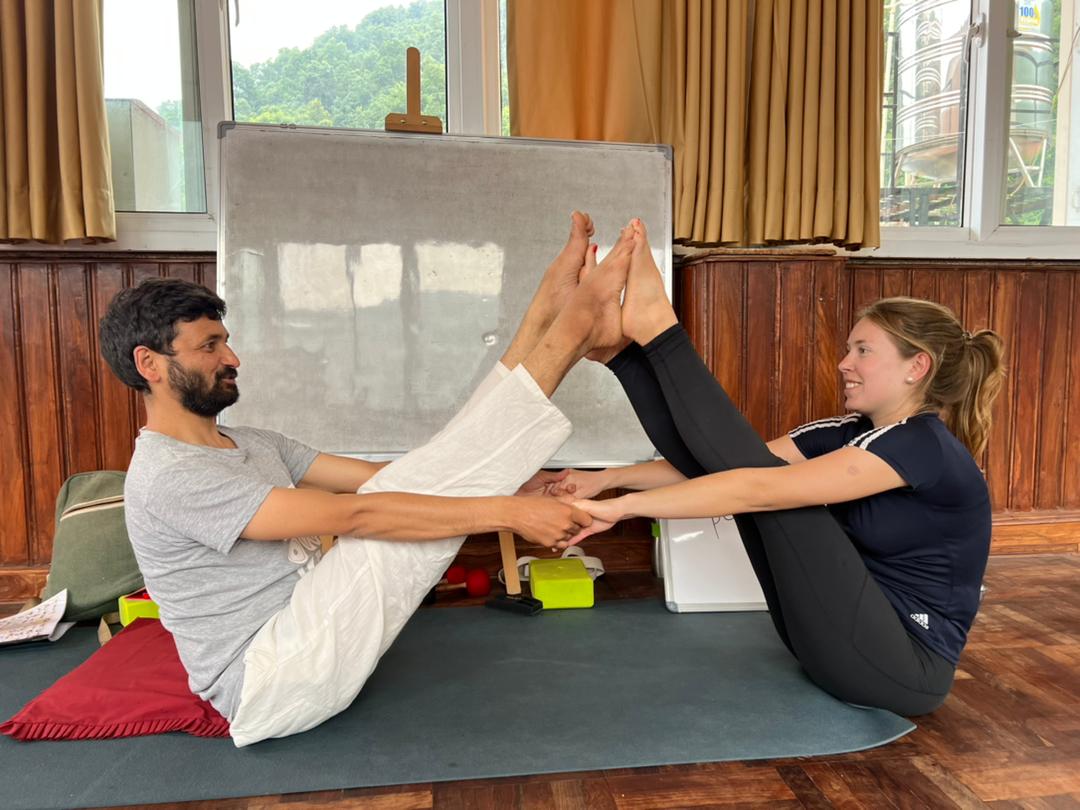
Why we are the Best Yoga School in Nepal?
In Nepal, throughout the decades, there have been many yoga teacher training schools, which have been delivering 200-hour yoga teacher training & 300 Hour Yoga Teacher Training. But We, Himalayan Yoga Academy were the first yoga school in Nepal, to provide the course globally. We were providing the course in a much more qualitative way to our students.
Due to our guidance, many students were able to get yoga certification and were able to open yoga studios throughout their country. Our Gurus are highly experienced and very knowledgeable about the way of teaching and influencing the student’s goals most positively. We believe in quality over quantity which has been our key factor in providing the best education and skill to our students.
- Yoga teacher training in Nepal
- Yoga instructor
- Online yoga teacher training
- Yoga teacher training online
- Online yoga school
- Yoga certification
- YTTC 200, 300, 500 hrs
- yoga teacher training near me
- yoga teacher
- become a yoga instructor
- yoga instructor training and certification
- yoga training
- 200-hour yoga teacher training
- yoga alliance certification
- yoga certification near me
- best online yoga teacher training