
PART II YOGA TRADITION, DIVINE KNOWLEDGE AND CULTIVATION
Here is a continuity PART II YOGA TRADITION, DIVINE KNOWLEDGE AND CULTIVATION to provide you with insights in detail, including popular philosophies.
SHRIMAD BHAGAVAD GITA- श्रीमद् भगवत गीता
“Tam vidhyaad dukha sanyogaviyogam Yogasangyeetam! Sa nishchayena Yoktavyo Yogo’nirvinnachetasaa !!6/23; “तं विद्याद् दुखसंयोगवियोगं योगसंज्ञितम्। स निश्चयेन योक्तव्यो योगो? निर्विण्णचेतसा।। ६। / २३; In which the coincidence of sorrow is detachment, that is Yoga Samadhi. That yoga, which is the goal of Dhyana Yoga, must be practiced from the mind.
“Yogasthah Kuru Karmani sanga tyaktvaa Dhananjaya; Siddhayasiddhyoh Samo bhootva samatvam yoga uchyate. 2-48 “Gita- ” योगस्थ: कुरू कर्माणि सङ्ग त्यक्त्वा धनन्जय! सिद्धयसिद्ध्यो: समो भूत्वा समत्वम योग उच्यते।। २ -४८ ” गीता; O Arjuna! Forsake successful and unsuccessful attachments and do your duty in possibility, this possibility is called yoga.
SANKHYA PHILOSOPHY: THE DISTINCTION OF PRAKRITI-PURUSHA- सांख्य दर्शन : प्रक्र्ति, -पुरुष को भेद
“Gyananmuktih” S. D. 3/23, “ज्ञानान्मुक्त्ति:’ स। द। ३ / २३।।; It is said that there will be liberation from knowledge, in which the means of knowledge are mentioned as restraint, asana, perception, meditation, practice, asceticism, etc. Its active use is found in yoga philosophy. “Bandho viparyayat” “बंधो विपर्ययात” viparyaya means lack of self-knowledge, and due to ignorance, the living soul is bound from birth to death.
JUSTICE, VAISHESHIKA, VEDANTA PHILOSOPHY- न्याय, वैशेषिक, वेदान्त दर्शन
Philosophy of justice (न्याय): 4. 2. 46. It is said that for the attainment of Samadhi, by following the rules of Yama, etc., the Ragadi defect should be destroyed and the soul should be made purely cultured, and the measures mentioned in Yoga Shastra should be followed.
Vaisheshika (वैशेषिक) Darshan: Nirvana (salvation) is obtained from the elemental knowledge produced by a particular religion.
Vedanta (वेदान्त) philosophy: Asana, pranayama, concentration, meditation, etc. are described as compound actions for ‘mindfulness control’.
PATANJALI IN VEDIC YOGA TRADITION- वैदिक योग परम्परामा पतंजलि
From the Vedic Samhita to the Brahman, Aranyaka, and Upanishads, the harmonization and summarization of the compound elements available has been formulated by Maharishi Patanjali in Yoga philosophy. Author of Yoga Sutras, Grammar Mahabhasya, Nidan Sutras, Sankhyacharya, Ayurveda Spokesperson, and Lohshastrakar.
Yoga Sutra is the oldest philosophy, about 300/700/1000/8000 B.C., with different vows. It is also believed to be about 10,000 years old. There are 4 Chapters 195 Sutras in yoga darshan. “tadā draṣṭuḥ svarūpe-‘vasthānam” ॥1. 3॥ तदा द्रष्टुः स्वरूपेऽवस्थानम् ॥३॥ -For finding our true self (drashtu) entails insight into our nature. When the complex and intricate instincts of the mind are restrained, then the seer is situated in his real form or Brahmasvarupa.
BUDDHIST PHILOSOPHY, ATHEISTIC PHILOSOPHY- बौद्ध दर्शन नास्तिक दर्शन
Buddhist philosophy does not believe in Vedic knowledge but believes in salvation, the word Nirvana. The sadhana path for Nirvana is in line with the yoga form. Yoga philosophy considers worldly life to be miserable, while Buddha’s philosophy has the same principle. Both philosophies believe in the end of the cycle of life and death for salvation. It is said that the philosophy of numbers and yoga has evolved into a functional form of Buddhist philosophy.
BUDDHIST PHILOSOPHY – YOGA PHILOSOPHY AND SADHANA- बौद्ध दर्शन -योग दर्शन र साधना
Mahatma Buddha practiced asceticism, and in yoga tradition philosophy asceticism is the main practice. In the Buddha’s philosophy, the Ashtanga path and the Ashtanga yoga of yoga correspond. The five sub-rules of Buddha’s Panchsheel and Ashtanga Yoga’s Yama correspond.
The Eightfold Path in Buddha’s Philosophy is Right Sight, Right Resolution, Speech, Karma, Life, Exercise, Right Memory, and Samadhi. Ashtanga Yoga in Yoga Philosophy are Yama, Niyama, Asana, Pranayama, Pratyahara, Dharana, Dhyana and Samadhi. Asana and Pranayama are also discussed in Buddha’s philosophy. For example, Buddha used to meditate with Padmasana and practice Anapan Sati Pranayama.
SHIVA SAMHITA OR SHIVA’S ABBREVIATED TEXT-शिव संहिता वा शिवको संक्षेप ग्रन्थ
Yoga is an old unknown Sanskrit text in the practice and art. This is one of the classical yogic sciences. The word “yoga” means the union of the human soul and the divine. This talk includes detailed instructions on how to practice the various elements of yoga asanas, postures, pranayamas, meditation, tantric practices, and abstract yogic philosophy.
SHIVA SAMHITA- शिव संहिता
“Yasmin jnate sarvamidam jnatam bhavati nischitam; tasminparishramah kaaryah kimanyaachchhaastra- bhaashit. 1.18; “यस्मीन ज्ञाते सर्वमिदम ज्ञातम भवति निश्चितम। तस्मिन्परिश्रम: कार्य: किमन्याच्छास्त्र-भाशित।।१। १८।।. With the knowledge of Yoga, the knowledge of the whole is definitely obtained, but effort must be made. More than 350,000 nadis, (Varina, Sushumna and Asi), 4 major out of 84 asanas, ten mudras, Practices of meditation, such as: Pratikopasana (God or Spirit in the sky), Jyoti Roop Atma, Naad Brahma, Niranjan’s, Kantha Koop (Khechari), Trinetra’s; Chakra Dhyana Yoga, Paramsunya’s Dhyana, Nirvichara Dhyana are mentioned.
Chaturvidha Yoga are Mantra, Hatha, Laya, Raj Yoga. “Raja Yoga without Hatham, Raja Yoga without Hatha:. “Hatham Vina raajayogo raajayogam vina Hathah, tasmaatpravaartaate Yogi hathe satgurumaargatah.” – “हठम विना राजयोगो राजयोगम विना हठ:। तस्मात्प्रवार्ताते योगी हठे सत्गुरुमार्गत: Without Hatha Yoga, Raja Yoga and without Raj Yoga, Hatha Yoga is not obtained. Therefore, according to the path guided by the Sat Guru, first practice Hatha Yoga.
Disruptions of Yoga: Disruption of Bhog Bandhan, Bodily bondage, Religious disruption, Knowledge disruption, Food disruption, music disruption, classical disruption.
To be Continued…
Yoga Tradition, Divine Knowledge and Cultivation PART I
Yoga Tradition, Divine Knowledge and Cultivation (योग परम्परामा दिव्य ज्ञान एवं साधना) is the article that will enlighten all the historical knowledge relating to the yoga tradition that has been recorded in the Vedas. The word “Yoga is rooted in ‘Yuj’ dhatu, which means to join or to yoke, and Yoga means “addition”/ ‘Union’; So ‘Yuj’ determines the process, but ‘Yoga’ determines the achievement. Yoga is Jod or Sam or Dhyaya or Sadhya in the Bhav Pradhan sense. Yoga is meant in three fundamental ways and means to have Addition/Experience.
Derived from verbs:
Divadiganiya ‘Use-Samadhau’ ‘युज–समाधौ’ Samadhi from Yuj
Rudhadiganiya ‘Yujir Yoge Dhatu’ युजिर योगे धातु’ –Samyog from Yuj
Churadiganeeya Yuj ‘Samyamane’- संयमने – Samyaman from Yuj
DEFINITION OF YOGA (योगको परिभाषा)
The commentator Maharshi Vyas said the yoga is “Yoga: Samadhi” “योग: समाधि”- Yoga is called Samadhi, and Samadhi is called Yoga.
“Sthitametat Sven Rupen” (Chhandogya 8.3.4), “स्थितमेतत स्वेन रुपेण” (छान्दोग्य ८।३।४) –
In the state of Swaroop by Samadhi, the soul is situated in Swa-Swaroop-Yoga
Yogashchittavrittinirodh: Pa. Su..1; 2-..”योगश्चित्तवृत्तिनिरोध:” पा. यो. सू..१; २ Controlling the changed instincts or thoughts in the mind, or the journey of emptiness, is yoga.
Yoga tradition योग परम्परा
In the pre-Vedic period of yoga, Paramatma has given the knowledge of the Vedas to four sages or poets, or yogis, in the form of meditation, that is, in the state of samadhi. Four rishis are Agni, Vayu, Aditra, and Angira.
The Yoga period is considered to have five periods.
- Pre-Vedic period-> 15000
- Vedic period-> 5000
- Pre-classical -> 3000
- Classical -> 2000 – 3000
- Post Classical; > 1893
- Yoga in the Modern Era <1893
SOUL + SPIRIT = BRAHMA CONSCIOUS – आत्मा + परमात्मा = ब्रह्मा चेतन
The conscious energy (soul) within the element or organism, Cosmic Conscious Energy (Spirit), which is functional as ॐ = a + u + m. According to Vedic doctrine, Om Shakti was later considered to be Paramatma, Purusha, or consciousness. Omkar is the first universal name of Ishvara/God.
ORIGIN OF OM FROM PANCH MAHABHUTA-पन्चमहाभूतबाट ॐ को उत्त्पति
In the Panch Mahabhuta, the subtle form of the sky element is the word or sound, or vibration (Shabda). It is from this sound that completes Pancha Tattva, that is, all things, originated. Meeting the celestial element of a word or sound is perfect yoga. The nature of the union of the five elements is yoga. The cosmic energy is the existence of every creation.
“OM KHAN BRAHMA”-“ओम खं ब्रह्म“
Omkar / om = a ——– u …………….. m …………..
Existence cycle = creation …… status ………… cataclysm ………
Dharma Parampara = Brahma ——- Vishnu ————- Rudra ———–
Life = body ———– mind —————- soul —————-
Nadi = Ida ———— Pingala —————— Sushumna ———
Gland = Spirit ——– Vishnu ————— Rudra ————
Chakra = Mula-Swadhi —- Mani-Anahat —- Vishuddi-Ajna-
Bandh = Original ——— Aviation —– Jalandhar ——-
Molecule = Electron —– Protron ——– Neutron ———-
ORIGINAL SOURCE OF YOGA योगविद्याको आदिस्रोत
Paramatma – Parabrahma – Omkar.
The meeting point of Veda and Yoga Vidya is Brahma / Prana Vidya. “Om Khan Brahma” Yaj-A-40; “-“ओम खं ब्रह्म” यज-अ-४०; and “Tasya vaachakah brahma” P.Y.S 1.27; “तस्य वाचक: ब्रह्म ” –यो सु १-२७; That is, Om is Brahman or Paramatma. Brahma Vidha in the Vedas: The entire Veda is the same form of Omkar. Brahman is considered to be omnipotent, omnipresent, eternal, sachchidananda, unchanging, eternal, incomparable, omnipotent, omniscient.
SPOKESPERSON OF HIRANYAGARBHA YOGA -हिरण्यगर्भ योगको प्रवक्त्ता
Brahma created ‘Raj Yoga’ and was offering the right to develop to Hiranyagarbha as spokesperson and -Patanjali-10,000 years ago as successor.
Vishnu created Vedic Yoga and offering the right to Sri Krishna to develop Sannyasa, Sankhya, Mantra, Dhyana, Gyan, Bhakti, karma Yoga etc.
Shiva created the Tantra Yoga , Kundalini Yoga and Hatha Yoga and offering the right to Gorakhnath. “Hiranyagarbha: Samavartatagre Bhutasya jaatah Patireka Aasit. Sadadhar Prithivi Dhyamutemam Kasmai Devaya Havisha Vidhem, Rig 10. 121 1.. “हिरण्यगर्भ: समवर्तताग्रे भूतस्य जात: पतिरेक आसीत्। सदाधार प्रिथिवी द्यामुतेमाम कस्मै देवाय हविषा विधेम।। ऋग १०। १२१। १।।. First of all, Hiranyagarbha was born who was the only lord of the creatures. He was the one who created the world and the spirit world.
YAJNA, SIDDHI AND RAJ YOGA -यज्ञ, सिद्धि र राज योग
“Yasmadrete na siddhati yajno vipaschitashchan. Sa dheenaam Yogaminvatee. Rig 1/18/7. “यस्मादृते न सिद्धती यज्ञो विपश्चितश्चन। स धीनाम योगमिन्वती।। desireऋग १/१८/७।।; Without the great element of Brahma Yajna (meditation of the evening between sunset and sunrise), no Yajna of the scholar and Vidhushi is perfect. Since there is a desire. In which the coincidence of sorrow is detachment, that is, Yoga Samadhi. That yoga, which is the goal of Dhyana Yoga, must be practiced from the mind. To prove spiritual yoga through the yoga sadhana rituals in the form of Paramatma by Dharna, Dhyana, and Samadhi in the form of the chosen deity, be perfect by providing perfection in the sadhana of the rituals.
YOGA INTERVIEW- योग साक्षात्कार
‘Rishirdashanaat’, ‘Mantra Mananaat’ ,’ऋषिर्दशनात् ‘, ‘मन्त्र मननात्”. What a poet/yogi in the form of a sage, Rishi says and writes, he first writes and speaks by seeing his mind power through the vision of yoga. In Vedo-mantra, the subject interviewed is fulfilled by the yoga of meditation, which is full of serious and profound mysteries. “Sakshatkritadharman Rishay:” “साक्षत्कृतधर्माण ऋषय:” The sage/poet who interviewed the subject from his point of view. “Na Vichetdandha:” ” न विचेतदन्ध:” – Without yoga vision or yoga knowledge, one cannot experience/portray any subject.
UPANISHADS AND INTIMATE SADHANA-उपनिषद र अन्तरंग साधना
Maharshi Yajnavalkya, while preaching to his friends, says, – ‘Aatmaa waa Are draShtuvyo mantavyo nididhyaasitavyo Maitreyee’ – Brihadaranyak Sub.4 /5/6 / “आत्मा वा अरे द्रष्टव्य:श्रोतव्यो मन्तव्यो निदिध्यासितव्यो मैत्रेयी”। -बृहदारण्यक उप.४/५/६/ -The soul itself is a truth, the soul is a visible element, the truth must be realized through its hearing, contemplation and meditation (intimate yoga-meditation and samadhi). “Drishyate Tvagrayayaa Sukshmaya Sukshmadarshibhi” 3. 12. “दृश्यते त्वग्रयया सूक्ष्मया सूक्ष्मदर्शिभी ” कठ १। ३। १२।- The yogi made his intellect subtle and depth through yoga sadhana.
“Antah shareere jyotirmayo hi shubhro yama pashyanti yatayah ksheena doshaa”- Mundak 3.1.5. “अन्त:शरीरे ज्योतिर्मयो हि शुभ्रो यम पश्यन्ति यतय: क्षीण दोषा ” मुन्ड़क ३। १। ५।–It means- Prabhma is all-pervading, Paramatma is present in everyone’s heart as Jyotirman. Only a person with a pure heart without any guilt can see it.
Yogashikhopanishad -24: “Gyannishtho Viraktto’pi Dharmajno Vijitendriya. Without Dehe’pi Yogen, there is no salvation. योगशिखोपनिषद: २४; ज्ञाननिष्ठो विरक्त्तो’पी धर्मज्ञो विजितेंद्रिय। विना देहे’पी योगेन न मोक्षम लभते विधेThis means – O Vidhe! Even if the seeker is as knowledgeable, pious, pious and ascetic, there is no salvation without yoga.
To be continued………
YOGA AND STRESS
The term “Yog” in Sanskrit means the Union of existence. Yog is getting popular now all over the world and becoming a part of life as a precious thing. According to Yoga philosophy, all existence is itself Yog, all life is Yog, all nature is Yog, all creation is Yog, all galaxies are Yog. The connection of the five elements (pancha mahabhoota) is the Yog of Nature. The connection of soul, intellect, mind, and body is the Yog of Human life. This trilateral integration of the universe, Nature, and Human life is the Yog of existence. If there is any disconnection amongst them, everything around will be disturbed. More about Yoga and Stress.
Yoga is the ethic of life under the biological clock of the universe. It is considered a way of complete transformation of our nature which harmonizes the precious life and also appeals to have peace, love, non-violence, happiness, and bliss in human life. This is not a science, just some decades before somebody discovered it. It is an ancient human science based on ancient wisdom for ethical and spiritual life.
Practically, Yog is the science of the soul, which drives our mind and body. The absolute purity of the soul keeps life more balanced and sound. It also releases happiness, positivity, and calmness in the mind. If thoughts are positive, we are purified and can then be free from trees and all the sufferings. So right way Yog understand and regular Yog practice is the total way of getting rid of stress, tension, anxiety, depression, restlessness, frustration, and loss of concentration, which usually cause the psychosomatic problems that are related diseases or stress diseases.
What is stress?
According to Yog science, stress is the imbalance at the physical and mental levels. Stress is the automatic response of the body to any physical and mental demand placed on human life. Imbalance is misery that causes conflicts and disorders in life.
Stress Levels
- Moderate: It can improve our performance and efficiency and also drive into positive way.
- Too Much: It can cause an unproductive anxiety level and whole body disorders.
Effects of Stress
- Physical Effects: Weight gain/ loss, Hypertension, Heart palpitations, Unhealthy skin and wrinkles, Unexpected hair loss, Early aging, Body aches
- Emotional effects: Mood swings, tension and anxiety, leading to depression, leading to bad expression, Coping strategies, i.e., Drugs, Alcohol, Difficult in making decisions; Sexual and romantic indiscretions; Feeling worthless, inadequate, and insecure.
Symptoms of stress:
- Moderate levels: tension headache, indigestion, reduced concentration, tight jaw, muscle tension, sweaty limbs, restlessness, cold limbs, loss/increase in appetite, sleep disturbance, irregular bowel.
- Severe levels: chest pain, hypertension, allergies, phobias, anxiety, depression, fatigue/tiredness, confusion, memory loss, chronic constipation, sexual disorders, infertility, dermatitis, menstrual distress.
Strategy of Stress Relief
- Ethical changes: Social ethics, self ethics
- Better way of living: Positive Nature (Samyak Prakriti), Positive Food (Samyak Aahaar), Positive Action (Samyak Vihaar), Positive Rest (Samyak Vishram ), Positive Thinking (Samyak Vichaar)
- Body warm up/preparation by the subtle exercise and cleansing process
- Yogasana, Pranayama, and overall workout routine
- Yoga nidra (Psychic sleep), music healing
- Shavasana: a complete rest and relaxation and balance pose
- Meditation: a way of inner awareness, sound rest, and mind purity
- Counseling: talk therapy and life coaching
- Body relaxing therapy and spiritual healing
- Other helpful tips: Proper knowledge of body, mind, and spiritual issues associated with stress, Action oriented life pattern
Realistic goal setting, No compromising with your norms and values and beliefs, No competition in life, always try to be excellent but not the first one, low stress lifestyle, love to all.
Brain Functioning nature and calming pattern:
Our brain fires 14 to 20 more cycles of thoughts called Beta waves a second, which is for getting tasks done. But it is not for enhancing your learning capacity for new things. So doing any type of relaxation practice keeps sound rest at the atomic levels, which minimizes the high consumption of oxygen and energy, which provides better life and a longer life. Taking a few minutes to relax deeply slows our brain waves down, which are Alpha waves, occurring at between 7 to 14 cycles a second, can empower our learning level and soundness in life.
Conclusion
Finally, Yog is the solution in life. If one problem arises in the mind, hundreds of solutions come to mind. But just one hour going to Yog studio and practicing Yog is not a yogic life. This complete world is Yog studio, and this precious life is itself a huge Yog laboratory where we have to do well experiments for ourselves. This beautiful life gifted by nature is itself a huge chemical, biological, and physical industry where we can find all the requirements for the experimental fulfillment of your being and consciousness. So please let’s globalize the Yog science for peace, harmony, happiness, bliss with the exploration of wisdom and intelligence all over the world.
Written by: Swami Yog Subodh
Hatha Yoga and Jalaneti (Nasal Cleansing with Water)
Here is an interesting article on Hatha Yoga and Jalaneti. Hatha Yoga literally means dedication. It is known as power of life or balance of life. In Hatha, ‘Ha’ means Sun and ‘Tha’ means Moon. Haṭha yoga is associated in popular tradition with the Yogis of the Natha cult through its tradition of Shiva and developed by Matsyendranath. Almost all hatha sacred texts belong to the Nath Siddhas, and the important ones are credited to Matsyendranath’s disciple, Gorakhnath, Svatmaram, Gheranda, Bhartuhari, etc. Hatha yoga is the science of purification. Hatha Yoga is a powerful method of self-transformation. The main objective of hatha yoga is to create an absolute balance of the interacting activities and processes of the physical body, mind, and energy. More about Jalaneti.
Shatakarma (Six Cleansing Acts)
The Shatkarmas (Sanskrit: षटकर्म, literally six cleansing acts), also known as Shatkriyas, are a set of Yogic purifications of the body, balancing three humours in the body, Vata, Pitta, and Kapha. It just prepares the well path and sets the main work of yoga towards moksha (liberation). These practices, outlined by Yogi Swatmarama in the Haṭha Yoga Pradīpikā and Maharshi Gheranda in Gheranda Samhita as kriyas, are Netī, Dhautī, Naulī, Basti, Kapālabhātī, and Trāṭaka. Traditional Hatha Yoga study is our major course in our Yoga Teacher courses (YTT 200 hrs/300 hrs) at Himalayan Yoga Academy.
“Dhautirbastistathaa Netistraatakam naulikam tathaa;!
Kapalbhaatishchaitaani shat karmani Prachakshate”!! .
These are known as shatkarma or the six cleansing processes: Dhauti, Basti, Neti, Trataka, Nauli, and Kapalbhati.
Jalaneti (Nasal Cleansing with Water)
Neti is an important part of Shatkarma as a part of Hatha Yoga, the yogic system of body cleansing techniques. It is intended mainly to clean the air passageways for balancing solar and lunar energy. Both the Hatha Yoga Pradipika and other sources usually attribute to Neti many beneficial effects that range from profound physiological ones on the body, mind, and personality to even clairvoyance. The two main variants are jala neti (जलनेति) using water and the more advanced sutra neti (सूत्रनेति) using string or Ghrihat Neti (घृत).
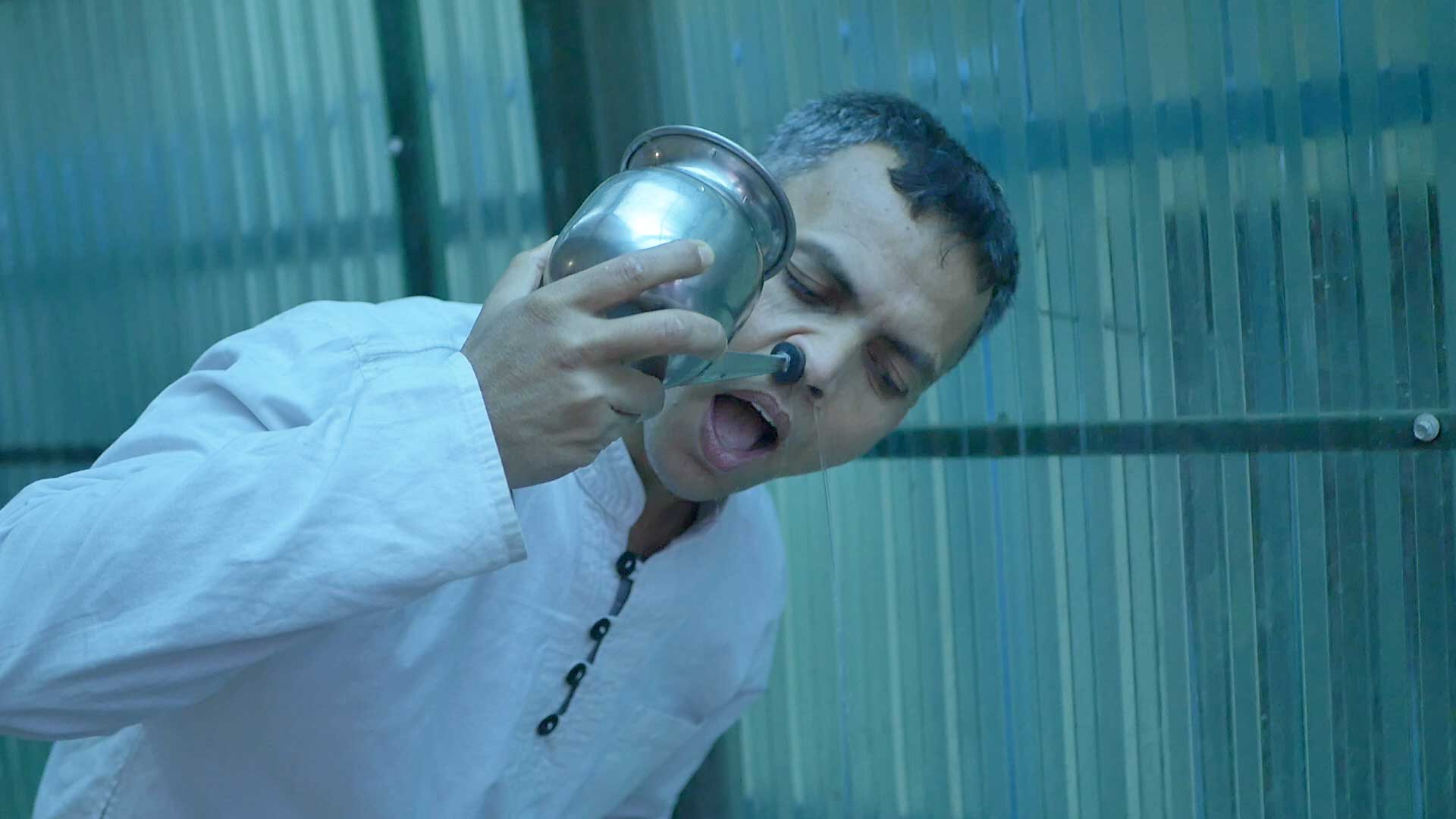
It is the nasal cleansing process with salty, warm, or saline water. We require a Neti Pot or any pot with a nozzle designed to fit into a nostril. This process is very important to cleanse our nostrils and nasal cavity. In the current atmosphere and current pandemic situation is essential to prevent and reduce the effects of virus entry. So the post of video of Jalaneti throughout the Himalayan Yoga Academy and other media, as well in Websites, YouTube, and Facebook, gave well benefits to all during this pandemic phase. Any virus, including coronavirus, can occupy and survive in the Nasal and throat cavity for two days to two weeks, so it is very necessary and expressed solution to disperse and reduce the number of viruses. At the same time, we can rinse and gargle to minimize the pathogens and cleanse that zone.
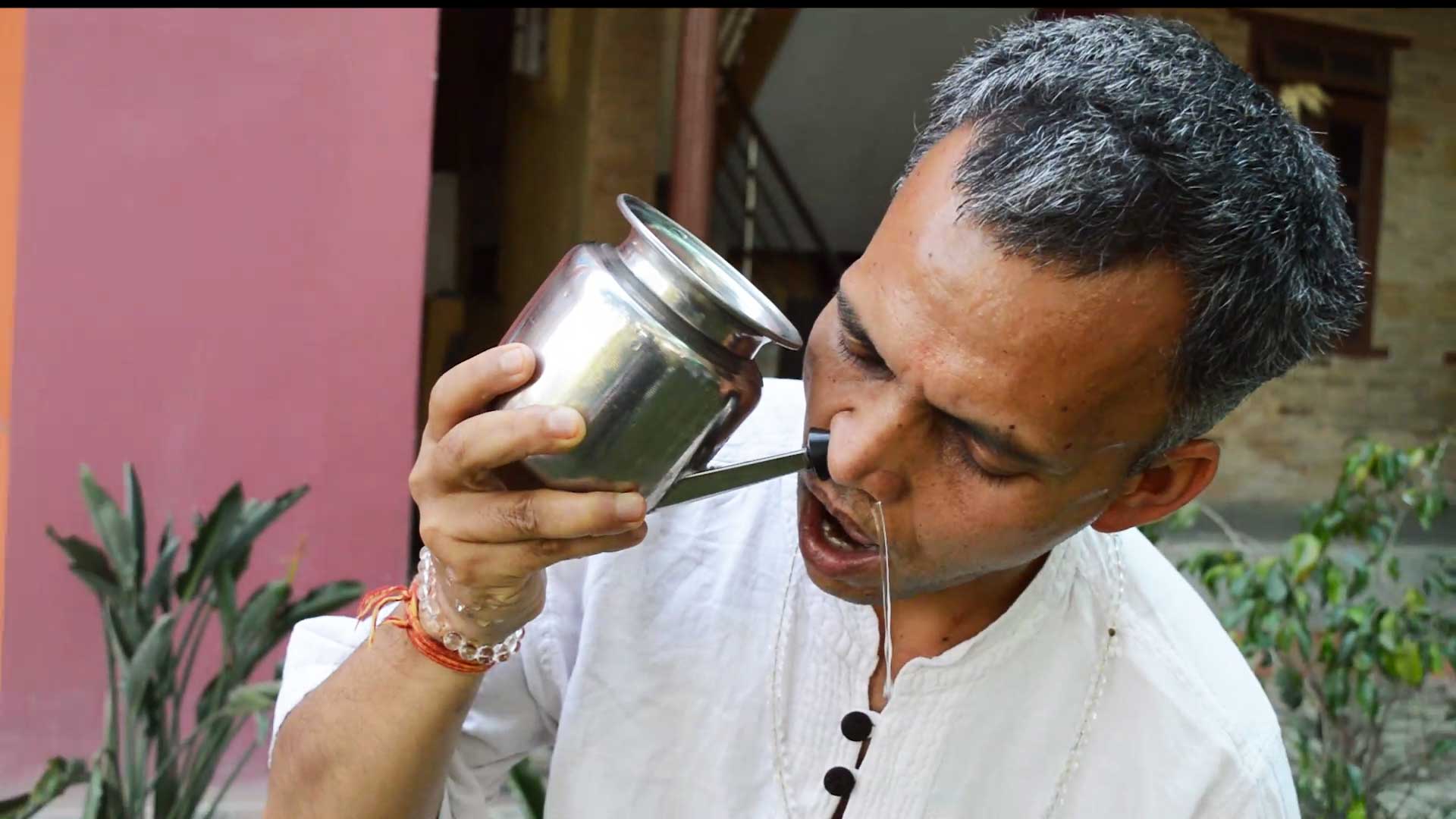
Jalaneti Methods
- Fill the neti pot with salty or saline water.
- Stand squarely, legs apart, body weight evenly distributed between the two feet and lean forward.
- Insert slowly and comfortably the nozzle of the Neti pot in the left/right nostril and tilt the head to the right side while starting from the left. There should be no force involved.
- Open the mouth slightly and let the breath pass throughout the mouth.
- Keep the whole body relaxed and let the water pass out through the another nostril.
- Keep on thee half of the water through one nostril and remove the neti pot, center the head, then get the nostril dry by letting the water run out of the nose and also blow the left nostril gently
- Practice through another nostril in same way.
- Finally stand erect and do kapalbhati kriya, first one nasika turn by turn and both nostrils.
- Do this blowing kriyas side to side and in half bending position as well.
Jalaneti Merits
- It helps to activate all the sensory organs.
- Removes the mucus and pollution from the nasal passages and sinuses.
- It allows the air to flow without any obstruction.
- It helps to prevent respiratory system related illness.
- Calms and influences on the brain.
- It activates depression, anxiety, anger and removes drowsiness.
- Balances the prana flow throughout both nostrils and corresponds the left and right hemispheres of the brain.
- It makes the head feel free, light and fresh.
- It increases the concentration and makes better memory.
- Helps to maintain good health the body.
- It induces the harmony and balance throughout the body and mind.
- It helps to activate the Ajna Chakra and awaken the kundalini.
Note: First you should learn once from experts. We teach here in Himalayan Yoga Academy very well in both Yoga retreat packages and Yoga Teacher Training Course.
Yoga Teacher Training Course after COVID-19
Here is an article on Yoga Teacher Training Course after COVID-19 to boost up for better health, career goals, and other tasks. After more than half a year of the coronavirus crisis, the world is now feeling relief. We feel more hope and look to release somewhere else and something else. During the pandemic period, however, it has been an infectious crisis; at the same time, Yogic knowledge and practices have also been introduced and applied to boost the immune system and intuition as a great lesson since the beginning of the coronavirus infection. What we are practicing and getting preventive tips from WHO, as well as the Governments, surprisingly, are the codes and ethics of our ancient knowledge and science, which have usually been taught in our Himalayan Yoga Teacher Training Course at Himalayan Yoga Academy in Nepal.
वक्रतुण्ड महाकाय सूर्यकोटि समप्रभ । निर्विघ्नं कुरु मे देव सर्वकार्येषु सर्वदा ॥
Vakra-Tunndda Maha-Kaaya Suurya-Kotti Samaprabha | Nirvighnam Kuru Me Deva Sarva-Kaaryessu Sarvadaa ||
Meaning
(Salutations to Sri Ganesha) Who has a Curved Trunk, Who has a Large Body, and Whose Splendor is similar to a Million Suns;
O Deva, Please Make my Undertakings Free of Obstacles, by extending Your Blessings in all my Works.
Means of Practice
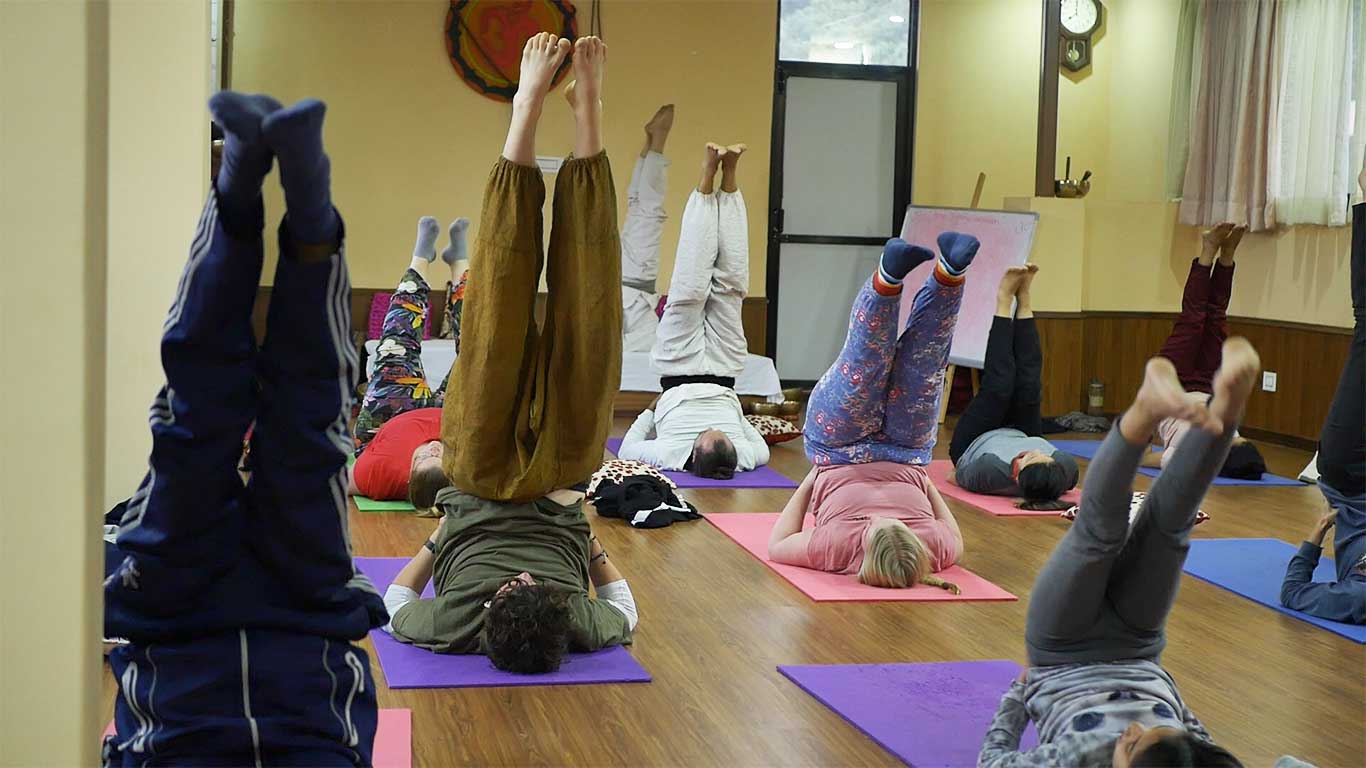
Suppose we learn these kriyas in Shatkarma under Hatha Yoga as the content of Yoga Teacher Training. Such as washing hands and feet, Jala Neti (Nasal Cleansing), rinsing and gargling with salty warm water (Data Dhauti), drinking warm water, lemon water, ginger tea, tulsi tea, vomiting cleansing act (Vaman Dhauti), etc. We generally do prayer every day for physical, mental, emotional, and entire body preparation by chanting Om, Mantras with Salutation Mudra (Namaste) instead of Handshake as a Bhakti Yoga In our Yoga Teacher Training and Yoga Retreat Packages at Himalayan Yoga Academy in Nepal, now the world is learning from corona Master. This is the second surprise.
What we learn is Aahara Yoga (Yoga of Food) and Yogic lifestyle in the Yoga teacher training course. Now the corona is teaching the worldly people about the intake of natural, balanced, organic, seasonal, vegetarian, and live food for the right purpose, right time, and the right way of eating daily rather than junk, fast, dead, meat products, etc. We should think that “Fast food and Fast life tend to Fast death,” but it is better to have only the ‘Fast’. We learn here Dina-charya (Day), Ratri-charya (Night ), Ritu-charya (Seasonal regimen) as a proper lifestyle in the Yoga Teacher Training Course at Himalayan Yoga Academy, the first Yoga school in Nepal under Yoga Alliance Affiliation.
What we learn here is Warm-up, Dynamic exercise, Surya Namaskar, and Yogasana under the Yoga Teacher Training in Nepal ( 200 Hour YTTC / 300 Hour YTTC / 500 Hour YTTC ), but corona teaches us to keep physical activity at least by doing 30 minutes of physical exercises or a morning walk, playing games, or, if not, we do a physical work-out on-farm and sweat break out at least. Instead of this, we can do yogasana. We do Physical exercise and Yogasana, then we do bandha, mudras, breathing workout, and Pranayama – Bhastrika and Sheetali (Highly Recommended) to increase immunity because the immune system is the natural and original vaccine. It is our ignorance that we are looking forward to getting the vaccine, which means we indirectly want to be infected, because to date, no vaccine against viruses in the world has been invented, and also, everybody has their immunity system.
What we learn to have a 3R = Rest, Relaxation, and Recreation, Yoga Nidra, Concentration, Meditation, and the ethical part of Yogic life, e.g., Yama & Niyama, this corona also teaches us how to get good sleep. Somehow, we learn good humor and ethics from this situation, and finally, it made us realize something more. So, we heartily request that to make the travel plan. We are looking forward to seeing you soon for the Himalayan Yoga Teacher Training and Yoga Retreats packages at the Himalayan Yoga Academy.
OM SHANTIH!
IS IT YOGA, YOGAA OR EXERCISE OR BEYOND THAT??? PART – II
Now let’s talk about the yoga that people understand uncertainty today :
Stage-1: The first step is to get rid of the disease as an exercise only. They talk about only health, but not yogic perception and reachable of owns origin form.
Stage -2: Chaturvyuha with the help of which one can realize one’s true nature and can over come threefold suffering permanently.
Fourfold Strategy (Chaturvyuha) – Chaturvyuha of Ancient Medical Science
Roga (Disease)
Roga ka karana (Cause of disease)
Arogya (Health)
Bhaishjya (Treatment)
Chaturvyuha of Eastern Philosophy with special ref. to Maharishi Patanjali
Heya (suffering)
Heyahetu (cause of pain)
Hana (freedom from duhkha wherein feeling of well being prevails)
Hanopaya (means to achieve Hana State)
Stage-3: The practice of maintaining health – both of which are understood today as yoga therapy, but surprisingly, there is a misconception about yoga therapy. It is said that the beginning of yoga therapy is the time of research done by a university within a decade, but that is the beginning of a research paper done by a scholar in the presence of 2/4 hundred and they do not believe from the beginning of yoga practice.
Stage- 4: Thousands of years ago, sages, sages, yogis, etc., as a result of their hundreds of years of experimentation and thousands of years of experimental experience of other sages, as well as the processes of Kriya Yoga, preparation and purification, were all therapies, including the benefits and side effects of yoga. Or side effects. Adequate healing is mentioned in ancient yoga.
Stage-5: They think yoga makes the body curvy or beautiful or flexible, to give strength enhancing yoga (yogasana). But yoga therapy is not the only purpose.
Stage-6: To do Jogging, Dandabaithaka, Tandava dancing, gymnastic stretch, sports play, singing the hymns of a guru is not the only yoga.
Stage-7: Wearing the ocher robe (in some people), growing a beard, being the president and patron of the ashram or organization for years, reciting Sanskrit verses, knowing the informatins found in Google is not just Yoga Practice or Yoga research.
Stage-8: Yoga is neither a modern religion, nor a culture, nor a politics. This is the religion of human, this is the religion of Shiva, this is the religion of Krishna, this is the religion of Buddha, and this is the religion of Tattva. What kind of spiritual politics to believe in Buddha but not to believe in Buddha’s self-religion, to believe in Shiva but not to believe in Shiva’s self-religion.
Stage -9: Whether it’s self-practice, whether it’s training, whether it’s copy and paste in research, it’s not just yoga.
The Realization of Yoga:
Yoga teaches us for survive 86,400 seconds in 24 hours. Yoga teaches to search for the Guru’s path, not the path of Google. This world universe is Yogalaya, and this body with our energy, mind and spirit and soul is the laboratory. Yoga is a gift from Supreme power that everyone has the right to receive.
It moves to be in harmony with nature and the universe. Rising above my culture, my tradition, my religion, my dress, my geography, my politics, my society, my family, etc., respecting all, without discriminating, being bound, arrogance, greed for position, individualistic pride rise our lives. Not talking about status, not talking about authority, not being a master, following the rules and regulations, embracing human religion and Sanatan vedic Dharma, practicing living with what is lacking, free from disease, suffering, grief, whatever is lacking. Trying to survive with that will be the body religion.
Now, what about this great knowledge of yoga and the ocean to those who understand yoga or yogasana, or to those who understand yoga and meditation separately? That is ignorance and to some extent it may be arrogance. The main part of yoga is meditation. Meditation is used in all practices, although asanas, postures, pranayamas, hymns, chanting mantras are also meditations. Similarly, eating, drinking, speaking, thinking, working, resting, etc. are meditations. And the eternal journey to eternal salvation and cavalry is also meditation.
Meditation is the ultimate means of maximum yoga. In Hatha Yoga or Saptang Yoga, the sixth organ is meditation and in Ashtanga Yoga, the seventh organ is meditation. Mantra Yoga’s Pranav Mantra and Divya or Bij Mantra Sadhana is meditation. Meditation is the ultimate state of knowledge, devotion, karma, etc. Yoga, and Raj Yoga is meditation in itself. There are 750 meditation methods or levels in Raj Yoga alone. There are thousands of methods of meditation. Therefore, one can reach yoga only through sadhana.
Conclusion:
Within the practice of yoga, there is a sequence of at least satkarma, sukshma Vyayama, prathana, exercise, asana, pranayama, bandha or mudra, meditation. However, there are many other practices such as Yama, Niyama, Ahara Yoga, Lifestyle, etc. There is a request that it is wrong to say yoga and meditation. Only part of meditation is understood more than meditation yoga, not all yogas are understood in it. And many people say yoga practice, pranayama, exercise and meditation, but what should be is exercise, yogasana, pranayama and meditation. Yoga practice does not mean yogasana or exercises, it means the sense of all yogic paths.
Om Shanti: Shanti: Shanti:
IS IT YOGA, YOGAA, OR EXERCISE, OR BEYOND THAT? Part I
IS IT YOGA, YOGAA, OR EXERCISE, OR BEYOND THAT? Let’s go deeper and understand it through this insightful article. Yoga is usually a union. Its meaning and knowledge are very wide. Yoga is a spiritual element of the universe. This is the result of the creation and existence of the universe. The law of origin of celestial bodies is yoga. One body with another body, one element with energy, one object with another substance, whatever came into existence as one, becomes one, bound in one formula, which forms Yoga. Therefore, we also take care of the effect or energy position of yoga in the planetary constellation. More about IS IT YOGA, YOGAA, OR EXERCISE?
If the union of body, mind, and soul is Yoga, the process of union is action. Soul is the conscious energy within the element or organism, and Parmatma is the cosmic conscious energy, which is active as ॐ = A + U + M. This is yoga. As a result, the cycle of creation (सृष्टि/जन्म); / birth; condition / life (स्थिति/जीवन) and disaster / death (प्रलय/मृत्यु) continues. The existence of every creation is cosmic energy. In the Panch Mahabhuta, the subtle form of the Aakaasha/Sky element is the word or sound or vibration (शब्द वा ध्वनि). From this sound came the complete Panchatattva, that is, all things. The union of words or a sound with the sky is yoga. The union of the Pancha tattva of nature is Yoga.
What Veda Says ?
According to Vedic or Sanatan doctrine, the power of creation, operation, and destruction was later considered to be the supreme unseen power. And later Puranic or Hindu doctrine got the likeness of the God-Trimurti as Gods- Brahma, Vishnu, and Maheshwara. Therefore, if the universe is a physical sky, then Om (Omkar) is energy. OMKAARA is the first universal name of God/ Supreme Power. This is Yoga
In ancient times, chanting, recitation (Japa), Tapa (penance), Sadhana, Upavasa (Fasting), Dhyana (meditation) were the means of the self-realization of spiritual/divine power, salvation, and the state of spiritual discipline was obtained, which was considered Yoga. This state of spiritual consciousness was understood based on the scriptures as Yoga itself, as samadhi, moksha, mukti, nirvana, and kaivalya. Based on the essence of yoga, Samadhi is also a partial path of Yoga, and through many Samadhi Paths, one reaches the state of Yoga, i.e., Kaivalya.
Veda Vyasa commented that “Yoga: Samadhi” means that yoga is samadhi and samadhi is yoga. Samadhi is also a part of Yoga. All the means, actions within the yoga make all realize the four elements of yoga. Such as Hey, Heyhetu, Han, and Hanopaya, for realizing the life, the universe, and the spiritual element, and for solving the problem.
The word ‘heya’ is a part of the fourfold system:
Heya: which is to be eliminated (suffering or duhkha)
Heya-hetu: cause of the pain
Heya-hana: process of eliminating the suffering
Hana-upaya: the means for eliminating the sufferings
Discussion on threefold Suffering (Duhkhatraya)
There are innumerable kinds of duhkha as one object that gives me pain may give pleasure to someone else. However, our sages have classified all kinds of pain under three heads:
Adhyatmika Duhkha (Intra-organic caused by oneself due to ignorance).
Adhibhautika Duhkha (Extra-organic caused by fellow beings or other creatures)
Adhidaivika Duhkha (Supernatural caused by natural calamities)
Maharishi Patanjali defines yoga in the philosophy of yoga as “Yogashchittavrittini Nirodh: 1. 2, that is, Yoga is to stop the many kinds of fired thoughts that arise in the mind. In the first stage, 24 to 40 thoughts come to the mind in a second, purifying and positive, and Yoga is the state of restraint as the moment decreases and travels towards the eternal emptiness. Now, whatever path we take, whether it is the path of Knowledge, Devotion, Karma, Hatha, Mantra, Tantra, Laya (Rhythm), Raj, or Meditation, or Ashtanga Yoga, Reaching the state or void state is yoga. In the Patanjali Yoga Sutra, a formulaic garland of cosmic truth is woven, meaning that yoga is the realization of actions, the attainment of truth from the various means.
From the gods and goddesses of ancient times (Pre-Vedic Period) to the sages of different periods, the Maharishis, who prepared the Vedas, the Upanishads, the Upavedas, and the philosophies (Orthodox), were all yogis. Shiva, Rama, Krishna, Janak, Buddha, Mahavira, Jesus, Ashtavakra, Kapila, Machhendranath, Gorakhanath, etc., were yogis. Did they participate in the Olympics, jump and exercise, and fly in the air without asanas, meditate without breathing norms? Why did Buddha talk about Panchsheel? The five sub-rules within the Buddha’s Panchasheel and Yoga’s Yama are Ahimsa, Satya, Asteya, Natural attitudes, and Aparigraha, etc., which are the rules that the yogi must first understand and follow. Similarly, the by-laws (NIyama) of the rules are also basic and the foundation of sadhanas.
To Be Continued…….
PROTECTION OF ALMIGHTY IMMUNE SYSTEM AGAINST COVID-19
Here is an interesting article on PROTECTION OF ALMIGHTY IMMUNE SYSTEM AGAINST COVID-19. Please, you may protect your almighty immune system and preserve healthy and genetic genes not only for yourself but also for future generations. You may run away from Corona today, but think about how you can avoid the more fatal virus tomorrow. If you are anxiously waiting for a vaccine to exacerbate your fears, suppose you are signing up for a ventilator one day. So be aware now and make your lifestyle regular and natural.
TIPS FOR THE IMMUNE SYSTEM AGAINST COVID-19
Today, one hand, if people are suffering from this virus, but I am not sure this is a pandemic, or epidemic, or something else. The normal fatal rate is an average of 2 % of COVID-19 where whereas the 20 % fatal rate of suicide occurs globally context of 6 months. So, the second one is more dangerous. Maybe Corona isn’t behind this fatal outcome? Everyone should think sensitively. “Prevention is better than a Cure”. The fact is that no medications to date in the world have been developed through the latest medical science.
But there is an ultimate reality that only one power remains in this universe to fight every fatal pathogen. That is the natural Immunity System acquired by birth and creation, which has been saving 8.4 million lives in the world, and 7 billion people are living today due to this original immunity. So do something, get everything.
Source of Immune / Prana
i. Parental Prana
ii. Grain Prana
iii. Air Prana
iv. Cosmos Prana
Essential Tips
Boost your natural immune system by changing positive lifestyle / yogic lifestyle. Don’t wait to get vaccinated, which is not a medicine. Medicine is within you, just know and use.
Yoga Saadhana: OM / Mantra chants, Purification/ Hygiene, Warm up Exercise, Yogasana, Mudras, Pranayama, Dhyana. Gain true knowledge, and do excellent karma.
Sleep in time within 10 pm after 2-3 hours of Meals and take deep & sound sleep.
Waking up between 3-6 in the morning before sunrise.
Drink enough water as needed.
Get enough air in an open place. Love the ventilation rather than the ventilator.
20-40 minutes of Solar Energy by Sun Bath.
Do 40 minutes of work or exercise or yogasana, sweat once a day, or increase your heart rate.
Breathing for 20 minutes or doing Pranayama/Kumbhaka by knowing, if possible, two times a Day.
20 minutes of straightening the back and sitting in silence or practicing any method of meditation yoga, if possible, two times a Day.
Action and Rest should be equal. So have a proper rest. Rest is itself a reserve of energy.
Chant Omkar or any other mantras, there will be no germs in that vibration, whether inside or outside.
Eat a balanced, natural, and vegetarian diet in time for the right purpose. No fast food, junk food, smokes, drugs, etc.
Cereals, Sprouts, and green vegetables used at least 9 types of spices. Eat at least one thing every day.
City dwellers should eat less dairy in the city and boycott the meat class altogether. No intake of sugar.
Drink basil, ginger, or lemon, any type of herbal tea.
Drink turmeric dissolved in evening milk or warm water.
Gargle and rinse with salt water or Tulsi tea for more than 30 seconds and minimum 4 times, at least after coming back to home and before sleep.
If you know, do Jalneti in the morning, and if you come from outside, do it in the evening.
Steam: Take a steam bath or sauna twice a week.
Whoever survives with what is available, what has become of you, and now learn to live happily with deprivation. Learn to live with what you have.
Clap, rub your palms, and wash your hands occasionally. Don’t kill your own hand tissue or skin with too much sanitizer, and have a bath daily.
Smile from time to time, smiling can increase your positive energy. It is the best prescription for stress.
Just as you were careful with a person with a common cold, you should be as careful as you are with a person who is unfamiliar with normal behavior, infected persons, and in crowds. Use Max in only crowds, in hospitals, and crowds.
Our lungs with a capacity of 2100 C.C, but 1/4 of the lung capacity is working now who live in urban life or modern life.
Live a normal and active life, not just a life of comfort, a life of happiness and joy. Although it is difficult to find happiness, we should achieve a life of happiness and joy because it is obtained from within and not bought on the market.
Make a strong willpower, have a fresh mood, and be positive.
ॐ Survey Bhavantu Sukhin! Survey Santu Niramaya! Survey Bhadrani Pashyantu, Ma Kashchid Dukh Bhag Bhavet !!
Om Shanti!
Sirsasana ( Head Stand Pose)
Sirsasana consists of two words, where ‘Sirsa’ means ‘the head’ and ‘asana‘ means pose. It is also commonly known as headstand, also known as Salamba Sirsasana. It is known as the ‘king’ of asana, but Aarogya (Therapeutic) point of view, sometimes it can be ‘killer’ in the technological era instead of ‘King’ because of the illness complications such as Hypertension, Heart problems, Brain problems, Excess stress, and the stage of beginners. In this yoga pose, the body is completely inverted and held up right, where the body is supported by the forearms, while the crown of the head rests lightly on the floor.
Steps to do Sirsasana
Preparatory Phase:
It is very intense postures, so we need to prepare very well.
i. Sukshma Vyayama: Fingers; wrist, elbow and shoulder exercises, Neck Exercises, Eyes exercises
ii. Pre-aasanas: Tadasana, Vajrasana, Bhringasana, Shasankasana, Dolphine Pose
Methods:
- First of All, Lower yourself down on your knees or from Shasankasana, place your arms on the floor and interlock your fingers in such a way that the weight of your upper body is focused on your arms.
- Then, extend your legs and lift your buttocks in the air to enter into the dolphin pose.
- Rest your head on the interlocked finger to give it a base. Lift your heels and rest your legs entirely on your toes.
- Now slowly bend your knees and slowly lift one of your legs off the floor.
- Try to slowly lift your other leg by folding your knees by slightly pushing the weight of your body to your head.
- Stretch your legs straight, maintain the balance of your body and hold the pose for half a minute to 3 minutes, and more depending upon your comfort level.
- We can perform different variations of legs and also Ardha or padmasana as well.
- To come out of the pose, slowly bend your knees and try placing your feet on the floor one by one and hold in Shasankasana.
- Roll back into the sitting position Vajrasana, Ardha -Vajrasana and Tadasana and let your body relax for a minute or two in Shavasana.
Note: Counter Pose of Sirsasana is Tadasana
Benefits of Sirsasana
- It keeps all organs free and relax.
- Strengthens the arms, core, legs, and back.
- Increases the blood circulation and impulsive communication.
- Improves the immune system.
- Due to the inverted pose, there is better circulation of blood to brain and eyes.
- This pose highly improves the nervous system and strengthens the spine.
- It’s the solution for insonmia, loss of concentration, loss of memory, anxiety, in beginning stages of stress and anger management.
- Inverted pose puts pressure on pituitary and pineal glands which in turns improve its efficiency.
Sirsasana Contradictions
- People having any form of back injury or neck injury.
- People with blood pressure issues and heart disease.
- Pregnant women or women who are menstruating shouldn’t practice this pose.
We will teach you how to do Sirsasana properly. Join our 200-hour or 300-hour yoga teacher training program at Himalayan Yoga Academy in Nepal. You will be properly guided by our experienced teachers.
FAQs about Our Best Online Yoga Teacher Training
Here we present FAQs about our Best Online Yoga Teacher Training to provide you with meaningful insights.
1. What makes your online yoga course different than other online yoga teacher training courses ?
Ans: Our online course is so unique that you will get both physical and theoretical knowledge of Yoga, most understandably. Our main Guru, who has the experience of more than 20 years, will guide you most positively and innovatively. He and other gurus’ experiences will cover up your satisfaction level and understanding level. You will have no regrets and complaints.
2. Is this online yoga teacher training registered with Yoga Alliance?
Ans: Yes, we are indeed registered with Yoga Alliance USA.
3. Is this online yoga teacher training suitable for beginners ?
Ans: Yes, this 200 hour online yoga course is suitable for beginners. They will get every beginners training and knowledge. Everybody in Beginning is beginners.
4. What device can I use to take the training ?
Ans: You can use any device, such as laptops, tablets, smartphones, etc.
5. How long does this yoga training lasts?
Ans: This is self paced online yoga teacher training. You can complete this course on basis of your comfortless, satisfaction and mutual understanding.
6. Do you also offer yoga teacher training in person?
Ans: Yes, we do. Please contact us for more details.
7. After completion of this course, am I eligible to teach yoga internationally and domestically?
Ans: Yes, the course is registered under Yoga Alliance USA. This accreditation will help you to make you recognize yourself as a yoga teacher internationally, and you can teach anywhere.
8. What is the nature of the course, only physical or something more?
Ans: Of course! It will be more; only physical is not a Yoga course, that is the Fitness course, so this course will be more integrated with philosophy and a physiological base.
9. Is the online course going on all year?
Ans: We do boost up, regular classes, healing cases, and counselling, but the Yoga Teacher Training course will run on a specific situation only.
10. What are the other benefits of doing Online classes?
Ans: Learning is infinite, and Yoga is the science of life, so you will become a member of our Yoga family. You may get proper guidance, further knowledge, and practices, and also different courses as well.