
Herbs For Brain Health
Our brain health is essential for normal living and plays a massive role in how to deal correctly with life, which begins when we wake up and also plays an important part in how we sleep. It is truly an amazing organ, working around the clock for us. Below, we talk about Herbs For Brain Health.
Brain-boosting is required for keeping a check on its functioning, and there are lots of wonderful herbs, spices, and superfoods that enhance brain power. The natural option is always a better and healthier way of treating an issue, and similarly, the herbs mentioned below work their magic on our brains.
9 Super Herbs For Brain Health
Ginseng
A wonder herb, Ginseng is required in the modern world credited to its stress-busting and boosting elements. An adaptogenic herb, Ginseng alleviates mood, improves concentration, attention, and memory, lengthens mental and physical endurance, and eases anxiety.
- Eat raw or lightly steam it.
- Stew in water to make tea.
- Add water to freshly sliced Ginseng and steep it for a while.
Gotu Kola
Pegged as the “herb of longevity,” gotu kola is a staple in traditional Chinese, Indonesian, and Ayurvedic medicine. Practitioners claim the medicinal plant has the power to boost brainpower, heal skin issues, and promote liver and kidney health.
- It is better to consume the herb after consulting a doctor and the herb is available in powder form.
Turmeric
Turmeric is a very popular and commonly used spice in India and other Southeast Asian countries. The herb spice is linked to improving brain functioning, especially on the parts of memory and attention. As per a study, the herb protects the brain against Alzheimer’s disease, enhances immunity, lowers the rate of dementia, and more.
Ashwagandha
The Ayurvedic herb consists of a lot of benefits for various health issues and always helps in combating symptoms of depression, reduces stress, slows, reverses, or stops neuritic atrophy, and prevents brain cell damage. It also prevents age-related degenerative diseases and increases longevity.
- It is available in both powder and capsule form, and it’s better to consume the powder.
- You can mix it in honey and eat 300 gm daily, and while consuming the root extract, eat it twice daily.
- You can combine it with ginger and turmeric in honey and use it in tea.
Ginkgo Biloba
Ginkgo biloba is a popular supplement and one of the top-selling herbal medicines. Its extract is collected from the dried green leaves of the plant and is available as a liquid extracts, capsules, and tablets. People use it for a variety of reasons.
Rosemary
The aromatic herb is magical if used in food and enhances the taste. Just smelling the herb can give a great boost to your brain. In a study, it was found that patients were faster and more accurate on cognitive tests after smelling rosemary or its essential oil. Another study reveals that ingredients in the herb protect the brain against free radicals, preventing stroke and neurodegeneration.
- Add fresh rosemary in your food, curd, salad, soul, etc., and is the best way to consume the herb.
Sage
Sage is a staple herb in various cuisines around the world. It improves brain functioning. The herb has been used for centuries in bringing mental clarity and reducing the depletion of noncholinergic and cholinergic neurons in the brain.
- The herb is used in several forms like fresh leaves for aromatic flavor in your food.
- You can sprinkle or garnish it on soups, roast dishes, sauces, etc.
Parsley and Thyme
This is also a commonly used herb in the kitchen; both parsley and thyme in our diet help to boost brainpower. The flavonoid present in the herb, named apigenin, boosts neuron formation and creates a strong connection between the cells of the brain.
Brahmi
The Ayurvedic herb is wonderful. Brahmi can work wonders by supporting the nervous system and the brain. The herb helps the brain spheres (left and right) to work together more synergistically. Brahmi also increases memory, focus, learning capacity, and intelligence, reduces stress, provides adrenal support, alleviates anxiety, and treats insomnia.
- 300mg of Brahmi per day is required for mental functioning, and it is better to consult an Ayurvedic expert before starting.
- Brahmi is available in powder, capsule, and juice form.
Ushtrasana
Ushtrasana or the Camel Yoga Pose is considered one of the backward-bending asanas for strengthening your back and spine. Ushtra in Sanskrit refers to a camel and Asana refers to a pose. It is considered a good asana for improving the flexibility of the spine and neck. It keeps entire fitness as well.
How to do Ushtrasana (The Camel Pose)
- Comfortably sit keeping your legs straight at the front.
- By Kneeling down and sitting on your heels. Keep the heels and knees a little apart.
- Then, raise your body up holding your weight on the knees.
- Stretch your hands slowly backward and then, with your chin raised, bend your head and back. You can put your hands beside your hips on either side. Then, be stable in this position.
- Then, continue the stretch till your hands reach down and you can feel the heels of your feet. Rest your hands on the heels. Check if your chest is expanded and you have your neck flexed backward gazing towards the sky.
- Stay in this position as long as you like(comfortable). You can do this position for 30 sec to 2 minutes as per your level.
- In order to release from this posture, you need to kneel down slowly inhaling. Beginners should be very careful.
- You can take a rest by getting into the position of Hare Pose ( Shasankasana ), this is the counter pose as well.
Benefits
- Gives a fine backward bend to the spine and the lumbar region; makes thigh muscles and the abdominal muscles elastic; removes congestion in the pelvic region; improves respiration.
- It helps improve digestive, reproductive, and excretory organs.
- Increases blood circulation to the brain.
- Helps to improve Posture.
- Reduce the fats in the stomach.
- Improve digestion.
Contradictions
- Don’t do this posture if you have severe knee pain or you have a stiff spine should do it carefully.
- Persons with neck-related problems should avoid this Ushtrasana.
If you wanna learn Yog Asana, have a certificate of your yoga teacher training.
Chakrasana
Chakrasana is an asana, also called Urdhva Dhanurasana in Sanskrit: ऊर्ध्वधनुरासन; Urdhva – Upward, Dhanur – Bow, Asana – Pose; Pronounced As – OORD-vah don-your-AHS-anna.
The Urdhva Dhanurasana is a backbend and also an asana that forms a part of the trailing-off exercises in an Ashtanga Yoga regimen. It is also called the Chakrasana or the Wheel Pose, apart from being called the Upward Facing Bow Pose. When the pose is assumed, it resembles a wheel or an upward-facing bow. This asana is known to give the spine great flexibility. When done as a part of an acrobatic or a gymnastic routine, it is called the back bridge.
How To Do The Urdhva Dhanurasana (Chakrasana)
- Lie flat on your back on the floor. You may bend your knees so that the soles of your feet are on the floor and closer to your buttocks. Make sure that your feet are hip-width apart.
- Your hands must be placed behind your shoulders, ensuring your fingers are opened up and pointed towards your shoulders.
- Once you feel comfortable in this stance, balance your weight on your limbs. Then, press your feet and palms and lift your entire body off the mat. Let your head hang gently. Your neck should be long.
- Make sure you breathe comfortably. Take slow, deep breaths.
- Hold the pose for a minute or as long as you are comfortable. Then, release by bending your arms and legs and gently lowering your back to the ground. Lie down in Shavasana for a few minutes before you resume normal activity or continue with your workout.
Precautions And Contraindications
These are some points of caution you must keep in mind before doing this asana.
- It is best to avoid this asana if you have tendonitis in the wrists or carpal tunnel syndrome.
- If your lower back starts to hurt due to the extension, immediately come out of the pose. Make sure you drive the posture of the glutes and the thoracic spine.
- You must steer clear of this asana if you have a shoulder impingement.
- Do not do this asana if you suffer from headaches or high blood pressure.
Benefits of Chakrasana
There are huge numbers of benefits offered by Chakrasana. However, the main benefits are given to the abdomen areas.
- This position is used to strengthen the back muscles, arms as well as the abdominal muscles.
- It highly helps in enhancing the eyesight of an individual.
- The lungs can take more oxygen as the chest gets enhanced.
- It helps in enhancing the flexibility of the spine.
- It reduces the fat at the abdomen muscles so that you can have a great body structure.
- The asana helps strengthen the muscles of the legs and hands.
- It keeps our metabolism maintained normally by inducing endocrine glands.
- It refreshes the brain by inducing brain cells.
- Women who are suffering from menstrual problems then this asana can be very helpful in rectifying such kind of problems.
- It stimulates the process of spleen, kidneys, and liver.
- It provides relief if an individual is suffering from constipation.
- Helps in rectifying our blood as well as makes us feel better and peaceful.
- It is helpful in stimulating the process of kidneys, pancreas, and liver.
- It is also helpful in stimulating the thyroid gland.
Cons of Chakrasana
- Although there are no specific cons of this wheel pose there are some limitations and contradictions on it.
- An individual who is suffering from cardiac ailment should avoid performing this asana.
- The one who is suffering from high blood pressure problems also should avoid this position.
- One should not attempt it if one is too tired, heart ailments, have weak arms or wrists, hypertension and during pregnancy
Panchakarma Treatment in Ayurveda?
School of Panchakarma
Ayurveda comes from a Sanskrit word, “ayuh,” meaning life, and “Veda,” meaning knowledge. Hence, Ayurveda is a system of traditional medicine that has been practiced in India for over 5000 years. The name Ayurveda translates to “The Science of Life,” and focuses on achieving optimal health through the balance of mind, body, and consciousness. Learn what is Panchakarma Treatment in Ayurveda?
The Ayurveda principles, which are based on achieving a balanced state of mind, are an important step in achieving a healthy body. The Yoga Sutras and the Vedas understood the connection between the purity of one’s mind through constant and regular practice of Yoga, thereby applying the principles Niyamas and Yamas to achieve total health of the mind, body, and spirit.
● Maintain internal and external balance
● Sync with our truest nature
● Connect with the natural surroundings
What Is Panchakarma Treatment in Ayurveda?
Panchakarma is renowned as the king’s treatment of Ayurveda, a therapy designed to restore health and revive the entire being. Here are some of the core elements of a traditional Panchakarma treatment.
Panchakarma is the amazing Ayurvedic five-step treatment that balances the doshas, detoxifies the entire being, and rejuvenates the body, both internally and externally. Panchakarma is a Sanskrit word that narrates ‘Panch-Five’ and ‘Karma-Treatment’. The therapy removes the ama accumulation in the body, cleanses it deeply, and reduces stress.
Panchakarma is an essential part of Ayurveda that helps us achieve a balanced state of the body, mind, and consciousness. The method involves body massages, oil baths, steam baths, and nasal administrations to treat the illnesses.
With a proper consultation from a certified Ayurvedic doctor or Panchakarma expert, the treatment is recommended.
Pre-Panchakarma Procedures
Panchakarma preparatory methods include oleation and fomentation therapies that help loosen up the toxins and then remove them from the body.
Snehana (Oleation) – In the therapy, herbal, dosha-specific oil is applied to the body, and a deep tissue massage is given. The medicinal oil reaches the deep layers of the skin and loosens up the ama accumulation in the tissues.
Swedana (Fomentation) – In this therapy, you will sweat out. The softened toxins become thinner and eventually get thrown out of the body.
How to Perform Pre-Panchakarma Treatment?
• Abhyanga- Medicated oil is applied to the body for massage.
• Pizhichil- Warm medicinal herbal oil is poured on the entire body, followed by a soft hand massage.
• Nasyam- A detox therapy through the nasal administration where drops of an herbal oil or medicinal extracts are poured into the nose.
• Podikizhi- A potli massage where potlis or bags are made from muslin cloth and are induced with rice, medicinal herbs, etc. The bag is then heated in warm herbal oil, and then the Potli is used for massage therapy.
• Kashaya Vasti- A decoction made of rock salt, herbal oil, honey, herbs, administered through the anal route for detoxification.
• Shirodhara- A stream of warm oil poured on the head region for 30-45 minutes.
Five Treatments in Panchakarma
Vamana
After the pre-panchakarma procedure, for a few days, when the toxins loosen up and gather in the body’s upper cavity, the Vamana is performed. In the therapy, an emetic medicine is given to the patients that induces vomiting and clears the toxins from the tissues. Best suited therapy for the Kapha people with ailments like asthma and obesity.
Virechanam
Purgation or Virechana is performed to flush out the ama from the Gallbladder and Liver. The toxins are eliminated from the body and cleanse the gastrointestinal tract. It is performed to cleanse the Pitta toxins. Works best for the Pitta people with ailments like colitis and jaundice.
Basti
Enema or Basti is used to cleanse all the Doshas through the colon and is considered the Mother of Ayurvedic Panchakarma treatment. A medicated herbal substance like oil, milk, herbal decoction, ghee, etc., is administered into the rectum for cleansing. The therapy is beneficial for curing many health conditions, especially chronic and complex ones.
Nasya
The therapy is used to cleanse the nose and head region where the Kapha toxins are gathered. In this therapy, a light massage and fomentation are given in the head and shoulder regions. Then, herbal nasal drops are poured into the nostrils that clear the entire head.
Rakta Moksha
It is a blood-cleaning Ayurveda technique that cures the diseases caused due to the impurities present in the blood. Rakta Moksha can be performed on the entire body or particular areas only after the recommendation of an expert. The treatment treats skin diseases like pigmentation, eczema and reduces the risk of infection as well.
Ayurveda is a vast science of preventing and healing ailments, and Panchakarma treatment is one major and most beneficial form of Ayurvedic treatment.
Why everyone should take a yoga teacher training course once in their lifetime
School of Traditional Yoga
Normally, most people think that yoga teacher training is something that you should only do if you were thinking of having a career as a teacher or were looking to deepen an already advanced practice. What people normally don’t know is that whatever level you practice at, a yoga teacher training course will have a profound effect on your life, not just your physicality. Here, you will learn why everyone should take a yoga teacher training course once in their lifetime. Reasons Are :
1. You will realize that yoga isn’t just about asanas.
Normally, people who go to a 200-hour Ashtanga Yoga Teacher Training Course come with the idea that they would work on asana practice and become better at Ashtanga or Vinyasa as a result. Whilst that was true, it was the discovery that yoga is a way of life, encompassing a set of practices and values that extend way beyond the physical class, that became the biggest learning. You discover that meditation, pranayama, and asanas work in total together with a set of life values (Yamas) and practices (Niyamas) to help you reach the ultimate goal of yoga – to find your true nature or goal.
2. You will gradually say goodbye to your ego.
If you are a regular practitioner of Yoga, then doing YTTC will help you boost up and become a successful teacher or person. Normally, people think they should do these asanas completely and forcefully. However, by the end of the course, this struggle will end, and you will greatly accept that what is important is that you work only with yourself and stop comparing and competing with others.
3. You will have a much happier relationship with your body.
You may have pushed your body doing physical exercise in your everyday lives. By focusing on the ritual of a daily practice led by experienced teachers, you will realize the full potential of its latent power. Whatever limitations or restrictions you think you may have, you will be given the chance to focus positively on everything your body has the potential to do, and it will amaze you.
4. You will reassess your entire life.
A yoga teacher training course gives you the space and time to step outside your daily routine and gain perspective on what you are doing in your everyday life. Many people turn up at yoga courses after a significant event in their lives has taken place – perhaps they have left or lost a job like I had, or a relationship has ended. By focusing on the daily ritual of asanas, meditation, pranayama (breathing), and the study of yoga philosophy, you will learn that you have the freedom to choose what path you take next in life, and it may not be what you thought it was.
5. You will realise how connected we are with nature.
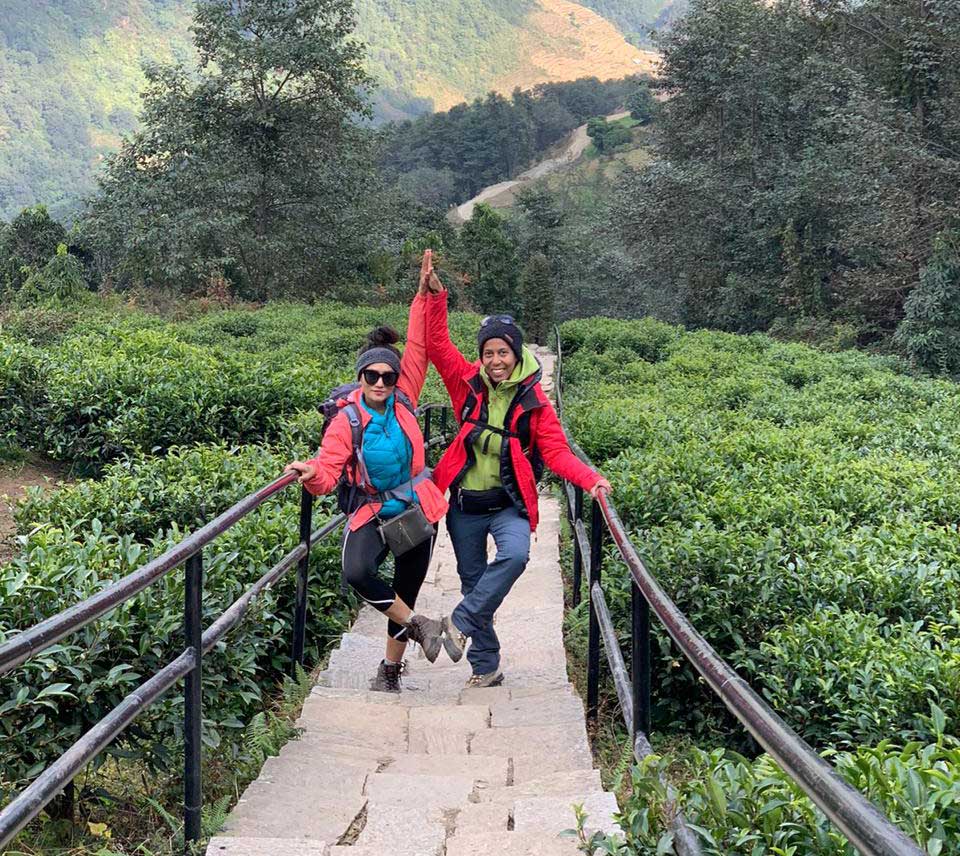
Not only will you connect with other human beings profoundly, but you will start to see the creatures around you as part of the same network. Depending on where you do your yoga teacher training /TTC, you may find yourself surrounded by animals of different types. During training, you will feel your connection and relation with the creature. In Nepal, our tradition helps a lot in identifying our connection with each other.
The landscape you complete your training may also have a profound effect on your outlook on life. A mountain location may help you discover the vast beauty of the universe, and breathing in its pure air may help you to connect with it more efficiently. Normally, the environment that you felt during the training will help you boost up your self-care.
Wanna do a Yoga teacher training in Nepal in 2020
Join Us
Chakra Healing
What is Chakra?
The word chakra means “wheel” in Sanskrit, though these are not like any wheels we’ve ever seen. Chakra energy spins in a clockwise direction as it moves the energy of our body out into the field around us. It spins counterclockwise to pull energy from our external world (and the people in it) into our bodies. It is the frequency state of our chakras that determines the direction our energy will flow as they either draw energy into our body or release it outward. Learn Chakra Healing.
About Chakra Healing with Singing Bowl
We often see pictures and diagrams of chakras and energy centers running from the top of the head to the base of the body. Each chakra is said to have its own tone, which aligns closely with the range of singing bowls. There are many ways to interpret the relationship between tones and chakras and assign notes. Since I don’t have the sensitivity required to confirm any system, idea, or set of beliefs in this area, I don’t label singing bowls as chakra-specific.
Many systems can be found in various books from different teachers. Generally, lower tones correspond to lower chakras, while higher tones correspond to higher chakras. One of the most popular systems places the root chakra at C, with the next six notes in that octave aligning with the higher chakras. For this reason, the Chakra Sets listed in the bowl section follow this pattern. Keep in mind, however, that singing bowls are not like tuning forks, which are made to exact frequencies based on the Western music scale. Singing bowls are more versatile, and using them in chakra healing requires an open mind. When assembling a chakra singing bowl set, I focus on sound quality and the relationships between the bowls.
One limitation of the single-octave Chakra set is its relatively narrow range of sounds. To understand this, imagine how 7 adjacent white keys on a piano cover only a small portion of the total distance from left to right. Because of this, sound healing and chakra sets with both large (low tone) and small (high tone) singing bowls can spread notes across multiple octaves. If you’re interested in a healing set that spans multiple octaves, tap the blue Custom Sets button above for a tour of the process.
How to Use a Chakra Singing Bowl Set for Chakra Healing
Sound is vibration, and vibration transmits to the body through the air or directly through the skin. One common method is placing singing bowls on chakra points and ringing them, allowing the resonance to penetrate deeply. For practitioners who want to contact multiple chakras simultaneously, the best choices are the smaller Thadobati and thin Remuna bowls. These bowls are light enough not to disturb the body, small enough to place several at once, and have relatively flat bottoms for good contact. Manipuri bowls, with their rounded bottoms, can be more challenging to keep in place.
Sound healing based on the chakras can also be practiced by ringing bowls above or beside the client. Over-the-air vibrational transmission methods allow for the use of heavier and deeper-sounding bowls.
Singing Bowl Sound Healing and Meditation in Nepal: A Path of Transformation to Inner Harmony
Singing Bowl Sound Healing and Meditation in Nepal: A Path of Transformation to Inner Harmony
Sound healing in Nepal has grown remarkably in the last few years to become one of the most sought-after holistic practices for emotional balance, mental clarity, and spiritual well-being. Among various sound therapies available today, Himalayan singing bowl healing is outstanding for its authenticity, depth, and profound restorative effects. This is an ancient practice that was born in the Himalayas centuries ago and is now embraced by people from all over the world, although its true essence can be felt most deeply here in Nepal.
The Global Rise of Singing Bowl Sound Healing
In recent years, singing bowl meditation and sound healing have gained momentum across continents. Yogis , wellness guests and students , meditation practitioners, and even medical professionals from everywhere around the world all over have incorporated the use of singing bowl therapy into daily life.
One of the reasons for its rising fame, varied and innovative nature of the sounds making it a super beneficial for relaxation and therapeutical propose. Every bowl produces rich layers of tones and soothing harmonics which softly penetrate both body and mind. These tones reach far beyond ordinary auditory perception, dissolve mental chatter, deepen awareness, and awaken the quieter parts of our consciousness.
The healing of singing bowls is the skillful use of vibration to balance the body, mind, and soul. For many, this is not just a technique used for relaxation but a complete energetic experience that touches the root of one’s emotional and spiritual being.
How Singing Bowl Healing Works
Practitioners view illness and stress as a result of the natural vibratory frequency of the body falling out of balance. Singing bowl sound healing aims at restoring these frequencies, allowing harmony to flow again.
Benefits of Singing Bowl Therapy: Non-Medical Practices
While not a medical treatment, many people experience meaningful changes such as:
Reduced stress, tension, and anxiety
Better sleep quality
Emotional release and clarity
Relief from energetic blockages
Deepened meditation and intuition
Enhanced creative thinking
It is purported to work in the healing process by helping the brain synchronize its waves to the frequencies of the bowl. As the sonic waves wash over you, the mind naturally shifts into meditative states-sometimes even into theta brainwaves, known for insight, intuition, and deep rest.
People who have been at the receiving end of sound healing often relate to the experience as a moment when their whole body felt the sound. The vibrations resound inside every cell, immersing them in feelings of grounding and expansion.
Singing Bowl Healing and Meditation in Nepal
Nepal is considered to be among the most authentic places for traditional sound healing. The Himalayas have hosted the practices of singing bowls for generations, where healers, monks, and yogis used them during rituals, meditation, and spiritual ceremonies.
Nowadays, people travel to Nepal fully intending to explore sound healing, which has become an important part of yoga retreats, wellness tours, and meditation trainings.
How Sound Healing Works in the Body
Through playing the singing bowl, its vibrations interact with the sympathetic nervous system, guiding the body away from stress mode into a calm and restorative state. These vibrations:
Slowing the heart rate
Ease the breath
Loosen up brainwave patterns
Disrupt the body’s pain signals
Encourage emotional release
Support deep meditation
The harmonic resonance works like a natural tuning system for the body. In addition, many practitioners in Nepal combine singing bowls with chakra balancing, energy work, breath awareness, and flower essences to enhance the therapeutic experience.
The Science and Wisdom Behind Sound Healing
Dr. Mitchell Gaynor, firector of Medical Oncology and Integrative Medicine at the Cornell Cancer Prevention Center, refers to the general effect this practice has in a beautiful way:
“If we accept that sound is vibration and we know that vibration touches every part of our physical being, then we understand that sound is heard not only through our ears but through every cell in our bodies. One reason sound heals on a physical level is because it so deeply touches and transforms us on the emotional and spiritual planes. Sound can redress imbalances on every level of physiologic functioning and can play a positive role in the treatment of virtually any medical disorder.”
His words reflect why people all over the world are turning to sound healing—not just for relaxation, but for complete energetic alignment.
Why Nepal Is the Best Place for Sound Healing
Nepal is identified globally as the heart of Himalayan Singing Bowl traditions.
Here’s why seekers find their authentic sound healing experiences in Nepal:
True Himalayan lineage: Most sound healers in Nepal carry on the knowledge passed down to them through generations.
Pure environment: The natural serenity of Nepal—mountains, forests, ancient temples—supports deep meditative immersion.
Holistic learning encompasses Nepal workshops, certification courses, retreats, and individual sessions in tune with authentic Eastern wisdom.
Integration of yoga and meditation: Most centers integrate sound healing with pranayama, mindfulness, and traditional yogic practices.
Whether one is a curious beginner, yoga teacher, or in pursuit of balance for the emotions, Nepal represents one of the most enriching places in the world to explore sound healing.
Sound Healing in Nepal: Experiencing Singing Bowls
A typical session might start with some grounding breathwork, followed by the gentle playing of bowls placed around or on the body. As the vibrations ripple through you, tension dissolves and the mind enters a quiet, receptive space.
Many participants reported feelings such as
Lightness in the body
Spaciousness in the mind Emotional clearing A sense of being reconnected to oneself What makes sound healing in Nepal so special is the combination of ancient Himalayan energy, skillful practitioners, and the deeply transformative power of vibration.
Kundalini Yoga, an Understanding for Yoga Lovers
Human Being is a journey of being toward infinity which cycles into circular motion in rhythmic order; it never ends. Human Being has by nature no purpose; we should live without purpose, and life should be purposeless. If we try to live with purpose, that means we are living with future, we shall truly be suffering and worrying in life because purpose tends to future, always ahead. Learn Further about Kundalini Yoga.
All of us are on a journey back home, back to nature, back to the Supreme Being, from where our journey initiated. All of us have fallen into worldly homes and left heavenly home, so we are facing and suffering with heavier and fatal miseries, is barrier of happy life.
The journey of the human soul is fallen from our heavenly source of existence into material and painful modern life. Our evolution is the ascent out of these lower realms, experiencing the paths to master our energies and to realize the beauty, goodness, and ultimate truth. The way of ultimate liberation is achieved through the Antaranga Yoga (Integral).
Yoga means harmony or equanimity with the almighty Divine Mother. Yoga or Union is not done, is achieved, and is realized throughout the divine power and cosmic consciousness. There are different paths of Yoga. Kundalini is not a type of yoga, it is the stage of transformed energy into spiritual power, a form of Goddess (Durga) or the feminine supremacy, an ultimate energy for Yoga or Samadhi. Our potential energy and biological energy transform into sexual energy, creative energy, a form of kundalini (feminine power), which eventually transforms into cosmic consciousness.
Kundalini lies as a coiled serpent at the base of the spine, in between the first and second chakras and upgrades through wheel–like energy centers called Chakras. These chakras are associated with endocrine glands under neuro-control. To understand Kundalini Yoga, we should first know about yogic anatomy and physiology i.e. Yogic body composition – Pancha Kosa (five sheaths), Prana Body – Pancha Prana (five life force), Nadis (psychic channels), Chakras (psychic centers), and Kundalini (spiritual energy).
Kundalini is a special form of energy within every individual. Some persons have dormant, and in some, it was slowly evolving while in a few it was fully awakened. The word ‘Kundalini’ is derived from Tantra Yoga. This word is rooted from ‘Kunda’ means a pit or deeper spring in which the human energy settles in the form of a coiled three and half times and closing the opening of the sushumna nerve in the center of the spine cord by its mouth.
In males, it lies asleep in the perineum between anus and genitals. In females, it lies at the root of the uterus in the cervix. Kundalini represents Shakti or power, will, and action and is manifested by a female deity. The masculine static form of energy is activated only through the female kinetic energy of the goddess. According to Yoga Philosophy, the Goddess (Kali), the first manifestation of sleeping Kundalini. It is a terrible and uncontrollable power represented by her standing on the core of consciousness (Lord Shiva).
To be continued…. Kundalini Yoga, an Understanding for Yoga Lovers
By Swami Yog Subodh – School of Kundalini Yoga
REIKI A CHANNEL OF UNIVERSAL POWER PART II
We present an article, Reiki A Channel of Universal Power Part II. An unseen force in the universe is at work for the existence of the universe. As the appearance or creation of the world, something energy is working around us. Each creature or each being is directly or indirectly, this way or that way, less or more connected to universal power.
The application of this supreme power or universal power was considered a spiritual sadhana (Practice) in ancient times. It was also later used for spiritual healing and Pranic Healing. The means of practice was dhyana (Meditation) or tapa (Austerity). The sages and seers practiced intense tapas and meditated to attain supreme power and blessings. They used this power to uphold righteousness, destroy evil, and bless and empower devotees.
This universal power as a healing therapy was partially applied by Buddha, but it was not used in public because of his different mission to spread peace all over the world.
In the 19th century, Dr. Mikau Usui, a Buddhist devotee, experienced supreme energy during 21 days of deep meditation on a Japanese hill. After this realization while meditating, he then achieved different experiences from his great energy that he had felt from his deep saadhanaa. After this successful application in his society, he decided to promote this energy as a healing therapy. He gave the name ‘Reiki’ in Japanese word, for this healing therapy.
The Japanese word ‘Reiki’ has two words, Rei + Ki that is Rei means universal power, and Ki means Energy or cosmos intelligence. In this therapy, the healer gets the energy from the universe and transfers it to the receiver, who is a channel. This therapy is not only the therapy, it is also the techniques for meditation. This therapy or technique has many meditation paths, breathing techniques, awareness, loving kindness, art of silence, art of hypnotism and spiritual healing techniques as well.
Usui Reiki Ryoho based Reiki Healing, a traditional Reiki meditation and spiritual healing system has three Levels (Degrees) course, i.e.
First Degree – It is related to Contact Healing, through the Reiki first breathing consciousness, listening consciousness, movements, and concentration.
Second Degree – It is a Distance Healing technique and it has telepathy practices, third eye activation practices, hypnotic, and mind technology will be practice, lights, and colors, visions, and aura, mantras, psychic symbols, and Vajra- van, all the physical, mental and emotional forces will be practices.
Third Degree – It is the final level or Master level of the Reiki Course. It has two sections.
Section A – We practice all the healing techniques to be connected always with the cosmic consciousness and with the Masters. This section is called Mastership in REIKI HEALING.
Section B- We practice to connect with Reiki lineages, Reiki Attunement /Initiation practices, no mind, and higher intelligence practices.
To be continued….. : REIKI, A CHANNEL OF UNIVERSAL POWER
By Swami Yog Subodh – School of Reiki
Objectives of Reiki Healing Part I
Reiki is a Japanese word that means the universal power of intelligence. There are many various OBJECTIVES OF REIKI HEALING Part I. Reiki is a very simple process of spiritual healing, but it usually produces quite profound effects in the body, mind, and spirit. The main objective of a Reiki treatment is not only to support the physical body but also to promote a positive mind so you can experience more joy in life. The great thing about reiki is that one does not have to be ill to experience the benefits. It is a meditation technique as well. Reiki Healing, Singing bowl Healing, Pranic healing, Kundalini meditation, and other techniques of Meditation are the means of Yogic Sadhana for Yoga or union or Samadhi.
Various Objectives of Reiki (Usui) Healing
01. Reiki Healing Balances the energy
02. Healing can be used for mankind, it is not religious.
03. It heals physical pains and cleanses feelings, mental stresses and diseases.
04. No side effects, cures without general medicines
05. Reiki heals root of the problems
06. It develops intelligence
07. It cleanses energy, mental and spiritual paths
08. Purifies eternal and external forces
09. It directs to live actual and natural life
10. It can cure and heal almost psychic diseases and chronic diseases as like cancer also
11. Reiki can be learnt by all; sick people, healthy, old aged
12. It makes pleasant and joyful balancing body, energy and mind
13. It helps to deep practitioners as like Yogis
14. Healing can be used to make succeed in jobs, businesses, tasks, works, documents
15. Within very distance and very closed to us also will fruitfully heals
16. Reiki Healing brighten, sharpen and increases memory power
17. It increases loving kindness, compassion, gladness and equanimity
18. Past, present and future also can be set by Reiki healing
19. To learn and heal Reiki no need to be an educated; anyone can learn
20. Reiki healing does not harm, cannot be used to mischief, it is not dangerous
21. Physical, material and subtle in all dimensions can be used
22. It helps and possible to heal when peoples are in clinical, medical and any therapeutic treatment
23. The healing can be used for betterment of plants, animals, pets, living and non-living things
24. One can heal mass and mass can heal one
25. Reiki Healing can help to balance psychosis; mental disordered, ADHD(Attention-Deficit Hyperactivity Disorder)
26. Healing can be used to the dead people whose spirit still wander (past soul)
27. Energy from the Cosmic Source energy flows continuously, never end so energy can be used until we want
28. Reiki healing cannot be affected by any miracle practitioner, black-magician, witch and shaman, it is eternal
29. It cannot be used for miss purpose and negative-sense
30. It cleanses cosmic canal and psychic channels (nadis) inside us
To be continued..