
Yoga For Migraine
Introduction: What is Migraine?
Why Yoga for Migraine? Migraine is a neurological disorder that causes recurring headaches ranging from moderate to high intensity. Typically, it affects only one half of the head and can last from 2 hours to more than 2 days. When under a migraine attack, the sufferer may become extremely sensitive to light or noise. Other common symptoms include vomiting, nausea, and pain aggravation due to physical activity.
Migraine headaches cause unbearable pain and can hamper one’s personal as well as professional life. Explaining your situation to family, friends, and colleagues will encourage moral and emotional support from them. It will also help them have an open-minded view of your situation. Further, we talk about yoga for migraine…
Symptoms of Migraines
Migraines symptoms may vary from person to person, but they generally include:
1. Headache: Migraine headaches are typically characterized by a throbbing or pulsating pain that can be moderate to severe in intensity. The pain often occurs on one side of the head but can occur on both sides.
2. Aura: Many people with migraines experience an aura before the onset of the headache. The aura can include visual disturbances such as seeing flashing lights or zigzag lines, or sensory changes such as numbness or tingling in the face or limbs.
3. Nausea and vomiting: Many people with migraines experience nausea and vomiting, which can worsen headache pain.
4. Sensitivity to light and sound: People with migraines may be sensitive to light and sound and may need to seek out a dark, quiet environment to find relief.
5. Fatigue: Migraines can be very exhausting, and people may feel very tired or fatigued after an attack.
6. Dizziness or vertigo: Some people with migraines may experience dizziness or vertigo, which can make it difficult to perform daily activities
Types of Migraines
There are several types of migraines, each with its own unique set of symptoms and triggers. However, the most common types are as follows:
1. Migraine without aura:
This is the most common type of migraine, in this type of migraine, the headache is moderate to severe that lasts for several hours to days. People suffering from this type of migraine may experience nausea, vomiting, and sensitivity to light and sound.
2. Migraine with aura:
This type of migraine is characterized by visual disturbances such as flashing lights, zigzag lines, or blind spots, which can occur before or during the headache. Other aura symptoms may include tingling or numbness in the face or hands and difficulty speaking.
3. Chronic migraine:
This type of migraine occurs when a person experiences migraines for 15 or more days per month. People with chronic migraines may have a headache on most days, and the pain may be less severe than in other types of migraines.
4. Menstrual migraine:
This type of migraine is generally triggered by hormonal changes during the menstrual cycle and often occurs just before or during menstruation. Women who experience menstrual migraines may also have other menstrual-related symptoms such as cramping and bloating.
5. Vestibular migraine:
This migraine type generally involves dizziness, vertigo as well as balance problems in addition to headache pain. People with vestibular migraines may also experience nausea, vomiting, and sensitivity to light and sound.
6. Hemiplegic migraine:
This type of migraine is rare and can cause temporary paralysis or weakness on one side of the body. Hemiplegic migraines may also cause other symptoms such as vision changes, difficulty speaking, and confusion.
7. Retinal migraine:
This type of migraine is rare and affects vision in one eye. People with retinal migraines may experience temporary blindness or loss of vision in one eye, in addition to headache pain.
8. Abdominal migraine:
This is a type of migraine headache that primarily affects children. It is characterized by recurrent episodes of abdominal pain that usually last for several hours. The pain is often severe and can be accompanied by other symptoms such as nausea, vomiting, and diarrhea.
9. Basilar Migraine:
It is also known as migraine with brainstem aura (MBA), is a type of migraine headache that involves aura symptoms originating from the brainstem. The brainstem is the area of the brain that controls many important bodily functions, such as breathing, heart rate, and blood pressure.
10. Cluster Migraines:
This migraine type is sometimes referred to as “cluster headaches”. It is a type of headache that occurs in cycles or clusters. They are characterized by intense, excruciating pain on one side of the head, typically around the eye or temple. Cluster headaches can occur several times a day, often at the same time each day, and can last from 15 minutes to several hours.
What Causes Migraines
The actual cause of migraines is not completely known. However, there is a belief that it is a combination of genetic and environmental factors. These factors affect the brain and its blood vessels. Let’s look on some general causes of migraines:
1. Genetics: Migraines tend to run in families, suggesting that there may be a genetic component involved. Certain genes have been identified that are associated with an increased risk of migraines.
2. Hormones: Migraines are more common in women than men, and they often occur around the time of menstruation. Fluctuations in hormones, such as estrogen and progesterone, may play a role in triggering migraines.
3. Migraine Triggers: Certain foods, drinks, and environmental factors can trigger migraines in some people. Common triggers include alcohol, caffeine, chocolate, cheese, stress, lack of sleep, and changes in weather.
4. Abnormalities in the brain and its blood vessels: Migraines are thought to involve changes in the brain and its blood vessels. During a migraine attack, the blood vessels in the brain may constrict and then dilate, causing pain and other symptoms.
5. Neurotransmitters: Migraines may be related to abnormalities in the levels of certain neurotransmitters in the brain, such as serotonin and dopamine.
How Yoga Can Help with Migraines
Yoga can be a natural and effective way to manage migraines and reduce their frequency and intensity. The practice of yoga can help with migraines in several ways such as:
1. Reducing Stress: Stress is one of the primary triggers of migraines. Yoga can help reduce stress levels by calming the nervous system, which in turn can help prevent migraines.
2. Improving Blood Circulation: Yoga poses can increase blood flow and oxygen to the brain, which can help alleviate migraines.
3. Relaxing the Body and Mind: Yoga helps release tension in the body and calm the mind. This way it helps reduce the intensity and frequency of migraines.
Yoga Poses for Migraines
Yoga is an ancient technique that promotes holistic living through a combination of postures and breathing techniques. Yoga is a side-effect-free method to fight migraines. Practicing these simple yoga postures for a few minutes every day will help prepare you better for the next migraine attack:
1. Downward-Facing Dog Pose (Adho Mukha Svanasana):
This pose stretches the spine, shoulders, and neck. Hence it can help release tension and relieve migraines.
2. Child’s Pose (Balasana):
This pose helps calm the mind and reduce stress levels. It also gently stretches the back and neck, which can help relieve migraines.
3. Standing Forward Fold (Uttanasana):
This pose can help relieve tension in the neck and shoulders. It also increases blood flow to the head, which can help alleviate migraines.
4. Eagle Pose (Garudasana):
This pose helps release tension in the shoulders and upper back, which can help alleviate migraines.
5. Seated Forward Bend (Paschimottanasana):
This pose can help calm the mind and reduce stress levels. It also stretches the back and neck, which can help relieve migraines.
This pose can help relieve tension in the neck and shoulders. It also increases blood flow to the head, which can help alleviate migraines.
This pose is a relaxation pose that can help calm the mind and reduce stress levels. It is a great way to end yoga practice and reduce the likelihood of a migraine.
8. Supported Shoulderstand (Salamba Sarvangasana):
Lie on your back with your legs raised up and supported by a wall or other prop. This pose can help improve circulation to the head and calm the mind.
9. Legs Up the Wall Pose (Viparita Karani):
Lay down on your back and keep your legs resting up against a wall. This pose helps improve circulation to the head and relieve tension in the neck and shoulders.
10. Head-to-Knee Forward Bend (Janu Sirsasana):
Sit with one leg stretched out in front of you and the other leg bent with the foot touching the inner thigh. Fold forward over the outstretched leg and reach for your toes. This pose can help relieve tension in the neck and shoulders and improve circulation to the head.
11. Cat-Cow Stretch (Marjaryasana-Bitilasana):
Start on your hands and knees, then alternate between arching your back and rounding it. This pose can help release tension in the neck and spine.
These are the yoga asana for migraine, which are very helpful in managing the problem of migraines.
Tips for Practising Yoga for Migraines
Below are a few tips that we can keep in mind while practicing yoga for migraines:
1. Practice regularly: Practice yoga at least 3-4 times a week to help prevent migraines.
2. Listen to your body: If a pose feels uncomfortable or painful, modify or skip it. Always listen to your body and practice within your limits.
3. Breathe: Focus on deep and slow breathing throughout your yoga practice. This can help reduce stress levels and calm the nervous system.
4. Avoid straining the neck: If you have a migraine, avoid straining your neck. Instead, focus on gentle stretches that can help relieve tension.
4. Practice in a quiet space: Practice yoga in a quiet, peaceful space free from distractions. Practicing this way can help reduce stress levels as well as calm the mind.
Pranayama for Migraines
Apart from incorporating yoga for migraines, it is more beneficial if we use pranayama for migraines also. Pranayama, which refers to the practice of controlling the breath in yoga, can be beneficial for managing migraines in several ways such as:
1. Stress reduction: Pranayama practices, such as alternate nostril breathing (Nadi shodhana) and deep belly breathing (diaphragmatic breathing), can help reduce stress and tension in the body, which are common triggers of migraines.
2. Oxygenation: Certain pranayama practices, such as Kapalabhati (skull-shining breath) and Bhastrika (bellows breath), can help increase oxygen flow to the brain and improve blood circulation, which can reduce the frequency and intensity of migraines.
3. Relaxation response: Pranayama practices can activate the relaxation response in the body, which can help reduce pain and tension associated with migraines.
4. Hormonal balance: Some research suggests that regular pranayama practice can help regulate hormones, which may be a contributing factor to migraines in some individuals.
Here are the main pranayamas which are especially helpful in the condition of migraines:
Anulom Vilom pranayama is also known as alternate nostril breathing, Nadi Shodhana pranayama or “the breath of purification”. This pranayama is commonly practiced to promote balance and relaxation in the body and mind.
This pranayama technique involves inhaling and exhaling through alternate nostrils while holding one nostril closed with the fingers. It can help calm the mind, reduce stress, and improve circulation, which can help reduce the frequency and intensity of migraines.
To do Anulom Vilom, you need to sit in a comfortable position while keeping your back straight and shoulders relaxed. Now using your right hand, place your thumb on your right nostril and your ring and little fingers on your left nostril.
Now slowly take a long deep breath through your left nostril while closing your right nostril with your thumb. Hold your breath for a while, then remove your thumb and exhale through your right nostril while closing your left nostril with your ring and little fingers.
Do the same practice with the right nostril also. Repeat this pattern for several rounds, alternating the nostrils with each inhalation and exhalation.
Bhramari (Humming Bee breath): This pranayama technique involves inhaling deeply and exhaling while making a humming sound like a bee. It can help reduce stress and tension in the body and activate the relaxation response, which can reduce pain and tension associated with migraines.
To practice Bhramari pranayama for migraines, Sit comfortably keeping your back straight and shoulders relaxed. Now close your eyes and place your index fingers on your ears, and your thumbs on your forehead.
Take a deep breath in through your nose, hold it for some time and as you exhale, make a low humming sound like the buzzing of a bee, while pressing your forehead with your thumbs and keeping your mouth closed.
Focus on the vibration and sound of the humming. Keep repeating this process as many times as you feel comfortable.
3. Ujjayi Pranayama
Ujjayi (Victorious breath): is also known as “victorious breath” or “ocean breath” due to the sound it produces, which is similar to the sound of waves in the ocean. This pranayama technique involves inhaling and exhaling through the nose while slightly constricting the back of the throat. It can help reduce stress and tension and improve circulation, which can reduce the frequency and intensity of migraines.
To practice Ujjayi pranayama, sit in a comfortable seated position while having your back straight and shoulders relaxed. Now constrict your throat and inhale through your nose while expanding your chest and filling your lungs with air.
Exhale through your mouth while slightly constricting your throat muscles, creating a hissing or ocean-like sound. Focus on the sound and sensation of your breath as you continue to practice Ujjayi pranayama. Do it for as many rounds as you feel comfortable.
4. Udgeeth pranayama
It is a pranayama technique in which the breath is exhaled slowly while chanting the sound “Om” or “Aum”. It is also known as Om chanting pranayama. Udgeeth pranayama is believed to have several benefits, including reducing stress and anxiety and improving concentration and focus, thus offering good help in managing migraines.
To practice Udgeeth pranayama, get into a seated position with your back straight and shoulders relaxed. Inhale long and deep and exhale slowly while chanting the sound “Om” or “Aum” for the entire duration of the exhalation.
Focus on the sound and vibration of the “Om” as you chant it. This is one round, but you need to repeat this process for multiple rounds according to your capability.
5. Bhastrika pranayama
Bhastrika pranayama is a type of pranayama technique in yoga that involves forceful and rapid breathing through the nose. It is also known as “bellows breath” due to the rapid and vigorous movement of the diaphragm during practice.
It is helpful in reducing migraines due to its ability to promote relaxation, reduce stress, and improve circulation in the body.
Migraines are often triggered by stress and tension in the body, and Bhastrika pranayama can help to release this tension by calming the mind and nervous system. This, in turn, can help to alleviate the symptoms of migraines.
Additionally, Bhastrika pranayama improves circulation by increasing the oxygen supply to the brain and other parts of the body. This can help to reduce inflammation and promote healing, which can be beneficial for those who suffer from migraines.
To practice Bhastrika pranayama, get in a seated position keeping your back straight and shoulders relaxed. Begin inhaling and exhaling rapidly through your nose, with forceful and equal emphasis on both inhalation and exhalation.
Focus on the movement of your diaphragm and the sound of your breath. Continue practicing Bhastrika pranayama for as many rounds as you feel ok, starting with a few rounds and gradually increasing as you become more comfortable with the practice.
Conclusion Yoga for Migraines :
Yoga can prove to be an effective way in managing the problem of migraines. By reducing stress levels, improving blood circulation as well as relaxing the body and mind. Yoga can help alleviate migraines and improve one’s quality of life. Incorporate the above yoga poses into your regular practice to help prevent migraines and enjoy a pain-free life.
Reference : https://www.shivatattvayoga.com/yoga-for-migraine/
What is Laughter Yoga?
Laughter Yoga is a wonderful practice & discipline based on the revolutionary idea – simple and profound – that anyone can laugh unconditionally, without relying on humor, jokes, or comedy. Laughter is simulated as a body exercise in a group: with eye contact and childlike playfulness, it soon turns into real and contagious laughter. It is based on the scientific fact that the body cannot differentiate between fake and real laughter. One gets the same physiological and psychological benefits, which are many.
We have dedicated the first Happiness Shot of our Happiness Contribution™ Show to the Benefits of Laughter in the business world.
Why: The Benefits of Laughter Yoga
Laughter yoga gives the maximum health benefits because it is:
- Sustained (10-15 minutes)
- Deep (diaphragm)
- Unconditional
The benefits are so many that one can wonder why we don’t all just laugh daily like we shower and brush our teeth. Here are just a few benefits of laughter yoga in 5 main areas :
- Mood: better mood and less anxiety & depression, because of the production of serotonin & endorphins, and better oxygenation
- Health: Increased oxygenation: stronger respiratory system and increased oxygenation, hence more concentration, attention, and better performances
- Health Improvements:
i)reduced stress & related illnesses, because Laughter activates our parasympathetic system & reduces cortisol production
ii)better digestion, because the movement of abdominal muscles & diaphragm provides a gentle massage to all digestive organs, functioning as internal jogging
iii)healthy heart and better circulatory system
iv)stronger immune system and less sickness because of the increased number of natural killer (NK) cells and interferon-gamma (IFN) - Performance and work: Increased creativity and innovation because of the playfulness and right brain activation; increased energy because of oxygenation
- Social connectors: people who laugh together bond together and work better together; the laughter clubs become real supportive networks for their members
- Copying mechanism in challenging times: A quote from the founder Dr. Kataria which I love and has become the motto of the movement is “I don’t laugh because I’m happy, I’m happy because I laugh”
These benefits make laughter yoga a remarkable fun and inexpensive solution for many current business problems:
- Stress management
- Burn-out prevention
- Reduce sickness, absenteeism, and turnover
- Increase productivity, creativity, innovation, and team bonding
- Creating a happy, healthy, and energetic workforce
How it started and continues
Laughter Yoga is the brainchild of Dr. Madan Kataria, an Indian physician from Mumbai who started the first laughter club in a park on 13th March 1995, with just 5 people.
While the saying “laughter is the best medicine” is believed to have originated from Proverbs 17.22 of the King James Bible, and already in the 1300s, Henri de Mondeville, a professor of surgery, propagated post-operative therapy with humor, the basis of Laughter Yoga is to be found in the 1979 book “Anatomy of an Illness as Perceived by the Patient: Reflections on Healing” by Norman Cousins.
Cousins was a journalist and a professor, who did research on the biochemistry of human emotions, which he long believed were the key to human beings’ success in fighting illness. When in 1964 he suffered from a very painful ankylosing spondylitis and was told that he had one chance in 500 of recovering, he developed his own “treatment,” based on mood elevation through laughter. According to Cousins, ten minutes of laughter resulted in two hours of pain-free sleep.
Many studies have demonstrated the beneficial effects of laughter, thanks to the release of endorphins and other happiness chemicals, and increased oxygenation.
Dr. Madan Kataria, an Indian physician from Mumbai, was researching how to support better some of his patients when he stumbled upon the research from Cousins and, on 13th March 1995, he had the intuition to start the first laughter club in a park, with just 5 people. It started with participants telling each other funny jokes and when they run out of jokes, it continued as an intentional practice and discipline based on the simple yet revolutionary idea that anyone can laugh for no reason, without relying on humor, jokes, or comedy. Laughter is simulated as a body exercise in a group and with eye contact and childlike playfulness, it soon turns into real and contagious laughter.
There are five secrets (or principles) for unconditional laughter:
- It doesn’t need humor. It does need us to ignore any inhibition or pre-conception coming from our past or upbringing.
- Motion creates emotion: if we bring our body to laugh, the mind will follow. Just like Amy Cuddy’s research on postures shows, if we change our actions and posture, our thoughts and emotions will change too.
- We laugh as a choice: we can choose to laugh also if we don’t feel happy. We can “fake it” till we become the laughter because our mind cannot distinguish between real and fake laughter (as long as intentional).
- Nurture the inner child with playfulness
- Just train the mind and body to laugh till it comes naturally to laugh: “Know laughter, do laughter, be laughter”.
A laughter session can be done virtually or in person and can be as brief as 10-15 minutes (the minimum amount of time we need for our body to produce the joy cocktail), or range between 30 minutes and 1 hour. Till 2015, a laughter yoga session included only laughter; since 2015, it includes also the other three elements of joy: play, singing, and dancing.
Every LY facilitator develops his/her own style, though the most common format used during a 50-60 minute Laughter Club session is the following:
- Warm-up movements and breathing: 10 minutes
- Games & laughter exercises: 10-20 minutes
- Laughter meditation: 10-15 minutes
- Grounding closing meditation: humming, breathing, or yoga nidra.
Today, it has become a worldwide phenomenon and there are thousands of social laughter clubs in more than 101 countries, an international organization (Laughter Yoga International), and an Academy with complete training programs and certifications. There are 4 levels of training:
- Basic Learning Course is designed to learn LY for yourself
- Certified LY Leader is designed for you to become an LY facilitator
- Certified LY Teacher Training you will learn how to train LY Leaders
- Certified LY Master Trainer you will learn how to train LY Teachers

NEW: Laughter Yoga at Himalayan Yoga Academy
At Himalayan Yoga Academy, we are constantly looking to bring you the best knowledge and practices to nurture your well-being and spirituality, and we are now very excited to start offering the very first Laughter Yoga Leader Certification entirely online, Live via Zoom with Laughter Yoga Teacher – Rosaria Cirillo – that has trained directly with the founder Dr. Kataria and holds also three certifications from our own Himalayan Yoga Academy:
Rosaria will the teacher leading the official Laughter Yoga Leader Training to help you become a LY facilitator. Find out more and sign up sending an email to hya@wownow.eu .
She also offers a FREE weekly LaugherZoom where you can get to know her better and experience her style. If you don’t want to become an LY facilitator yourself, but simply want to learn more Laughter Yoga and Happiness practices, Rosaria has also created her own “Stress Buster and Joy Blaster” combining her learnings from Laughter Yoga, Heart Coherence, Qigong, the Happiness Studies Academy and the classes from Himalayan Yoga Academy. All her courses are available on-demand as in-company programs, while the “Stress Buster and Joy Blaster” is also available as an open program.
PS. Part of this post was originally published at https://wownow.eu/the-power-of-laughter-yoga-world-laughter-day/
Guest post by Rosaria Cirillo, Certified 200hr Yoga Teacher by HYA.
Benefits of Applying tilak on the forehead
Tilak or Tika is a reference to the dot symbol of Hindu people, commonly worn on the forehead as a religious or cultural practice. Applied in a variety of shapes and sizes, it is usually made using sacred ash, vermillion, or sandalwood paste. The practice of wearing a tilak or tika has been around for centuries, and it is believed to have many benefits for both the wearer and those around them. In this article, we will explore some of the benefits of applying tilak on the forehead.
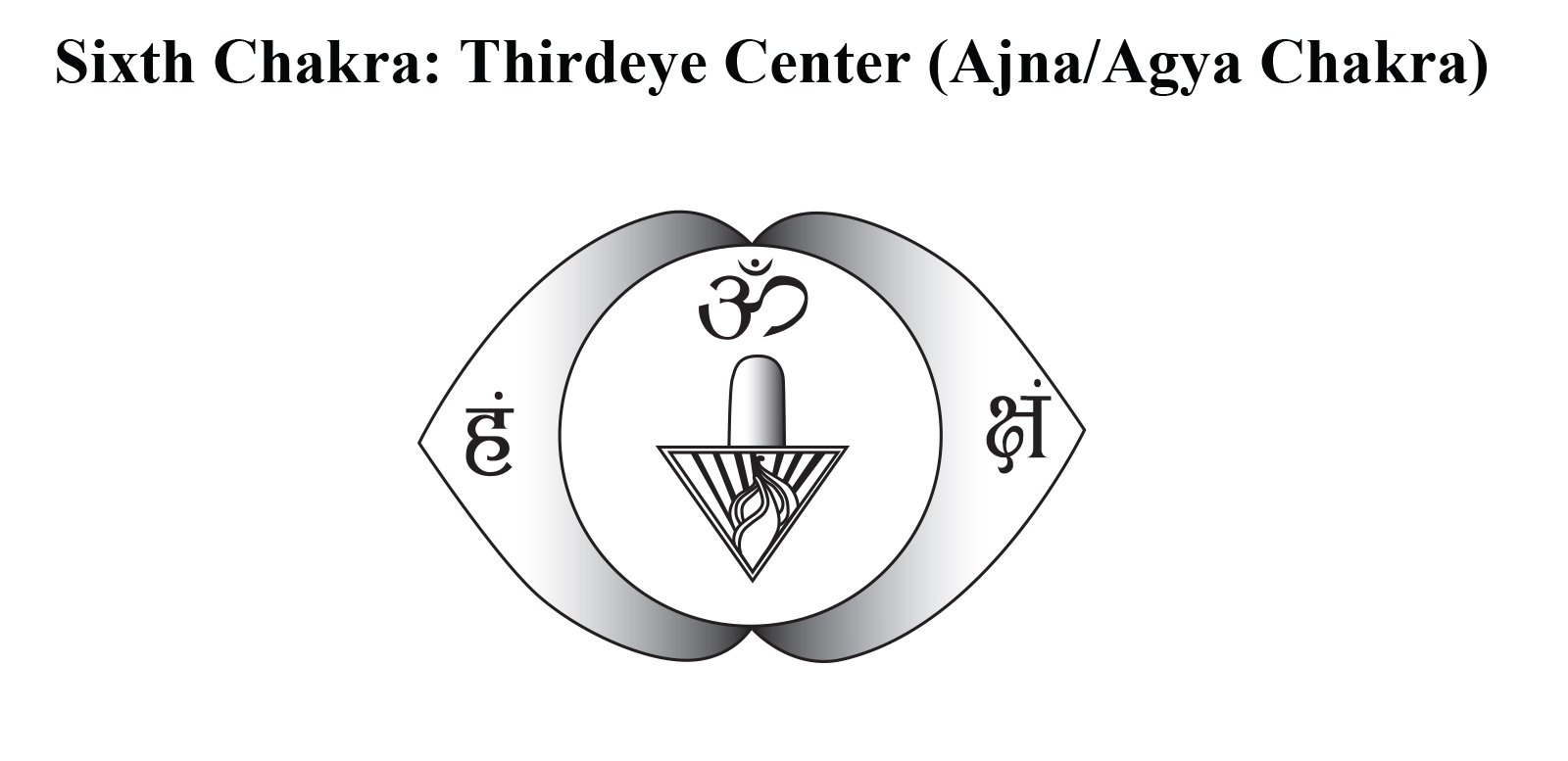
- Spiritual Importance: One of the primary reasons people wear a tilak is its spiritual significance. In Hinduism, the tilak is believed to represent the third eye or the Ajna chakra, which is associated with higher consciousness and spiritual awakening. It is believed that by wearing a tilak, one can connect with the divine and gain access to higher levels of awareness.
- Protection from negative energy: Another benefit of wearing a tilak is that it is believed to offer protection from negative energy. It is said that the tilak creates a protective shield around the wearer’s aura, preventing negative energies from penetrating it. This can be particularly beneficial in situations with a lot of negativity or stress, as the tilak can help calm and center the mind.
- Increased concentration and focus: The tilak is also believed to help with concentration and focus. When applied to the Ajna chakra, it activates this energy center, which can help improve mental clarity and focus. This can be particularly beneficial for students, professionals, and anyone who needs to maintain a high level of concentration in their daily life.
- Promotion of good health: According to Ayurveda, tilak can also promote good health. The forehead is believed to be an important energy center in the body, and by applying a tilak to this area, one can balance the body’s energy and promote overall well-being. Additionally, the ingredients used in the tilak, such as sandalwood and turmeric, are known for their antibacterial and antifungal properties, which can help to keep the skin healthy and free from infection.
- Social Significance: Wearing a tilak can also have social significance. In Hindu culture, the tilak is often used to mark special occasions, such as weddings and religious ceremonies. It is also a way to identify oneself as a follower of a particular tradition or sect. By wearing a tilak, one can connect with others who share similar beliefs and values and feel a sense of belonging and community.
In conclusion, wearing a tilak or tika on the forehead has many benefits, both spiritual and practical. It can help to promote good health, protect against negative energy, improve concentration, and focus, and create a sense of community and belonging.
While the practice of wearing a tilak may have religious roots, it is also a meaningful and valuable practice for anyone who is interested in cultivating a deeper connection with themselves and the world around them. In Nepal as well as everywhere people welcome you with tika which is for your well-being. We put tika or tilak during different celebrations that a way of sharing joy and happiness with each other and as well blessing each other with good energy.
During yoga teacher training as well after the completion of 200-hour yoga teacher training and 500 Hour Yoga Teacher Training in Nepal we put tilak and the bead which refers to the awakening of the ajna chakra and hence providing them with the path of more intelligence and consciousness as the course guides them to deal with every aspect of their life.
20 Best Inspirational Yoga Quotes
Best and Famous Yoga quotes by Bhagavad Gita and Spiritual Guru, Yoga Teacher. Yoga’s essence is balance. Not just the balance between the mind and body, but also the balance in our relationship with the outside world. Yoga stresses mindfulness, moderation, and discipline.
Yoga Quotes
#1: Yoga is a skill in action-The Bhagavad Gita
#2: Yoga is a mirror to look at ourselves from within-B K S Iyengar
#3: The attitude of gratitude is the highest yoga–Yogi Bhajan
#4: Yoga is 99% practice & 1% theory– Sri K. Pattabhi Jois
#5: Blessed are the flexible, for they shall not be bent out of shape-Michael McGriffy
#6: If you are in a state of all-inclusive passion, we call this yoga— Sadhguru
#7: It is better to conquer yourself than to win a thousand battles– Buddha
#8: The inspiration you seek is already inside you, be silent and listen– Rumi
#9: The mind is madness. Only when you go beyond the mind, will there be Meditation— Sadhguru
#10: Yoga cultivates ways of maintaining a balanced attitude in day-to-day life and endows skill in the performance of one’s actions-B.K.S. Iyengar
#11: Do your practice and all is coming-K. Pattabhi Jois
#12: When you inhale, you are taking strength from God. When you exhale, it represents the service you are giving to the world-B.K.S. Iyengar
#13: Yoga is the fountain of youth. You’re only as young as your spine is flexible-Bob Harper
#14: Yoga is a way to freedom. By its constant practice, we can free ourselves from fear, anguish, and loneliness-Indra Devi
#15: Take care of your body, it’s the only place you have to live– Jim Rohn
#16: Yoga takes you into the present moment, the only place where life exists-Patanjali
#17: Your task is not to seek for love, but merely to seek and find all the barriers within yourself that you have built against it-Rumi
#18: Yoga is a light, which once lit, will never dim. The better your practice, the brighter the flame-B.K.S. Iyengar
#19: In truth, Yoga doesn’t take time, it gives time– Ganga White
#20: Yoga teaches you how to listen to your body-Mariel Hemingway
Let’s adopt these quotes in our life and enhance the lifestyle of Yoga with these amazing meaningful quotes. This quotes not only enlightens us but also gives us knowledge of how yoga can be.
Yoga Mudras to Practice in Daily Life
Himalayan Yoga presents an article on Yoga Mudras to practice in daily life. Mudras have been a vital piece of profound practices in India and Nepal for millennia and have been portrayed in old Indian workmanship and models. In Hinduism, mudras are utilized in sanctuary customs and dance exhibitions. They are also found in practice in ritual dances and Buddha statues in Buddhism.
The starting points of yoga mudras can be followed back to old India and are referenced in old texts, for example, the Hatha Yoga Pradipika and the Gheranda Samhita, which date back to the fifteenth century CE. Be that as it may, what precisely is a yoga mudra? We should investigate.
What is Yoga Mudra?
In Yoga, mudras are viewed as non-verbal correspondences between the subtle body and the physical body, they are used to help stimulate the flow of energy through the body and activate specific areas of the brain to bring about a specific state of mind. They are often performed in pair with pranayama (breathing techniques) and asanas (yoga postures) to enhance the benefits that we receive as they channel the more energy flow in our body.
Mudras have a lot to offer in terms of spiritual, physical, and mental well-being, and are now widely used in yoga and meditation practice in the modern world. It’s also used in other forms of art, such as dance and music, due to its healing and therapeutic benefits.
7 Easy Yoga Mudras You Can Do every day
- Chin Mudra
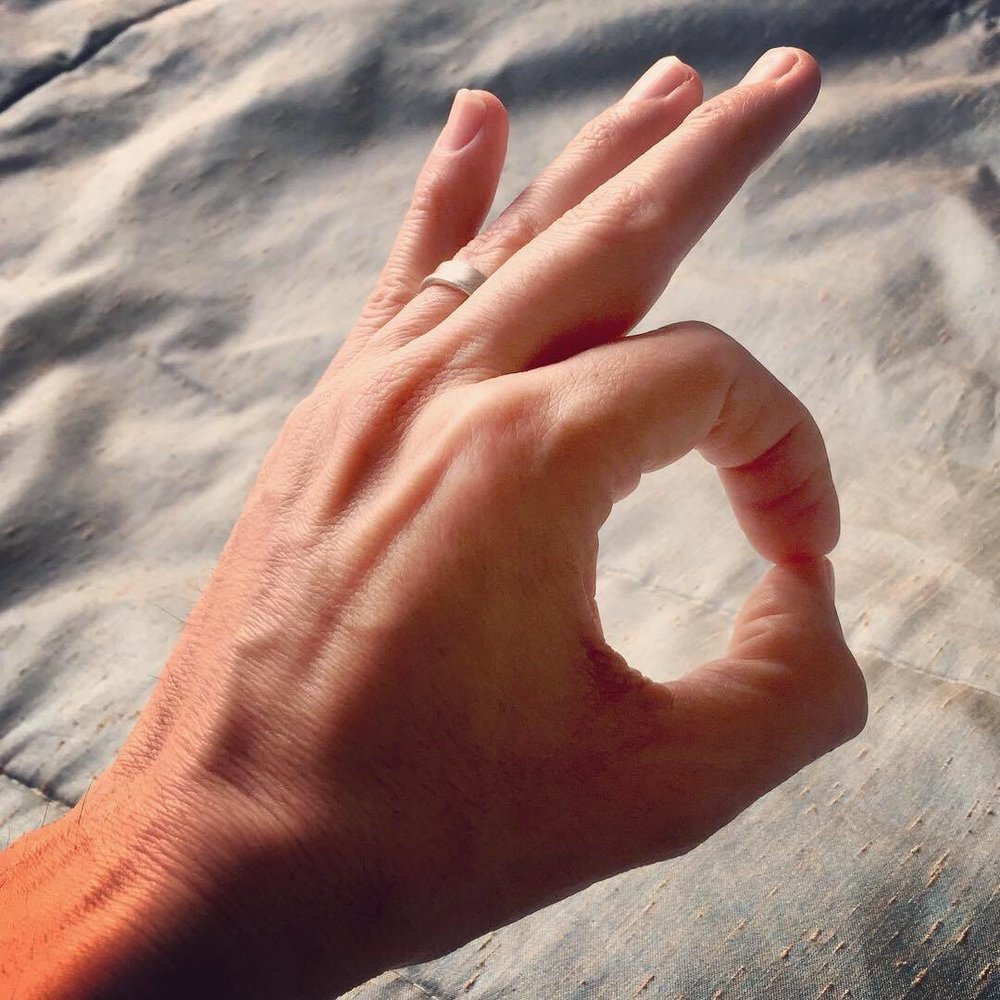
The Chin Mudra is much of the time utilized during contemplation and pranayama practices to assist with expanding concentration and focus. It is accepted to assist with adjusting the body’s energy stream and advance a feeling of quiet and peacefulness.
It is also used in asanas and yoga postures. The belief that one can transcend the ego and reach a higher level of consciousness by performing this mudra is represented by the union of individual consciousness and universal consciousness. It is frequently depicted in Buddha statues while he is meditating with his hands in Chin Mudra.
Steps of Chin Mudra:
- Sit in Sukhasana (Easy Pose), Padmasana (Lotus Pose), or Vajrasana (Thunderbolt Pose) in a comfortable seated position with a straight spine.
- Unite your hands before your chest, with your palms looking up.
- While keeping the other fingers straight, touch the tip of your index finger to the tip of your thumb. The other fingers remain extended while the index and thumb form a circle.
- Maintain this position while paying attention to your intention and breath. Relax and let go of any tension in your body by taking slow, deep breaths.
2. The Anjali Mudra
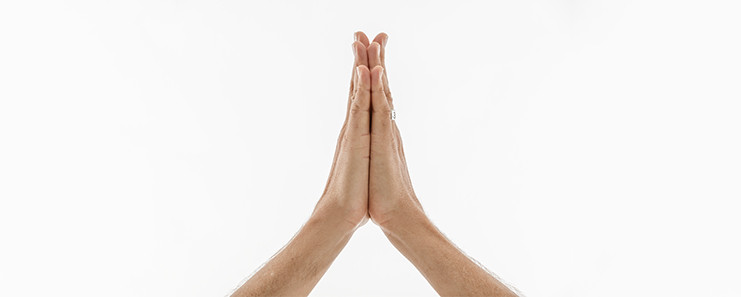
The Anjali Mudra is a common yoga pose that is performed at the beginning and end of classes as a gesture of respect and appreciation for the teacher and the practice.
This is the way to do the Anjali Mudra:
- Maintain a straight spine as you stand or sit in a comfortable position.
- Unite your hands before your heart, with your palms contacting and fingers facing up.
- Press your palms together solidly yet easily, ensuring your fingers are facing up and not twisted back.
- Stand firm on this foothold while zeroing in on your breath and your aim. Take slow, full breaths, and unwind.
- As you press your palms together, you can bow your head somewhat in a token of regard, modesty, and appreciation.
3. The Shuni Mudra
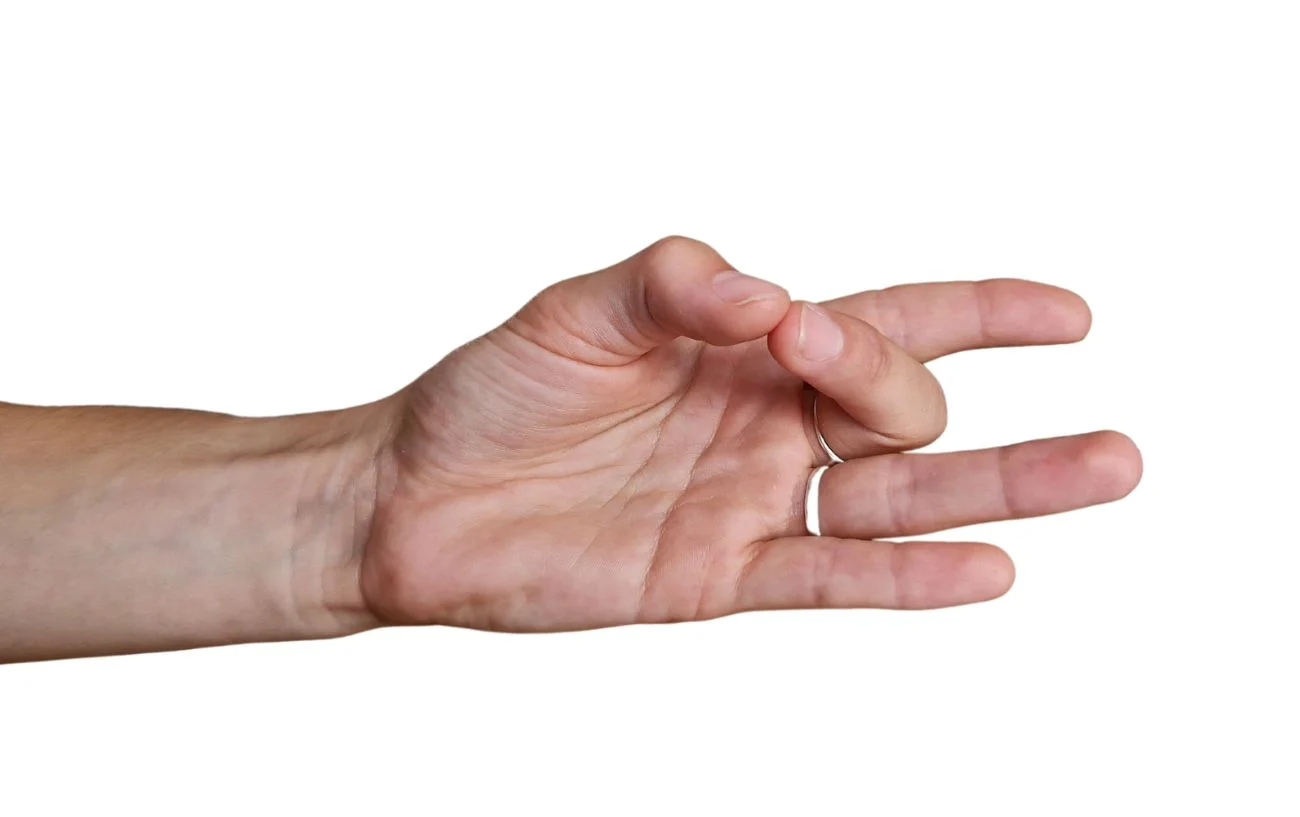
The Shuni Mudra is created by holding the other fingers straight and pressing the middle finger’s tip against the thumb. This yoga mudra is related to the component of earth and is accepted to expand the characteristics of persistence and assurance in the specialist, as well as the capacity to defeat impediments.
This is the way to perform Shuni Mudra:
- Sit in Sukhasana (Easy Pose), Padmasana (Lotus Pose), or Vajrasana (Thunderbolt Pose) in a comfortable seated position with a straight spine.
- Push your hands to the brink of collapse, with your palms looking up.
- Contact the tip of the center finger to the tip of the thumb, while holding different fingers straight. The other fingers remain extended while the middle and thumb form an energy circuit.
- Maintain this position while paying attention to your intention and breath. Relax and let go of any tension in your body by taking slow, deep breaths.
This mudra can be worked on during situated reflection, pranayama, and yoga asanas, yet in addition can be integrated into your day-to-day everyday practice whenever, for example, when you are feeling worried or have a troublesome undertaking ahead.
4. The Prithvi Mudra
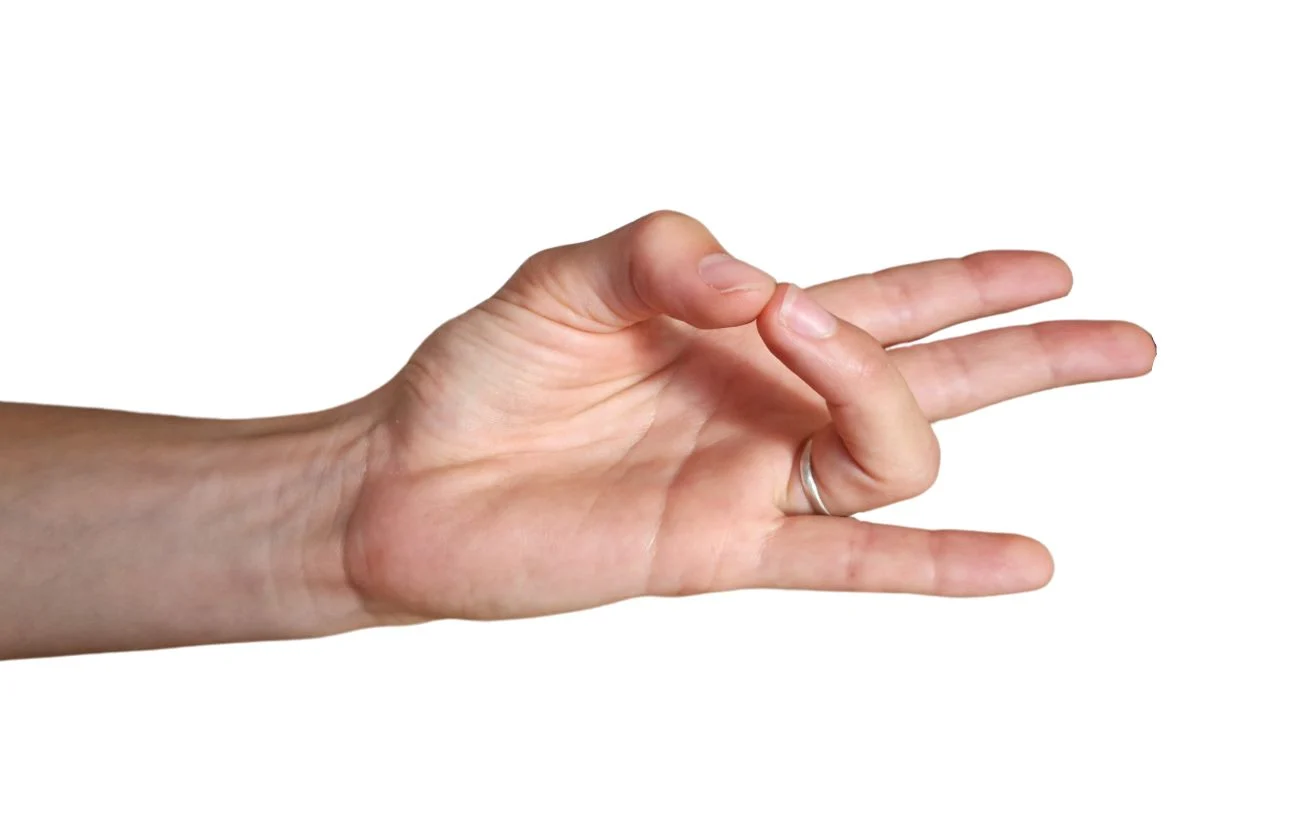
The Prithvi Mudra is created by holding the other fingers straight while touching the ring finger’s tip to the thumb’s tip. The earth element is associated with this yoga mudra, which is believed to aid in the body’s balance of this element, thereby enhancing overall physical strength and stability.
This is the way to perform Prithvi Mudra:
- Sit in Sukhasana (Easy Pose), Padmasana (Lotus Pose), or Vajrasana (Thunderbolt Pose) in a comfortable seated position with a straight spine.
- Push your hands to the brink of collapse, with your palms looking up.
- Contact the tip of the ring finger to the tip of the thumb, while holding different fingers straight. The ring finger and thumb structure a circuit of energy, and different fingers stay broadened.
- Maintain this position while paying attention to your intention and breath. Relax and let go of any tension in your body by taking slow, deep breaths.
Likewise with different mudras, Rehearsing Prithvi Mudra for no less than 5-10 minutes every day for ideal benefits is suggested. It tends to be worked on during situated reflection, pranayama, and yoga asanas and it tends to be remembered for your day-to-day daily schedule too.
5. Vayu Mudra
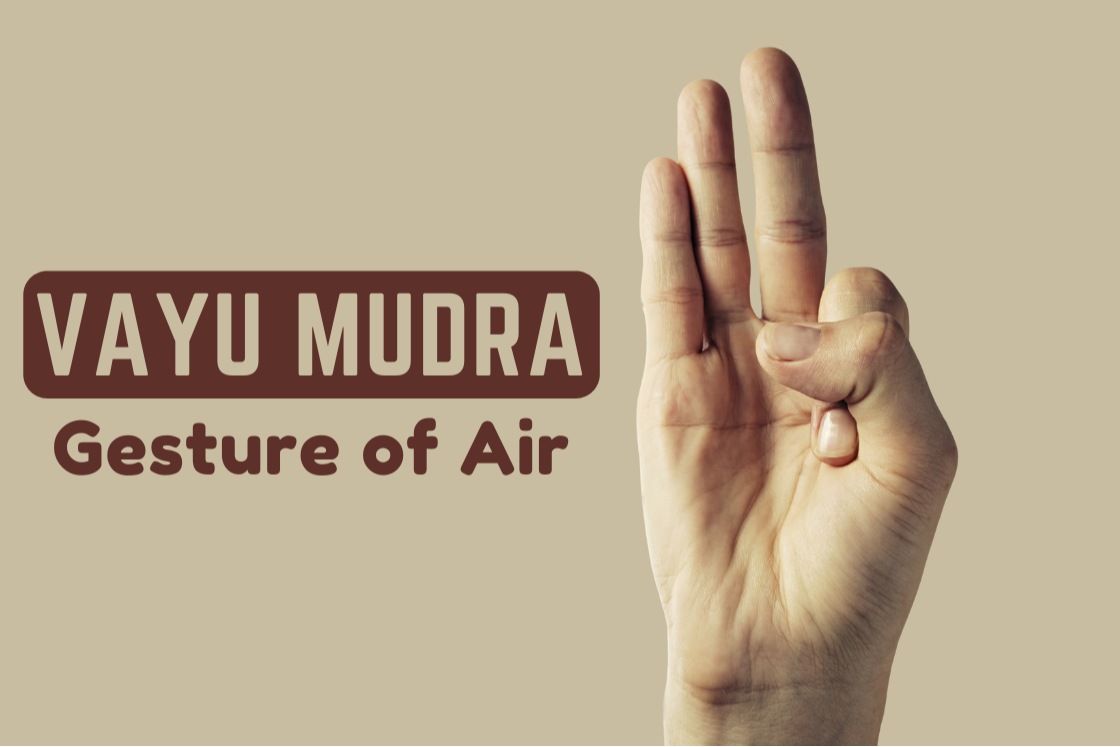
Vayu Mudra is framed by collapsing the forefinger and squeezing it against the foundation of the thumb. This mudra is related to the air component and is accepted to assist with adjusting this component inside the body, which can ease specific circumstances like clogging and weakness.
Vayu Mudra is performed as follows:
- Sit in an agreeable situated position with your spine straight.
- Push your hands to the brink of collapse, with your palms looking up.
- While maintaining straight fingers, fold the index finger and press it against the base of the thumb. The other fingers remain extended while the index and thumb form an energy circuit.
- Stand firm on this foothold while you center around your breath and your expectation. Take slow, full breaths, and let go of any strain in your body.
Vayu mudra is thought to be helpful for people who have constipation, indigestion, and gas, as well as for people who have asthma, COPD, and chronic bronchitis, which are respiratory conditions.
However, mudras should not be used in place of medical care, and if you have any questions about your health, you should talk to a doctor before beginning mudra practice. Mudras are viewed as a supplement to conventional clinical treatment and not a substitution for it.
6. The Apana Mudra
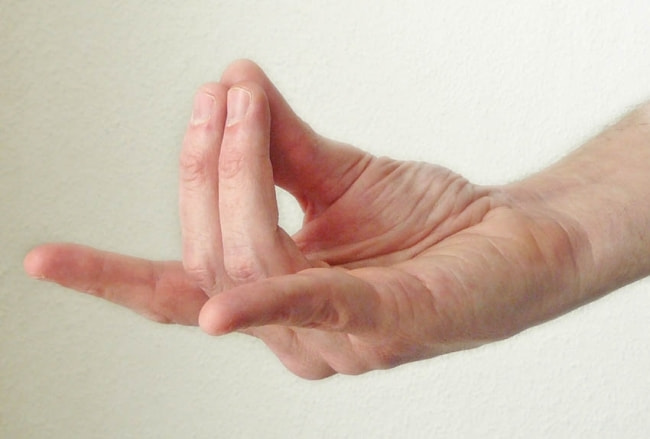
The Apana Mudra is shaped by collapsing the center and ring fingers and squeezing them against the foundation of the thumb while keeping different fingers straight.
Also known as Apana Vayu, it is used to help the body move energy downward, which is important for controlling the reproductive organs and getting rid of waste. This Mudra is accepted to help in the treatment of conditions like clogging, acid reflux, and gas, as well as specific circumstances connected with regenerative organs.
Apana Mudra is performed as follows:
- Sit in an agreeable situated position with a straight spine.
- Push your hands to the brink of collapse, with your palms looking up.
- Overlay the center and ring fingers and press them against the foundation of the thumb, while keeping different fingers straight. The center and ring finger and thumb structure a circuit of energy.
- Maintain this position while paying attention to your intention and breath. Take slow, full breaths, and unwind.
Apana Mudra, like all mudras, is thought to be more effective when practiced in conjunction with pranayama, visualization, and affirmation. Before beginning a mudra practice, it is essential to consult a medical professional as always.
7. The Surya Mudra
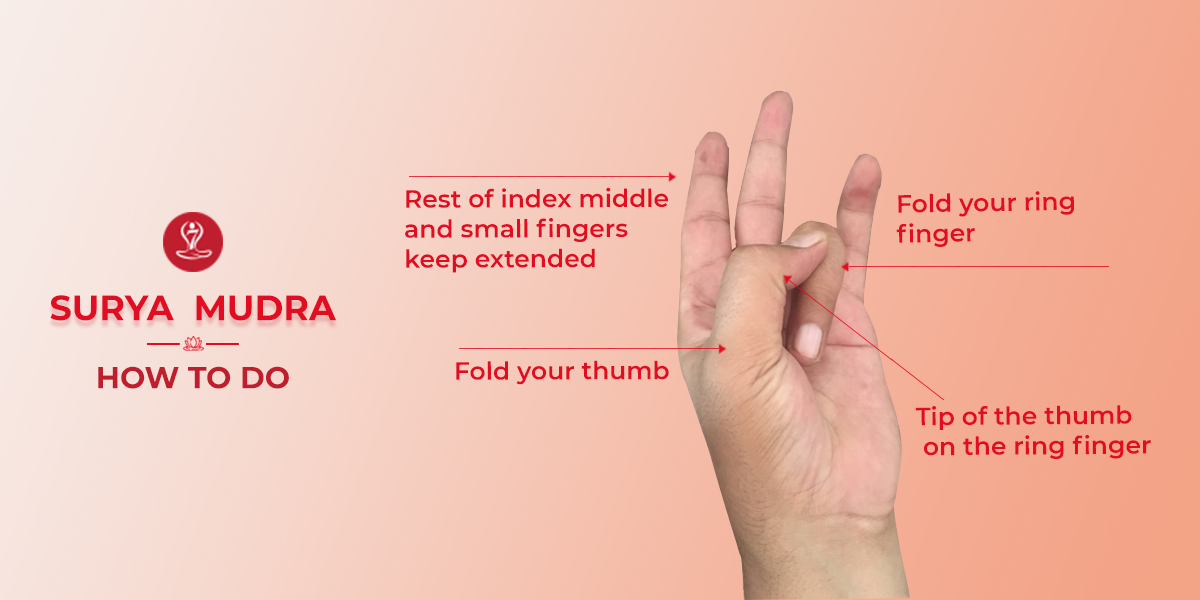
The Surya Mudra is created by pressing the ring finger’s tip against the thumb’s base while maintaining straight fingers. This yoga mudra is accepted to assist with adjusting the component of fire in the body and is many times used to build energy, and essentialness and to assist with weight reduction. It is utilized to actuate the Manipura Chakra, or the sunlight-based plexus, which is related to resolve, confidence, and the stomach-related framework.
Surya Mudra is performed as follows:
- Sit in Sukhasana (Easy Pose), Padmasana (Lotus Pose), or Vajrasana (Thunderbolt Pose) in a comfortable seated position with a straight spine.
- Push your hands to the brink of collapse, with your palms looking up.
- Press the tip of the ring finger against the foundation of the thumb, while keeping different fingers straight.
- Maintain this position while paying attention to your intention and breath. Relax and let go of any tension in your body by taking slow, deep breaths.
Conclusions for Yoga Mudras:
Yoga Mudras are a significant part of yoga practice and are accepted to have many advantages for both the body and the brain. In yoga, there are a variety of mudras, each with its own benefits and applications. Once more, Mudras ought not to be viewed as a substitute for clinical treatment. Mudras are viewed as a supplement to conventional clinical treatment and not a swap for it. Regardless, it’s fundamental to be aware of the unique situation and the beginning of the mudra while performing them to get the full advantages and figure out the appropriate use.
To develop your yoga information further then Himalayan Yoga Academy’s 200-Hour Yoga Teacher Training and 500-Hour Yoga Teacher Training Welcomes you invites you. Our advanced 500-Hour Yoga Teacher Training program will help you reach your full potential as a yoga practitioner and teacher. Our program in Nepal is designed to be safe, suitable, and transformative. It gives you a complete and authentic yogic experience while also immersing you in Nepal Immerse Culture and Natural Diversity.
4 Simple Methods for Improve Up Your Yoga Practice
4 Simple Methods for Improve Up Your Yoga Practice
In the present speedy society, you once in a while need to stop and relax. This may explain why yoga and meditation are gaining popularity worldwide, including in the United States. As per Forbes, the ascent of yoga in the Western world outcomes from the “universality of yoga studios, reflection applications, and the media inclusion” of studies. It showcases yoga’s physical and emotional well-being benefits on the human body. How people are transforming and way of living has been transformed in many people due to
Here are various steps that will help you Improve Up Your Yoga Practice
Bring a Towel
Whether you have an ailment like hyperhidrosis or honestly love hot yoga, a towel makes your training more secure and less dangerous. Pick a dampness-wicking towel to pull sweat away from your skin. Towels help you avoid injuries and allow you to keep your good form even when you’re sweating. Placing a towel on your mat during training reduces sweaty palms during lower confronting canine while padding your joints.
Install a Mobile App
Nowadays, it appears to be there’s an application for everything — and yoga is surely no special case! There are a few free and minimal-expense Android and iPhone applications for yogis of all expertise levels, from novice to experienced. For instance, the impending YogaGen application will involve your cell phone to catch and break down your arrangement in each posture. Yogis who utilize the application will want to address arrangement issues and keep tabs on their development after some time.
A smartphone is needed for many apps, especially those for newer models. Assuming your telephone is more established, it very well may be the ideal opportunity for an update. Find a gadget that works with your ongoing information plan and spending plan, and furthermore incorporates every one of the elements you really want to transform into a yoga problem area. Assuming you’re an iPhone darling, peruse and look at accessible Apple cell phones, you can ordinarily track down an arrangement that places your exchange toward the expense. Obviously, on the off chance that you’re a greater amount of Android fans, similar advances actually apply. Scan the web for item surveys, and find a telephone that fits the spending plan and highlights you want. As per PCMag, Android telephones offer something for everybody.
Make Use of Yoga Props
Yoga props aren’t just for newbies. The regarded yoga instructor, B.K.S Iyengar, truth be told. Iyengar brought props into yoga practice with the goal that everybody, paying little mind to actual capacity, could capitalize on their yoga practice. “Props are not the path itself, but merely an aid in a particular situation,” wrote one Yoga Journal reader.
Yoga blocks, ties, and reinforces can assist you with forestalling injury, unwinding into a posture, holding a more profound, or helping your supportive yoga practice. Yoga balls, on the other hand, are a healthier alternative to sitting in a chair and help strengthen your core muscles. Keep in mind, the yoga mat is a bad situation for self-image. As you go deeper into your practice, using the right props gives you support and safety.
Get Certified
If you’re a more experienced yogi or yogini or if you want to deepen your own practice, attending yoga teacher training might be worthwhile. You will learn about anatomy, yoga physiology, and anatomically correct posture during yoga teacher training.
Yoga Teacher Training, such as those offered by Himalayan Yoga Academy, provide certification that enables you to teach yoga classes or, if you so choose, open your own yoga studio. For the most widely accepted teaching credentials, look for programs that are certified by Yoga Alliance when selecting a teacher training program.
To further develop your physical and mental prosperity, yoga is an insightful spot to begin. You can clear your mind by slowing down, stretching, and taking deep breaths. Numerous studies demonstrate yoga’s positive effects on health, including relief from stress and back pain. Apps, props, and other tools can help you take your practice to the next level, whether you want to teach yoga or learn an advanced pose.
Questions That Every New Yogi Asks
Around the world, the popular practice of yoga has been around for thousands of years, so here are nine questions that every new yogi asks or should ask. It has numerous advantages, such as enhanced flexibility, strength, balance, and mental health. However, navigating the numerous yoga styles, poses, and breathing techniques can be overwhelming and confusing for those who are new to the practice.
If you’re another yogi, you might have a few various forms of feedback about beginning your yoga process. How to choose the right kind of yoga, what to wear to a yoga class, and how to find the right instructor are just a few of the seven questions that new yogis frequently ask. You’ll have a better idea of what to expect from your yoga practice by the time this article is over, and you’ll be more confident and ready to start your yoga journey.
What do I require to begin practicing yoga?
A yoga mat, supportive clothing that lets you move freely, and an open mind are all necessary to begin practicing yoga. You needn’t bother with any extravagant hardware or apparel, simply something that permits you to move without limitations.
How frequently would it be a good idea for me to rehearse yoga?
The goals you have for yourself and your schedule will determine how often you practice yoga. A few people practice a few times a week, while others practice every day. If you’re new to yoga, start with a few classes a week and build up your practice’s intensity as you get more used to it.
What sort of yoga would it be advisable for me to do?
There are numerous styles of yoga, each with its own emphasis and advantages. Yoga styles like Hatha, Vinyasa, Yin, and Ashtanga are well-liked. It’s best to start with one style and then experiment with other kinds of yoga to find the one that works best for you.
How long does a typical yoga class last?
The type of yoga practiced and the instructor can have an impact on how long a yoga class lasts. A typical yoga class lasts between 60 and 90 minutes, though some classes last as little as 30 minutes and others as long as two hours. Finding a class that accommodates your timetable and goals is fundamental.
What can I anticipate from a yoga class?
You can anticipate engaging in a variety of poses, meditation techniques, and breathing exercises during a yoga class. You will be guided through each pose by the instructor, who will offer adjustments for different levels of experience. Depending on the kind of class you take, yoga classes can be fun or hard.
Is it necessary for me to be flexible to do yoga?
Yoga does not require flexibility on your part. Yoga can really assist with working on your adaptability after some time. Listening to your body and avoiding pushing yourself beyond your capabilities are essential. It is acceptable to be unable to perform all of the poses in a class because everyone’s body is unique.
Can yoga alleviate anxiety and stress?
Yes, yoga is well-known for its ability to alleviate anxiety and stress. Meditation, physical activity, and breathing exercises can all contribute to mental clarity and relaxation. Many individuals find that standard yoga practice works on their general feeling of prosperity.
How can I tell if I’m doing a pose right?
It’s normal for new yogis to contemplate whether they’re doing a posture accurately. Attending classes taught by knowledgeable teachers is the most effective method for ensuring proper alignment. They can show you the poses, make adjustments, and give you feedback on your form. You can also supplement your practice and improve your understanding of the poses by utilizing resources like books, videos, and online tutorials.
Can physical injuries be treated with yoga?
Yoga can be a magnificent method for restoring actual wounds, yet it’s fundamental to talk with medical care proficient prior to beginning a yoga practice. A certified educator can give changes and elective represents that can assist you with working around your physical issue. Yoga can likewise further develop adaptability, strength, and equilibrium, which can assist with forestalling future wounds. But it’s important to listen to your body and stay away from poses that hurt or make you uncomfortable.
What Should Every New Yogi Know About Yoga Breathing?
Yoga’s physical and mental benefits can be significantly enhanced by practicing proper breathing, which is an essential part of the practice. There are a few essential things about yoga breathing that you should know as a beginner:
- The breath is the underpinning of yoga practice: The breath is regarded as the life force, or prana, in yoga. It helps to connect the mind, body, and spirit and serves as the foundation for all yoga postures and practices.
- Relaxed and natural breathing is required: The breath should be natural, slow, and deep in yoga. It ought to flow effortlessly and without any tension or strain. Breathing ought to be loose, and you ought to abstain from pausing your breathing or driving it in any capacity.
- Concentrate on using the nose to breathe: When practicing yoga, it is better to breathe through the nose than through the mouth. By filtering, warming, and humidifying the air through the nose, breathing makes it easier for the lungs to take in oxygen.
- In some practices, use ujjayi breath: In some yoga practices, a specific breathing technique known as ujjayi breath is utilized. In order to produce a sound that is audible and resembles ocean waves, the back of the throat must be slightly constrained. The mind can be calmed and the breath can be deepened with this method.
- Practicing breath awareness can be beneficial: During your yoga practice, paying attention to your breath can assist you in deepening your poses, maintaining focus, and calming your mind. You can improve your awareness of your body and its needs by observing your breath.
Conclusions:
There are several yoga practitioners who wanna proceed in the path of yoga, but they have several confusions and doubts, such doubts are very needed for them to have clarity in their thought of being yoga teachers as yogis need thirst and thirst that comes with confusion and needs proper guidance. Such guidance is those questions that every yogi asks. Hence here at Himalayan Yoga Academy, we guide all the students in their yoga teacher training trainees. We guide them thoroughly for all the questions and guide them in learning without any confusion and clarity in mind.
Exploring Different Types of Yoga Teacher Training in Nepal
Exploring different types of Yoga Teacher Training in Nepal from Hatha to Vinyasa and More. Through exercise comes Yoga, with Yoga comes understanding, with understanding comes love, and with love comes bliss. Yoga is one of the excellent sports to loosen up your frame, mind, and soul. The artwork of Yoga originated in Nepal. It has numerous locations of obscurity and uncertainty due to the fact its transformation has been carried out orally. The development of yoga may be traced returned to 5000 years ago. It changed into evolved via way of means of the Indus-Sarasvati civilization within side the Northern part of India and Nepal as well.
The Rig Veda additionally mentions the phrase Yoga. Over time Yoga has been slowly redefined and is specifically utilized by Brahmans and Rishis. The trend of Yoga Teacher Training is famous around the world as it provides a perfect chance to learn something and enhance your knowledge as well as take your yoga and lifestyle to another mode. Yoga Teacher Training in Nepal is famous for learning yoga in the most amazing locations and for teachers who have practiced traditional yoga in a traditional environment.
This changed into the pre-classical age of yoga which changed into a mishmash of numerous ideas. It had numerous strategies and ideals related to it. Classical yoga is described via way of means of Patanjali`s Yoga-Sutras and its miles the systematic presentation of Yoga. It consists of the current fashion of Yoga as well. Post-classical yoga is greater than the current approach that targets extended existence and a rejuvenated frame.
The essential goal is to include the frame because of the way to acquire enlightenment. The Modern Period is greater pushed via way of means of Nepali and Indian instructors who have become pioneers and it’s miles pushed via way of means of Western lifestyle as well. There are numerous Yoga Teacher Training to be had in Nepal.
There are Different Types of Yoga Teacher Training in Nepal that offers now no longer have the most effective theoretical understanding but additionally the sensible nuances of the same. It is schooling that is composed of powerfully sequenced and pre-designed magnificent routines. Other than this, the path additionally consists of recommendations on public speaking, a way to save you from injuries, remedy the frame, and make it higher and more potent. The coaching technique consists of exercise and certain routines.
There are numerous styles of applications that are protected in Yoga Training Nepal. Some of the primary ones are as follows:
Hatha Yoga Pradipika: It is the traditional fifteenth-century Sanskrit guide on haṭha yoga.
Yoga Sutra: It consists of exclusive traditions, particularly movement yoga (Kriya yoga) and “8 limb yoga” (aṣṭāṅga yoga).
The Bhagavad Gita: It consists of a few effective coaching of yoga.
One of the excellent Yoga Teacher Training in Nepal is the Himalayan Yoga Academy. If one sincerely desires to unfold the understanding of yoga across the world, one ought to sign up withinside the Yoga Teacher Training path. The path makes a specialty of selling mental, physical, and non-secular health. It is an expert schooling path that consists of all of the asanas and makes a specialty of the classical yoga tradition. Through the program, one improves the non-secular connection and enables withinside the transformation of a person. Through the program, one receives the direction of self and divinity.
Yoga Teacher Training in Nepal is a residential program. A strict ordinary is observed for the duration of the tenure of the path. One has to observe the early to bed, early to upward thrust concept. The college students of the path stay collectively in concord and analyze yoga practices. The skilled and educated instructors impart understanding in each aspect. They are immersed withinside the yogic lifestyle. With near touch with them, one receives to analyze loads of factors and insights into the yogic lifestyle.
Benefits of Yoga Teacher Training in Nepal
- Learn Yoga in the Land of the Himalayas where yoga was born.
- Learn practice with a Community of Yogis from Across the Globe
- Practice Karma Yoga
- Daily Yoga Classes, Meditation, Chanting, Vegetarian Meals, and More!
- Spend Time With the Local Community
- Strengthen Your Hatha and Bhakti Yoga Practice
- Homely environment
- Internationally accredited
- The scientific way of learning
Patanjali Sloka (Yogena Chittasya)
Yogena Chittasya Padena Shloka
The Patanjali Sloka (Yogena chittasya padena) shloka meaning – Let us bow down to the great sages of Patanjali, who gave yoga for peace and purity of mind, grammar for clarity and purity of speech and medicine for perfection of health. Let us bow before Patanjali, an incarnation of Adisesha, who has a human form in his upper body, with a conch shell and a chakra in his arms.
History of Patanjali :
Sage Patanjali is believed to be an incarnation of Adishesha, a serpent with a thousand heads. Usually, the number thousand is a representation of infinity in ancient scriptures. A serpent is a symbol of strength.
Patanjali is considered a sage with unlimited strength and knowledge. And the Yogena Chittasya mantra is the invocation of all his powers. Because of his powers, it is believed that Patanjali lived for eight centuries. He was known for encoding the Yoga Sutras from which the modern practice of yoga is derived. Patanjali’s work is found in around 200 aphorisms in the Yoga Sutra.
Yogena Chittasya Sanskrit Shloka Meaning in Hindi and English
Yogena Chittasya Sanskrit Shloka
योगेन चित्तस्य पदेन वाचां ।
मलं शरीरस्य च वैद्यकेन ॥
योऽपाकरोत्तमं प्रवरं मुनीनां ।
पतञ्जलिं प्राञ्जलिरानतोऽस्मि ॥
Transliteration
yogena cittasya padena vācāṁ ।
malaṁ śarīrasya ca vaidyakena ॥
yo’pākarottamaṁ pravaraṁ munīnāṁ ।
patañjaliṁ prāñjalirānato’smi ॥
Transcript
yogena chittasya padena vacham |
malam sharirasya cha vaidyakena ||
yo’pakarottamam pravaram muninam |
patanjalim pranjaliranato’smi ||
Hindi Translation
जिन्होंने स्पष्टता और वाणी की शुद्धता के लिए व्याकरण,
मन की शांति और पवित्रता के लिए योग दिया,
और जो वैद्य (चिकित्सा विज्ञान) के माध्यम से शरीर की अशुद्धियों को दूर करते है,
वे जो (शरीर, मन और वाणी की अशुद्धियों) को दूर करने में माहिर है,
उन सबसे उत्कृष्ट मुनि पतंजलि, को मैं हाथ जोड़कर नमन करता हूं।
English Translation
Let us bow before the noblest of sages Patanjali,
who gave yoga for serenity and sanctity of mind,
grammar for clarity and purity of speech and medicine for perfection of health.
Let us prostrate before sage Patanjali.
Benefits of this Patanjali Sloka mantra
The Yogena Chittasya mantra invokes the sage Patanjali who gifts us the medicinal powers to purify our mind and the power of speech to express ourselves uninhibitedly. Listening to this mantra along with meditation helps you in the following ways.
Benefit 1 – Better concentration
It builds up our confidence and focus.
Benefit 2 – Release pain
It helps you to release pain, both physical and emotional
Benefit 3 – Remove ego
It helps to get rid of our ego.
Benefit 4 – Better decisions
Without any ego, your decision-making skills get much better.
Benefit 5 – Richer life experience
You get to learn more and have richer experiences in day-to-day life thanks to the inner calmness it grants
Benefit 6 – Purify the mind
Chanting or listening to the mantra helps you to purify your mind and body
Why Yoga in Nepal
Nepal is the origin of yoga. This is the country of yoga, the country of Tantra, and the country of spiritual practice. There are many reasons why Yoga in Nepal is considered the best place to learn yoga and do various courses such as yoga teacher training courses, reiki courses, singing bowl courses, meditation courses, and many more beautiful spiritual experiences.
1. Country of enlightened people:
This is the country that has enabled numerous people have attain enlightenment. Especially, during the time of Buddha, many meditators were enlightened. Though Nepal lacks good governance and a political system, it is very good in yoga and spiritual practice. You can feel the spiritual vibrations during your practice. Since many yogis, hermits, sages, solons, savants, recluses, eremites, etc. have attained a higher level of the spiritual realm, this is the best place for yoga, the best place for meditation, and other types of spiritual practices.
2. Favorable Geography:
The places and the relationships between people and their environments in Nepal are one of the best in the world. This is very favorable for yoga, meditation, and other techniques of spiritual practice. It is located between 26° 20′ and 30°10′ north latitude and 80° 15′ to 88° 19′ east longitude. This part of the earth is proper for yogic practice. That is why yoga originated here. This is the part of earth auspicious and sacred for spiritual growth. It is great in both ways- the physical properties of Earth’s surface and the various human societies that live there. People in Nepal are connected to spirituality.
3. Yoga and Spiritual Centers:
There are many types of spiritual and yoga centers in Nepal. Whatever type of practice you want, is available in Nepal. People are of different types. One likes a type of practice while the other likes other types of practice. Since Nepal is full of spiritual practice, you will find it here according to your interest.
4. Access to Scriptures:
Many scholars in Nepal can impart knowledge and wisdom in Vedic Sciences such as Karma yoga, Bhakti yoga, Jnana yoga, etc. Spiritual Scriptures such as the Puranas, Bhagavad Gita, Dhammapada, Patanjali’s Yoga Sutras, etc. You will have access to all the ancient text here.
5. Multiple ways of understanding:
There are five major heterodox schools—Jain, Buddhist, Ajivika, Ajana, and Crvka—and six major orthodox Eastern schools—Nyaya, Vaisheshika, Samkhya, Yoga, Mīmāṃsā, and Vedanta. They teach spiritual knowledge in a unique way. You can understand philosophy from various perspectives.
6. Practicing Yoga with Yogis from Around the World:
We welcome visitors from all around the world on an annual basis. Gain new insights into your yoga practice from yogis around the world. Together, you may practice, walk, cook, volunteer, and forge connections that will last a lifetime. We take pride in building a volunteer community where everyone feels supported and at ease expressing who they truly are. Spend your evening leading your preferred workshop, participating in other events, or sitting in the tipi with your new friends and sharing poems and stories. Talk to us if you have an idea for a fun activity to do while camping, hiking, or trekking; we’ll help you set it up.
7. Practice Seva Yoga (Selfless Service):
Even if a selfless act is conducted without regard for the outcome for the individual, it results in collective benefit and gain. One must face his or her challenges, reluctance, and negativity when doing selflessly. One gains awareness of his or her thought processes, habits, and other personality traits. Let go of personality traits that are no longer helpful to them via this increased self-awareness and discover an inner calm that is independent of and unaffected by external circumstances.
Seva yoga combines Bhakti yoga, the yoga of love and devotion, with Karma yoga, the yoga of action. One helps others through their deeds and does it with a mindset of unadulterated, selfless compassion when one engages in Seva yoga. “The word’s roots are thought to capture the spirit of Seva yoga. Seva derives from the Sanskrit words Saha, which means “with that,” and Eva, which means “too.” Seva, therefore, means “together with.”
8. Practice Yoga in the Himalayas:
There are many mountains and Himalayas which are best suited for yoga practice. You can enjoy the natural beauty, peaceful environment, and ancient system for the practice.
9. Time with Local people:
You can visit local people and understand their culture, lifestyle, habit patterns, traditions exploring, and many more. If you are interested to explore various secrets of Nepal, this is one of the best methods.
10. The climate and weather in Nepal:
It varies greatly depending on the season and altitude. The Terai region in the south, which is less than 500 meters above sea level, and the High Himalayan region in the north, which is more than 5,000 meters, can both be classified as different climate zones in Nepal. Average temperatures in Nepal’s highest mountains drop to sub-zero levels after reaching a peak of around 24°C in the south. The amount of precipitation varies depending on where it falls in the country, with some high-altitude places in the north receiving less than 1,000 millimeters (mm) and some central and northern pockets receiving more than 3,000 mm. It is neither too hot, nor too warm, neither too rainy nor drought. It has a perfect climate.
11. Strengthen Your Hatha, Jnana, and Bhakti Yoga Practice
HATHA YOGA
The yoga style that Westerners are most accustomed to is hatha yoga. The word is derived from the Sanskrit words ha, which means “sun,” and tha, which means “moon.” The goal of the practice is to bring together the active and receptive traits that each heavenly entity represents. The goal of Hatha yoga is to develop harmony between the active body and its environment through proper breathing and physical alignment. Physical strength, physiological health, and emotional well-being are the results of this equilibrium.
Jnana Yoga
Self-awareness is the focus of Jnana Yoga. If you can do it, Jnana Yoga has the power to improve your life as well. Jnana Yoga doesn’t include performing any physical asanas, unlike Vinyasa or Hatha Yoga. Instead, utilizing the appropriate understanding is one of the four paths to enlightenment.
BHAKTI YOGA
The goal of Bhakti yoga is to realize the union of the individual self with God by dedicating oneself to the Divine that is present in everything. It has been called the loveliest of the yogic paths since it fosters love and acceptance for all beings and is driven by a love of God rather than a fear of adverse consequences or retribution. Yoga practitioners who follow the Bhakti path may worship through chanting, mantras of devotion, prayer, kirtan, and rituals.