
Mud Therapy & Its Benefits
According to Ayurvedic beliefs, our body is made up of five essential elements-earth, water, air, fire, and ether. Mud is an important element of nature. Mud, clay (or earth), can heal the body from the inside and correct any imbalance. Learn about Mud Therapy & Its Benefits.
What is Pelotherapy (Mud Therapy)?
Mud Therapy is the use of natural clay from the earth for therapeutic purposes. Most are familiar with Pelotherapy in the form of a facial “mud” mask, but the applications include any form of external poultice. Clay has a long, worldwide history of outstanding, health-promoting effects and has been used extensively by many cultures for thousands of years.
Generally speaking, when activated with moisture, clay has a unique drawing capacity that provides its detoxifying benefits. The natural detoxifiers in the Medi-Body Pack are highly negatively charged. Toxic, synthetic chemicals are positively charged. When the wetted mixture of the Medi-Body Pack is applied to your skin, an osmotic pulling effect occurs where the positively charged ions of the chemical toxins are attracted to draw them out of the body It is useful to understand a little about the three primary actions or properties of clay.
Mud contains a lot of vital minerals that fight the bad toxins in the body. Since it has so many health benefits, it can also treat a lot many chronic health problems and cure ailments as well. Mud can absorb toxins from the human body; therefore is very useful in preventing many diseases. It is also known for its healing properties. It also helps in cooling and relaxing body as it can hold moisture for a long time.
Benefits of Mud Therapy
Skin Problems
Mud therapy treatment benefits the skin the most. It cools the skin and the blood, helping control the effects of Pitta. It removes dead skin cells and makes the skin softer. Mud therapy also detoxifies the body effectively, as the mud draws out harmful toxins through the skin’s pores.
Improves your digestion
Mud therapy helps in relaxing the digestive system and strengthening all the associated organs. Applying mud packs on abdomen helps in so many digestion problems such as gas, acidity, constipation, and stomach ache. Also, the mud therapy helps in absorbing the intestinal heat boosting metabolism.
Gets rid of stress, a bad headache or fever
Applying mud therapy to the head is a relaxing experience. It reduces stress, depression, and anxiety and helps in getting a good night’s sleep. It is also sometimes prescribed by Naturopathy experts to deal with disorders of the nervous system, such as Neuralgia, Sciatica, Epilepsy, Post-traumatic Paralysis, etc.
Useful in condition of stiff joints
In conditions such as Arthritis, the intense pain and swelling around the affected area can be easily countered by mud therapy. Naturopathy experts also prescribe mud therapy for problems like Fibromyalgia, Osteoarthritis, Peri arthritis, Rheumatism, Gout, etc. It helps a lot in getting relief from stiffness of the joints and restricted movements.
Benefits of Singing Bowl Training
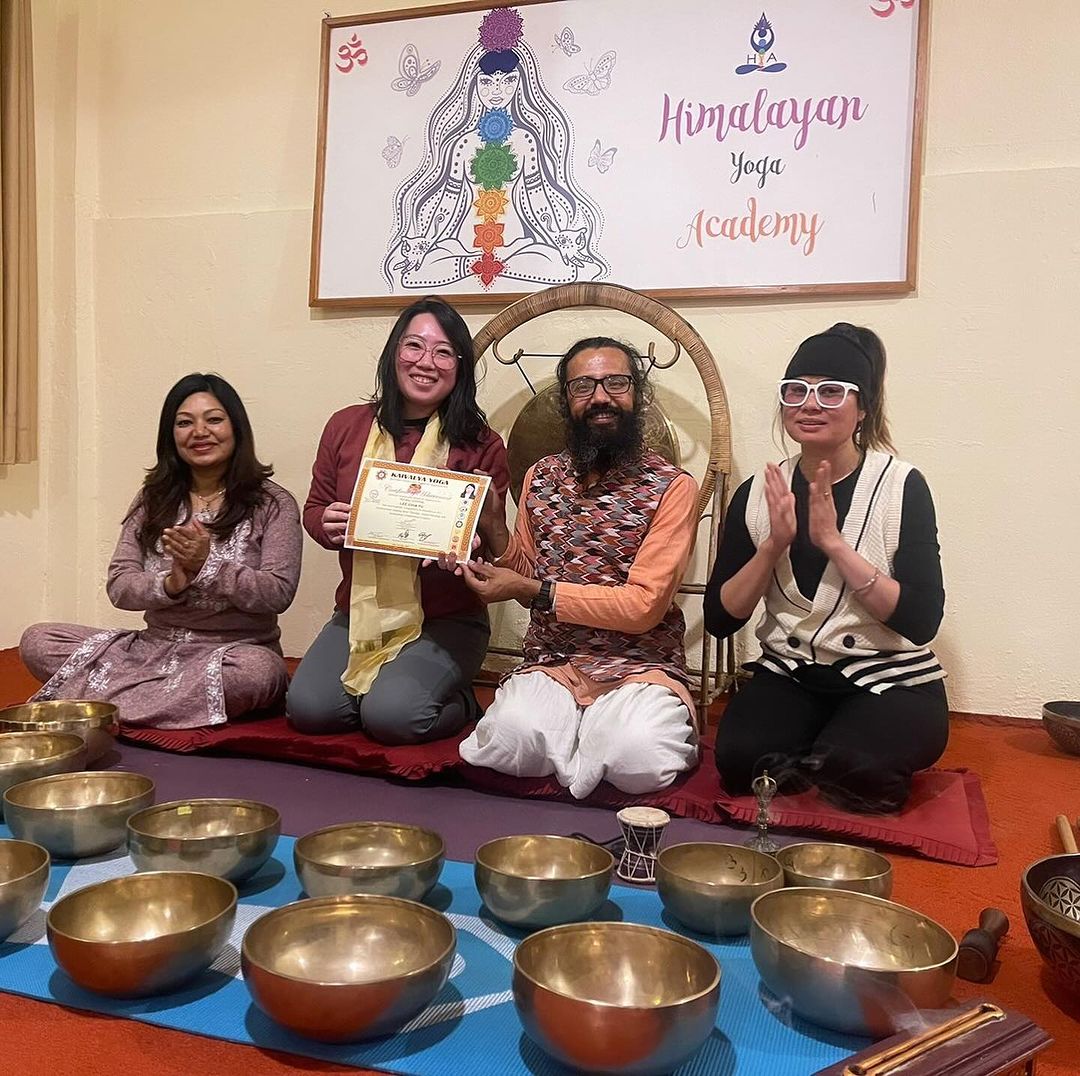
Himalayan Yoga Academy is a registered training school in Nepal. We offer various training and courses to students from all around the world. If you wanna experience holistic wellness and transform your thoughts. The teachings from our great healers and leading teachers will help you achieve the needs and aims of your journey. Below, we will learn the Benefits of Singing Bowl Training in Nepal.
Here in our academy, you will experience and learn teachings to use the power of vibration to clear your emotions and release toxins to bring positive change, through one-on-one work, and group sharing and receiving. We will train your sensitivity to energetic connections and learn how to hold space with positive intention. We will make you do group sound healings and sound baths that will be helpful for your teaching skills. A powerful soundscape in which to immerse and shift your consciousness to another level.
Who can join this Singing Bowl Training in Nepal?
Anyone who has felt the power of sound, healers, musicians, yogis, meditators, mystics, teachers, medical personnel, and many more music enthusiasts can learn from this course. Those who want to explore more about consciousness and stillness. He can explore more in silence.
WHAT WILL YOU ACHIEVE?
Graduates from these Singing Bowl training will have the skills and teachings to confidently give effective sound healing treatments. Those teachings will help them to achieve their aims in their lives.
Benefits of Singing Bowl Training in Nepal
- Rejuvenates your body, and mind and promotes physical, emotional, and spiritual health of your body.
- The sound and vibration of bowls are so relaxing that they help in the healing of several mental and psychological ailments, such as migraine, anxiety, depression, and body and muscle aches.
- Bowl massage, vibrations help in clearing up blockages by increasing mental and emotional clarity.
- Provides deep relaxation to your mind and as a result, many find it promotes sleep, helps stimulate blood flow.
- Chakra Therapy session Cleanses and balances the Chakra and aura.
- Also used as a tool for clearing up negative energy and cleansing of space whether it’s your own room or office with the practice of a Shamanic session with the bowls by the master.
Best Yoga Retreat School in Nepal
Yoga means the unification of body, mind, and soul for health, happiness, and harmony. Retreat means a quiet private place where we can change our minds about something else. Nepal is the land of striving spirituality, the land of peace, the land of natural and cultural beauty. Below is why best Yoga Retreat School in Nepal.
Nepal is such a place where world people can land for rest and relaxation, a core place for bliss and happiness, People can take a long breath with free body and fresh mind until satisfactory volume. So Nepal is perfect place to renew the energy, emotions, feelings, perception, moral values and positivity.
Himalayan Yoga Academy, an international commune, is perfect umbrella that gives peace of mind, loving kindness and light run by very Professional, Professor, Spiritual Guru and International Yoga Master named Yogacharya Dr. Subodh Simkhada (Swami Yog Subodh) who is the first person in Nepal, introduced Yoga and Spiritualism in tourism faculty for worldly people, started to teach informally since 1997 and institutionally since 2007. In his indefatigable exertion of a few years, a one-year Post-Graduation Diploma in Yogic Science course has been initiated in Tribhuvan University, the first and oldest University in Nepal since 2019.
Under his obvious, we have Yoga retreat packages of few days to few weeks with different packages in need assessment base, regular Yogasana, Pranayama, and Meditation session, Cleansing process like Nasal cleansing, Eyes Gaze, Therapy Massage, Oil treatment, Sauna, Steam, Swimming, Sound healing, Reiki healing, Lifestyle counseling, Food counseling, Fasting, speechless practice as need.
With Yoga Retreat, we provide 3 times vegetarian or Vegan, or Gluten free food as need with fruits and salad, herbal tea, drinking water, Towels, hot shower.
This Academy is located in perfect zones on lap of beautiful typical Vedic pagoda Monastery surrounded by jungles almost 3 sides and one sides city views. So that it is perfect place for refreshing body and mind, regenerating the energy, rejuvenating the life through the retreat packages.
We do discussion session everyday in evening whatever you have questions about health, life, yoga science, spiritual life, stress manage, lifestyle, and sleep quality, etc.
200 Hour Yoga Teacher Training in Nepal
Located in the foothills of the Himalayan Mountains, our pioneering school of Yoga takes a holistic approach to providing you with the best learning environment for your 200 Hour Yoga Teacher Training Certification.
Registered with the Yoga Alliance USA, we create bespoke training programs for 200 hours, 300 hours, or 500 hours of Yoga Teacher Training, specializing in Hatha Yoga and Ashtanga Yoga. These programs include:
- A foundation in Nutrition
- Anatomy and Physiology
- Psychology
- An overview of the Yogic Lifestyle
Yoga Studio for Yoga Teacher Training
- Reiki Healing– Levels 1 to 3
- Music Meditation
- Ayurveda and Panchakarma
- Singing Bowl Healing
Himalayan Yoga Academy is well known as the best studio for Yoga Teacher Training in Nepal. It has been conducting Yoga Teacher Training in Kathmandu for 10 years. Himalayan Yoga Academy is like a home school and the most favorite place to do Yoga Teacher Training in Nepal. It is a very relaxing place to do a yoga course for people all over the world. Here in the Himalayan Yoga Academy, students find a very friendly environment and comfortable to achieve their aim in life. The studio provides an adaptable course for the basic level, intermediate level, and advanced level.
Our Academy is also a sanctuary for those seeking a respite from life, with our Yoga Retreat and Detox programs, which include daily Yoga practice, use of our spa and swimming pool, full body Massage, shirodhara, and healing therapies. From here, we can arrange Spiritual Yoga Tours and Treks to several destinations using a vetted and experienced team of guides, instructors and porters.
The surroundings in this location remain naturally clean. To the south lies the Shivapuri-Nagarjuna National Park, a mountainous forest. The environment at HYA for the 200-hour Yoga Teacher Training in Nepal is ideal for everyone. The nature in this area is designed to welcome all who wish to enter the field of yoga and spirituality.
Why Practice Hatha Yoga Asanas
Why Practice Hatha Yoga Asanas or Poses? Hatha Yoga is the path of physical discipline. It is for beginners levels to higher levels. It is also called saptanga Sadhana. Hatha Yoga Practice begins from Shatakarma (Six Cleansing Acts), and follows Asanas, Mudras & bandha, Pratyahara, Pranayama , Dhyana and Samadhi.
Among these practices, Hatha yoga asanas, the backbone, are widely practiced everywhere in the world. It helps to increase your body’s flexibility and strength in many ways. People of all ages can perform asanas according to their needs and effort.
Hatha Yoga Asanas Benefits
Improves Heart Health
Heart is a vital organ in human body. It runs 24 hours frequently, so we need regular cardiac exercise for regulation of heart. Hatha Yogasanas give cardiac exercise which warms up, activates the heart muscles, and maintains the cardiac muscular contraction. It increases the heart pumping, maintains the valve contractions. Our heart says “I run 24 hours for you, so you give 1 hour for me”.
Improves your immunity
The Immune System or Defense mechanism is very important in the human body. All the means of yogic practices help to increase the body’s immune system. In general, we need balance or integrated practice for fullness. Hatha Yogasanas increase the body’s immunity, revitalize the body. Asana practice helps to develop immune cells. Asana practice activates the neuro cells, lymphatic glands and endocrine glands, which help to produce immune cells and mature these cells for active functions.
Proper Body Functioning
Most of the hatha yoga asanas will require good alignment by keeping the back straight. This will improve your posture, consequently. Stretching the muscles through Asanas releases tension and maintains the muscular contractions. Thus, your body will become more flexible. Various injuries can be prevented if your body is flexible, particularly if you are a regular practitioners. Also in hatha yoga, you need to consciously concentrate on your breathing while performing asanas.
You can start your yoga journey with us at the Himalayan Yoga Academy.
A Pioneer Academy: Himalayan Yoga Academy for Yoga Teachers Training in Nepal
Himalayan Yoga Academy for Yoga Teachers Training in Nepal is a pioneer academy that offers residential 200 hours Yoga Teacher Training, 300 hours Yoga Teacher Training, and Hatha Yoga Teacher Training Course. We also provide many courses related to Singing Bowl Training, Reiki Training, and Ayurveda Courses at very affordable prices. We are one of the most reputable institutions offering yoga teacher training in Nepal, specializing in the traditional systems of Hatha Yoga. National and international communities recognize us for delivering outstanding Hatha Yoga teacher training in Nepal.
So if you want to be a yoga teacher, Himalayan Yoga Academy can provide you with the best opportunity to take yourself in a healthy environment. Our Yoga Teacher Training courses in Kathmandu offer deep spiritual knowledge rooted in this ancient blend of art and science. We guide you through a transformative journey that nurtures both mind and soul. The serene Himalayas rejuvenate your mind and body, helping you experience true inner harmony. With a wide range of courses for yoga teacher training to choose from, you can enroll with us. Learn at the pace you want at very affordable and competitive prices.
Himalayan Yoga Academy is also well-known for its retreat packages. We provide retreat and detox programs for people who want to relax and enjoy their leisure in peace and happiness. They may enjoy delicious foods that are cooked in the Himalayan Yoga Academy.
Gaining accreditation from Yoga Alliance USA in 2015, we started offering professional courses. In the same year, we completed our first 200-Hour Yoga Teacher Training Course. We are a yoga alliance-certified yoga teacher training school in Nepal. HYA aims to spread the knowledge of yoga through our Yoga Alliance-accredited 200- and 300-hour Yoga Teacher Training Courses.
Yogic Tips for Coronavirus in Nepal
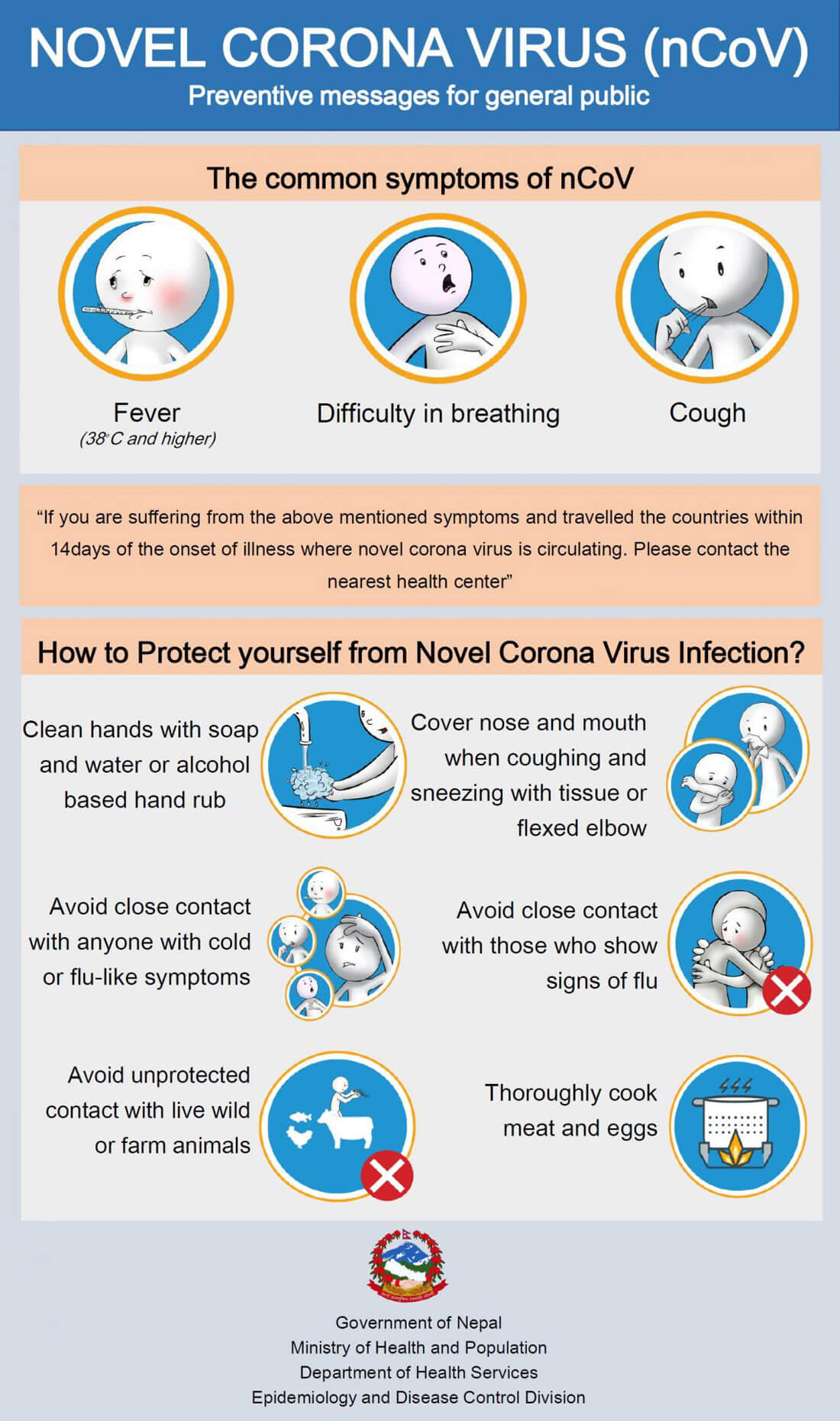
Himalayan Yoga presents an important article on Yogic Tips for Coronavirus in Nepal. First of all, what is Corona Virus? According to the World Health Organization (WHO), coronaviruses are a family of viruses that cause illnesses ranging from the common cold to more severe diseases such as SARS and Middle East respiratory syndrome (MERS). These viruses were originally transmitted between animals and people. SARS, for instance, was believed to have been transmitted from civet cats to humans, while MERS travelled from a type of camel to humans.
Several known coronaviruses are circulating in animals that have not yet infected humans. The name coronavirus comes from the Latin word corona, meaning crown or halo. Under an electron microscope, the image of the virus is reminiscent of a solar corona.
A novel coronavirus, identified by Chinese authorities on January 7 and named 2019-nCoV, is a new strain that had not been previously identified in humans.
What are the symptoms?
According to the WHO, signs of infection include fever, cough, shortness of breath, and breathing difficulties. In more severe cases, it can lead to pneumonia, severe acute respiratory syndrome, kidney failure and even death.
The incubation period of the coronavirus remains unknown. Some sources say it could be between 10 and 14 days.

Where have cases been reported?
Most cases and deaths have been reported in China – the vast majority in Hubei Province.
So far, the Philippines is the only country that has reported a fatality from the new virus outside of mainland China.
The virus has spread to many Asian countries, as well as Australia, Europe, North America, and the Middle East. Nearly all of the dozens of cases outside China are among people who recently travelled there.
What is the condition of Coronavirus in Nepal?
The government of Nepal has officially launched a notice regarding the truth of coronavirus spread in Nepal and the current situation. It has been notified in a special press statement by Trekking Agencies Association of Nepal (TAAN) that “The ministry of health has joined hands with ministry of tourism in Nepal to check and curb the impact of the virus and isolate such cases when reported. Separate health desks manned by doctors and health professionals have been set up at Tribhuvan International Airport as well as all border points along Nepal and China. As many as four hospitals are running intensive care units to treat any patients of coronavirus”.
Nepal has confirmed only one coronavirus case. A 32-year-old youth who had returned from China was infected with coronavirus.
But, the epidemic outbreak of coronavirus in China has started alarming the Nepali tourism sector while the country has just inaugurated the ‘Visit Nepal Year 2020’ campaign.
As a response to the outbreak, the Chinese Government has implemented travel restrictions across the country. Moreover, the China Tourism Association has halted all outbound tourist groups since January 26, 2020.
Nepal will have to resist the adverse impact of the increasing threat of coronavirus which has claimed 362 human lives and infected more than 17,390 people in China alone, as of January 30, 2020.
But, coronavirus is not as deadly as SARS. The official record of Worldometers says that there has been a record of 505 people who are already cured from coronavirus.
There have not been many cases of coronavirus recently in Nepal. Nepal can be said to be totally safe to travel to as Nepal is also taking very precautious steps to avoid being an affected zone. You can travel to many places in Nepal. So far, Nepal has obtained only one case of coronavirus, who is being treated right now under quarantine conditions.
You may travel to Nepal with the necessary precautions only.
What is being done to stop it from spreading?
Scientists are working on a vaccine but have warned one is unlikely to be available for mass distribution before 2021.
Chinese authorities have effectively sealed off Wuhan and have placed restrictions on travel to and from several other cities, affecting some 56 million people. The move was meant to “resolutely contain the momentum of the epidemic spreading” and protect lives, the central city’s special command center against the virus said, according to state broadcaster CCTV.
Scores of airlines have cancelled flights to China, while some countries have banned Chinese nationals from entering and have evacuated their citizens from Wuhan.
Yogic Tips for Coronavirus in Nepal to cure and prevention
Empower your defense mechanism to resist any type of pathogens, even this virus. For this:
Hygienic way of life and yogic life should be applied.
We should maintain the proper lifestyle with fresh and seasonal foods, regular exercise, good sleep, good rest, intake of fresh oxygen, nature exploration, and intake of enough warm drinking water.
We should practice Yogic Cleansing acts, Yogasana, the physical performance which activates the body organs and detoxify the body toxins; Pranayama, the breath acts which boost the immune power quickly.
Build strong willpower, be positive, and make yourself strong.
Do fasting that makes purity and enhance your immune.
Use of laughing therapy.
How to treat coronavirus?
Why Do We Practice Pranayama?
Yoga breathing, or the word ‘Pranayama,” the process of breath control, is the science of Prana (vital energy), which is referred to as a source of all life in all living beings in this universe. Prana + Aayama = Pranayama; Prana stands for Life force, and Aayama stands for extension. It consists of a series of breathing exercises especially intended to meet the body’s needs and keep it in vibrant health.
Other than for increasing vital reserves in the body, Pranayamas are mainly practiced for stilling the mind and thought process – as the prana and thoughts are no different. According to Yogic ethics, we can control the thoughts by the breath, and breathing is a tool to harmonize the body, mind, and consciousness. It works as therapy, healing, and meditation.
Merits of Pranayama Practice
1. To purify the Nadis
Pranyama purifies the body cells, nadis (energy channels). Purity gives energy, strength, and health. A pure body and mind keeps peace and calm.
2. To Remain Stressless
The autonomic nervous system is composed of two parts: the parasympathetic and the sympathetic system. You can think of the parasympathetic system as what causes us to relax while the sympathetic system is what engages our “fight or flight” responses.
In today’s society, we generally have a problem with overstimulating the sympathetic system, which puts us in stress. Stress is known to lead to a host of diseases and body pains, some of which even life are even life-threatening. While stimulation of the sympathetic system at the proper time can save our lives from harmful situations, overstimulation can lead to incredibly harmful effects on our health and create disorders.
It is known that the regular practice of pranayama exercises increases parasympathetic tone and decreases sympathetic activity.
Pranayama relaxes you, which is far more beneficial than just a feel-good vibe. Most of us don’t stimulate our parasympathetic systems nearly enough. Consistent practice restructures your autonomic nervous system so that you are engaging your parasympathetic system in equilibrium with your sympathetic system.
3. Cleanses Tissue/ cells
We have approximately 70% of fluid in our body known as “interstitial fluid” moving freely around our vessels, organs, and cells. Pranayama increases the velocity of these fluids moving through the tissues of our body, which creates an alternating “saturating and wringing” effect. This cleanses our tissues while increasing the number of nutrients absorbed and furthering the cleansing process of the lymphatic system.
3. Cleanses Vitals
Pranayama cleanses our lungs in that it empties the bottom area of our lungs completely. Gravity tends to pull material to the bottom of nearly all things, where it can build up to cause harmful effects. The same can happen to your lungs when the bottom area is not being emptied and “cleansed,” so to speak. Pranayama causes the build-up material to be released from this bottom area of our vitals, e.g., brain, lungs, heart, liver, and kidneys, filling it with fresh nutrients and pranas to enhance the functions of your vitals overall.
4. A Glowing Complexion
When you practice pranayama, your breathing becomes far more effective. This gives your body an extra pump of oxygen, which leaves your skin with a naturally bright, healthy glow. It makes smartness of body and sharpness of mind.
5. Weight Loss and Gain quality of health
The fast-paced lifestyle where little time is given to think about the implications of our eating habits and our bodies’ state of true hunger is masked by boredom or stress. Controlling stress will reduce stress-eating, and slowing down to become self-aware and thoughtful will encourage your mind to consider what foods are best for the body and plan to avoid fast-food stops. Several pranayama techniques have been shown to actually burn the accumulation of fat from the abdominal area, lower blood pressure, increase the function of the thyroid gland, and increase metabolism. Pranayama helps to gain good quality of health, optimum health, and makes silence.
Want to Learn more about Pranayama? Contact Us.
What is Asana?
“Sthira Sukham Aasanam” PYD 2.46
The verse means that Body is steady and comfortable.
Asana is a seat of the body for the body. It is the position, not an exercise. There are some differences between Physical exercise and Asana. Posture/Aasanam/ Asana is that in which body is steady, comfortably and pleasure-fully rested according to Patanjali Yoga Sutra it is justified so. Asana is the third level of Ashtanga Yoga in Yoga Darshana, the second level of Hatha Yoga in Gheranda Samhita, and the first stage in Hatha Pradipika.
In order to restrain the modifications of the mind, one needs to practice to sit in a particular posture. When one maintains a particular gyrometric posture with coordination to breath and thoughtlessness in mind, he/she can connect with the outer cosmos, the source. The connection of inner source with outer source can manifest power, intelligence, and knowledge, which is the main intention of performing asanas.
“Shareera – maadhyam khalu Dharma-saadhanam, the body is the means of fulfillment of Dharama (Ethics). The body is the primary instrument for the fulfillment of duties and ethics.
Just Asana cannot manifest the aim of yoga, but it is a very crucial step to adjust our physical body/vehicle to reach in state of meditation.
Physical Activities/Body act becomes a hindrance for steadiness of mind while sitting in a particular posture. The power of body/vehicle gets manifested in the form of compassion & intelligence, i.e., we move beyond animal nature to intelligent being.
The body holds on; the mind holds on; thoughts hold on; then, consciousness expands.
In conclusion, it can be stated that the source/the divine exists within the dense body. So one must understand the real essence of performing asana & implement it on being to meditative state. From this, we can realize the divine within and the divine outside as a result. We become everything; we dissolve; the state of enlightenment happens.
By Erika Bam – School of Hatha Yoga
Yogasana To Increase Your Height And Strength
Height has been a significant concern in society for as far back as we can remember. No matter how much we want to debate it, this fact will remain true. The fact is that height is not in our hands every time. It is the genetic formation of our body that allows us to grow or have accuracy with it. However, when it comes to Yogasana To Increase Your Height, yes, there are many options that we can apply for this. The fun thing is that not everyone will go for them. But they are extremely beneficial in terms of a healthy body, good height, and strength.
Yogasana To Increase Height
1. Tadasana
This is one of the poses where one has to work on every single part from head to toe. This Mountain pose forces the pressure on the body that makes them facilitate the growth hormone production in the body.
Tadasana comes from the Sanskrit word “tada,” means “mountain”. It is a simple standing posture, which forms the basis for all the standing asanas. Tadasana is the beginning and ending asana of Surya Namaskar. You can do this asana in two different positions and try both of them as your comfortable ability level.
2. Triyaka Tadasana
Triyaka Tadasana, a form of tadasana, is done in standing position that makes us bend left and right to the extent possible with your arms above your head, straight, and palms fixed to each other and facing upward.
3. Katichakrasana
The name of this yoga posture, Katichakrasana, literally means rotation of the waist. It gives a nice stretch to the waist and helps in making it more flexible and supple. It takes very little time to do the stretch, and it benefits your body in many ways. A simple yet very effective yoga posture, Katichakrasana carries the power to heal constipation if practiced regularly and accurately. Pronounce the name of this yoga posture in Sanskrit as Katee-cha-kraahs-un-uh.
4. Bhujangasana
One of the most popular and effective asanas is Bhujangasana, which works on the abs, the upper back, lower back muscles, helps in cutting back the excess fat around the stomach. It is also one of the best asanas for body strength.
5. Hasta-Padasana
Hasta-Padasana is a variation of the Padasana. It is effective for body stretching and increasing height as it elongates the spine and at the same time stretches the hamstring muscles.
6. Trikonasana
It works on the principle of a triangle and hence is named as triangle pose. This type of pose allows an individual to work on the requirement of the body with eyes closed. It recalls the basic requirement with the centric power. It is best to do in the morning with an empty stomach for best results. This pose is usually done by beginners to get started with the whole height process.
7. Sukhasana
This type of pose is also famous as a pleasant pose. The best part about this pose is that it is not limited to a particular height, and anyone can take advantage of it. This is one of the most done meditation poses, which is recommended in the morning for best effects.
8. Marjariasana
The pose is extremely famous with the name of cat pose. In this pose, one can attain a flexible body and trigger the growth hormones. This is mainly recommended with an empty stomach, and hence, it is better to follow it in the morning. This few seconds pose can show the wonderful effect on height.
9. Shirshasana
This is the pose that is extensively used as the Yoga for Height Increase. This headstand pose helps in triggering the hormones that work for the incensement of height. The best part is that it works amazingly well with the pituitary gland and apply pressure on the right place.
So, these are the major poses that are followed in order to increase the height or get the hormones working and also for attempting the good strength. If you are above 25, then it might not work that amazingly but a few inches can be gained.
By Swami Yog Subodh – School of Hatha Yoga