
Bhramari Pranayama
Bhramari Pranayama also known as the Humming Bee breathing technique is a calming breathing practice. It is derived from the Sanskrit word “Bhramar” which means Bumble Bee. Bhramari is an effective breathing exercise for meditation. It is the action of making a light humming sound in a comfortable seated position.
Bhramari Pranayama helps to release your mind of agitation, frustration, anxiety, and anger. The humming sound vibrations have a natural calming effect. The activity of this respiratory exercise helps to bring a chilling impact on your mind rapidly. It is a simple technique that can be done anywhere at work or home, it is an instant option to de-stress yourself.
In Bhramari Pranayama the exhalation sound resembles the humming sound of the bee so, called Bhramari Pranayama. While practicing Bhramari breath you have to close your eyes, block your ears, and make a humming sound. This can help to block out external distractions.
How To Perform Bhramari Breathing
Technique
- Sit in a comfortable meditation asana, preferably padmasana or Siddha/siddha yoni asana with the hands resting on the knees in jnana or chin mudra.
- Close your eyes and relax the whole body.
- The lips should remain gently closed with the teeth slightly separated throughout the practice. This allows the sound vibration to be heard and felt more distinctly.
- Raise the arms sideways and bend the elbows, bringing the hands to the ears. Use the index or middle fingers to plug the ears or the flaps of the ears may be pressed without inserting the fingers.
- Bring awareness to the center of the head, where the Ajna chakra is located, and keep the body absolutely still.
- Inhale through the nose.
- Exhale slowly and in a controlled manner while making a deep, steady humming sound like that of the black bee.
- The humming sound is smooth, even, and continuous for the duration of the exhalation. The sound should be soft and mellow, making the front of the skull reverberate.
- At the end of exhalation, the hands can be kept steady or returned to the knee and then raised again for the next round. The inhalation and exhalation should be smooth and controlled. This is one round.
While practicing Bhramari breathing, you can feel the vibration of humming in your face. You may notice a vibration sensation in your cheek, bones, teeth, or maybe even on the surface of your skin. Practice balancing the effort while producing humming so that is strong enough to feel the vibration but gentle enough to feel relaxed.
Benefits of Bhramari Pranayama
- It is the instant way to release your stress, anger,, and anxiety.
- Pranayama helps to reduce blood pressure, which relieves hypertension.
- Calms your mind before entering into meditation.
- Builds confidence.
- It strengthens your concentration and memory power.
- It soothes the nerve.
Precautions
- Make sure that you are not putting your finger inside the ear but on the cartilage.
- Don’t press the cartilage too hard. Just place your thumb gently on it.
- Be sure to keep your mouth closed, and gently press your lips while making a humming sound.
- Do not put pressure on your face.
- You can also do Bhramari pranayama with your fingers in Shanmukhi mudra.
- Do not exceed the recommendations repetitions of 3-4 times.
Shanmukhi Mudra
Note: Please make sure to wash your hands with soap and water before and after touching your face.
Shanmukhi Mudra is a hand position that represents closing the six gates of perception. In this hand position the eyes, nose, mouth, and ears are symbolically closed. To use Shanmukhi Mudra in Bhramari Pranayama, Close your eyes and place your index fingers over your closed eyelids. Use your thumb to block your ears, your middle fingers on either side of your nose, your ring fingers just above your closed lips, and your pinky fingers just below your lips. Do not block your nose or hold your breath if you use Shanmukhi Mudra. Make sure your fingers are in the right position in a comfortable position so that you can continuously breathe in and out through your nose.
Yoga For Obesity
Why Yoga for Obesity?’ First of all, what is Obesity? Obesity means excessive body weight. This imposes unnecessary strain on the body’s various physiological systems. Especially the heart, circulatory, respiratory, and eliminative systems. It predisposes the person to the development of many serious metabolic diseases, including diabetes, hypertension, heart diseases, and arthritis. In addition, it leads to lowered vitality, mental dullness, and depression.
The most common cause of obesity is overeating, pure and simple. The problem is not only too much food but also that the wrong type of food is taken. A diet composed of excessive oil, spices, starches, sugars, and refined products leads to excess weight. A diet based on natural grains, fruits, and vegetables leads one automatically towards correct body weight and optimal health.
Obesity typically occurs in two types of people. The first type is the competitive, passionate, acquisitive person who eats too much too quickly. They use food as a channel to release pent-up mental energy, unfulfilled ambitions, and desires. Here there is an excess of rajo guna, the activating principle in the personality.
The second type is the household person who overeats out of boredom. Here there is an excess of tamo guna, the principle of inertia. Where lethargy and dullness predominate. As people put on weight, they tend to become even less happy with themselves and their appearance, and thus eat still more. In general, we can say that overeating is due to frustration, where unfulfilled creative energy becomes wrongly channeled into an excessive desire for food.
All obese people suffer from a glandular deficiency in that their endocrine glands cease to function correctly, leading to mental, emotional, and hormonal imbalances. A small number of obese people, however, suffer from a primary glandular disturbance or imbalance, usually of the thyroid, adrenal, or reproductive glands.
Treatment of obesity
Almost all people with obesity will return to a normal body weight and an inspired life if a daily program is followed and determination. The problem is that the obese individual needs inspiration and willpower. He or she needs to lift themselves out of a rut of habits and patterns based wrongly on food. They should redirect their energies into more healthy, creative outlets. Yoga practice provides an excellent means for achieving this goal.
The tense rajasic overeater benefits especially from yoga nidra. He or she habitually sits to eat with a tense, preoccupied mind, takes an enormous meal without really relaxing, tasting and enjoying it at all. They should learn to relax for ten minutes in Shavasana before each meal, dropping their mental preoccupations and relaxing the digestive and other bodily organs. In addition, an object of awareness while eating helps enormously. For example, one may follow a formula of filling the stomach one-half with food, one-quarter with water, and one-quarter empty, or one may fill the mind with the idea that with every piece of food placed into the mouth, one is feeding Agni, the deity of fire.” I am feeding Agni”. “This is the mouth of Agni”. This transforms eating into a form of medication and awareness, which automatically ensures a reduction in the amount of food consumed.
On the other hand the bored, tamasic overeater should be initiated into karma yoga. Some mode of self-expression which will get him or her out of her kitchen. In fact, out of the house away from the constant temptation of food, and into some more stimulating and useful activity. As other interests awaken, the obsession with food will fall away.
Holistic management of Obesity
Yoga program
- Asana: These are essential to remove blockages, liberate prana, revitalize the mind and activate the endocrine glands. Obese people should be encouraged to practice to their limit, but never to exhaustion. Let them practice with enjoyment, relaxation,and awareness, and their problems will fall away. It is not necessary to try to sweat off excess ppounds. This is not the way to lose weight. The obese person has poor stamina and willpower and will soon drop out of such a demanding and exhausting regime. Permanent loss of weight demands a total overhaul of the pranic energy structure of the body and mind.
Yogic Asanas For Obesity
- Chaturangadandasana – Plank pose
- Virabhadrasana – Warrior pose
- Trikonasana – Triangle pose
- Adho Mukha Svanasana – Downward Dog pose
- Sarvangasana – Shoulder stand
- Sethu Bandha Sarvangasana – Bridge pose
- Parivrtta Utkatasana – Twisted Chair pose
- Dhanurasana – Bow pose
- Surya Namaskara – Sun Salutation
Asanas build up vitality slowly but surely. They rebalance the nervous and endocrine pathways gradually and effortlessly. In Yoga, the slimming and rebalancing process occurs on an altogether different level from the gymnastics program aimed at sweating off a few kilograms, at best a temporary measure. Weight will surely reaccumulate quickly unless the psychic and pranic energies are rebalanced and glandular mechanisms readjusted. Best practices are pawanmuktasana and the Shakti bandha series followed by Surya Namaskara. Major asanas, especially useful in balancing the endocrine glands and spinal nerves, can be adopted after some months of daily practice of these simple ones.
- Pranayama: Bhramari and nadi Sodhana are especially useful in awakening diminished vitality. Excessive pranayama, which stimulates appetite, should be avoided. Mild bhastrika helps speed up the metabolism and reduce fat.
- Shatkarma: Kunjal and neti should be practiced daily, and poorn shankhaprakshalana should be practiced once guidance in an ashram. Laghoo shankhaprakshalana should continue once or twice weekly. These practices will relieve a clogged up and devitalized digestive system, overtaxed bowels, and depleted liver and pancreas. As a result, long-forgotten mental and physical lightness, increased vital energy, and clarity of mind are experienced.
- Relaxation: Yoga Nidra is essential each day. A negative sankalpa (resolve) should not be adopted, as this is suppressive and may lead to overeating on the rebound. A positive resolve, in a form such as ”My vitality is increasing daily” or “My creative energy is being liberated from food more and more each day” is a powerful means of overhauling a faulty, uninspired lifestyle.
- Diet: Fasting is not recommended for obese people as it is extremely difficult to maintain proper fasting programs, free from the inevitable rebound be made wholesome with simple food, regular meal times, and no snacks in between. Sugar, sweets, oils, spices, milk and milk products, and, rich and refined foods that overtax the liver, digestion, and heart, should be vastly reduced, in the flavor of whole grains, fruits, and green vegetables.
Obesity Education
The community needs to be educated on the importance of eating for hunger and physical needs rather than for taste. The fashionable belief that a fat baby is a healthy one should be discarded, as this penalizes the child. This leads to a weight problem in adolescence and later life. A child who lives in a house where frustration and creative energy are wrongly channeled into overeating develops into overeating develops a similar samskara and carries it into later life.
Diversion of the creative impulse and energies into eating leads to physical , mental and emotional heaviness and dullness. People with creative genius are very active and seldom obese. They are usually consumed with their work, often forgetting to eat in the process. Daily practice of yoga under guidance goes a long way towards rectifying wrong eating habits and towards the proper expression of instincts and desires in creative, inspiring, healthy ways.
A Guide to Buti Yoga
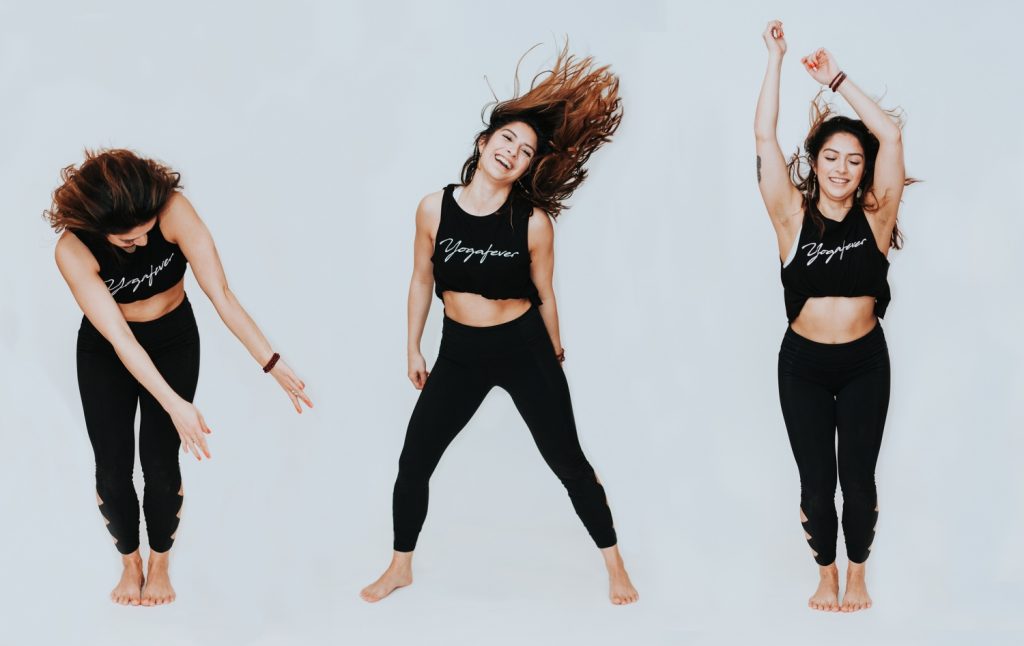
Buti Yoga can be explained as a new type of yoga with a hottest craze among women. It combines traditional yoga poses with jump training (plyometrics), tribal dancing, and burst of cardio-vascular movements .
It’s a classroom full of high-energy individuals with high intensity workouts and loud music. Buti yoga is far different than traditional yoga but focuses in the deep awareness of the mind and body’s connection. Buti is a practice of going within to discover your power potential.
The Buti Yoga system is marketed specifically to women as a female empowerment workout. This workout uplift, motivate and allow women to set aside ego and embrace their own beauty and build confidence.
Physical Benefits of Buti Yoga
The physical benefits differ from the traditional form of yoga because of the amount of movement and stress added to your body. It utilizes the method of Spiral Structure Technique (SST), which forms the basis for Buti yoga’s dynamic flow sequence. Spinal movements mean that it’s strengthening all parts of the abdominal muscle groups, from the inner to top, top to bottom. SST uses spinal movements to tone the core, rather than the linear movements found in many yoga practices. These spiral movements are thought to be more appropriate for a woman’s body. The amount of sweat is considerable in comparison to a traditional yoga classroom. During one class, one can burn 800-1000 calories.
How is Buti Yoga Unique ?
Buti Yoga creates the link between traditional and modern yoga practices while adding unique dance moves to keep the audience active and more interested. In Buti Yoga, the major movements are designed to activate all the abdominal muscle groups using the Spiral Structure Technique (SST). It not only prioritizes transforming the body from the outside, but helps to unify and balance body, mind, and soul. Buti yoga intends to tone the core and energize the divine feminine energy inside.
Through Buti yoga, the Divine feminine energy also called shakti that lies dormant at the spine gets released through exercises such as hip rotations, or powerful yoga movements, to sculpt and mold the body from the outside, incorporating the strong feminine power from within.
Who Created Buti Yoga?
Celebrity trainer Bizzie Gold founded Buti Yoga in 2010, creating it as a way to use movement to heal her body. Known for coaching and working with celebrities to shape their bodies for Hollywood, Gold infuses all her teachings and advisory services with the core belief that people should build the world they want to live in, not just complain about it. Her empire has grown to include over 1,000 instructors across more than 15 countries worldwide. Buti Yoga is generally marketed towards women as a tool of empowerment.
Buti came from the Indian Marathi word that means “the cure to something hidden or kept secret.” Buti yoga is a Shakti Awakening yoga practice that fuses power yoga, tribal dance, and plyometrics into a high-intensity workout. It is empowering a growing tribe of women around the world. It created a deeper connection between the body, mind, and soul.
Bizzie wanted to create a yoga that tones and sculpts the entire body while facilitating complete inner transformation, encouraging the power, confidence, and knowledge to know we can help ourselves.
What are the spiritual and emotional benefits of Buti Yoga
Buti yoga focuses on removing the blockage in our chakras, especially in the first and second chakra. They are responsible to activate our sexuality, power, and confidence. We all are born with these qualities. The result of this blockage usually leads to tighten hips and closed minds.
The movement in Buti Yoga helps to open and align these chakras by cultivating a new awareness of our mind and body’s connection. It defines our views of ourselves and considers our potential and limits.
Is Buti Yoga only for women?
Buti Yoga is for both men and women, and it is designed to be an engaging, fast-paced workout that finds comfort in their sexuality. A lot of women are attracted towards the practice, but plenty of men have too. It is the practice of developing self love and confidence. The exercises aim to spiral the body, working into the core and stabilizing the muscles.
This can also be popular choice for women after childbirth, as the core stabilizing exercises can help women with diastatis recti-the abdominal separation women often experience during pregnancy.
What to expect during a Buti Yoga?
You can expect to have a best time in your life. You will feel far better physically, emotionally and mentally than when you came in.
The buti yoga welcome individuals from the different backgrounds of yoga as well as all ages. Here , we can see the individual just be starting yoga in their sixties or a teacher in their thirties and still in the classroom. That`s the beauty of the classroom.
This practice is quite challenging as intentional shaking, tribal dancing, and cardio-intense practice are done. It feels like the dance class, with a couple of traditional yoga poses chuckled along the way but it meets individuals at the level they are. Whether you are just a beginner or an advanced yogi, you can just attend a class and feel out of place. Partly because you don’t need to have a lot of yoga experience to prepare for this course.
You can expect music and most of women wearing shorts and sports bra. This clothing practice is intentional within the classroom as there is a mirror that helps patrons visually see abdominal muscles to know when they are fully activated and when they’re not.
Of course, if you don`t feel comfortable wearing these clothes, you can wear whatever makes you comfortable. It’s a practice to develop your self-love and self acceptance.
The class’s energy is high; you can expect shouting from the instructor, who will make patrons feels motivated with hoots to maintain engagement. Class runs about 60-90 minutes.
What are some moves of Buti Yoga?
When entering in the Buti Yoga class, expect more than the traditional yoga moves. Consider the most fast paced dance moves, with the jumping movements that will cause to produce good amount of sweat making you feel more awakened, relaxed refreshed and revitalized.
Climber: It works in the abdominal muscles, and strengthens the arms, back, and legs. To start this move, first, be in a plank position. Inhale to engage the core, and to drop the hips down. Exhale and slowly raise your hips, round the back towards the ceiling, keep your head lifted, pull the left knee towards your chest, and then return – alternative side.
Slide exercises: This mainly focuses on the legs, shoulders, abdominal muscles, and rear. Squat with feet together with a slight forward bend, keep palms together in front of the chest. Move right leg out towards the side, with toes touching the ground. Staying in the squat, extend the left arm diagonally overhead, while allowing the right arm to fall to the side- Alternative sides.
Straddle Exercises: These exercises stimulates abs, obliques and back while strengthening shoulders, arms and hips. For this exercise, you have to stand on your feet wider than your shoulder level. Keep legs straight but not locked. Lean backward and engage the upper half of the abs by taking inward. Extend both arms towards the sides at shoulder level and shift torso from the left to right . Repeat quickly from side to side.
Break it down: This exercise stimulates the abdominal muscles, and back and strengthens the butt and legs. To start, start with parting feet at shoulder length apart, bending over, and keeping the legs straight. Engage and move feet to the left and bend both knees. Drop right knees towards the center but keep lifted. With palms remaining on the floor, hop legs back.
Butt workout: This exercise strengthens abs, legs, butts, or hips. Squat with feet slightly apart, toes pointed outwards, resting hands on the top of your thighs. Inhale, squeeze the abdominal muscles, and push to pelvis forward. Then exhale, engaging the lower back muscles, and pushing the tailbone backward. Continue moving quickly between two positions.
Is Buti Yoga worth a try ?
It is obvious that it is a different approach to yoga than the traditional yoga and to answer that question depends on what the individual looks for when attending. For variety, and something fast paced, Buti yoga will deliver. As with any class, there is handful of pros and cons that depend on what someone is hoping to take away.
However, observing the praises, it seems like it’s worthy of giving it a shot. Not only on the physical aspect, it focuses on the emotional elements and insight alone.
The community that surrounds Buti yoga cultivate the idea of inclusively, self awareness, and promoting self- love. Surrounding people with like – minded viewpoints and perspectives that wish to build others up , support and encourage growth, we think it is always a positive environment that promotes the positivity. That is still something to try.
Yoga Postures for Relaxation
Himalayan Yoga Academy presents an article on ‘Yoga Postures for Relaxation’ considering the hectic lifestyle of the individuals. Daily we go through a lot of task and activities that makes us stressed and fatigued. Our bodies and mind become tired and we lose a lot of energy. The whole body becomes tired and we always look for ways of relaxation. Our daily life has become influenced by these modern lifestyles of working like machines which have made us tired from the body to mind. We need these relaxation yogic asanas to energize our vital energies and feel the relaxation from the whole body to mind. So here are Yoga Postures for Relaxation.
- Shavasana (Corpse Pose)
- Makarasana (Crocodile Pose)
- Balasana (Child Pose)
- Bhujangasana (Cobra Pose)
- Supta Matsyendrasana (Reclining Fish Pose)
Yoga Postures for Relaxation
1. Shavasana (Corpse Pose)
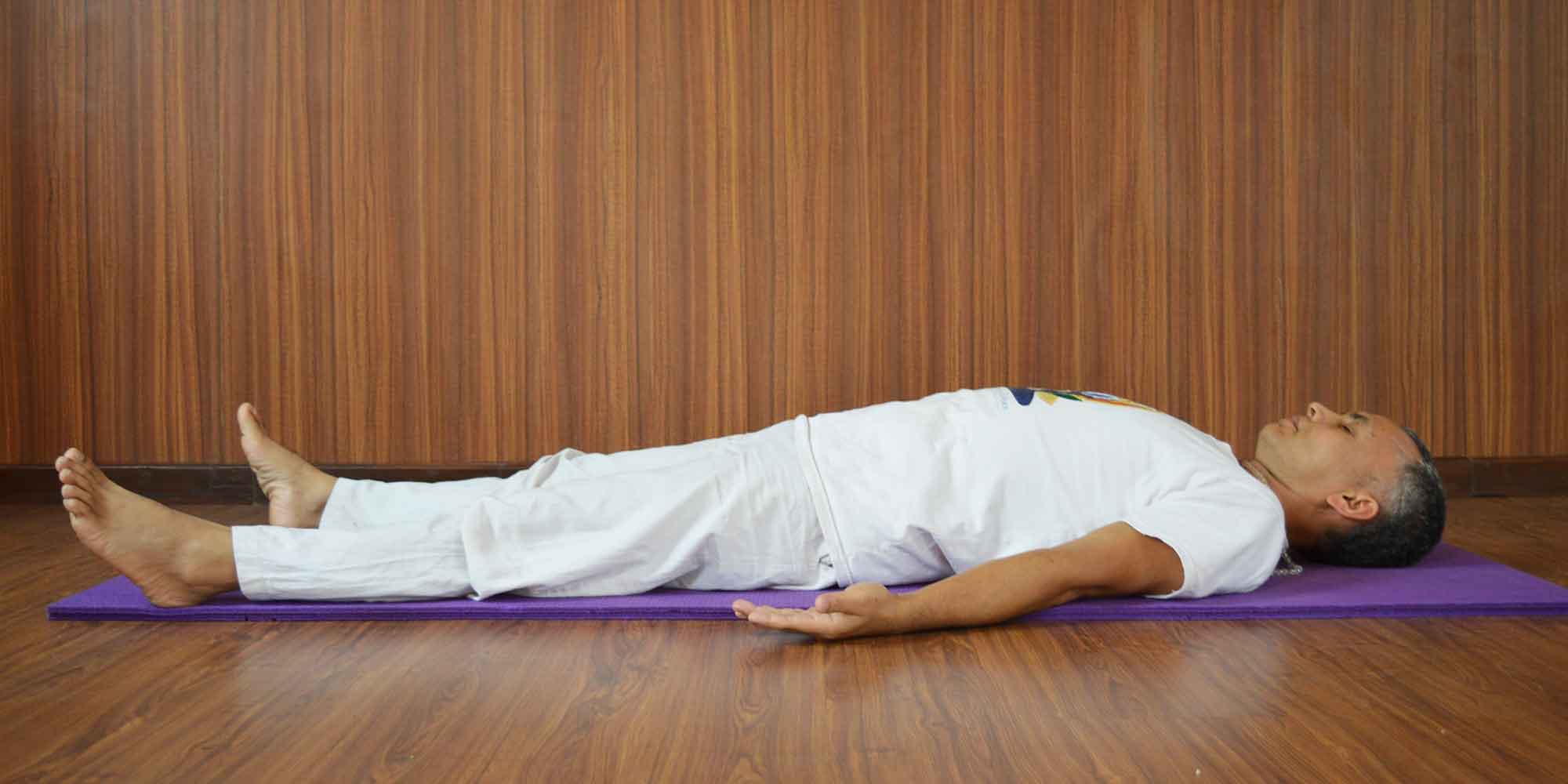
Shavasana, ‘Shav’ – Corpse/dead body; Asana – Pose; Corpse Pose, or is an asana in hatha yoga and modern yoga as exercise. It is often used for relaxation at the end of a session. It is the usual pose for Yoga Nidra meditation as well. Shavasana is the Sanskrit name for an important restorative asana. It is a key component of asana practice in almost every yoga tradition. It is most commonly used at the end of a sequence as a means of relaxation and integration. This pose gets its name from the recumbent posture of a dead body. It is a position of rest and is usually practiced towards the end of a yoga session. A session that typically begins with activity and ends in rest; a space or pause when deep healing can take place.
Shavasana is believed to stimulate the Muladhara (root) chakra since the entire length of the body is connected with the earth. Energizing this chakra through shavasana is deeply grounding, and cultivates the inner stillness and stability necessary for personal growth. While giving a class the teacher can also chant a mantra and ask the students to focus on the sound and the vibrations it produces in the body. This is particularly helpful for beginner students who find it difficult to calm their minds. Shavasana is particularly useful for a full-body reset. If you can enter into 5 minutes of proper Shavasana, you can remove the fatigue and stress from the body, get back up energized ready to carry on.
2. Makarasana (Crocodile Pose)
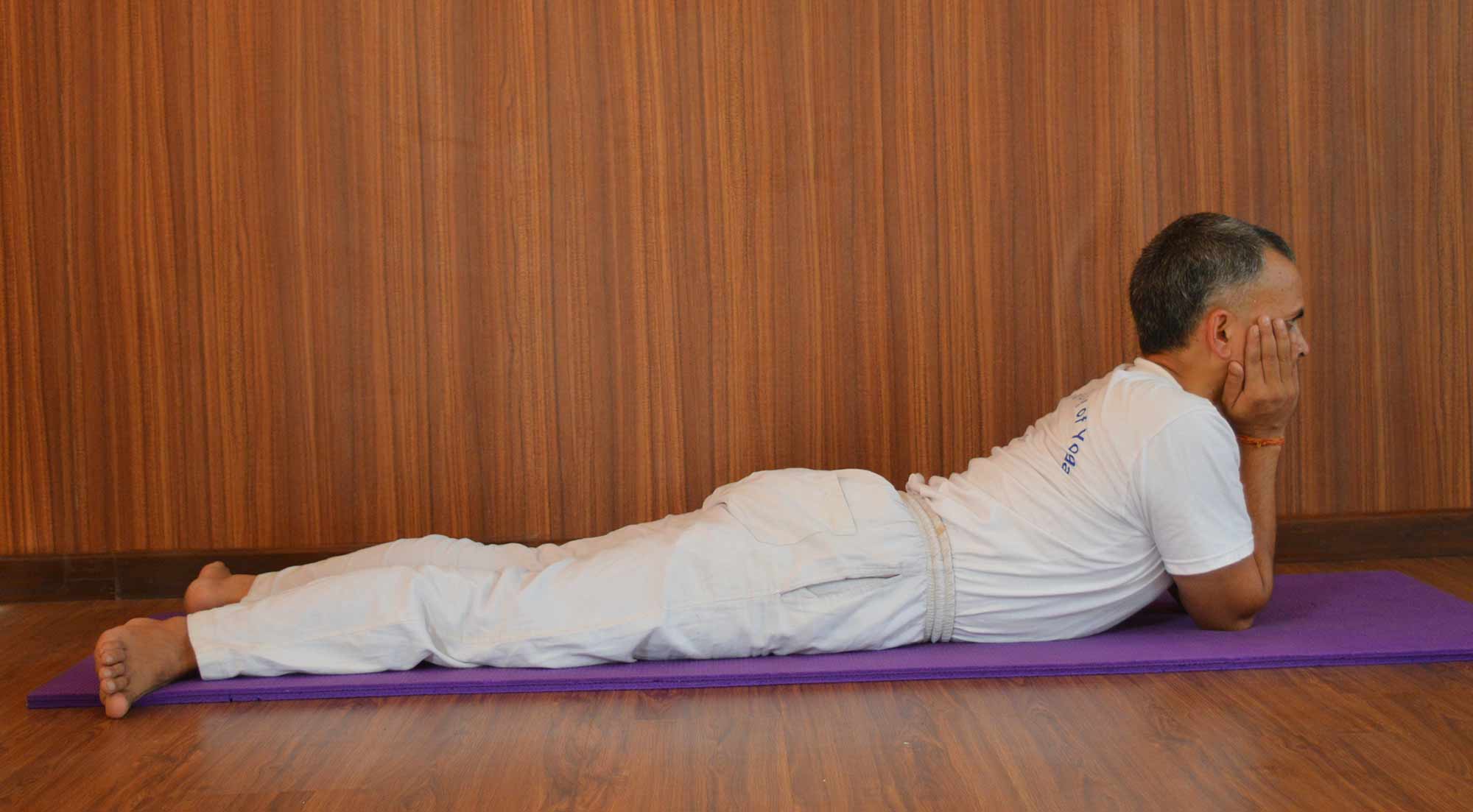
Makaraasana (मकरासन, “makara posture”) is a Sanskrit word referring to a type of posture (Aasana) used in Yoga. The name comes from the Sanskrit मकर makara meaning “crocodile” and आसन Aasana meaning “posture” or “seat”. Makaraasana is described in the 17th-century Gheraṇḍa Saṁhitā (Chapter 2, Verse 40). It is one of the thirty-two Aasanas (postures) taught in the second chapter of the Gheraṇḍasaṃhitaa: “Lie prone, the chest touching the ground and the two legs stretched out. Hold the head with the two arms. This is Makaraasana that increases the heat of the body”.
Makaraasana is a very useful and effective Aasana that is for all levels of practitioners. After and before traveling, walking, working, and also driving for a long time, it prepares and gives instant relief. It is affordable for all. It is bed exercise. It is the best pose for low back pain and cervical spondylitis as well. This pose is best for relaxing after doing other Asana.
3. Balasana (Child Pose)
Balasana is an easy yoga asana that can even be performed by beginners. In Sanskrit, Bala means child and asana refers to one’s posture. Thus, this pose is also called Child Pose. It is a ‘counter’ asana for many asanas and is performed preceding and following Sirsasana as it is a resting pose. This is often the first pose taught to beginners. It is easy to follow and highly beneficial. If perfectly performed, the body faces the floor in the fetal position (thus the name). It is also called Garbhasana and Shashankasana.
The key to yoga is regulated breathing. If you get that part right, the rest just flows. T. Krishnamacharya, in his paper ‘Salutation to the Teacher and the Eternal One,’ says, “One important thing to be constantly kept in mind when doing asanas is the regulation of the breath. It should be slow, thin, long, and steady: breathing through both nostrils with a rubbing sensation at the throat and through the esophagus, inhaling when coming to the straight posture, and exhaling when bending the body. ”This is one of the relaxation poses that relaxes your body.
4. Bhujangasana (Cobra Pose)
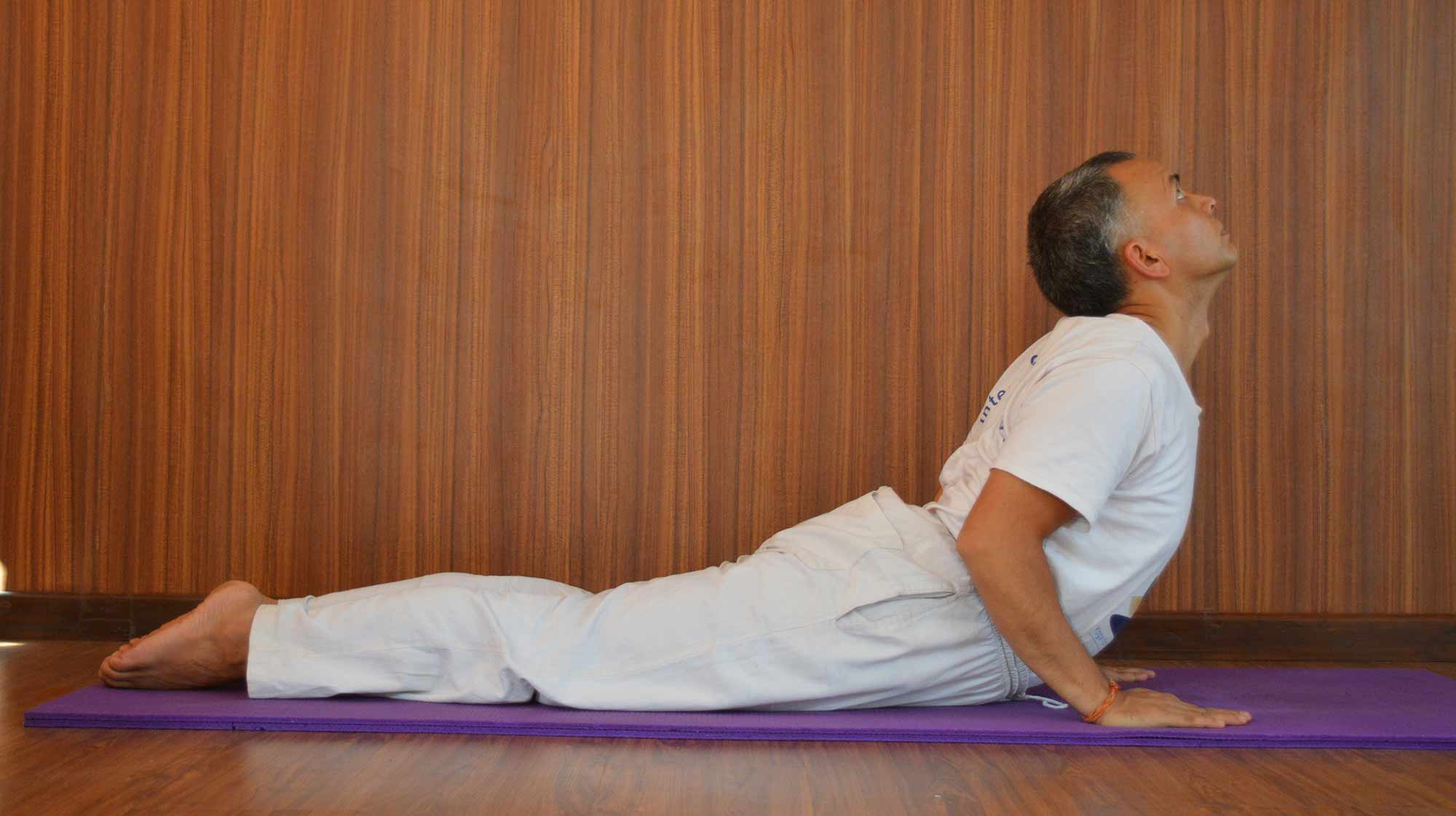
Bhujangasana (भुजंगासना) or the Cobra pose is one of the gentle backbends that helps relieve backache. It also helps in improving digestion and the overall health of the spine. Cobra pose is often used within a sun salutation or vinyasa as a transitional pose in a collection of asanas
Benefits
- Strengthens the back and legs
- Stretches the front of the body, opening the chest and shoulders
- Energizes and mobilizes the spine
5. Supta Matsyendrasana (Reclining Fish Pose)
Supine Spinal Twist — Supta Matsyendrasana (Soop-tah-MOTS-yen-drAA-SUN-aa) — is a restorative spinal twist, that lengthens and strengthens the spine while detoxifying the internal organs. Supta Matsyendrasana is a gentle posture that stretches the spine, shoulder, back, thighs, and neck and stimulates internal detoxifying processes, all while the body rests. Regular practice of Supta Natarajasana can relieve lower back pain and tight shoulders. The pose gets its name from the Sanskrit words, Supta, meaning supine or reclined, Matsya, meaning fish, Indra, meaning ruler, and asana, meaning pose.
Benefits
- Stretches the spine and quadriceps
- Massages the back and hips
- Lengthens, strengthens, and realigns the spine
- Encourages fresh blood flow to the internal organs
- Improves digestion
- Provides deep relaxation
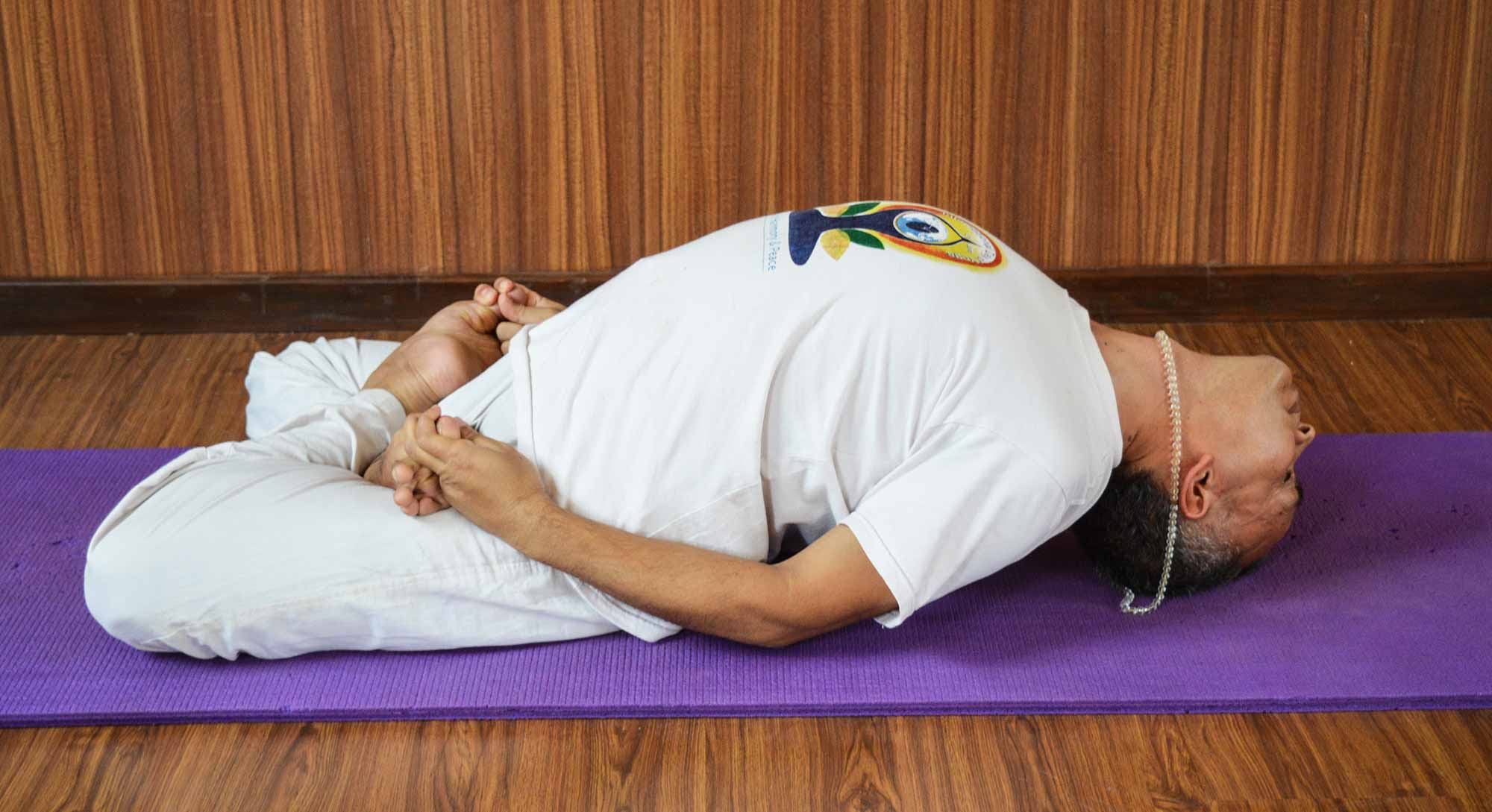
During 200-hour, 300-hour, and 500-hour Yoga Teacher Training in Nepal, we highly focus on yoga asanas for various situations like relaxation, etc. The teaching of which asanas are beneficial for a particular situation and which are suitable for another situation. We teach the teachers standing, sitting, supine, and prone asanas and also balancing asanas where we separate the asanas based on people’s wants and demands. So the students during the yoga teacher training course at Himalayan Yoga Academy will be able to demonstrate these super relaxation asanas with proper management of the alignment.
Cervical Spondylitis Yogic Management
Cervical spondylitis refers to the long-term stiffening and degeneration of the spinal column in the neck. It causes pain and muscular spasms in the back of the neck and shoulders. Tension headaches often accompany it. The pain may radiate into the shoulders, arms, and forearms, with sensations of pins and needles or tingling in the same areas. Neck movement becomes restricted, and individuals may experience muscular weakness, muscle wasting in the arms, giddiness, and ringing in the ears.
In some cases of spondylitis, doctors can easily see signs of vertebral degeneration in the neck on X-rays. However, paradoxically, an X-ray of the neck in many sufferers appears normal and healthy, showing little or no classical signs of degeneration. Visible degeneration includes the narrowing of the intervertebral disc space. It makes the area appear worn away, and the presence of new dense bony projections, called osteophytes. The foramina, or bony tunnels through which the blood vessels run, become narrowed. These blood vessels supply not only the spinal cord but also the rear portion of the brain, including the cerebellum and medulla.
Bony constriction of these vertebral arteries will cause decreased blood flow to the brain and faintness and giddiness will result. Similarly, bony overgrowth may impinge on the delicate cervical nerve roots emerging on the either side of the vertebral column in the neck. Aches and pain in the back and arms will result.
Cause of Cervical Spondylitis
Osteoarthritis of the vertebral bones of the neck may be precipitated by a previous injury. The neck is the most delicate part of the spinal column and is also one of the most vulnerable. Even a jerk due to a moving vehicle stopping suddenly can cause such an injury in the neck.
Damage can also occur as a gradual degenerative process, due to wear and tear of the joints, bones, muscles ad ligaments of the neck. Hence it is more common after middle-age and especially in the middle-aged sedentary workers who sit with their heads held rigidly forward the whole day.
Medical Management
Modern medicine mainly offers physiotherapy as a remedy for this malady, in addition to anti-inflammatory and analgesic (pain-relieving) drugs. Intervertebral injections of corticosteroids into painful areas often provide effective pain relief by damping down inflammation in the short term. However, many sufferers report that their overall state worsens after receiving a series of injections, with the pain becoming ultimately worse. Physiotherapy often provides effective temporary relief but rarely cures the condition. It is administered in the form of short-wave diathermy, massage, cervical traction, and the wearing of a cervical collar.
Yogic Management
Yogasana prove both palliative and curative in spondylitis. Especially in early and newly diagnosed cases, where minimal changes are detected in X-rays. Asanas act by reducing muscular tension and spasm and also by correcting posture. In addition, they restore pranic balance in the neck, leading to regeneration of damaged tissues and reversal of abnormal bone growth.
The following practice program is prescribed for sufferers of cervical spondylitis. It should be adopted slowly and carefully under skilled guidance, and then practised each morning.
Asana: Pawanmuktasana part 1, especially poorna titali asana (full butterfly), skandha chakra (shoulder socket rotation), and greeva sanchalana (neck movements). The neck rotation exercises should be performed carefully.
One can perform Vajrasana, Shashankasana, Shashank Bhujangasana, Bhadrasana, Shavasana, Akarna Dhanurasana, Makarasana, Marjari-asana, and Sarpasana.
Later on, as the range of pain free movement increases, the following asana can be gradually adopted: padmasana, matsyasana, yoga mudra, supta vajrasana, saral dhanurasana, and ardha matsyendrasana.
- Pranayama: Nadi shodhana stages 1 and 2.
- Meditation: Kaya sthairyam is most effective in spinal diseases and deformities. The head should be held erect but with the slightest tilt backward, the spine upright and shoulders relaxed. An experienced yoga teacher will demonstrate the position
- Relaxation: Yoga nindra in shavasana. A neck support in the form of a soft pillow may be necessary.
- Shatkarma: Neti Kriya daily
- Diet: as for arthritis
- Additional aid: a cervical collar is often helpful.
Yoga For Kidney Stones
What are Kidney stones? Why Yoga for Kidney Stones? Kidney Stones occur due to metabolic and dietary imbalances in the body and reflect disturbances in the body’s fluid and acid balance. Under different conditions, various substances precipitate out of the urine and form sludge, sediment, gravel, or large stones. Sediments or even stones may pass in the urine, accompanied by severe pain and blood (hematuria). Here we will learn some yogic kriyas for kidney stones.
Types of Kidney Stones
There are three most common forms of kidney stones:
1) Oxalate stones are likely to occur with persistently concentrated urine. Some people assume that a diet including too much oxalic acid-enriched foods is necessary for stone formation. Such foods are spinach, tomatoes, rhubarb, etc. But this is yet to be scientifically proven.
2) Calcium or Phosphate stones are large and staghorn shaped. They may form rapidly under excessively alkaline conditions, or where there is a disturbance of calcium metabolism. This could occur due to an imbalance of the parathyroid glands, excess of calcium food such as milk, or where calcium is being mobilized into the circulation from the bones of the skeleton.
3) Uric acid and urate stones may form due to acidic conditions. For example, consuming a diet too rich in protein sources such as meat, fish, and eggs.
Kidney Pain
Ureteric colic is an excruciatingly severe form of pain. It arises when a stone of relatively large diameter enters the narrow ureter. Then, begins its passage down towards the bladder. This pain radiates from the loin into the groin and may occur in recurrent bouts of two or three hours, or a single bout may continue for twenty –four hours or more. It usually comes on acutely, causing the sufferer to draw up his knees and roll about in agony. It is frequently accompanied by vomiting, profuse sweating, and a great desire to pass urine (strangury), though only small amounts are passed. This is a clear sign that the urinary tract is obstructed.
The acute bout of agonizing renal colic may require a morphine injection for immediate relief and surgery may be indicated in chronic cases where the presence of one or more large stones in the pelvis or the kidney is detected.
Cause of Kidney Stones
Several factors combine to lead to kidney stone formation. They usually occur in the presence of some metabolic disorder and when the urine remains persistently highly concentrated. An unsuitable diet containing excessive meat protein, acid-forming foods such as refined flour and sugar products, too much tea and coffee, chemically preserved and treated foods, and pungent and sour condiments and spices helps to precipitate stones.
An unhealthy diet congests and overloads the liver, and what the liver cannot effectively detoxify and metabolize is passed on to the kidneys. There it may cause inflammation or gravel and stone formation. The kidneys pass as much as possible into the urine, which is usually foul-smelling and highly irritating to the urinary bladder. The long-term effects of this may be inflammation, ulceration, and tumor formation in the bladder.
Other factors contributing to kidney stone formation may include excessive salt or reduced water intake. These leads to a highly concentrated urine obstruction to urinary outflow, and chronic tract infection, leading to stagnant urine. Lack of exercise, especially prolonged immobilization in a recumbent position during convalescence or recovery from injury, is another precipitating cause.
Yogic Management of Kidney Stones
Adopting the following yogic management program and general recommendations can prevent the formation of kidney stones and help remove old stones and urinary sediments. Those who have experienced mild or severe renal pain or have prevented recurrences of the condition can benefit from this approach. However, large stones may present a difficult therapeutic problem, and if yoga fails to provide relief, surgery may become necessary.
- Surya Namaskara: Up to six rounds.
- Asana: Trikonasana, vajrasana, marjari-asana, vyaghrasana, supta vajrasana, ushtrasana, shashank bhujangasana, shalabasana, ardha matshyendrasana, naukasana, ardha padma paschimottanasana, ardha padma halasana, chakrasana, merudandasana, hamsasana, mayurasana, koormasana, dwi pada sirsana, tadasana, triyaka tadasana, kati chakrasana, udarakarshanasana.
- Pranayama: Bhastrika with bandhas.
- Mudra and bandha: Pashinee mudra and yoga mudra, moola bandha, Vajroli mudra, uddiyana bandha.
- Shatkarma: Agnisar Kriya or Naulil is practiced daily. Shankhaprakshalana in an ashram environment. Laghoo shankhaprakshalana once a week.
- Relaxation: Yoga Nidra and abdominal breathe awareness.
- Meditation: Ajapa japa, nada yoga.
- Diet: A fresh wholesome natural diet is recommended. Fruit, juices, and lightly cooked succulent vegetables are recommended to alkalinize the urine. Avoid or reduce the intake of meat, eggs, fish, and milk products as they produce uric acid and waste in high concentrations. Avoid acid-forming foods and highly refined flour and sugar products such as cakes, sweets, biscuits, etc. Restrict the intake of tomatoes and spinach, which are high in oxalic acid. Decrease the intake of salt. Try to drink at least four liters of water per day, especially in the summer months. It is claimed that pears can dissolve kidney stones if up to a dozen are consumed per day.
- Fasting: In conjunction with increased water intake fasting is highly recommended in order to flush , cleanse, and purify a sluggish urinary system.
Further Recommendation
- A short walk each day is recommended, particularly after the evening meal.
- Try to get some outdoor exercise at least once or twice a week.
- Parsley tea is said to be very beneficial. Take a small glassful every three hours.
20 Different Styles of Yoga
Yoga can be defined as a group of disciplines including mental, physical, and spiritual exercises. Yoga is a mind and body practice. Various styles of Yoga combine physical postures, breathing techniques, and meditation or relaxation. Yoga is an ancient practice that may have originated in India. Yoga is now a popular form of exercise around the world. Our exposure to new ideas has altered the way we practice yoga. There are several options to consider for your Yogic style with the incorporation of new inventions and the adoption of a new contemporary style.
Whether you’re interested in spiritual or mental yoga whose goal is therapeutic healing or physical yoga that has endurance strength and flexibility. The list will give you the inside scoop on which style you fit the most.
20 Different Styles of Yoga
1. Kundalini Yoga
Kundalini yoga is a form of yoga that involves chanting, singing, breathing exercises, and repetitive poses. It is about connecting our spiritual energy. Its purpose is to activate your kundalini energy or shakti which helps us to gain a better awareness of ourselves. Kundalini yoga is the Yoga of awareness. It is a dynamic, powerful practice that is designed to give you an experience of your soul.
This is the spiritual energy that is said to be located in the base of your spine. This yoga focuses on using the energy which is stored in the base of the spine, drawing it up through the seven chakras. It brings balance to the body, mind, and soul. With regular practice, this form of yoga’s aim is to lead us to spiritual enlightenment and finally, your kundalini energy is awakened.
What to expect in Kundalini Yoga:
- Chanting
- Breathing exercises
- Sequence of postures
- Mudras and Meditations
2. Hatha Yoga
Hatha means the yoga to bring balance between the sun and the moon in you, or the Pingala and Ida in You. Hatha yoga is often compared to the Vinyasa classes as they share similar asanas and pair them with specific breathing techniques. The Hatha Yoga is a general term for any type of Yoga that teaches Physical Poses. It combines all the other types of modern Yoga and is a basic and classical approach to posture and breathing routines. It lengthens the muscles and refreshes the mind. The class is generally encouraged to move at a slower pace to ensure the proper execution of each pose.
What to expect in Hatha Yoga:
- Breathing work
- Sun Salutation
- Meditation exercises
- Yoga poses are like a series of twisting movements, bending, or folding.
3. Vinyasa Yoga
Vinyasa, also called “flow” because of the smooth way that the pose run together. That means all the movements in Vinyasa class are coordinated with your breathing, and there is no break in between the poses. It often allows the time in-between poses to rest and may vary in speed depending upon the instructor’s preference. Vinyasa is very versatile but one thing that remains constant is its ability to fluidly move and transition.
- Sun salutations
- Steady flow with synchronized breathing
4. Ashtanga Yoga
Ashtanga Yoga is a dynamic, flowing style that purifies the body and mind combining strength, flexibility, and stamina for a complete practice. It involves synchronizing breath with progressive and continuous postures, which provide internal heat while detoxifying the body. It is a rapidly moving discipline that flows from one move to the next with an inhale and exhale. The sequence is fast-paced and physically demanding. It is also called the eight limbs of yoga.
What to expect in Ashtanga Yoga:
- Sun salutations (A and B)
- Repeated postures
- Fast pace
- Sweating
- Dynamic Vinyasa Flow
5. Yin Yoga
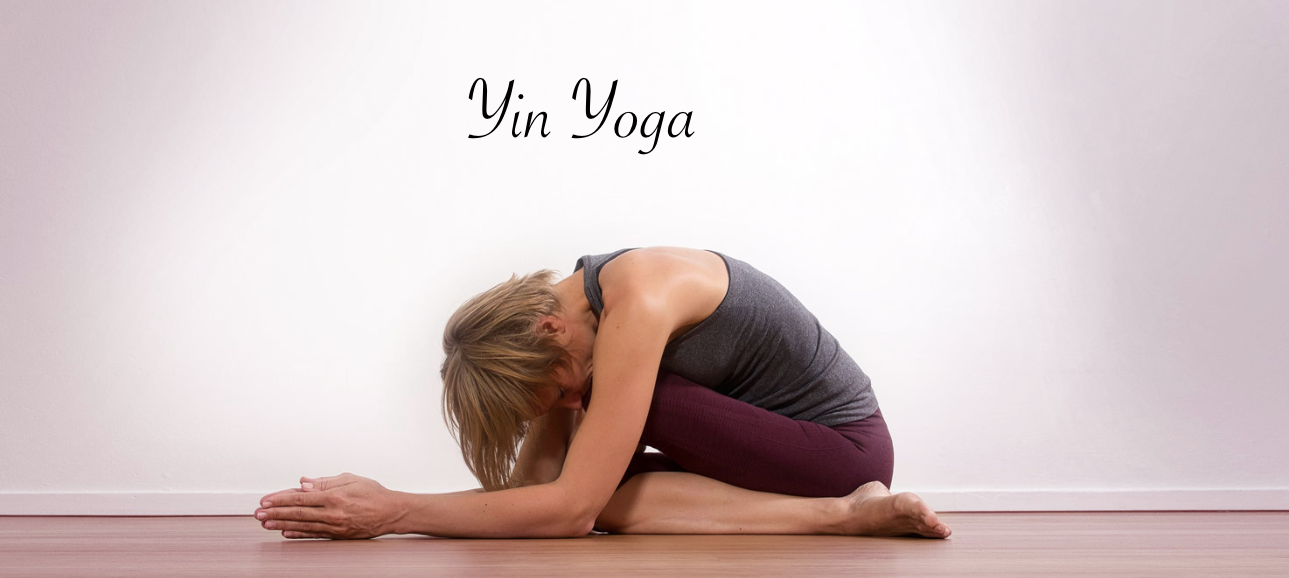
Yin Yoga is a slow-paced style of yoga that turns inwardly and targets the deepest tissues of the body, our connective tissues, ligaments, joints, and bones. It’s slower and more meditative, giving you space to turn inward and tune into both the mind and physical sensations of your body. You can expect this type of yoga to hold poses for a longer period which helps you strengthen and lengthen muscles and tissues.
The practice of Yin yoga is based on ancient Chinese philosophies and Taoist principles which believe there are pathways of energy that run through our body. By stretching and deepening into poses, we’re opening up any blockages and releasing that energy to flow freely.
What to expect in Yin Yoga:
- Focused deep breathing
- Slower more meditative form of Yoga
- Non-heated room
- Holding postures for a longer time
- Finding comfort in discomfort- focus on holding poses and turning inward
6. Iyengar Yoga
Iyengar yoga is a form of yoga that focuses on proper alignment and precise technique through slower movements and emphasis on quality over quantity. It focuses on finding the correct alignment in each pose with the help of a range of props, such as blocks, blankets, and straps. It combines asanas (poses), and pranayama (breath) to build strength, stamina, and flexibility. The ability to deepen a stretch is enhanced through its specific technique, which ensures that stability is prioritized first. It will help you to achieve mental, physical, and spiritual stability and strength. Iyengar yoga is a unique blend of both meditation and movement.
What to expect in Iyengar Yoga:
- Challenging Poses
- Breathing exercises
- Poses held for long durations
- Very technical in poses for alignment and stability
- Encouragement of props(to avoid injury risk) and achieve strength and balance
7. Bikram Yoga
Bikram yoga is a system of hot yoga characterized by a set series of postures and breathing exercises. It is performed in a room heated to a very high temperature which promotes detoxification and flexibility. Often the temperature is as high as 105 degrees with 40% humidity. It received its popularity in the 1970s in California. It includes standard series of 26 breathing exercises and asanas over a 90-minute class.
What to expect in Bikram Yoga:
- Heated rooms
- 90 minutes classroom
- Difficult breathing exercises
- Classes can be difficult for individuals completely new to yoga
- Difficult breathing
- Increases blood circulation and increases metabolism
8. Power Yoga
Power yoga is an energetic form of yoga that makes for the best yoga workout and the maximum health benefits. If you are looking for a form of yoga that gets the heart pumping then Power yoga won’t disappoint. The objective of this sort of yoga is to make sure that cardio sits at its core meaning that this yoga will get you moving.
What to expect in Power Yoga:
- High level of energy
- Designed for athletes- lots of movements
- Heated rooms
- Modified Ashtanga yoga practice
9. Restorative Yoga
Restorative yoga is a style of yoga that encourages physical, mental, and emotional relaxation. As the name suggests this form of yoga helps encourage healing and support for the body. It is a restful practice that is all about slowing down and opening your body through passive stretching. This is a relaxing method of yoga. A person spends a restorative yoga class in four or five simple poses that will calm and reset your entire body and mind to prepare you for deep relaxation. These poses will help its students activate the parasympathetic nervous system and by activation that help the PNS ‘ rest and digest.
What to expect in Restorative Yoga:
- Slow movements
- Lowering Blood pressure
- Releasing tension
- Increased feeling of awareness and relaxation
- Calm and controlled movements
- Use of props
10. Prenatal Yoga
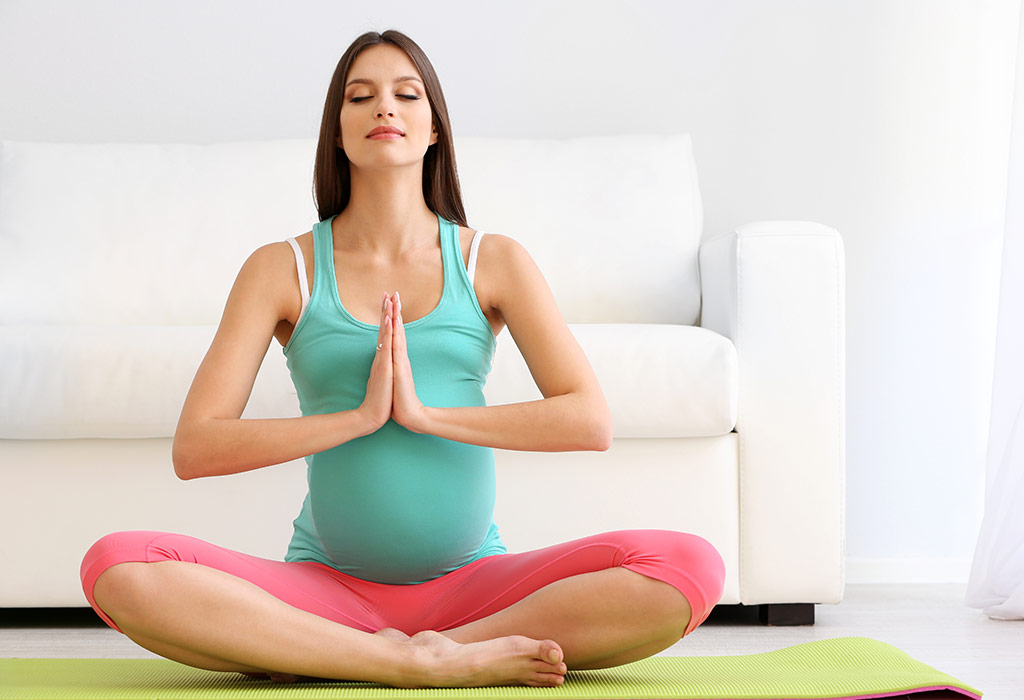
Prenatal yoga is a form of gentle yoga designed for pregnant women to practice during all three trimesters. The mixture of stretching, controlled breathing and mental focus offers a variety of benefits to expectant mothers. It is also suitable for getting back into shape after birth, this style will keep muscles strong throughout the pregnancy, and then ensure that they return to normal afterward. This style prepares the expectant mom mentally for birth. It is a great way to relax and stay fit. Exercises include pelvic floor exercises, breathing asanas, and ways to increase flexibility.
What to expect in Prenatal Yoga:
- May reduce symptoms of nausea
- Can help ease some body aches, especially in the lower body
- Fun, slow-paced postures that enhance flexibility.
11. Aerial Yoga
If you are interested in aerobatics and gymnastics then aerial yoga may be a perfect fit for you. Aerial yoga combines the physical practice of yoga with elements of acrobatics. Through the use of a suspended hammock constructed out of the silk material that is often used in aerial performances. Many postures that students struggle with, like backbends, are easier with this type of yoga. It improves your overall strength, health, and well-being. Many of its postures come from the inspiration of dance, some Pilates exercises, and of course aerobatic gymnastics.
What to expect in Aerial Yoga:
- Not suitable for pregnant women
- Great for the students who suffer from back pain that enables a deeper stretch not attainable on the yoga mat
- Many poses that are challenging on a yoga mat
- Students who don’t mind inverted yoga poses and asanas
12. Acro Yoga
Acro yoga is similar to aerial yoga but it doesn’t include hammocks or yoga swings. It includes many types of partners and group acrobatics in which at least someone is lifted. There are three roles that participants will choose, either the base:
An individual responsible for moving,
The flyer (the person that is being moved), and
the spotter (the individual who helps to ensure that movements are going smoothly).
What to expect in Acro Yoga:
- Working collaboratively with a partner or group
- Play and fitness
- Exercise I communication
13. Anusara yoga
Anusara means “flowing with grace”, “going with the flow” and “following your heart”. Anusara emphasizes “Universal Principles of Alignment” as the focal point of its practice which underlie all kinds of physical asanas. It encourages students to focus inward to balance their energy and enhance their connection to spirituality.
What to expect in Anusara Yoga:
- A flow that connects to breathing
- Fun- light-hearted classrooms
- Holding poses for a longer duration of time
- Vinyasa style poses
14. Sivananda Yoga
This philosophy maintains that proper breathing, relaxation, diet, exercise, and positive thinking work together to create a healthy yogic lifestyle. It is a complete healing system designed to help the body maintain a naturally healthy state. It focuses mainly on breathing, meditation, and spirituality. This practice is ultimately about acknowledging the awareness of the self.
What to expect in Sivananda Yoga:
- Deep focus on self-awareness
- Reduction of stress and increase in energy
- Classic Yoga postures
15. Jivamukti Yoga
Jivamukti is physical, spiritual, and ethical yoga that combines vigorous style with exercise. Anyone who wants to explore the more meditational and spiritual type of yoga will find this fulfilling. One of the main distinctions of Jivamukti Yoga is they encourage its participants to adhere to a vegan diet. This is because it is an element of their advocacy of Yama ahimsa or their exercise or commitment to non-violence.
What to expect in Jivamukti Yoga:
- Increased awareness of self and the divine
- A vigorous style of yoga
- Will increase flexibility, and strength and encourage balance
- Improves circulation and decreases stress
16. Yang Yoga
It is the type of yoga that focuses on engagement and warming of the body which helps muscles to build up strength and increases blood circulation. Yang Yoga is exactly the opposite of Yin Yoga. It includes dynamic and more active forms of yoga. This style of yoga has breathing exercises to complement the poses and enable the activation to release energy.
What to expect in Yang Yoga:
- Enhanced stamina and improved energy
- Improved blood circulations
- Relaxed body and mind
- Steady flow with synchronized breathing
17. Tantra Yoga
Tantra is a type of yoga that weaves together many different techniques such as mantra, meditation, visualization, mudras, pranayama, and initiation to study the inner universe through our human body. This is a very ancient practice that combines an energy lock and an energy center so that you build strength, clarity, and happiness in everyday life. It connects the human body with the universe. When practiced consistently, Tantra Yoga can help you get in tune with who you are, achieve your goals, and when done with your partner, deepen your relationship.
What to expect from Tantra Yoga:
- To connect the spiritual with the physical realm
- Increased energy and improve the relationship
- Identify weaknesses and turn them into strengths
- Ability to overcome blockages and gain control
18. Vini Yoga
This discipline focuses on students learning to adapt poses according to their own body needs. It is very gentle and healing type of yoga. It focuses heavily on breathing exercises alongside chanting and meditation. A Vini yoga sequence is a logically ordered, context-specific strategy that uses the tools of yoga to actualize an intention. It is an ideal way to create a positive direction of change in your lives.
What to expect in Vini Yoga:
- Longer holds
- Bandhas, chanting, and meditation
- Individualized practice
- Many sequences depend upon the instructor
19. Karma Yoga
Karma yoga is the yoga of action. This form of yoga is a way to develop a deeper connection to their spirituality. It’s about purifying your heart by learning to act selflessly in service of others. The one who practices karma yoga will receive satisfaction by balancing the body and mind and through this path will lead to a fulfilled life.
What to expect in Karma Yoga :
- Learning lessons of selflessness and self-acceptance
- Helps participants embrace discipline
- Practicing positive thinking/ pure thoughts
20. Buti Yoga
Buti yoga is a unique practice working on spiritual yoga by activating your inner chakras or energy while also getting a workout. You can get deeper core workouts and cardio sprints (mostly from tribal dance moves). This type of class has a sequence like a vinyasa class, just with a faster pace.
What to expect in Buti Yoga:
- Prepare to sweat
- Fast-paced sequences
- Incorporation of contemporary music
There are several types of yoga ranging from slow-paced to fast-paced or with some that are in-between. The alignment must meet your personal needs and serve you on a spiritual and physical level. Each style is about your individual preferences.
500 Hour Yoga Teacher Training
Whether you are only a beginner wanting to become a yoga teacher or one who already finished your 200-hour RYT and considering going for your advanced 500 hour yoga teacher training certification, this blog will explore a few reasons why every yoga teacher should pursue 500–hour yoga teacher training.
The most common path to becoming is to first register as RYT 200 and then join a 300-hours yoga teacher training. Alternatively, you can do all 500 hours at once. With advanced yoga teacher training, you will not only learn about the philosophy, yoga in-depth, and how to be a great teacher, but you will be more likely to start a yoga business on your own.
Yes, most of the teacher training will touch on the sutras, chakra system, anatomy, and pranayama/meditation. But most of the time spent is learning how to find your voices, and how to sequence a yoga session and practice teaching the actual yoga poses. The reason behind the popularity of 500-hour yoga teacher training you can get an extra 300 hours to dive deeper into philosophy, chakras, and anatomy.
Also, in most yoga studios, yoga teachers with 500 hours of RYT are required because of their deep knowledge and practice. After 500 hours of Registered Yoga Teacher Training, you will be able to develop your teaching style by choosing which category you are focusing on. Think of it as getting a Master’s degree in teaching yoga. This course is a life-changer that requires lots of effort, interest, plenty of time, and dedication to the practice. If you are still in the dilemma about earning your 500-hour yoga teacher certification, keep reading, everything you need to know about.
Why 500 Hour Yoga Teacher Training?
1. Use advanced yoga teacher training to develop your new styles of yoga
During 200 hours RYT, you will learn all the basics any teacher should know, from proper alignment to the teaching methodology and yoga philosophy. Honestly, there isn’t enough time to dive deeply into the psychological aspects and philosophy of yoga. That`s what a 300 hours RYT certification is for.
Students of 500-hour programs get the opportunity to delve deeper into the practice of Yoga as a whole. Pursuing an advanced yoga teacher training course will allow you to dig into things you want to learn Ayurvedic yoga, Yin yoga, yoga Nidra, meditation, and more. Therefore, an RYT 300 Hours program will let you spend a lot of time entering into the depth. It’s the perfect way to fill in any blanks left from 200-hour yoga teacher training. 2. Anatomy workshops
In advanced yoga teacher training, you’ll spend at minimum another 50 hours reviewing anatomy and applying this knowledge to asana alignment and sequencing. When you have a deeper understanding of the three different – planes of movement, specific muscle groups, and common injuries be aware of the class. It not only promotes your creditability but also this knowledge will also drastically change your practice. In the extra hours you get to spend on anatomy breakdown, you begin to realize the vastness of the human body and will learn many valuable modifications for your students.
2. You will be able to teach students with diverse needs
In 200 hours RYT, you`ll learn about the different asana its benefits, and way of doing but may not have the time to learn modifications for aging students, beginners, or students recovering from injury/diseases.
Now, that you have already known about the various asanas in 200 hours RYT, you can spend more time with your teachers about the intricacies of poses. You will learn about the small changes you can make that will have a major effect on your practice and healing.
3. You can know more about the historical and philosophical background of yoga
As yoga teacher, it’s our goal to know more about the origin of yoga so that we can respectfully teach yoga. When you do 300 hours of yoga teacher training, you’ll be able to spend more time studying an ancient text that is the foundation of yoga – the yoga sutras of Patanjali. You can get to know more about the Bhagavad Gita, where the giant text came from.
4. Improve your marketability as a Yoga teacher
Having the RYT-500 is impressive. It’s getting popular day by day. With advanced teacher yoga training, you can market yourself either as a teacher or a yoga business with a bit more confidence.
You’ll also have an opportunity to meet other students who want to go deeper into their practice. This networking opportunity allows you to further establish yourself in the yoga community. Additionally, you’ll get to spend time with experienced instructors who can mentor and guide you. You can establish your own yoga business.
Advanced 500 Hour Yoga Teacher Training:
We hope this blog gave you a few reasons to consider advanced yoga teacher training. If you’re feeling motivated to take the next step in your yoga teacher career and become an RYT-500, Please take a look at the advanced training at Himalayan Yoga Academy.
Top 10 Yoga Breathing Practices
This Breathing sounds so simple, but working with the breath is a Yogic technique that can completely change your life. Whether you are a beginner or an advanced practitioner, you can practice Pranayama, it is the regulation of the breath with certain techniques. Pranayama is generally defined as breath control. The word Pranayama is comprised of two roots: `prana’ plus `ayama’. Prana means ‘Vital energy’ or `life force’ and ‘ayama‘ means control. Thus the word pranayama means ‘extension’ or ‘expansion‘ of the dimension of prana. The techniques of pranayama provide the method whereby the life force can be activated and regulated to go beyond one’s normal boundaries or imitations and attain a higher state of vibratory energy and awareness.
“Pranayama teaches the aspirant to regulate his breathing and thereby control the mind.”
B.K.S. Iyengar
Top 10 Yoga Breathing Practices
1) Lion’s Breathe (Simha Pranayama)
Lion’s breathe is a simple breathing exercise that’s said to alleviate stress, eliminate toxins, strengthen the fine muscles of the neck and face, making it a natural yoga face lift. This method doesn’t need any counting or holding. So, it’s perfect for complete beginners and children. You can do lions breathing to help you to clear your throat if you have a dry mouth or throat tickle . It also helps to relax your facia muscles .
Follow these steps:
- Exhale all the air out of your lungs.
- Inhale deeply through your nose, tilt your head back slightly, open your mouth, super wide, and stick your tongue out while exhaling loudly like a roaring lion.
- Feel free to roar like a lion while exhaling. The audible release is what makes this breathing method more powerful.
- Practice this while sitting down or in a chair wherever you feel comfortable and try raising your arms up in cactus while inhaling. Lower them down on the exhale. This will make you more resilient to stress over time.
2) 4-7-8 Breathe
This breathing exercise is great for beginners and is very calming. It can be best for those suffering from anxiety. You can practice 4-7-8 breathing anywhere and at any time. When you’re first learning, try to practice at least twice a day , but you can do it as often as you wan.
Follow these steps:
- Sit comfortably with your spine straight.
- While breathing in, keep your tongue poised against the gum line on your front teeth.
- Close your lips and inhale through your nose for a count four.
- After that, Hold your breathe for seven seconds.
- Finally, Exhale completely through your mouth making a whoosh sound for a count of eight.
- This completes one cycle. Repeat it for four more cycles.
This powerful breathing exercise is a natural tranquilizer for the nervous system. Do it anytime when you feel stressed. It will become more powerful when you use it.
3) Ujjayi breathe (Ujjayi Pranayama)
You are more likely to listen to this Ujjayi breathing if you have ever been to a Vinyasa session. This means ‘ocean breathing’. The steadiness, sound, and depth of the Ujjayi breathe help to link your body, mind, and spirit to the present moment. This unification adds richness and depth to your practice. Ujjayi is particularly beneficial for calming the mind. It is known to be beneficial for those suffering from stress, insomnia, and mental tension.
To begin, Both the exhale and inhale should be through the nose.
- Inhale deeper than usual.
- Exhale slowly and contract your throat muscles .
- The sound should be gentle `HAAAAAH’. The breath should be so subtle it will likely only be audible to you. If it is loud, you need to exhale a little more gently.
4) Alternate Nostril Breathing (Nadisodhana Pranayama)
Nadi sodhana means `clearing the passage of circulation’, or Alternate Nostril Breathing,” is a simple yet powerful technique that settles the mind, body and emotions. This yogic exercise is safe for all the yogis of all levels and ages. So, it is done in the end or starting of every yoga classes .
Whenever you feel stressed, anxious about a conversation, or nervous about a project or presentation, this breathing exercise can be a quick and calming way to bring you back to your center.
There are several styles of Nadi Sodhana, but all of them serves the purpose of creating balance and regulating the flow of air through your nasal passage .
Follow these steps:
- Sit in any comfortable meditation posture.
- Keep the head and spine straight.
- Relax the whole body and close the eyes.
- Relax your left hand comfortable in your lap or in jnana mudra .
- With your right hand, bring your pointer finger and middle finger to rest in between your eyebrows, using them as anchors.
- The fingers we will be actively using are the thumb and ring finger.
- Take a breathe in and out through your nose.
- Close your right nostrils with your right thumb , inhale through the left nostrils slowly and steadily .
- Close the left nostril with your ring finger so that both nostrils are closed and retained.
Your breathe at the top of the inhale for a brief cause .
- Open your right nostril and release the breath slowly through the right side; pause briefly at the bottom of the exhale.
- Inhale through the right side slowly.
- Hold both nostrils closed.
- Open your left nostril and release your breathe slowly through the left side. Pause briefly at the bottom.
- Repeat 5-10 cycles, allowing your mind to follow inhale and exhale.
5) Bellow Breathe
This breathe exercise is best for boosting your energy. This is a vigorous practice, entailing a series of active inhalation and exhalation. This practice burns up toxins and stimulates the metabolic rate, producing heat and flushing out wastes and toxins. Also, it balances and strengthens the nervous system, including peace, tranquility and one pointedness of mind in preparation for meditation.
Follow these steps:
- Sit in a comfortable meditation posture with the hands resting on the knees in either chin or jnana mudra .
- Keep the head and spine straight, close the eyes and relax the whole body.
- Inhale and exhale forcefully throughout the nose.
- Immediately afterwards breathe in with the same force. Forceful inhalation results from fully expanding the abdominal muscles and forceful exhalation from firm contraction of the abdominal muscles.
- Continue in this manner, counting 10 breaths.
- Take a deep breath in and out slowly.
- This is one round. Practice up to 5 rounds.
6) Three part breathing
The three parts are the ‘abdomen’, ‘diaphragm’, and chest. This exercise is good for insomnia, anxiety, and frustrating situations .” You can also practice this on or off the mat. Three-part breathing also helps you to calm your mind and muscles.
Follow these steps:
- Sit in a comfortable position.
- Place one hand on your chest and other on your belly.
- Inhale into your upper chest, and then expand the air into your belly. Your belly should feel like a big balloon.
- Exhale from the belly first then, the upper lungs.
- Repeat as needed. Be sure that the breath is smooth.
7) Sheetali Pranayama (THE COOLING BREATHE)
Sheetali pranayama also known as cooling breathe. It is the breathing practices that cools the body and affects important brain centers associated with biological drives and temperature regulations. Sheetali pranayama soothes and calms the mind-body by activating powerful evaporative cooling mechanism on inhalation. But do not practice it in a polluted atmosphere or during cold weather.
Follow these steps:
- Sit in any comfortable meditation posture.
- Close the eyes and relax the whole body.
- Extend the tongue outside the mouth as far as possible without the strain. Roll the sides of the tongue up so that it forms a tube. Practice a long, smooth, and controlled inhalation through the rolled tongue.
- At the end of inhalation, Draw the tongue in, close the mouth, and exhale through the nose.
- Practice yogic breathing throughout.
- The breath should produce a sucking sound.
- A feeling of icy coldness will be experienced on the tongue and the roof of the mouth.
This is one round .
The duration of the inhalation should gradually become longer to increase the cooling effect . Gradually increase the number of rounds from 9 – 15 .
8) Bhramari Pranayama
Bhramari pranayama also known as humming bee breath, is one of the best breathing exercises to free the mind of agitation, frustration, or anxiety and get rid of anger to a greater extent. Bhramari relieves stress and cerebral tension, and so helps in alleviating anger, anxiety, and insomnia, in increasing the hearing capacity of the body. It strengthens and improves the voice. The vibration of the humming sound creates a soothing effect on the mind and nervous system.
Follow these steps:
- Sit in a comfortable meditation asana.
- Close the eyes and relax the whole body.
- The lips should remain gently closed with the teeth slightly separated throughout the practice. This allows the sound vibration to be heard and felt more distinctly.
- Raise the arms sideways and bend the elbows, bringing the hands to the ears. Use index or middle fingers to plug the ears or the flaps of the ears may be pressed without inserting the fingers.
- Bring the awareness to the center of the head. Keep the body still.
- Inhale through the nose.
- Exhale slowly and in a controlled manner while making a deep, steady humming sound like that of the black bee.
- The humming sound should be smooth, even and continuous for the duration of the exhalation. The sound should be soft and mellow.
- At the end of exhalation, the hands can be kept steady or returned to the knee and then raised again for the next round.
- Both inhalation and exhalation should be smooth.
- This is one round.
9) Kapalbhati pranayama (Skull shining breathe)
Kapalbhati has a cleansing effect on the lungs and is a good practice for respiratory disorders. It balances the strengthens the nervous system and tones the digestive organs. It purifies the nadis, removes sensory distraction, energizes the mind, for mental work, and removes sleepiness.
However, this breathing practice should not be practiced by those suffering from heart disease, high blood pressure, vertigo, epilepsy, stroke, hernia, or gastric ulcer. It is not recommended during pregnancy.
Follow these steps:
- Sit in a comfortable meditation asana. The head and spine should be straight with the hands resting on the knees in either chin or jnana mudra.
- Close the eyes and relax the whole body.
- Exhale through both nostrils with a forceful contraction of the abdominal muscles.
- The following inhalation should take place passively by allowing the abdominal muscles to relax .
- Inhalation should be spontaneous recoil, involving no effort.
- After completing 10 rapid breaths in succession, inhale and exhale deeply. Allow the breathe to return to normal.
- This is one round. Practice up to 5 rounds.
10) Breathe of Fire
This breathing practice is a little more advanced. Do not practice it if you reverse breathe. Reverse breathing is a very common phenomenon among beginners. Before doing this breathing practice, make sure you are inhaling from the bottom of the lungs to the top, and exhaling from the top of the lungs down.
Begin practicing for 1-3 minutes at a time. This practice can make you dizzy. So, it`s best done at home. Sit in a comfortable meditation position.
- Hands sit comfortable and loose on your knees. Close your eyes and exhale completely.
- Feel your belly expand and contract on inhale. Focus on the sensation.
- Use the diaphragm to quickly pump the breath in and out.
- Close your mouth and start pumping the air through your nose.
- Keep in mind, that this breathing method is not meant for children, menstruating women, or pregnant women.
This powerful breathing practice works by rapidly draining old, stale air, from your lungs, and invigorates your body with fresh oxygen. There is no doubt these breathing exercises will flood your body with natural feel-good natural chemicals and the increase in oxygen can help your body dispose of cancer cells.
Transcendental Meditation in Nepal
Meditation is a practice that we have at least heard at one point in our lives. Be it through social media, advertisements, texts, and books or we have seen or heard the word. So, what exactly is mediation, and why it is popular among people? Considering all the health benefits it offers, it’s no surprise that an increasing number of people use it. There are even many of its types that have been classified along with their natures and characteristics. Mindful meditation, spiritual meditation, Transcendental meditation, and Loving-kindness meditation are some of the meditation types. Each type has its character, history, and origin. These have their importance as they came into existence at various times, through various regions and various civilizations.
Simply, meditation is the act of remaining in a silent and calm state for a period. In other words, meditation is the process of focusing and channeling their spirituality to a center by calming the mind and making the body still. The practitioner attempts to get beyond the reflexive “thinking mind into a deeper state of relaxation or awareness. Meditation is practiced in numerous religious traditions. Meditation plays a salient role in the contemplative repertoire of Hinduism and Buddhism. It helps you to get in touch with your deeper self. Many meditation practices do not follow this standard definition of yoga. There is walking meditation which does not follow the typical staying still while performing meditation.
Transcendental Meditation / Silent Mantra Meditation in Nepal
Transcendental meditation refers to the specific form of silent and a mantra meditation. It promotes a state of relaxed awareness, stress relief, and access to higher states of consciousness, as well as physiological benefits such as reducing the risk of heart diseases and high blood pressure. This technique became more popular when the transcendental meditation movement occurred.
Transcendental meditation was invented by Maharishi Mahesh Yogi in the 1950s. He first introduced the technique in India and along with the technique also introduced the transcendental meditation movement. In 1955, the Maharishi began publicly teaching a traditional meditation technique which is called Transcendental deep meditation and later renamed” Transcendental Meditation”.
Transcendental meditation is practiced 15 to 20 minutes a day once or twice depending upon you and your timetable. However, the standard practice is twice a day which if one can complete is good. Transcendental meditation has been described as both religious and non-religious, as an aspect of a new religious movement, as rooted in Hinduism, and as a non-religious practice for self-development.
Hearing the mention of mantra people get the idea that Transcendental meditation is a type of religious meditation because the standard definition of mantra is a religious one. For those who believe in Hinduism Transcendental meditation is a religious one as it is based on or attached to the religious techniques of Hinduism. However, if you are a non-religious person also then transcendental meditation is for you. It is a non-religious method for relaxation, stress reduction, and self-development. It doesn’t matter if someone takes it as a religious path or some take it as a path of self-development or taking either part is fine.
Maharishi Mahesh Yogi
Maharishi Mahesh Yogi was an Indian yoga guru, known for developing and popularizing Transcendental Meditation, and for being the leader and guru of a worldwide organization that has been characterized in multiple ways including as a new religious movement. He was born on January 12, 1918, in India. The date is filled with new mysteries as it is used mostly to define his birthday, but many have doubts about the authenticity of this date. This is due to the fact when an individual moves on the way to becoming a Yogi, they sever their connection with the family and society. To be on the yogic path one must leave all their belongings, materials, and relations also. This is the very reason that the name given to Maharishi Mahesh Yogi is also not certain and is varied with sources.
The Early Life of Maharishi
Maharishi studied Physics at the University of Allahabad. He earned a degree in Physics from this University in 1942. Before following the spiritual life and yogic path he tried his life in one or two things here and there. However, his destiny and his true passion lie elsewhere, he had not realized that till now. He felt increasingly attracted to the spiritual life. He joined the Jyotir math and became a disciple of Swami Brahmananda Sarswati. It is also said that it took more than two years to consider Brahmananda Sarswati to take Maharishi as the disciple of the path. He started calling himself Bal Brahmachari Mahesh. Maharishi says that his life truly began in 1940 when he met his master. He was with his Master till the death of Sarswati in 1953.
Maharishi Mahesh Yogi and Transcendental Meditation
After the death of the Maharishi’s guru, he thought of teaching his learning to the world in 1955. So began teaching traditional meditation technique called Transcendental deep meditation to India and the world. He also assumed the title “Maharishi” which means great sage and is quite common amongst Indian Gurus who have achieved great spiritual capacity.
Transcendental Meditation Movement
In 1957, he founded his first organization the Spiritual Regeneration Movement. There have been many related organization, they tend to get grouped under the heading of Transcendental meditation Movement. The growth in Transcendental Meditation movement was rapid especially in 1960s when the counterculture made meditation and eastern spirituality more appealing and in the public eye. Many high profile celebrities were attracted to the movement.
Process of Transcendental Meditation
Transcendental Meditation involves repeating a mantra silently for 15-20 minutes (or longer) in a quiet, dimly –lit room with no distractions or music. Before starting make sure you turn off your phone or put it on silent. You can also light candles or burn incense to make your meditation space more comfortable. This meditation involves simple steps of 7 to 8, which collectively completes the meditation.
Then follow these steps:
- Sit in a comfortable position either in the chair or in the floor with your hand on the lap.
- Take a deep and slow breath and relax your body and mind so that your body goes through the meditation period efficiently.
- Closing your eyes during the whole period of time is one of the compulsory thing about Transcendental meditation.
- Silently repeat the mantra in your mind continuously for 15-20 minutes. This could be a Sanskrit sound you learned from a meditation teacher.
- Focus on the mantra completely. If you feel yourself getting distracted, refocus your thoughts on the mantra.
- Just after chanting mantra, take a deep breath and start slowly moving your feet and palms. Now you are back to the world.
- Gently and slowly open your eyes.
- Relax and rest for a few minutes until you feel ready to get up. This concludes transcendental meditation.
Mantra for transcendental Meditation
Mantra selection can be a complicated process for some people, as there are thousands and thousands of mantras here. Search for positivity and balance in whichever mantra you choose. Few are believed to have massive spiritual and deity powers. Those who practice transcendental meditation for religious approaches also can use it. Om Nama Shivaya, Om Gan Gana Pattye Nama, Surya Namaha, Om Namo Narayan Aaya, etc. There are many to choose from, you can choose one, no need to think hard about it more than necessary. Those who are into transcendental meditation for self-development and are not religious can create their mantra if they like, the options are open and wide. To create a mantra first, go through yourself to find out want from transcendental meditation.
Your goal can be lots of things like confidence, spiritual strength, mental strength, and inner peace. First, figure out what you want through your meditation and make it your mantra. All types of meditation, including transcendental meditation, can have the following benefits:
- Reduce stress
- Improve focus and memory
- Improves quality of sleep
- Connection to the inner-self
- Improves productivity, and self-steem
- Improves pain management
- Decrease the risk of developing certain diseases
- Improve awareness
New Maharishi Vaastu Building for Transcendental Meditation
Our fourth Maharishi Vaastu Building project is almost complete as of January 2021. This project is a campus with four buildings to house 400 Maharishi Vedic Pandits and one building to serve as a Training Center.
Maharishi Vaastu architecture ensures that a building or community will have only nourishing influences on its occupants. This results from the use of several key natural law-based, Vedic principles: Right Direction, Right Placement of Rooms, Natural and Nontoxic Materials, Right Proportion, and Solar Energy, plus several external influences.