
AN ANCIENT YOGIC TEXT SHIVA SAMHITA
DEFINITION OF SHIVA SAMHITA
The “Shiva Samhita” is an ancient Sanskrit text about yoga and the aspect of Spiritualism. The name translates to English as “Shiva’s Compendium.”
The author of this text is unknown and the date of its writing is disputed. The most recent examinations have concluded that it was probably written before 1500 C.E. in the Himavat Kshetra (Himalayan Belt) and Mahabharata Hills.
Shiva Samhita in Sanskrit, शिव संहिता was composed more than five centuries ago and is considered a fundamental text of Hatha Yoga. Recording beautiful spiritual teachings found nowhere. Featuring photographs of the asanas and mudras described by the text, the Shiva Samhita is a strongly recommended, core addition to personal, academic, and community library Hinduism Studies, Yoga Studies, and World Religion Studies reference collections and supplemental reading lists.
SHIVA SAMHITA AND ITS MESSAGE
The Shiva Samhita is an ancient sacred text based on Raj Yoga, as seen by the Aadi Yogi or Aadi Natha Shiva. The Samhita serves as the applied yogic text of ultimate truth, guiding the ethical path to unite with the supreme power, not only through realization but also by experiencing the Paramatma (supreme soul) in the state of Samadhi or Yoga. The message was verbally conveyed to the Sages and seers who listened during their state of meditation.
Vedas, and Upanishadas are sources of whole knowledge in all disciplines and discoveries but it gives two central ideas as precious messages to all human beings that are “Satyam vada” and “Dharma chara”. These valuable sentences sort of the ultimate truth of Jnana Yoga, Bhakti Yoga, Kriya yoga, and Raja Yoga as well. Sanatana rite begins from these versions. Satyam Vada expresses to speak truth, to listen the truth and to act the truth. The truth is pervasive, ultimate, universal, non-dual, and classical.
Dharma chara expresses the act of ultimate truth to initiate human ethics and humor (Dharma) and Dharma aims the unification and the realization of the ultimate reality through the act of means and practice. The truth inspires us to achieve the ultimate knowledge from speech, listening, and inner campaign. Truth is the expression but not achievement. We need the act or karma to achieve this. The act for the achievement of ultimate truth is Dharma which is yoga. You will be enriched by this novel here at Himalayan Yoga Academy, Nepal.
SAMHITA AND YOGA
The “Shiva Samhita” is written from the point of view of the Hindu god, Shiva, writing to his consort, Parvati. It is one of the oldest surviving texts based on Hatha yoga and Raja Yoga. It is regarded as being the most complete set of writings on Yogic novels.
The text mentions eighty-four asanas, but only four are described in detail. It also covers five types of prana, meditation, Tantra, mudras, and yogic philosophy. The Shiva Samhita is beautifully written as a conversation between Shiva and Parvati, with Shiva symbolizing the creative and destructive power of the divine masculine, while Parvati represents the gentle, feminine creative power of the universe. The text delves into many esoteric details of Yoga practice, discussing eighty-four asanas, four of which are described in detail, along with the benefits of mantra repetition, Yogic philosophy, five types of prana, tantric practices, and the art of meditation.
ASPECTS OF THE PRACTICE OF YOGA IN SAMHITA
The chapters of the Shiva Samhita cover various aspects of the practice of Yoga. The word “Yoga” means the union of a human soul with the divine. Some of the aspects that are covered in the chapters of the Shiva Samhita are several methods of liberation, eighty-four different asanas , the structure of our 72,864 nadis, types of prana and the awakening of the Kundalini Shakti energy. Additionally, the Shiva Samhita outlines the importance of having a true Guru who can awaken the Kundalini energy safely, as well as describing the subtle body and the movement of prana.
There is an explanation in the Shiva Samhita of hand mudras or sacred gestures, eleven of which may substantially support a Yoga student in reaching liberation. In the text, Shiva also clarifies obstacles that a seeker may encounter on the spiritual path and outlines techniques for working with both those obstacles and our shadow aspects. In addition, the Yoga of sacred sound or Nada Yoga is discussed along with the practice of mantra repetition as Mantra Yoga.
CONCLUSION
The Shiva Samhita is one of three major surviving classical treatises on hatha yoga, the other two being Gheranda Samhita and Hatha Yoga Pradipika. It is considered the most comprehensive treatise on hatha yoga, one that recommends that all householders practice and benefit from yoga. It tends to Raja Yoga in depth. Even though the text discusses many esoteric aspects of practicing Yoga, Shiva himself emphasizes that even an ordinary individual, or family, living in the middle of the maelstrom of the world can benefit from a regular practice of different means of Yoga. Himalayan Yoga Academy is becoming an international commune as a yoga Family with a motive to build human hearts. Here Swami Yog Subodh will surely take the meaning of Shiva Samhita knowledge to your hearts.
YOGASANA (POSTURE OF UNION)
Uttaanau charanau Kritvaa samsthaapyo-pari Jaanunoh;
Aasano-pari sansthaapya chottaanam karayugmakam !!2.44!!
Poorakair-vaayumaa-krishya naasaagramava-lokayet;
Yogaasanam bhavedeta-dyoginaam Yogasaadhane !!2.45!!
Place both feet on the opposite knees and keep both hands on the knees in chin mudra. With inhalation suck the air inside and hold the breath while gazing at the nose tip. Yogis must practice it daily. It is called yogasana.
Introduction
The word “asana” literally means a posture. Out of the countless asanas the body can assume, 84 have been identified as Yogasanas, through which one can transform the body and mind to achieve ultimate well-being. Yogasanas are not exercises; instead, they are subtle processes that direct one’s energy in a particular way. There are many differences between Yogasana and exercise.
An asana is a body posture, originally and still a general term for a sitting meditation pose. Later extended in hatha yoga and modern yoga as exercise, to any type of pose or position, adding reclining, standing, inverted, twisting, and balancing poses.
In Yoga, Aasana is called Yogasana, one of the units of Ashtanga or Hatha Yoga. But Gheranda Samhita, one of the 32 Aasanas, last one is named Yogasana which seems like Ardha-padmasana.
Technique
Yogasana, which has been described herein as Gheranda Samhita, is an easy form of Padmasana or Ardha Padmasana in which the feet are not the thighs but not right on top of the thighs close to the body. In this position, the hands are placed on the knees. Nasikagra drishti is then practiced. It is an easy Aasana that can be practiced by anyone, anywhere, for steadiness, japa, concentration, meditation, and also for a natural sitting position.
Benefits Include:
- Greater Clarity and Calmness of Mind
- Better Bodily Alignment and Balance
- Increased Sense of Awareness
- Improved Focus
- Provide Physical benefits, such as relaxation, increased flexibility or strength
- Break Compulsive and Addictive Patterns
- Yogasana is valued more for their mental, emotional or spiritual benefits, such as enhanced focus, mental clarity or connection to the higher Self. Deepening of Other Spiritual Practices
- Better Cellular Regeneration (Slows Ageing of the Body)
How Does Yogasnasa Help?
Yogasana can be a tool to raise our consciousness to increase awareness of how we live. Not just through training our minds but directing our energies properly and following a system that is in line with the human system. However, this will only work if it is taught and practiced properly. As this is a subtle process, even the smallest of details make a big difference.
Conclusion:
Yogasana is a way of aligning the inner system and adjusting it to the celestial geometry, thereby becoming in sync with existence and naturally achieving a chemistry of healthfulness, joyfulness, blissfulness, and above all, balance. It should be steady and comfortable.
MAKARAASANA (CROCODILE POSE)
Verse :
Adhyaasya shete hridayam nidhaaya, bhoomau cha paadau prasaaryamaanau;
Shrashcha dhritvaa karadandayugme, dehaagnikaaram makaraasanam tat. !!2.40!!
Lie with the chest on the ground and the legs spread out and hold the head in the arms. This asana, which activates the fire of the body, is called Makaraasana.
Introduction of Makaraasana
Makaraasana (मकरासन, “Makara posture”) is a Sanskrit word referring to a type of posture (Aasana) used in Yoga. The name comes from the Sanskrit मकर makara meaning “crocodile” and आसन Aasana meaning “posture” or “seat”. Makaraasana is described in the 17th-century Gheraṇḍa Saṁhitā (Chapter 2, Verse 40). Makaraasana (मकरासन) is one of the thirty-two Aasanas (postures) taught in the second chapter of the Gheraṇḍasaṃhitaa: “Lie prone, the chest touching the ground and the two legs stretched out. Hold the head with the two arms. This is Makaraasana that increases the heat of the body”.
Makaraasana is one of the selected 32 postures amongst 8,400,000 total mentioned by Shiva, according to Gheraṇḍasaṃhitaa 2.1-2, “In all, there are as many Aasanas as species of animals. Eighty-four lacs of them are mentioned by Shiva. Out of them, 84 are regarded as important and among these 84, again 32 are good (enough) in this world of mortal beings”.
To perform this asana, the yogi lies face down with the hands folded under the head. Place your palms under the chin, on the shoulders, or flat on the ground. The legs stretch out as far as possible, with the toes pointing forward. The whole body should stay relaxed.
There are many variations of Makaraasana and steps in order to perform Makaraasana that has been pinpointed below:
Variation 1
- Lie flat on the ground on the stomach.
- Raise the head and both the shoulders.
- Fold the arms in the front, place the right arm above the left arm, keeping the elbows pointing.
- Keep the left palm down on the ground and the right palm on the left arm, the fingers touching the inside of the elbow.
- Put the head down on the center point, where the right wrist is above the left wrist
- Closes both the eyes and relax the whole mind and body
- After a few moments, come back to the material world and become aware of the reality. Slowly release the posture.
Variation 2
- Lie flat on the ground on the stomach, big toes and heels touching each other
- Raise the head and both the shoulders. Place both the elbows on the ground keeping them shoulder width apart. Hold the chin in the palms to support the face.
- For being in coordination with the spine, keep both the elbows close
- In case, one experiences much pressure and stress on the neck, the elbows may be separated slightly.
- Close both the eyes and relax the whole mind and body. Feel both inhalation and exhalation deeply and get completely within yourself.
- After a few moments, come back to the material world and become aware of the reality. Slowly release the posture.
Anatomical Focus
The main anatomical focus of this pose is upon the spines, legs, forearms, forehead, and belly. It puts pressure on the belly as the person practicing this pose needs to lie down on his stomach.
Therapeutic Application
Makaraasana tends to possess therapeutic applications such as making use of the pose in order to get rid of fatigue, constipation, indigestion as well as low back pain. It also tends to control blood pressure as well as hypertension. It is very common asanas to recover different ailments and align the body.
Benefits of Makaraasana (Crocodile Pose)
Following are the health benefits of Makarasana which one may experience gradually with regular practice:
- Balances the functioning of abdominal organs.
- Improves the blood circulation in the body.
- Helpful in getting rid of stress, anxiety, depression, tension and fatigue.
- Quite helpful for people suffering from in cervical spondylitis, slipped disc, sciatica or other back ailments.
- Beneficial in all spine related problems.
- Highly beneficial for people suffering from asthma or other lung disorders as this asana elevates the breathing and helps in respiring easily. Very useful in Asthama, knee pain, and other lungs related problems.
- Stay healthy stay strong and get the best out of life.
- Stretches the muscles of the legs and hips.
- This pose is best for relaxing after doing other Asana.
Conclusion
Makaraasana is a very useful and effective Aasana that is for all levels of practitioners. After and before traveling, walking, working, and also driving a long time. It prepares and gives instant relief and is affordable for all which is also the bed exercise. It is the best pose for low back pain and cervical spondylitis as well. If you wanna learn new poses, then feel free to contact Swami Yog Subodh.
UTTANA MANDUKAASANA
Verse :
“Mandukaasana-madhyastham koorparaabhyaam dhritam shirah;
Etad-bhekavaduttaana-metaduttaana-mandukam. !!2.35!!
Adopting Mandukasana, the head is placed firmly on the elbows and the chest, abdomen and waist are lifted up like a frog. This is uttana mandukaasana. The practice of Uttana mandukaasana begins like Supta vajraasana.
Description of Uttana Mandukaasana
“Manduka” in Sanskrit means frog. The body in Uttana-Mandukaasana resembles an erect frog that’s why it is called ‘uttana mandukaasana’.
This asana is a variant of the Mandukaasana, and involves more stretching than the Mandukaasana. The Uttana Mandukaasana is commonly referred to as the extended frog poses, and has several health benefits to offer to practitioners.
Uttana Mandukaasana Technique:
- Sthithi (Starting position): Sit on the floor in Vajrasana. Place hands on the sides.
- Spread the knee.
- Take the hands over the shoulder and join the hands behind the head.
- Slide the other hand behind the back and try to couple it with the hand over the shoulder
- Maintain shallow breathing if unable to sustain a “breathing out” situation. Hold 3 to 10 counts.
- The drishti for this asana is Urdhva drishti (gazing into space or ceiling) or Brumadhya drishti (gazing between the eyebrows)
- Slowly, release the pressure on the back and bring the hands to the sides.
- Bring the knees together to Vajrasana position.
- Breathe deeply. Repeat 3 to 6 times.
Uttana Mandukaasana benefits:
- Improves abdominal strength
- The asana will benefit activation of the Svadishthana chakra and Manipura Chakra as well.
- The reverse arch results in strengthening of the entire spine – the lumbar, thoracic and cervical regions, lengthen the spine
- Tone the arms, strengthens the leg muscles
- Promotes lung capacity,
- This asana also strengthens the sympathetic and parasympathetic nervous system.
- This asana is effective is helping resolve menstruation problems, Improves reproductive health
- It should one practice Ujjyayi pranayama, there is enormous strengthening of the lower respiratory tract.
Therapeutic uses
- Uttana Mandukaasana cures asthma and other lung diseases.
- This posture is also useful for getting rid of menstrual cramps or pain.
- It has relieving effects on mental disorders, including stress and anxiety. People with cervical spondylitis need to practice this pose for relieving effects.
- In addition, it also heals back pain in the cervical, lumbar or thoracic areas.
- It also relieves neck and shoulder pain.
- Stretching the abdomen improves the functioning of the digestive organs and cures constipation or other digestive disorders.
- Uttana Mandukaasana also stretches the pancreas and regulates insulin secretion, which is beneficial in treating diabetes.
Uttana Mandukaasana contraindications:
- People with arthritis, hernia and back problems must perform this asana only under supervision of a physician.
- Do not perform this asana during menstruation or pregnancy.
How to reach the stretch
- Sit in Vajrasana and keep your knees wide. Let the great toes touch each other and keep the body straight.
- Then, cross both arms behind the head and place the hands on the upper part of the opposite shoulder blades.
- The chin should touch the chest wall like the Jalandhara bandha.
- The bandhas of Jalandhara, Uddiyana and Moola are also performed in this asana.
How to release the stretch
- To release, come back to the starting position and then relax.
Benefits of Uttana Mandukaasan
- It improves the lungpower, circulation in the walls of the chest and abdomen, and tone of the abdominal and shoulder muscles
- It also improves sciatica in some people
- Lungs become strong
- Improves digestive system
- Fats levels decrease near waist level
- Relieve stress
Rule for beginners
- Don’t exert yourself.
- Don’t force or overstretch.
- Toes should touch each other behind our body.
- Don’t try to hold your breath if you are not common with it.
CAUTION
- People with spinal cord deformities, disabilities of hip joints and severe backache don’t do this exercise.
- If you have suffered any spinal injuries or have done any back surgery then it should be avoided
- Person affected by Ulcer should avoid it
- Any person having knee problem should avoid it
- People suffering from high blood pressure or migraine should avoid it
- A person suffering from cardiac problems should avoid it
- If any abdominal surgery is done then one should avoid it.
Conclusion
Uttana mandukaasana is a body-relaxing yoga pose that leaves behind physical, mental, and emotional balance and provides well-healing effects on pain as well. It gives the complete fitting, and trimming to the whole body. It activates and stimulates the glands, nodes, and entire body organs.
Where to Learn It :
If you wanna learn this asana under proper guidance and become a teacher as well, then join our yoga teacher training in Nepal, taught and guided by Swami Yoga Subodh.
MANDUKAASANA (FROG POSE)
“Prishthadeshe paadatalaavangushthau dvau cha samsprishet;
Jaanuyugmam purushkritya Saadhyenmandookaasanam !!2.34!!
Bring both feet to the back, join the big toes and keep both knees in front. Thus is performed Mandukaasana.
Mandukaasana (Sanskrit: मन्दुकासन; IAST: Mandukaasana), or Frog posture is a group of seated asanas in Hatha yoga and modern yoga as exercise, all of which put the body in a shape like that of a frog. Another frog-like pose is Bhekhasana.
In Sanskrit the word “Manduk” means frog. In this pose, your body posture resembles a frog, so that’s why this Asana is called Mandukaasana. Mandukaasana is a simple Asana that anyone, regardless of age, can practice. In Yoga, people use many variations of Mandukaasana.
According to the Gheraṇḍasaṃhitaa, Maṇḍukaasana is one of the 32 selected postures among the 8,400,000 total postures mentioned by Shiva. The Mandukaasana in the Gheranda Samhita is also called Manduki Mudra. Shiva mentions 8.4 million asanas, as many as there are species of animals. He considers 84 of these asanas important and recommends 32 poses for regular practice to gain merits in the world of mortal beings.
The 17th-century Gheraṇḍa saṃhitaa, which mentions Maṇḍuka-Aasana, is one of the three classic texts of Haṭha-yoga, a major branch of Yoga. It shares similarities with the Yoga system taught by Patañjali but claims its mythical founder as Matsyendranaatha. This Gheraṇḍa Saṃhitaa is an encyclopedic Sanskrit treatise that describes thirty-two such Aasanas. In English, Mandukaasana is also referred to as the frog pose.
Traditionally, Mandukaasana is believed to open the Mooladhaara (Root) and Svadisthana (sacral) chakra. These chakras are the center of stability, survival, foundations, stilling, then, creativity, pleasure and enjoyment. Activating it promotes focus, productivity, and inner acceptance.
Methods of Mandukaasana (In Gheranda Samhita) or, Manduki Mudra
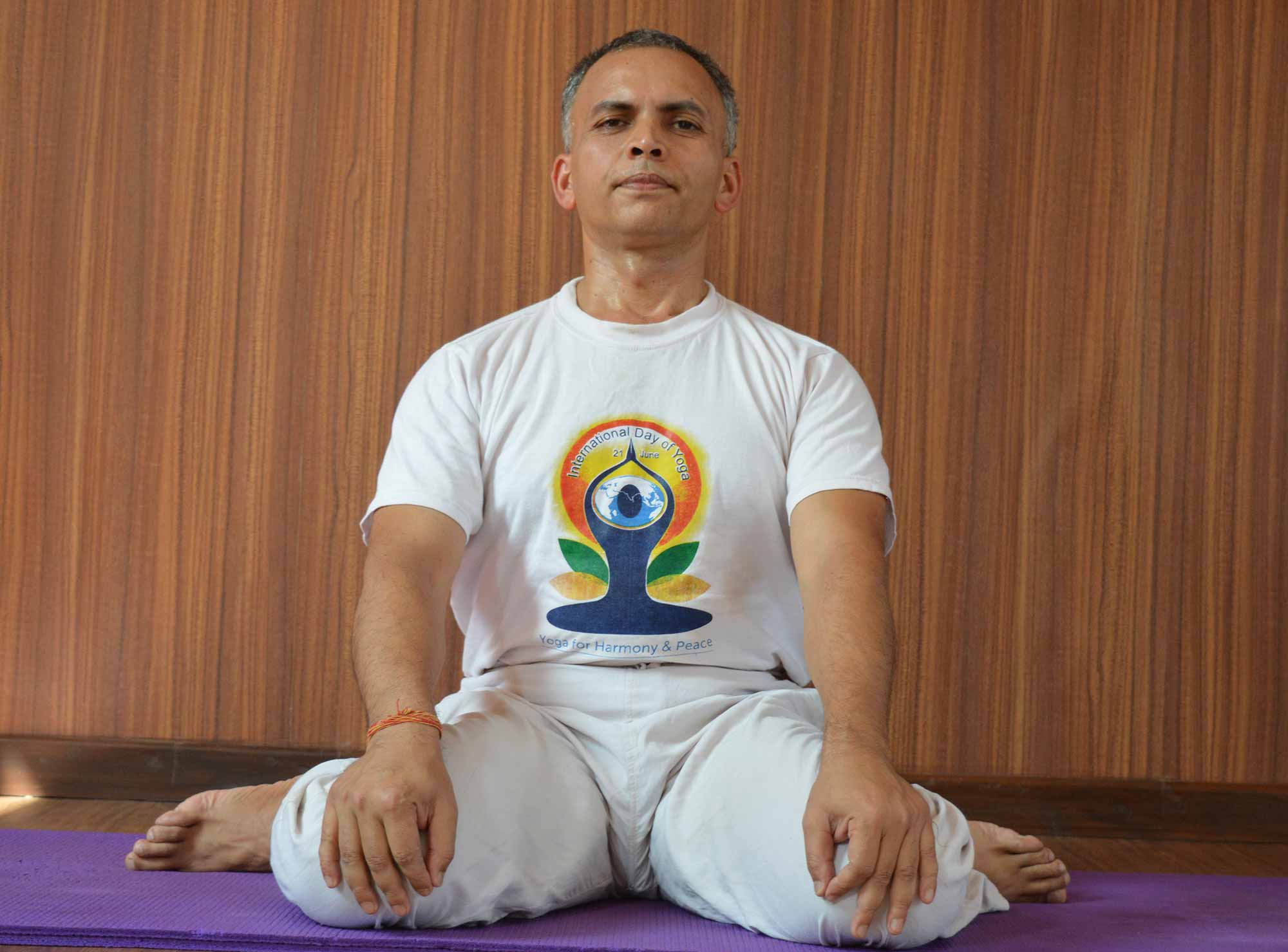
- Sit comfortably on your yoga mat.
- Take a few deep and slow breaths to relax your body.
- Sit in Vajrasana or the Bhadrasana or Viraasana
- Ensure you separate the two legs and sit.
- Take the feet apart as much as possible.
- Your perineum should touch the yoga mat.
- You can use a cushion or blanket under the buttocks to support.
- Keep your body straight while doing this Mandukaasana or Manduki Mudra.
- Keep the eyes closed and the whole body should be relaxed.
- Ensure you keep your mouth closed throughout the practice.
- Rotate the tongue and touch the soft palate.
You can be in this mudra for about 3-5 minutes depending on your physical fitness and body flexibility.
You might get the nectar flowing from the brain to the mouth.
Reaping the benefits from this Mandukaasana or Manduki Mudra will take a lot of effort and time.
It comes with regular practice of meditation.
Steps of Mandukasana (Frog Pose) – as common Aasana
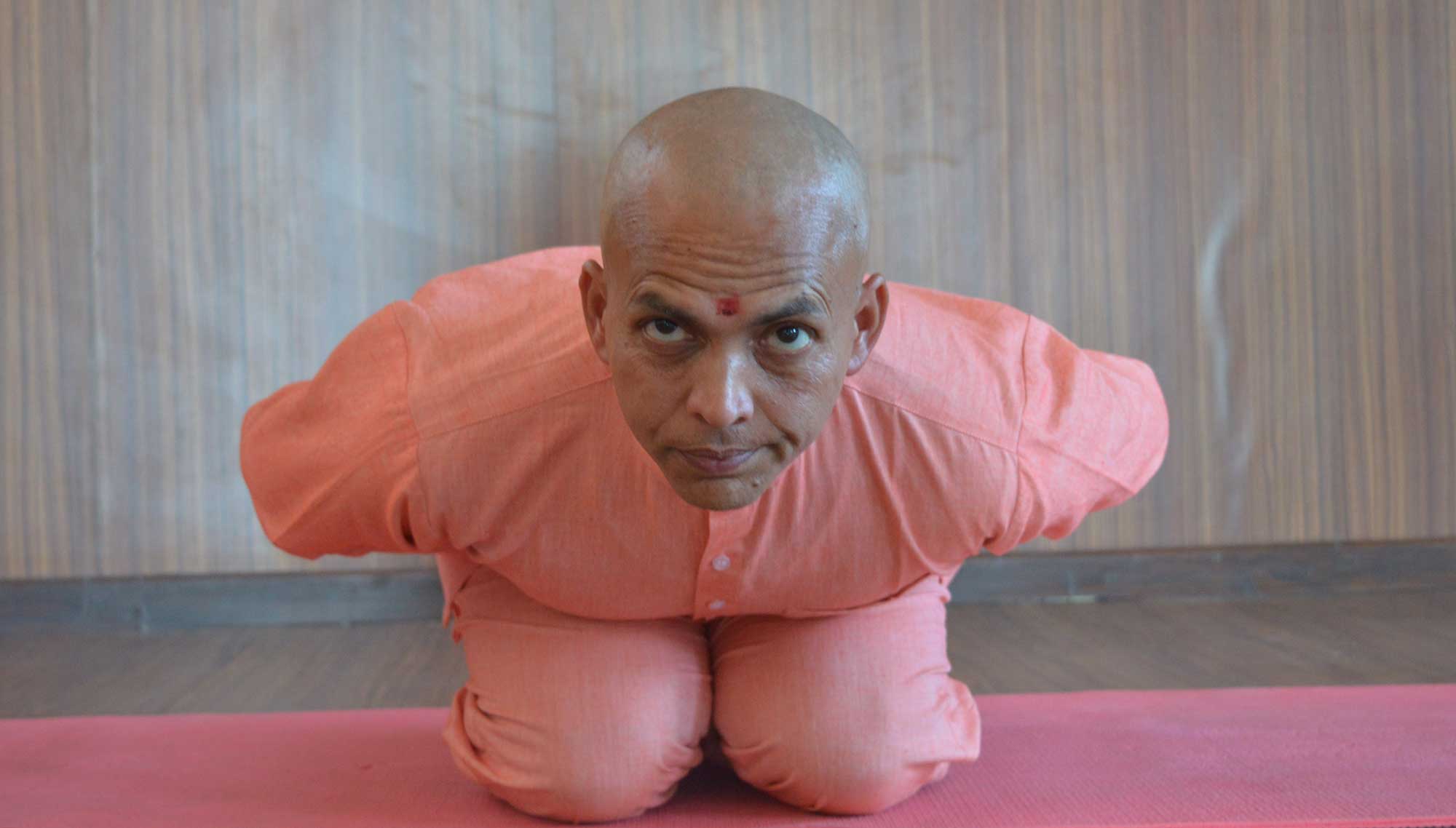
- Comfortably sit in Vajrasana (thunderbolt poses)
- Close the fists of both hands.
- While clenching the fists press your thumb inside with the fingers.
- While pressing the navel with your both fists exhale and bend forward.
- Hold the breath when you are in the position of bend forward and keep looking straight.
- Your chest will touch your thigh; Look straight and keep your eyes open
- Stay in this position for some time (hold the position as much as you can), Hold your breath if you can. Initially it will be difficult but you practice every day you will be able to do it for longer period. Or you can breathe slowly if you cannot hold your breath. inhale, and come back to starting position (Vajrasana).
- Now come back to original position in Vajrasan while simultaneously doing deep inhaling.
- Repeat this for three to five times as need and time.
Physical and mental Benefits of frog pose (Mandukaasana)
Mandukaasana gives you relief from diabetes, digestive disorders, and constipation. This pose improves the flexibility and mobility of the knee and ankle joints. It helps tone the muscles of the shoulder and abdomen. Regular practice of this pose increases your lung capacity.
1) Helps in treatment of constipation and digestion
2) Strengthen the Back, Hips, Knees, and Ankles
3) It is known for benefiting people suffering from diabetic as when we bend the pancreas gets pressed which is known for insulin secretion
4) Increases flexibility of thigh, hips and legs and also Reduces extra fat from thighs and hips.
5) Decrease the fats which are stored in lower part of body
6) Makes you back strong and stretch our spine
7) Removes gases which are in stomach
8) Makes our shoulder flexible
9) Helps in strengthening the forearm.
Health Benefits of Mandukaasana
1. Prevent Diabetes
2. Improve Digestive System and Cure the problems related to the stomach.
3. Relieve Stress, mild depression and Anxiety
4. Heals the joints, ankles and knee pain
5. Improve Heart Health and Circulation; It is beneficial in all types of cardiovascular diseases.
6. Reduce Fat from Belly, Hips, and Abdomen
7. Enhance Kidney and Liver Functioning
8. Soothes menstrual cramps
9. This would help stimulate the pineal gland in the brain which is responsible for involuntary actions.
Others- The asana makes you feel relaxed, calm the mind, therapeutic for asthmatics, awakens the Kundalini, and also improves sexual health by stimulating the sexual organs and enhances sexual performance as well.