
Common Night Shade: A Kidney Herb
Solanum americanum is an annual or short-lived perennial plant, erect and widely spreading, growing up to 150 cm tall. The plant is used as a vegetable, especially in Africa, where it is often called Common Night Shade. It was collected from the wild. In Sierra Leone, the lowlands of Ethiopia, Kenya, Uganda, Tanzania, Seychelles, and Mauritius it was reported for cultivated. It is a popular wild pot herb in Côte d’Ivoire and Cameroon, and in eastern Zimbabwe and Mozambique, the leaves are also eaten as a vegetable. It is also commonly found in Nepal. Many people can see it in many parts of their places lying everywhere.
Edible Uses
Young shoots and leaves – cooked. Depending on the bitterness, the cooking water is sometimes changed during the cooking. This is done especially for children – elderly people often appreciate a higher degree of bitterness and will therefore leave the flowers and young fruits, whereas people who object to the bitter taste remove them. To further reduce the bitterness, the leaves are sometimes served together with cooked amaranth, either separately or as a mixture. In Uganda, the leaves are steamed and the juice is collected and used in soups so that the nutrients are fully utilized. The leaves contain about 6990mg of beta carotene per 100g. Caution is advised, see the notes above on toxicity.
Medicinal Uses
The plant is antispasmodic and vermifuge. A decoction of the whole plant is used as a blood purifier, for treating inflammation, dissipating blood stasis, and expelling worms.
The plant is applied externally as a remedy for cardialgia, corroding ulcers, suppurating cancers, deep wounds, and skin diseases such as dartre, and for use in poultices for treating kidney pain.
The leaves are eaten raw to treat heart pains. The cooked leaves are said to have a heart-clearing effect.
The juice extracted from the leaves is used to relieve chronic conjunctivitis and related inflammations.
The pounded leaves are used to treat sores and other skin problems.
An infusion of the leaves and stems is used to improve kidney function.
A decoction of the root, mixed with lime juice and a pinch of salt, is drunk as a treatment for malaria.
MUSCULAR SYSTEM
Group of specialized contractile cells (e.g. Contraction and relaxation) are MUSCULAR SYSTEM.
Types of Muscles:
1. Skeletal Muscles
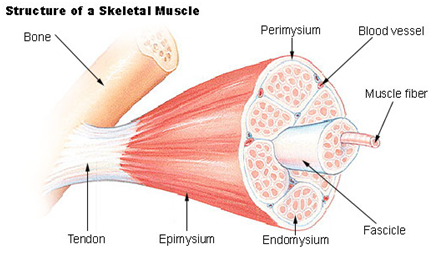
- Smooth Muscles e.g Stomach
- Cardiac Muscles e.g Heart Muscles
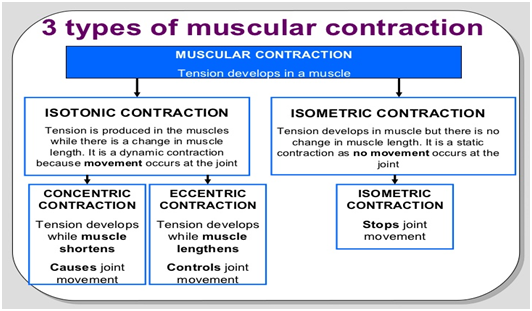
Parts of Muscles
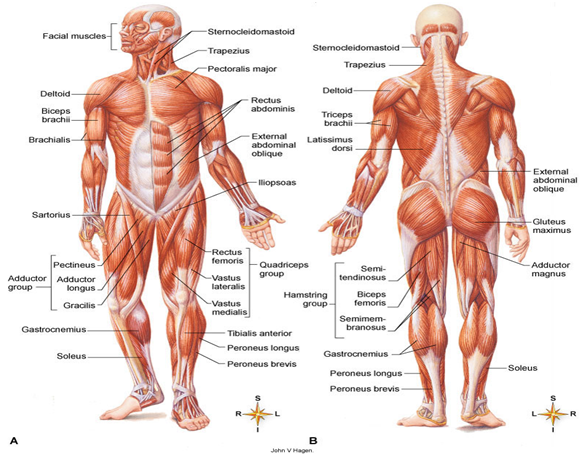
Fundamentals of Body Movement: Alignment; Flexibility & Efficiency
Alignment–
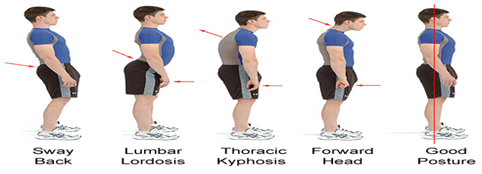
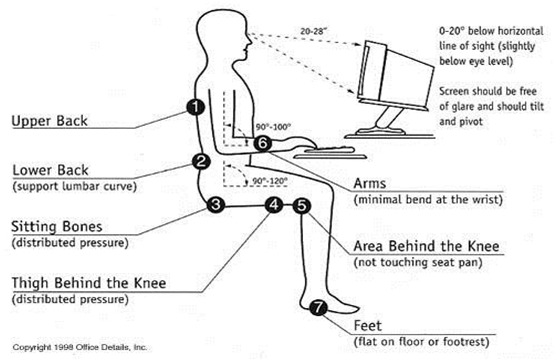
What holds us up in a standing posture? The position of the limbs or the carriage of the body as a whole is called posture: The viewed posture is maintained and erected from four aspects; anteriorly, posteriorly, right and left in which the line of gravity (the vertical line drawn through the body’s Centre of gravity) is called the Ideal posture. When viewed from the front or the back, the vertical line passing through the body’s centre of gravity should theoretically bisect the body into two equal halves, with the body weight distributed between the two feet.
FLEXIBLITY
Flexibility is defined as a range of mobility and ability of joints and muscles. For a yogi, a yoga teacher and any level practitioner, flexibility is the greatest challenge but most important, anatomically speaking, because it loosens cartilage restraints, tendon, ligaments and joints
Benefits Flexibility: *increase range of motion *decrease the risk of injury *reduce muscle soreness *Keeps muscles loose and relaxed * improves athletic performance.
Things to be remembered when stretching: *Free and relax mind *Intake of water * more oxygen inhalation * Natural food*equilibrium of action and rest* Visualization the changes inside*warm up before stretching *stretch the entire body * hold the stretch for at least 05 to 15 second, but do not bounce *stretch to the point where you feel some mild tension *breathe normally when stretching; never hold the breath * Lubricating the joints and tensed part of body * Vibrating and relaxing.Remember stretching = lengthening and decreases stretching = foreshortening
Specific effects through:
When alignment and efficiency are mastered? Below are just a few of the numerous effects of yoga physiologically. Some can be felt before efficiency is mastered. Effect of yoga are muscles flexibility, muscular strength, and endurance, joint stability, correct postures, balance neuro muscular co ordination, and improves all involuntary functions.
Shatakarma:…………………………………………………………………….
Asana:………………………………………………………………………………
Pranayama:…………………………………………………………….
SKELETAL SYSTEM
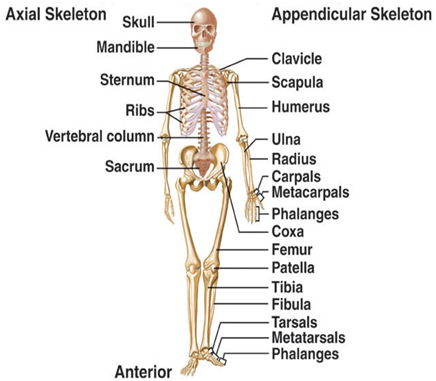
THE SKELETAL SYSTEM is the framework or body model of bony portion. It is made up of bones,joints, tendons and ligamentswhich provide support, movement, and protection to the body. They serve as levers for the of muscles and they provide anchor for tension, resistance and muscular contraction
Bones Composition: Water: 25% and solid matters: 75%
Types of Bone: Compact (Hard Bone) and Cartilage (Soft Bone)
Bones have various roles:
- To hold upright (femur), To protect the organs
- Permitting movement and locomotion
- To articulate (lower arm): ulna and radius twist around one another while the wrist and shoulder stay immobile)
- Manufacturing blood cells and storing the calcium
- JOINT:
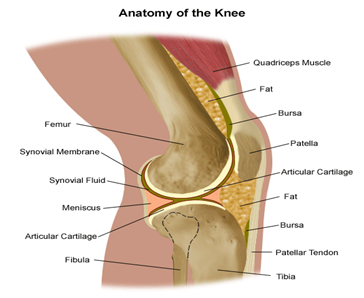
Joint is the meeting ground between bones made of Hyaline cartilage; capsular ligament; Synovial membrane; synovial fluid and fat pads in some
Roles: Allow friction and impact (runners versus cyclists or swimmers) Have cartilage to protect and smoothen and stabilize articulation Have ligaments to connect bones (while tendons connect bone to muscle) Ligaments cannot contract but they can stretch and become loose and unstable.
PARTS OF BONES:
THREE TYPES OF JOINT STRUCTURE
- Fixed 2. Cartilaginous 3. Synovial Joints
#yoga teacher training nepal #yoga teacher training pokhara
#yoga teacher training kathmandu #yoga teacher training nepal 2019
Best Seasons to Trek in Nepal
There are 6 seasons in Nepal. Nepal consists of diverse natures So, so there is always something to see in any season of Nepal we are talking about the Best Seasons to Trek in Nepal.
Autumn Season
Nepal has four main seasons which are mostly centered on the summer monsoon. The majority of tourists in Nepal prioritize mountain visibility so, it is recommended for travelers to visit Nepal in the autumn peak season which falls from late September to late November. This is the period when the climatic condition is clear and dry and neither hot in the Terai nor too cold in the high hills in Nepal. Another important point is that this is the period when dust and pollution are washed away by the monsoon rains making the mountains visible. This is the same reason why it is the best time for trekking which Nepal is quite famous for all over the world.
Two main festivals in Nepal Dashain and Tihar also fall during this period. The main thing that can put anyone at a disadvantage during this period is that this is the season in which Nepal receives the most visitors. So, do expect some crowds and high prices wherever you visit.
Winter Season
Winter season falls in Nepal from December to February. The capital Kathmandu never receives snow but mornings in Kathmandu can be quite chilly. Cold can be fierce in the trekking regions and expect some lodges to be closed for the same reason. Winter is the perfect time to visit the Terai region. During the Winter season, you can visit the Chitwan National Park, best for a wildlife safari, or visit Pokhara, the tourism capital of Nepal.
Spring Season
Spring season falls in Nepal during the period of March to mid-April. This is the second tourist season after Autumn in Nepal. The days are longer and warmer, Rhododendrons which is the national flower of Nepal bloom in the hills during the end of the Spring in Nepal. This is the perfect time to visit Terai to view wildlife since the long grasses are cut during this period.
Monsoon Season
During mid-April to early June is the period of pre-monsoon in Nepal which is quite known for the afternoon clouds, stifling heat, and rain showers. This is the period of unrest and illness and if you are planning to visit Nepal during this period then do take care of your health.
On the other hand during the monsoon that falls from the mid-June to last weeks of September, it is a fascinating time to visit Nepal. Nepalese welcome monsoon since it brings rain which makes fields come alive with green shoots and rushing waters. This is the point when the air is clean, flowers bloom, and fresh fruits and vegetables are abundant. The downside is the roads and paths of trekking routes may be blocked due to the heavy rainfall and landslides.
#yoga teacher training Nepal #yoga teacher training Pokhara
#yoga teacher training Kathmandu #yoga teacher training Nepal
#yoga teacher training near me
Cruciferous Vegetables
What are cruciferous vegetables and why are they so good for us?
Cruciferous vegetables belong to the Brassicaceae family of plants. These vegetables are comparatively low in calories and high in nutrients, typically vitamins A, C, and K as well as other dietary fiber.
They are very unique because they possess sulfur-containing compounds called glucosinolates, which have been shown to have cancer-fighting properties in various types of research. (1)
Why do we need to eat them?
The body is a complex system that needs essential vitamins and minerals to perform optimally. Many people spend their lives with a lack of energy, bad digestion, irregular moods, a foggy brain, and many other symptoms that lead to inflammation and disease. And many people accept this to be ‘normal’!
The easiest way to help improve those symptoms, as we know, is to eat more fruits and vegetables or Natural foods.
Here are the list of 6 cruciferous vegetables to include in your diet to help build and sustain a healthy body.
- Kale, a nutritional powerhouse with high amounts of Vitamin A and C. It also provides fiber, calcium, iron, B6, and magnesium. Delicious stir-fried or baked to make crispy kale chips.
- Broccoli provides your body with vitamin C and vitamin B6. My favorite with kale. Steamed, stir-fried, or baked.
- Cauliflower has potassium and Vitamin C. Try it mashed or make rice by chopping it in a food processor.
- Brussels sprouts are full of vitamin C and are a source of fiber and potassium. I would not eat these as a kid but love them now, baked or stir-fried with tamari sauce.
- Cabbage – red and green, one of the top vitamin C foods on the planet. It also provides vitamin A, vitamin K, and iron. Finely chopped raw for a salad or stir-fried with onion and garlic for even more health benefits.
- Bok choy is one of the top anti-inflammatory foods. Providing a very high amount of vitamins A and C. Minerals such as iron, calcium, manganese, and folate. Stir fry with ginger, delicious.
How do these vitamins and minerals support our bodies?
- Vitamin A – can help maintain healthy teeth, skeletal tissue, and mucous membranes
- Vitamin K regulates bone mineralization by increasing bone density and helps the blood to coagulate.
- Vitamin C provides antioxidants and collagen protein. The body needs vitamin C to help repair wounds and injuries as well as keeping bones, cartilage, and teeth strong and healthy.
- Iron delivers oxygen to the cells, which helps the muscles perform well. Lack of iron in the diet could lead to anemia, leading to fatigue.
Knowing why we need these essential vitamins and minerals and where to get them can help inspire us to make the efforts needed to live a healthy, vital life with an able body and mind.
Knowledge is power, power for the body and mind.
YOGA TEACHER 6 TIPS ON WHAT TO DO AFTER YOU COMPLETE YOUR YOGA TEACHER TRAINING
Yoga Teacher 6 TIPS ON WHAT TO DO AFTER YOU COMPLETE YOUR Yoga Teacher Training Course
Your recent thoughts have probably been focused solely on staying supple and getting through your yoga teacher training course. There’s a lot to get through and, likely, you were too engrossed in the program to consider “what next?” Even if your reason for completing the course was not to teach yoga, there are still many things to get done before you take a mat as a teacher rather than a student.
Mind your business
First things first, get registered with Yoga Alliance. It might be of any country. it’s a simple process that can be done online, hassle-free. The accreditation will boost your credibility for your yoga teacher certificate. You’ll also have access to an online community, continued training, and resources. Secondly, if you intend on teaching then get yourself liability insurance. Regardless of where you want to teach in the world, any decent yoga studio or teaching venue will expect you to have it. Perhaps more importantly, being insured means you’ll be protected while teaching. It’s usually a minimal cost and well worth it.
Get going!
If you managed to line up some teaching opportunities before you were officially trained, good for you! However, to gain experience most graduates have to find teaching opportunities as they go along. To get some teaching practice under your belt, consider organizing small classes. Start with family and friends, and work colleagues, or ask your studio/gym if they’ll contact you when they need a substitute teacher. Always ask your ‘students’ for feedback. The key is to seize teaching opportunities as they arise. The longer you leave it, the harder it will get. You need to practice your sequences, get used to guiding others, and ultimately discover your teaching mojo.
Persist and assist
Alongside trying to get your teaching opportunities, it’s a good idea to assist more experienced teachers as and when you can. This may mean committing to a class for a set period or perhaps you already know of some teachers in your area who will let you assist them in their class from time to time. Ideally, you’ll want to make it a regular commitment while you build your resume and your experience. Assisting allows you to observe an experienced teacher, learn alignment, and pick up teaching tricks. Assisting can also lead to more opportunities to substitute or pick up a class when another instructor leaves. This
Think like a yoga teacher business pro
If you completed your yoga teacher training course to pursue a career in the yoga industry, then you’re going to need to put on your yoga business hat and think about how your passion is also going to pay the bills. When you’re assisting and substituting, pay attention to class fees, as you will need to determine your solo teaching rate. You’ll have to gain a solid understanding of the yoga industry. Research the many ways you can make money as a yoga teacher. Finally, while the thought of networking and sales pitches might not gel with your idea of being a yoga teacher, promoting your teaching services is going to help build your career.
Build your brand
Once you’re certified, obviously you’ll also need to think about how you’re going to build your brand. Start with setting up a well-designed website. One that showcases why people should sign up for your classes and what you have to offer. Social media can also be a highly effective promotional tool. It can connect you to potential clients and teaching opportunities. You don’t have to sign up to all platforms immediately; start with what you know and what feels comfortable. As a yoga teacher, you’ll have plenty of content to share: blogs, photos, inspirational quotes – there are countless possibilities. Post content that is of value to your audience. You’ll soon establish yourself as an expert and have budding clients approaching you.
Don’t overlook your own practice
Just because you’re now a qualified teacher doesn’t mean you can forget about your practice. That couldn’t be further from the truth! Not only do you need to continue developing your abilities and knowledge, but your mat is also likely to remain your sacred space. With the buzz of trying to build your yoga career, you’ll likely want to go there often.
It’s easy to complete your yoga teacher training and then get stuck on what to do next. Make your training count. Get going with these six tips and you’ll soon find yourself taking the next step on your path to a career in yoga. More about 6 TIPS ON WHAT TO DO AFTER YOU COMPLETE YOUR YTT wait for the next part.
YOGA NIDRA AND ITS BENEFITS
Yoga Nidra also known as sleepless sleep is the correct name for a form of yoga that is often referred to as yogic sleep. It is a yoga practice that offers the finest physical and spiritual benefits and is not difficult to learn. This article will teach you more about the practice so that you can explore it for yourself. Further about YOGA NIDRA AND ITS BENEFITS
Savasana Pose (Corpse Pose)
To begin your Yoga Nidra journey, you first need to assume the corpse pose or Shavasana as it is known in Sanskrit. This is lying flat on the floor on your back, with your hands resting in a relaxed position at the sides of the body. Do not try and hold or pose your arms simply let them fall away from you. If you need to place a thin blanket under your head to make it more comfortable that is fine, a yoga mat makes the floor a little more forgiving. As you do not want to get cold, you may also want to cover the body with a blanket. If you cannot manage to lie on the floor, you can practice Yoga Nidra in a seated position or failing that then use a bed to support your body.
Totally Relax & Listen
The process of Yoga Nidra involves quietening the mind and listening to the inner voice. It is a process of inner exploration, and you need to guard against allowing the inner chatter to distract you. Be sure that your mind is quiet and allow your focus to take a journey. It doesn’t matter if you fall asleep as the unconscious mind will still gain from the practice. Your guide, whether you are in a class or listening to a recorded meditation is there to help you keep your mind in focus, but you might not even hear parts of it as you go deeper into meditation. This is also fine. You can use any length of meditation that fits your time schedule if you are practicing at home but remember the importance of this time is so precious you should guard against squeezing in five minutes as opposed to bumping something less important so you can spend an hour on your Yoga Nidra.
Open Mind & Feel the Nature
You may be surprised by what you can learn about yourself and what comes up when you start the practice of Yoga Nidra. It is a very safe space, and the brain is more likely to relax and allow the subconscious to release things, or tackle issues that have been causing stress. In other cases, the benefit simply comes from the profound sense of relaxation and the healing that takes place when the body is allowed to transcend into this space. It is like unplugging the mind from the mainframe computer of life and taking this break to escape the constant barrage of information that comes from modern life. The more you practice Yoga Nidra, the more your mind will learn to be disassociated from stress when it is happening which is also much healthier.
The Ten Living Principles
Talking about The Ten Living Principles: The first limb or the yamas, consists of characteristics observed and codified by wise people since the beginning of time as being central to any life lived in freedom. They are mostly concerned with how we use our energy in our relationship with others and, in a subtler sense, our relationship with ourselves.
The sages recognized that stealing from your neighbor was likely to promote discord, lying to your wife would cause suffering, and violence begets more violence; the result is hardly conducive to living a peaceful life.
The second limb, the niyamas, constitutes a code for living in a way that fosters the soulfulness of the individual and has to do with the choices we make. The yamas and niyamas are emphatic descriptions of what we are when we are fundamental nature is compassionate, generous, honest, and peaceful.
In the West, we are taught from an early age that what we do and what we own are the sole components for measuring whether we are successful.” We measure our success and that of others through this limited vantage point, judging and dismissing anything that falls outside these narrow parameters. What yoga teaches us is that who we are constitute the ultimate proof of a life lived in freedom. If you do not truly believe this, it is likely that you will measure success in your yoga practice through the achievement of external forms.
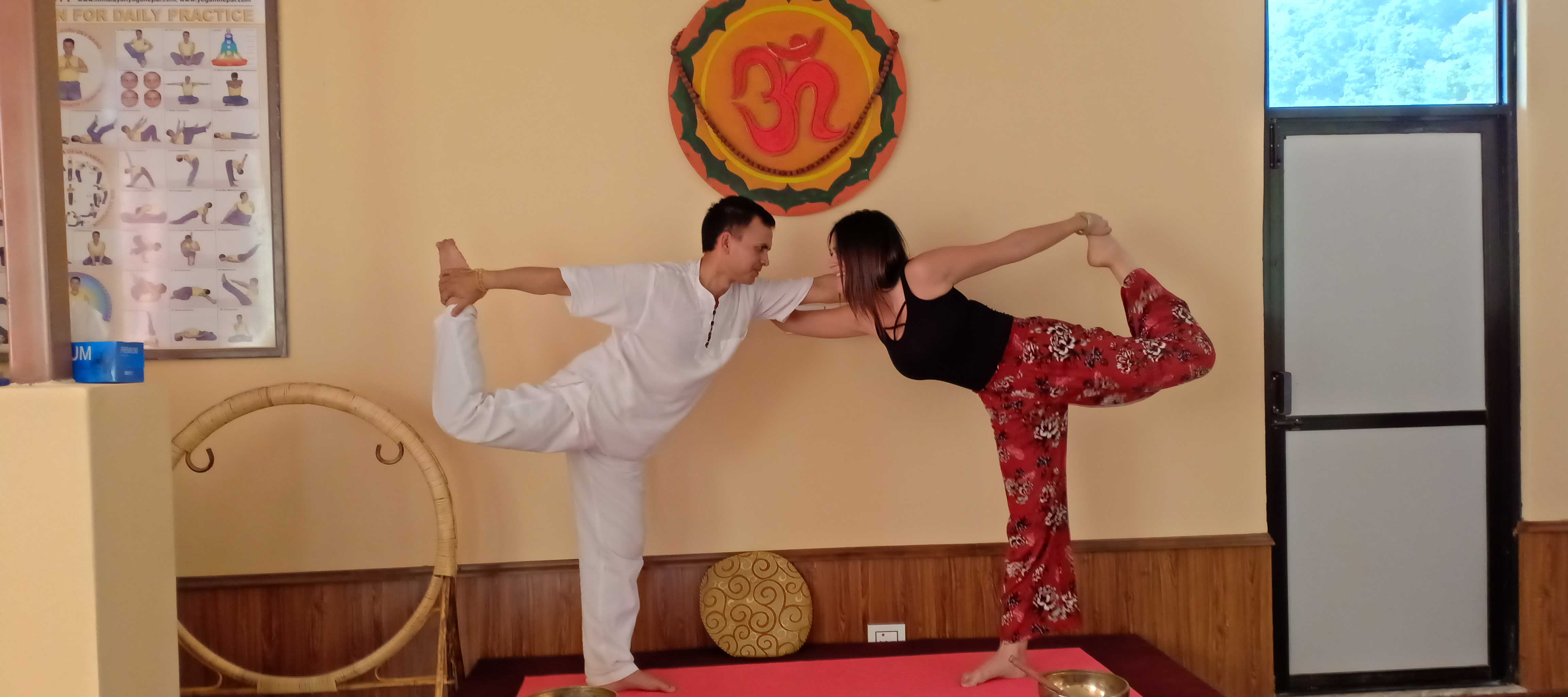
How we speak, how we treat others, and how we live are more subjective qualities and attributes we need to learn to recognize in ourselves as a testament to our own progress and as a gauge of authenticity in our potential teachers. When we remain committed to our most deeply held values we can begin to discern the differences between the appearance of achievement and the true experiences of transformation, thereby freeing ourselves to pursue those things of real value.
What is Yoga
Short intro for What is Yoga ?
What is Yoga? Yoga is a technology for arriving at this moment. It is a means of waking up from our spiritual amnesia so that we can remember all that we already know. It is a way of remembering our true nature, which is essentially joyful and peaceful. Developed as a pragmatic science by ancient seers centuries ago, yoga is a practice that any person, regardless of age, sex, race, or religious belief, can use to realize her full potential.
Yoga is a means of staying in intimate communication with the formative core matrix of yourself and those forces that serve to bind all living beings together. As you establish and sustain this intimate communication, this state of equanimity becomes the core of your experience rather than the rare exception.
Through observing nature and through intense self-observation and inquiry, the ancient yogis were able to codify the conditions that must be present to realize our intrinsic wholeness. Although such realization can occur spontaneously, more often than not it is the result of a sustained commitment to practice over a lifetime. This is not to imply that yoga is a goal that strives toward, or that there is some kind of chronological progression toward self-improvement Rather it is recognition that each individual can achieve understanding only through his exploration and discovery, that all of life is a continual process of refinement which allows us to see more clearly.
THE OBSTACLES TO MEDITATION
Disease, languor, tremors, and irregular breathing are the symptoms of a distracted mind. These are the obstacles to meditation. To remove these, Meditate on one principle. Patanjali believes and not only believes, but he also knows that sound is the basic element of existence. Just as physicists say that electricity is the basic element, yogis say that sound is the basic element. They suitably agree with each other.
Physicists say that sound is nothing but a modification of electricity, and yogis say that electricity is nothing but a modification of sound. Then both are true. Sound and electricity are two forms of one phenomenon, and to me, that phenomenon is not known yet and will not be known ever. Whatsoever we know will be just a modification of it. You may call it sound, you may call it electricity, you may call it water like Lao Tzu: that depends on you. But all these are modifications – forms of the formless. That formless will always remain unknown.
How can you know the formless? Knowledge is possible only when there is a form. When something becomes visible, then you can know it. How can you make invisibility the object of knowledge? The very nature of invisibility is that it can’t be objectified. You cannot pinpoint where it is, or what it is. Only something visible can become an object.
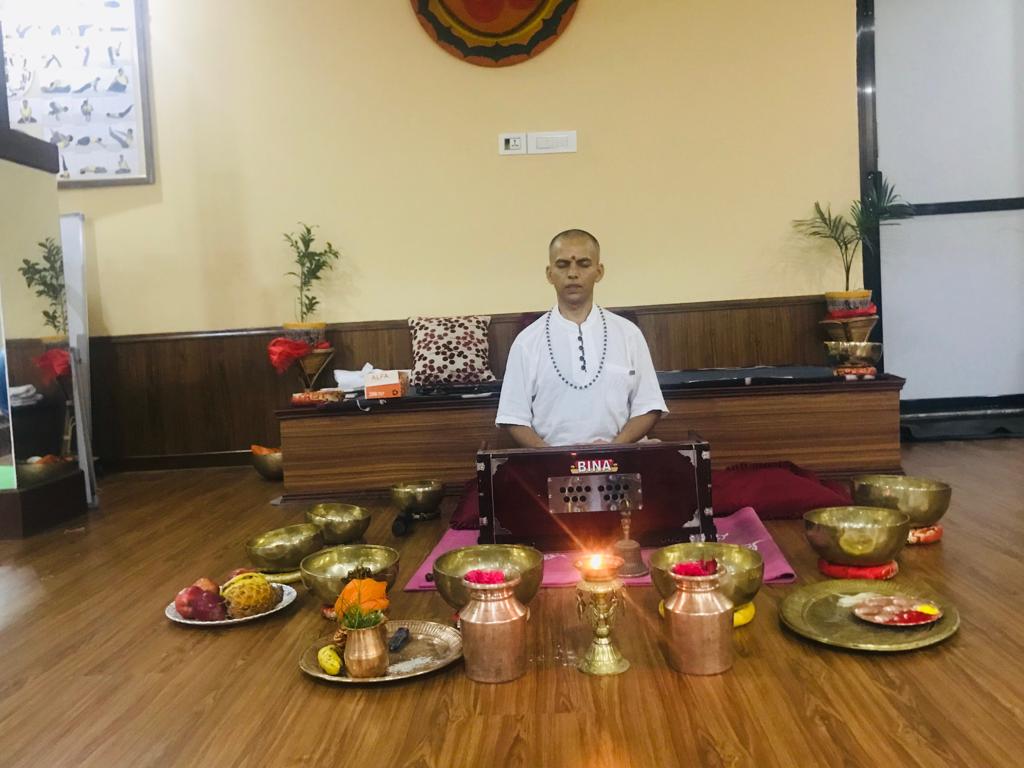
So whenever anything is known, it will be just a modification of the unknown. The unknown remains unknown. It is unknowable. So it depends on you what you call it, and it depends on the utility you are going to put it into. For the yogi, electricity is not relevant. He is working in the inner lab of being . There, sound is more relevant, because through sound he can change any phenomena inside, and through sound he can change the inner electricity also. Yogis call it pana – the inner bioenergy or bioelectricity . Through sound that can be changed immediately.
That’s why, when listening to classical music, you feel a certain silence surrounding you: your inner body energy is changed. Listen to a madman and you will feel you are also going crazy: because the madman is in a chaos of body electricity and his words and sounds carry that electricity to you. Sit with an enlightened person and suddenly you feel everything within you is falling in a rhythm. Suddenly you feel a different quality of energy arising in you.