
The Bee Is Declared The Most Important Living Being On The Planet. See Why !!!
According to the Earthwatch Institute, The BEES have been declared the most important living beings on this planet. Many wildlife experts and scientist consider BEES to be on the long list of endangered species. In the past few years, 90% of the BEE population has disappeared … making them Extremely Endangered! The uncontrolled use of pesticides, deforestation and lack of flowers are the main reasons of their extinction.
Its sting hurts a lot, but if they were to disappear, it would hurt much more.
Here’s why BEE ARE THE MOST IMPORTANT being on Earth:
- 70 % of the world’s agriculture depends exclusively on BEES.
- Pollunation of Plants for reproduction happens thanks to BEES.
- BEES are the only living beings who do not carry any type of pathogen (a bacterium, virus, or other microorganism that can cause disease)
- BEES are crucial to have around for Earth’s ecosystems.
The agriculture of the world depends on 70% of these insects, to put it more clearly and directly, we could say that 70 of 100 foods are intervened in favor of bees. Also, the pollination that the bees make allows the plants to reproduce, of which millions of animals feed, without them, the fauna would soon begin to disappear. The honey produced by bees, not only serves as food but also provides many benefits to our health and our skin.

The Bees around the world have disappeared by up to 90% according to recent studies by different researchers. The reasons are different depending on the region, but among the main reasons are massive deforestation, lack of safe places for nests, lack of flowers, use of uncontrolled pesticides, and changes in soil, among others.
How to help the BEES thrive and keep Earth’s ecosystems in working order:
- Stop using Deadly Pesticides
- Promote Natural Agricultural alternatives
- Monitorize BEES Health & Welfare
According to a quote attributed to Albert Einstein, If the bees disappear, humans would have 4 years to live.
Yoga for Senior People
In the present world, health is defined very narrowly. Fitness is only seen as the state of looking good from the outside. The way you move, one’s external appearance, and lack of diseases are seen as major indicators of being healthy. Amid all these talks, we overlook the much important context of life – emotion. Life is not just about the body, it is also equally about the mind and soul.
When we talk about senior citizens, the most common perception we hold is their inability to do physical tasks. Should they be treated as entirely unhealthy individuals? No, certainly not. Since the meaning of fitness is not limited to the body, one can aspire to remain fit from the inside. Yoga, as a philosophy of overall fitness, believes that all kinds of work can be performed by anybody, albeit in different ways. Hence we talk about Yoga for Senior People.
Yoga is a highly flexible science. It has been prevalent for more than 5000 years in South Asia and the world. Yoga promises to bring anyone with the zeal to enjoy good health on the track of fitness. It is different for different groups of practitioners. For seniors, Yoga presents a set of practices that are highly compatible with their body structures and physical abilities.
Yoga poses for Seniors
1. Shishuasana: Shishuasana is an easy exercise for calming down the brain. In old age, human brains need more peace and serenity. An elderly person cannot tolerate much humdrum and thus, the mind requires immense calmness. Get on your knees and bend forward to bring the chest on the thighs and put the forehead in front of the knees on the mat. Experience silence in the position. This exercise not only lets your brain enjoy peace but also stretches the spine to provide the body with relaxation.
2. Baddha Konasana: Baddha Konasana is a sitting exercise, in which a person enjoys a good amount of stretching in the thighs, and spine. The practice is great for elongating the spine and keeping the body in good shape. Flexibility in the hips and pelvis regions can also be experienced with the practice of Baddha Konasana. To perform this asana, one needs to join the soles in front of the pelvis while keeping the body straight in a seated pose. Hold the toes with your hands and keep the chest open.
3. Pranayama: Talking about the most effective Yoga exercises for elders, Pranayama can be the best. It is all about breathing, which is the regulator of almost all the body’s metabolic acts. The practice of Pranayama is easy and doesn’t require any physical movement of the body. It is about inhaling and exhaling constantly to experience peace. The practice is effective in astonishingly boosting blood circulation and also purifying the red liquid. It is highly recommended to aged people, who will experience a boost in many inner body functions.
Chair Yoga for elders
One of the biggest beauties of contemporary Yoga in this world is Chair Yoga. This has provided elderly people and those with immobility a great way to enjoy the benefits of Yoga while sitting on a chair. In this form of Yoga, a person sits on a chair and practices various asanas. Although most of the asanas, particularly sitting ones, are similar, many poses are remodeled in different ways. Chair Yoga poses allow elders to practice and enjoy workouts without moving from one place to another. This way, they can benefit themselves by boosting blood circulation, stretching body parts, etc.
Yoga for beginners
Coming to those having little knowledge of Yoga, it is very difficult for them to quickly adjust to most of the highly advanced poses. Beginners need to first understand the simple poses of Yoga before exploring science. Here are some of the Yoga exercises a beginner-level practitioner should enjoy:
1. Trikonasana: Trikonasana or Triangle Pose is a very influential exercise, especially when you talk about thighs and shoulders stretching. It is a basic level asana, which is practiced by stretching both legs to a distance of about 3-4 feet. One needs to bend forward to touch the left toe with the left hand and repeat the same on the other side. Make sure to keep the knees unbent during practice.
2. Tadasana: Tadasana is one of the introductory level asanas. The pose is very effective in maintaining the stability of the body and mind. It is just about standing straight with all body parts active. You can raise your hands in the air to join the palms in Namaskar to give the asana a spiritual touch.
3. Dandasana: Sitting on the mat, spread the legs in front of the body. Keep both the legs parallel to each other and the upper body in a straight line. Make sure the upper and lower body makes a right angle at the pelvis. During the practice, place the palms on the mat beside the hips and the hands should be in line with the body.
FAQs Regarding Yoga Teacher Training in Nepal
Given are those FAQs Regarding Yoga Teacher Training in Nepal with respective answers.
Q. My body is no longer flexible – can I still learn yoga?
Yes! Flexibility is not required to learn yoga. Our patient and empathetic teachers will help you increase your fitness and flexibility.
Q. How is yoga different from other forms of exercise?
Unlike other forms of exercise, yoga focuses on the all-encompassing wellness of mind, body, and soul. It does bring fitness to the body, but the spirit is uplifted along the way.
Q. Is yoga a religion?
Yoga is not a religion. It is a Vedic science, first documented by ancient sages of India, which aims to unify the mind, body, and soul. This unification brings enhanced mental and spiritual awareness and well-being.
ABOUT THE COURSES
Q. Do I need to be trained in yoga to join a course?
It is not highly needed for you to take a yoga course before entering a yoga teacher training course. Because here we will teach you the knowledge and practices of yoga from the beginning.
Q. What style of yoga will I be learning?
Yoga has many different styles, each having its significance. At Himalayan Yoga Academy, you will be exposed to several forms of yoga, which will give you a holistic view of how and what you’d like to teach. Our goal is to give you the most comprehensive training we can.
You will encounter these styles in our 200-hour Yoga Teacher Training:
- Hatha Yoga – Yoga of Body and Mind Purification
- Karma Yoga – Yoga of Action
- Bhakti Yoga – Yoga of Devotion
- Mantra Yoga – Yoga of Recitation
- Raja Yoga – Yoga of Meditation
- Vinyasa Yoga – Modern Yoga Flow
- Ashtanga Yoga – Yoga of Eight-fold Path/Totality of yoga
Q. Will I be qualified to teach when I graduate? At what level?
Students who pass this course by attending all the classes and completing the homework– receive certificates of course completion and can start teaching as they will receive certificates from Yoga Alliance USA. Then It is recommended that they apply for Yoga Alliance certification as well.
Q. Can I take the course to deepen my practice if I don’t plan to teach?
Sure. Many students join us for access to high-quality yoga training. This is a perfect place for those who want to go beyond the physical aspect of yoga to study meditation and philosophy.
ABOUT YOGA CERTIFICATION
Q. What is the Yoga Alliance?
Yoga Alliance is an education and support organization for yoga schools. In order to become an RYT (Registered Yoga Teacher), you must adhere to their standards for curriculum, planning, training, and qualification. In the yoga industry, Yoga Alliance has become the standard certification program for any yoga training school, and most studios will expect it from their teachers.
Q. Is Himalayan Yoga Academy Certified by Yoga Alliance?
Yes. All Himalayan Yoga Academy courses are Yoga Alliance accredited.
Q. Will the certificate issued by Himalayan Yoga Academy work in my home country?
Yes, Himalayan Yoga Academy has an excellent reputation internationally. We have trained students from more than 60 countries. More importantly, your Yoga Alliance registration is the international standard for teachers of yoga.
Q. Will I need to apply for Yoga Alliance separately?
Yes. The certification you receive from us on completion of the course will allow you to apply for Yoga Alliance certification. You will need to pay their fees separately. They charge USD115 for the first time and after that USD65/year. However, this registration is not compulsory. If you wish, you can register in our graduate directory for free.
BEFORE THE COURSE
Q. I am traveling to Nepal for the first time. What do I need to know?
Upon registration, you will receive the contact information of our course manager. Feel free to ask them your travel questions. You can also take a look at this article for more details.
Q. Can you arrange an airport pickup for me?
Yes, please let us know your flight schedule in advance, and we can arrange free pickup. If you wish to tip the driver, we recommend Rs.100.
Q. How many students are there in one class?
We have a maximum of 10-15 students in one class.
Q. What do I bring with me?
You should bring comfortable clothing for your practice, toiletries, and towels. You may also like a notebook, natural mosquito repellent, an umbrella, and an alarm clock. For Rooms, expect cooler temperatures and plan accordingly. You can also take a look at this article for more details.
REFUND POLICY:
Q. If I’m unable to attend the \ will I get a refund?
The deposit that is required to reserve a spot in a course is non-refundable. The rest of your course fees are due one month before arrival. If a student has to leave training unexpectedly, The student can join us to complete training during any program in the next one year by paying for the accommodation and meals again. However, tuition is non-refundable.
If you have paid the deposit and can no longer make the dates you chose, you must inform us 30 days in advance to reschedule your course within the next year. If we are informed fewer than 30 days in advance, your deposit will be forfeited.
If you have paid the full fees and did not inform us that you are not coming, under “no show” your 50% fees will be forfeited. Rest of the 50% fees you can use within next year against any of our courses.
Q. I am pregnant, or injured, and can no longer attend training. Can I get a refund?
We are so sorry about your injury and happy to hear about your pregnancy. Unfortunately, the course fee is non-refundable. Please contact us to reschedule your training within the next one year.
Q. I noticed a promotion running after I booked my course. Can I receive a discount?
Sometimes we need to run special promotions to make sure there are enough people to run the course instead of canceling it. The promotional price applies to the new bookings only.
Q. How can I get a visa to Nepal?
In Nepal, the visa is on arrival. So, there won’t be any issue regarding the visa of Nepal
Q. What if Himalayan Yoga Academy postponed the course or canceled it?
So far we have not canceled any of our courses. Due to unforeseen circumstances, if we need to cancel our course, we will issue you 100% refund of the amount received by us. You will have the option to attend future batch also where we will issue you special discounts.
Himalayas in Nepal
The Himalayas are the highest mountain range in the world and have 9 out of 10 of the world’s highest peaks, including Mount Everest. Nepal is a beautiful nation blessed with natural beauty, including mountains, hills, and rivers, among other natural landscapes. The major part of the world-famous Himalayan Mountain Range lies in the northern range of Nepal as it boasts several top mountain peaks, including Mount Everest. Learn further about the Himalayas in Nepal.
Highest peak: Mount Everest at 29,031.7 ft. (8,848.86 m) is not only the highest peak in the Himalayas but the highest peak on the entire planet. Other famous peaks include K2, Kanchenjunga, Nanga Parbat, Annapurna, and Manaslu.
Glaciers: The Himalayas are the third largest deposit of ice and snow in the world, after Antarctica and the Arctic. There are approximately 15,000 glaciers located throughout the range. At 48 miles (72 km) in length, the Himalayan Siachen glacier is the largest glacier outside the poles. Nepal consists of the snow-fed river which is all thanks to the high mountains present in the roof of Nepal. That’s why Nepal is popular for White Water River Rafting around the world.
Climate: The Himalayas have a profound effect on the climate of the Indian subcontinent and the Tibetan Plateau. They prevent frigid, dry winds from blowing south into the subcontinent, which keeps South Asia much warmer than corresponding temperate regions in the other continents.
Ecology: The flora and fauna of the Himalayas vary with climate, rainfall, altitude, and soil. At high altitudes, the elusive and previously endangered snow leopard is the main predator. Its prey includes members of the goat family grazing on the alpine pastures and living on the rocky terrain, notably the endemic Bharal or Himalayan blue sheep. The Himalayan musk deer is also found at high altitudes. Hunted for its musk, it is now rare and endangered.
Pine forests are invading the oak forest in the Garhwal Himalayan region. There are reports of early flowering and fruiting in some tree species, especially rhododendron, apple, and box myrtle. The highest-known tree species in the Himalayas is Juniperus Tibetica located at 4,900 m (16,080 ft.) in Southeastern Tibet.
Culture: There is a complex blend of racial groups in the people of Nepal. The dominant castes of Hindus, namely Chhetri, Brahmin, and Thakur, along with others, speak Nepali. The Tamangs, Limbus, Magars, and Gurungs of Mongoloid strains dominate the middle hills and form organized groups of tribal hill farmers. The Sherpas from the Solo Khumbu region of the northeast are among the many groups of Bhutiyas that speak Tibetan dialects.
Religion: The main religions, which are practiced in the Himalayan region, are Hinduism and Buddhism. There is religious harmony between those two religions. They both speak Nepali in common.
Facts about Himalayas
- The Himalayas cover approximately 75% of Nepal.
- The Himalayan range is one of the youngest mountain ranges on the planet and consists mostly of uplifted sedimentary and metamorphic rock.
- The Nepalese call Mt. Everest “Sagarmatha” which can be translated as “Goddess of the Universe” or “Forehead of the Sky.”
- In 1953, Sir Edmund Hillary and Sherpa mountaineer Tenzing Norgay were the first people to successfully climb to the summit of Everest.
- Despite its name, the Snow Leopard – a Himalayan local – is most closely related to the Tiger.
Wanna do trekking in Nepal. Wanna see the Himalayas. You may join us.
#trekking #yoga #meditation #nepal #yogaretreats #yogainnepal #yogateachertraining #yogatreks #tours #yogaasana #yogacourses
Why Yoga in Nepal?
Nepal covers 147,181 square kilometers, stretching 145-241 kilometers from north to south and 850 kilometers from west to east. Located between China in the north and India in the south, Nepal lies at latitudes 26 to 30 degrees north and longitudes 80 to 88 degrees east. The country is divided into three geographic regions: the Himalayan Region to the north, the hills consisting of the Mahabharat range and Churia hills in the mid-region, and the Terai to the south. With such varied elevations, Nepal offers a unique environment for practicing Yoga. Learn why Yoga in Nepal is a transformative experience.
Nepal, the birthplace of Yoga, has been enriched and influenced by Shiva Sabhyata (Civilization), Janaka Sabhyata, and Buddha Sabhyata. The study of Yoga Teacher Training, especially in traditional Hatha Yoga, Ashtanga Yoga, Mantra Yoga, and Kundalini Yoga, is deeply rooted in sacred texts. The given reasons are ” Why yoga in Nepal? “
1. Nepal Himalayas :
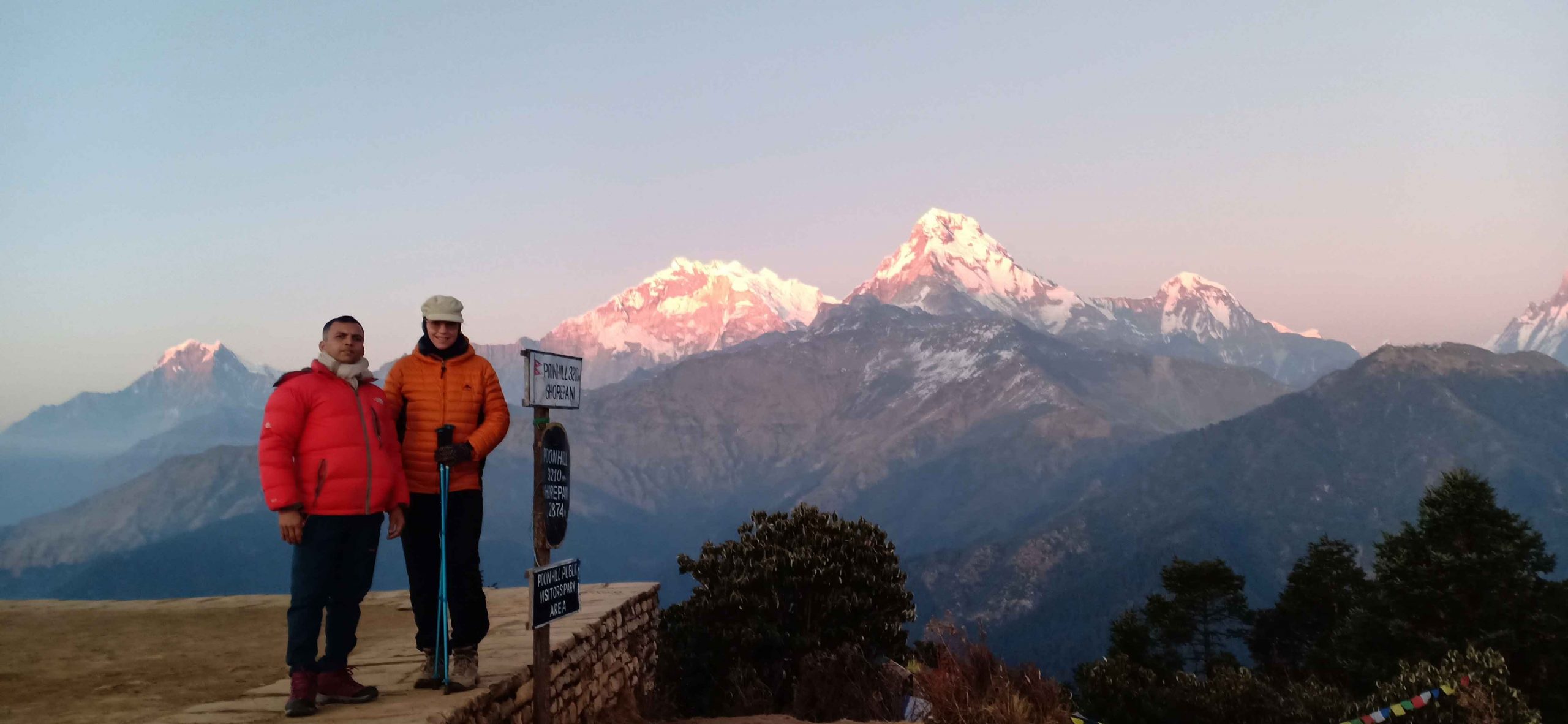
The Nepal Himalayas are known as the rooftops of the world. As the highest mountains on Earth, their scenery is legendary. These mountains held an air of mystery until recently, and even today, much of the Himalayas remain untouched. They have always fascinated and inspired people from all walks of life around the world.
Yoga was born within the countries that hold the enchanting Himalayas. Nepal is home to some incredible mountain ranges such as Everest, Kangchenjunga, Manaslu, Ama Dablam, and many others. Yoga in the mountains creates a special bond between the people in the group where yoga is the central point. The mountains are calling. Yoga with a view like this is beyond explanation; it must be experienced. You feel the urge to reach higher and stretch longer, not wanting the practice to end.
2. Eco – Yoga :
Walking meditation combined with yoga in the woods is known as Eco-yoga. It’s about exploring our deep and intrinsic connection with nature. Hence Nepal consists of pristine nature and forest. Nepal is surely a country blessed by nature. 25.4% of Nepal’s land area is covered by is covered with forest. The forest is the dominant form of land cover in Nepal. Eco-yoga is very ideal for those who enjoy yoga but are looking to experience something deeper. It highly helps outdoor enthusiasts connect with nature in a powerful way.
4. Eastern Philosophies :
At its broadest, yoga, from the root word “yuj” in Sanskrit, means to unite. Most Hindu texts discuss yoga as a practice to control the senses and ultimately, the mind. The most famous is the Bhagavad Gita (dating back to 6th-3rd Century BCE3), in which Krishna speaks of four types of yoga – bhakti, or devotion; jnana, or knowledge; karma, or action; and dhyana, or concentration (often referred to as raja yoga, though not all sources agree on the term) – as paths to achieve moksha, the ultimate goal according to Hindu understanding.
3. Buddhist Teachings:Yoga in Nepal
Nepal is the land where “Gautam Buddha” was born. In Nepal’s hill and mountain regions, Hinduism has absorbed Buddhist tenets to such an extent that in many cases they have shared deities as well as temples. Many Buddhists do specifically undertake practices meant to cultivate mindfulness. We suffer, according to Buddhism, not because there’s anything inherently wrong with us but simply because we misunderstand the nature of reality. Buddhist practice helps us come to terms with reality by cultivating our awareness of the “three characteristics of experience,” also known as “the three marks of existence.” These are the impermanence, suffering, and insight. Nepal can be perfect place to learn Buddhist Teachings.
DASHAIN: NEPAL’S BIGGEST FESTIVAL
Introduction:
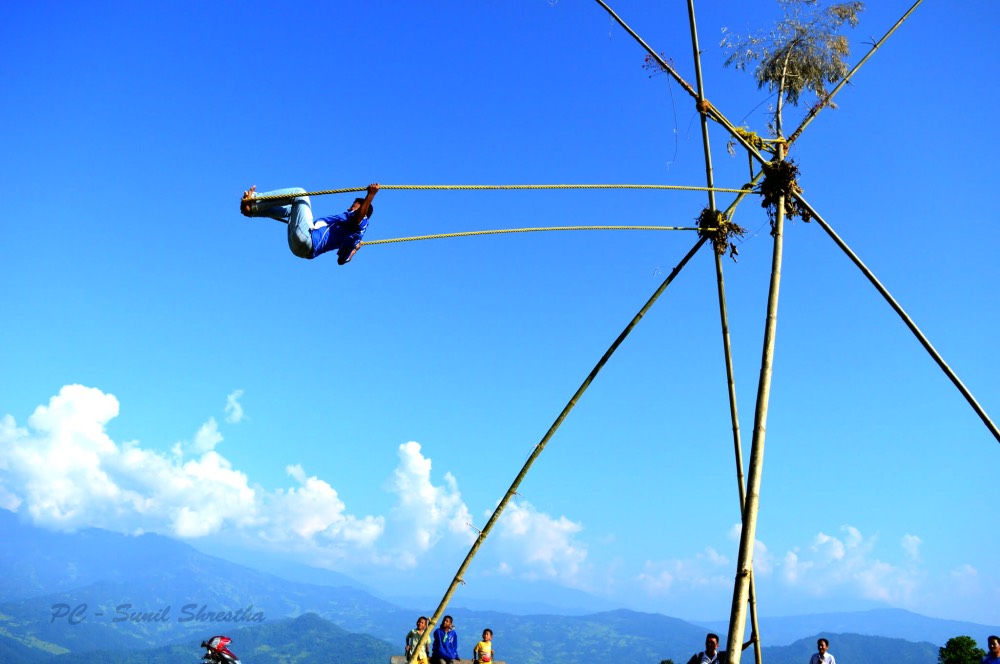
Dashain is the most important festival in Nepal. It is a celebration of good prevailing over evil. Families offer goats, ducks, chickens, eggs, and coconuts to the goddess Durga. People return to their home villages to spend some or all of the fifteen-day festival with their families. Large swings are set up for children, and from the tenth day, family members receive blessings of tika (rice, red vermilion, and yogurt) on their foreheads from their elders.
The great harvest festival of Nepal, Dashain is a time for family reunions, exchange of gifts and blessings, and elaborate pujas. Dashain honors the Goddess Durga, who was created out of the shakti or energy of all the gods, armed with weapons from each of them. Usually falling during September or October, Dashain starts in the Shukla paksha (bright lunar fortnight) and ends on the day of the full moon.
During Dashain, men and women in their fineries visit their elders to seek tika (a dab of red vermilion mixed with yogurt and rice) accompanied by blessings. Sword precessions (Paayaa) are also held in various parts of the Kathmandu Valley. A large number of animals are officially sacrificed at Hanuman Dhoka during Nawami which is attended by officials, invitees, and visitors.
Its History :
In Hindu mythology, the demon Mahishasura was causing terror in the devaloka (world of the gods) until Durga killed the demon. The first nine days of Dashain symbolize the battle that took place between the different manifestations of Durga and Mahishasura. The tenth day is the day when Durga finally defeats him. For other Hindus, this festival symbolizes the victory of Rama over Ravana, as recounted in the Ramayana.

Over the last few years, animal rights activists have been opposing these acts of slaughter, and have been appealing to people to stop, instead offering fruit and vegetables. They justify this because it is mentioned nowhere in the Hindu religious books that animal sacrifices appease the gods and goddesses.
TOP 5 HEALTH BENEFITS OF NAUKASANA
Introduction: HEALTH BENEFITS OF NAUKASANA
Indeed, the science of yoga is a boon for humans in the modern century, where our health is deteriorating at physical, mental, and spiritual levels. The Naukasana, the yoga posture, in which you assume the shape of a boat, is the practice for health.
From helping you to lose extra pounds to waking up the core to strengthening the back muscles, the Naukasana has diverse variations, in all of which you can garner the benefits of boat pose. Here are the TOP 5 HEALTH BENEFITS OF NAUKASANA:
Step by Step performing Naukasana
1: Start the boat pose in a sitting position on a yoga mat.
2: Press the hands into a yoga mat behind the hips, lift through the top of the sternum, and slightly lean back.
3: Try to sit on the tripod of your two sitting bones and tailbone
4: Breathe Out, bend your knees, and keep your thighs at a 45-degree angle to the floor.
5: Gently straighten the knees and raise the feet above eye level.
6: Stretch the arms alongside the legs parallel to the floor.
7: Stay in the Boat Pose for as long as comfortable.
The Top 5 Health Benefits of Naukasana
- Good for our digestive and reproductive systems:
It aids both the upper abdominal organs (pancreas and liver) and the lower abdominal organs (kidney and intestines), thus helping in reducing digestive problems. Helping in the circulation of the blood and oxygen around the abdomen area faster, this pose also enhances the secretion power of the liver and pancreas. For men, it is essentially beneficial because it stimulates the prostate gland which is good for the male reproductive system.
2. Strengthens the Body Muscles:
During the practice of the Naukasana, the arms are stretched in a forwarding direction, the thighs are angled at 45 degrees, the shin is perpendicular to the floor, and the feet are raised up. All these movements cast a stretching and strengthening effect on the diverse muscle group located in the body. In this way, you strengthen your whole body internally helping you manifest a robust look.
3. Very good for diabetic patients:
The health benefits of the Naukasana pose are also reaped by diabetic patients as it essentially works on fixing the sugar levels of the body.
4. Placid Mind:
Like with most yoga asanas, the Naukasana also acts as a distress tool, keeping your mind peaceful and placid. With a calm mind, you can enjoy the present moment, work with alertness, and can have a healthy body.
5. Ideal Weight Loss:
In the Naukasana, you can lose stubborn fat in a healthier and ideal manner. The stretching, compressing, and relaxing of the abdominal organs during the performance of the Boat Pose helps you to lose extra fat around the stomach. The key is to practice the pose regularly with attention to alignment.
With the Naukasana and its variations, develop a healthy body, mind, and soul.
To know about Naukasana in further detail, explore our Yoga Teacher Training in Nepal
Top 3 Tips to Enhance Your Yoga Teaching Skills
Teaching the ancient science of Yoga is an interesting task, probably the most pleasing one. The job presents one with utmost delight and satisfaction. However, it isn’t at all an easy job, and teaching Yoga requires you to pass all those hurdles that come along the way. The profession is as challenging as the journey of learning Yoga is. Whether you are a teacher at a Yoga school in Nepal or a studio in Munich, you are required to make your students satisfied with your way of teaching. If you are willing to improve yourself as a teacher in the highly demanding world, have a look at the following ways to do so. Here are the Top 3 Tips to Enhance Your Yoga Teaching Skills:
1. Devote yourself to Yoga
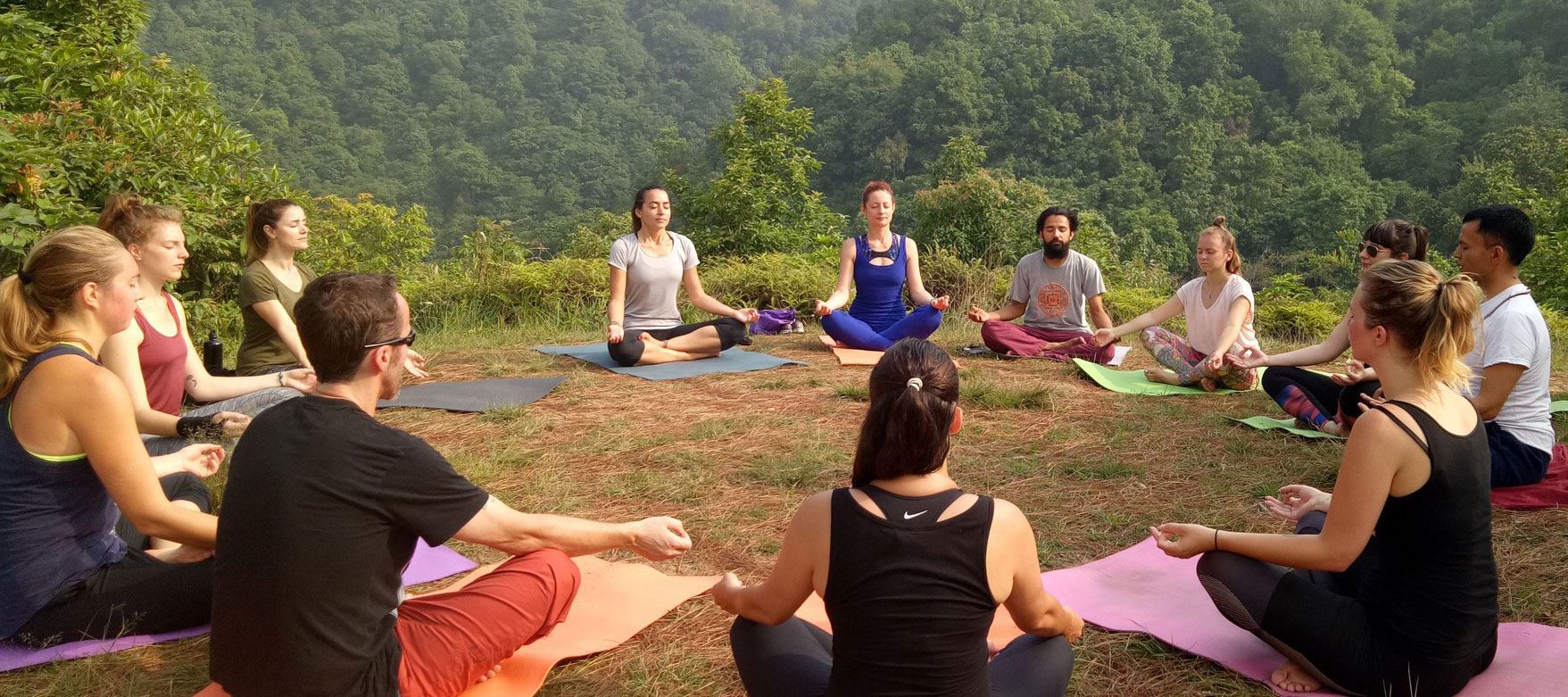
Every Yoga teacher is first a yogi. No non-yogi can become a Yoga teacher. While a yogi practices Yoga, a Yoga master worships the spiritual science. Utter devotion to the science of Yoga is the only way one can worship it. There are many people, who just learn the basics of Yoga and start teaching. This is not the way you teach Yoga. It has to be taught with immense emphasis so, before beginning your teaching career, make sure you have the passion inside you to learn more and more about this science of life. Make Yoga an integral part of your life. Before preaching to your students to practice Yoga, start living the yogic way of life yourself. The more you embrace the beauty of Yoga, the better your teaching style will be. Commit yourself to the discipline of Yoga.
2. Bring variety to your teaching
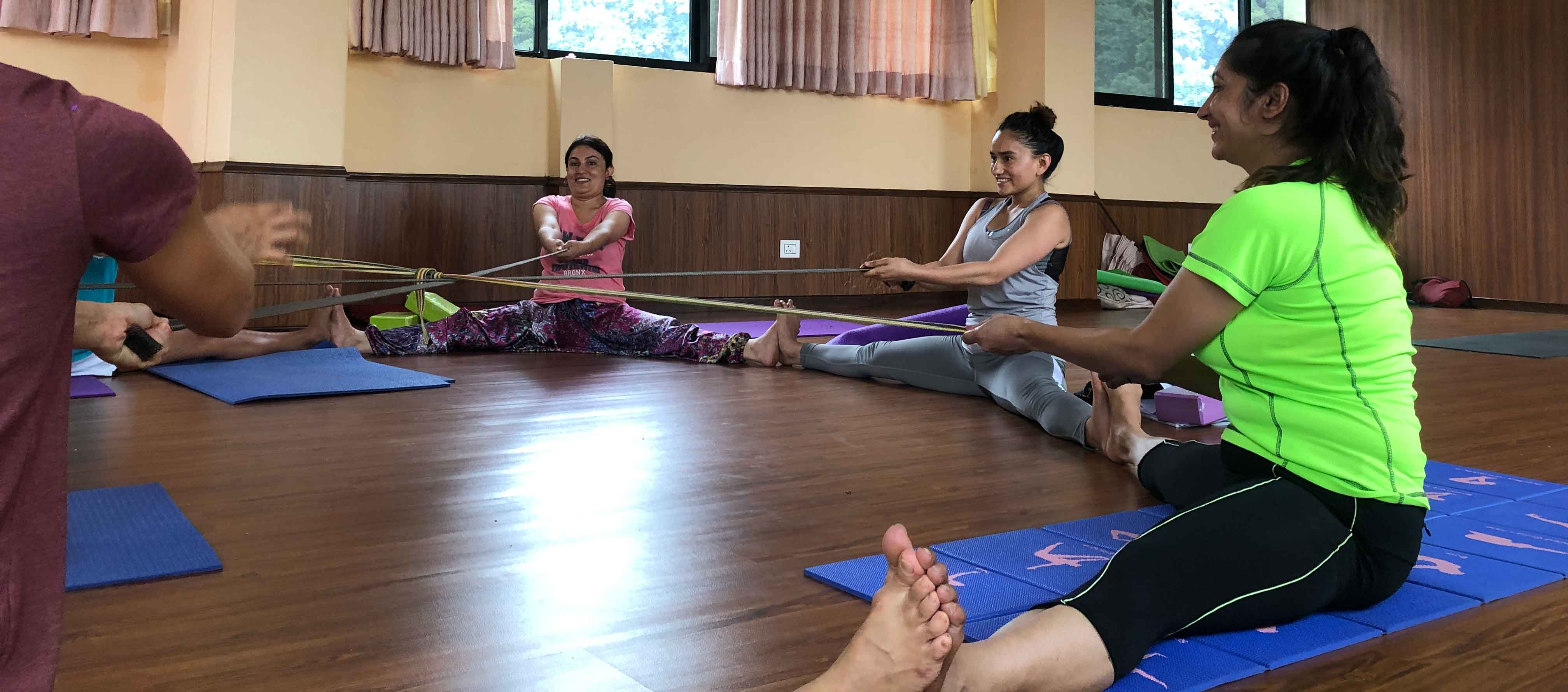
Monotony is one of the most despised words in the English dictionary. Nobody enjoys the company of a monotonous person. You can’t keep on repeating the same thing, in the same way, every day and expect your listeners to digest everything. All people in the world need to have a different taste. In the same way, students in a Yoga class want their teacher to come up with a unique set of ideas for the class. To be a diversified teacher, you need to explore the vastness of Yoga. You can divide different Yoga practices into various routines. Different styles of Yoga on different days. It is recommended to give more emphasis to the philosophical education. Enter the class with a different mood, and distinct stories each day. All these will transform you into an awesome Yoga Teacher.
3. Reading and writing
Yoga is a vast collection of knowledge. Exploring the discipline is probably the best way not only to improve yourself as a yogi but also as a teacher. While you are reading some journals, websites, or books, do not limit yourself just to Yoga. Read everything and anything that comes your way. Look for some form of inspiration in the pieces. Try to write about various topics that you know about. This will improve your language skills and help you shape your teaching style in a fine way finely shape your teaching style. You can create a blog and write about Yoga teaching techniques and your own experience while being in the company of so many students. Many times, deviation from your primary task of teaching the students contributes to your decline as a teacher. Reading various materials keeps your mind sharp and focused at all times.
7 Incredible Health Benefits of Locust Pose Shalabhasana
Shalabhasana is a back-bending Yoga asana that is filled with a large number of benefits for the body, mind, and soul. The word ‘Shalabhasana’ is made of two Sanskrit words – ‘Shalabh’ which means a locust or grasshopper and ‘Asana’ which means pose or position. The final position of a Shalabhasana practitioner imitates a locust. The asana has traditionally been an integral part of Hatha Yoga and is among the popular Yoga exercises. Learn 7 Incredible Health Benefits of Locust Pose Shalabhasana
How to Do Shalabhasana :
To practice the pose, lie down on the Yoga mat with the belly facing the mat. Raise your legs and chest while keeping the pelvis on the ground. Bring the hands above your buttocks parallel to the mat. Make sure the knees and elbows do not get bent. Close your eyes and keep the body in balance. Try to feel the tenderness of the earth before opening the eyes and setting the body free.
Have a look at some of the health benefits of the Locust pose while getting acquainted with how it works with various body parts and organs.
1. Instigates digestion
Digestive organs are among the finest beneficiaries of the Locust Pose. Since a lot of body weight is put on the abdomen, the digestive system gets toned awesomely. From the intestines to the liver, every digestive organ is influenced by the practice of Shalabhasana in some positive way or the other. The ultimate benefit comes in the form of better digestion. It is a matter of tremendous importance that the digestive system of a person works properly. This lets you remain away from all digestive problems such as constipation, stomach pain, diarrhea, etc. Just 5-10 minutes of Locust Pose every morning can help you enjoy your meals in the best way possible.
2. Helps burn fats
One of the most widely known health benefits of Shalabhasana is its ability to burn those extra kilos present in the body. For this reason, the yogic exercise is extremely popular among the modern generation of practitioners. Muscles from almost all parts of the body feel the toning effect of the Locust pose. While removing harmful toxins from the body, the exercise helps you experience immense rejuvenation. Include the practice of Shalabhasana in your daily lifestyle and enjoy its goodness in abundance.
3. Promotes blood circulation
For better circulation of blood in the body, Shalabhasana is of great significance. Almost all parts of the body come into action when one practices the Locust pose. The exercise stretches all the muscles, resulting in blood reaching everywhere. The red liquid enriches each and every cell of the body. Feel rejuvenated, refreshed, and energetic by practicing this asana every day.
4. Cures back pain
Any kind of back issues can be resolved with the regular practice of Shalabhasana. While being in the back-bending and reclining position of the Locust pose, the spine gets stretched and the back muscles enjoy a good exercise. Many people find it difficult to hold the correct posture of the body due to the weakening of the lower backbone, hips, etc. Those people can find this asana influential since the pose impacts the whole back region beautifully.
5. Tones thigh and arm muscles
When it comes to toning the muscles, Shalabhasana can certainly do wonders. One needs to raise his/her legs and arms in the air while practicing the asana. This puts a lot of pressure on the thighs and the arms. Along with strengthening the muscles, the Yoga pose enlivens the body parts. It has a good impact on the joints as well. Strengthening the thighs and arms boosts the whole power of the body. If you are looking to enhance your physical stamina, this asana can help you in a great way.
6. Bolsters the shoulders
The shoulders and the chest have an extraordinary role to play during the practice of Shalabhasana. The exercise is an ideal way to boost the strength of the shoulders, which keeps the body in good shape. In addition, the neck also gets stimulated with the Locust pose, since all three are joined together closely. Those, who feel any kind of pain in their upper body part are recommended to give a few moments of the day to Shalabhasana. It is incredible for maintaining proper posture and alignment.
7. Aids body balance
Shalabhasana is all about balancing the body’s two halves on the pelvis. The practice teaches the body and mind to remain well-adjusted all the time. It throws light on the equitable nature of Yoga and the utilization of the ancient practice in a more inclusive way. You feel similar tranquility as that with Meditation. After a session of the Locust pose, you can feel immense serenity and equitability in the brain. When all three aspects of life – mind, body, and soul work together, it manufactures an environment of eternal beauty and bliss.
Top 10 Health Benefits of Dandelion
Introduction: Health Benefits of Dandelion
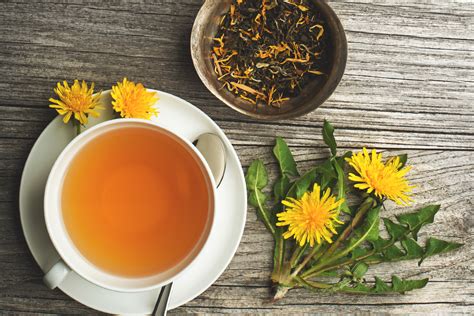
Dandelions are green and growing miracle herbs or flowers. Their ability to heal and nourish the body from the inside out makes them one plant you do not want to get rid of this summer. There’s a reason dried dandelion root is so expensive. Here are the top 10 of the most important health benefits of dandelion:
Stronger Bones
Dandelions are calcium-rich, which is the main element required for the growth of strong, healthy bones. They are also high in antioxidants like Luteolin and Vitamin C, which protect from loss of bone density and bone weakening.
Liver Health
One of the greatest benefits of dandelion is how it nourishes and healing the liver. Dandelion has been shown to improve hepatic function by detoxifying the liver and reestablishing hydration and electrolyte balance. It also increases the production and release of bile. One of the greatest benefits of dandelion is its effect on our liver.
Diabetes
Dandelion helps stimulate the pancreas to produce insulin and helps regulate blood sugar levels. It is also a natural diuretic and thus encourages urination. What does this have to do with diabetes? It helps remove excess sugar and salt from the body and reduces sugar build-up in the kidneys (thus helping reduce the risk of renal problems in diabetics).
Urinary Health
As mentioned above, dandelions are a great natural diuretic, and so they help eliminate toxic build-up in the kidneys and urinary tract. The anti-microbial properties of dandelion also prevent bacterial growth in the urinary system, which is great for individuals suffering from recurring urinary tract infections (UTIs)
Better Skin
Dandelion is an excellent detoxifier and antioxidant, making it one of the best herbal remedies for treating acne and other skin problems like psoriasis and eczema. It helps purify the blood and improves liver function, both of which result in beautiful, glowing skin. The major chlorophyll content in dandelion greens is also a win-win for skin health.
Cancer
Another important use for dandelion is its powerful effects against cancer. Many studies have found that dandelion root extract is effective in the treatment of leukemia and breast cancer. It acts by inducing apoptosis in leukemia cells while leaving healthy cells alone. It also has a positive impact on cancer cells that are resistant to chemotherapy.
Jaundice
Thanks to the liver-healing abilities of dandelion, it also helps with jaundice, a disorder of the liver, where it overproduces bile and messes with the body’s metabolism. Dandelion helps regulate bile production, and also promotes urination, helping to get rid of excess bile.