
YOGA RETREAT TRAVEL TIPS
Himalayan Yoga Retreat with us is like a vacation where you will get the combined feeling of relaxation, homeliness, cultural vibes, and many more experiences. Before you can enjoy all the exciting experiences a yoga retreat has to offer, you have to get there. Traveling abroad can be hard for somebody and somebody easy. We will provide you with tips that will help you during your yoga retreat travel. Here are Yoga Retreat Travel Tips
Whether you’re planning for your first abroad yoga retreat or you’re an experienced traveling yogi. Taking the time to make certain mental and practical preparations is essential for everyone.
7 yoga retreat travel tips to prepare for your next yoga retreat are as follows :
Early Planning
Planning is the most important step for traveling abroad. If you plan wisely then you get the travel experience fullest without any obstacle. But if you plan to delay, then there might be chances that you will face some difficulties. So, Planning early will help you get the best deals. Also, you might even have time to convince a friend to travel with you for the retreat.
Wisely Choose Your Destination
When you start thinking about your yoga retreat, think about places that you want to visit the most. Think of places that you have been creating on your travel bucket list. So a yoga retreat is about getting away from things you know and opening yourself to something new experiences. Don’t hesitate to explore unseen parts of the world but choose a destination where you’ll feel the most comfortable navigating the travel, accommodations, and conversation.
Understand International Travel Requirements
If you really plan on traveling abroad, research the documents that you’ll need to enter your destination country and get back home. Normally, you’ll need a valid passport that will be valid for at least six months after your return. You may need a visa to enter some countries but as in Nepal, you get a visa on arrival. So before traveling, check all the documents that are needed for traveling properly.

Get your travel insurance and book in advance
So if you have planned your destination for the retreat, then don’t delay booking. Booking at least six months in advance ensures that you’ll get the best pricing on flights and accommodations. Also when you book, purchase travel insurance as well. Though travel insurance will cost a little, it is well worth the peace of mind you’ll have regarding things like a delayed flight, lost luggage in case of medical emergencies, etc. Nothing should keep you from enjoying your relaxing yoga retreat to the fullest.
Pack Things Wisely :
Basically yoga retreat is like a place where you do relaxation and recreation type of things. So, A few pairs of yoga pants, a lightweight dress for small trips, and a cardigan for chilly nights will be enough. You should pack things according to the weather at your destination. Wear a sensible pair of shoes on the plane and bring a comfortable pair of dressy sandals if you want to dress up one night.

Take time to settle in
Once you arrive at your destination, take time to settle in. Explore your surroundings and sample the local cuisine if you have the time before your first yoga session. If there’s no activity during the day on your arrival, choose a quiet place to spend a little time on your own in order to prepare yourself for the change.
Grab New Experiences
In order to gain new experiences try to grab every challenge the retreat has to offer. Also, Take a walk without a specific destination in mind or choose a restaurant at random and try some of the local dishes. Keep your mind and heart open to every possibility and give yourself plenty of downtime to rest, relax, and absorb as much as you can of the experience.
Travel to Nepal for Yoga Teacher Training
Nepal is the perfect destination for people who wanna experience luxury tourism activities to wild trekking adventures. Every experience can be found in this small landlocked country. Yoga Teacher Training can be a wonderful experience for travelers who wish to broaden their knowledge of yoga and have full experience of traveling abroad. Nepal being a hyper tourism bomb can create your yoga teacher training experience to the fullest and thrill.
So here’s the question Why do your yoga teacher training in Nepal?
From the remotest corners to the urban landscape, Nepal embodies a sensory experience of colours, sounds, sights and tastes. Visit Nepal welcomes you to life’s amazing moments. So does Yoga Teacher Training in Nepal provides you with ultimate knowledge and experience?
What is special about Nepal? The reasons are :
Local Food
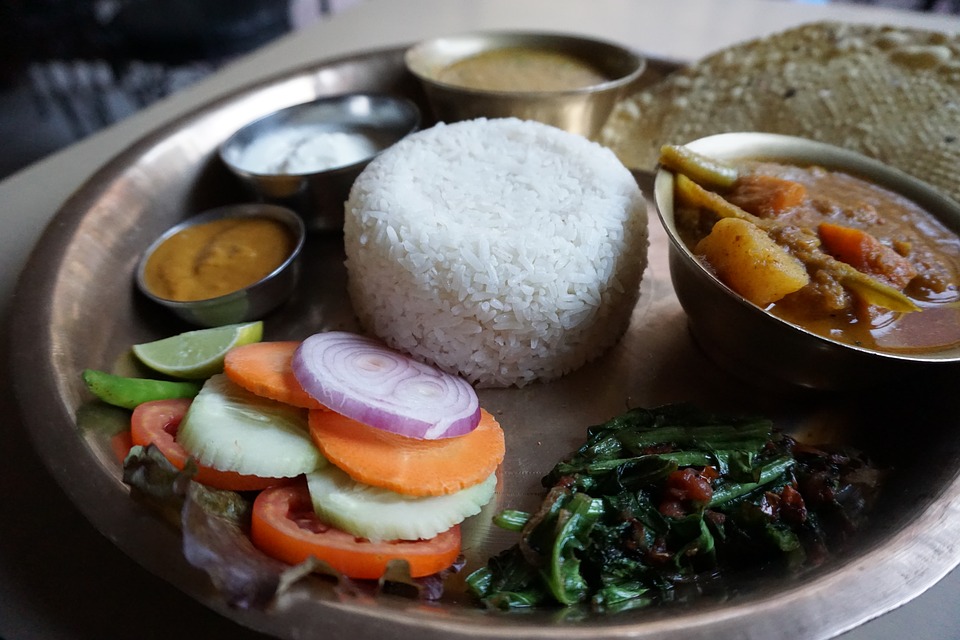
Nepal is very famous for its food and local culture. Although small and landlocked, you can enjoy a variety of dishes with a warm welcome and the best hospitality.
if you visit Nepal, you get the wonderful chance to get familiar with the delicious local food of various ethnic groups of Nepal. During your teacher training, you get to eat different dishes from Delicious Dal Bhat to Chapati etc. Nepalese food is more than just delicious and healthy as well.
Local Culture
During your yoga teacher training, you get a chance to be familiar with various new cultures and traditions. During your holidays in training, you get a chance to visit multiple Temples and Stupas. The city of Kathmandu is known as the City of Temples. Also, you can be part of Nepalese festivals and traditions and have an enjoyable time. This way, you get to know people and places much better.
Low-Budget destination
Normally if you have a low budget and wanna have a wonderful experience for your yoga teacher training then Nepal could be the perfect destination. For Nepal, all flights, accommodation, and other significant services can be found at ridiculously low prices. So, Nepal may be one of the cheapest yet best tourist destinations in terms of the cost of services.
National Parks and Conservation Areas
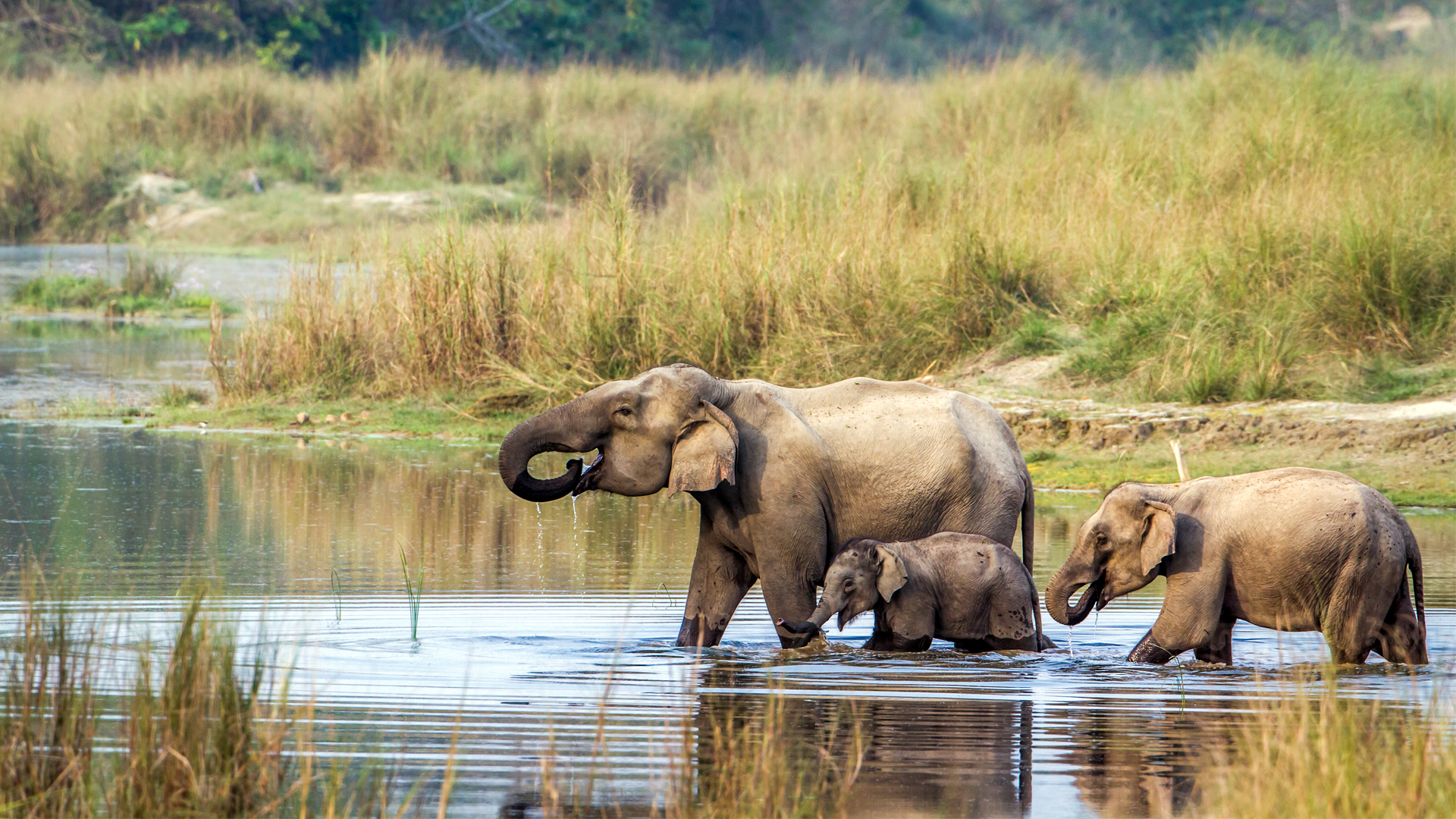
Nepal is home to vast natural resources, Currently, there are nine national parks, three conservation areas, three wildlife reserves, and 11 buffer zones. And it is 19.67 % of the total land area of Nepal. Nepal is saving wild dense forests and wildlife so effectively.
During yoga teacher training or after training, if you wish to see wildlife, then you may go to different locations and enjoy your sightseeing beautifully. You may also do different hikes as well.
Special Reason’s Why to Visit Nepal ?
- In Nepal, the various tourism service providers will provide various offers and discounts for their products. That will help you experience different things. For example, Airlines will provide special fares, Hotels will provide special rates for rooms, etc.
- For tourism promotion, the government is organizing different cultural, adventure, and breathtaking events which will provide you chance to enjoy various experiences.
- During this year, the government is promoting sustainable tourism and well-managed tourism, which will make your travel more smooth and worth it.
- Ministry of Culture, Tourism and Civil Aviation(MoCTCA) will review the air service agreements with Thailand, Japan, Egypt, and China among others which will make your flight experience easier, cheaper, and reliable.
Why March is good for Yoga Teacher Training in Nepal?
Question on Yoga Teacher Training in March
Namaste, if you are looking for doing your yoga teacher training in this year 2025 or any year ahead, why consider March as your perfect training time? Learn reasons for Yoga Teacher Training in March in Nepal.
Do you love the warm temperatures, blooming flora, and good weather while yoga teacher training in Nepal? March is the start of one of Nepal’s two annual peak tourist seasons, and it’s also when the temperatures have truly warmed up after winter. March is a great time to travel to Nepal. In Nepal, March signifies the beginning of the Spring season. And it is very special! Appeasing sunlight, flowers blooming everywhere are filled with the fragrance of blossoms.
Temperatures on the Terai can be scorching by March, well above 90°F, while Kathmandu and Pokhara can reach 80°F. The mountain areas at high altitudes will still be cold, however, especially at night.
March Events
Traditional Nepali festivals (whether Hindu or Buddhist) usually follow a lunar calendar. This means that some festivals that fall in March one year may be in February or April the next. Some festivals that often fall in March are:
Ghode Jatra, a festival in Kathmandu when the Nepal Army performs horse races to ward off the demon Gurumapa.
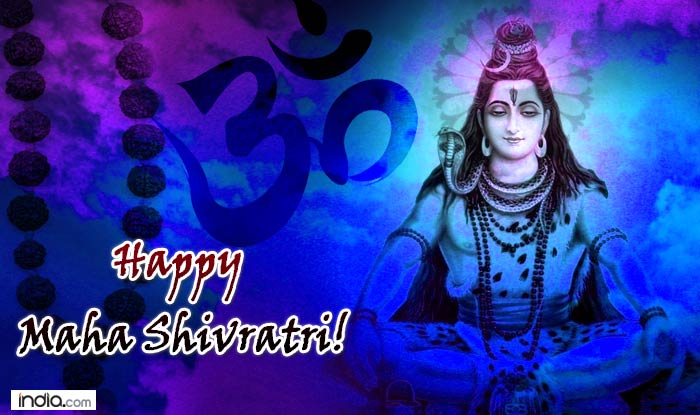
Maha Shivaratri, is celebrated throughout the country but is particularly lively at Kathmandu’s Pashupatinath Temple where thousands of sadhus (Hindu holy men) gather to worship Lord Shiva.
Holi is a festival of color celebrated around the country (on one day in the Terai, and the next in the hill areas) to welcome spring. Water and brightly colored powder are thrown in the air—a great opportunity for photos.
In Conclusion
Above you saw, why March is a very good time to do your yoga teacher training in Nepal. March brings the spring season, brings a lot of happiness and it brings a pristine change in nature that activates our inner aura very deeply. If you do yoga teacher training in March then you may do surely amazing small hikes during your holiday. Warm and shining weather adds a lot of boost and power to our behavior and mood during training. Also during this month, you may convince your yoga teacher to practice your classes in the outer environment as the climate totally supports you.
Types of Singing Bowl (Dwani Paatro)
Singing bowls are used during meditation sessions to evoke spiritual, healing energies. Handcrafted from seven different metals, the singing bowl emits melodic vibrations that synchronize with inner chakras and restore harmony.
Types of Singing Bowl (Dwani Patro)
Thadobati
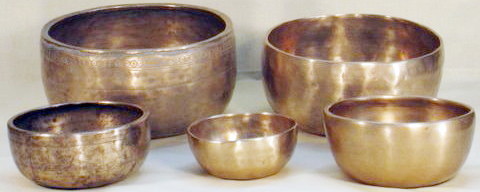
“Thado” literal English translation is straight. Thadobati singing bowls are defined by relatively vertical sides and a flat bottom. Some Thadobati singing bowls are rounder than others however the most common ones have a bottom diameter only slightly smaller than the diameter of the opening. Thadobati singing bowls are relatively deep, up to 5″, while a 9″ diameter is about the largest size you will see in this style.
Thadobati style may be the most ancient common singing bowl, with simple thick examples dating back well over 500 years. These thick old singing bowls will weigh more than a similar diameter Jambati singing bowl. The Thadobati style, especially those with a high copper content and a golden color was preferred by Nepalese.
Thadobati singing bowls usually have no discernible lip overhang and are quite thin from extensive abrasive cleaning over the centuries. Some Thadobati come with interesting punched and etched decorative markings. You could say there are different sub-styles of Thadobati bowls based on recurrent marking patterns but there is no commonly accepted nomenclature to describe these styles. You can see some fanciful names for these styles but this is modern marketing, not tradition.
Singing bowls in the Thadobati style range in tone over four octaves, the widest range of any style. It would be possible to put together a hundred bowl sets, all with discernably different strike tones. Thick small Thadobati bowls can be very high well up into the 6th octave while thinner large bowls go down to the bottom of the 3rd. A few rare examples can ring in the upper ranges of the very low 2nd octave.
Jambati
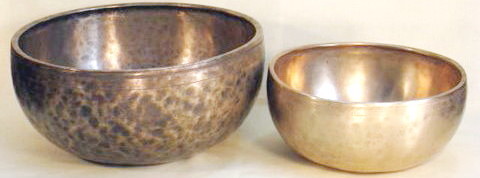
Jambati bowls often have visible hammer marks. There are classical etching lines on Jambati bowls – below the rim on the outside and circular markings inside at the bottom. Some very old Jambati have no lines left, they have been worn off from use. Many older Jambati were made with a flattened rim, very old examples can have a broad flat rim with its own set of etched lines. These have become quite rare in recent years. Jambati bowls were often used for relatively clean purposes such as grain storage so bowls hundreds of years old can have a high level of preservation. The Jambati style, especially darker ones possibly indicating the presence of thunderbolt metal (iron), was preferred by Tibetans.
The vast majority of Jambati are in the 2nd and 3rd octave with an occasional small extra thick bowl ringing at the very low end of the middle octave.
Remuna
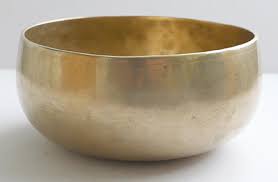
Remuna singing bowls are similar to Thadobati in shape and timbre. Since they have a similar soundscape they mix seamlessly with Thadobati in sets. The difference between a Remuna and a Thadobati is the Remuna have inward sloping walls to go with their flat bottom. Remuna bowls are very strong on artwork.
Remuna bowls tend to sport complex artwork. They often have deep etching with circles inside and out, even occasionally on the bottom of the bowl. It is not uncommon for Remuna bowls to have two textures outside, with a darker and rougher bottom half of the bowl. Inscriptions are more common on Remunas than any other type of bowl. As with all antique singing bowls artwork may be worn away through long years of use.
Remunas tend to be thinner than Thadobati and you never see an extra thick one. The origin of the name Remuna is not clear, however, there is a Remuna town and district on the northwest side of the Bay of Bengal, south of Bhutan.
Manipuri
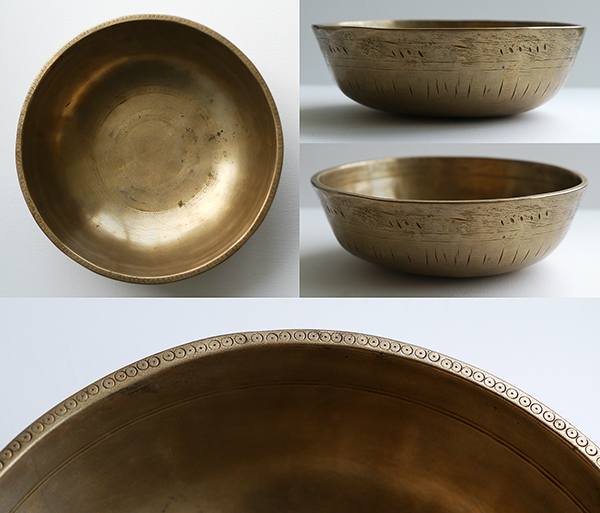
Manipuri are the original singing bowls. When singing bowls first were introduced to Western travelers in the 1970s this was by far the most common type. At the time most singing bowls were coming from Tibet on the back of refugees. Due to their metallic content, they were easily sold to buyers in India and Nepal. The name Manipuri, however, comes from a state in Northeastern India. This is possibly due to that state being a center of production for brass objects.
There are many sub-styles of Manipuri bowls. No doubt over the last ten centuries millions of these were made and it is easy to imagine different makers using slightly different techniques. Manipuri bowls can be quite old and worn. They were used so extensively that thick elaborately etched bowls eventually became thin smooth bowls with no markings. it is not unusual to see a worn bowl with less than half the thickness of a well preserved version of the same sub-style. Much more so than Thadobati bowls, Manipuri were made with many hammermarks and fine craftsmanship so that they were quite smooth and even when brand new. This is not always true but a roughly made Manipuri is unusual.
Manipuri singing bowls were made in quite a range of sizes from tiny 3-inch bowls to ones a foot across. Due to their range of sizes, and also thickness, Manipuri have a very wide range of primary tones, from the lower second octave to the top of the 5th. The very worn Manipuri bowls can have exquisite sound. The shape of Manipuri bowls gives them a timbre that blends well with Jambati.
Ultabati
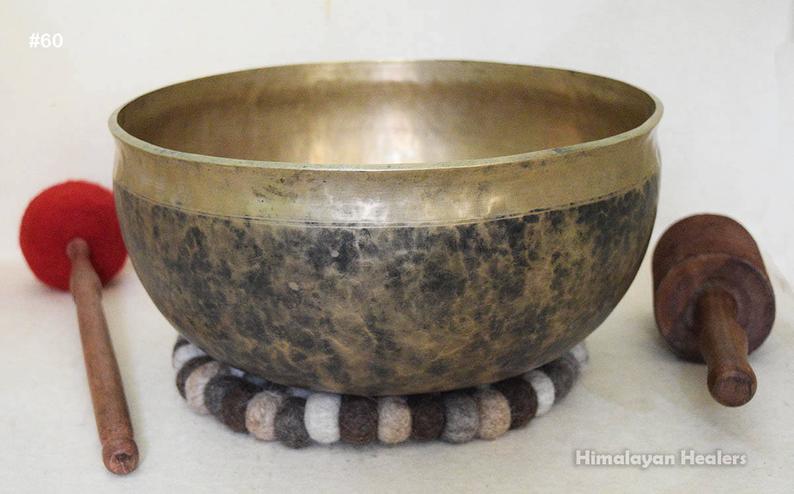
Ultabati singing bowls are similar to the Jambati style and come in similarly large sizes over 7″. Their distinguishing feature is that the side of the bowl is curved under the rim. These bowls are not very common which makes them difficult to find with better sound quality. Ultabati bowls often have prominent hammer marks. They can come darkened, even black, on the outside and bright in the interior. Etching lines are similar to Jambati bowls but much less common.
While Jambati bowls were a favorite in Tibet Ultabati seemed to be more of a Northern Indian bowl. Ultabati bowls have the same low tones of Jambati. Indeed some of the deepest tones I have come across are thinner large Ultabati, starting at the bottom end of the 2nd octave.
Trapezoid
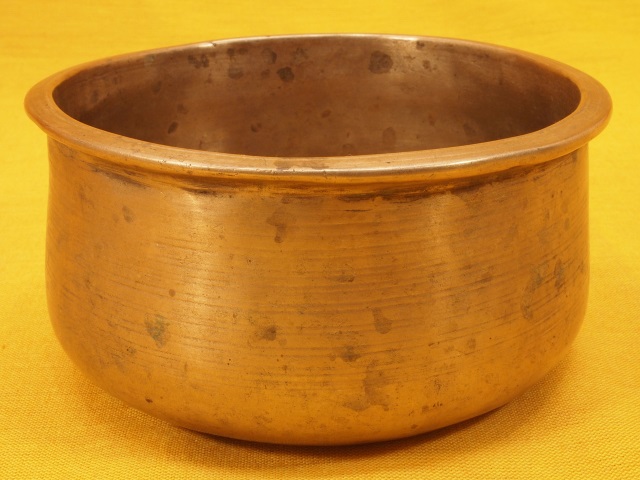
Every once in a while a “new” antique singing bowl type emerges. In the past, an occasional Trapezoid shape would pop up here and there, then in 2013 the quantities suddenly jumped. In the past,, the Trapezoid bowls that would surface were large, thin, and often not very sonic. What’s come to the market recently are smaller thicker bowls some of which sound incredibly sweet. My theory is that some village in some Himalayan regional backwater was “found” by the antique bowl collectors. In this village, there was a tradition, maybe maintained by a single family, of making this style. A little time capsule treasure trove was waiting for just the right moment.
These bowls have straight, symmetrically sloped sides and a flat bottom and straight top, viewed from the side a perfect Trapezoid. They all seem to have been made with similar markings, many parallel exterior lines, and groups of inner circles. The rims are broad and outward-facing with etching lines. Some of the very oldest examples have broad rims worn down to nubs. Who knows how many years of use that took?
Reiki for the Common Cold
Now people have established or found different things from climbing Everest to going on Mars, but we still get confused about what to do when we have a common cold. Many things help you in curing cold. Reiki doesn’t help you directly to deal with it but will help in curing discomforts caused due to cold. Here is why Reiki for the Common Cold.
Learn below How Reiki helps curing common cold
Clean the Room
Cleaning the energy in the room or home is a good idea before you begin working in the cold. Use incense, singing bowls, chanting, sage, or whatever other methods you typically find helpful.
Balance Your Chakras
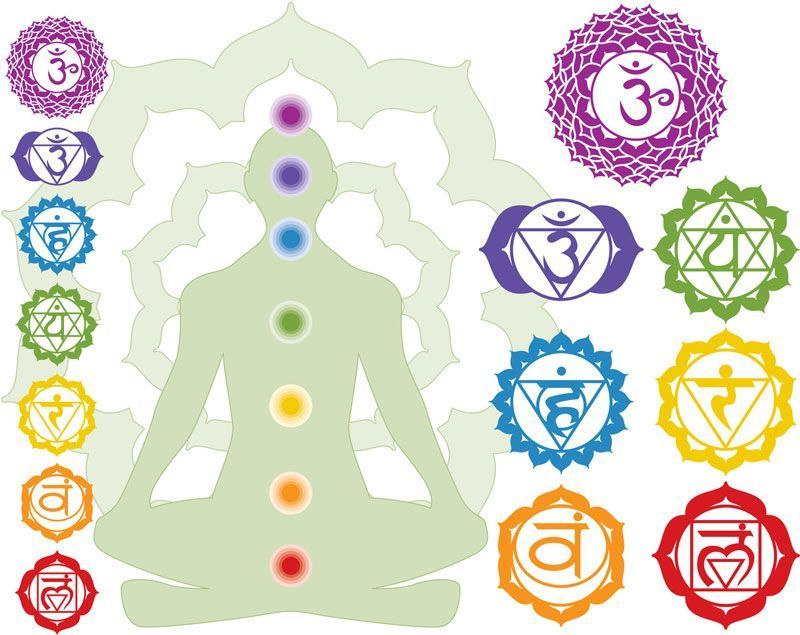
Cleaning and energizing your chakras is next. Here you can enter your usual meditative state, then imagine a ray of bright, gold light entering through the top of your head. The light travels down your spine, invigorating each chakra with its respective color. While you most likely know the chakras backward and forward, here comes a quick reminder nonetheless:
- Crown chakra: Violet
- Third eye chakra: Indigo
- Throat chakra: Blue
- Heart chakra: Green
- Solar plexus chakra: Yellow
- Sacral chakra: Orange
- Root chakra: Red
Continue the meditation until you feel each chakra has been opened, cleared out, energized, and is once again spinning heartily and with ease.
Enhancing Your Reiki Practice
Overview in Reiki : Enhancing your Reiki Practice
Reiki is a spiritual healing science that is based on universal power energy. Reiki means universal energy which is around us. Reiki is a First-degree contact healing Practice based on traditional and modern ways of healing followed by different energy centers called Chakras. We can use this energy to heal ourselves and others, at all levels i.e. physically, mentally, and spiritually. The healing energy flows from the source, the cosmos around us through the healers to the physical, mental, and emotional bodies of the person. We provide reiki classes in Kathmandu to all people. Learn Enhancing Your Reiki Practice
What does enhancing your Reiki practice mean ?
Enhancing your Reiki practice means practicing with generosity, and giving more of yourself to your practice. The way to do that depends on where you are with your Reiki practice (keep reading).
But know that whether you are new to Reiki or you’ve been practicing a long time, you can always increase your Reiki benefits by enhancing your Reiki practice.
What are Reiki benefits?
Reiki practice is balancing, and balance means different things at different times. All the benefits your Reiki practice brings come from you being more balanced. And being more balanced more often. That increases your overall resilience.
So the benefits you’ll experience have a lot to do with how and where your system is unbalanced. If, for example, you have digestive problems, you’ll likely notice improved digestion and appetite. And better food choices. You might notice it right away, or it might take a week or so.
Enhancing your daily self Reiki practice
- Improve Your Reiki Practice by Using Reiki on Yourself Daily
- Receive Reiki from Others
- Let Reiki do the Healing
- Price Services Fairly
- Get Rid of Selfishness
6 Surprising Health Benefits of Lemongrass Tea
Lemongrass, is popular in many countries throughout the world, mainly due to its amazing health benefits, taste, and light scent. This plant has a variety of nutritional favors, and the benefits, and properties of lemongrass are surprising. What is a lemongrass plant and what are the health benefits of Lemongrass Tea? What are the properties of lemongrass? How to make lemongrass tea? Know it in depth!
What is lemongrass?
Lemongrass (Cymbopogon citratus) is a tall, perennial grass in a class of about 45 species of grasses native to the tropical and sub-tropical climates of Asia, Australia, and Africa. India is the highest producer of lemongrass (producing over 2 million pounds per year), which is cultivated along the mountain range of the Western Ghats and beside the foothills of Arunachal Pradesh and Sikkim in the Himalayan mountains.
Lemongrass grows spectacularly well in Teatulia®’s USDA-certified organic tea garden in Northern Bangladesh, which borders India and is nestled against the Himalayan mountains.
Benefits of Lemongrass
- Respiratory Disorders
Lemongrass is widely used in Ayurvedic medicine for its healing effects in treating coughs and colds. Along with other beneficial components, the vitamin C content present in it may help in providing relief from nasal blockages, flu, and other respiratory disorders such as bronchial asthma.
2. Helps Lower Cholesterol
Study Shows that lemongrass highly possesses anti-hyperlipidemic and anti-hypercholesterolemia properties that support healthy cholesterol levels.
3. Anticancer Potential
Lemongrass as seen may be effective in preventing the growth of cancer cells without affecting the healthy cells of the body. Research conducted by various groups shows lemongrass has shown promising outcomes in the prevention of skin cancer. This is mainly because of the presence of a chemical compound called citral in the lemon grass body.
4. Helps Treat Infections :
Lemongrass also works as an antiseptic and is effective in treating infections such as ringworm, sores, Athlete’s Foot, scabies, and urinary tract infections (UTI) because of its antimicrobial and anti-fungal properties. They also use it to treat various diseases, such as oral or vaginal candidiasis.
5. Skin Care
Lemongrass acts as a skin tonic and an effective cleanser for oily or acne-prone skin due to its astringent and antiseptic properties. It helps in strengthening the skin tissues and toning up the pores while also sterilizing them.
6. Boosts Immunity
Lemongrass extracts have a beneficial effect on the inflammatory actions of cytokines. They are the signaling molecules through which the cells communicate and respond to the body. Studies have shown that lemongrass exerts anti-inflammatory action and its constituent, citral, may be the cause of its inhibitory effect on cytokine production.
Why Yoga Teacher Training in February
Why Yoga Teacher Training in February? During February, the Weather is beautiful in Nepal. The sky is clear the day is sunny and warm. It is considered winter and is not best for high-altitude trekking. However, February is warmer than December and January and is best for short treks jungle safari, and Nepal tour with day hiking. February is shoulder season to Spring and is less crowded here in our academy. Himalayan views are guaranteed and are more beautiful during the month than in some months of peak season.
February Events
Traditional Nepali festivals (whether Hindu or Buddhist) usually follow a lunar calendar. This means that some festivals falling in February one year may be in January or March the next. A festival that often falls in February is Maha Shivaratri, On this day, Hindu devotees worship Lord Shiva. The celebrations are particularly vibrant at Pashupatinath Temple in Kathmandu, where thousands of sadhus (Hindu holy men) gather.
Why February?
- Clear blue sky.
- Warm and sunny days are comfortable for short treks and day hiking.
- Snow peaks appear more picturesque with fresh snow from winter.
- The trekking trails and sightseeing places will be less crowded and quieter.
- Accommodations and services become easily available.
Why Yoga Teacher Training in February?
In February, the weather is very preferable. This is pre-spring, So the sky will be clear and sunny. Due to this type of weather, your stay at the academy will be more favorable and awesome. During your training holidays, you may visit many tourist places and in this month, there will be very less crowds. During February, if you plan on going on small hikes around the academy, then the trekking trails are very beautiful and the mountain views are also really breathtaking. February is very warm compared to December, so you don’t need to worry about many things.
Natural Ways to Improve Sleep
Struggling with your sleep schedule? Anyone who hasn’t been sleeping well knows that we’re not ourselves without a good night’s sleep. So learn Natural Ways to Improve Sleep.
Some Recent Facts on Sleeping Behavior :
- 30% of adult suffer from insomnia.
- 37.9% of people have reported falling asleep unintentionally on the job in the last 30 days.
- Even moderately sleep-deprived individuals are 50% slower to respond than someone who is under the influence of alcohol.
- 12 % of people entirely dream in white and black.
Fortunately, there are many ways to encourage a solid night’s sleep without depending prescribed drugs. Skip the medication and opt for one of these natural ways to improve sleep: Day work nature is the preparation for Sleep.
# Chants AUM and Mantras:
# Read a book
Quiet the mental chatter and dive into a good book to help slow down your brain and prepare for a solid sleep.
# Meditate
Try a guided meditation and deep breathing to help you doze off.
# Get an Oil Massage and Shirodhara
Ayurveda Massage helps you relax, relieves aches and pains, and can stimulate sleep hormones and Shirodhara detoxifies the mental and emotional toxins.
# Yoga Nidra
Yoga Nidra is a state in which the body is completely relaxed, and the practitioner becomes systematically and increasingly aware of the inner world by following a set of verbal instructions. This helps relieve stress.
#Eat Healthy Food Habits
Avoid Foods that are high in sugar and caffeine.if you healthy foods ( organic fruits and vegetables ) .You will surely ensure healthy sleep.
#Moderate Yogasana
There are many asanas that help people maintain their health nervous system and circulation system. Due to this reason, there will be a vast improvement in the sleep condition of the person.
8 Questions You Have Before Your Yoga Teacher Training
In the world, there is an increasing trend for having their yoga teacher training course. People highly prefer having their training course to maintain their standard and life for healthiness and peacefulness. People get their course in different parts of the world. They choose the destination far from their home so that they can travel as well as have their training complete with full of excitement and relaxation. Since Teacher training is a big investment of your time, money, and energy, it’s important to spend some time researching programs to see which is the right fit for you. So we have enlisted those top 8 Questions You Have Before Your Yoga Teacher Training.
1. Do I need to be certified to teach yoga?
This is probably the very first question that everyone thinks of asking before registering for a teacher training course. The answer is actually, NO. Not technically. But it’s very easy to get a job if you are – TRUST ME. Most yoga jobs that you look up require at least a 200-RYT (200-hour Registered Yoga Teacher). Because there are so many people who are certified they could hire, why would they hire someone who’s not? Even now with my certification, I wonder if I should go for my 500-RYT just to have more of an advantage. It never hurts to have more experience under your belt in the ever-growing world of yoga.
2. What style of yoga will I learn?
This is one of the most important questions to ask. Go to the director’s classes and see if the style is something you want to learn. Be wary of training that doesn’t clearly define what they are teaching and try to be a training of all styles. You will need to be focused on one style to be a strong teacher in that style. Once you complete your 200-hour cert, you can take additional training to learn other forms of yoga.
3. What else will I learn besides physical asana?
Often trainings have additional teachings such as anatomy, the history of yoga, energy work, types of yoga, and Vedas and its history. Find out what else the training has to offer.
4. What will I be eating?
Nepalese food is generally based on Indian cuisine and some on Chinese-based cuisines. So normally, the food in Nepal is very delicious. You may get a variety of Indian dishes. But for breakfast here in our training center, you will provide the continental type of breakfast (not so varied). So there won’t be any problem with the food. The food will be healthy, organic, freshly cooked, and also as your choice.
5. What is the average class size?
So Basically the class size depends upon the season or the month, but Nepal is favorable for doing Yoga Teacher Training throughout the year. So normally the class size ranges here in our Academy from 8-15 people. But we think less students the better because more students pay less attention to each student.
6. What kind of yoga mat should I take?
Normally, here in our academy, we have yoga mats for yoga practice. But if you prefer bringing your own type of mats, then you are very welcome. There is no restriction on bringing your mats. You may buy yoga mats as per your needs (may be expensive or cheap).
7. Where would I be sleeping?
When traveling abroad the first thing that comes to our mind, is where to stay and have a wonderful sleep. So does this type of thought come when we travel for studies and training like this yoga teacher training and elsewhere? During your training, you will be staying in rooms with your room partner (female with female and male with male). So you don’t need to worry about the accommodation as you will get perfect rooms with attached bathrooms.
8. What is the price?
While important, we suggest that this is the last question you should be asking or thinking about. 200-hour training is generally between USD 2500-USD 4200. But Nepal being the birthplace of yoga, provides teacher training courses at very affordable prices. We have provided this price with very good reasons. The teaching will be very very good as you receive while paying USD 2500.