
Parkinson’s Disease
Introdution:
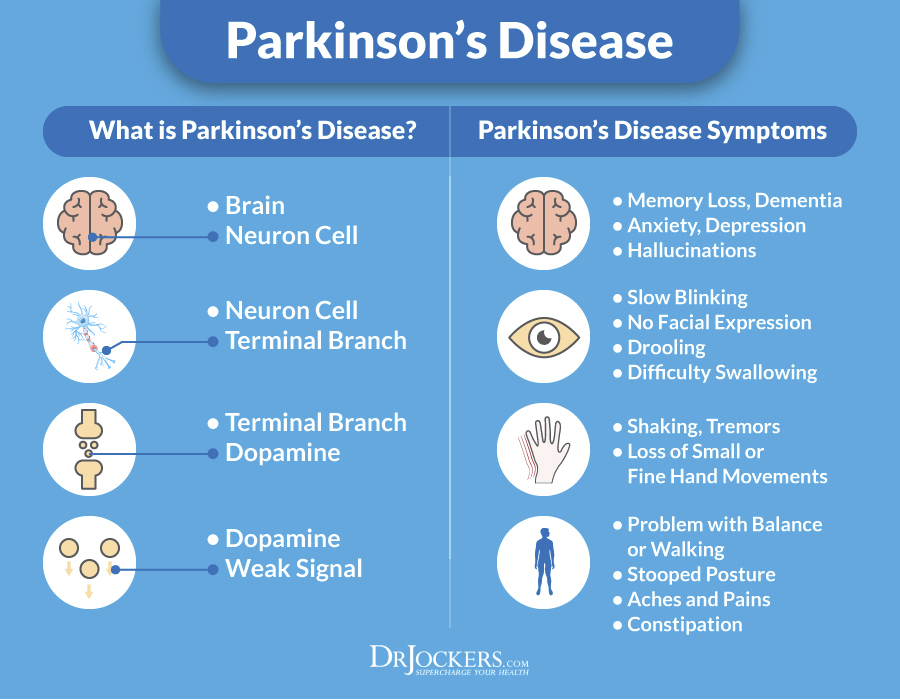
Parkinson’s disease is a degenerative disorder of the brain. Descriptions of Parkinson’s disease are present in the ancient Indian system of Medicine, Ayurveda. It is described as the disorder Kampavata. Parkinson’s disease belongs to a group of conditions called movement disorders. In this disorder, nerve cells or neurons in the brain that control muscle movements are greatly affected. It is characterized by loss of muscle control, which leads to trembling of limbs and head while at rest, stiffness, slowness, and impaired balance. This disease generally develops in elderly people of 50.
Sometimes Parkinson’s disease occurs in younger adults. It affects both men and women. The progression of Parkinson’s disease and the degree of impairment vary from individual to individual. Many people with this disease may live long productive lives, whereas others become disabled much quicker.
Causes:
- Genetic
- Excessive Stress
- Environmental Factors: Possible Toxins could include pesticides and herbicides used in farming, toxins released by industrial plants, air pollution related to road traffic.
- Excessive Alcohol Consumption
- Any other neurological illness
- Drub Abuse
Sign and Symptoms of Parkinson’s Disease
1. Symptoms that affect motor functions
- Tremors: It is one of the most common symptoms. Trembling in fingers, hands, arms, feet, legs, jaw, or head. Resting tremors are noticeable when hands are at complete rest.
- Rigidity: This includes stiffness of the joints and when combined with tremor will produce a cogwheel type of rigidity when the limbs are passively moved.
- Akinesia or Bradykinesia: This slowness or absence of movement.
- Postural Instability:
- Shuffling Gait: While walking person takes small step with their feet barely leaving ground.
- Stooped Posture: In severe or progressive forms of Parkinson’s Disease, the person’s head or upper body may become bent at a right angle to the trunk.
- Dysphagia: The person may have difficulty in swallowing and this leads to aspiration some times.
2. Neuro-Psychiatric Symptoms affecting (mood, thinking and behaviour)
- Depression: Depression is thought to affect between 30-80 percent of all people suffering from this disease.
- Mild cognitive impairment: The person’s voluntary and involuntary responses will show a significant delayed reaction.
- Dementia: It will often occur in about 20-40 percent of all people suffering form Parkinson’s Disease
- Anxiety: Anxiety can also affect people with Parkinson’s Disease.
- Sleep Disturbances: Insomnia is thought to affect half of those with Parkinson’s Disease. They can include changes to the brain, side-effects of some of the medications used to treat Parkinson’s Disease.
3. Symptoms that affect autonomic nervous systems
- Problems with Urination
- Drooling:
- Erectile Dysfunction in Men:
- Constipation:
Management
Parkinson’s Disease is a chronic disorder that requires board-based management including patient and family education, support group services, general wellness maintenance, physiotherapy, exercise, and nutrition.
Complementary Treatment:
There are many modalities and nutritional supplements which can ease symptoms and improve quality of life. Patients must inform their physician about the over-the-counter medications herbs or other supplements. Exercise therapy can help support and tone the underrated muscles and give inflexible joints a better range of motion.
Yogic Managment :
The practices which are helpful in the management of Parkinson’s Disease:
- Kriyas: Jalaneti, Sutraneti, Kapalbhati
- Yogic SukshmaVyama: Buddhitatha Dhritishaktivikasaka, Medhashaktivikasaka, Manibandha Shaki vikasakakriya
- Yogic Sthula Vyayama: Urdhwagati, Rekhagati
- Yogasanas: Tadasana, Trikonasana, Hastottanmasana, Katichakrasana, Pawanamuktasana, Ushtranasana, Bhujangasana, Makarasana, Shavasana.
- Pranayama: Nadishodhan, Bhramari , Ujjayi and Sitali
- Meditation : Breath Awarness, Om Meditation or Guided Meditation focusing on the affected part.
- Yogic Diet: Alkaline food with less oil, salt and spice
Obesity
Intro: Obesity
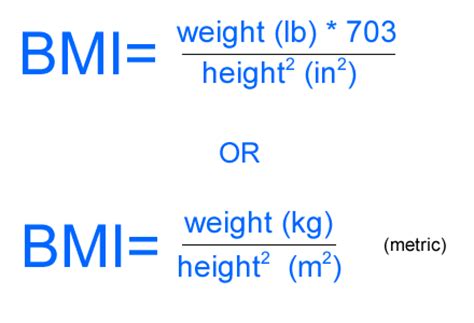
Obesity is the most common nutritional or metabolic disorder commonly defined by body mass index (BMI). It is a condition in which excess body fat accumulates to such an extent that health may be negatively affected. A BMI of 30 kg/m2 or higher is considered as obese. Body mass measurement criteria compare the weight and Height of the person to categorize him/her as overweight, pre-obese, or obese.
Obesity, in absolute terms, is an increase in body adipose tissue( fat tissue) mass. It is considered a chronic disease, like high blood pressure or diabetes. The foods we eat every day contribute to our well-being. Foods provide us with the nutrients we need for healthy bodies and the calories we need for energy. If we eat too much, however, the extra food turns into fat and is stored in our bodies. If we overeat regularly, we gain weight, and if we continue to gain weight, we may become obese.
Causes
A combination of excessive calorie consumption and a sedentary lifestyle are the primary causes of obesity. In a minority of cases, increased food consumption can be attributed to genetic, medical, or psychiatric illness. Excess fat accumulation may be due to an imbalance between energy intake and energy expenditure. There are no specific causes as such but the factors influencing are:
Diet:
Comsumption of high calorie and low –fibre diet
Sedentary Lifestyle:
A sendetary lifestyle plays a significant role in obesity.
Medical and psychiatric illness:
Certain physical and mental illnesses and the pharmaceutical substances used to treat them can increase the risk of obesity.
Socio-economic:
People of high socio-economic group are more prone to obesity.
Endocrine Factors:
Due to certain hormonal imbalance conditions like Hypothyroidism, Cushing Syndrome, etc.
Metabolism:
The persons whose rate of metabolism is low are at higher risk of obesity.
Water retention:
Too much consumption of tea, coffee , aerated drinks, soda soft drinks alcoholic drinks results in deposition of fluid in the body tissues and causes increase in weight.
Yogic Management of Obesity
- Om chanting and prayer
- Shodhana Kriya: Kapalbhati, Kunjal , Agnisara, Nauli
- Surya Namaskar
- Sukshma Vyayama: Selected Practices of Sukshma Vyayama: Udarasakti-vikasaka (2,3,4,6,7,8,9)
- Yogasanas: Tadasana, Katichakrasana, urdhwa, Hastottanasana, Dhanurasana, Uttan Padasana, Paschimotanasana, Asdha Matsyendrasana, Ushtrasana, Mandukasana, Shavasana
- Pranayama: Nadisodhana, Suryabhedi, Pranayama, Bhramari, Sitali and Bhastrika
- Special Practice: Yoga Nidra
- Dhyana: Om Chanting, Om meditation
- Yama and Niyama
Dietary Management
Prevention from Obesity
- Have regular meals at fixed interval
- Do not read or watch television while eating
- Try to keep healthy snacks at home like fruits, vegetables and sprouts.
- Do not keep nibbling between meals. Eat Slowly and chew the food properly
- Avoid drinking alcohol and smoking
- Encourage breast feeding to children as who gets proper breast milk has less probability of getting obesity
- Physical Activity
- Have control over carbohydrate intake
Bronchial Asthma
Introduction: Bronchial Asthma
The asthmatic disorder is a chronic (recurring) inflammatory condition in which the airways develop increased responsiveness to various stimuli characterized by repeated episodes of wheezing, breathlessness, chest tightness, and cough that are at least partly reversible, either spontaneously or through treatment. It is thought that inflammation causes an increase in airway responsiveness (bronchospasm) to a variety of stimuli. Some of these stimuli would have little or no effect or non-asthmatics with normal airways. Many cells play a role in the inflammatory response. More about Bronchial Asthma.
Asthma causes the narrowing of airways and broncho-spasm. The airway narrowing process basically involves:
- Tightening of the smooth muscles around the airways
- Swelling of the airway
- Collecting of thick mucus secretions in the airways
Signs and Symptoms of Bronchial Asthma
- Asthma is characterized by difficulty in breathing, wheezing, and coughing.
- Tightness of the chest/discomfort in the chest.
- Attacks last from one to several hours.
- Severe attacks may affect the heart and circulatory system.
- A severe attack, not responsive to usual therapy is called status asthmatics” and is a medical emergency.
- Hypercarbia, acidosis, and hypoxia is rare in Asthma.
Factors for Bronchial Asthma Triggers
- Tobacco smoke
- Infections such as colds, flu, or pneumonia
- Allergens such as food, pollen, mold, dust mites, and pet dander
- Exercise
- Air pollution and toxins
- Weather, especially extreme changes in temperature
- Drugs (such as aspirins, NSAIDs, and beta-blockers)
- Food additives (such as MSG)
- Emotional stress and anxiety
- Smoking, perfumes, or sprays
- Acid reflux
- Occupational irritants (gases, fumes, vapors, dust, tobacco or other smoke, air pollution of any kind)
- Microscopic droppings of dust mites and cockroaches, airborne pollens and molds, plants and plant proteins, enzymes, and pet dander (minute scales of hair, feathers, or skin)
- Viral, sinus infections such as a cold
- Exposure to an allergen (to which the person is allergic)
Management of Bronchial Asthma
Dietary Management
- Diet plays an important role in the management of asthma.
- There are foods, which are allergic to asthma patients and such foods should be avoided. These foods include cold foods, ice creams, chocolates, stimulants, etc
- Foods that add to mucous production should be specifically avoided.
- Try to take warm water/ drinks
- When you have an asthma attack, avoid taking food after sunset.
Yogic Management
- Shatkriyas: Jalaneti, Sutraneti, Kapalbhati, Kunjal, Vastra Dhouti
- Om chanting and Prayer
- Suryanamaskar
- Selected Practices of Sukshma Vyayama: Uccarana Sthala tatha Visuddha chakra suddhi, Budhi tatha dhriti shakti vikasaka, Vaksha sthala shakti vikasaka- 1 and 2
- Yogasanas: Tadasana , Katichakrasana, Urdhwahastottanasna, Gomukhasana, Usthrasana, Vakrasana, Bhujangasana, Sarvangasana, Sarala Matsyanasa, Shavasana
- Pranayama: Full yogic breathing, Nadisodhana Pranayama, Suryanadi Pranayama, Bhramari
- Yoga Nidra
- Om Meditation
HYPERTENSION
Introduction: Hypertension
Hypertension, also referred to as high blood pressure, is a condition in which the arteries have continuous elevated blood pressure. Blood pressure is the force of blood exerted against the blood vessel walls. Every time the human heart beats, it pumps blood to the whole body through the arteries. The higher the pressure the harder the heart has to pump.
Hypertension can lead to damaged organs, as well as several illnesses, such as renal failure(kidney failure), heart failure, stroke, or heart attack. High blood pressure during middle age may raise the risk of cognitive decline in the later part of life.
The normal level for blood pressure is below 120/80 mm Hg, where 120 represents the systolic measurement (peak pressure in the arteries) and 80 represents the diastolic measurement (minimum pressure in the arteries). Blood pressure between 120/80 mm Hg and 139/89 mm Hg is called pre-hypertension (to denote increased risk), and a blood pressure of 140/90 mm Hg or above is called Hypertension.
Symptoms
High Blood Pressure (hypertension) usually has no obvious symptoms and many people have it without knowing. Untreated high blood pressure can lead to serious diseases, including stroke and heart diseases.
- Persistent Headache
- Blurred or Double Vision
- Nose Bleeds
- Shortness
Cause
- Age
- Family History
- Obesity
- Excess Salt Intake
- Diet
- Addiction(Alcohol & Cigarette)
- Physical inactivity
- Mental Stress
Yogic Management
The role of Yoga in the management of Hypertension is well documented now. The aim of the treatment should be to lower the blood pressure and prevent form further complications arising out of Hypertension. The practices for the management of Hypertension are as under:
Kriyas: Jalaneti, Sutraneti
Yogasanas: Tadasana, Katichakrasana, Urdhawa Hastottanasana, Pawanmuktasana, Vajrasana Ushtrasana, Gomukhasana, Sashankasana Vakrasana, Bhujangasana
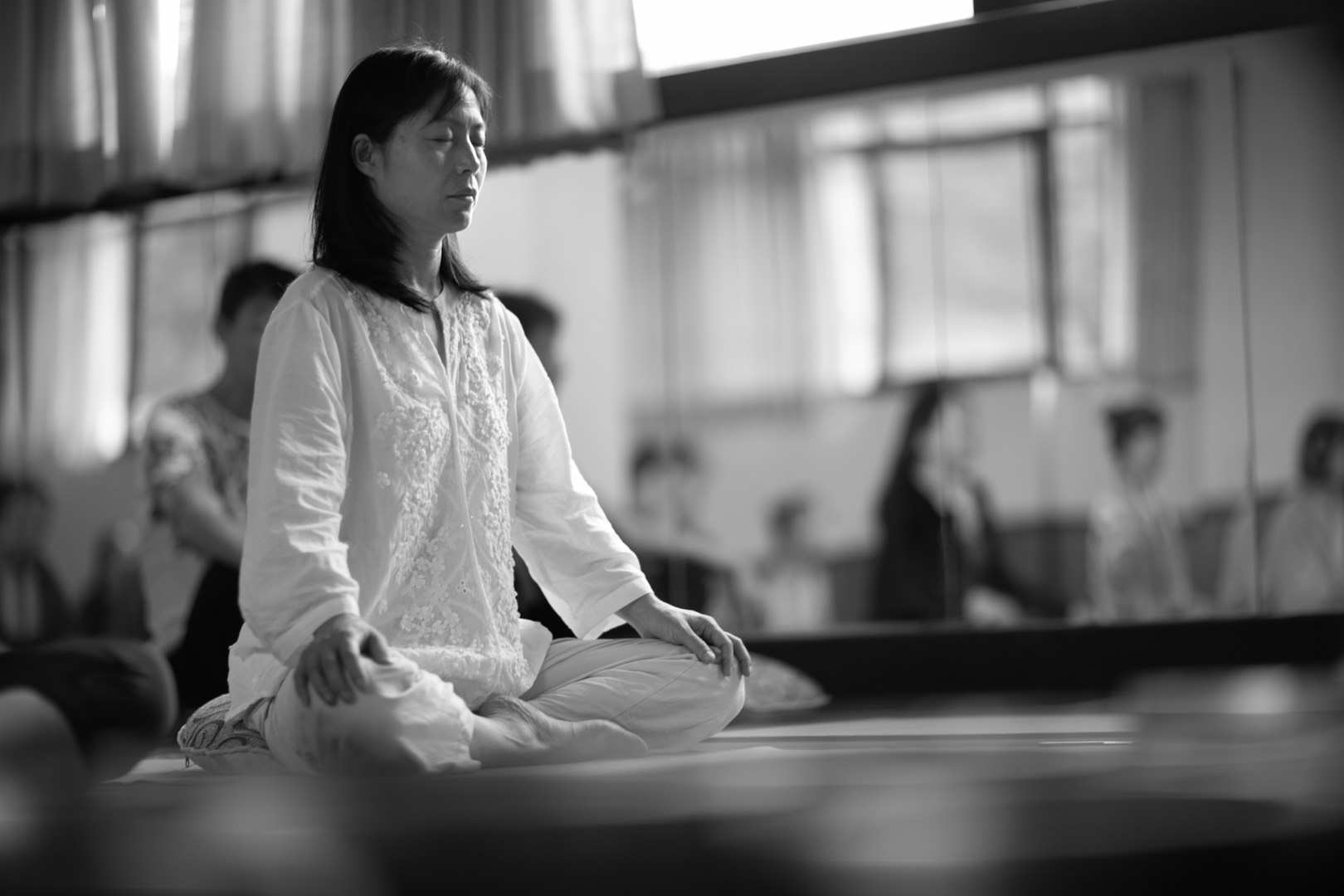
Pranayam: Nadisodhana, Ujjayi, Sitali and Bhramari
Meditation: Om Chanting, Breath Awareness, and Om Meditation
Precautions:
- Head Stand Postures
- Hyperventilation Breathing Practices should be avoided.
Special Note: Concentrate more on pranayama and meditation than the other practices.
DHYANA (MEDITATION) Part 1
DHYANA (MEDITATION)
Introduction of Dhyana(Meditation)
The word Dhyana has been derived from the Sanskrit word ‘Dhi’, which means to contemplate, reflect and pay full attention at a point. According to Maharshi Patanjali: “Tatra pratyaikataanataa Dhyaanam”- “An incessant flow of attention on the concentrated object is called Dhyana” It is an adventure into silence.
Dhyana is defined by the Samkhya School of philosophy as “Dhyanam nirvishayam manah” which means the liberation of the mind from all disturbing and distracting emotions, thoughts, and desires.” Dhyana begins from pratyahara (withdrawal of senses) and Dharana (Concentration), the mind becomes steady and one-pointed through deep concentration tends to the uninterrupted flow of consciousness towards one object that becomes Dhyana.
The Sanskrit words Dhyana and Nididhyasana bith are sometimes used for Dhyana, but it has some differences between Dhyana and Nididhyasana, Nididhyanasana means reflection or contemplation” a method used by the Monastic culture of Vedanta, is one of the eastern philosophy, whereas Dhyana is a conscious attempt is made to still the activities of the conscious mind. Through withdrawal of senses and concentration, one-contentedness of mind is achieved and then concentration is changed into Dhayana.
Misconception about Dhyana:
Dhyana(Meditation) and Yoga are not different sciences, Dhyana is one of the major parts or keys for Yoga, ultimately Dhyana through, yoga is attained, Dhyana is itself Yoga, Yoga is itself Samadhi. But Asana and Dhyana are different stages of Yoga. Yoga is Union or harmony, and Dhyana is the means or vehicle to reach that happening.
Dhyana is not merely feeling about something repeating sacred mantras or concentrating on particular objects or matters. It is not the Pooja or Worship or prayer for grossed gains or boons. It is not practiced by force, just realized or happened. Dhyana is a final and inner part of Yoga. After Dhyana, Yoga begins. The word Dhyana has been used for concentration and advises for concentration and musings of various kinds with closed eyes.
In general ordinary students, practitioners, researchers, and thinkers use Dharana and Dhyana indiscriminately. Dhyana cannot be taught which is expressive and abstraction science, but an experiencing art where the consciousness of the practitioners is diffused evenly within and without the body, without showing signs of division.
Measures for Meditation:
The following measures are important measures or requirements for attempting Dhyana.
Place: Places for Dhyana are the Peepal Tree, Gaya Tree, Temples, Gumba, holy places, the bank of the river, the beach shore, the base of the Himalayas, caves, Jungles, and gardens.
Environment: Pure, Fresh, Open, Free, Natural, Greenery and moderate temperature are preferred.
Time: Brahmamuhurta before sun rising, Noon, Sunsets, and Midnight are four periods in the whole day of 45 minutes duration each during junctures.
Mudra: Any Hand Mudras, and Head Mudras
Posture: Any meditative postures like Sahajasana, Sukhasana, Swastikasana, Ardha-padmasana, Padmasana, Siddhasana
Diet: Natural, fresh, live, organic, Satvik food.
Purity of Nadis (Energy Channels): As per the ancient scriptures, before Dhyana practiced Yoga, it was very important to cleanse the nadis. Shatakarma cleanses the internal organs, and asanas make a good foundation, an active and healthy body, by practicing pranayama the body becomes pure, light, and radiant, by pratyahara the sensory organs and senses are controlled, Dharana brings in the shape of concentration, and Dhyana helps in self-realization and finally it leads the aspirants to have Yoga or Samadhi, an enlightenment state. Hence one should practice these patterns; otherwise, there is the likelihood of getting harmed by the practice of the means of yoga.
Types of Dhyana(Meditation):
According to Gheranda Samhita, there are three types of Dhyana: Sthula, Jyotir, and Sukshma
Others: Vipasana Dhyana, Mantra Dhyana, Aajapa Japa Dhyana, Preksha Dhyana, Pranava Dhyana, Brahmanaada Dhyana, Mudra dhyana, Chakra Dhyana, Zen dhyana, etc.
Yoga Asana for Cardiovascular Health
Do you know the fact that every year, nearly 60 million people die from heart attacks only in the United States? Stress, hypertension, and cholesterol are major reasons behind our spoilt and untimed cardiovascular health. Thankfully, Yoga is there to help us tackle this epidemic as well. Multiple studies of universities have observed that regular yoga practice keeps your heart healthy and helps it fight several diseases. So, Learn about Yoga Asana for Cardiovascular Health.
You will be surprised to know that by performing some specific yoga poses, heart chakras can also be activated and heart health improved greatly. In this blog, Ekattva shares yoga poses that help a heart stay healthy.
Vrikshasana- Tree pose
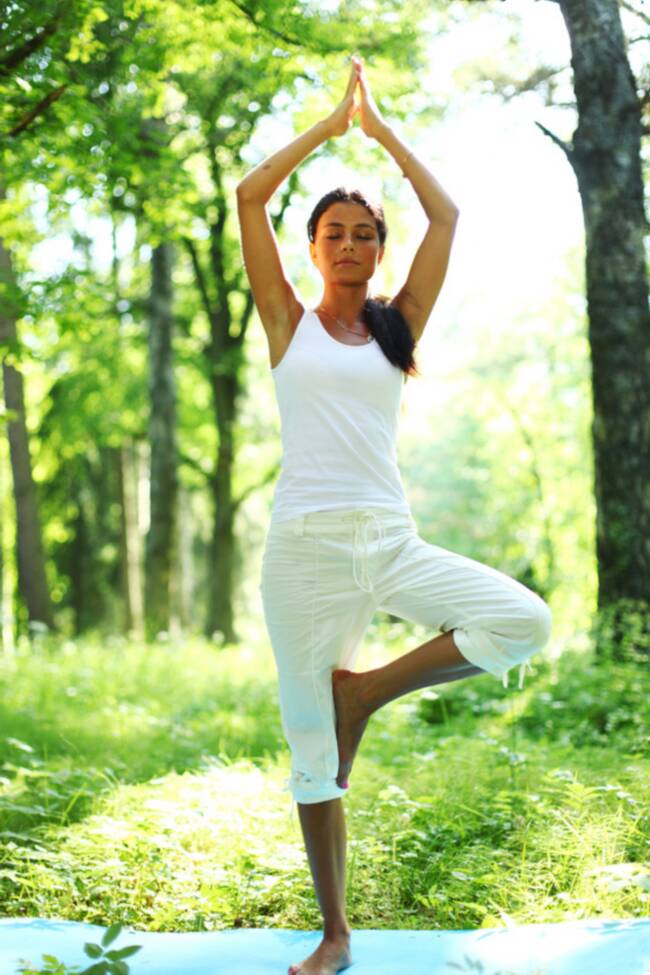
This standing asana is known for strengthening your knee, ankle, and joints. Vrikshasana helps you improve your motor abilities by giving you proper balance. In addition to it, tree pose calms your brain, and takes away unwanted stress, resulting in improved blood circulation. Learn how to practice tree pose:
- Stand absolutely erect and drop your arms to the side of your body
- Slightly bend your right knee, and then, place the right foot high up on your left thigh. Make sure that the sole is placed firmly and flat on the root of the thigh.
- Your left leg needs to be absolutely erect. Once you have assumed this position, breathe, and find your balance.
- Now, inhale, gently raise your arms over your head and bring them together in a ‘namaste’ mudra.
- Look straight at a distant object and hold your gaze. This will help you maintain balance.
- Keep your spine straight. Note that your body needs to be taut, yet elastic. Take in deep breaths, and every time you exhale, relax your body more.
- Gently bring your hands down from the sides, and release the right leg. Come back to the original position of standing tall and straight as you did at the beginning of the practice. Repeat this pose with the left leg.
Trikonasana- Triangle pose
This asana opens up your chest and heart by stimulating the abdominal organs. By stretching your hips, groin, calves, spine, and back, trikonasana ensures your heart is always pumping at its best. Trikonasana is a beginner-level yoga pose. By regular practice, you will be able to reap its benefits for your heart.
Here’s how to practice the triangle pose(Trikonasana) :
- Stand straight keeping your feet about a leg distance apart.
- Turn your right foot out and left foot’s toe in about 45 degrees.
- Now roll the right thigh keeping the right knee in line with the first two toes.
- Draw the lower belly in and upkeep arms parallel to the floor or mat.
- Move to the right while inhaling.
- Extend your body over your right leg and push the hips back.
- Bring your right arm down while exhaling.
- Keep your hand either on the leg, the floor or a block.
- Rotate your ribs towards the ceiling.
- Raise your left arm straight to the ceiling keeping in line with your shoulder, palm facing forwards.
- Lengthen through the sides of the neck, keeping it in line with the spine.
- Look straight ahead, or tuck the chin slightly.
- Now turn to look up towards your left hand.
- Breathe gently as you press through your feet.
- Extend through fingertips and crown of the head, and rotate your ribcage.
- Press your feet firmly into the floor to release from the tree pose.
- Inhale and lift your left arm up as you come back to a standing position.
- Pivot your heels and repeat on the other side. Repeat 5 times.
The major aim of trikonasana is to increase your cardiovascular activity. The triangle pose also helps in activating the heart chakra. If you find it difficult to practice on your own, consult a yoga teacher to teach you!
Do you practice yoga and want to teach? Enroll in the 200 Hours YTT Program to get your teacher certification!
Veerbhadrasana- Warrior pose
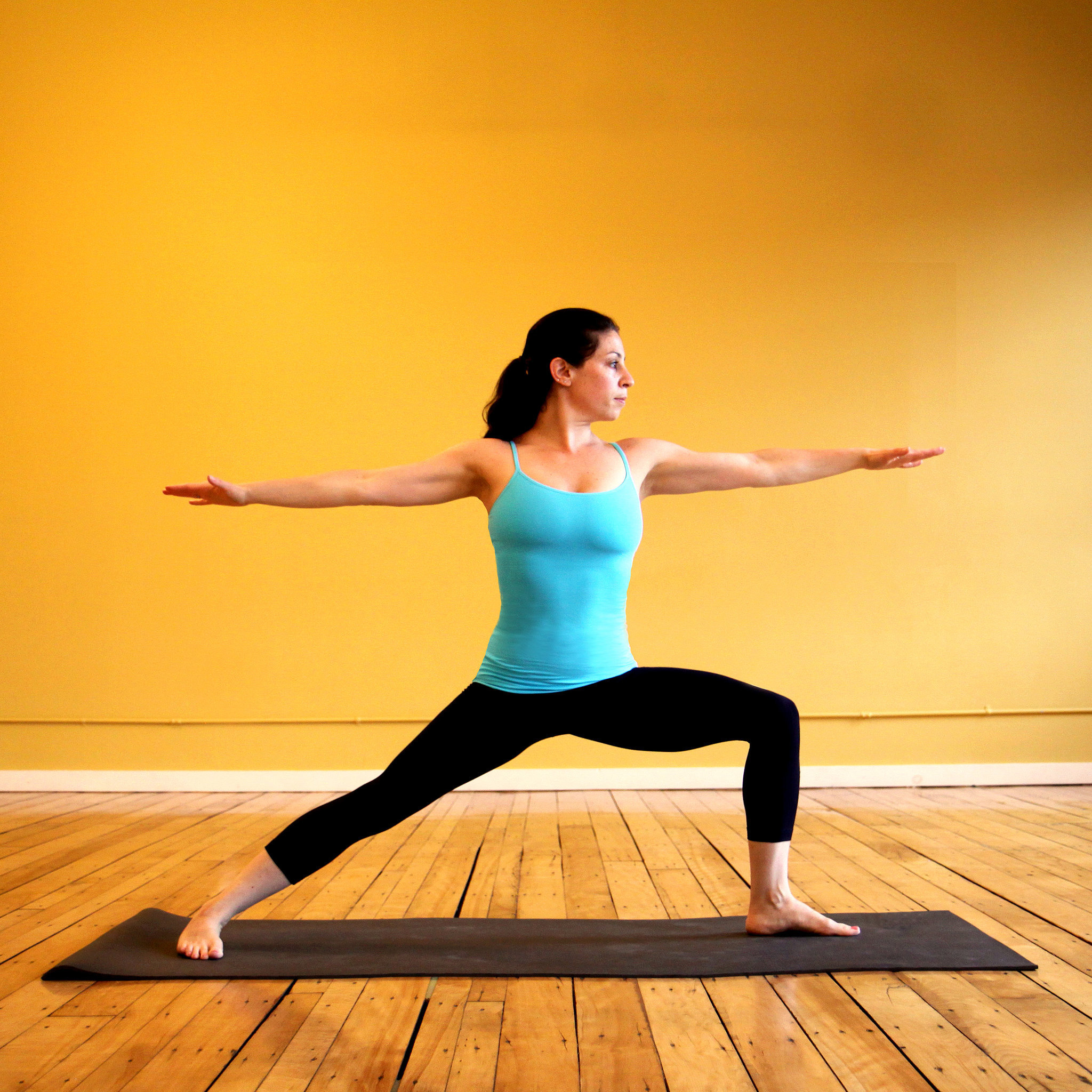
Warrior pose is best known to improve stamina and balance. Virabhadrasana helps stabilize your heartbeat too. While performing this stretching exercise, our body secretes hormones that help to normalize heartbeat and relax us as well. Here’s how to do it:
- This pose begins with finding the Warrior 1 stance with your front knee stacked over your front ankle and placing the rear foot firmly down at a 90-degree angle.
- Once done, bring your both hands to your low back and slowly start to inch them down towards your back leg.
- Keep your hips moving forward as you allow your chest to lift up.
- Release very slowly and carefully!
Very few are aware of the fact that Veerbhadrasana is one of the several limbs of heart chakra-activating asanas.
Urdhava Dharurasana- Wheel pose

Wheel Pose develops mobility and flexibility in your spine and hip flexors. Urdhava Dhanurasana also benefits your heart by creating a ‘space’ in your heart. This stretching yoga pose gives your heart additional breathability by giving your body an energy boost. Learn how to practice this healthy heart yoga pose:
- This intermediate-level heart chakra pose begins with laying on your back with your feet on your mat and knees facing the sky.
- Now bring your hands beside your ears keeping your fingers towards your shoulders and elbows towards the sky.
- Deep inhale for once and then press evenly into your hands and feet to push yourself up.
- You can select the option to come to the balls of your feet for more intensity.
- Stay in this position while holding your breath.
- Tuck your chin towards your chest and slowly lower to your mat, your hips are the last things to touch down.
- Relax in Shavasana!
Tadasana- Mountain pose
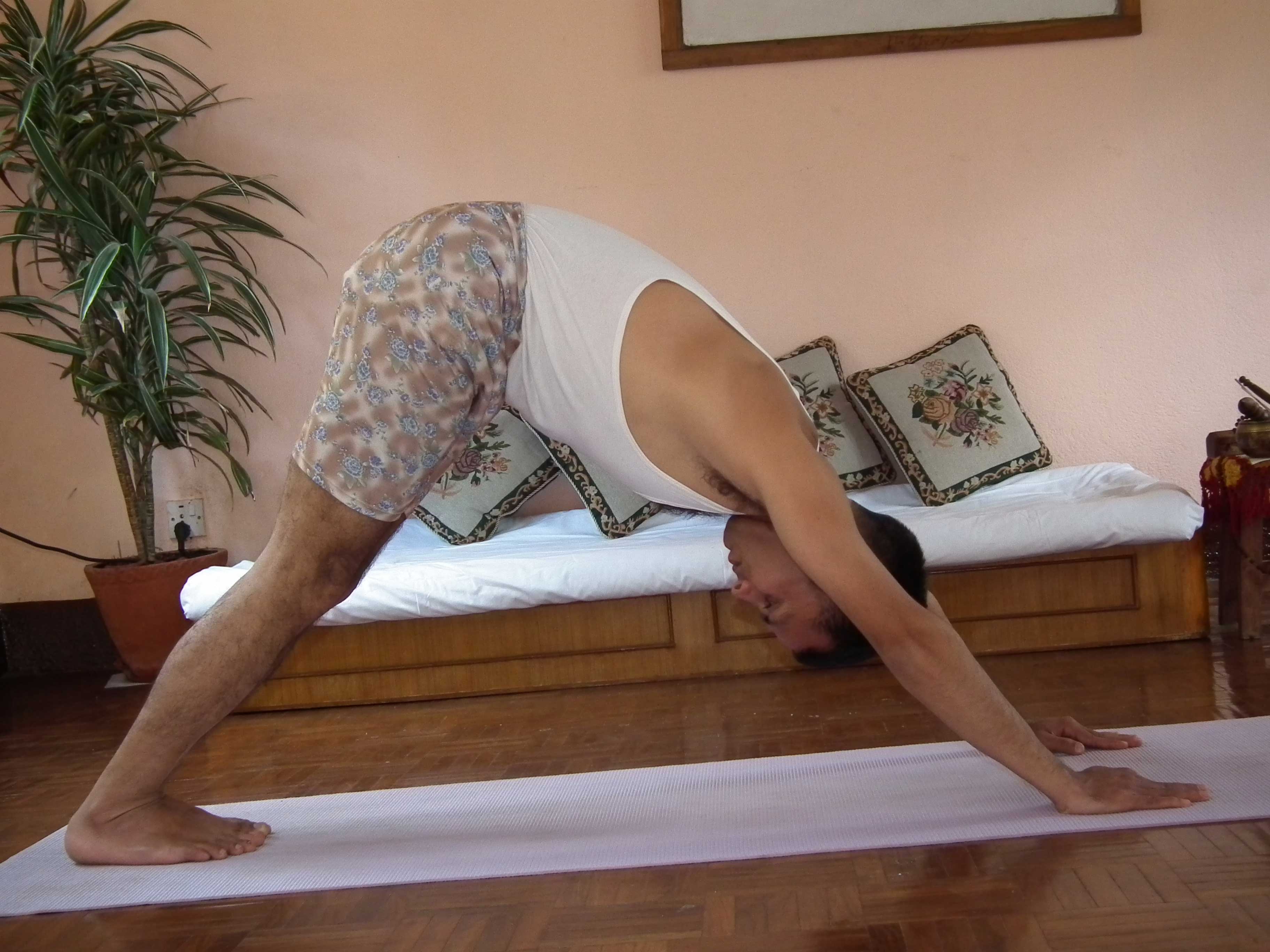
The fundamental purpose of the mountain pose is to strengthen your spine, sharpen your focus, and improve blood circulation (heart-related) in your body. Tadasana is the foundation of every standing yoga asana. It helps improve blood circulation and also makes your body flexible. Here’s how to do it!
- Begin this heart-strengthening asana by standing with your feet together.
- Make sure you distribute your weight evenly on your feet.
- Now, lift your kneecaps and activate your quadriceps muscles.
- It’s time to press the backs of your knees forward without bending them.
- Hug your upper thighs together to activate both your adductors.
- Place both arms alongside your body and turn your biceps and palms to face forward.
- Align your neck straight so it feels long and even on all sides.
- Inhale deep and lift your rib cage evenly away from the pelvis.
- Exhale and hug in the sides of your waist creating lumbar stability.
- Stay in Tadasana for at least 8-10 breaths.
Practicing this heart-friendly yoga pose for 3-5 minutes daily will strengthen your immune system, making your heart agile.
By practicing the above yoga poses, you can reduce the chances of a heart attack and other cardiovascular diseases to a great extent. But remember, if you are already suffering from heart or any other medical condition, it is always advisable to ask your doctor and yoga teacher before beginning the practice!
If you have been practicing yoga for a while and have the desire to learn more about yoga’s healing poses, join our Yoga Alliance certified 200-hour YTT program and help others stay away from cardiovascular diseases. Drop your queries at email at himalayanyogainnepal@gmail.com
Samadhi
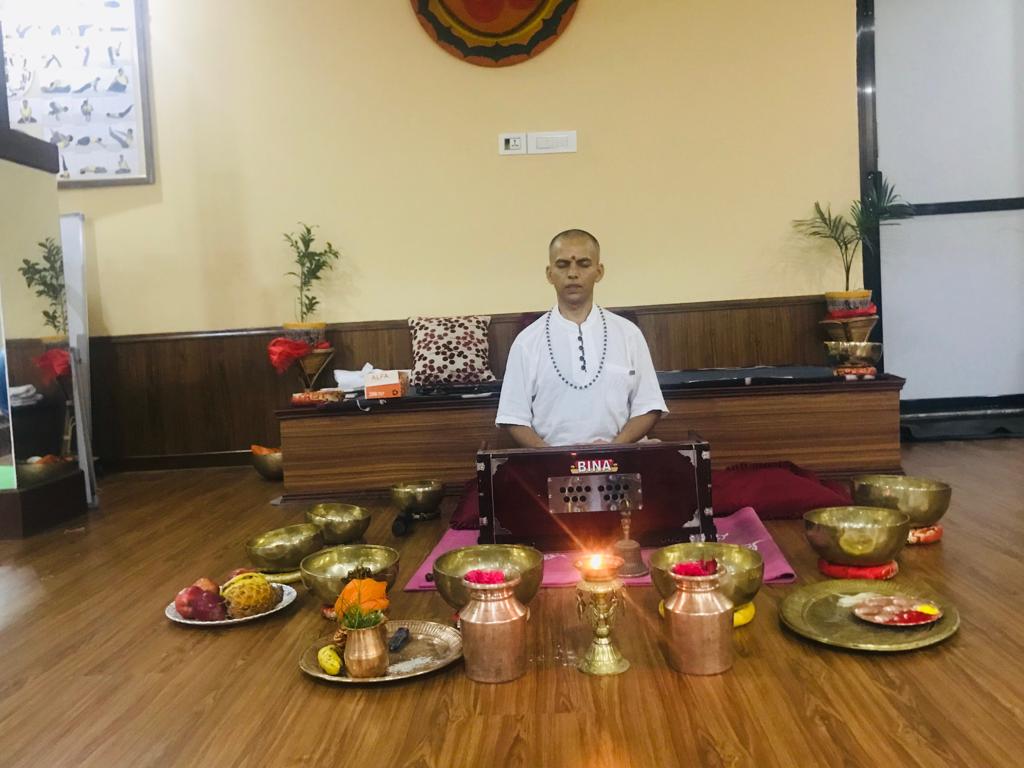
What is Samadhi?
Samadhi in Yoga is the 8th and final stage or step in the system of eight-limbed Ashtanga Yoga. It is explained in the Yoga Sutras of Maharishi Patanjali as total absorption in the object of meditation, where the mind becomes completely still. There are various stages of Samadhi each leading to a higher superconscious state of mind.
How to practice Samadhi?
Samadhi cannot be practiced. It happens spontaneously just like meditation. There is no effort involved. One cannot forcefully practice Samadhi. We have to start from the process of Dharana or concentration with effort and in due course of time experience Dhyana or a state of meditation, which occurs spontaneously.
In Dharana (concentration), there is focus and effort and in Dhyana (meditation) there is de-focus, relaxation, and effortlessness. In Samadhi, there is a sudden jump from the state of Dhyana or meditation into a state of total absorption in the object of meditation, where the knower, knowing, and known merge into one conscious reality.
This is effortless. It is an experience of the superconscious state of mind. It can be compared to deep sleep, except that, in deep sleep, we are not conscious, while in Samadhi one is fully conscious.
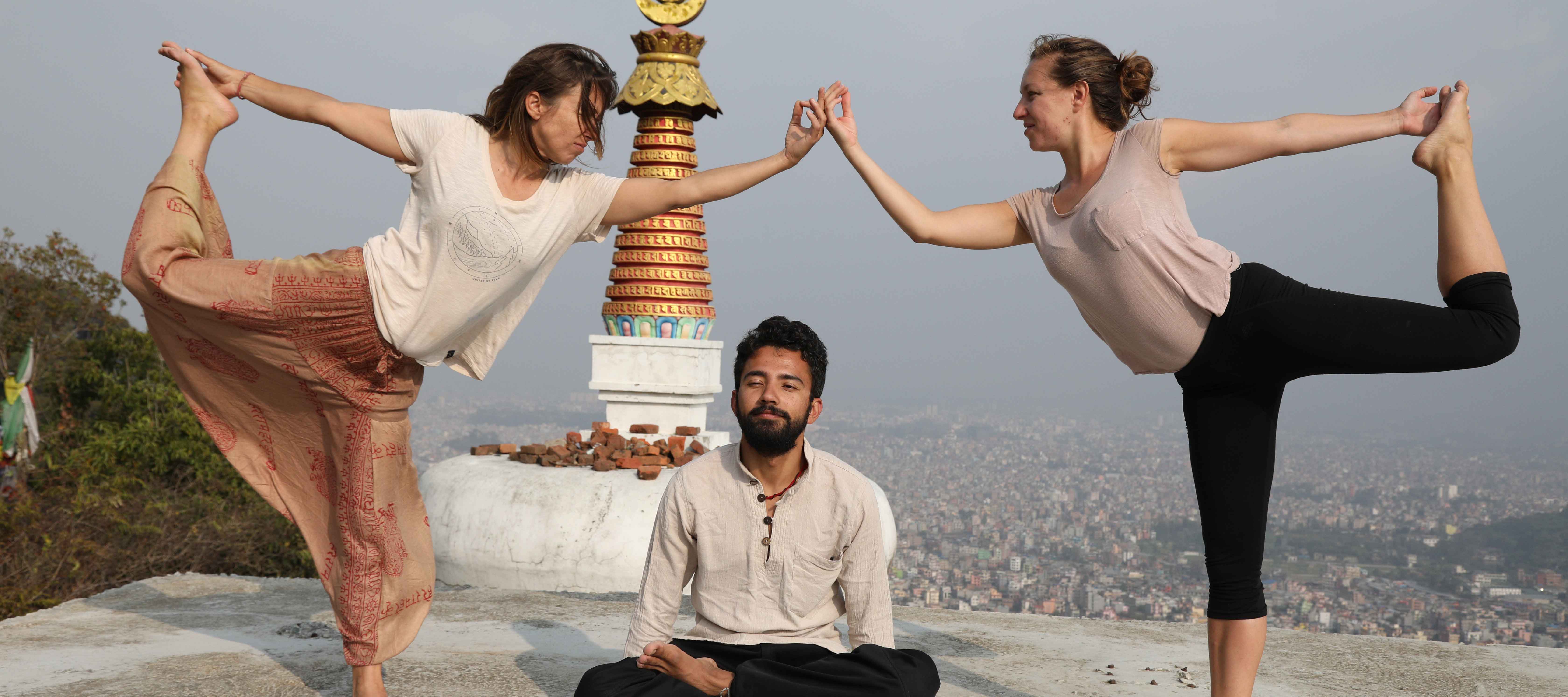
The liberation of this state comes from transcending the confines of the ego. You are no longer wrapped up in the trappings of like, dislike, judgment, worry, and fear. You become completely absorbed in the present moment, at all times, while remaining in total awareness. This is a pure state of being. As you go through your daily tasks, you are no longer replaying the past or looking into the future. You are immersed in the enjoyment of each moment as a sacred act.
Samadhi brings you freedom from the cycle of karma, which is a result of never-ending desires (vasanas) and memories (sanskaras). What this means is that you will still have desires, such as hugging your children or eating food, but you won’t be a prisoner of the melodramatic cycle that karma brings. As the ego is continually concerned with what’s “me” and “mine,” your higher self knows that there is never a lack of anything because there is no separateness. Therefore, all fear subsides and what is left is pure love.
Yogic Layers (The Koshas of Life)
Human Body is composed of five sheaths (Panchakosha) or Yogic Layers. These sheaths from gross level to subtle level are seated.
The Five Koshas
1. Annamaya kosa (Physical sheath):
The physical body is built up by food. It is visible, palpable, and gross. Everything is sustained by Anna/Food and everything dissolves into Food. The creation of life is also from food. This matter-based aspect of the body is called Annamaya Kosa which consists of panchamahabhuta namely Sky, Air, Fire, Water, and Earth. The facts of this entire world of matter start from elements, molecules, atoms, and ions.
*Positive lifestyle– All the techniques and methods are basically meant for spiritual experiences, self-realization, self-healing, and creating eternal potency for a better life.
*Ethical Life Build To maintain social and individual discipline, basically Yama and Niyama are considered the primary and required qualities, features, attitudes, and principles of Human Beings. Out of these Ahimsa/ non-violence is the first key of life and is said to the Queen Bee because once keeping her in Hive, all the bees come together into Hive. Similarly, all ethical qualities automatically develop in our life.
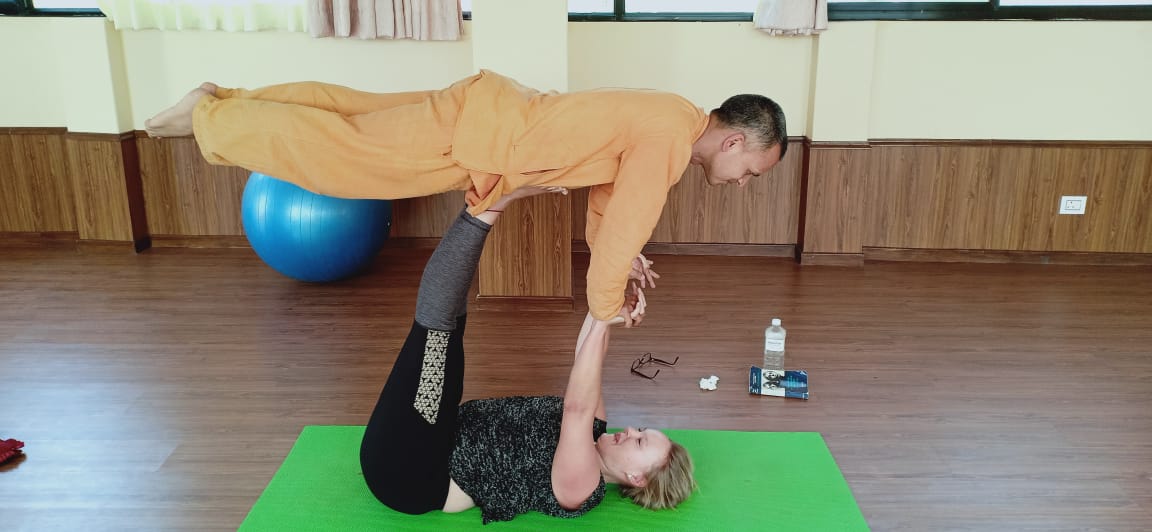
*Body Cleansing Acts- To purify the body, different rules and techniques can be used such as Ushapan (drinking water early in the morning just after waking up), drinking herbal tea, fasting, six cleansing acts , Panchakarma, etc.
*Healthy food habits- for the right purpose right quality of food in the right time through correct eating rules with good feelings should be used properly.
*Physical Activities- correct working habits, aerobics exercise, morning walks, adventure trips, etc. should be done for better health and life.
*Yogasana practice- The body is established by asana which keeps the body fit and well-organized and increases the body’s stamina, helps in growth and development, relieves tiredness and fatigue, and controls the stretching, contraction, and relaxation of muscles.
2. Pranamaya Kosa (Vital sheath):
The prana is the life force, from which the gross Annamaya kosa comes out. This prana is the basic fabric of this universe both inside and outside the body. A uniform and harmonious flow of prana to each and every cell of the Annamaya Kosa keeps them alive and healthy. Prana flows through subtle channels called nadis. The five dimensions of prana flow regularly in activities are called Pancha pranas. They are Prana, Udana, Vyana, Samana,Apana.
*Active physical life– Any type of action naturally increases the inhalation capacity of the lungs, oxygenates the body, and increases the circulation of blood and impulses communication in the body.
*Walking in Nature– It promotes the prana level in the body.
* Breathing exercise- full and deep breathing helps in maintaining immunity levels of the body.
* Good position- Erect spinal cord and back that keeps active breathing mechanism and enhances the prana.
* Healing therapy- Kriyas, mudras, reflexology, acupressure, massage, marmas, etc. help to increase the life force/Prana.
* Pranayama practice- “Pranayama Parama Tapa” is the main practice for controlling the breath and prana in the body.
3. Manomaya kosa (Mental sheath):
A subtle sheath composed of mental stuff and essence perennial source of emotions and desires, anchoring willpower and the five cognitive organs in a subtle form purified through Yama and Niyama. The mind is the source of everything which carries different functions such as perception, memory, and egos and is characterized by feeling such as likes or dislikes, love or hate, carried by the heavy egos. It is this emotion that is the root cause of all human joys and distress.
*Listening to the devotional songs, chants, music, praying, and worship-
It induces deep relaxation, healing, devotional power, harmony, love, and awareness in life.
*Yoga Nidra– It is a powerful technique in which we learn to relax consciously. It is a systematic method of inducing complete physical, mental, and emotional relaxation. Here the consciousness is functioning at a deeper level of awareness, so is called psychic sleep as well. Half an hour of yoga nidra practice meets two hours of sleep benefits.
*Dharana and Relaxation practice- This practice enhances good concentration and awareness of one’s own mental processes including emotions, memory, relaxation, pure thoughts, inner purity, harmony, calmness, etc. The right way of practice gradually restores the psycho-physiological functions back to their conscious state which makes our manomaya kosa well-disciplined and pure.
4. Vijnanamaya Kosa (Wisdom Sheath):
This is the fourth layer of the body. This is conscience within that continuously guides us to do a thing or not to do, that is the Vijnanamaya Kosa. It is this component of the mind that has developed in the human race greatly and it differentiates man from animal. It always guides us to get mastery basic instincts.
* Dhyana Practice- It is the deep concentration phase and continuation of concentration and relaxation which promotes awareness, positive feelings, happiness, blissfulness, and freeing of the mind. This component concerns itself with changes in one’s attitudes, behavior, positive habits, well qualities, good nature, way of speech, way of thinking, and wholesome lifestyle which helps in inducing the feeling of sharing, the feeling of warmth, peace, and harmony, love and respect, attitudes of gratitude, honesty, truthfulness, and finally towards liberation and make this beautiful life gifted by pramatma more beautiful, more precious, more glory, more positive, more freedom, more self-realized by upgrading the wisdom level and opening the intuition through self-study in life. * Expansion of Consciousness by Continuity, Purity, Devotion, and Belief.
5. Anandamaya Kosa (Blissful Sheath):
This is the most subtle layer of our life full of bliss and joy as reflected from the purest pristine fountain source Atma. This is a state of total silence and perfection. It induces the Anandamaya kosa, the highest level of evolution in the manifested existence. All those practices make this sheath a more blissful, harmonious, and joyful life and give the glory of life which leads the life of aspirants towards liberation, a state of getting free from miseries.
Actually, this is not a practice; it is a happening phase that means sadhya, not sadhana. But there are different types of Samadhi on the basis of the way of practice like Dhyana yoga, Nada yoga, Rasananda, Bhakti yoga, jnana yoga, and Moorchha Yoga Samadhi. This is just a feeling or realization and reflected changes seen in life and the same way the best living pattern or arts will be obtained.
CARDIOVASCULAR SYSTEM
The Continuous movement of blood within an organism is called blood circulation. There are three parts of CVS: Heart, Blood Vessels, and Blood. Most importantly circulation and respiration go hand in hand. Good respiration yields a more efficient circulatory system. Further about the CARDIOVASCULAR SYSTEM.
Physiology of Heart:
Cardio-fitness respiration = getting air into the lungs and transferring oxygen from the lungs to the heart via the pulmonary veins before the heart pumps oxygenated blood via the aorta to the tissues of the body. The heart pumps blood through 2 circuits: pulmonary and systemic. But the flow of the blood is unidirectional.
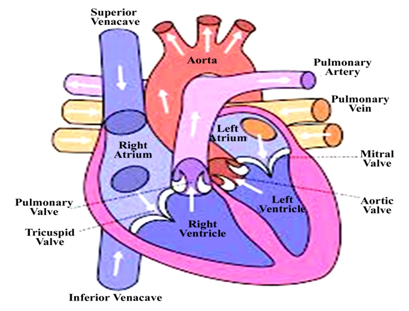
In the pulmonary circulation circuit, blood flows from the right ventricle to the lungs back to the left atrium this allows the blood to pick up O2 (oxygen) in the lungs and release CO2 (carbon dioxide). This is shown in red in the figure on the following page.
In the systemic circulation circuit, blood flows from the left ventricle to the body and back to the right atrium, this allows the blood to pick up CO2 from tissues and release O2. This is shown in blue in the same figure on the following page.
The Basics
When there is a buildup of CO2 in the tissues, such as muscles, it forms lactic acid and it is what is called a cramp. Hence the importance of efficient breathing to support a healthy heart during times of physical intensity.
Going more into depth
During physical effort: The rate of oxygen intake increases yielding a greater blood supply (systolic blood pressure increases accordingly while diastolic pressure remains relatively constant).
Skeletal arterioles are dilated and the sympathetic influence of the nervous system increases while the parasympathetic influence decreases (refer back to ‘nervous system and breathing).
With this, there is also a direct response from the body with a greater rate of elimination of wastage (heat, water through perspiration, carbon dioxide, and lactic acid).
The heart has the capacity to pump anywhere between 5 liters of blood per minute to 35 liters of blood depending on the intensity of exercise and fitness level (which includes lung capacity).
Relating it back to Yoga
Asanas that have the most significant influence on the cardiovascular system:
Shirasana (headstand) pressure in the head arteries veins and soft tissues of the head and neck is felt. Also physical and psychological pressure such as maintaining balance and the urge to come out of posture affect musculoskeletal nervous endocrine circulatory respiratory and digestive
High blood pressure= blood in arteries and in the systemic circulation
Someone active and anxious – the sympathetic nervous system and hormones from the adrenal glands increase blood pressure by increasing both peripheral resistance and the strength and rate of the heartbeat.
Blood pressure varies in different parts of the body: increases below the heart and decreases above the heart for standing blood pressure is equalized only when in a bath or lying supine / when in inverted poses like headstand heart blood pressure stays the same but increases above the heart and decreases below the heart
Pins and needles or go-to-sleep sensations caused by diastolic blood pressure dropping to 0 and systolic at 40mm Hg insufficient for capillaries to get what they need.
Compare for yourself:
Yogic breathing or NadiShodhan with Jalandhara Bandha and without. Which is easier?
Types of Mantra
Primarily, there are 3 types of Mantra and are as follows:
- Pranava Mantra
- Deviya Mantra
- Divya Mantra
- Pranava Mantra-the hymn of the universe i.e. AUM or OM
Om – often referred to as the hymn of the universe – is considered the ultimate vibration because it contains every vibration that has ever existed and every vibration that will ever exist. It’s pure yoga – union.
Historically, Om is first mentioned in the twelve verses of the ancient Vedic text the Mandukya Upanishads, which explains the three basic states of consciousness: waking, sleeping, and dreaming. In its original spelling and pronunciation, AUM (pronounced ahh-uhh-mmm) is a blending of those three states of consciousness into the one-ness of three distinct syllables: A, U, and M. These three vibrations also represent the three stages of life: birth, living, and death.When the three individual vibrations are combined, a fourth vibration is created like a chord in music made up of individual notes.
AUM (pronounced ahhh–uhhh–mmmm) represents the fourth state of consciousness – transcendent consciousness or turiya – what we call enlightenment or one-ness. In Vedanta, it’s the unity of the divine made up of its three components: creation; preservation; destruction (and rebirth). Chanting Om (out loud or silently) is an ideal reminder of our universality.
2. Deviya Mantra
Chanting mantra for prayer and worshiping purposed to explore devotion, good senses, and feelings. E.g.
“Om Sahanavavatu, SahanouBhunaktu, SahaViryamKaravavahai,
Tejasvinavadhistamastu Ma Vidvisavahai” Om Shantih! Shantih!! Shantih!!!
Meaning: May he protect us both Master and Disciple! May he nourish us both! May we both work together with the great energy! May our study be enlightening and fruitful! May we not hate each other! Om Peace! Peace!! Peace!!!
- Divya Mantra: divine sounds/ words – specially recitation for Dhyana
Yoga; Kundalini Yoga; Raja Yoga
E.g. Rim; Krim; Shrim; Lrim; Brham; Yam; Hum; Rham; Rhim; Klim; Hreem; Swaha;
Ways of Mantra Chanting or Recitation
- VaachikaJapa (Verbal) –Chanting by loudly
- UpaanshuJapa (whispering) – chanting by internally with low action and effort
- ManasikJapa (Mental/ reminded) – reciting or reminding with action less or motionless
- AajapaJapa (Hearing inner sound) – hearing inner sounds like breath sounds, heart sounds, and any
inner vibrations. The mantra ‘SOHAM’ is very common in the beginning.
Types of Mala – 108 beads as significant in all sacred texts and 1 sumeru bead