
HIMAVAT
Himavat (Sanskrit: हिमवत्, literally frosty) or Himavān (Sanskrit: हिमवान्, literally snowy), or Parvateshwara (Sanskrit: पर्वतेश्वर, lit. lord of mountains) is the personification of the Himalayan mountains and Frosty Hills, which are also known as the Himavat Mountains. He was the ruler of the Himalayan Kingdom of Nepal, one of the independent countries in south Asia since ancient times, which finds mention in Shiva Sabhyataa (Civilization) and the epic Mahabharata.
Himavat fathered Mahakali the river goddess, river is commonly known as Ganga Sagar as well as Ragini and Parvati, the wife of Shiva. His wife and queen consort is Vedic Menavati, the daughter of Mount Meru (Himalayan Parvat).
Let us do some mountain climbing that ends in the Kailash and Sagarmatha (Mount Everest)., ‘Himavant’ means having much snow. Thus, Himavat is the God of Snow, implying the Himalayan Mountains or the Himavat Mountains. It is also called the Abode of the Gods or Devabhumi (Land of GODS). The Mahabaratha extols Himavat as the ruler of the Himalayan Kingdom, now known as Nepal. The total of various versions makes Himayat the father of Sati or prominently known as Uma or Parvathi. His consort is Queen Mena, the daughter of Mount Meru.
KAILASHA TO PASHUPATI AND YOGA
The Himalaya range in general and Mount Kailash to Sagarmatha (Mount Everest) in particular have inspired awe for anyone who has beheld them. People on all sides of the great mountains have regarded them as space between the world of humans and the heavens. Mount Kailash is sacred to Hindus as the mythological paradise of Lord Shiva and his wife Parvati- who is the daughter of Himavat- the King of the Himalaya. Ganesh, the elephant headed god, who is the remover of obstacles, is the son of Shiva and Parvati and also grew up in and around Mount Kailash alongside the Himalayan ranges. Kailash is the Palace of Shiva and also Yogaashram (a place for Yoga practice). He is always in state of Yoga or Samadhi with meditation in different mudras.
Shiva is often depicted in traditional paintings with Parvati and his son Ganesh on his lap. He is blue to reflect the fact that he has taken in all the “poison” in the world so that everything else can live and exist. Shiva is one of three principle Hindu deities, along with Vishnu (Operator) and Brahma (Generator), forming Trimurti or a triad. Shiva protects but also destroys and is hence found in battlefields and Cremating Ghats. The most famous one is at the Arya Ghat in the Pashupatinath Temple complex along the Holy River ‘Bagmati’. Here, as the first temple of the world and also the first Yoga School of Shiva here in Kathmandu, Nepal. In Hindu mythology, Shiva, the god of destruction and regeneration, resides at the summit of Mount Kailash, which believers regard as the center of the world. Everything on earth and the Universe stretch out in all directions from here.
Yoga as Path of Spiritual Exploration
Yoga is the higher spiritual achievement throughout the Knowledge, Karma, Upasana and Science. The almighty viewed the valuable knowledge and ethics for the creation, existence and life-cycle of beings in meditated form or in a state of Samadhi to Human Kind via four sages. A prayer in the ancient Sanatan Holy Scripture, Rig Veda, entreats upon Supreme Power, Almighty, ‘Tamaso Maa Jyotir-gamaya, Asato Maa Sat-gamaya, Mrityor Maa Amritam-gamaya” or ‘Lead us from Darkness (Ignorance) to Light (Knowledge), from Untruth to Truth, from Mortal to Immortality:
Every human being on earth is in relentless pursuit of love, mental peace, happiness, and spiritual bliss. According to Sanatan Dharma, the eternal religion or Human religion, the proven way to overcome the tensions, stress and strain that one faces in daily life is faith in spiritualism (adhyatma), Spiritual practice (sadhana) casts ‘light to do away with darkness’ and liberates a person from sorrows, gloom and suffers. Spiritual enlightenment leads to blissful inner peace and equanimity, i.e, Samadhi.
For many, since ancient times, Nepal remains a mystical land on the lap of the Himalayas, especially Mount Everest, with its harmonious blend of two of the world’s prominent religions, Hinduism and Buddhism. The beauty of natures and cultures; its incredibly tolerant people living through a fascinating traditional-cultural milieu and its amazing landscapes that in ancient times drew rishis (sages), ascetics, mystics and yogis who wandered in a spiritual mission in search of tatva jnana (supreme knowledge), nirvana (enlightenment/ isolation) and divine grace. Today draws spiritual seekers, aspirants of a new bewildered generation seeking tranquility, mental peace, happiness, fulfillments and all the unconditional answers to all the questions that people had long hidden or unknown till today.
Sagarmatha/Mount Everest
Kathmandu: Nepal and China on Tuesday jointly announced that the revised height of the world’s highest peak Sagarmatha / Mount Everest was 8,848.86 metres, about 86 centimetres more than the previous measurement done by India in 1954. It is said ‘Third Pole of the World”.
The Nepal government decided to measure the exact height of the mountain amid debates that there might have been a change in it due to various reasons, including the devastating earthquake of 2015.
The new height of Mt Everest, the world’s highest peak, is 8,848.86 metres, China and Nepal jointly announced on Tuesday, 8th December, 2020. China’s state-run Xinhua news agency said in a brief report.
Nepal recalculates the height of Mount Everest at 8848.86 metres, the country’s Foreign Minister Pradeep Gyawali announced in Kathmandu.
The new official height is 8,848.86 meters — roughly one meter higher than Nepal’s previous measurement. Global warming and a 2015 earthquake spurred speculation over the actual height of the world’s tallest peak.
The new height is 86 cm more than the previous measurement. According to the measurement done in 1954 by the Survey of India, the height of Mount Everest is 8,848 meters.
Notice
Note: Himalayan Yoga Academy is going to organize the Highest Altitude Yoga Camp in around 5643 meters height, Kalapatthar, of Mount Everest Base camp in coming May, 2021. So, we humbly request to reserve this Yoga campaign as soon as possible via this links given below.
Benefits of Aerobic Exercise
Aerobic exercise is any activity that gets your blood pumping and large muscle groups working. It’s also known as cardiovascular activity. Aerobic exercise stimulates the heart rate and breathing rate to increase in a way that can be sustained for the exercise session. In contrast, anaerobic (“without oxygen”) exercise is an activity that causes you to be quickly out of breath, like sprinting or lifting a heavy weight.
Various Aerobic Exercises
- running
- cycling
- swimming
- heavy cleaning or gardening
- playing soccer
What happens to your body when you do aerobic exercise ?
While doing aerobic exercises, you repeatedly move large muscles in your arms, legs, and hips. Then, you will notice you’re breathing faster and more deeply. This maximizes the amount of oxygen in your blood. Your heart will beat faster, which increases blood flow to your muscles and back to your lungs. Your small blood vessels (capillaries) will widen to deliver more oxygen to your muscles and carry away waste products, such as carbon dioxide and lactic acid. The body will even release endorphins, natural painkillers that promote an increased sense of well-being.
1. Improves cardiovascular health
Aerobic Exercises strengthen your heart and help it more efficiently pump blood throughout the body. A stronger heart doesn’t need to beat as fast. A stronger heart also pumps blood more efficiently, which improves blood flow to all parts of your body. Cardiovascular exercise can also help lower blood pressure and keep your arteries clear by raising “good” high-density lipoprotein (HDL) cholesterol and lowering “bad” low-density lipoprotein (LDL) cholesterol levels in the blood.
2. Increase your stamina, fitness and strength
Doing aerobic exercises, helps your body maintain the strength and stamina. Daily performance of aerobic exercises helps in increasing your capacity to use oxygen. Hence, this include an increased capacity for the muscles to take up and use the additional oxygen being delivered by the heart.
3. Manage chronic conditions
Aerobic exercise makes your muscles move. Aerobic exercise can help with better muscle function and endurance. It will also help in weight loss leading to less stress on the muscles.
4. Regulates weight
Aerobic exercise burns up energy (calories). Regular sessions of 30 to 60 minutes of low to moderate intensity aerobic exercise (at around 55 to 70 per cent of maximum heart rate) can be an important part of a weight loss or weight management program.
5. Helps you sleep better
Inadequate sleep is linked to many health risks. Regular exercise can keep you energetic throughout the day and assist you in sleeping better in the dark.
GORAKSHASANA
Jaanoorvorantare paadau uttaanau vyaktasamsthitau; Gulphau chaachchhaadya hastaabhyaamuttaanaabhyaam prayatnatah !!25!!
Kanthasankockchanam Kritvaa naasaagramavalokayet; Gorakshaasanamityaahuryoginaam siddhikaaranam!! 26!!
Keep the toes of both the feet in a hidden manner in the middle of both thighs and knees. Holding both heels with both hands, contract the throat and fix the gaze at the nosetip. This Gorakshasana enables yogis to attain Siddhi.
Gorakshasana – Yogi Gorakhnath’s Pose
Gorakshasana or Yogi Gorakhnath’s pose was used as a meditative pose by the yogi Gorakhnath. Goraksha s the name of a well-known sage who was credited with creating the first-ever written text on Hatha yoga, called “Goraksha Samhita.” It is also sometimes known as the “Goraksha Paddhati.”
Goraksha is a semi-legendary figure who is believed to have lived around the 9th or 10th century. Legend has it that he was a student of Matsyendra, the man who first learned the teachings of yoga when he overheard Shiva talking to Parvati.
To perform this asana, the practitioner needs lot of flexibility of the legs muscles. It may take months to loosen the leg muscles to achieve the final pose.
Steps to release the stretch
You can keep this posture as long as you feel comfortable and release back to your basic asana. Breathing activities while doing Gorakshasana: You can continue to breathe usually throughout your practice.
Duration:
You can maintain this pose for a few minutes, according to your capacity. You can increase the duration by using your regular practice. If you maintain this posture for a long time, you can obtain wonderful benefits.
Gorakshasana Steps
- Sit on the floor in padmasana.
- Stretching the arms forward, place them on the floor.
- Raise your trunk and lift the hips off the floor.
- Keeping the trunk stretched straight stand with your knees.
- Stretch your thighs and gradually lift the hands off the floor one-by-one.
- Maintain the balance and integrity of the spine.
- Join your hands in prayer position in front of your chest.
- Stay in the position as long as you can hold it comfortably.
- Now, place your hands on the floor and bring your hips to the floor.
- Release your legs and now change the leg position.
- Repeat it for the same duration.
Benefits of Gorakshasana (Yogi Gorakhnath’s Pose)
- This excellent yoga pose reverses a flow of your apana, directing it upward exactly to the greater centers for better use in the meditative states.
- Gorakshasana make the legs and feet extremely flexible. It helps to awaken the kundalini Shakti. It can relieve piles and urinary disorders and tones the reproductive system; Stimulates sexual energy.
- This yoga pose also makes your feet and legs supple, Strengthens leg muscles.
- Gorakshasana is an effective posture that aids you in sitting straight as well as gets used for sitting straight. It is therefore really good for the posture and back. Your legs and ankles benefit from any pressure in the feet and post at the similar time stimulate your second chakra.
- It activates the sexual energy.
- This straightening task of your back as well as pressure from the base calms your digestion process and in this method Gorakshasana is particularly suggested against the IBS (Irritable Bowel Syndrome).
- This excellent yoga pose helps you to awaken your kundalini Shakti. It can properly relieve urinary disorders and piles disorders. Additionally, it also tones your reproductive system.
- Gorakshasana can be merged with various Pranayama techniques and, therefore, create various results. You can experiment with various types of breathing in this asana, and you will observe how the results change.
Precautions & Contraindications
- An unhealthy person with stiff and painful legs, feet, and ankles shouldn’t try this asana.
- Do not hunchback while holding the pose.
- While going into the pose and holding the cowherd pose, the shoulders should be relaxed.
- Avoid practicing Gorakshasana if there is an issue with feet and leg joints.
- If you are suffering from knee pain, then do not practice this asana.
- People with sciatica and other lower spinal pain should not practice Gorakshasana.
Conclusion
Practicing Gorakshasana is beneficial in numerous ways. Along with providing the above-mentioned benefits, all the benefits associated with Padmasana are also accessible through its practice.
MATSYENDRASANA
Udaram pashchimaabhaasam kritvaa tishthatyayatnatah; Namritam vaamapaadam hi dakshajaanoopari nyaset; !!23!!
उदरम पश्चिमाभासम कृत्वा तिष्ठत्ययत्नत:। नम्रितम वामपादम हि दक्षजानूपरि न्यसेत् ।। २३।।
Tatra yaamyam koorparam cha vaktram yaamyakare’pi cha; Bhruvormadhye gataa drihtih peetham maatsyendramuchyate. !!24!!
तत्र याम्यम कूर्परम च, वक्त्रम याम्यकरे’पी च। भ्रुवोर्मध्ये गता दृष्टि: पीठम मात्स्येंद्रमुच्यते।। २४।।
Pull the abdomen towards the back, keeping the back straight. Bend the left leg with effort, placing the heel over the right thigh. Support the right elbow on the leg. Placing the chin on the right hand, fix the gaze at the eyebrow centre. This is known as Matsyendrasana.
Matsyendra Pose, or Lord of the Fishes Pose, is a seated twisting asana in hatha yoga and modern yoga as exercise. The full form is the difficult Paripurna Matsyendrasana.
MATSYENDRASANA (YOGI MATSYENDRASANA’S POSTURE)
Matsyendrasana was named after the yogi, Matsyendranath, a student of the Hindu god, Shiva (also known as the adi yogi, or the “first” yogi). Also referred to as Purna matsyendrasana, the pose is a complete spinal twist with amazing health benefits. The name for this pose is derived from the Sanskrit roots matsya, meaning “fish,” and indra, meaning “lord” or king.” Matsyendrasana may also be called lord of the fishes pose in English.
VARIATION –I: ARDHA MATSYENDRASANA
Ardha Matsyendrasana (Sanskrit: अर्धमत्स्येन्द्रासन), Half Lord of the Fishes Pose, Half Spinal Twist Pose, or Vakrasana, is an asana that usually appears as a seated spinal twist with many variations. It is one of the twelve basic asanas in many systems of Hatha Yoga. This asana is named after the great yogi Matsyendranath, the 9th-century yoga guru who founded Hatha Yoga.
The name comes from the Sanskrit words ardha meaning “half“, matsya meaning “fish“, eendra meaning “king“, and asana (आसन ) meaning “posture” or “seat“. The name Vakrasana comes from the Sanskrit “Vakra” (‘twisted or reverse‘) are the pre asanas
VARIATION –II: POORNA MATSYENDRASANA
Poorna Matsyendrasana is normally considered as the full form of the asana. The only different is that instead of keeping the back foot on the floor, it is placed on top of the thigh as in Ardha padmasana. Other process is the same as Ardha matsyendrasana.
Procedure of Ardha-matsyendrasana
- First of all, sit on the ground with spreading your legs in front of you in Sama sthithi. i.e Dandasana
- Bend your left leg so that the left foot comes close to your hips while the right foot is placed outside the left knee.
- Place the left arm over the right knee and grasp the toes of the right foot with the left hand.
- Now, put your right arm behind your back around the waist to touch the navel from behind.
- Try to look behind by turning your head towards the right side.
- The same thing should be repeated from the other side.
- Exhale the catch the right big toe from outside of the right leg,
- Maintain the final position with normal breathing.
- Gaze at the right side while in the final position.
- Repeat the practice on another side after 5 breaths.
Benefits of Matsyendrasana or Ardha Matsyendrasana
- The half twist spinal pose is one of the few yoga asanas, which provides a new flexible life to the entire spinal region. It only rejuvenates the spinal column, yet shows its positive beneficial aspects to the maximum systems of the body.
- The spinal column is strengthened due to the alternate contraction and relaxation during the twisting of the whole spine. It is beneficial in the case of sciatica and slipped disc. It provides a wide range of flexibility to the spine.
- This used to rejuvenate the spinal nerves, muscles. Sluggish and stagnant blood is squeezed out of the spinal regions. Intervertebral discs are nourished.
- This pose is good for channelizing the pranic energy in the spine. Therapeutically it is useful in the prevention and management of a backache, neck ache as well as general body stiffness.
- The practice of this asana enhances the lung capacity. It helps to remove any tendency towards round shoulders, drooping or hunching because of shoulder movements alternatively.
- It is good for digestive organs, the pressure of the thigh and squeezing effect on the abdominal region improves the efficiency of the organs of absorption, assimilation and elimination effectively.
- This develops the digestive capacity. Liver, spleen intestines are massaged during this pose to enhance their functional capacity.
- It gives compression and stretch to the abdominal organs, thus facilitates massage, recirculates impure blood, and tones up the associated nerves. Common digestive disorders are relieved through this pose.
- Tones the reproductive system.
- This yoga pose is extremely beneficial for burning fat from the abdomen. Thus, this pose is helpful in weight loss and obesity management.
- Ardha Matsyendrasana has been found beneficial in the treatment of backache, neckache, and headache. It helps to remove any tendency towards round shoulders. The yoga pose strengthens the shoulder, hips, and neck.
- It is effective in the proper function of adrenal glands, kidney’s, and liver.
Mental health benefits of Matsyendrasana/Ardha matsyendrasana
- Creates inner awareness; Promotes sense of calm
- Strengthens the nervous system and relieves stress
- Shields the mind from anger, fear and desire
- Promotes a sense of acceptance
- Practicing Matsyendrasana stimulates the Manipura (solar plexus) chakra, which radiates vital prana. This chakra is associated with willpower, self-esteem, and confidence
Precautions and Contraindications
- It is not good for people suffering from hypertension and any other cardiovascular disorders.
- During menstruation and pregnancy women should not practice this pose.
- Consistency in the practice is safer, avoid the jerks while twisting.
- Keep the spine straight to the best possible extent.
- Don’t exert pressure on the arms for the twisting purpose.
MATSYASANA – THE FISH POSE
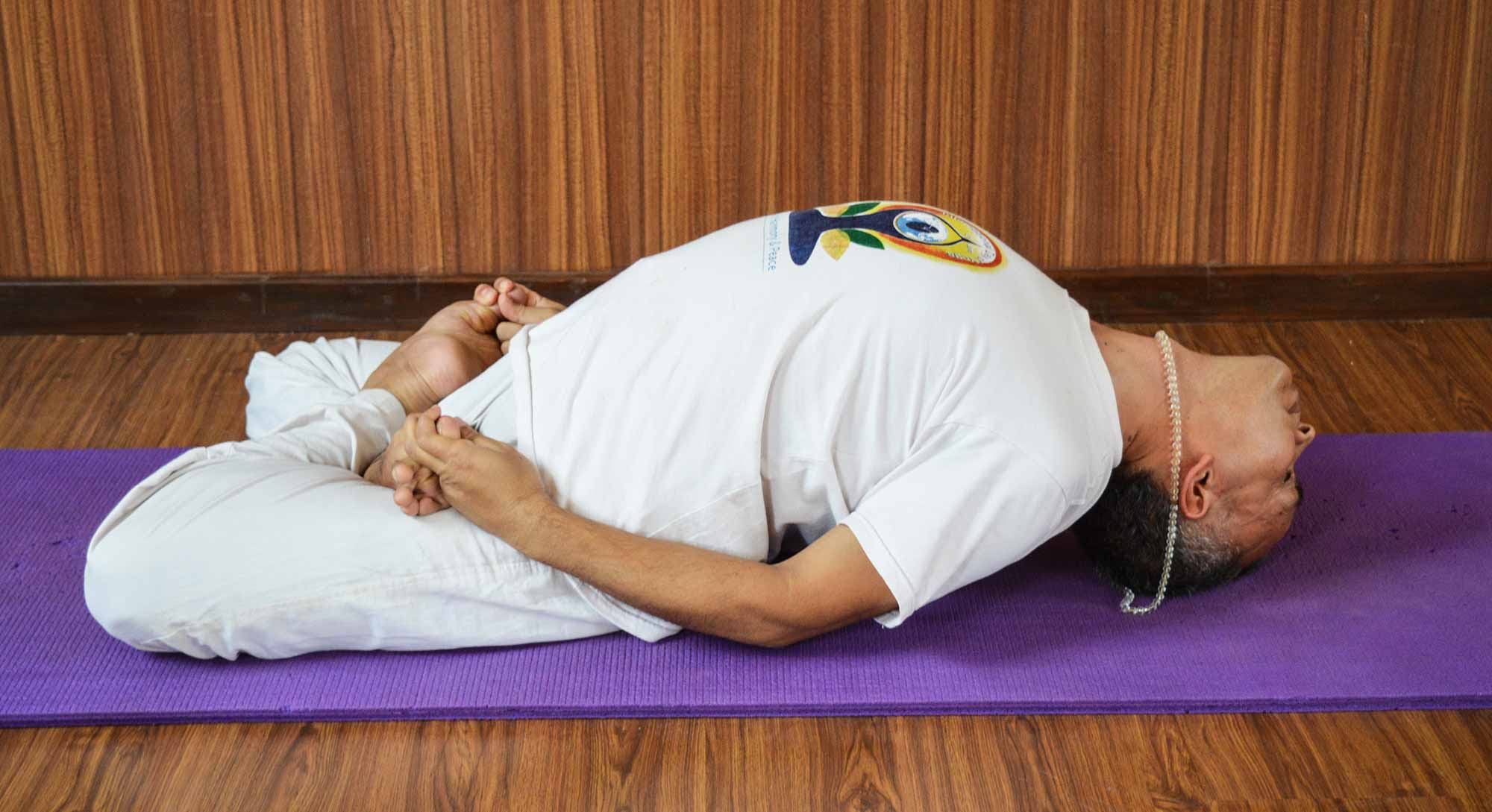
The Sanskrit word ‘Matsya’ means ‘fish’. It is thus nicknamed ‘The Fish Pose’. Matsyasana is a reclining back-bending asana. The name is derived from the Sanskrit matsya, meaning “fish,” and asana, meaning “pose.” Matsya is also the name of an incarnation of the god, Vishnu, who manifested himself as a large fish in order to save the earth from a flood.
“Muktapadmasanam kritva uttannashayanam charet; koorparaabhyaam shro veshtyam rogaghnam maatsyamaasanam!!
“मुक्तापद्मासनम कृत्वा उत्तानशयनम चरे। कूर्पराभ्याम शिरो वेष्त्यम रोगघ्नम मात्स्यमासनम”।। ।। २२।।
In the Position of mukta padmasana, bring the elbows of both hands around the head and lie flat on the floor. This destroyer of disease is called Matsyasana.
Story behind Matsyasana
At a time when the world was about to be destroyed, Vishnu came to the rescue of the people in the form of a fish. He appeared when King Manu was fetching water and pleaded him to keep him. He kept growing bigger every day filling whatever vessel he was put in until the king came to a realization that he was not a normal being.
After this Manu begged Vishnu to enlighten him to which he warned of a flood that was going to kill everything and how Manu could save it by building a great ship that Matsya (Vishnu) directed to safety. As Matsya, Vishnu was able to carry wise Hindu sages to safety, thus preserving the wisdom of all of mankind. Vishnu is known as the Operator for protecting, caring and running the existence.
Steps to perform Matsyasana
- To enter the pose, the practitioner lies flat on the back and then lifts the pelvis so the hands can slide under the buttocks. The back arches and the chest lift until the crown of the head (or the back of the head for beginners) rests on the floor.
- Begin with the Shavasana (Corpse Pose).
- Maintain a flat back. Make sure your arms are straight, with palms laid out on the mat.
- Gently, bring your palms in under your buttocks.
- Tip your head backwards slightly with your torso resting on the floor. Hold for a minimum of 30 seconds.
- Inhale and use your forearms to lift your chest, shoulders, upper back, and head off the mat.
- Bring the top of your head to rest on the mat and hold this position for a minimum of 30 seconds.
- Return to the initial position.
- Relax and inhale.
Preparatory Poses: Baddha konasana, Dhanurasana, Salabhasana, Supta virasana, Virasana, Urdhva mukha svanasana,
Follow Up Poses: Supta Virasana, Gomukhasana, Ustrasana, Virasana, Setu bandha, Sarvangasana
Bandhas: Mula bandha, Uddiyana bandha
Drishti: The third eye
Pose Type: Backbends, Supine pose
Merits of Matsyasana or Fish Pose
- The stretched upper body allows unrestricted airflow, thus providing extra oxygen into the lungs.
- It expands the bronchial tubes to permit easier breathing. This is especially useful for asthma patients.
- Stretching of the neck and spine stabilizes the functions of the thyroid, parathyroid, pineal, pituitary, and adrenal glands, thus regulating the hormonal functions within your body. This means increased improvement in skin conditions and your facial and throat muscles.
- Improves metabolism, which makes it a great pose for those who wish to shed weight,
- Stretches the spinal cord and opens the vertebral column.
- Removes soreness of the muscles and bones in your spine and neck.
- It greatly improves posture, flexibility, digestion, thus reducing constipation.
- Practicing certain advanced variations of this pose will help you acquire perfectly toned glutes.
- This pose also allows you to de-stress and detoxify with ease, therefore improving your overall health and happiness.
- It keeps the body trim and fit.
Clinical benefits
- In the ancient Yogic texts, Matsyasana can restore spinal strength and overall body balance, consequently leading to a better physical and emotional outlook of the practitioner. Matsyasana stimulates your spine, cervical muscles, thorax, rib cage, and the lungs, thus relieving your fatigue almost instantly.
- Matsyasana gives an excellent massage to the abdominal organs, thereby helping to alleviate various types of digestive disorders, including Constipation and Gastritis. The Matsyasana helps in the prevention and management of many throat diseases.
- It helps to expand the chest and beneficial in lungs and respiratory disorders. The rib cage and lungs are given an accentuated stretch, which helps to improve the breathing process by allowing the chest to expand to full capacity during respiration. It is, therefore, a good asana for those people who suffer from asthma, bronchitis, or any other lung ailments.
- It relaxes the muscles of the upper back and makes the spine resilient. The practice of the pose under the guidance of a yoga teacher will ensure to cure of back pain.
- Regular practice of the fish pose prevents issues in the formation of sperm and ova.
- It is useful for ladies in preventing and curing various forms of reproductive problems. It’s a good yoga practice for the health of the pelvic region with pelvic muscles and bones. The practice of the fish pose helps to strengthen the uterus, thus being beneficial for overcoming uterus problems.
Matsyasana Precautions
- Cervical Spondylosis, any type of neck pain.
- People who are suffering from peptic ulcers should skip performing Matsyasana.
- Patients with hernia should avoid it.
- It shouldn’t be practiced in the case of spinal ailments.
- Pregnant women with an advanced stage of pregnancy should avoid this yoga pose.
Practice Note
The body must be slowly lowered into and raised from the final position by using the elbows as a support. The movement should be performed with control and care as the spine is easily injured by sudden, jerking movements.
Eight limbs of Ashtanga Yoga
In Sanskrit “Ashta + anga” is ashtanga. “Ashta” means eight, and “Anga” is limbs, so it means Eight-Limb path. Ashtanga yoga is based on the Yoga Philosophy of Patanjali. The asanas, Pranayamas, or the dharana, which we have studied earlier, or the yam and niyam are based on the Yoga Sutras of Patanjali. Hence, we will acquaint ourselves with the fundamentals as stated by Patanjali first. The eight limbs of Ashtanga Yoga are given below :
History of Ashtanga Yoga
Yoga has its roots about 5000 years BC as described in Vedic Philosophy and Tantras. Patanjali, a great sage, composed this path into a Darshan (Philosophy) in his Book Patanjal Yoga Sutra. In which he has formulated Yoga as Eight Limbs or an Eight Fold path.
Eight limbs of Asthanga Yoga
1. Yama — social ethics
The five yamas are: ahimsa (non-violence, meaning no negative thoughts, words or actions towards yourself or others), satya (honesty, with yourself and others), asteya (no stealing — of possessions or time), brahmacharya (wise use of sexual energy), and aparigraha (non-possessiveness).
Ahimsa– non violence. This means to be non violent in word, thought, or action. Becoming established in non violence, those around cease to be hostile. (YS 2.35)
Satya– truthfulness. To be truthful in both words and actions and to follow a path that is true and honest. If you speak the truth, your words become powerful, and you become aligned with truth. By being truthful, whatever action you take will be successful. (YS 2.36)
Asteya– non stealing. To not steal the property, wealth, or work of ideas of others. When one is established in non-stealing, all jewels present themselves. (YS 2.37)
Brahmacharya– abstinence. We should live a lifestyle conducive to attaining higher truth and restraining from multiplying our desires to retain energy for spiritual development. When celibacy is established, vitality is attained. (YS 2.38)
Aparigraha– non-possessiveness. To not be greedy and to not grasp or seek to possess things or ideas. One who overcomes possessiveness and a grasping mind will gain knowledge of the past, present, and future. (YS 2.39)
2. Niyama — personal ethics
The five niyamas are: saucha (cleanliness of mind, body, spirit), santosha (contentment), tapas (discipline), svadhyaya (self-study, reflection, looking within), and isvarapranidhana (surrendering to a better power, keeping God in our hearts.)
Sauca – purity. Maintaining internal and external purity by keeping the mind, body, and environment clear and clean. From cleanliness, an aversion to one’s own body and contact with the bodies of others arises. (YS 2.40)
Santosha – contentment. To be happy with what we have, which leads to inner joy. “From contentment, one gains supreme happiness”. (YS 2.42)
Tapas – self-discipline. Through tapas, the body and senses are purified, resulting in clarity and spiritual power. By practicing self-discipline, impurities are destroyed, then the body and the sense organs will gain spiritual strength.” (YS 2.43)
Svadhyaya – self study. To engage ourselves and further our studies. Self-study will result in the experiential realization of the chosen scriptures, discipline, and deities. While practicing self-study, we submerse ourselves in the deity that we have chosen. (YS 2.44)
Isvara pranidhana – devotion to the Divine. To surrender everything to the supreme being, dropping the sense of ego or doing and seeing that all action is done with the intention of the Divine. By surrounding God, one will attain Samadhi. (YS 2.45)
3. Pranayama— breathing exercise for expansion of important energy (prana)
Pranayama can be understood as either ‘prana-yama’, which would mean ‘breath–control’ or ‘breath restraint’, or it could be understood as ‘prana-ayama’, which would translate as ‘freedom of breath’, ‘breath expansion’ or ‘breath liberation’.
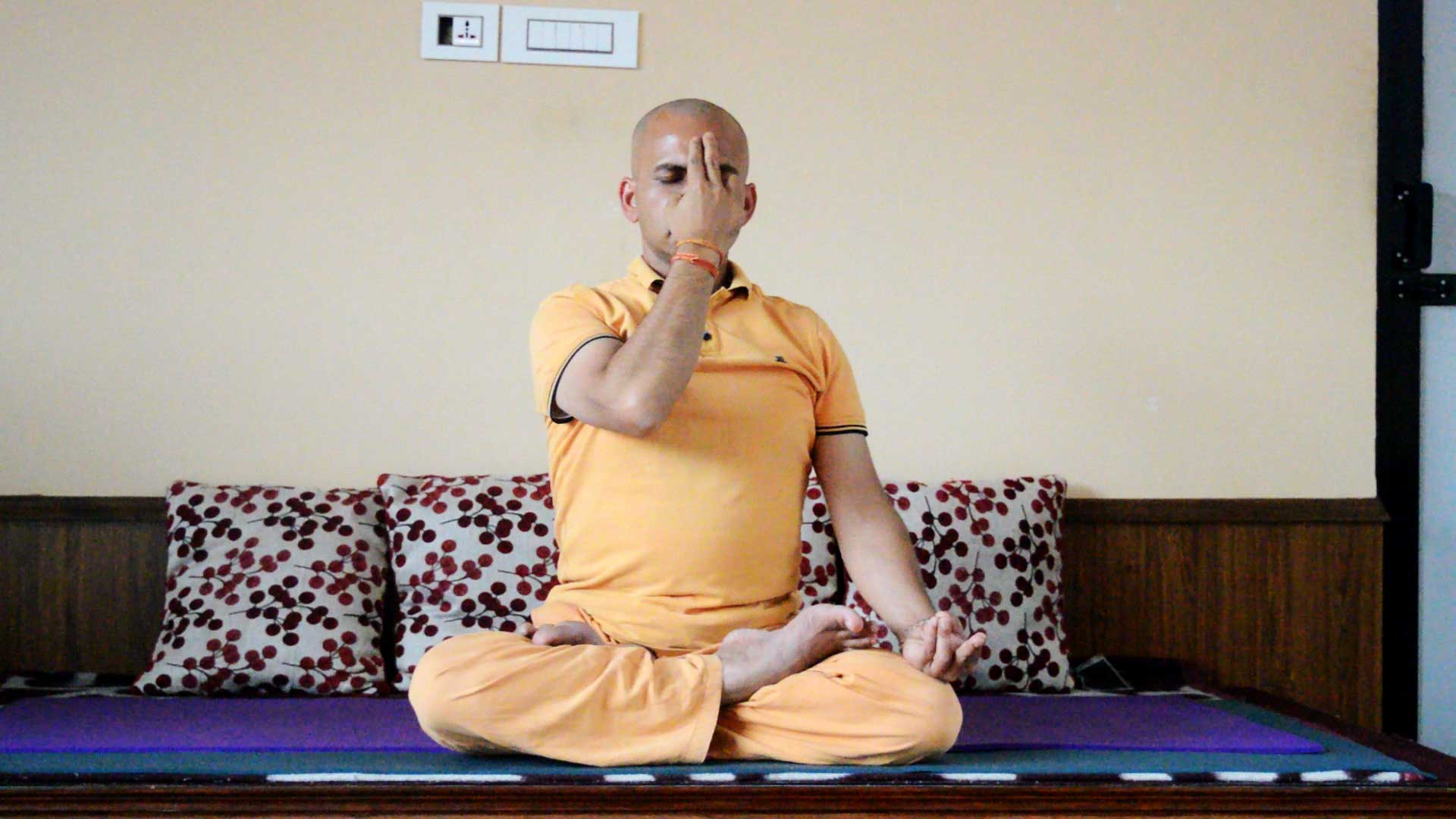
The physical act of working with different breathing techniques alters the mind in a myriad of ways – we can choose calming practices like Chandra Bhadana (moon piercing breath) or more stimulating techniques such as Kapalabhati (shining skull cleansing breath).
4. Asana
The physical aspect of yoga is the third step on the path to freedom, and if we’re being honest. The word asana here doesn’t refer to the ability to perform a handstand or an aesthetically impressive backbend. It means ‘seat’ – specifically the seat you would take for the practice of meditation. The only alignment instruction Patanjali gives for this asana is “sthira sukham asanam”, the posture should be steady and comfortable.
While traditional texts like the Hatha Yoga Pradipika list many postures such as Padmasana (lotus pose) and Virasana (hero pose) and Simhasana suitable for meditation. This text also tells us that the most important posture is, in fact, sthirasukhasana – meaning, ‘a posture the practitioner can hold comfortably and motionlessness’.
5. Pratyahara — withdrawal of senses (so you’ll look within and hear your heart)
The binding of the senses and retuning the senses from the external world to the mind. When pratyahara has arisen, then we are prepared for concentration. “When the senses withdraw themselves from the objects and imitate, because it were, the character of the mind-stuff, this is often pratyahara.
6. Dharana — single-pointed focus, concentration on one point
Dhyana — meditation for stability of mind. This is often perhaps the foremost important part of yoga. Meditating on emptiness, releasing ego, witnessing thoughts but not getting trapped in them.
7. Dhyana (meditation)
It is the seventh limb of Ashtanga Yoga. It takes the practice of concentration on an object, dharana, to the deeper level of meditation.
8. Samadhi — a state of bliss
To achieve a state of bliss, we must practice all eight limbs. Once you perform the ritual of the first series a couple of times, it’s not hard to like this tradition of yoga because the advantages are instantaneous. You are feeling stronger, calmer, and more capable of surfing the turbulence of life.
Mantra of Ashtanga Yoga
In Ashtanga yoga the practitioner opens and ends each session by reciting a mantra. The opening mantra can be found in the Yoga Taravali, a text by the philosopher Sankaracharya which dates back to 700 BC. The mantra contains references to Indian mythology, a tribute to “the highest guru” and also to Patanjali, assumed to be the author of the Yoga Sutras, one of the original texts of yoga. A guru is a teacher or master who guides man from darkness to light. Gu means darkness and Ru means light.
Opening mantra
Om
Vande Gurunam charanaravinde
Sandarshita svatmasukavabodhe
Nishreyase jangalikayamane
Samsara halahala mohashantyai
Abahu Purushakaram
Shankhacakrsi dharinam
Sahasra sirasam svetam
Pranamami patanjalim
Om
Meaning of Mantra
Om
I bow in devotion at the lotus feet of the guru
who awaken happiness by revealing the true nature of the Self
by removing the poison of illusion and ignorance
which chains the mind to conditioned existence
born into a physical body
carrying a sword for discrimination
and a discus of fire for infinite time
and a conch for divine sound
with thousands of white radiant heads
Patanjali, to him I salute
Om
YAJNA- HAWAN
Yajna (Vedic Hawan) is a spiritual ritual in which offerings are made to the Supreme soul (Paramatama), whole almighty, and Goddesses (Will, action, and energy) in a specific manner by chanting of Vedic mantras. It is also known as Homa. The chanting of mantras while performing Hawan is expected to ensure the achievement of particular desires. It is also believed that whatever is offered at Fire (Agni Dev) reaches directly to the universal power.
The Vedic scholars of the Vedas who perform this spiritual ritual do so with very pure souls and bodies. Because of their strong focus and purity of thought, their performance and offerings can gently help in solving problems, struggles, and suffering, and removing blockages in one’s life. The hymns sung and an oblation offered into the Agni (fire) are a form of hospitality for the Vedic gods and goddesses.
MEANING
Yajna is the holy offering to pray, worship, and please various deities that use fire as the medium. Fire is one of the elements our body is composed of. So, Yajna acts as a link between humans and the Almighty, inner and outer natures.
Hawan, also known as homa or agnihotra, is a Sanskrit word that refers to any ritual wherein offerings are made into a consecrated fire. The word comes from the Sanskrit root word hu, meaning “to offer” or “to present.” Generally, the word is used in northern India, while homa is used in South Asia, especially in the Himvat Kshetra, in Maha Bhaarat. Regardless, the meaning is identical.
It is believed that the regular practice of Agnihotra brings purification and transformation to the individual and the environment. In this way, homas are also part of yoga ecology as they adhere to the yogic principles of purity and caring for the natural world.
Spiritual Meaning of Yajna (Hawan)
The word Yajna is derived from the word ‘yaj’, which has a foreword meaning: to unite, to worship deities (Deva pujan), to give (dana), and to meditate for higher spiritual achievements. Yajna also encompasses the welcoming of the person (satkaar) and unity (sangathan) while performing the auspicious action. The importance of Yajna has been described in a layer of Vedic literature called Yajurveda as well as Brahmanas. The philosophy of Hawan teaches a way of living in peace and a lifestyle that promotes higher human norms and values, which is indeed the basis of a great human culture.
TYPES OF YAJNA
Brahmayajna –Meditation on OMKARA
Devayajna – Fire Ceremony
Pitriyajna – Pray to Parents
Athitiyajna – Honor to Guests
Balivaishvadevayajna – Feeding to Creatures
Hawan is a Devayajna
Yajna, or Yagya, is an outer form of worship in which an altar is built. The sacred fire is kindled using specific types of grass or wood, and then pouring into it oblations such as ghee or clarified butter, food, grains, and sesame seeds, while chanting Mantras from the Vedas. The chanting of mantras while performing Hawan is to invoke the gods and seek their blessings and favors. It is also done to ensure the fulfillment of specific desires and overall welfare of an individual, a group of people, the entire society, the entire country, or, for that matter, the entire universe.
Symbolical Meaning
Now, I would like you to remember one important thing about Hawan or Yajna. The visible fire that you see is not worshipped. It is only a symbolic act, which should be clear from the following purport of the mantra chanted during the Hawan. The summary of the meanings of the mantras during Hawan is as follows: “Oh resplendent glory, light of the universe, we light this fire to remove darkness from our midst. Thou dwellest within our hearts; may we burn out all our sins and vices. Bless us, Oh Lord, with kindness and generosity, knowledge and strength, food and wealth, and good children, and useful animals. Oh, Almighty Lord, in thy name, we offer all these ingredients into this sacred fire.
HAWAN KUNDA
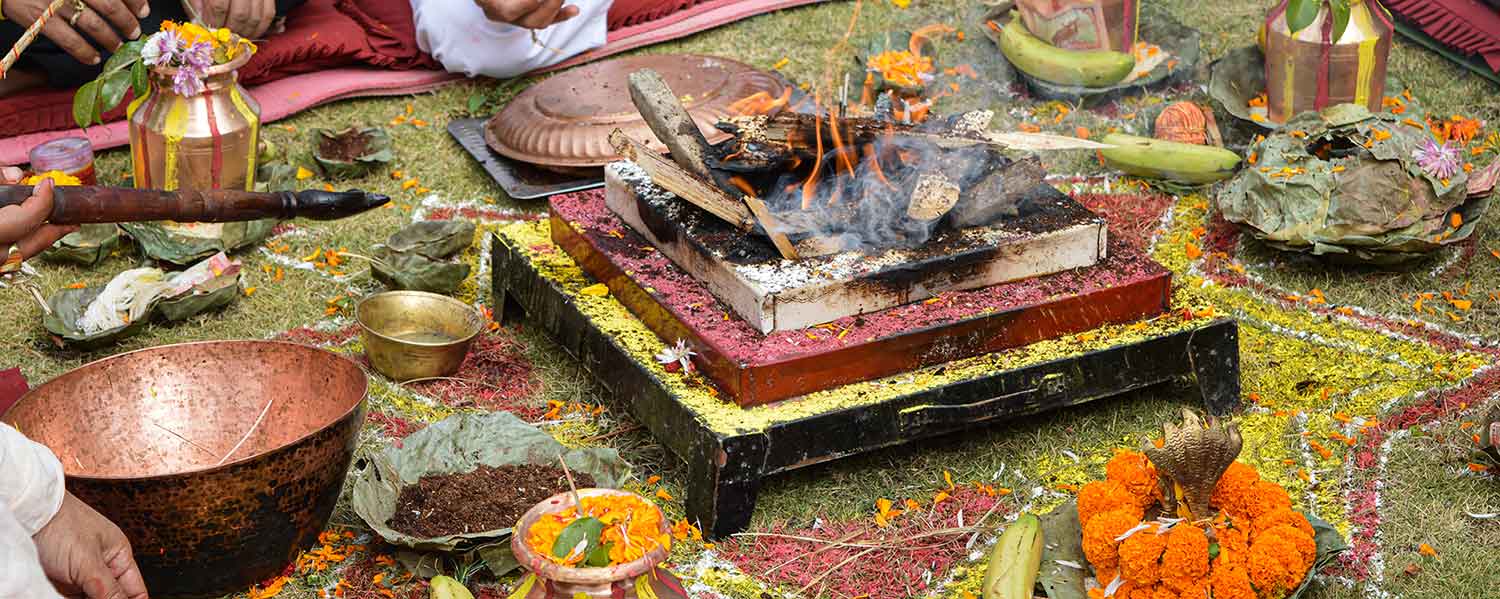
Hawan Kund is the central place in a Hawan in which the fire is put and all the offerings are made. It could be considered like a sanctum sanctorum for a Yajna. The structure of the HAWAN KUND itself generates energy to perform the rituals. It is traditionally made in pure copper as copper is well known for its grasping capacity; it grasps the divine spirit and destroys bad spirits. The spiritual vibrations are easily absorbed in copper, and it can transmit them.
Requirements
- A simple Hawan Kund
- One bundle of mango or any other suitable wood / Dry cow dung (Keep aside three individual wood sticks as “Samidhaa”)
- Some Camphor,
- Poojaa Saamaagree
- 250g Pure Hawan Saamaagree
- 250g Ghee (Melted)
- Holy Thread (Sutra),
- Some offerings e.g. (Haluwa / Kheer (Sweet Rice) / Puwa / fruit)
- A container with fresh water and teaspoons
- Matches / Fire lighter
- A lamp / diyo to be placed in front of the Hawan kunda (Optional)
Hawan Samagri
Havan Samagri is a blend of different herbal roots, leaves, grains, butter, milk, incense, and seeds.
The main content in Hawan Samagri are Agar Wood, Anwala, Bach, Baheda, Bawachi, Bay Leaves, Cardamom Green, Chharil, Cloves, Daru, Haldi, Deodar, Dhawai Phool, Dry Coconut or Sookha Nariyal, Dry Eucalyptus leaves, Guggal or Guggul, Guruch, Harr or Harad, Howber, Indra Jau, Jara Kush, Jata Masi or Balchhad, Kamal Gatta, Kapoor Kachari, Nag Keshar, Nagarmotha, Nutmeg, Red Sandal Wood, Sandal Wood, Sugandh Bala, Sugandh Kokila, Sugandh Mantri, Tagar Wood, Talish Patra, Tej Bal Wood, Tomad Bee. Nowadays, you get Hawan Samagri packed in the market. The havan samagri is offered in the fire during yagnas and homas after the completion of every mantra chant.
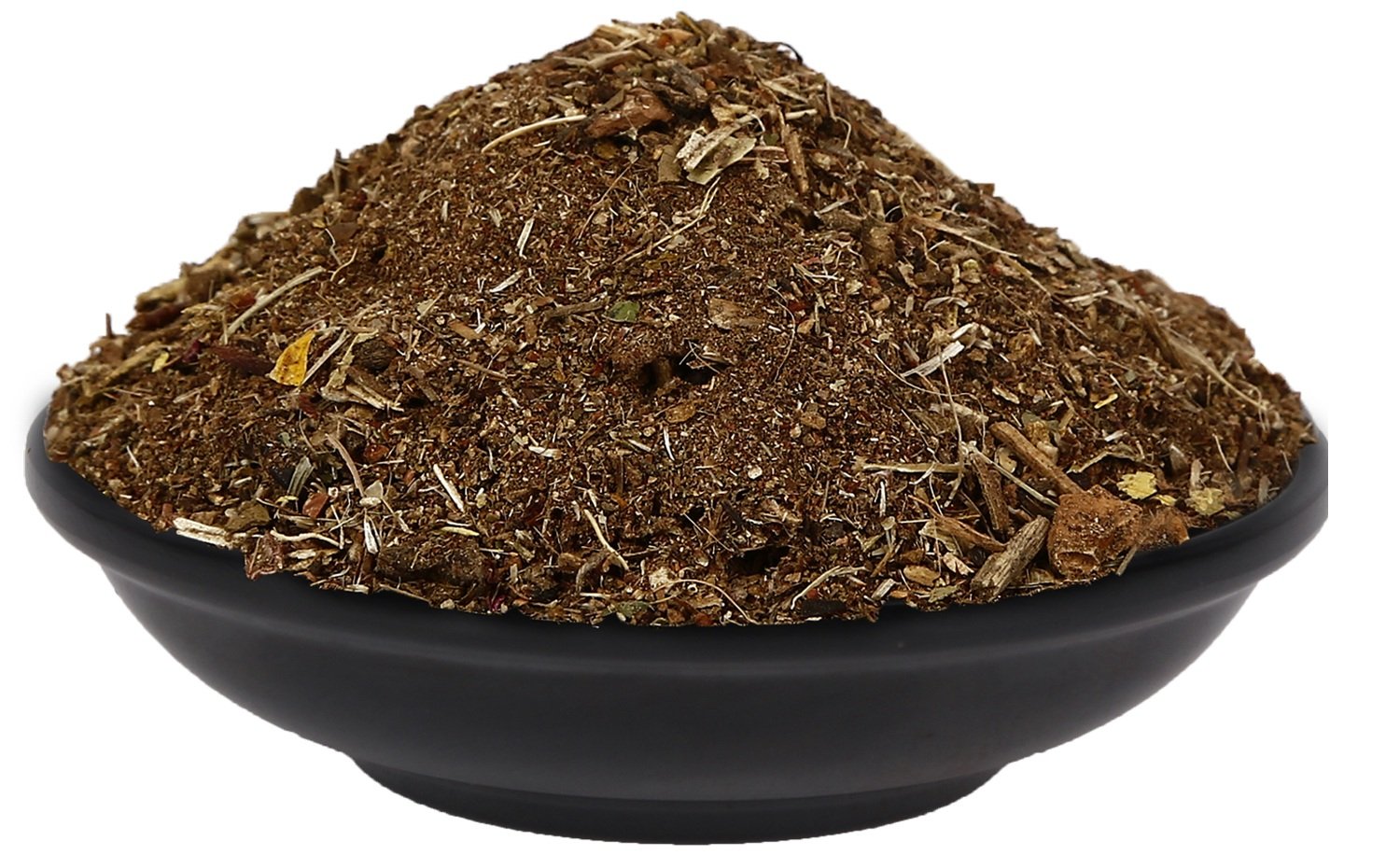
Hawan Samagri, when offered in the ablaze fire, disseminates in microform in the air to purify the environment. Besides, activates the air as a disinfectant germicidal agent. It is anti-bacterial and is made from high-grade raw materials.
Preparation
For preparing the Hawan Kund and vedi, see video:
- Mix the hawan samagree (pronounced sama-gree, and not samaa-gree) with a little ghee, about 1 tablespoon. Then place the samagree in plates/bowls/thalis and set around the hawan kund where the people participating in the hawan are going to sit.
- Place the container with the water, the parsadh, as well as the container with the melted ghee around the kunda.
- Place the three wood sticks (Samidha) that were kept aside in the ghee container. Ensure that the water and ghee containers have their own spoons.
- Take another tablespoon and place a piece of camphor in it and put next to the ghee container.
- The main lamp/diyo (optional) should be prepared with ghee/oil and a wick and placed next to the hawan kund on the side where the main hawan participants will sit.
In Himalaya Yoga Academy
After the completion of yoga teacher training courses in our yoga school, we do this hawan ( Yajna ) for the graduation ceremony. We do it to provide the yoga students with positive affirmation through the yajna. The hawan is taken part the the yoga teacher training students as well as the yoga retreat students.
Guptasana – Secret / Hidden Posture
Guptasana, also known as Siddhasana, is an Asana translated as Hidden Pose from Sanskrit. In the world of yoga, numerous poses seem to be simple but are quite powerful. Among such poses, one of them is the ‘Perfect pose’ or ‘Adept’s pose’. It is Asana no 12 and also mentioned as the oldest, seated yoga form that has been conventionally used for a long period for the purpose of meditation and breathing exercises.
“Jaanurvorantare Paadau Kritvaa Paadau cha Gopayet;!
Paadopari cha sansthaapya Gudam Gupataasanam Viduh!! –21-
Meaning: Keep both feet hidden in the middle portion of both the knees and bring the anal region between the feet. This is called ‘Guptasana’.
Description
It’s similar to Swastikasana, same as Siddhasana, but practiced by men only, purely meant for meditation. As this Asana hides well the organ of generation it is called Guptasana.
Guptasana Technique
- Initially, it is required to sit down on the floor and keep legs stretched and spine straight in the sitting Dandasana.
- Rest the arms at the sides. This pose is known as Dandasana.
- By tilting the left knee and taking the left heel towards the groin area.
- The heels would rest on the perineum which is the area at the base of spine in between the anus and genitals.
- Similarly, tilt the right leg and take the right heel inside, then be required to keep the right ankle over the inner ankle of the left foot. Place your right heel over the pubic bone.
- Keep your hands over your thighs, and face your palms facing upward.
- Spine needs to be straight.
- It is supposed to close the eyes slowly and gaze inward.
- Remain in this pose for around one minute or till the time during meditation or in pranayama practice.
- Come out of this pose by stretching your legs on the floor in Staff pose. You are then required to rest yourself in Corpse pose for one to three minutes.
How to release the stretch
Sit in this position as long as you can and come back to the basic sitting Dandasana position. Release one by one how we formed it and followed by Shavasana to relax.
Benefits of Guptasana
- Useful for stimulation of all the visceral organs, controlling heart rate, blood pressure
- Correcting sexual and emotional problems
- Calms and relaxes the physical tension and pressure
- Helpful for concentration, reaching a higher state of awareness, and meditation as well
- Stimulates the genitals and also increases the secretion of testosterone
MRITASANA – CORPSE POSTURE (SHAVASANA)
Mritasana, ‘Mrit’ – Corpse/dead body; Asana – Pose; Corpse Pose, or is an asana in hatha yoga and modern yoga as exercise, often used for relaxation at the end of a session. It is the usual pose for the practice of yoga nidra meditation as well.
Mritasana, or shavasana, is the Sanskrit name for an important restorative asana. It is a key component of asana practice in almost every yoga tradition. It is most commonly used at the end of a sequence as a means of relaxation and integration.
This pose gets its name from the recumbent posture of a dead body. It is a position of rest, and is usually practiced towards the end of a yoga session. A session that typically begins with activity and ends in rest; a space or pause when deep healing can take place.
Mritasana in Core levels
Mritasana / Shavasana is believed to stimulate the muladhara (root) chakra, since the entire length of the body is connected with the earth. Energizing this chakra through shavasana is deeply grounding, and cultivates the inner stillness and stability necessary for personal growth.
While giving a class, the teacher can also chant a mantra and ask the students to focus on the sound and the vibrations it produces in the body. This is particularly helpful for beginner students who find it difficult to calm their minds.
Mritasana is particularly useful for a full body reset. If you are able to enter into 5 minutes of proper mritasana/savasana, you can remove the fatigue and stress from the body, get back up energized ready to carry on.
How to do the Mritasana / Shavasana (Corpse Pose)
There are three phases while doing Mritasana:
1. Deha Dharana (Body Preparation / Relaxation Phase)
2. Prana Dharana (Breath & Energy Relaxation Phase)
3. Mano Dharana (Mind Relaxation Phase)
- Lie flat on your back in supine pose, preferably without any props or cushions. Use a small pillow below your neck if absolutely required. Keep feet apart, hands beside the body, upward facing. Keep the back, neck, and head in a straight line. Close your eyes.
- Keep your legs comfortably apart and let your feet and knees relax completely, toes facing to the sides.
- Taking your attention to different body parts one by one, slowly relax your entire body.
- Begin by bringing your awareness to the right foot, move on to the right knee (as you complete one leg, move your attention onto the other leg), and so on, and slowly move upwards to your head, relaxing each part of the body.
- Keep breathing slowly, gently, deeply, and allow your breath to relax you more and more. The incoming breath energizes the body while the outgoing breath brings relaxation.
- Drop all sense of hurry or urgency or any need to attend to anything else. Just be with the body and the breath. Surrender the whole body to the floor and let go. Make sure you don’t fall asleep!
- After some time, about 2 to 12 minutes, when you feel fully relaxed, keeping your eyes closed, slowly roll onto your right side. Lie in that position for a minute or so.
- Then, taking the support of your left hand, gently sit up into a seated pose such as Sukhasana (Easy Pose) or Sahajasana (Comfort Pose).
- Keep your eyes closed and take a few deep breaths in and out as you gradually become aware of your environment and your body. When you feel complete, slowly and gently open your eyes.
Although Savasana aims to give rest to the body and mind. It is, in fact, considered to be a somewhat active pose in which the practitioner should remain fully conscious and not fall asleep.
Various techniques during the Mritasana
- Improving memory, focus and concentration
- Providing deep relaxation
- Rotation of consciousness around the body parts just like in Yoga nindra
- Focusing on internal sounds of the body
- Chanting a mantra in the mind with complete focus on the mantra
- Fixing your gaze at the third eye or any other energetic point/chakra on the body
Benefits of the Corpse Pose – Savasana
- This posture brings a deep, meditative state of rest, which may help in the repair of tissues and cells, and in releasing stress.
- It also gives time for the yoga workout to sink in at a deeper level.
- Increasing energy and productivity.
- Savasana relieves physical and mental stress that builds during a workout.
- Lowering blood pressure.
- Relief from stress, headache, fatigue, and insomnia.
- This posture leaves you in a state of rejuvenation.
- It is the perfect way to end a yoga session, particularly if it has been a fast-paced one.
- It helps reduce blood pressure, anxiety, and insomnia.
- This is an excellent way to ground the body and reduce the Vata dosha (imbalance of the air element) in the body.
Note: 1 minute to 7 minutes practice is normally called Shavasana, and more than 10 minutes to more normally 90 minutes will be Yoga nidra Practice.
Veerasana (Hero’s Pose)
Veerasana, widely famous as Hero’s Pose, is derived from two Sanskrit words: Veera, meaning Hero, and Asana, meaning Posture. It is also known as balancing posture, and it helps to increase awareness and concentration. If you plan to sit still for more than a few minutes, as you would for a meditation session, give it a try. If you wanna practice this asana and become a yoga teacher, contact the yoga teacher training in Nepal.
Steps for Veerasana
- First Sit on Vajrasana.
- Then, raise the right knee upright, placing the right foot on the ground by the side of left knee.
- The right elbow at the top of the right knee, rest the chin on the right hand’s palm, and place the left palm at the top of the left knee.
- Keep the spine erect and the head fully straight. Gently close the eyes and relax the whole body.
- Let the body remain fully relaxed and motionless. Hold this position for a minute or two.
- Release the position and come back to Vajrasana to relax.
- Repeat the same practice from the opposite side by placing the left foot at the side of the right knee.
Benefits of Veerasana
1. Balances the mind and improves concentration.
2. Helpful in stabilizing the functioning of the entire nervous system.
3. Highly beneficial for the liver, kidneys, and every other abdominal organ.
4. Practicing the second variation of this asana improves the functioning of the reproductive organs.
5. Extremely beneficial for people having a disturbed mind because of the regular practice of this asana clears up the thought process and helps in getting rid of the habit of overthinking.
Precautions for Veerasana (Hero’s Pose)
- People having knee weakness or knee injury should not practice this asana.
- People having arthritis, spinal disorders, osteoarthritis, high blood pressure, respiratory diseases, or any heart disease should not practice this asana.