
Ashwini Mudra and its amazing benefits
We could never have predicted how much more of an effect our hectic lifestyle and unhealthy habits would have on our health. We now have the ability to undo the harm and embark on a healthy path, thanks to yoga asanas, exercises, and a diet filled with wholesome recipes.
Ashwini Mudra: What is it?
In English, Ashwini Mudra is known as horse motion or horse mudra. Ashwini Mudrayoga, a form of hatha yoga, includes contracting and relaxing the anal sphincter in a way that relieves constipation and hemorrhoids while assisting in bringing pranic energy up to the body. The term “horse mudra” refers to the rhythmic activity that horses engage in regularly, during which they contract and relax the entire pelvic region as well as the buttock muscles, sphincter, and perineum of the body.
How to do Ashwini Mudra: Steps-
The Ashwini Mudra can come in a variety of forms. These are two of them:
Ashwini Mudra (Variety I)
- Sit tall and straight in Padmasana and comfort your body.
- Eyes closed, begin inhaling. Spend a few minutes focusing on your respiration as it occurs naturally.
- Now tense/ contract the anus sphincter muscle for a few seconds, without pulling or straining, and keep the whole body relaxed. Make sure that you only clench in the anal region during this exercise as far as possible.
- Repeat the contraction for about 5 minutes.
- Try to execute the contraction and relaxation cycle as smoothly and rhythmically as you can. You can progressively tighten the constriction even more.
Ashwini Mudra (Variation 2)
Try to sit on a towel that has been rolled up or on your heels for this variation of the Ashwini Mudra. View images of Ashwini Mudra to learn how. The Muladhara Chakra will feel more pressure as a result of this.
Following are the steps for performing Ashwini Mudra Yoga:
Fill the lungs to one-third of their maximum capacity by inhaling. Right now, quickly constrict and relax your anus twice. You should repeat this at least 15 times, roughly. Exhale gradually. 15 times, go through the entire inhalation and muscle contraction procedure. After that, slowly exhale.
Give it another go. For the third and last time, fill the lungs to one-third of their maximum capacity. The last 15 repetitions were spent contracting and relaxing the muscles. Don’t breathe out at this point. Instead, bring the shoulders forward and press the chin with the chest. You’ll feel the heat. Now exhale through your nose to let the stress leave. The energy will be felt throughout your entire body.
Things to Consider
Even though Ashwini Mudra has many excellent advantages, there is something you should keep in mind before doing the exercises. These consist of:
- When a woman is pregnant or menstruating, she shouldn’t practice the Ashwini Mudra.
- It can be used to treat problems like bedwetting and is also a type of yoga for youngsters.
- You should stay away from Ashwini Mudra yoga if you have serious uterine problems.
- Doing Ashwini Mudra asana is not recommended for anyone with conditions such as an enlarged thyroid, slipped disc, enlarged liver, or spleen.
- Do Ashwini Mudra sparingly because doing it repeatedly can have negative effects on your health.
- Never perform the Ashwini Mudra while moving.
- In addition to this, you can perform it while lying down, standing, or in any other position.
- To do the Ashwini Mudra correctly, you shouldn’t merely rely on pictures of it.
- Consult with a yoga specialist for advice.
Advantages of Ashwini Mudra :
- Effective For Piles: Ashwini Mudra promotes healthy digestion in addition to other things. Additionally, it can be a beneficial kind of yoga for conditions associated with the anal and rectum, such as piles, hemorrhoids, and others. The blood circulation throughout the area is improved when you tighten the anal sphincter while performing this stance. This speeds up the process of healing and lessens localized pain and burning. So, if you have piles or another similar condition, we advise you to practice Ashwini Mudra frequently.
- Improved Digestion: One of the key advantages of Ashwini Mudra is improved digestion. The position aids in easing gas and constipation problems. It increases the flow of prana into the internal organs, making them more robust and disease-resistant. If you regularly practice Ashwini Mudra, you may also notice an improvement in your bowel motions.
- Enhances Sexual Health: Ashwini Mudra is frequently used to improve sexual health. Men will particularly benefit from this. The pelvic muscles, perineum, sphincter, and entire pelvic area are repeatedly contracted and relaxed in the Ashwini Mudra pose. These provide the sex muscles additional power and endurance while also strengthening them. Additionally, the position enhances pelvic blood flow, which adds to the pleasure of sex.
What’s next? Additionally, yoga enhances sexual pleasure by arousing the earth and water chakras’ sexual energies.
- Strengthens Uterine Muscles: It has been observed that Ashwini Mudra can assist ladies in resolving any uterine-related health issues. This organ is responsible for growing the fetus and carrying the child until birth. For this reason, uterine muscles need to be powerful. Furthermore, uterine muscles that are strong aid in relaxing the menstrual cycle. It has been shown that performing Ashwini Mudra and Mul Bandha together can strengthen the uterus muscles.
- Reduces Stress and Depression: We live fast-paced lives, which can occasionally cause undue stress. Depression can develop from long-term, constant stress. As you are aware, yoga is effective in battling both stress and depression. In a similar vein, Ashwini Mudra moves. It can support the adrenal gland’s healthy operation and regulate the body’s level of the stress hormone cortisol.
- Beneficial During Pregnancy: Ashwini Mudra asana can also be done to ensure a healthy pregnancy. It is well known for supporting the fetus’ gradually increasing weight. To strengthen the pelvic floor muscles, some women practice this yoga both before and after becoming pregnant.
- Supports Healthy Skin: It may come as a surprise, but Ashwini Mudra can help people achieve healthy, clear skin. It indirectly results in improved skin because it eliminates serious stomach-related disorders. Additionally, it supports a healthy hormonal system and endocrine system, which keeps your skin looking young and vibrant.
The Last Few Words
Now that you know everything there is to know about the horse gesture, it’s time to put your newfound knowledge to use by incorporating it into your daily routine. If you are a beginner, it is advised that you obtain professional advice on how to carry out this yoga correctly. This will not only make sure that you get the most out of all the advantages but also protect you from any negative effects that can result from using Ashwini improperly.
Sun Salutation B sequence with Breath
Sun Salutation B or Surya Namaskar B is an advanced variation of the traditional 12-posture sequence of flowing movements. There are many different Sun Salutation variations, with Sun Salutations A, B, and C ranking among the most popular. Sun Salutation B features 19 poses that offer a full-body stretch that opens the heart, shoulders, hips, back, and chest, and a cardiovascular workout.
Sun Salutation B or Surya Namaskar B increases energy in the body, boosting overall vitality and preparing the body for more advanced poses. When you focus on the preceding breath to movement and flow gracefully from one pose to the next, you will move from practicing physical asanas to moving meditation.
The proper method to synchronize your breath to the movements of your body.
1. Utkatasana – Chair pose
Start in the mountain position, or Tadasana, at the front of your mat. To calm and be within yourself, close your eyes and take a few deep breaths. Inhale, squat your knees and raise your wrists so that your upper arms rest just above your ears. The knee should not cross the toe level but can be behind your toe level. Try to maintain soft shoulders, a long spine, and legs that don’t “overshoot” your toes. Bring your wrists in front of you while bending your elbows if your shoulders are tight. Gaze fix to your thumbs.
2. Uttanasana – Standing forward fold
Exhale, straighten your legs by pushing through your feet and sweep your body forward and downward while hunching at the hips. Maintain a long spine, move your shoulders away from your ears, and align your fingers with your toes. Bend your knees and put your fingertips on the ground or your hands on blocks if this is too challenging for your hamstrings. Gaze fix to your navel or tip of your nose.
3. Ardha Uttanasana – Half-standing forward fold
Taking a breath, extend your sternum forward until it touches your fingers. In order to avoid compression, maintain your neck long on the sides and back. Imagine the crown of your cranium and your sit bones as sources of opposing energy that radiates outward.
You could adjust by putting your palms on the tops of your thighs or shins.
4. Chaturanga Dandasana – Four-limbed staff pose / low press up
Deeply bending your knees will allow you to press your palms solidly into the ground. When you become an advanced practitioner, you can try it without bending your knees. As you exhale, engage your abdominal muscles to support your spine, focus your attention on a spot just in front of your toes, and jump back into Chaturanga Dandasana, sending your energy and sternum’s base towards this focal point. Land with your shoulders aligned with your forearms and your elbows bent. You have to engage your arms, shoulders, and core properly. Your elbows should be about 90 degrees, in this situation, forearms happen to be perpendicular to the ground.
5. Urdhva Mukha Svanasana – Upward facing dog pose
Take a deep breath in, roll onto your toes, and push your sternum forward and upward until your chest passes through the opening between your upper arms. Draw the thighs away from the floor while pressing the tops of the feet, particularly the big toes, solidly into the ground. Try to engage the entire palm region and fingers, not only the heel of your hands. Lift the sternum and look upward while keeping the abdomen slightly engaged to safeguard the lower belly.
6. Adho Mukha Svanasana – Downward-facing dog
Exhale, Raise the belly in and up, and tightly press the palms together. Step over your toes or roll your hips up and back to balance on the balls of your feet with your feet hip distance apart. Press the tops of the thighs back while extending through the sit bones and the crown of the cranium. Instead of pressing your heel to the floor, try to lengthen your spine.
7. Virabhadrasana I – Warrior 1
Exhale, grip your palms tightly and draw your belly in and upward. Step over your toes or roll your hips up and back to balance on the balls of your feet with your feet hip distance apart, it can be zero distance as well. There should be a balanced weight on both legs. Press the tops of the thighs back while extending through the sit bones and the crown of the cranium. Instead of forcing your feet to the floor, try to lengthen your spine.
8. Chaturanga Dandasana
As you exhale, frame the right foot with your hands and return to Chaturanga. Make sure your shoulders don’t drop below the line where your arms are.
9. Urdhva Mukha Svanasana / Upward facing dog
Inhale and go ahead to Urdvha Mukha Svanasana / Upward facing dog pose.
10. Adho Mukha Svanasana – Downward-facing dog
Exhale, then return to Adho Mukha Svanasana.
11. Virabhadrasana 1 Warrior 1 on the other side
Inhale, Step forward with your LEFT foot into Virabhadrasana from Adho Mukha Svanasana.
12. Move through Chaturanga
13. Urdvha Mukha Svanasana
14. Adho Mukha Svanasana; hold the pose for five deep breaths
15. Ardha Uttanasana – Half-standing forward fold
Deeply squat on your knees while gazing at your hands at the conclusion of the fifth breath. Hug your abdominal muscles in and up, then firmly push your palms into the ground. Keep your elbows slightly pliable as you rise onto the balls of your feet and hop or float to the top of your cushion. Inhale, returning to your fingers, take Ardha Uttansana, and extend your sternum forward once more.
16. Uttanasana – Standing forward fold
Exhale, Fold deeply, extending the back of your neck and vertebrae, and bringing your palms once more to the outside of your feet.
17. Utkatasana – Chair pose
Inhale, Take a deep breath in, flex your knees, and raise your arms back up towards the heavens. Keep your tailbone long and your neck’s sides open.
Exhale, straighten your legs by pressing into your feet and bring your hands together so that they rest at the base of your heart.
Take five lengthy, deep breaths while standing in Tadasana with your eyes closed. Then, repeat the process. Start with three to five cycles.
Utthita Hasta Padangustasana A, B, C and D
Utthita Hasta Padangusthasana is a standing posture that fosters equilibrium, balance, and increased focus. The word is a combination of the Sanskrit words utthita, which means “standing,” hasta, which means “hand,” padangustha, which means “big toe,” and asana, which means “pose”. It is known as the Extended Hand To Big Toe Pose.
How to do Utthita hasta padangusthasana-A:
- Stand straight and tall in samasthiti.
- Inhale and lift your right leg, and grab your right big toe with your right hand while keeping your left hand on your left waist.
- Exhale and pull your leg closer to your chin and slightly fold forward towards your leg.
- Gaze fix to the big toe. Hold the pose for about five deep breaths.
How to do Utthita hasta padangusthasana- B:
- From Utthita hasta padangusthasana- A, inhale and release your forward fold. Continue holding your big toe and keep your body straight
- Exhale and slowly move your right leg towards the right side while holding your big toe with your right hand. Turn your head to the left side. Gaze fix far to the left.
- Hold the pose for about 5 deep breaths.
How to do Utthita hasta padangusthasana- C:
From Utthita hasta padangusthasana- B, bring your leg back to the front and pull your right in front with both hands. This is done only for one breath according to the Ashtsnga Vinyasa Series. Yet, if you want you can increase its duration up to five deep breaths.
How to do Utthita hasta padangusthasana- D:
- From Utthita hasta padangusthasana-C, inhale, release your both hands and keep them on your waist.
- Keep your leg extended forward parallel to the floor.
- Hold the pose for about five deep breaths, gaze fixed on the big toe, and release.
- Repeat the same process on the other side as well.
Benefits of Utthita hasta padangusthasana:
- Utthita hasta padangusthasana boosts the strength of your leg.
- It enhances a person’s feeling of balance, both physically and mentally.
- It boosts mental focus during meditation, harmonizes feelings, encourages mental steadiness, and heightens self-awareness.
- In addition to strengthening the core and opening the heart, this posture aids in maintaining a sense of calm and equilibrium that is always present.
- It helps to balance the left and right hemispheres of the brain.
- If you do this pose regularly, it works for anti-aging.
- Utthita hasta padangusthasana stimulates the Muladhara (root) and svadisthana (spleen or sacrum) chakras. A person’s feeling of stability, openness to intimacy, creativity, and sense of self are all strengthened when these two chakras are stimulated.
- Stretches and opens the hips, shoulders, and arms while strengthening the legs, ankles, and muscles around the knees.
- It also thoroughly stretches the hamstrings or back thigh muscles.
- Improved digestion and lower back pain relief are both benefits of this practice.
Modifications :
- Beginners who need modifications can use a strap to hold on to the foot, maintain the leg bent, and open the hip to the side. As soon as one is balanced enough to turn to the side, one can also keep looking forward.
- Another adjustment is to bend your knee and hold on to the top of your shin, which is near your knee, rather than your big toe.
- If your balance is not proper, practice it next to a wall or pillar. As and when necessary, take support of it.
Contra-indication for Utthita Hasta Padangusthasana
You should never perform Padangusthasana if you have any of the following medical problems without first speaking to a qualified yoga instructor or ayurvedic physician:
- Pregnant women later than four months.
- Knee pain or Arthritis
- Recent surgery in the neck, abdomen, or knees.
- Chronic diarrhea
- Injury in the back, quadriceps, or hamstrings.
- Persistent headaches or migraine.
Who should not miss Utthita Hasta Padangusthasana?
Padangusthasana can be readily altered to accommodate various fitness goals, ages, and health conditions.
This asana is good for all but very important for:
- Children
- Seniors
- Those who have issues with their kidneys and stomach.
- People who wish to lessen their anxiety and tension.
- People who suffer from lower back pain.
- Those who often experience stomach issues.
- People who experience occasional light headaches.
Remember:
Deep breath during an asana is very important to gain strength to hold the pose for a longer duration and maintain stability and balance. It is better to observe a deep breath from nostrils to tandem (area 2 inches below your navel) and tandem to nostrils. This practice will continue to recharge your body.
Ayurveda Diet and Nutrition
Ayurveda Diet and Nutrition are some of the healthiest supplements for proper functioning of mind, body, and soul. Ayurveda, having origin in the Vedas, focuses a lot of accent on a diet (Aahara) and food (anna), and it holds that a balanced diet nourishes the body, mind, and soul. Ayurveda does not categorize food as good or bad; rather, it places prominence on several factors that affect it, including its biological characteristics, place of origin, environmental factors, seasons, preparation, and freshness. It also offers a logical justification for how to balance food by a person’s dosha and physical requirements. Scriptures state that no letter cannot be a mantra, and no root can be a medicine. Every man is useful in some way.
According to Ayurveda, “Aahara” (diet) and “Anna” (food) are very important for a healthy life, health, and wellness. Mind, body, and spirit are all nourished by wholesome, healthy food.
Even though each person’s digestive ability may vary, a healthy life requires eating food of sufficient quality and quantity. Food, when consumed in the right amounts, gives you energy, and a healthy complexion, and supports the health of your tissues.
Science, philosophy, and spirituality, according to the 6000-year-old Ayurvedic medical system, are all crucial aspects of living a healthy life. Ayurveda is recognized as a complete medical system as well as a way of life. The individual is inseparable from his or her environment and a “microcosm” within the “macrocosm.”
Ayurveda talks about six tastes. When ingested in the proper quantity, each taste elicited by the meal helps to nourish the body. Sweet enhances the quality of life generally, gives skin luster, strengthens the body overall, and is good for the throat. However, overuse will exacerbate kapha and exacerbate problems including obesity, congestion, and other illnesses.
The right digestive powers (Agni) are stimulated by sour tastes, which also give energy, arouse the mind, and cause salivation. However, frequent use will result in indigestion, water retention, and heartburn. When used in moderation, salt, which is greasy and heavy, acts as an antispasmodic, a stimulant of energy, and a supporter of electrolyte and water balance. Salt, however, causes water retention when used in excess, raises blood pressure, and causes nausea. Rock salt should be used in the diet since it contains minerals, according to Ayurveda.
Pungent assists with digestion, absorption, and sinus cleaning when used sparingly. It also promotes circulation and aids with excretion. It contributes to the body’s health and vigor while acting as a blood thinner. However, overuse can result in sterility, exhaustion, and extreme thirst.
Bitter foods like fenugreek, aloe Vera, turmeric, and dandelion boost all other flavors. They remove fat, tone the pancreas, and function as an antipyretic. Overconsumption may make you feel lightheaded.
“Sour taste” in Ayurveda typically refers to acidic foods or fermented foods, as in “the milk has gone sour.” Yogurt, wine, beer, miso, and pickles are examples of sour foods. Citrus fruits and sub-acidic fruits like peaches are also regarded as sour; nevertheless, sour fruits cool the blood as opposed to ferments, which heat it.
Unripe bananas, pomegranates, and chickpeas are a few examples of astringent foods that are binding and aid in absorption. Use in excess will cause blood coagulation, constipation, and whining.
Indigestion, flatulence, acidity, and the formation of toxins in the body can occur when various foods are consumed together and their qualities are not complementary. However, the same food may be quickly digested and may even encourage “agni” when consumed separately. Ayurveda offers recommendations for food combinations that promote healthy digestion and optimal nutrition. Additionally, it advises using herbs and spices when cooking (Ayurvedic cookery) to make the food easier to digest. Ayurvedic cooking is a great science that teaches how to combine foods and food ingredients in the right ways to keep good health.
Ayurvedic Diet :
According to Ayurveda, every root is a medicine, thus there is no such thing as good or bad food. It also offers a logical method for creating balanced meals for the best nutrition by creating harmonious food groups, encouraging appropriate digestion, and maximizing nutrient absorption. Food that is comparable to one’s dosa will make the dosa worse. To balance the dosa, one needs to choose the right food group. Ayurveda advises:
(a) Right consumption of raw (uncooked) food, fruits, and vegetables,
(b) Prior understanding of the effects of herbs, and
(c) Should stay away from incompatible food pairings, such as salt and milk.
According to Ayurveda, the plants and plant-based foods that make up our diet have a significant impact on how we feel physically and mentally. Ayurveda advises avoiding leftovers and consuming a moderate amount of raw foods in order to have appropriate digestion. It is advised to eat handmade, freshly prepared food for proper nutrient absorption. Spices are used to mellow the negative effects of the dish and make it more palatable. Warm food is advised because it stimulates the Agni and digestive enzymes.
Food intake timing is also taken into account; for example, Vata people may choose smaller portions and eat more frequently. The best times to eat are at dawn and dusk. While Kapha persons can skip breakfast and make lunch their greatest meal, Pitta individuals can eat their largest meal at noon (a maximum of three times). Other aspects to take into account are gender and age. Older people should follow an anti-vata diet, whereas middle-aged people and youngsters should follow an anti-pitta diet.
Similar to how women choose a more anti-Kapha diet, men may explore a more anti-pitta diet. It is advised to have a calm and relaxed attitude for the best digestion. It is advised against eating when one is experiencing strong emotions like stress, rage, or grief, among others, as these things might cause abnormal digestion and have a detrimental effect on the mind, which is the seat of all sensory perception and control. Spices’ Function in the Ayurvedic Diet: Ayurvedic nutrition places a high value on herbs and spices since they are utilized to balance the humoral qualities of food.
For example, ginger neutralizes the heavy quality of the food thus adding ginger will convert the property of heavy food into a lighter state. Similarly, when combined with different food agents it will change its mode of action as ginger when taken with rock salt will reduce vayulvata symptoms, with rock candy it will reduce pitta and when used with honey it will reduce kapha. With its versatile qualities ginger is used for treating indigestion, flatulence, colic, vomiting, stomach spasm, colds, cough, and asthma. In addition to their medicinal qualities herbs and spices enhance the taste and flavor of the food and aid digestive secretions. Herbs and spices also provide mineral and vitamin supplements. Five of the commonly used spices are described below. Influence of food over mind and emotions
For instance, adding ginger will make the property of heavy food into a lighter state since ginger neutralizes the heavy character of the food. Similar to how changing dietary agents can affect a substance’s mode of action, ginger can diminish vayulvata symptoms when mixed with rock salt, pitta symptoms when combined with rock candy, and Kapha symptoms when associated with honey. Due to its adaptability, ginger is used to treat a variety of conditions, including indigestion, flatulence, colic, vomiting, stomach spasms, colds, coughs, and asthma. Herbs and spices provide health benefits in addition to enhancing the flavor of food and promoting the release of digestive juices. Additionally, herbs and spices offer vitamin and mineral supplements.
Raja Yoga
The term ‘Raja’ means the ‘Royal’ or ‘king’ or ‘chief’, and ‘yoga’ means the ‘union’ thus Raja yoga refers to the chief union. It is a state where a practitioner experiences being at its utmost or supreme state of being. In the Shaiva Yogic text, Raja yoga is noted as a goal in which one experiences a calm state of natural peace and serenity.
Sage Patanjali mentioned Raja yoga as classical Yoga or Sahaja marg (easy way to mukti or liberation) in his yoga sutras. According to the Bhagavad Gita, there are Trimarga or the three paths of realization. Those three paths are mentioned as Karma Yoga; which is also known as the Path of action, Bhakti Yoga; which is also known as the path of devotion, and Jnana Yoga; which is known as the path of knowledge.
Later on, in the 19th century, Swami Vivekananda mentioned Raja Yoga as a fourth path of attainment of liberation. Four paths of liberation Karma yoga, Bhakti yoga, Jnana yoga, and Raja yoga in his book named raja yoga are suitable for four types of human personality active, the emotional, the philosophical, and the mystic respectively.
The Four Paths of Yoga
Yoga philosophy presents four paths toward enlightenment. It’s sometimes suggested that Raja Yoga is a superior path, because of the confusion caused by the “Yoga of Kings” myth. In truth, all four paths are equal. You can practice any one, or more than one, on your journey.
The four paths presented in yoga philosophy are:
- Karma Yoga (the Path of duty)
- Bhakti Yoga (the Path of devotion to purity)
- Raja Yoga (the Path of self-control)
- Jnana Yoga (the Path of knowledge of Self)
Hatha Yoga and Raja Yoga :
Hatha yoga is practiced and its knowledge is needed only to attain the state of Raja yoga or the Samadhi which is mentioned in Hatha yoga pradipika. The practice of Hatha yoga prepares our body for the attainment or the state of Raja yoga thus it is not the process but the state being happened.
Hatha yoga pradipika further elaborates Raja yoga as being one with the absolute self or dissolution of living self where one’s desires and cravings are dissolved or ended. When you add a spoonful of salt into the water and a moment later salt gets dissolved into water in such a way you can’t separate salt from water likewise raja yoga is a state of union or dissolution or the Samadhi or the sunya. This metaphorical example of salt and water to explain Raja Yoga is mentioned in Hatha yoga pradipika.
These days Raja yoga as the act of meditation is being practiced by Brahmakumaris in Brahmakumari Ishwariya maha Vidyalaya. It is taken as a sahaj marg or the easy way to attain salvation. The meditation taught in Brahmakumari in the name of Raja yoga has nothing to do with the concepts mentioned by Patanjali yoga sutras.
In your yoga practice journey, you can encounter this term so it’s better to know the concept. Being in a state of one with the supreme self is known as Raja Yoga. We practice seven limbs of yoga to attain the eighth limb the state of Samadhi or Raja Yoga.
How to Practice
Raja Yoga is considered a challenging practice because it requires consistent self-control. Luckily, it can be practiced at a level that fits your life and circumstance. You could be so moved by yoga philosophy that you decide to become a monk and give up all the chattels of material life. But more likely, you would prefer self-improvement without making such an extreme choice.
In Raja Yoga, there are eight specific practices presented in exact order. Patanjali, in the Yoga Sutras, declared that mastering each of these practices in order would lead to enlightenment.
The eight practices of Raja Yoga :
- The Yama – five areas to improve self-control and purify your intentions.
- The Niyama – five areas in which to purify your habits
- Asana – the physical practice to purify your body
- Pranayama – practiced using breathing exercises to purify the energy body
- Pratyahara – withdrawal from the senses to calm the senses and mind
- Dharana – concentration to control the mind
- Dhyana – meditation to understand the Self
- Samadhi – becoming liberated from the illusions of the outer world.
The Benefits :
- Through the dedicated practice of this Yoga, one develops detachment towards worldly objects, our thoughts, and the results of our actions
- It develops an understanding of our true nature and leads to the cultivation of inner peace and tranquility.
- Our character becomes purified, our virtues increase, and spiritual growth accelerates.
To understand you can watch this beautiful video about Raja Yoga :
Importance of Breathing in Yoga Asana
Breathing is a vital part of life. The pranic force is controlled by breathing. Your life is sustained by breathing. Thus, there is great importance of breathing in yoga asana.
Yoga asana is characterized by awareness of the breath and the coordination of the breath with movement, and if you miss this, you are not doing yoga asana but simply some exercise or physical activity.
The importance of breathing in Yoga asana can be listed in three ways according to the description of Yoga asana:
- Since yoga asana is a path or method to align both internal and external systems there requires a pranic flow i.e. proper breath flow to enliven the systems.
- Once your inner system is in proper alignment with breath, you can adjust your body to the cosmic geometry which is the further step for Yoga asana. Again for the adjustment of every single visible and invisible system of the body pranic force is required. Thus you should not miss deep breaths, Ujjayi breaths, or natural breaths with awareness.
- Yoga asana is not limited to the mere adjustment of systems to celestial or spiritual geometry but is also concerned with becoming one with existence. Once more your breath is very important for this boundless work.
Biological Importance of Breathing in Yoga
Without proper breath, you cannot get the actual benefits of Yoga. You cannot understand your body if you won’t integrate breathing during Yoga- asana you will lose your body awareness. Let’s see the importance of breathing in Yoga-asana biologically.
- Biology says Human being utilizes only 40% of lung capacity. The rest are still unused. Therefore, the importance of breathing in Yoga is highlighted for awakening the inactivated part.
- When you take a deep breath or conscious breath, your body gets a sufficient amount of oxygen. This helps to purify the blood, cleanse the body at the cellular level, and heal all types of diseases.
- You grow stronger and more powerful when there is a free flow of breath throughout the body.
- Breath also has a significant impact on our physical alignment and the ways that we hold, comprehend, and move the body in our physical practice.
- Joint compression and other imbalances from one’s postures and attitudes can be eradicated by breath wakefulness.
Mental Importance of Breathing in Yoga
Breath has a great influence in mind as well. The most important nutrition for the brain is oxygen. If there is a lack of oxygen in your brain, then you will suffer from different types of problems connected to the mind such as anxiety, stress, tension, depression, unnecessary thoughts, negative thoughts, confusion, loss of memory power, lack of concentration, focus, etc. That is why you need to provide oxygen properly to the brain to eradicate all of these problems. The moment you are aware of your breath, you will find your mind more tranquil and tranquil. You will experience the magic within.
The cerebral cortex is the evolved or super part of the brain. As you engage in mindfulness practice, this begins to work. As a result, breathing was used during the practice. You begin developing super and fantastic with this. Our ability to examine the minuter and subtler architecture of our mental and emotional realms is made possible by breath awareness.
You may know that anything is occurring in your thinking when the breath swings.
Termination of Miseries:
Your comprehension is activated by breath awareness. Your brain’s higher levels start to function. You will be clear about life and the world as a result. Your understanding of the world and the cosmos deepens. The good and bad sides of life are clear to you. You’ll come to appreciate how fleeting everything is. You will achieve mental equilibrium, making it impossible for anything to bother you. You will be in complete harmony, unaffected by dichotomies like success or failure, gain or loss, notoriety or infamy, etc. Life’s suffering and woes come to an end.
AUM The Sound of Universe
The Science of AUM
When we see or listen to AUM, we will have different feelings, devotions, and perceptions in our mind which is honored by all spiritual aspirants all over the world. But sometimes the problem is that it is misunderstood as the symbol of Hindus it is not religion’s religious purposes. It is totally Sanatana or Vedic only for Prani Jagata (creature world), especially for the Human Kingdom. AUM is drawn as a sacred symbol in all traditions and religions as well.
Aum is the one-word mantra which is the most powerful mantra. It is the essence of all mantras. As a rule, every mantra generally starts from Aum otherwise it is considered incomplete. Prayer (Mantra) is very important for understanding the supreme power or soul and for grabbing his existence through mind, body, and intellect. Praying to the divine at short and regular intervals makes it easier to establish communication with supreme power.
Formation of AUM
As the first infinite sound of the universe was AUM when Aakash (Space/sky) appeared (Sankhya Yoga Darshana), later it was the whole universe with all galaxies and planets surrounded by AUM sound. Si it is called as shabdabrahma (word of Universe). This is only the beej mantra, which is in the form of a pure sound vibration or melodious musical tone.
One can experience a typical blissful and joyous condition of mind even if one listens to AUM chanting, done by others. The condition is called Brahmananda. Sound vibrations produced due to Aum recitation would lead us to the power of the generator. This effect of Aum is due to the vibrations of divine sound. That is why it is also called Nadabrahma (Sound of the soul).
- Chanting of the Om Mantra purifies the environment around you and creates positive vibrations.
- Your concentration increases when you chant this universal hymn.
- Om chanting gives you better immunity and self-healing power.
- It improves your concentration and helps you focus.
- The Om chanting produces a vibration and sound which is felt through your vocal cords and sinuses. The vibrations open up the sinuses to clear the airways.
- It can place you in a meditational state which gives you deep relaxation
- The Om not only benefits the person who is chanting it but also the people around them, wherever its vibrations flow.
- The Om Mantra has cardiovascular benefits – by relaxing our mind and body, our blood pressure will decrease and our heart will beat with a regular rhythm.
- Om chanting actually improves your voice by giving strength to your vocal cords and the muscles around it. This is very helpful during old age.
- It is said that rubbing your hands together while om chanting and putting those charged hands on different parts of the body heals or activates those body parts.
- Through chanting and meditation, you can have better control over your emotions, thus allowing you to see situations with a clear and rational mind.
- Regular chanting of this Mantra will take you on a spiritual journey to greater happiness and positivity, but only if it is done daily for a longer period of time. Mantras are not an overnight fix to your problems – you must have patience and learn the correct techniques.
- When the OM Mantra is chanted in a group, the effects are amplified and this will produce immense positive vibrations which charge up the entire vicinity.
- It has been our experience that Om can even help cleanse your skin. The massive levels of internal positive energy and a cleansed aura that come from chanting the Om Mantra regularly will be reflected externally with a sunny glow on your face and body.
Association of AUM and Chakras
- Your spinal cord is strengthened through the vibrations caused by the sound of A or Aaaa…… As this sound is generated from the lower abdomen, it helps to strengthen the supporting muscles of the spinal cord and activates the Mooladhara (at the perineum junction) and Swadhishthan (at below the umbilicus).
- The sound U or Uuu……. is created by vocal cords which benefit the Thymus & thyroid glands and the throat also activates Manipur and Anahata Chakra.
- The sound M or Mmm…… is vibrated from the throat and the cranial cavity activates the organs above the throat and opens the Vishuddhi and Ajna chakra.
- If you’re looking at the spiritual eye while chanting, your eyesight will start improving.
- AUM or OM makes all the chakras powerful which in turn keeps one energetic and enthusiastic, and prana gets an upward direction.
- AUM mantra chanting is the superior mantra sadhana for the physical, mental, and spiritual merits.
Prayer: How to chant AUM or OM
“Tailadharamivachchhinnam deerghaghanta ninaadawat” -Varahopanishad-5.69,i.e it should be chanted very smoothly and continuously like a smooth fall of oil like a resonance of a bell. it should be melodious. traditionally, Aum can be recited in three patterns; Vaikhari (Loudly), Upanshu (Murmuring), and Manas ( Mantally) in the mind.
AUM should be recited 3 times at least more as we like.
AUM: A…………………………………………………….U…………M……..…
A: U: M =3:1:1 -Physical High scaling
A………………U……………………….………………………M………..
A: U: M = 1:3:1 Physical + Mental Merits – High Scaling
A………………U………………M…………………………………..………
A: U: M =1:1:3 Physical +Mental + Spiritual Merits – Equanimity scaling
O……………………………………………………M….., 3:1 – Physical effects high
O………………………..M…………………………. 1:1 – Physical and Mental Effects
O…………….M……………………………………. 1:3 – Physical + Mental + Spiritual
Top 7 Best Destinations for 200 Hour Yoga Teacher Training in India
The world is filled with many beautiful nations where one can find different beautiful places around the world to learn and practice yoga. If you are wondering and planning to go to India but are confused due to its large area and vast places around the whole idea. Then be assured and now dive into this amazing blog which will highlight the top best locations in India. We have gathered this location based on facts and experiences that we have received from our students coming to Nepal for more spiritual growth. They have listed the top 7 best destinations for 200 Hour Yoga Teacher Training in India.
Here are the Top 7 Best Destinations for 200-Hour Yoga Teacher Training in India.
Rishikesh
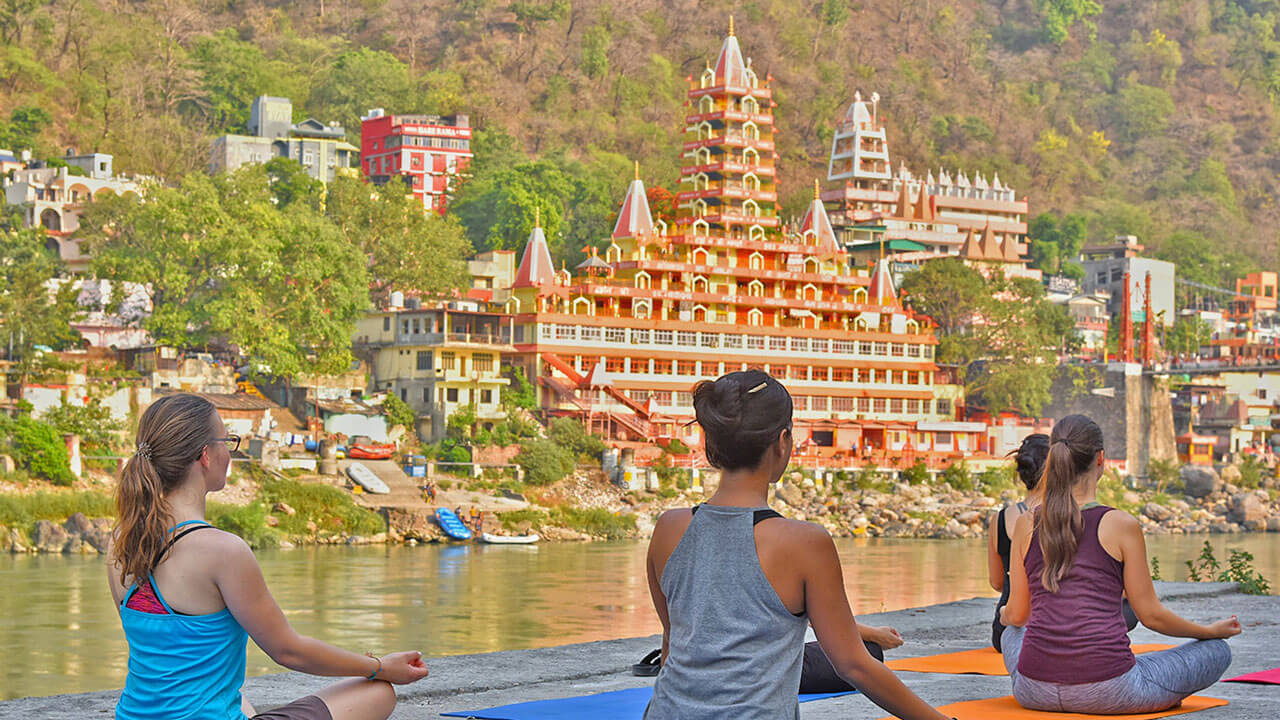
Rishikesh is often called the yoga and meditation capital of the world – and with good reason. Historically, the riverbanks and hills in the vicinity of the town were used by saints for yoga and meditation. Even today, there are internationally renowned yoga centers and ashrams here, and all you need to do to find yourself an ashram or yoga center in Rishikesh is to turn a corner! The most internationally acclaimed was the Chaurasi Kutia Ashram of Maharishi Mahesh Yogi, which once hosted celebrities such as Mia Farrow, Mike Lee, Mick Jagger, and of course, The Beatles. However, the ashram was left in disuse when the Maharishi shifted to Europe in the seventies, but efforts are on to renovate it to commemorate The Beatles’ visit.
Kerala
Yoga is a popular practice in Kerala, with numerous centers that teach the discipline. This southern state of India has embraced yoga with the same fervor as it has accepted many other traditional customs, art forms, and lifestyles.
More importantly, in many places in Kerala, one can still experience yoga in the classical sense – where the emphasis is laid not just on physical well-being but on spiritual awakening also. Yoga is also often combined with Ayurveda, a traditional system of medicine. Together, they provide a unique experience of complete cleansing of physical illnesses as well as mental turmoil.
At the same time, most yoga centers are mindful of modern forms of yoga that are popular around the world. These forms emphasized “asanas” or bodily postures that are known to strengthen the spine and render it flexible. Yoga centers in Kerala also teach these asanas to enthusiastic tourists.
Goa
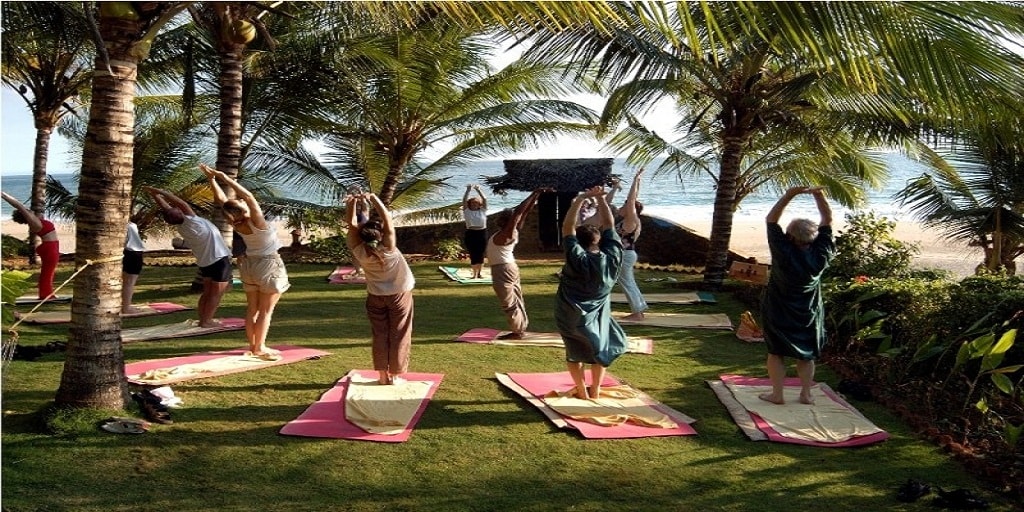
Goa boasts an amalgamation of modern yoga and alternative ways of healing. Such as Ayurveda, pranic healing, dance healing, and meditation. Goa can also provide you with all sorts of spiritually based activities, filling you up with new energy and a heightened sense of zen. Throw in some amazing organic food and paradise-like scenery, and Goa becomes the one place in India where the East truly meets the West. Goa has witnessed the emergence of numerous yoga teacher training centers and yoga retreats attracting people from different parts of the globe. The Portuguese-style houses and landscape gardens of palm trees make the experience even more beautiful. Here, you can have the best of both worlds.
Goa has plenty of Yoga schools and retreat centers which are also focused on Ayurvedic practices. When monsoon season is over, the institutes are opened again for yogi practitioners to enroll in.
Auroville
It is a place where the message of unity, peace, and harmony, even today, is sure to change your outlook on life. Auroville is also known for its unique architecture and sustainable methods, implemented to nurture nature. The 3000+ resident community is self-sustainable, and self-sufficient, and believes in exploring, learning, and experimenting.
While the place is gaining popularity, the community living here doesn’t want attention. They wish to continue living this unique, open-minded way of life, a free world they have created for themselves without interference from the outside world.
Dharamshala
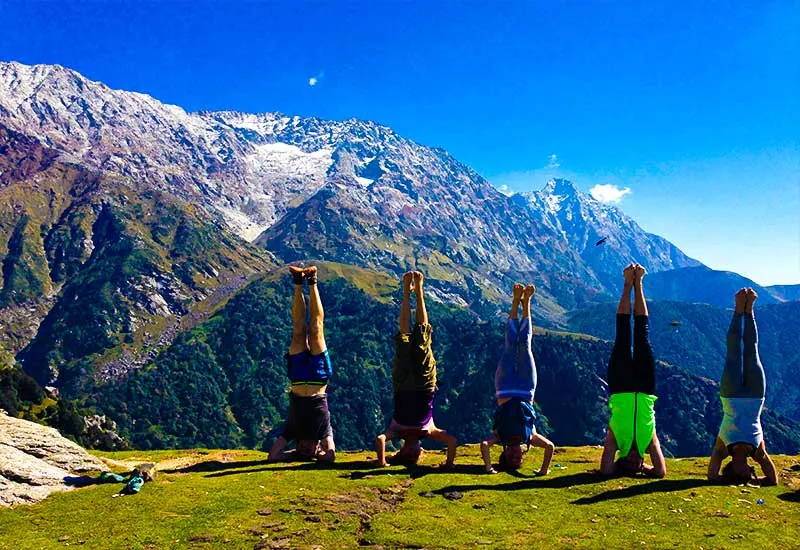
Dharamshala is the perfect place for someone who loves the outdoors, mountains, and yoga. Its picturesque landscapes are breathtaking and are an aspect most enjoyed by travelers and spiritual seekers. Situated in the foothills of the Himalayas, its beautiful surroundings provide the perfect setting for yoga in Dharamshala.
The famous yoga styles include but are not limited to Hatha, Ashtanga, Vinyasa, Iyengar, and Sivananda. Practicing yoga amid nature is an experience in itself and that is why we see celebrities also take time away to visit Dharamshala.
Varanasi
Varanasi, sometimes known as Benares or Banaras and Kashi, is a historical and holy city on the banks of the River Ganges in Uttar Pradesh. Varanasi is a pilgrimage location and a center of Indian spiritualism, philosophy, Ayurveda, yoga, and mysticism. At this place, one can get rid of their negative energies, by purifying themselves with detoxification methods and cleansing operations under the specialized yoga gurus.
Varanasi has a variety of holy sites, including temples like Shakti Peethas, and Kashi Vishwanath temple, which is mostly dedicated to Lord Shiva. This place has housed many yoga schools for yoga enthusiasts to flourish in a divine setting over the years. Gain the traditional knowledge here and learn and master yoga by polishing your techniques and skills in an ambient environment.
Mysore
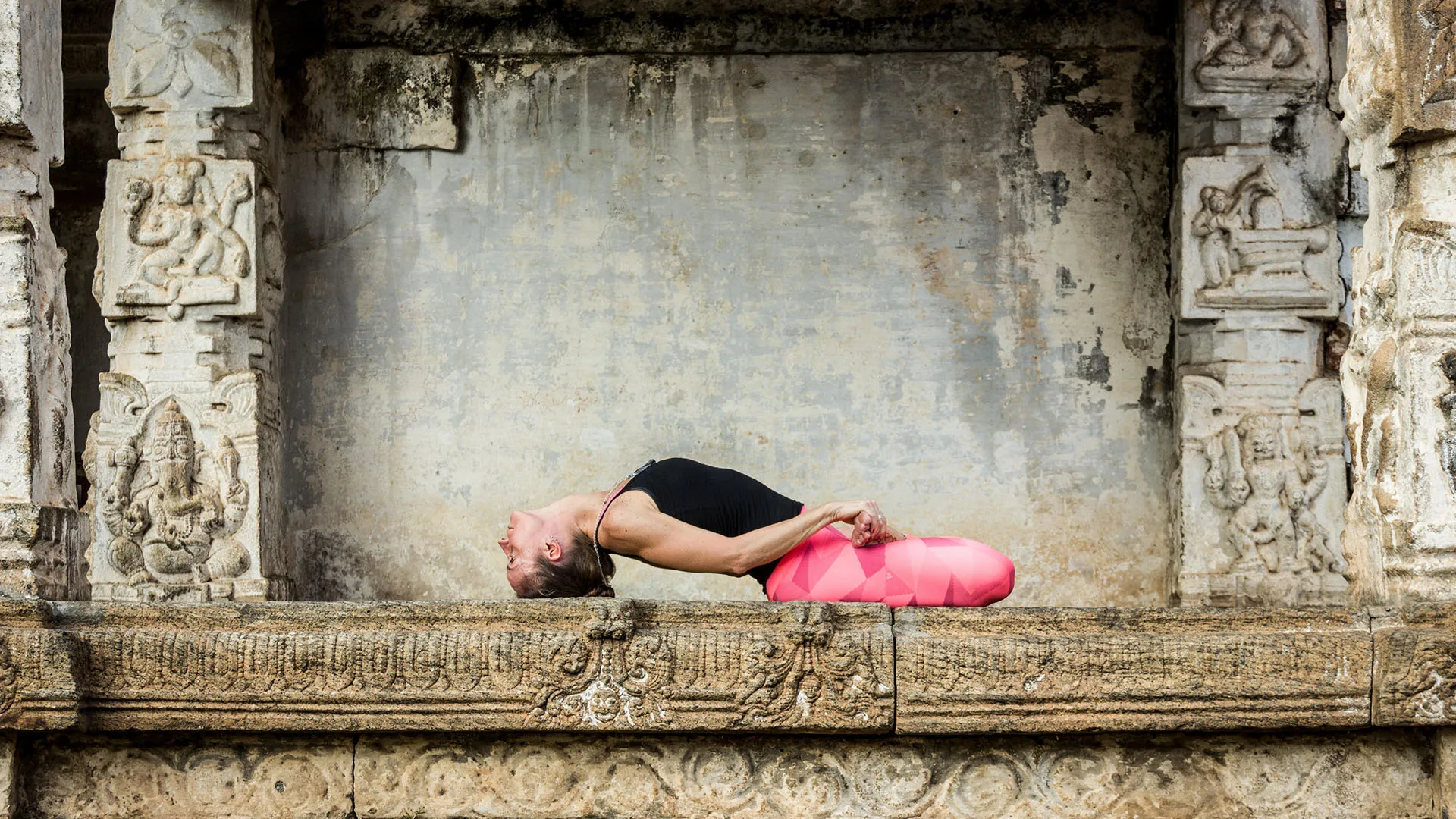
Mysore is a part of South India It is the birthplace of Astanga Yoga where Guru Pattabhi Jois was taught. Mysore is home to ‘Krishnamacharya’ widely regarded as ‘The Father of Modern Yoga’ which makes it much more authentic and attractive for many Yoga practitioners. It is the birthplace of Yoga where great teachers like Guruji BKS Iyengar, Sri Pattabhi Jois and Madam Indira Devi, and Sri TK Deshikachar learned from the Great Krisnamacharya.
There are beautiful palaces and temples in the city including the Mysore Palace. Chamundi Hill is another hill that is famous for its reflecting views. So, you can enjoy the surroundings while finessing your art of Yoga at this knowledgeable city of Ashtanga Yoga. Learn the various authentic forms and asanas directly under the lineage of the creators, as they are not commercially driven, but rather passionate to keep alive the true art of yoga.
Final Words
All these destinations are highly appreciated by the people of India and western countries for the amount of wisdom they shower with the use of Yoga to make the lives of people better. Since Yoga was born in the Himalayas. Yoga is considered as the knowledge given by the Adi yogi to Parbati and then given in the world by Maharshi Patanjali. Since Adi Yogi lives in the Himalayas. Nepal being the land of the Himalayas is the best place to learn the knowledge of yoga as learning the knowledge of yoga in the land of yoga is connecting yourself with the knowledge and trying to utilize it for the perfect transformation.
Learning the 200-Hour Yoga Teacher Training in Nepal or India, you will surely be connected to the spiritual depth of this yogic knowledge. Dive into the real practice of Yoga, to gain the true transformation. Learning in Nepal or India, you will surely gain the true teachings that will enlighten you and provide you with a path for every obstacle in your life. Himalayan Yoga Academy has been offering one of the best experiences of Yoga to all yoga enthusiasts around the world. Our 200-Hour Yoga Teacher Training Course in Nepal is considered the best yoga teacher training in Nepal who are looking for perfect balance for their physical growth as well as spiritual growth.
Padahastasana (Hand to Foot Pose) & Its Benefits
What is Padahastasana?
The term Padahastasana is traditionally derived from the Sanskrit Language where ‘Pada’ stands for ‘Foot’, ‘Hasta’ means ‘Hand’, and ‘Asana’ means ‘Posture’ or ‘Seat’. Padahastasana also known as ‘Hand to Foot Pose’ or ‘Standing Forward Bend’ works as a miracle to nurture one’s spiritual health.
Padahastasana or Hand to Foot pose is one of the most intense inverted yoga postures widely praised for its muscle strengthening and toning benefits. Being the third pose of Surya Namaskar, this semi-inversional pose of yoga is surmised to reduce tamas, which means heaviness of inertia in the body. Moreover, Padahastasana is believed to enrich body balance and spiritual cleansing by unlocking the energy zones of our bodies.
How to perform Padahastasana?
The following are the steps to perform this pose:
- First, Stand in Tadasana (Mountain Pose) which means standing while keeping the spine erect.
- Keep the feet hip-width apart.
- Inhale, and slowly raise both arms up.
- Exhale, and start folding forward slowly. Make sure that the spine remains as concave (arched) as possible while bending forward with control.
- Slide both hands under the feet with the palms up and toes touching the wrists.
- Exhale gently while moving the face towards the space between your knees.
- Maintain the pose for 3-5 breaths.
- Inhale, while looking forward.
- Inhale, and come back to the center position.
- Exhale, while bringing your hands down.
Benefits of Padahastasana :
1. Tone Your Body: Padahastasana being an intense stretching pose helps in bracing and toning the body resulting in harmonized, nimble physique.
2. The Spell of Flexed Spine: The semi-inverted pose holds several virtues in making the body free from sprains. This posture protects the tough muscles of the hamstrings, wrist, and lower back from various muscular diseases by enchanting the spell of great flexibility in the body.
3. Better Circulation(Flow): Padahastasana ensures a better blood flow right from the head to heel due to its inverted effect where the head is placed below the heart-boosting the blood flow in the veins. The better flow of blood, in turn, gives a brilliant glow to the skin, hampers anxiety, and fights various signs of aging.
4. Bye-Bye Fat: This pose significantly reduces excessive fat and protects the body from various cardiovascular diseases. This pose is best for vanishing belly fat through regular practice.
5. A Strong Gut: “A good digestion turns all to healthy” The best solution to indigestion and abdominal bloating is Padahastasana. This pose galvanizes the well-functioning of all the digestive organs including the spleen and liver ensuring a smooth bowel movement and a healthy digestive system.
6. Happy Glands: “Hormones are the reason for your happiness.” The glands in our body secrete hormones that play a vital role in maintaining homeostasis. This Yoga asana dominantly vivifies the functionality of the thyroid, endocrine, and pituitary glands to lock up the entire wellness.
7. Awaken Chakras: Padahastasana is a natural remedy to unlatch the nerve centers i.e., the chakras also known as the energy zones present across the body, making them fluid that further contributes to physical, psychological, emotional, and spiritual well-being.
8. Taming Tamas: “Tama attracts misery “ If one’s soul is infected by tamas, Padahastasana is the best drug. Tamasic mind is always wounded with laziness, depression, demotivation, heaviness, etc., which often dulls understanding and limits creativity. Therefore, this pose removes inertia and sets the practitioners free from these downward energies flowing in the spine. Regular practice of this pose makes the body light and energized.
9. The Well-Vata: The alignment of this asana unifies the Vata dosha in the body. Vata presides over all the movements in the body and mind viz. controlling the blood flow, elimination of waste, breathing, and other motions. Therefore as per Ayurveda, Padahastasana harmonizes Vata gifting good mental and physical health.
10. Stress
11. Anxiety
12. Fatigue
13. Speeding up metabolism and concentration
Precautions for Padahastasana:
• Padahastasana must be practiced before or after a backward bending pose.
• While bending forward move your torso from the hip joints and not the waist.
• Legs and knees must be kept straight while practicing the pose.
• Do not overstretch. Overstretching might overstress the knees, thighs, calves, ankles, etc. resulting in a sprain.
• Beginners may find it difficult to directly swoop into the Padahastasana posture due to the tightness of the hamstring and lower back. Therefore, one should practice a few simple stretches to relieve the tension from the neck, back, and hamstring before performing Padahastasana.
• People may take a few days to reach the hand-under-foot pose. It is advised to stretch as per one’s comfort and flexibility.
Who should avoid Padahastasana?
People suffering from the following problems should not practice this asana :
• High blood pressure
• Heart disease
• Abdominal hernia
• Knee Problem
Final words:
Padahastasana is an amazing yoga pose that has several health benefits. Right from flexibility to inner peace. Padahastasana showers its healing virtues to the practitioner. Include this healthy pose in your daily yoga routine to achieve the above-mentioned benefits.
Nepal Singing Bowl Course
Singing Bowls—widely known as Tibetan Singing Bowls or Himalayan Bowls—have been used for centuries across Tibet, India, and Nepal for their profound healing and spiritual qualities. These sacred instruments support deep relaxation, emotional cleansing, meditation, stress reduction, and energy balancing. Their sweet, multilayered tones cut through mental chatter and guide practitioners into a calm, harmonious state. Traditionally found on Buddhist altars, monasteries, and meditation centers, singing bowls remain a central part of Asian spiritual culture.
Nepal—home to the Himalayas and the birthplace of Gautam Buddha—has preserved the pure lineage of singing bowl craftsmanship and sound healing traditions. Today, Nepal Singing Bowl Courses are cherished worldwide for their authenticity, depth, and cultural richness.
Why Nepal Singing Bowl Courses Are the Most Authentic
Nepal is recognized globally as the heartland of genuine singing bowl knowledge. Many of the finest hand-hammered Himalayan bowls are crafted here by skilled artisans whose families have practiced this ancient art for generations. Nepalese sound healers study deeply in Buddhist philosophy, Vajrayana practices, and Himalayan meditation traditions, ensuring that their teachings carry spiritual integrity—not just technical instruction.
Training in Nepal allows students to learn in an environment blessed with centuries of spiritual heritage. The peaceful Himalayan atmosphere, monasteries, chanting, and natural vibration of the land enhance sensitivity and deepen the experience. Unlike commercialized or modernized workshops found elsewhere, Nepal’s courses preserve the true Himalayan method, allowing students to receive training rooted in spiritual lineage, purity, and authentic healing energy.
Himalayan Yoga Academy – The Best Sound Healing & Singing Bowl Training Center in Nepal
Himalayan Yoga Academy is widely regarded as one of Nepal’s leading and most trusted providers of authentic Himalayan Singing Bowl and Sound Healing Training. Our academy stands out for its traditional lineage, highly skilled instructors, and deeply experiential teaching methods.
We offer Level 1 to Level 4 Singing Bowl Courses, covering everything from foundational techniques to advanced therapeutic applications. The first two levels provide the main practical foundations, including purification, chakra healing, aura balancing, and deep therapy modalities. Levels 3 and 4 bring tibetan based advanced methods, spiritual activations, deeper vibrational therapies, and high-level Himalayan techniques rarely found elsewhere.
Students receive far more detail and practical knowledge upon arrival, including personalized guidance, one-on-one correction, group practice sessions, and immersive Himalayan teaching experiences. Many students choose Himalayan Yoga Academy specifically for its blend of authentic tradition, scientific understanding, and holistic healing.
By training with us, you are not only learning techniques—you are entering a sacred lineage of Himalayan sound wisdom.
Science Behind Singing Bowls
According to neuroscience, the human mind functions in five states: beta, alpha, theta, delta, and gamma. Beta is the everyday active state where stress, pressure, and imbalance arise. Singing bowl vibrations shift the brain into alpha and theta states—zones of meditation, clarity, and deep peace. In these states, immunity strengthens, healing accelerates, and the body restores its natural harmony.
Scientific studies confirm that sound vibration influences the autonomic nervous system, endocrine system, immune responses, and neuropeptide pathways. Sound reorganizes internal disharmony, restoring balance on emotional, mental, and energetic levels. The multidimensional tones of singing bowls penetrate deeply, resonating through chakra pathways and energetic layers to dissolve blockages and uplift consciousness.
What You Will Learn in Nepal Singing Bowl Course – Level 1
- 9 Singing Bowl Purification & Relaxation
- Balancing 4 Bowls Therapy
- Middle-Path / Sushumna Activation Therapy
- Sensual Vibration & Meditation
- Spinal & Lower Limbs Massage & Relaxation
- Pregnancy Sound Therapy
- Third Eye & Crown Active Awareness (A)
- Chakra Healing
- Space Cleansing Techniques
- Group Healing – I
What You Will Learn in Nepal Singing Bowl Course – Level 2
- Beautiful Aura Ornamentation
- Middle-Path / Sushumna Advanced Activation
- Solar Activation for Confidence & Fearlessness
- Agochar – Tenth Gate / Cosmic Channel Opening
- Sound Massage & Deep Relaxation
- Chakra Healing & Meditation
- Whole Body Resonance & Energy Balancing
- Meditation with Singing Bowl
- Silence Talk – Mind Blank & Psychic Balance
- Chilled Forest – Willpower Awakening
- Group Healing & Meditation
Learn About Our Singing Bowl Training Levels (1–4)
At Himalayan Yoga Academy, we have designed all four levels to provide a complete transformation:
- Level 1 & 2 → Core foundations, hands-on therapy, purification, chakra healing, practical techniques.
- Level 3 & 4 → Advanced Tibetan sound Healing Techniques, spiritual Himalayan techniques, deep energetic activations, and mastery-level practices.
More detailed instructions, practical sessions, and spiritual experiences are shared directly with students during the training for maximum immersion and understanding.