
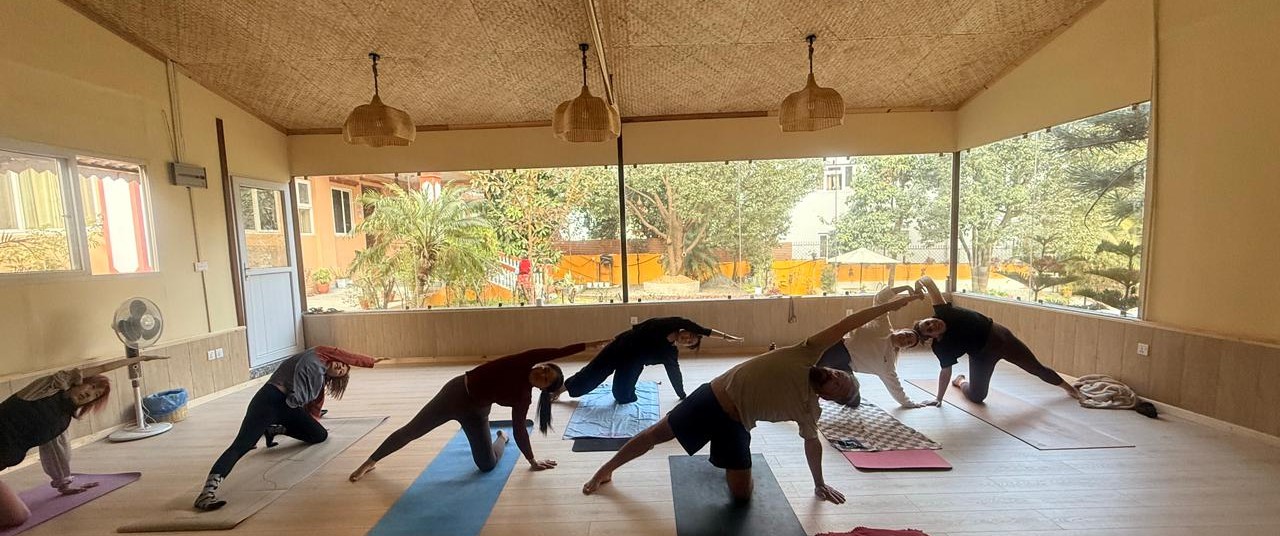
18 Feb 2026 HYN Himalayan Yoga Academy
The Himalayas have long been revered as the sacred abode of sages and seekers—a place where the pursuit of spiritual enlightenment is woven into the very fabric of the landscape. For a yoga teacher training student arriving in Nepal, the journey often feels like a step into this ancient, mystical tradition. The air is filled with the scent of incense and the promise of inner transformation.
But beneath the surface of this spiritual pursuit lies a cornerstone of modern, safe, and effective yoga teaching: a deep and practical understanding of human anatomy.
Why Anatomy Is Essential in Yoga Teacher Training
Many aspiring teachers enter yoga training with a love for asanas and philosophy, but without a clear understanding of how the body actually functions. Anatomy bridges this gap.
When you understand:
- How muscles contract and relax
- How joints move and stabilize
- How the spine aligns and supports
- How breathing affects the nervous system
You begin to practice and teach with intelligence rather than imitation.
At institutions such as Himalaya Yoga Academy in Nepal, anatomy is a core part of the 200-hour yoga teacher training curriculum. Studying anatomy in the birthplace of yoga, surrounded by the Himalayas, offers a unique blend of traditional yogic wisdom and modern scientific understanding.
As H. David Coulter wisely noted: “Being in a state of silence when you come into a posture is soothing, but you cannot connect with that state except by knowing how you got there and knowing where you are going.”
This is why anatomy is not just a supplementary subject in our training—it is a fundamental pillar. It transforms a personal practice into a professional skill, allowing you to guide students with intelligence, safety, and confidence.
More Than Just Muscles: The Macro and Micro of You
When we begin to study the human body, we start with its basic constituents: the cells, tissues, organs, and systems that work in perfect harmony. We learn that the average adult body is a complex, multicellular organism, composed of approximately 70-72% water, with around 5 liters of blood and 10 liters of interstitial fluid, tirelessly working to maintain homeostasis—that amazing self-regulating process that keeps us stable and alive.
Our training dives into the macro-structure of the body:
- Cells: The functional unit of life responsible for transport, metabolism, and reproduction
- Tissues: Epithelial, connective, muscular, and nervous systems
- Organs: Sensory organs (eyes, ears, nose, tongue, skin), action organs (mouth, limbs, anus, genitals), and vital organs (brain, heart, lungs, liver, kidneys)
- Systems: Groups of organs working together for protection, communication, intake, and elimination
This foundational knowledge is the bedrock upon which we build a safe and intelligent asana practice.
The Architecture of Movement: Bones, Muscles, and Joints
How can you teach a safe forward fold without understanding the spine? How can you adjust a student in a hip opener without knowing the architecture of a ball-and-socket joint? You can’t.
The Skeletal System
In our training, the skeletal system is explored as the body’s framework. We learn that bones are not just static, dry structures—they are living tissue (25% water, 75% solid matter) with vital roles:
- Protecting organs
- Storing calcium
- Manufacturing blood cells
- Permitting movement and locomotion
- Providing anchor points for muscles
Understanding Joints
We then move to the joints—the meeting points of bones. Understanding the difference between joint types is crucial for safe teaching:
- Fixed joints (like the skull): Immovable, providing protection
- Cartilaginous joints (like intervertebral discs): Partly movable; avascular and slow to repair
- Synovial joints (like knees and hips): Freely movable, with hyaline cartilage and synovial fluid for lubrication
For instance, knowing that fibrocartilage doesn’t repair easily explains why we must approach spinal twists and forward folds with care and patience. Gentle movement enhances the secretion of synovial fluid, warming it so it becomes thinner and better able to penetrate the cartilage—providing more cushioning and allowing bones to glide smoothly.
We explore the different types of synovial joints:
- Hinge joints (elbow, fingers): Movement in one plane
- Ball-and-socket joints (hip, shoulder): Movement in all directions
- Gliding joints (vertebral facets): Flat surfaces sliding past each other
- Pivot joints (atlas/axis): Ring rotating around an axle
- Saddle joints (thumb): All movements except rotation
This knowledge, combined with an understanding of body planes (sagittal, coronal, transverse) and anatomical movements (flexion, extension, abduction, adduction, rotation), empowers you to use precise, clear language in your classes.
The Muscular System
The muscular system makes up 70-85% of our body weight. We go beyond simply naming muscles to understanding how they work:
- Skeletal muscles: Voluntary, moving the skeleton
- Smooth muscles: Involuntary, found in organs
- Cardiac muscles: The heart’s specialized muscle tissue
We study the elegant dance of agonist and antagonist muscles through:
- Concentric contractions: Muscle shortens under tension
- Eccentric contractions: Muscle lengthens under tension
- Isometric contractions: Muscle engages without changing length
We learn about the stretch reflex (myotatic reflex) and why bouncing in a pose is counterproductive—it actually triggers the muscles to shorten. Instead, we learn to invite the clasp-knife reflex through gentle, extended holding (10-15 seconds or more), allowing the muscle to finally release and lengthen. This is the difference between forcing a stretch and cultivating true flexibility.
The Inner Tides: Respiration, Circulation, and the Nervous System
Asana is only one limb of yoga. Anatomy helps us understand the profound effects of others.
The Respiratory System
The respiratory system is our bridge to the life force. We study:
- The respiratory tract from the nose to the alveoli (functional units of the lungs)
- The mechanics of the diaphragm and 11 pairs of intercostal muscles
- The difference between abdominal and chest breathing
We explore how a practice like Kapalbhati reverses the normal breathing process—active exhalation, passive inhalation—creating a vacuum that stimulates and exercises the abdominal muscles while having direct impacts on the nervous system. This anatomical understanding transforms pranayama from a simple breathing exercise into a powerful physiological tool.
The Nervous System
This leads us directly to the Nervous System, the body’s communication superhighway:
- Somatic nervous system: Our conscious, voluntary control (like lifting an arm or consciously breathing)
- Autonomic nervous system: The autonomic regulator of our internal organs
Within the autonomic system lies the critical balance between:
- Sympathetic system (Pingala): Fight-or-flight, stimulation, acceleration
- Parasympathetic system (Ida): Rest-and-digest, relaxation, introversion
The goal of yoga—to find balance—is mirrored in the physiological goal of calming the sympathetic nervous system and activating the parasympathetic. Our ability to consciously control our breath gives us a unique key to influence this otherwise autonomous system, lowering the heart rate and cultivating a state of deep calm.
The Cardiovascular System
Yoga’s impact extends to every system in the body. We study the Cardiovascular System, tracing the path of blood:
- Deoxygenated blood returns via the venae cavae to the right atrium
- Passes through the tricuspid valve to the right ventricle
- Pumped through pulmonary arteries to the lungs for oxygenation
- Oxygenated blood returns via pulmonary veins to the left atrium
- Passes through the mitral valve to the left ventricle
- Pumped through the aortic valve into the aorta and throughout the body
We understand how asanas like Headstand (Shirshasana) invert the gravitational pull on circulation—increasing pressure above the heart, decreasing it below. We learn why “pins and needles” occur (diastolic pressure dropping too low for capillary exchange) and how a consistent practice can improve cardiac efficiency.
The Systems of Support: Digestion, Immunity, and Elimination
The Digestive System
We explore the Digestive System and why certain asanas are so powerful:
- Twisting poses (like Ardha Matsyendrasana): Mechanically stimulate organs, promoting digestion and elimination
- Bhujangasana (Cobra): Activates abdominal organs
- Mayurasana (Peacock): Creates intra-abdominal pressure
- Pawanmuktasana: Releases trapped gas
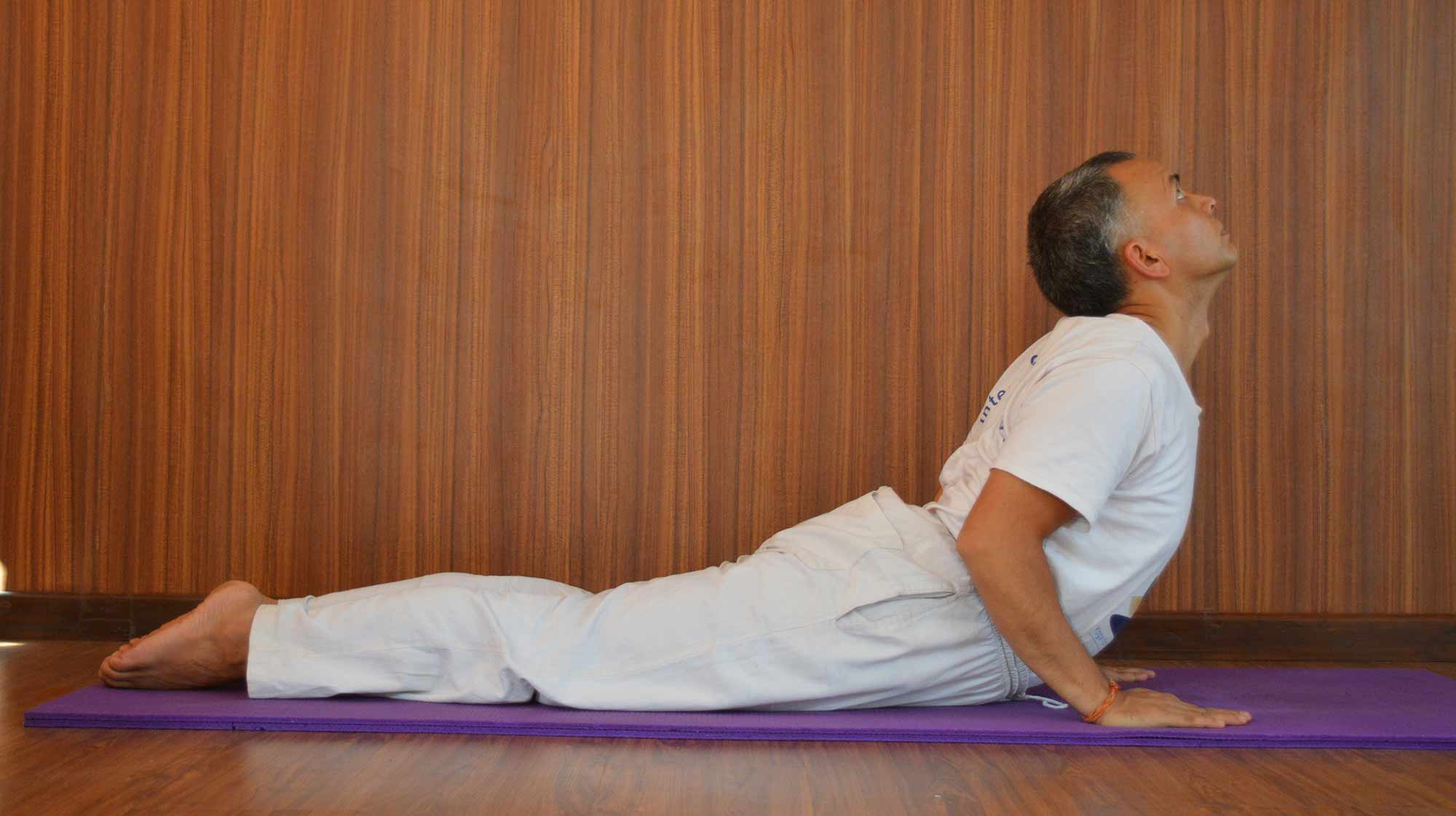
We understand why a peaceful mind leads to a healthier gut—our emotional state directly affects the smooth muscles of the digestive tract. The appetite and satiety centers lie in the hypothalamus, linking our emotional balance directly to digestive function.
The Lymphatic System
Finally, we look at the often-overlooked Lymphatic System, the body’s silent sewage system and immune defender. Unlike the cardiovascular system, the lymph has no central pump. It relies entirely on muscular contraction to move lymph—the clear fluid carrying white blood cells, proteins, and waste—through the body.
This is where yoga shines:
- Garudasana (Eagle): Pinches lymph glands behind knees, elbows, and armpits
- Mandukasana (Frog): Applies pressure to the mesenteric nodes and pancreas
- Sarvangasana (Shoulder Stand): Reverses gravity to drain lymph from the legs
Every asana, every conscious contraction and release, acts as a pump for the lymphatic system, helping to detoxify the body and strengthen immunity through the development of T-lymphocytes in the thymus and filtration in the spleen.
The Urinary System
The urinary system maintains fluid balance through:
- Kidneys with 1.2 million nephrons each, filtering impurities
- Ureters carry urine to the bladder
- The bladder is holding over 2 cups of urine
- The urethra eliminates waste
Understanding how antidiuretic hormone (ADH) from the pituitary gland regulates fluid balance helps us appreciate the body’s remarkable homeostatic mechanisms.
Anatomy and Injury Prevention
One of the most important reasons anatomy is emphasized in yoga teacher training in Nepal is injury prevention.
Without anatomical knowledge, teachers may:
- Over-adjust students
- Encourage unsafe flexibility
- Ignore structural differences
- Push students beyond healthy limits
With anatomy training, you learn to:
- Recognize body limitations
- Respect anatomical variations
- Offer safer alternatives
- Avoid hyperextension and compression
This ensures a long and sustainable yoga journey for both you and your future students.
The Spiritual Meets the Scientific
What makes anatomy studies in Nepal special is the integration of Eastern philosophy and Western science.
While anatomy explains the physical body, yogic teachings describe:
- Pancha Kosa (five sheaths): From the gross physical body to the bliss body
- Prana (life force energy) and its 10 manifestations
- Nadis (energy channels): 14 major nadis, including Ida, Pingala, and Sushumna
- Chakras: Energy centers along the spine
- Kundalini: The dormant potential energy
Understanding the sciatic nerve, for example, doesn’t diminish the concept of the Pingala Nadi—it enriches it. It allows us to work with the physical structure to create the conditions for the energetic and spiritual experience to arise safely.
Teaching Confidence Through Anatomical Knowledge
When you complete your yoga teacher training in Nepal, anatomy gives you confidence.
You will be able to:
- Explain alignment clearly and precisely
- Demonstrate poses with anatomical awareness
- Guide students of different abilities and body types
- Design balanced sequences that address all systems
- Respond to common physical concerns with knowledge
- Recognize the difference between therapeutic sensation and injury pain
Students trust teachers who understand the body. Anatomy builds that trust.
Learning Environment in Nepal
Studying anatomy in Nepal offers more than classroom education.
The peaceful Himalayan surroundings create an ideal environment for focused learning. The slower pace of life allows you to:
- Absorb complex concepts deeply
- Practice mindfully between study sessions
- Reflect on the connection between theory and experience
- Integrate anatomical knowledge with your personal practice
At schools like Himalaya Yoga Academy, anatomy classes are interactive—combining lectures, discussions, demonstrations, hands-on practice, and direct application to asana. This experiential approach makes learning engaging and memorable.
Who Benefits Most from Anatomy Training?
Anatomy in yoga teacher training is valuable for:
- Aspiring yoga teachers
- Fitness professionals
- Therapists and bodyworkers
- Dedicated yoga practitioners
- Anyone curious about how their body works
Even if you do not plan to teach, anatomical knowledge enhances your personal practice and prevents injury.
Conclusion
Anatomy is one of the most important pillars of yoga teacher training in Nepal. It transforms yoga from simple movement into intelligent practice—from imitation into understanding.
By understanding bones, muscles, joints, breath, and the nervous system, you learn to practice safely and teach responsibly. You develop a profound respect for the vehicle that carries you on your spiritual journey. You learn to self-correct, to feel the difference between the “good pain” of therapeutic stretch and the “bad pain” that signals injury.
Combined with the spiritual atmosphere of Nepal and the structured guidance offered by institutions like Himalaya Yoga Academy, anatomy becomes more than a subject—it becomes a foundation for your growth as a teacher.
By integrating modern anatomical science with traditional yogic wisdom, our 200-hour training in Nepal prepares you to be a teacher who can see the whole student—the body, the mind, and the spirit—and guide them safely on their own path of transformation.
If you are considering yoga teacher training in Nepal, remember: strong knowledge of anatomy is not optional—it is essential. It ensures that your teaching is safe, effective, and aligned with both ancient wisdom and modern understanding.