
2 Aug 2026 HYN Himalayan Yoga Academy
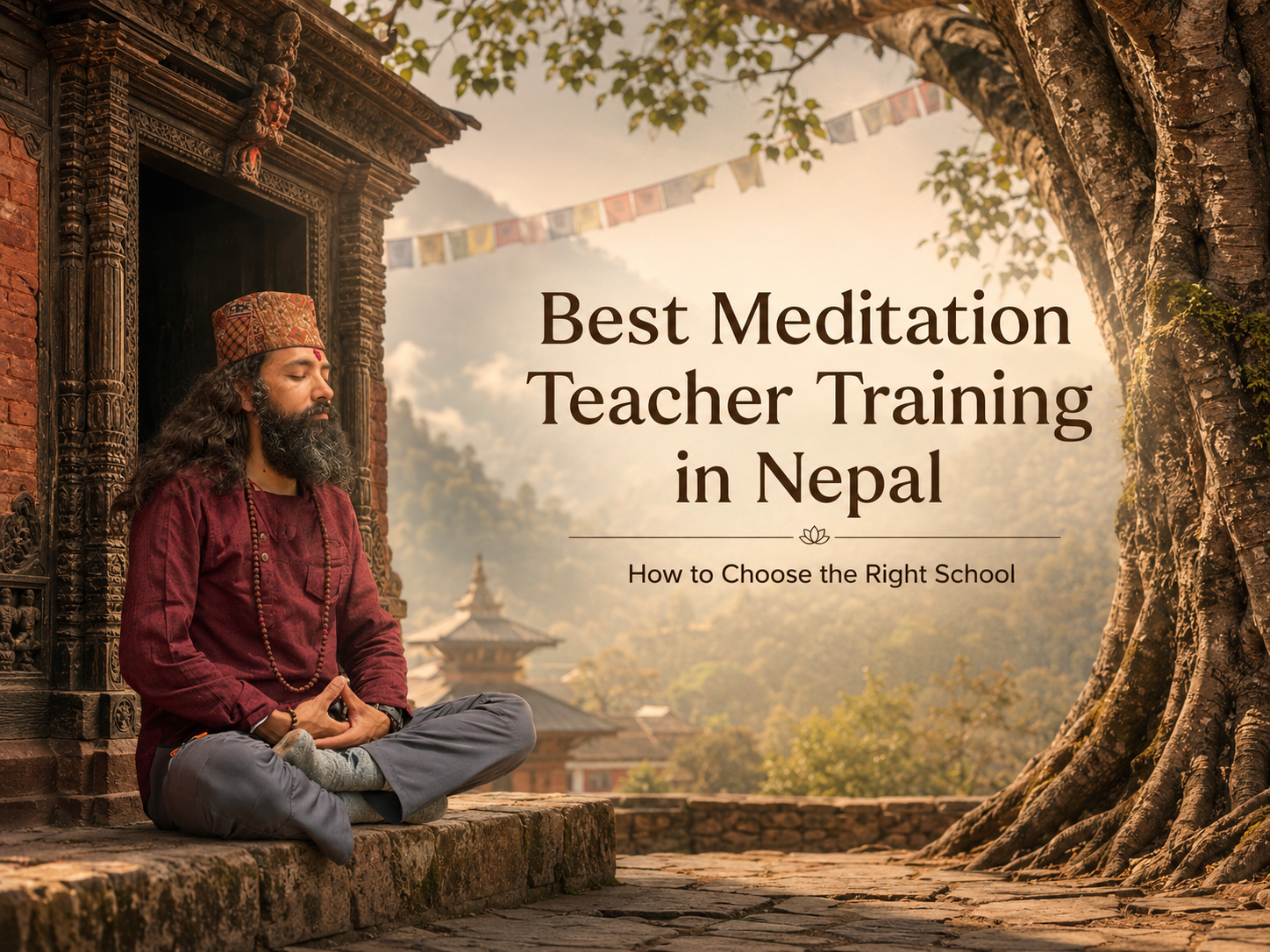
Nepal is one of the most profound places in the world to study meditation. As the birthplace of Lord Buddha and a land steeped in Hindu, Buddhist, and Himalayan contemplative traditions, spirituality isn’t just a tourist attraction here—it is a way of life. Finding the best meditation teacher training in Nepal means looking for a school that offers more than just relaxation techniques; it requires a school that offers a transformative, living educational journey.
Himalayan Yoga Academy (HYA) in Kathmandu embodies this philosophy. At HYA, meditation is presented as a lived discipline rather than a collection of stress-management tricks. Students engage in a residential rhythm that blends meditation, yoga, pranayama, philosophy, and community living. HYA also offers complementary courses in Yoga Teacher Training, Pranayama, Sound Healing, and Ayurveda, allowing students to build a holistic career path.
What to Look for in a Meditation Teacher Training
Before diving into specific courses, it is crucial to understand what separates a genuine training from a superficial one. You are not just learning to sit in silence; you are learning to guide others. The best programs combine personal practice with teaching competence.
A high-quality curriculum should cover:
- Methodology: Practical steps and how to adapt the practice for different participants.
- Philosophy: The historical and spiritual background of the practices.
- Difficulties: How to handle distractions, discomfort, and emotional releases.
- Ethics: Boundaries, consent, and scope of practice.
Meditation as a Training of the Mind
At the heart of authentic training is the understanding of the nature of the mind. The HYA curriculum begins with the study of Chitta (the mind-field) and the Vrittis (changing patterns of thought).
Meditation is not the violent suppression of thought. It is the cultivation of awareness and a steady, wise relationship with mental movement. Students learn to observe the body, breath, sensations, and emotions while reducing automatic reactions. This foundational knowledge is what separates a meditation technician from a meditation teacher.
The 40-Hour Foundation Course
The 40-hour pathway is the ideal starting point. It introduces the essential building blocks of meditation. This course is perfect for yoga teachers who want to integrate basic meditation into their classes or individuals seeking a structured introduction to practice.
The curriculum includes:
- Breath awareness (Anapana Sati)
- Witness consciousness and gratitude
- Mantra and Nada (sound) listening
- Tratak (concentrated gazing)
- Chakra and Kundalini-related practices
- Yoga Nidra (psychic sleep)
- Phased practice-teaching methods
The emphasis in this course is on foundations, direct practice, and clear instruction.
The 100-Hour Advanced Pathway
For those looking for depth and mastery, the 100-hour advanced pathway is the gold standard. This program deepens the fundamentals through extended personal practice, advanced teaching methodology, and the study of the Noble Eightfold Path and Buddhist ethics.
What the advanced course offers:
- Vipassana and Samatha (Insight and Calm-Abiding)
- The Four Brahma Viharas (Divine Abodes: Loving-kindness, Compassion, etc.)
- Tibetan Buddhist perspectives
- Dharana-Dhyana-Samadhi (Concentration, Meditation, Absorption)
- Professional responsibility and supervised teaching
- Ethical application of philosophy in daily life
Even when the focus is on one technique, the advanced course places it within a larger ethical and philosophical framework, ensuring you don’t teach meditation as a “performance” technique.
The HYA Approach: Practice, Philosophy, and Daily Life
At Himalayan Yoga Academy, meditation is not separated from how a person lives. The school integrates Yogic teachings (witness consciousness, non-attachment) alongside Buddhist teachings (compassion, impermanence).
This integrated approach helps future teachers avoid presenting meditation as a technique disconnected from real life. You learn that the way you speak, eat, rest, and relate to others is just as important as the time spent on the cushion.
Learning to Teach, Not Only to Practice
A personal meditation experience does not automatically create teaching competence. This is a vital distinction. At HYA, students learn practical facilitation skills, including:
- How to introduce a posture.
- Using accessible language.
- Timing periods of silence.
- Observing the group’s energy.
- Closing a session effectively.
Practice teaching, constructive feedback, and reflective study are core components of the program, ensuring you leave ready to facilitate with confidence.
Safety and Professional Responsibility
A responsible meditation teacher works within a clear scope of practice. You are not a therapist or a doctor. The best training teaches you to:
- Avoid diagnosing participants.
- Offer choices and respect consent.
- Know when to pause a practice or recommend professional support.
Strong breath retention, prolonged sensory deprivation, and intense Kundalini methods require additional care. Safety is paramount, and a good school will never encourage you to push students beyond their limits.
Why Choose Himalayan Yoga Academy?
Himalayan Yoga Academy isn’t just a training center; it is a holistic hub. By studying here, you gain access to an integrated ecosystem of wellness education:
- Meditation Teacher Training (40 & 100-hour)
- 200-hour and Advanced Yoga Teacher Training
- Pranayama Teacher Training
- Sound Healing programs
- Ayurveda Courses
- Yoga Retreats in Nepal
This integrated environment is particularly useful for teachers who want to understand how different practices support one another without mixing them carelessly.
Connecting Your Training with Yoga Retreats in Nepal
Perhaps you aren’t ready for certification yet. HYA also runs yoga and meditation retreats for personal renewal. Retreat life offers daily yoga, meditation, healthy meals, and cultural immersion.
A retreat can:
- Prepare a beginner for teacher training.
- Help a graduate integrate intensive study.
- Provide a gentle way for friends or family to experience the academy.
Measuring Progress: A Grounded Understanding
One of the most important lessons in teacher training is understanding what true progress looks like. In the modern world, we are used to measurable results. However, progress in meditation is not measured by visions, long periods of stillness, or impressive spiritual language.
Reliable signs of progress include:
- Less reactivity and greater patience.
- Emotional honesty.
- Clearer ethical choices.
- Steadier attention.
- Greater compassion for others.
Teachers are trained to encourage consistency rather than dramatic striving and to protect students from the trap of comparison.
The Role of Community in Residential Learning
Residential learning creates a temporary community where students share practice, meals, questions, and silence. This community reveals habits that private practice can hide: impatience, withdrawal, and the need to be recognized.
These experiences become part of the ethical education when handled with maturity. It is here that the theoretical teachings of compassion become a living reality.
Life After Teacher Training
What happens after you graduate? The best training prepares you for the transition.
- Start with short beginner sessions.
- Integrate meditation into existing yoga classes.
- Continue supervised practice before offering longer workshops.
A new teacher should always keep studying and maintain personal practice. Continuing education in pranayama, yoga philosophy, or trauma awareness can deepen professional maturity.
Adapting the Practice for All Students
A skilled teacher knows how to adapt. Meditation is not a “one size fits all” practice.
- Posture: Seated on the floor, on a chair, standing, walking, or lying down.
- Eyes: Closed, half-open, or open.
- Alternatives: For pain, pregnancy, fatigue, or trauma sensitivity.
Adaptation protects the purpose of the practice rather than weakening it. An inclusive teacher respects cultural comfort and physical limitations.\
Conclusion: Your Path to Authentic Teaching
Choosing the best meditation teacher training in Nepal is about finding a school that aligns with your values and prepares you for the responsibility of guiding others.
At Himalayan Yoga Academy, the 40-hour course establishes a strong foundation, while the 100-hour pathway expands into advanced practice, Tibetan Buddhist philosophy, and supervised teaching.
Graduates leave not with a promise of instant enlightenment, but with a clearer practice, a responsible teaching framework, and a deeper relationship with the contemplative traditions of Nepal. Whether you are starting your journey or deepening your career, HYA provides the depth, authenticity, and support you need.
Frequently Asked Questions (FAQ)
1. Do I need a yoga background to join the 40-hour meditation training?
No. While it helps, the 40-hour foundation course is designed for beginners and those seeking a structured introduction to meditation.
2. Is the 100-hour training suitable for teaching immediately?
Yes. The 100-hour course includes extensive teaching methodology and supervised practice to prepare you for professional facilitation.
3. Does HYA provide accommodation?
Yes. Himalayan Yoga Academy offers residential hospitality as part of the training experience, including healthy meals and comfortable accommodation.
4. How is HYA different from other schools in Nepal?
HYA combines multiple disciplines (Yoga, Pranayama, Ayurveda, Sound, and Meditation) into one holistic environment, ensuring you understand how these practices interconnect.